
Estimated reading time: 7 minutes
Hot water powers everyday household routines — showers, laundry, dishwashing and cleaning. Behind the scenes, the appliance producing that hot water quietly consumes a significant portion of your home’s energy. Selecting an energy-efficient water heater can then produce meaningful long-term savings while also improving overall home efficiency.
Advances in technology have introduced several high-performance options, from heat pump water heaters to tankless systems and solar-assisted designs. For homeowners, the challenge involves identifying which models actually deliver efficiency in real-world conditions. Efficiency ratings, system types, household demand and installation requirements all play a role. The following guide explains how to find the most energy-efficient water heater.
Check the Uniform Energy Factor
Start by reviewing the uniform energy factor (UEF) — the standard rating used to measure water heater efficiency. A higher UEF means the system converts more energy into hot water with less waste. This rating appears on the EnergyGuide label, which also estimates annual operating costs to help homeowners easily compare models.
Choose the Right Water Heater Technology
Different water heater technologies vary widely in efficiency. For example, heat pump water heaters transfer heat from the surrounding air rather than generating it directly, making them significantly more efficient than conventional electric resistance systems. According to the U.S. Department of Energy (DOE), heat pump models can be two to three times more energy-efficient than standard electric water heaters.
Compare Estimated Operating Costs
Up-front price tells only part of the story. Water heating accounts for about 18% of residential energy use, so efficient models can deliver meaningful long-term savings. Reviewing annual operating cost estimates on the EnergyGuide label helps determine which systems provide the best lifetime value.
Select the Correct Size for Your Household
A water heater should match your household’s hot water demand. Storage tank models rely on the first hour rating to measure how much hot water they can supply in one hour, while tankless systems use a flow rate measured in gallons per minute. Proper sizing improves efficiency and ensures reliable performance.
Look for Efficiency Certifications
Efficiency certifications help identify high-performance equipment. Programs such as Energy Star from the U.S. Environmental Protection Agency and the DOE label water heaters that exceed federal efficiency standards and use advanced technologies to reduce power consumption.
Consider Your Available Fuel Source
Efficiency also depends on the fuel used to run the water heater. Homes may rely on sources like electricity, solar, propane or natural gas. Comparing fuel availability and local costs helps determine which type of water heater will operate most efficiently in your area.
Companies Offering Energy-Efficient Water Heater Solutions
Below is a list of companies that manufacture or distribute water-heating equipment suitable for energy-efficient installations.
Ingram’s Water & Air Equipment
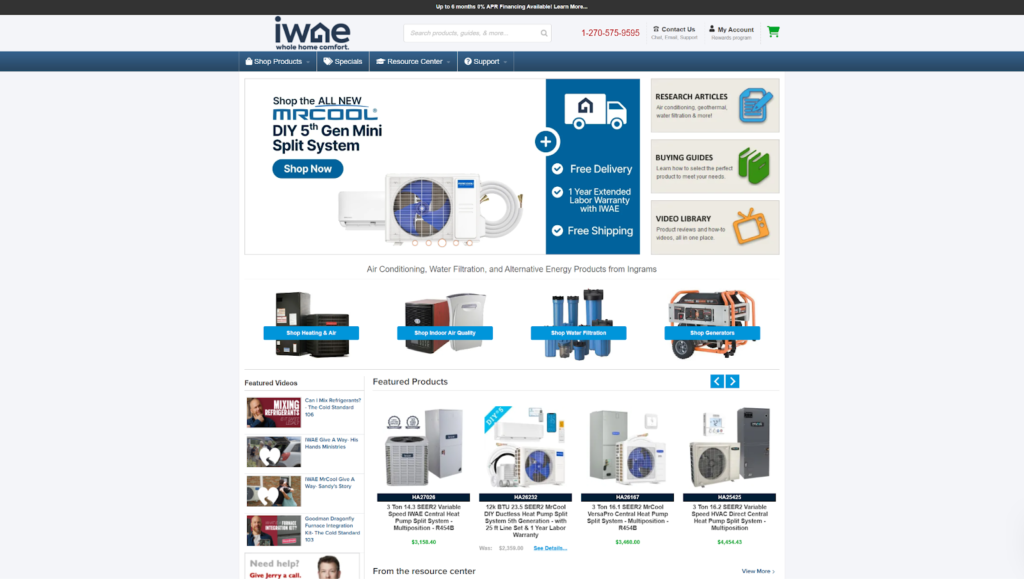
Ingram’s Water & Air Equipment began in Paducah, Kentucky, building on founder Doug Ingram’s background in plumbing, refrigeration, and heating, ventilation and air conditioning (HVAC) trades. It formally established operations in 1998 and expanded its reach in 2000 by launching an early online platform dedicated to selling HVAC equipment, helping bring heating, cooling and water systems directly to homeowners nationwide.
Ingram’s Water & Air Equipment offers a wide selection of residential equipment, including HVAC systems, water filtration products, and water-heating solutions like indirect and tankless water heaters. These support efficient hot water production while integrating with whole-home plumbing and filtration setups. Today, Ingram’s Water & Air Equipment supplies products across the United States through its online platform and distribution network, helping homeowners access practical, energy-efficient home comfort solutions.
A. O. Smith
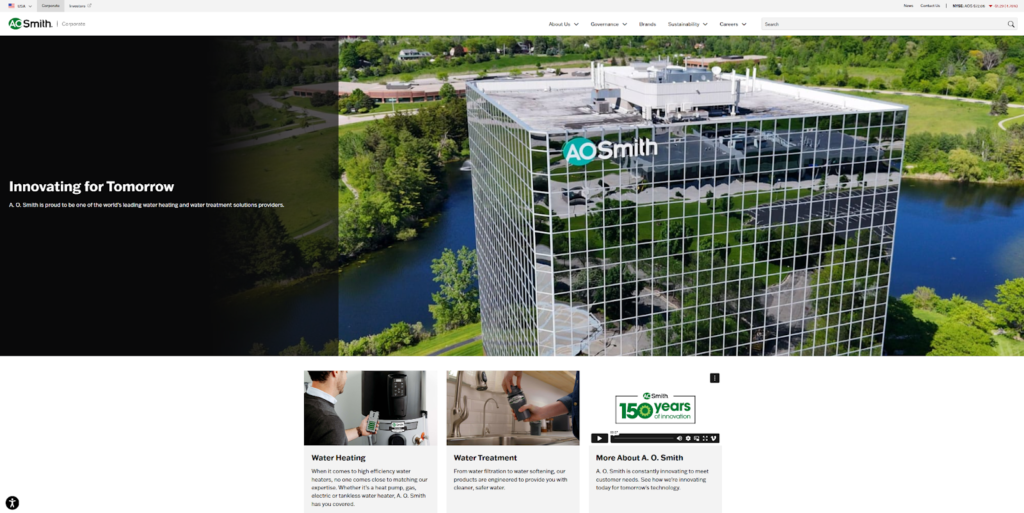
Founded in 1874 and headquartered in Milwaukee, Wisconsin, A. O. Smith develops water heating and water treatment technologies for residential, commercial and industrial markets worldwide. The entity operates manufacturing, research and distribution facilities across North America, Europe and Asia, supporting customers in more than 60 countries.
A. O. Smith designs a wide range of water heating systems, including heat pump, gas, electric and tankless models. The product portfolio focuses on improving efficiency, reliability and performance while supporting modern home energy management. Alongside water heaters, it produces filtration and water treatment systems designed to improve water quality and household sustainability. Continued investment in product development and global operations supports its role as a major provider of energy-efficient water heating solutions.
Rheem
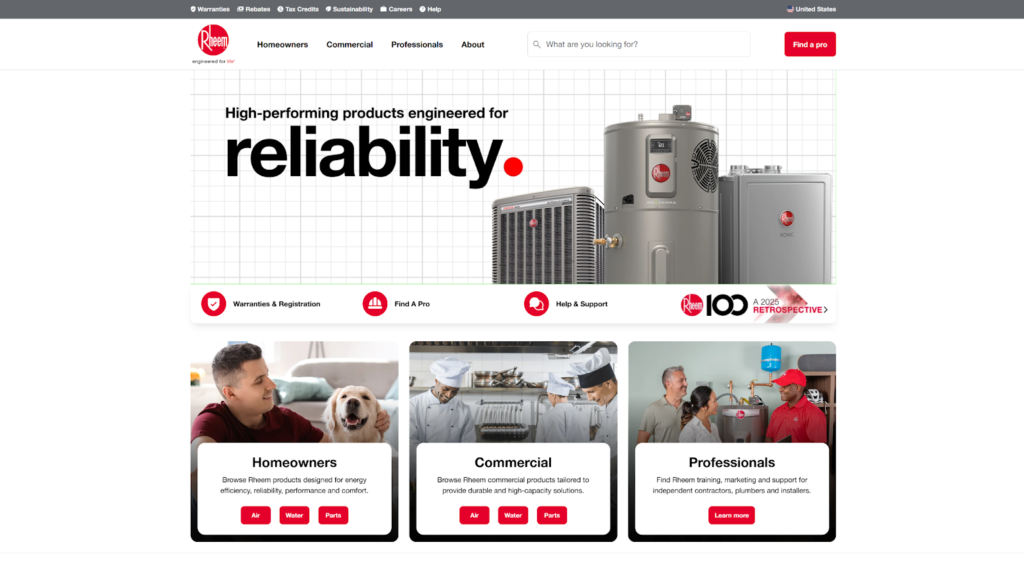
Since 1925, Rheem has designed and produced water-heating and climate-control solutions for homes and businesses worldwide. With a focus on energy efficiency and sustainability, it offers a comprehensive range of products to meet varying household and commercial needs.
The company’s water heating lineup includes tankless systems, gas and electric storage tanks, hybrid electric heat pump water heaters, and solar-assisted models. Each system is engineered to reduce energy consumption while maintaining reliable hot water delivery, with hybrid models leveraging ambient air to maximize efficiency and minimize emissions.
Rheem combines innovation and global reach to deliver products that balance comfort, performance and environmental responsibility. Its ongoing research and engineering initiatives ensure homeowners have access to advanced, energy-efficient water-heating solutions.
Comparing Energy-Efficient Water Heater Solutions
Choosing the right energy-efficient water heater involves more than price or brand name. The comparison below provides a clear snapshot of how each brand supports energy-efficient water heating, helping homeowners identify solutions that align with their household needs, budget and sustainability goals.
| Ingram’s Water & Air Equipment | A. O. Smith | Rheem | |
| Product Range | Indirect and tankless water heaters, filtration systems, and HVAC | Heat pump, gas, electric, tankless water heaters, and filtration and softening systems | Tankless, gas and electric tanks, hybrid heat pump, solar water heaters, and boilers |
| Energy-Efficient Options | Tankless and indirect heaters for lower energy use | Heat pump and tankless models, Energy Star certified | Hybrid electric heat pumps, tankless, solar-assisted systems |
| Technology Focus | Integrates water heating with filtration and whole-home systems | Advanced water heating and water treatment solutions with global innovation | Sustainable water heating with hybrid, solar and high-efficiency gas/electric models |
| Distribution | Ships nationwide via online platform | Global operations with manufacturing and distribution in North America, Europe and Asia | Global presence with more than 50 brands and extensive residential and commercial coverage |
| Additional Benefits | Combines water heating and filtration for health and energy savings | Emphasizes reliability, efficiency and sustainability | Strong focus on hybrid and renewable technologies, with federal and local rebate incentives |
Additional Factors to Consider Before Installing an Energy-Efficient Water Heater
Even the most efficient appliance requires the right installation environment to perform well. These additional considerations often influence long-term performance and energy savings:
- Installation location and airflow: Heat pump water heaters extract heat from the surrounding air, so they perform best in spaces with adequate airflow and stable temperatures, such as basements, garages or utility rooms. Proper placement helps maintain efficiency and prevents performance loss.
- Household hot water demand: The number of occupants, bathrooms and water-using appliances influences the required system capacity. Choosing a water heater that matches peak demand helps ensure efficient operation without excessive energy consumption.
- Climate conditions: Local climate can affect performance, particularly for systems that rely on ambient heat, such as heat pumps and solar water heaters.
- Fuel availability and energy costs: The efficiency and operating costs of a water heater can vary depending on whether it uses natural gas, solar energy, propane or electricity. Comparing local energy prices helps determine which fuel source delivers the best long-term savings.
- Pipe and tank insulation: Heat loss from hot water pipes and storage tanks can increase energy consumption. Insulating pipes and tanks helps maintain water temperature and reduces the workload placed on the water heater.
- Maintenance requirements: Regular maintenance tasks like flushing the tank, removing mineral buildup and inspecting components help maintain system efficiency and extend equipment lifespan.
- Available rebates and incentives: Many governments and utility providers offer rebates or tax credits for installing high-efficiency water heaters, particularly heat pump models. These programs can significantly reduce up-front installation costs.
Choosing the Right Energy-Efficient Water Heater for Your Home
Upgrading to an energy-efficient water heater allows homeowners to enjoy reliable hot water, lower energy bills and a smaller environmental footprint. By considering efficiency ratings, system type, household needs and fuel options, you can select a solution that maximizes comfort and long-term savings while supporting sustainable home energy use.