Estimated reading time: 11 minutes
Last updated on June 23rd, 2026 at 07:14 am
Most break-ins don’t involve picking a lock. They involve kicking a door until the frame gives way. That’s worth knowing before you spend an afternoon comparing deadbolt brands — because knowing how to choose the right lock for your door is only part of the answer. The door itself, and the frame it hangs in, is often the real weak point.
That said, the wrong lock in the wrong place is still a genuine problem. A bedroom privacy lock on a front entrance obviously won’t cut it. A double-cylinder deadbolt on a door next to a glass panel is more dangerous than it sounds. And a Grade 1 deadbolt mounted on a hollow-core door is security theatre — the hardware is fine, but the door it’s sitting in will fail first.
Here’s how to actually match a lock to a door, without overcomplicating it.
Why the Door Matters as Much as the Lock
Before you look at a single lock, look at the door.
Solid-core doors are dense and heavy — knock on one and there’s no give. They can support heavy-duty hardware without issue. Hollow-core doors are the lightweight interior type that produce a slightly hollow sound when tapped. They’re fine for bedroom privacy, but they’re not adequate for exterior use regardless of what lock you put on them.
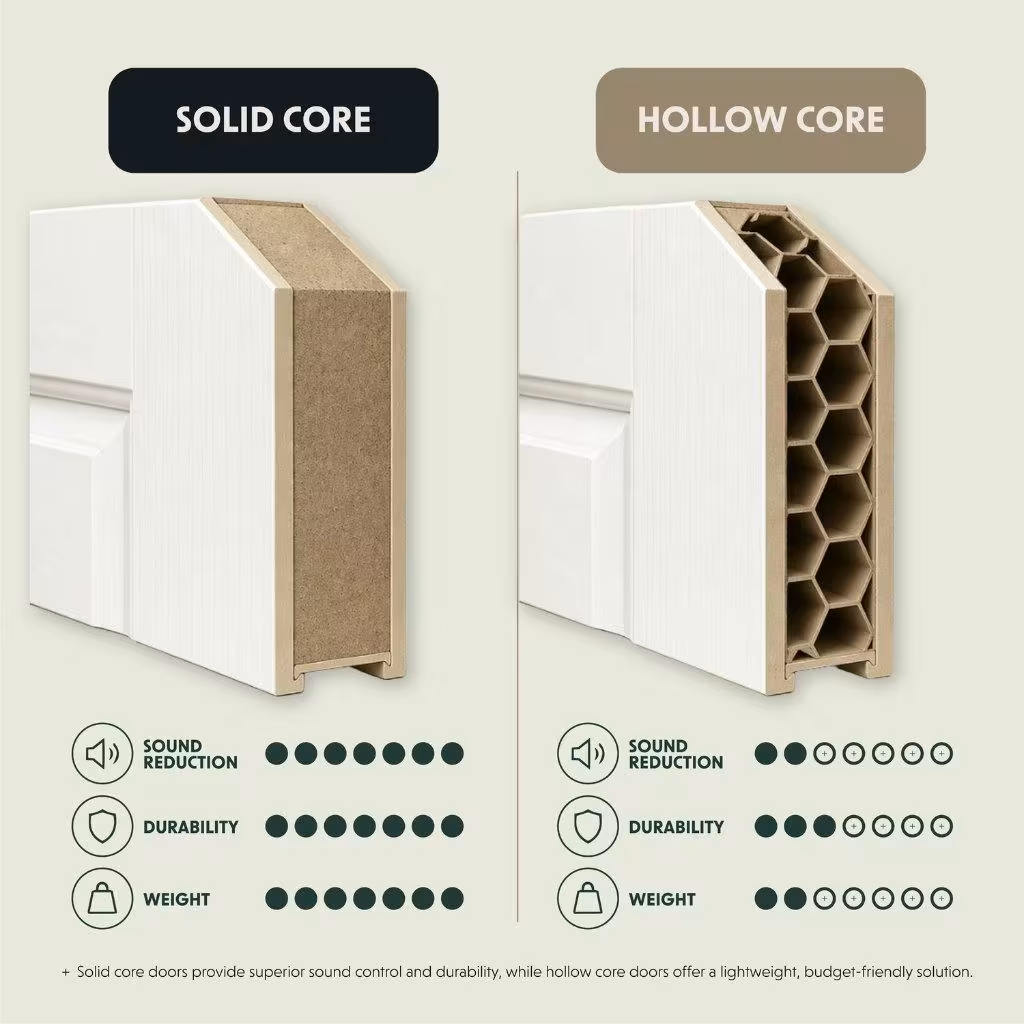
If you’re upgrading an exterior door and it turns out to be hollow-core, the smarter investment is often a door replacement rather than a lock upgrade. The frame matters too. A strike plate held in with short screws is a well-known vulnerability — the door frame splinters with a single hard kick. Three-inch screws that reach into the stud behind the frame, or a reinforced steel strike plate, close a gap that a lot of expensive lock upgrades quietly leave open.
Front and Side Entrance Doors: What Actually Works
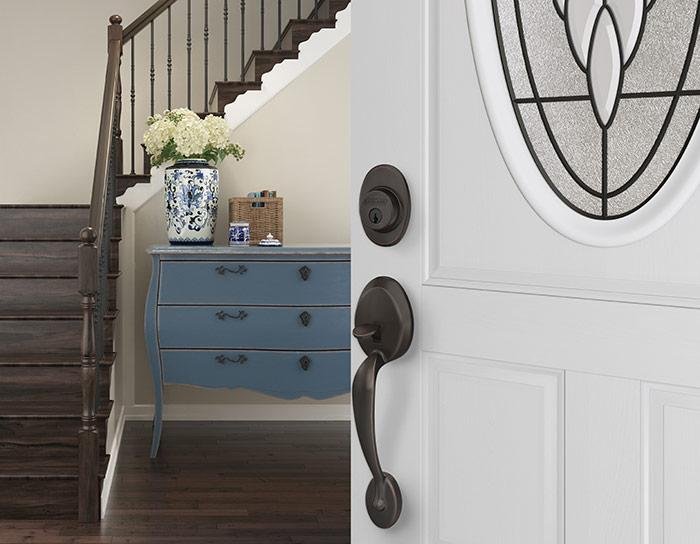
Your main entrance needs two things working together: a keyed entry knob or lever for everyday use, and an independent deadbolt for actual security.
The deadbolt is the important one. Look for ANSI Grade 1 or Grade 2, a throw bolt of at least one inch, and ideally anti-pick pins and an anti-drill plate for anything that serves as a primary entry point. Grade 1 is the highest residential standard — it’s what security professionals consistently recommend for front doors, and it’s rarely much more expensive than Grade 2 at most hardware stores.
The Double-Cylinder Deadbolt Trade-Off
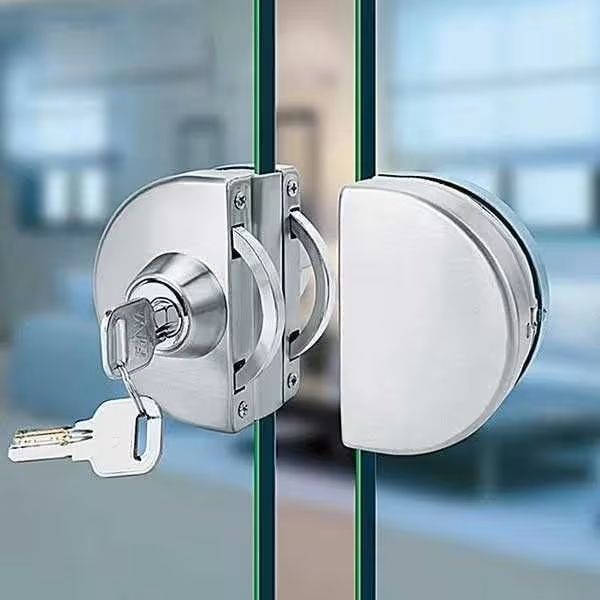
Double-cylinder deadbolts require a key to open from both the inside and the outside. That sounds like an upgrade, especially for doors that have glass panels nearby — if someone breaks the glass, they still can’t reach in and twist a thumb-turn to get in. The problem is fire.
In an emergency, needing to locate a key before you can exit a burning building is a genuine danger. Some building codes restrict double-cylinder deadbolts for exactly this reason — worth checking locally before you install one. If you do go this route, a key needs to hang within arm’s reach of the lock at all times, and every adult in the household needs to know where it is.
For a front door with glass panels, a better option for most people is a Grade 1 single-cylinder deadbolt with a hardened steel shroud that makes the thumb-turn awkward to grip even if someone reaches through broken glass.
Smart Locks on Front Doors
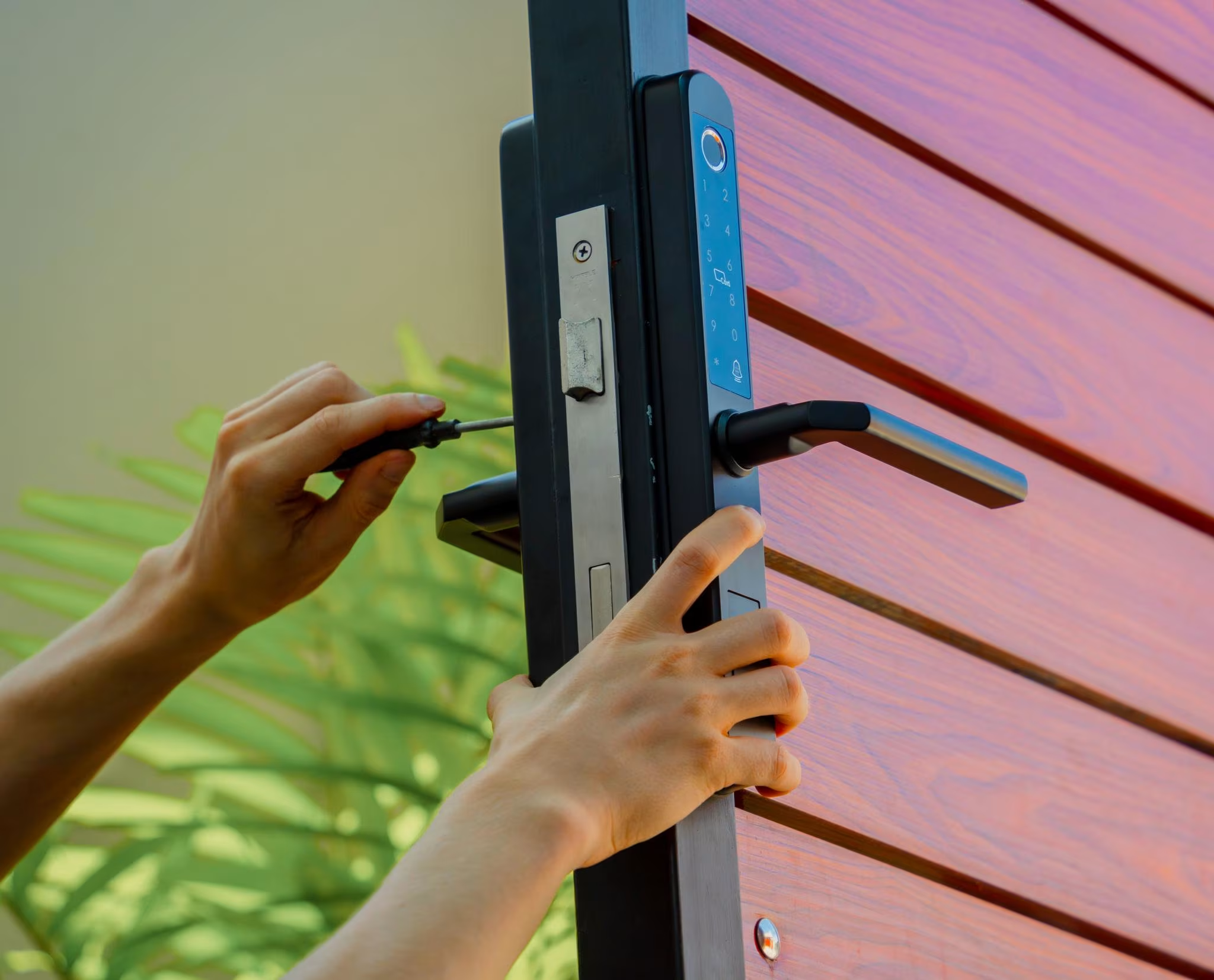
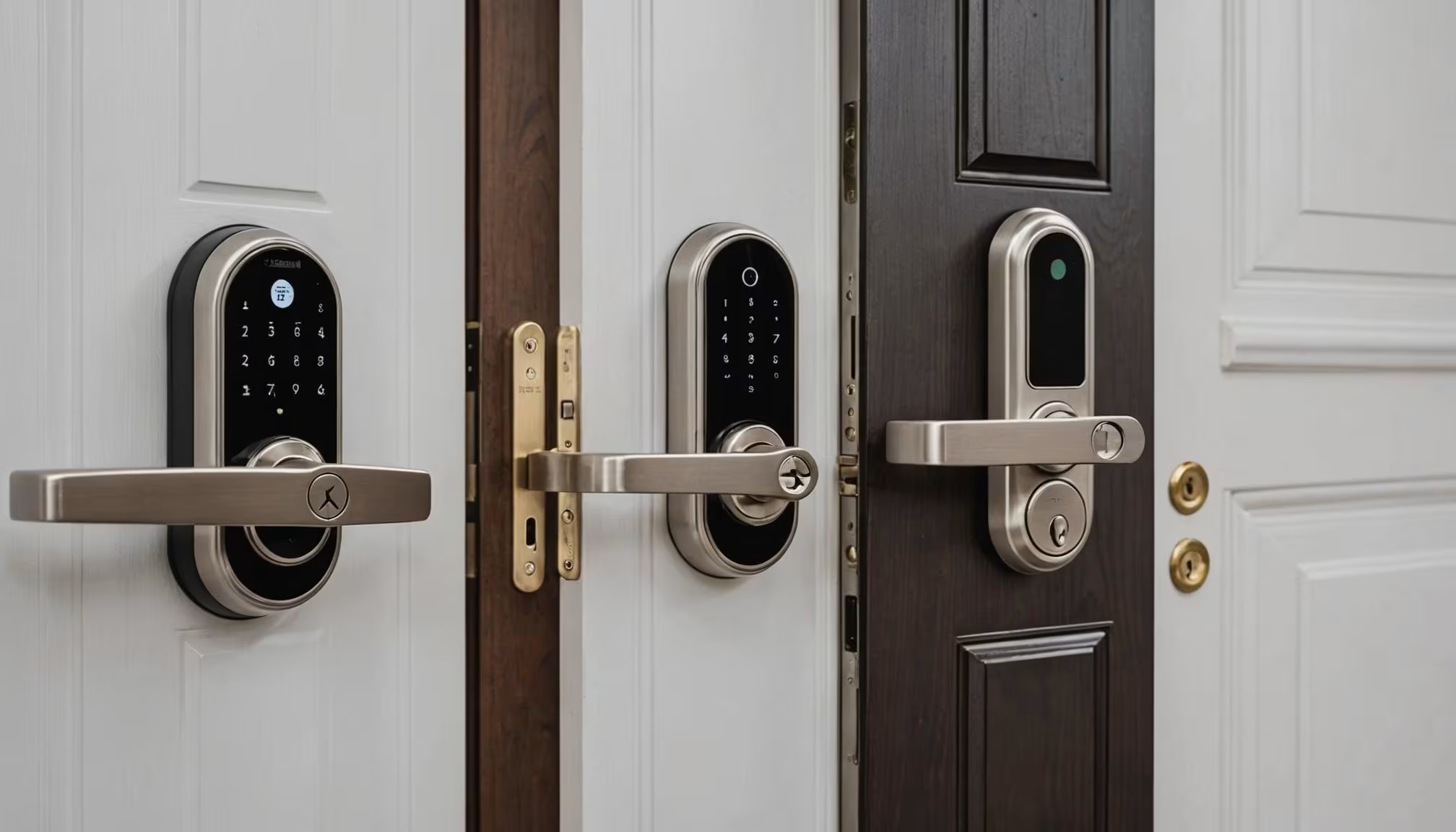
Smart locks are a legitimate choice here, and the convenience is real. Keypad codes eliminate the need to carry keys, app access lets you let in a tradesperson remotely, and temporary codes are easy to set and delete. The technology has matured considerably — reliability is no longer the concern it was several years ago.
A few practical things to check before buying: make sure the door prep (the drilled hole pattern) is compatible with your chosen smart lock, since most are designed for standard cylindrical locksets but not all. And for rentals or apartments, some landlords don’t allow modifications to the existing cylinder — there are smart locks designed to mount over an existing deadbolt without drilling, which is worth knowing.
One thing smart locks don’t do: make a weak door stronger. They’re only as secure as the door and frame they’re installed on. Upgrading the lock technology on a hollow-core door with a flimsy strike plate doesn’t actually improve security.
For a broader look at home safety beyond just door hardware, these home safety tips cover the full picture.
Interior Doors: Privacy, Not Security
Bedroom and bathroom doors don’t need to resist forced entry. They need to offer a moment of privacy and a clear signal that someone’s inside.
Privacy locksets are the right hardware here. They lock from the inside with a push-button or thumb-turn, and most can be opened from the outside with a small emergency tool — a thin pin or flathead screwdriver through a small hole in the outside handle. That’s intentional. If a child locks themselves in a bathroom, you need a way in without breaking the door.
Don’t install a keyed entry lock or a deadbolt on a bedroom door unless there’s a specific reason for it — a rental room with a lodger who needs independent access, for example. In a family home, it creates more inconvenience than security.
Passage sets — non-locking knobs or levers that simply latch — are right for pantries, linen closets, and any door that just needs to stay closed. They’re the correct hardware for a lot of interior applications that people default to locking unnecessarily.
Garage, Basement, and Utility Doors: The Overlooked Weak Points
Utility doors are where a lot of homes are quietly under-secured. A garage side door or basement entry is often a secondary access point that gets targeted specifically because it’s less visible from the street and more likely to have older hardware.
The approach that works well here: a keyed entry lever or knob for daily use, paired with an independent deadbolt. Two-point locking on a utility door is simple and effective.
Electronic keypads make particular sense for garage side doors — family members can come and go without a physical key, and the code is straightforward to change if needed. They’re not a luxury upgrade in this context; they’re just practical.
For basement doors or sheds where glass is nearby: this is where a double-cylinder deadbolt actually makes more sense than it does on a front door, because these spaces are accessed less often and the fire egress concern is much lower. Even so, be consistent about where the key lives.
Smart Locks: Convenient, Not Magic
Smart lock technology has gotten genuinely good. Biometric fingerprint readers, keypad codes, Bluetooth and Wi-Fi connectivity — these are reliable now in a way they weren’t five years ago. But a few practical things don’t often show up in product reviews.
Power and battery backup: Most smart locks run on AA batteries and last several months. But if the battery runs out while you’re away from home, you need a plan. Many smart locks include a physical key cylinder as backup — that’s worth prioritising when you’re choosing. Some models allow emergency power via an external battery pack held against the sensor.
Rental and apartment compatibility: Check before buying. Many landlords don’t permit modifications that replace the existing cylinder. Some smart locks are specifically designed to install over an existing deadbolt without door modifications — these are the ones to look at if you’re renting.
The security reality: A smart lock on a solid-core door with a reinforced frame is genuinely secure. A smart lock on a hollow-core door with a basic strike plate isn’t. The technology is a layer on top of the physical foundation — it can’t substitute for it.
What ANSI Grades Actually Mean
ANSI/BHMA grading is the standard used to rate residential lock performance. In practical terms:
Grade 1 is the highest residential rating. It’s tested for greater resistance to forced entry and more operational cycles. This is what you want for exterior doors.
Grade 2 is mid-range — fine for secondary exterior doors, but Grade 1 isn’t significantly more expensive and is usually worth the step up for a primary entrance.
Grade 3 is entry-level. Suitable for interior doors and very low-traffic applications. Not recommended for anything exterior.
Most packaging will list the ANSI grade clearly. If it doesn’t, look for the BHMA certification mark on the label.
How to Measure Your Door Before You Buy Anything
This is where most DIY lock replacements go wrong — not the installation, the buying. Three measurements matter:
Backset: The distance from the door’s edge to the centre of the lock hole. Standard residential backsets are 2⅜ inches or 2¾ inches. Most locksets accommodate both, but confirm before buying — a mismatched backset means the latch won’t align with the strike plate.
Cross bore: The diameter of the main hole drilled through the door face. Standard for residential cylindrical locks is 2⅛ inches. Older doors can be non-standard, so measure rather than assume.
Door thickness: Most exterior doors are 1¾ inches thick. Smart locks and some deadbolts have minimum and maximum thickness specs — if your door is unusually thick or thin, check the product listing before buying.
A tape measure and five minutes before heading to the hardware store prevents a wasted trip. If you’re replacing locks as part of a larger renovation, these home renovation tips for beginners are worth reading alongside this. And if you’re upgrading windows at the same time as doors — a common pairing — this guide on hiring a window installer covers what to look for in a contractor.
Quick Comparison: Lock Type by Door Location
| Door Location | Recommended Lock | Notes |
| Front/main entrance | Grade 1 deadbolt + keyed lever | Minimum 1-inch throw bolt |
| Side entrance | Grade 1 or 2 deadbolt + keyed lever | Same standard as front |
| Bedroom/bathroom | Privacy lockset | Emergency release from outside |
| Pantry/closet | Passage set | No lock needed — just a latch |
| Garage side door | Deadbolt + keyed lever or keypad | Two-point security recommended |
| Basement entry | Deadbolt + keyed lever | Consider double-cylinder if glass nearby |
| Shed/outbuilding | Heavy padlock or keyed deadbolt | Weatherproof finish essential |
Frequently Asked Questions
How do I choose the right lock for my front door?
For a front door, you want a Grade 1 or Grade 2 deadbolt with at least a 1-inch throw bolt, paired with a keyed entry knob or lever. Grade 1 is the higher residential standard and is usually worth the small price difference. If your door has glass panels nearby, consider a hardened steel shroud around the thumb-turn rather than a double-cylinder deadbolt — it’s safer in a fire.
What’s the difference between a deadbolt and a knob lock?
A knob lock has the locking cylinder inside the knob itself, which can be twisted or snapped off with basic tools. A deadbolt has a separate bolt that extends independently into the door frame. For any exterior door, a deadbolt is always the more secure option — a knob lock alone isn’t adequate for a front entrance.
Do I need a double-cylinder deadbolt for a door with glass panels?
It addresses one problem (someone reaching through broken glass to turn the thumb-turn) but creates another (fire egress). For most front doors, a Grade 1 single-cylinder deadbolt with a hardened shroud is a safer choice. Double-cylinder deadbolts make more sense on infrequently-used utility doors where fire risk is lower.
What lock do I need for a bedroom door?
A privacy lockset — not a keyed entry lock and not a deadbolt. Privacy locks give the person inside control and still allow emergency access from outside using a small pin or screwdriver. That’s exactly the right balance for a bedroom or bathroom.
Can I install a smart lock myself?
Most cylindrical smart locks — the type that replaces a standard deadbolt — are genuinely DIY-friendly and take 15 to 30 minutes with basic tools. Mortise locks, which are set into a deep pocket cut in the door edge, require more skill and the right tools; for those, most homeowners are better off calling a locksmith.
Does the finish matter on exterior door hardware?
Yes, practically. Solid brass, satin nickel, and oil-rubbed bronze with a proper coating hold up to outdoor conditions well. Cheap chrome finishes on exterior hardware tend to corrode within a few years. It’s also worth coordinating finishes across your door hardware — mismatched knobs and deadbolts look unfinished even when the security is solid.