Estimated reading time: 10 minutes
Last updated on June 23rd, 2026 at 07:00 am
There’s a specific kind of tired that comes from standing at the sink after dinner, hands in water that’s gone lukewarm, scrubbing the same pot you scrubbed yesterday, and the day before that. If your kitchen doesn’t have room — or plumbing — for a full-size dishwasher, you’ve probably scrolled past one of those compact countertop dishwashers online and wondered whether it’s an actual solution or just another appliance that ends up shoved in a cabinet after a month of novelty.
Fair question. It’s one I went back and forth on myself before actually digging into how these things work day-to-day. Let’s get into it properly.
What a Countertop Dishwasher Actually Does (and Doesn’t Do)
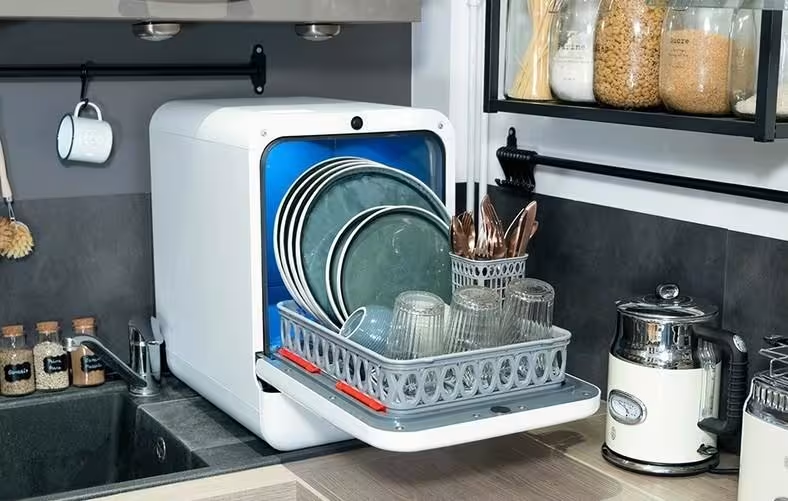
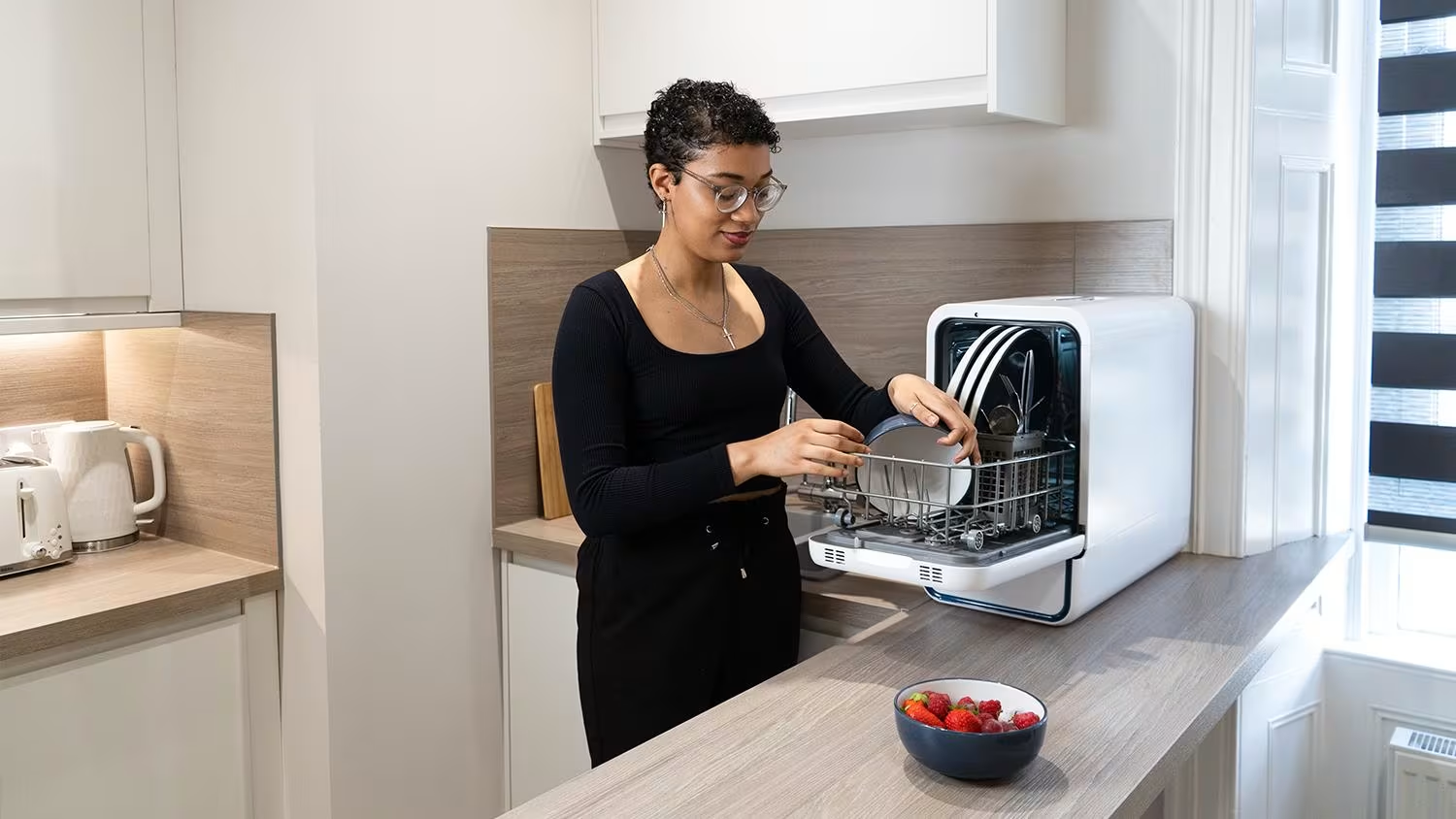
A countertop dishwasher is pretty much what it sounds like — a smaller version of a regular dishwasher that sits on your counter instead of being built into your cabinetry. Instead of being hardwired into your home’s plumbing, it connects to your kitchen faucet through an adapter, and it plugs into a normal wall outlet like a toaster or coffee maker. No installation appointment, no contractor, and in most rental situations, no landlord approval needed.
Functionally, it does the same core job as a full-size dishwasher. It runs wash cycles using hot water, and most models include a sanitize cycle that gets the water hot enough to actually kill bacteria — not just rinse food off. Plenty also have a drying function built in, though it’s worth setting expectations here: drying performance on countertop units is generally a step below what you’d get from a built-in, especially with plastic items that tend to hold onto water droplets longer.
Here’s how it stacks up against the two obvious alternatives:
| Countertop Dishwasher | Hand Washing | Built-In Dishwasher | |
| Cost | $200-$500 | Free (but costs time) | $400-$1,200+ plus installation |
| Capacity | 4-6 place settings | Unlimited, one item at a time | 8-14 place settings |
| Water/energy use | Lower per cycle | Variable, often higher | Efficient at larger volumes |
| Installation | Faucet adapter, plug into outlet | None | Requires plumbing |
| Best for | Small households, renters | Anyone, short-term situations | Larger households, frequent cooking |
What a countertop dishwasher doesn’t do is replace a full-size unit in a busy family kitchen — and honestly, it’s not really designed to. It’s solving a narrower, more specific problem: getting everyday dishes properly clean and sanitized without standing at the sink, in a space that genuinely can’t fit (or afford) a built-in.
Are Countertop Dishwashers Worth It? Here’s Who They’re Actually For
This is really the question that matters, and the honest answer comes down almost entirely to how many dishes your household actually generates in a day — not to anything about the appliance’s quality.
Singles and Couples
This is where countertop dishwashers genuinely earn their keep. If it’s just you, or you and a partner, your daily dish pile — a couple of plates, some glasses, a mug or two, maybe a pan — fits comfortably into one cycle. For this group, it’s not an exaggeration to say it can replace hand-washing almost entirely. Load it up after dinner, run it overnight, unload it in the morning. That’s the whole routine.
The time savings here are real, too. Hand-washing dishes for one or two people might only take ten or fifteen minutes a day, but that adds up — roughly the equivalent of ten extra days a year if you tally up the minutes. For someone who’s already stretched thin, getting that time back, even in small daily increments, is worth more than it sounds on paper.
Renters and Small Apartments
If you’re renting and don’t have a dishwasher hookup — and let’s be honest, getting one installed in a rental is usually more hassle than it’s worth — a countertop dishwasher is one of the few kitchen upgrades you can actually take with you when you move. No permanent changes to the apartment, no holes drilled, nothing left behind for the next tenant. Unplug it, disconnect the faucet adapter, pack it in a box, done.
This also solves a quieter problem a lot of renters deal with: not wanting to ask permission for every small change to a space they don’t own. A countertop dishwasher doesn’t require that conversation at all.
RVs and Vacation Homes
Portability matters a lot in this category, and most countertop dishwashers are light enough to move without serious effort — usually somewhere in the 25-40 pound range, depending on the model. For an RV where every inch of counter and storage space is contested territory, or a vacation home that sits empty for months at a time, the lower water usage per cycle compared to running a tap for ten minutes of hand-washing is a genuinely practical benefit, not just a marketing point.
There’s also a hygiene angle here that matters more in these settings than people expect. Vacation homes and RVs often go through stretches without regular cleaning, and a sanitize cycle that properly disinfects dishes between visits is more useful than it sounds.
Larger Families (the Honest “Probably Not” Section)
Here’s where I’ll be direct instead of hedging: if you’re cooking three meals a day for four or more people, a 4-6 place setting capacity is not going to cover your household’s dish load. You’ll likely end up running the dishwasher two or three times a day just to keep up — and at that point, you’ve lost a meaningful chunk of the convenience you bought it for.
This doesn’t mean it’s useless in a bigger household. It can absolutely help soak up the constant stream of cups, kid plates, snack bowls, and after-school dishes that pile up between main meals — the stuff that doesn’t justify running a full-size dishwasher but still needs washing. But if the expectation is that it’ll replace your dishwashing routine entirely for a family of four or five, that’s not a realistic picture, and it’s worth knowing that going in rather than discovering it after the return window closes.
The Capacity Question: What “4-6 Place Settings” Really Means
This number gets repeated constantly in product listings, and it sounds perfectly reasonable until you actually try to picture what fits.
In practical terms, 4-6 place settings translates to roughly one person’s dishes for an entire day — breakfast, lunch, and dinner plates, a few glasses or mugs, basic cutlery — or one round of dinner dishes for a couple, including a pot or two if they’re not too large.
What it’s not enough for is a full day’s worth of dishes for two people plus all the cooking equipment that comes with actually preparing meals from scratch. And if you cook a lot — multiple pots, baking sheets, large mixing bowls — those bigger items often won’t fit comfortably in the smaller racks regardless, which means you’ll be hand-washing those pieces no matter which type of dishwasher you own.
The practical way to think about it: a countertop dishwasher handles your everyday rotation — plates, bowls, glasses, mugs, basic cutlery — while larger cookware stays in a separate hand-wash pile either way. If you’re weighing this alongside other small-space solutions, it’s worth browsing small kitchen appliance ideas for renters, since counter space planning and appliance choices tend to be connected decisions rather than separate ones.
Installation Reality Check: Will It Fit Your Faucet?
This is the detail that trips people up most often, and it’s something most product pages barely touch on.
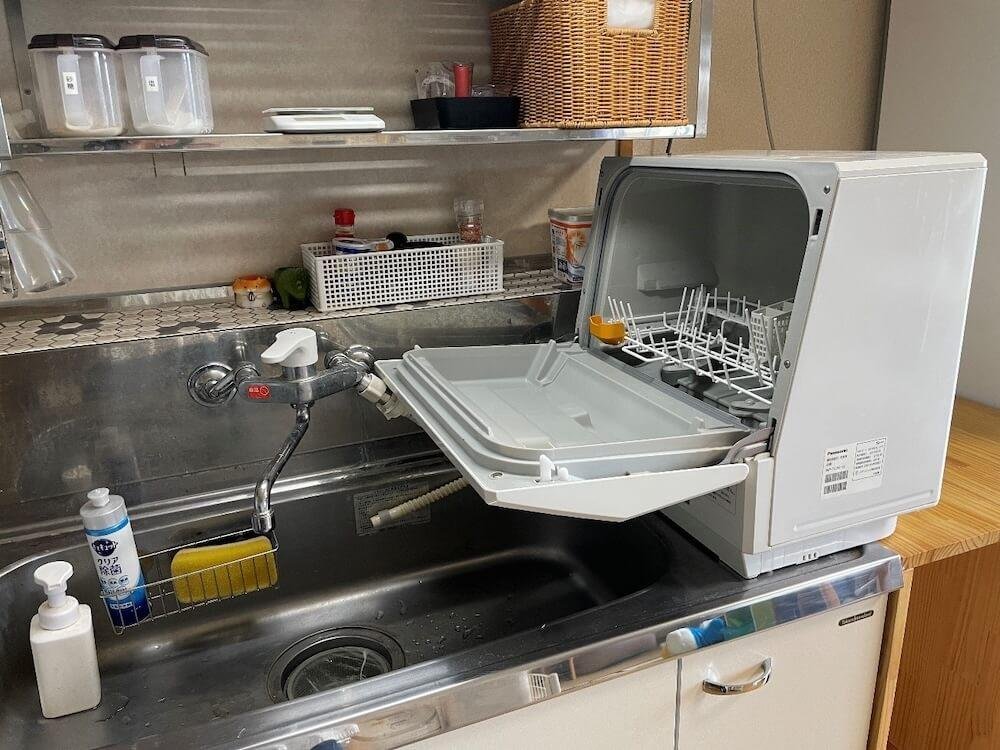
Most countertop dishwashers ship with an adapter built for standard threaded kitchen faucets — the type where the spout end unscrews to reveal threading underneath. If that’s what you’ve got, installation really is as simple as the marketing suggests: unscrew the aerator, screw on the adapter, connect the hose, and you’re ready to go.
Where things get complicated is with pull-down or pull-out sprayer faucets, and faucets that have an integrated water filter built into the spout — both increasingly common in newer kitchens. These setups often don’t match the included adapter cleanly, and you may need to order a separate adapter to make it work. It’s usually inexpensive, but it’s an extra step, an extra few days of waiting, and an extra bit of frustration if you weren’t expecting it.
Before buying, take a minute to actually look at your faucet. Does the spout tip unscrew? Is there a filter cartridge built into it? A quick check now can save you a return shipment and a week of the dishwasher sitting unused on your counter.
One more thing worth addressing honestly: noise. Countertop dishwashers tend to run louder than built-in units, mainly because there’s no surrounding cabinet to absorb the sound — it’s just sitting out in the open. It’s not jarring or alarm-bell loud, but it’s noticeable. In a studio apartment or open-plan living space, running it during a phone call or while watching TV in the same room is something you’ll likely notice. Most people solve this simply by running it overnight or while they’re out of the apartment, which works fine since cycle times tend to run longer than built-in dishwashers anyway — often somewhere in the 60-120 minute range.
Countertop vs. Portable Dishwasher: What’s the Difference?
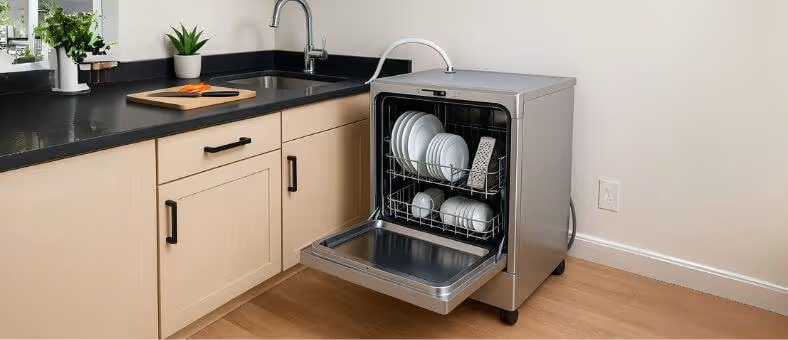
These two categories get mixed up constantly when people are shopping, and it’s worth sorting out before you add anything to a cart.
A countertop dishwasher sits on your counter, is generally compact and lightweight, and connects via a faucet adapter for both incoming water and drainage — water comes in through the adapter, and a drain hose runs the used water back out into your sink.
A portable dishwasher is a different animal entirely — closer in size to a mini fridge, sits on the floor on its own wheels, and gets rolled up to the sink when you want to run a cycle, using similar faucet-adapter connections. The trade-off is that portable units offer capacity much closer to a full-size built-in, often 8 place settings or more.
If counter space is your limiting factor, countertop is the obvious choice. But if you’ve got floor space to spare and counter space is the precious commodity, a portable unit might actually serve you better — especially for households a bit larger than “just one or two people.” That’s a comparison worth digging into further in a dedicated countertop vs. portable dishwasher breakdown if you’re genuinely torn between the two.
FAQ
Are countertop dishwashers worth it?
For singles, couples, renters, and small households, yes — they genuinely replace most hand-washing and install without any plumbing changes. For larger families cooking multiple meals a day, the limited capacity means running several cycles daily, which cuts significantly into the convenience.
How many dishes does a countertop dishwasher hold?
Most hold 4-6 place settings, which works out to roughly one person’s daily dishes, or one round of dinner dishes for a couple including a pot or two — but not a full day’s dishes for multiple people plus cookware.
Do countertop dishwashers need a special faucet?
Most work with standard threaded kitchen faucets using the included adapter. Pull-down sprayer faucets or those with built-in filters often need a separate adapter purchased on top, so it’s worth checking your faucet type before ordering.
What’s the difference between a countertop and portable dishwasher?
A countertop dishwasher sits on your counter and is smaller and lighter, while a portable dishwasher sits on the floor on wheels and offers capacity much closer to a full-size unit. Both connect through a faucet adapter without permanent plumbing changes.
Are countertop dishwashers loud?
Yes, noticeably louder than built-in dishwashers, since there’s no cabinet to absorb the sound. It’s not extreme, but in a small or open-plan space, you’ll hear it running — most people just run it overnight.
Can you use a countertop dishwasher every day?
Yes — most are built for daily use, and for one or two people, a single daily cycle typically covers that day’s dishes without issue.
Do countertop dishwashers dry dishes well?
They do dry dishes, but drying performance is generally weaker than a built-in dishwasher, particularly with plastic items, which may need a few extra minutes of air-drying after the cycle ends.