
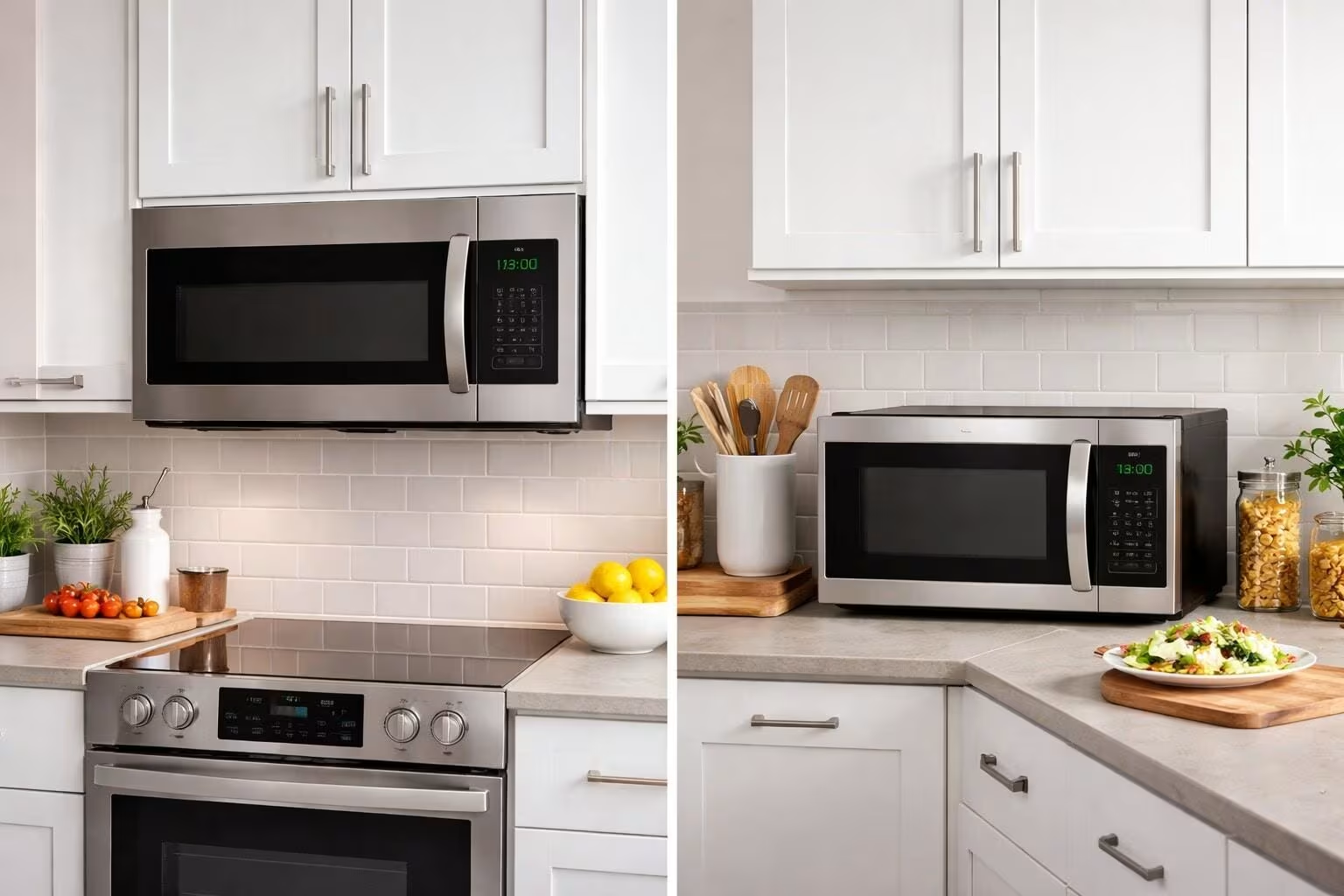
Estimated reading time: 10 minutes
Your old microwave just died, or maybe you’re standing in the middle of a kitchen renovation trying to figure out where this thing is even supposed to go. Either way, you’ve probably noticed there are a lot of options out there, and the prices swing wildly from “that seems too cheap to be safe” to “wait, that’s how much for a microwave?”
This microwave buying guide is meant to cut through that. Not by listing every spec ever invented, but by walking through the handful of decisions that actually matter: what type fits your kitchen, how much power you really need, which features are worth the extra money, and what you should expect to actually spend once everything’s said and done.
The Quick Answer
If you’re short on time, here’s the gist: countertop microwaves are the easiest option for most people and work in almost any kitchen, starting around $50 for basic models and running up to $300 for larger, feature-packed ones. Over-the-range (OTR) microwaves free up counter space and double as a vent fan, typically costing $150-$500 plus installation. Built-in microwaves give you the cleanest look but cost the most—usually $300-$1,000+—and often need professional installation.
For wattage, 900-1,100 watts is the sweet spot for most households. Anything below 800 watts works fine for reheating but will frustrate you if you’re cooking from scratch.
The Three Types of Microwaves (And Who Each One’s Actually For)
Countertop Microwaves: The No-Drama Option
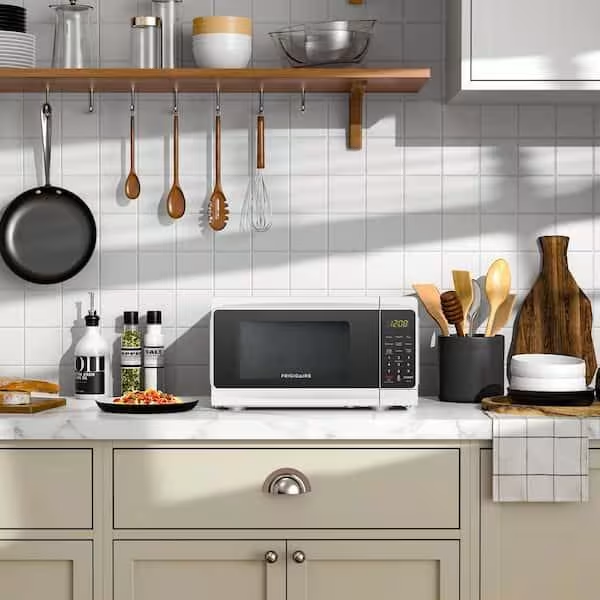
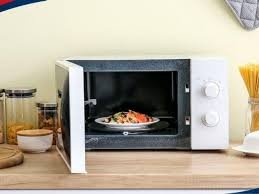
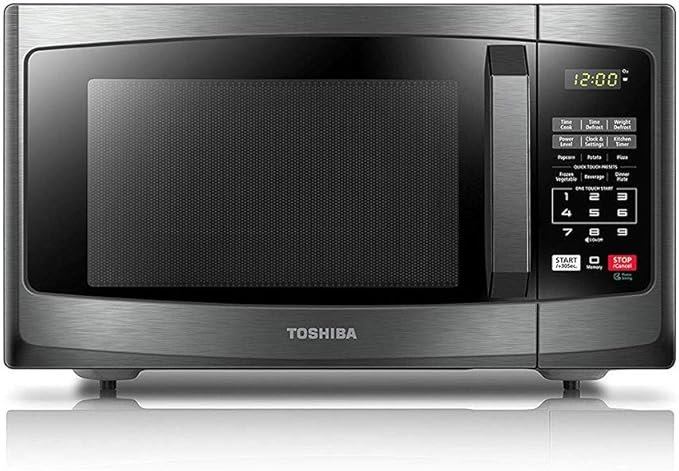
Countertop microwaves are exactly what they sound like—you plug them in, set them on a counter, and you’re done. No installation, no measuring cabinets, no calling anyone.
They range from small 700-watt units that barely take up space to larger 1,200+ watt models that can handle a full dinner plate. This is the obvious choice if you’re renting, if you’re not ready to commit to a kitchen layout, or if you just want something that works without a project attached to it.
The trade-off is counter space. If your kitchen is already tight on prep area, a countertop microwave is one more thing taking up real estate. For smaller kitchens, this is often the deciding factor that pushes people toward an OTR or built-in instead—even though countertop is usually the cheaper and easier route.
Over-the-Range (OTR) Microwaves: Two Jobs, One Appliance
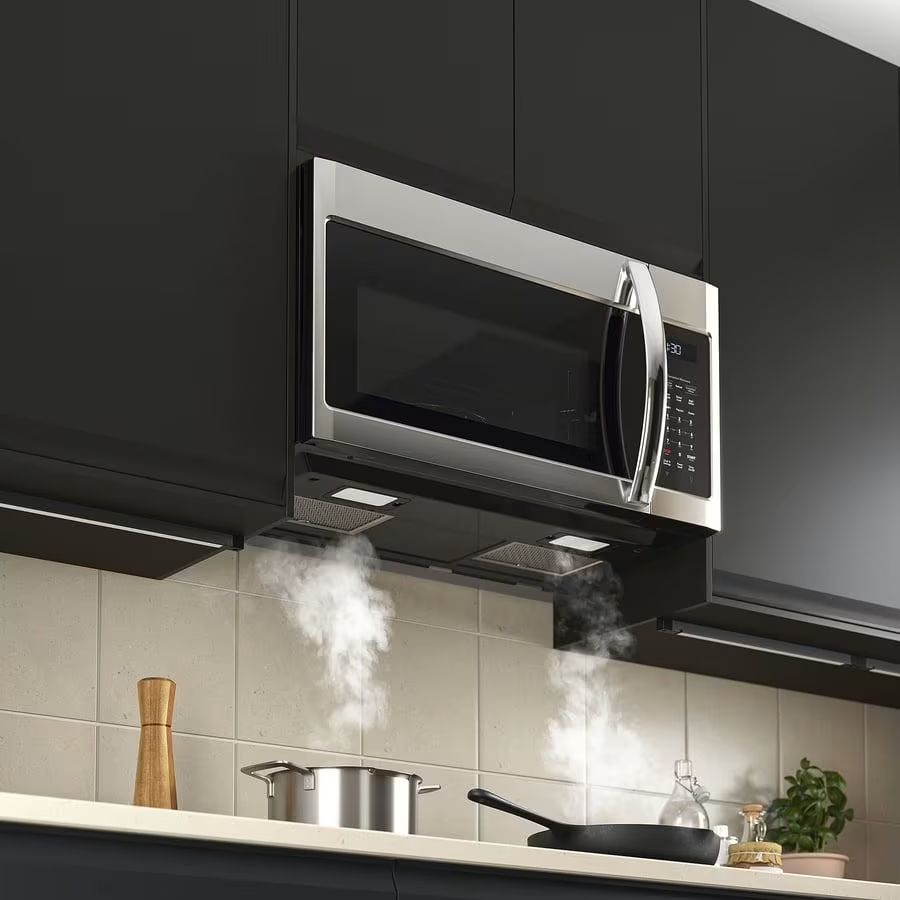
OTR microwaves mount above your stove, which does two things at once: it gets the microwave off your counter, and it acts as a vent for your cooktop, pulling steam, smoke, and odors up and out.
Here’s the honest take, though—OTR microwaves are not as good at venting as a dedicated range hood. If you do a lot of high-heat cooking (searing, stir-frying, anything that produces a lot of smoke), you’ll probably still smell it in your kitchen. For most everyday cooking, it’s good enough. For serious home cooks, it can feel like a compromise.
OTR units typically top out around 1,100 watts, and pricing runs $150-$500 for the unit itself. Installation is where people tend to get caught off guard. These need a dedicated electrical line run to an outlet inside the cabinet above the unit, and the exhaust needs to vent somewhere—either up through the roof or out an exterior wall. If you’re replacing an existing OTR with a similar-sized model, this is usually straightforward. If you’re adding one where there wasn’t one before, you’re looking at real electrical and possibly carpentry work, which means budgeting for a contractor or electrician on top of the unit price.
Built-In Microwaves: The Polished Look, The Polished Price
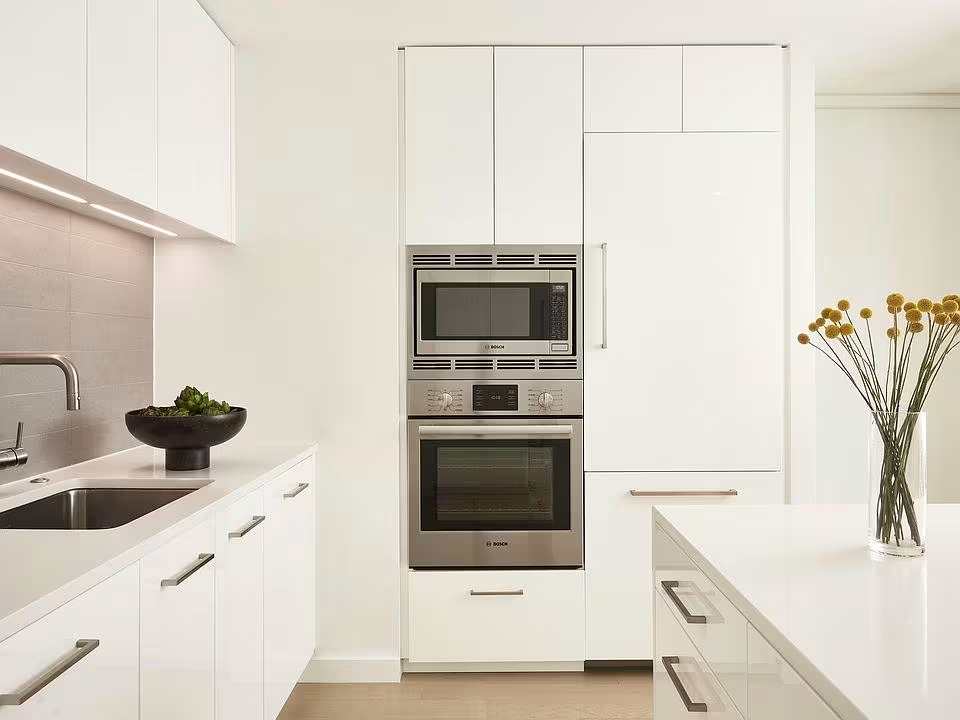
Built-in microwaves sit flush within a wall cavity or cabinet, sometimes as a standalone unit and sometimes stacked with a regular oven. Microwave drawers—built into the cabinetry under a counter—fall into this category too.
This is the type that makes a kitchen look intentional rather than like appliances were placed wherever they’d fit. It’s also the most expensive option, typically $300 on the low end and easily $1,000+ for high-end combo units that include convection cooking, broiling elements, and roasting accessories.
The catch here is precision. Built-in units need to match the exact dimensions of the cavity or cabinet opening, which means measuring carefully before you buy—not just eyeballing it. If you’re replacing an existing built-in with the same brand and size, that’s relatively simple. If you’re adding one where there wasn’t one before, or switching to a different size, you’re often looking at cabinetry modifications, which adds both cost and complexity.
One thing worth knowing: wattage for built-ins generally runs higher than countertop or OTR models, often 900 to 1,100+ watts, partly because these units are positioned as a more serious cooking appliance rather than just a reheating tool.
Wattage and Capacity: What Actually Matters
Wattage determines how fast your microwave heats food—nothing more mystical than that. Higher wattage means shorter cook times. Here’s how it breaks down in practical terms:
- 700-800 watts: Fine for reheating leftovers and basic defrosting, but you’ll need to add time to recipes written for higher-wattage microwaves, and unevenly heated food (cold in the middle, hot on the edges) becomes more common.
- 900-1,100 watts: This is the range most households should aim for. Fast enough for everyday cooking and reheating without much adjustment to standard cooking times.
- 1,200+ watts: Mostly found in larger countertop and built-in units. Noticeably faster, but unless you’re cooking large quantities regularly, the difference between 1,100 and 1,200 watts isn’t going to change your life.
Capacity, measured in cubic feet, is about interior space rather than speed. Most microwaves fall between 1 and 2 cubic feet. If you regularly heat large plates, casserole dishes, or multiple items at once, lean toward the higher end of that range. If it’s mostly mugs, bowls, and frozen meals, a smaller capacity won’t bother you and will take up less space.
Features Worth Paying For (And Ones You Can Skip)
Microwave listings love to throw a wall of features at you, but not all of them carry equal weight. Here’s a realistic breakdown:
Worth it for most people:
- Sensor cooking — this automatically adjusts time and power based on steam detected from your food, which genuinely takes the guesswork out of reheating. If you’ve ever microwaved something for the “recommended” time and ended up with a rubbery edge and a frozen center, this fixes that.
- Easy-to-use power level controls — this matters more than people expect. A microwave where adjusting power level requires three button presses and a manual is annoying every single day.
Nice-to-have, not essential:
- Quick keys and shortcut keys (popcorn, pizza, frozen vegetables, etc.) — convenient, but you’ll likely default to manually setting time anyway after the first few weeks.
- Sound control/beeper toggle — small thing, but if you’ve got a sleeping baby or work from home, being able to turn off the beep is one of those quality-of-life details you don’t notice until you have it.
Worth considering carefully:
- Convection cooking — this is the feature that turns a microwave into something that can also bake and roast, using a heating element and fan. It’s genuinely useful if you want one appliance to do more, especially in a small kitchen where a second oven isn’t realistic. But it adds cost, and microwaves still won’t brown or crisp food the way a real oven does—they’re fast, but they don’t caramelize. If you’re hoping convection mode will replace your oven entirely, it won’t quite get there, though it gets closer than a standard microwave.
Situational:
- Child locks — matters a lot if you have curious toddlers around; matters basically not at all otherwise.
- Removable racks — useful for convection cooking or heating two smaller items at once, but they do eat into your usable interior space, so factor that into capacity decisions.
What Microwaves Really Cost (Installation Included)
Here’s where a lot of guides get vague, so let’s get specific.
| Type | Unit Price | Installation | Realistic Total |
| Countertop | $50-$300 | None | $50-$300 |
| Over-the-Range | $150-$500 | Often $150-$400+ if new wiring/venting needed | $300-$900 |
| Built-In | $300-$1,000+ | Can range from minimal (direct replacement) to $300-$600+ (cabinet modifications) | $400-$1,600+ |
The big takeaway: for OTR and built-in units, the sticker price on the microwave itself is often only part of the story. If you’re doing a direct swap—same brand, same size, existing wiring and venting already in place—installation can be minimal. If you’re changing the setup at all, budget accordingly and get a quote before you commit to a unit.
Brands Worth Considering
You don’t need to overthink brand choice, but sticking with established names tends to mean better parts availability and more consistent quality control over the years. Some of the most trusted names in the microwave space include Panasonic, GE, Samsung, LG, Whirlpool, KitchenAid, Maytag, Bosch, and Frigidaire. Budget-friendly options like Amazon Basics, Black & Decker, and Hamilton Beach are reasonable for countertop units where you’re not expecting a 10-year lifespan anyway.
What to Expect During Installation
For countertop microwaves, there’s nothing to expect—plug it in and you’re done.
For OTR microwaves, the process generally involves mounting brackets on the wall (look for tabs on the bottom of the bracket that slot into the back of the unit), feeding the power cord through a pre-drilled hole in the cabinet above, and securing the unit with screws through the top so it doesn’t tip forward. If venting needs to go through an exterior wall and there’s a stud in the way, that’s additional framing work—cutting the stud, adding a header and jack studs for support. This is the kind of job where having an electrician run the dedicated line before you start makes everything else go smoother.
For built-in microwaves, you’ll typically apply a spacer kit, remove the old unit if there is one, confirm the wiring connects properly to the new appliance, and then mount the new unit into the cavity using the included brackets. Precise measurements going in are what make this step painless or painful.
If any of this sounds like more than you want to take on yourself, that’s a completely reasonable place to bring in a professional—especially for the electrical and venting work on OTR units, which isn’t really a DIY-friendly step for most people.
FAQ
Is 1100 watts good for a microwave?
Yes, 1,100 watts is on the higher end of the typical range and will heat food quickly with minimal adjustment to standard cooking times. It’s a solid choice if you do more than just reheating.
How do I choose the right microwave?
Start with type—countertop if you want simplicity, OTR if you need counter space and some venting, built-in if you want a seamless look and don’t mind the higher cost. From there, aim for 900-1,100 watts for general use, and choose capacity based on what you typically heat (mugs and plates vs. larger dishes).
Is it safe to microwave paper?
Plain paper towels and paper plates without wax coatings or printed inks are generally safe for short heating times. Avoid paper with metallic printing, glossy coatings, or recycled paper with unknown additives, as these can pose a fire risk.
How do you clean a microwave?
A simple method is heating a bowl of water with a splash of vinegar or lemon juice for a few minutes, which loosens grime with steam, then wiping down the interior with a damp cloth. For a deeper clean and routine maintenance tips, our guide to cleaning appliance interiors naturally covers more on this.
How big should your microwave be?
Most households do well with 1 to 1.5 cubic feet of capacity. If you regularly heat large casserole dishes or cook for a bigger household, look toward 1.5-2 cubic feet. For replacements, measuring your existing cutout (for OTR or built-in) matters more than capacity alone, since the new unit needs to physically fit the space.
If you’re mid-renovation and still sorting out where everything goes, it might also be worth checking our kitchen renovation appliance checklist to make sure the microwave decision fits with everything else you’ve got planned.



 Whereas it comes an issue of adjustment to settle in a small flat we tried to eliminate less important things. But few accessories are too versatile that you can not deductive them such as microwave.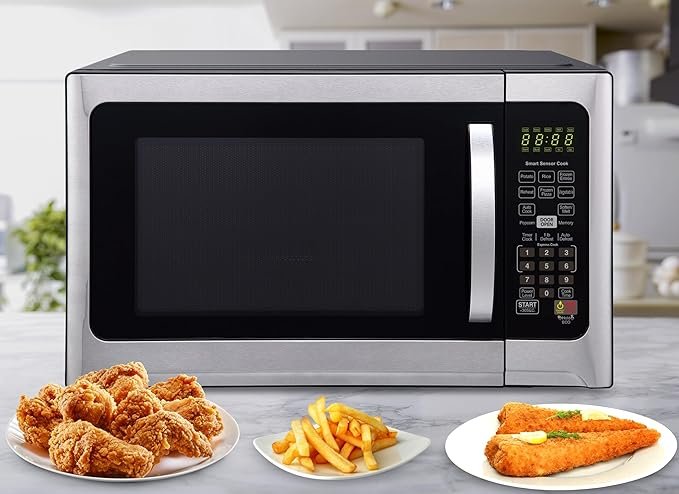
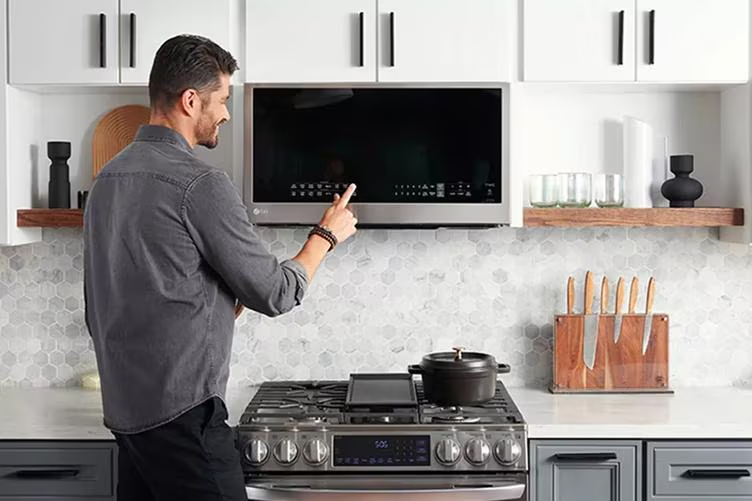
 Like its title, it is an expansion of the microwave as it is more powerful and efficient in your kitchen. It can be categorized up to its ventilation as a fully vented and ductless vented system. This item is available with an average watt’s consumer, spacious cooking space, and other catchy benefits.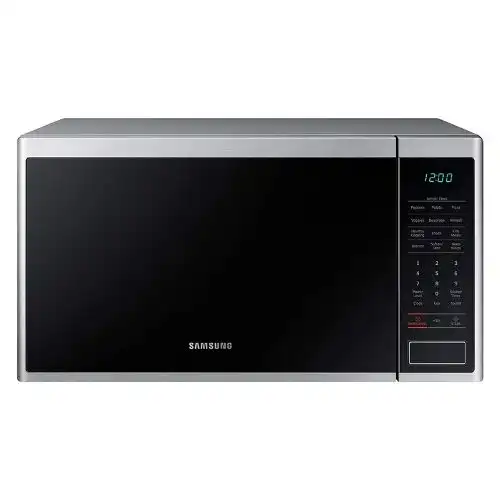
 Making an adjustment with perfect cooking and less cooking time is the usual war of every kitchen. And to end this war we purchased many kitchen appliances as they can save our time, and we can catch the food items at the exact time within they are perfectly made.