Estimated reading time: 11 minutes
Last updated on June 23rd, 2026 at 07:00 am
Six months in, that new sofa still looked great. A year later, the arms were pilling, the cushions had a permanent dent where everyone sits, and there was a faint stain near the corner that no amount of scrubbing fully lifted. Sound familiar?
Here’s the thing nobody tells you when you’re sofa shopping: the frame matters, the cushions matter, but the fabric is usually what determines whether your couch looks tired in two years or still looks decent in eight. And most people pick fabric based on how it feels in the showroom, which honestly tells you almost nothing about how it’ll hold up once real life starts happening to it.
So let’s actually talk through which sofa fabrics last, why, and — more importantly — which one makes sense for your specific household.
Quick Comparison: Sofa Fabrics at a Glance
| Fabric | Durability (Double Rubs) | Best For | Feel/Cost |
| Leather (full/top-grain) | Very high (won’t tear, but can scratch) | Classic look, no kids climbing/scratching | Higher cost, premium feel |
| Microfiber | 15,000-30,000+ | Pets, kids, easy cleanup | Affordable, soft |
| Performance fabric (Crypton, Sunbrella) | 30,000-100,000+ | Heavy daily use, spills, sun exposure | Mid-to-high cost, varies in feel |
| Wool blends | 15,000-30,000 | Natural look, moderate use, no pets | Mid-to-high cost, natural texture |
| Linen blends | 15,000-25,000 (tightly woven) | Breathable, lower-traffic rooms | Mid cost, casual texture |
| Synthetic blends (poly/nylon/rayon) | 15,000-25,000+ | Sunny rooms, budget-friendly durability | Affordable, varies in feel |
Keep this table in mind as you read — it’s the short version of everything below.
The Most Durable Sofa Fabrics, Ranked by What Actually Holds Up
Leather
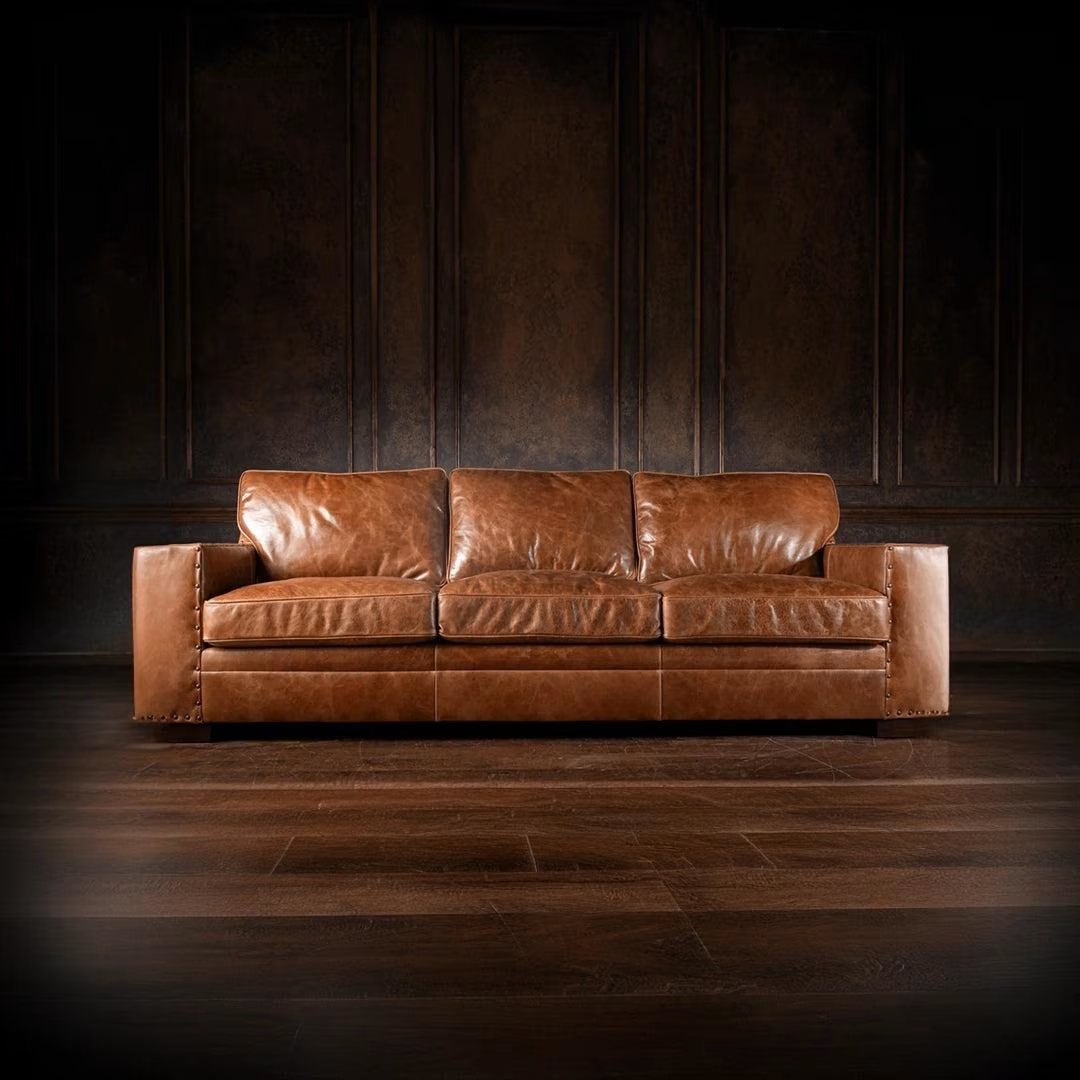
Full-grain and top-grain leather are about as close to “buy it once” as sofa fabric gets. It doesn’t pill, it doesn’t fade the way fabric does, and it actually looks better with age — that worn-in patina people pay extra for on vintage furniture happens naturally with leather over years of use.
But here’s the honest trade-off: leather scratches. If you’ve got a cat, assume there will be claw marks within the first year, no matter how careful everyone is. Leather also needs occasional conditioning — skip that for a couple of years and instead of a nice patina, you get dry, cracking leather that looks neglected rather than aged.
Best for: households without cats, people who don’t mind (or actually like) the look of leather aging, and anyone who wants a sofa that’s genuinely going to last a decade or more with basic care.
Microfiber
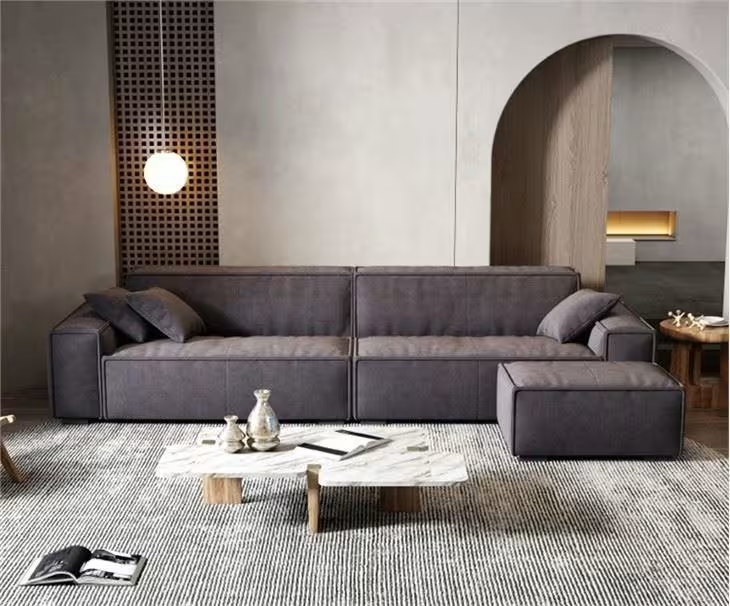
Microfiber is made from extremely fine polyester fibers woven so tightly that the surface feels almost suede-like. That tight weave is exactly why it holds up so well — spills bead up instead of soaking in, and it shrugs off everyday wear in a way a lot of natural fabrics just can’t.
If you’ve ever sat on a microfiber sofa after a few years with kids and pets, you’ll notice the arms might show a little wear, but it rarely looks “destroyed” the way a looser-weave fabric would. It’s also one of the easier fabrics to spot-clean — most stains come out with water and a little dish soap, no special products required.
Best for: households with kids and pets where easy cleanup matters more than a luxury feel. It’s not the most elegant fabric on the market, but it’s hard to beat for the price-to-durability ratio.
Performance Fabrics (Crypton, Sunbrella, and similar)
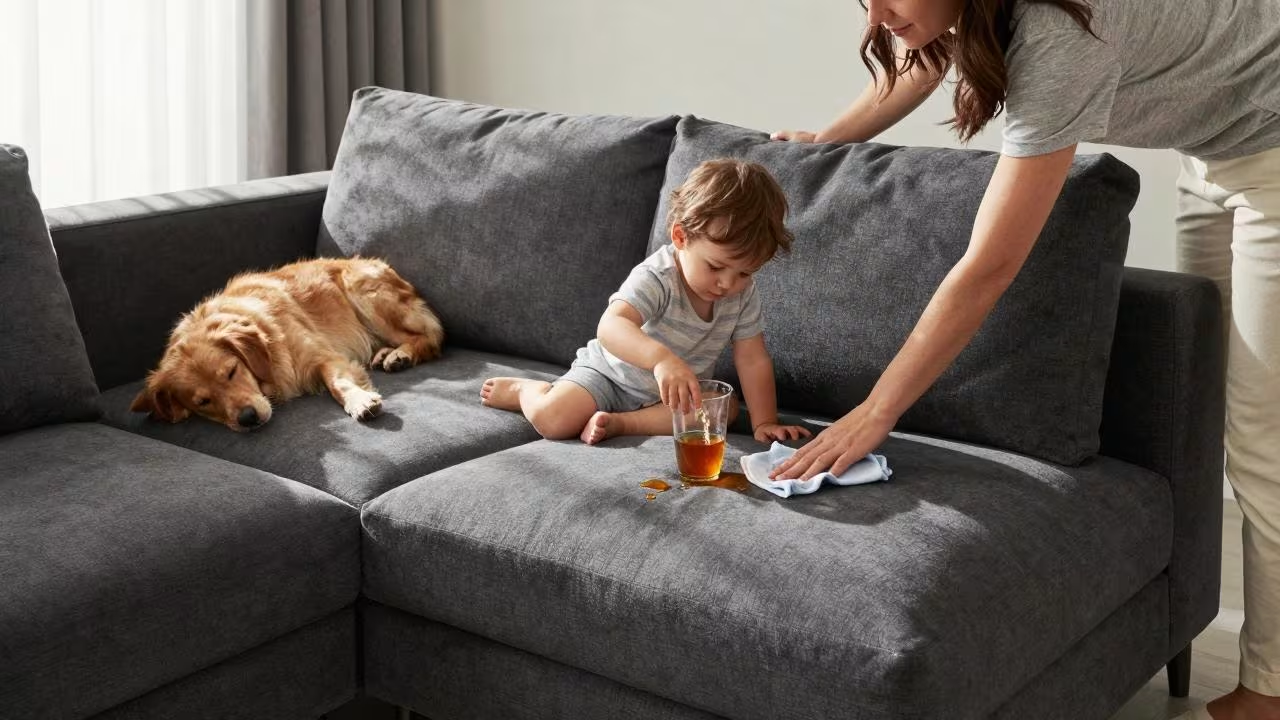
This is the category that gets thrown around as one big “performance fabric” bucket, but there’s actually meaningful variation here. Crypton is engineered to resist moisture, stains, and odors at the fiber level — spills genuinely sit on top rather than soaking in, which makes it a strong pick if you’ve got young kids or pets that have accidents. Sunbrella was originally developed for outdoor use and is known for serious fade resistance, which makes it a good call for sun-drenched living rooms.
One thing worth addressing honestly: older performance fabrics had a reputation for feeling stiff or slightly plasticky, and that reputation isn’t entirely undeserved for some older or cheaper performance weaves. But the newer generations of these fabrics have closed that gap a lot — many now feel close to a standard woven fabric while still carrying serious durability numbers, often well above 30,000 double rubs.
Best for: high-traffic households, families with young kids, anyone who’s had a “this stain will never come out” moment and doesn’t want a repeat.
Wool and Linen Blends
Wool blends bring something most synthetic options can’t — they resist pilling really well and tend to keep their shape and texture even after years of use. Linen, when it’s part of a tightly woven blend rather than loose and airy, is surprisingly strong and breathable, which makes it comfortable in warmer climates or rooms without great airflow.
The catch with wool: pet hair. If you’ve got a shedding dog, wool’s slightly textured surface grabs onto hair and fur in a way that’s genuinely annoying to deal with — way more than a smooth microfiber or performance weave would. Linen, on its own (not blended), tends to wrinkle and show wear faster, so look specifically for blends rather than pure linen if durability matters.
Best for: households without heavy-shedding pets, people who want a more natural look and texture, and rooms that don’t see constant daily abuse.
Synthetic Blends
Modern blends — combinations of polyester, nylon, and rayon — have come a long way. They resist wrinkling, hold their color well (especially when solution-dyed, which means the color is part of the fiber itself rather than just applied to the surface), and stand up to abrasion better than a lot of people expect from a “budget” fabric.
Solution-dyed fabrics deserve a specific mention here: because the dye is baked into the fiber, these fabrics resist fading from sunlight far better than fabrics that are dyed after weaving. If your living room gets a lot of afternoon sun, this is one of the more underrated specs to look for.
Best for: budget-conscious shoppers who still want solid durability, and sunny rooms where fading is a real concern.
Leather vs. Performance Fabric: Which One Wins for Pets?
This is probably the comparison most people actually care about, and the honest answer is: it depends on what kind of pet damage you’re trying to avoid.
Leather doesn’t stain — spills wipe right off — but it scratches, and once a cat has clawed leather a few times, those marks are permanent. Performance fabric, on the other hand, handles stains and spills exceptionally well (especially Crypton), and a tightly woven performance fabric is much more scratch-resistant than leather, though it’s not entirely scratch-proof either.
Quick answer: if your main concern is a cat scratching the sofa, go with a tightly woven performance fabric. If your main concern is stains and accidents from a dog or young kids, both leather and Crypton-style performance fabrics handle that well — but performance fabric usually wins on overall comfort and cost for families.
What “Double Rub Count” Actually Means (and Why It Matters)
You’ll see this number on a lot of fabric spec sheets, and it sounds technical because it kind of is — but the concept is simple. A “double rub” is one back-and-forth motion of a mechanical arm rubbing across the fabric in a durability test (the two common standards are Wyzenbeek and Martindale). The fabric is rubbed until it visibly wears through, and that number of cycles becomes the rating.
In practical terms:
- Under 10,000 double rubs: light-use fabrics, fine for a guest room or accent chair that doesn’t see daily traffic.
- 15,000-25,000 double rubs: considered suitable for regular residential use — this is where most decent sofa fabrics land.
- 25,000-30,000+ double rubs: heavy-use rating, good for households where the sofa is used daily by multiple people (and pets).
- 50,000-100,000+ double rubs: commercial-grade, often seen in higher-end performance fabrics — genuinely overbuilt for most homes, but a nice safety margin if you’ve got a big family.
So when a fabric is rated at 15,000 double rubs, it’s not a magic number that translates to “X years.” It’s a relative durability benchmark — the higher it is, the more abrasion the fabric can take before it starts showing wear. For a busy household, aiming for at least 25,000 double rubs gives you a reasonable buffer.
Choosing Fabric Based on Your Household
Instead of asking “what’s the most durable fabric” in the abstract, it helps to ask “durable against what, exactly?” Here’s how that plays out:
If you’ve got a dog that sheds: skip wool blends — the texture traps hair and it’s a constant battle. Microfiber or a tight performance weave will save you a lot of vacuuming.
If you’ve got a cat: leather will get scratched, full stop. A tightly woven performance fabric or microfiber is a safer bet if scratching is your main worry.
If you’ve got young kids: performance fabrics like Crypton are worth the extra cost — juice, marker, and snack grease all happen, and a fabric engineered to resist that at the fiber level saves a lot of stress.
If your living room gets direct afternoon sun: prioritize solution-dyed synthetic blends or Sunbrella-style performance fabric. Regular dyed fabrics — including leather, to some extent — will fade noticeably over a few years in strong sunlight.
If it’s mostly just adults and the sofa doesn’t see heavy daily use: wool or linen blends are a great call. You get a more natural look and texture without needing the heaviest-duty fabric on the market.
Keeping Your Sofa Fabric Looking Good Long-Term
Whatever fabric you land on, a few habits make a real difference over time:
- Leather needs conditioning roughly twice a year with a pH-balanced leather conditioner — this is what keeps it supple and prevents cracking as it ages. For a deeper maintenance routine, a proper leather sofa care schedule is worth bookmarking.
- Microfiber and synthetic blends benefit from regular vacuuming or brushing to keep dust and pet hair from working into the fibers. If you’re dealing with water marks or streaking after cleaning, there’s a specific technique for cleaning microfiber that avoids that issue.
- Rotate cushions every few weeks if they’re reversible — this spreads out wear evenly instead of letting one spot take all the abuse.
- Keep sofas out of direct, prolonged sunlight where possible, or use curtains/blinds during peak sun hours. Even fade-resistant fabrics will show some change over years of constant direct sun — solution-dyed fabrics just slow that process down significantly.
And don’t overlook what’s underneath the fabric. A great fabric on a weak frame or low-density foam will still sag and wear out faster than expected — fabric durability and frame/cushion quality work together, not separately. If you’re shopping with pets or kids specifically in mind, it’s worth pairing this with a look at sofas built for households with dogs and cats, since frame construction matters just as much as what’s covering it.
FAQ
What is the most durable sofa fabric?
Performance fabrics like Crypton and Sunbrella generally rank highest, often exceeding 30,000 double rubs while also resisting stains and fading. Leather is extremely durable in terms of longevity but is more vulnerable to scratches than these woven options.
Is leather or fabric better for pets?
It depends on the pet. Leather resists stains well but scratches easily, especially with cats. A tightly woven performance fabric handles both stains and scratches better overall, making it the safer all-around choice for most pet owners.
What does double rub count mean for sofa fabric?
It’s the number of back-and-forth rubbing cycles a fabric can withstand in a standardized durability test before visible wear appears. For regular household use, look for at least 15,000-25,000 double rubs; for heavy daily use, 25,000-30,000+ is a better target.
Does leather scratch easily with cats?
Yes — leather is one of the most cat-scratch-prone sofa materials. Even careful cats will leave marks over time, so if you have a cat, a durable woven fabric is usually a better choice.
Is Crypton fabric worth it?
For households with kids, pets, or frequent spills, yes — its stain and moisture resistance at the fiber level genuinely reduces permanent staining compared to standard fabrics, and the durability ratings tend to be well above average.
How often should you condition a leather couch?
About twice a year with a pH-balanced leather conditioner. Skipping this for a couple of years is one of the main reasons leather sofas end up looking dry and cracked instead of developing a nice patina.