Estimated reading time: 8 minutes
Last updated on June 23rd, 2026 at 07:32 am
There’s a specific moment a lot of people hit with their living room. You’ve got a sofa, maybe a loveseat that doesn’t quite match, an accent chair you bought because it was on sale, and somehow the whole thing still looks like four strangers waiting for a bus. Nothing’s wrong with any single piece, but the room never quite comes together.
That’s usually the moment a sectional starts looking appealing.
If you’re weighing whether the benefits of sectional furniture actually justify the price tag, here’s the honest answer: for a lot of living rooms, yes — but not for all of them, and there are a few things worth checking before you order one.
What Makes a Sectional Actually Worth the Investment
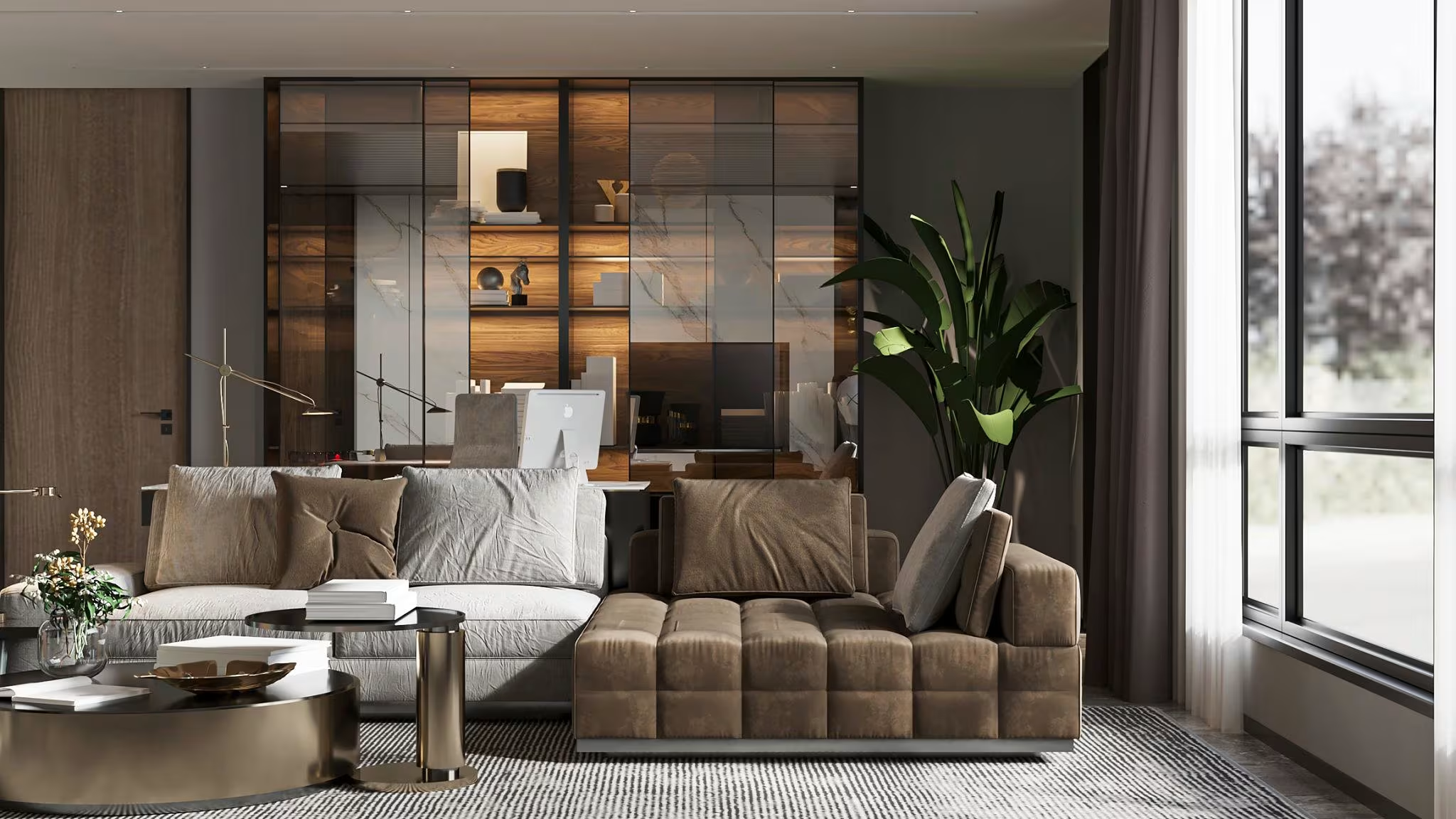
A sectional isn’t just a big couch. It’s a sofa, a chaise, and usually an extra seat or two, all built as one connected piece. That’s the core of why people end up happy with theirs.
It gives you more usable seating per square foot than separate pieces. A sofa-and-loveseat combo eats up floor space in two directions and still leaves awkward gaps between them. A sectional wraps around a corner instead, so the same footprint gives you continuous seating without those dead zones.
It anchors an open floor plan without needing walls. If you’ve got one of those living-room-meets-dining-room-meets-everything-else layouts, a sectional placed thoughtfully gives the space a clear “this is the living room” boundary. It does the job a wall would do, just without the wall.
It’s genuinely flexible — at least the modular ones are. Pieces can often be rearranged into different shapes (L-shape, U-shape, straight run) depending on how your room is laid out, which matters more than people expect until they move and realize their old layout doesn’t work anymore.
The Seating Math: Sectional vs. Sofa-and-Loveseat

Here’s the part that actually answers the “is it worth it” question, because it’s really a math question dressed up as a design question.
When you buy a sofa, a loveseat, and an accent chair separately, you’re paying for three individual pieces — each with its own frame, its own cushions, its own delivery. A sectional bundles roughly that same seating capacity (sofa + chaise + extra seat) into one connected unit.
In practice, that usually means the sectional ends up costing less than the sum of those three separate pieces would, for a comparable quality level. You’re not paying for three sets of legs, three separate frames, and three delivery fees — you’re paying for one larger piece that does the same job.
That said, “less than three separate pieces” doesn’t mean “cheap.” Sectionals still carry a real upfront cost, and a poorly-made one isn’t a bargain just because it’s one piece instead of three. The cost efficiency argument holds up best when you’re comparing similar quality tiers — a decent sectional against decent individual pieces, not a budget sectional against designer separates.
If you’re curious how sectionals stack up against a standard sofa setup in more detail, our sectional sofa vs regular sofa comparison breaks down the differences further.
Fixed vs. Modular — Which Fits Your Life Better

This is the decision that matters more than most people realize when they’re shopping, and it’s rarely explained well.
Fixed sectionals are permanently joined — the pieces don’t separate. They tend to look cleaner and more tailored, with no visible gaps between sections. The trade-off is adaptability: if you move to a place with a differently-shaped living room, a fixed L-shape sectional might just… not work anymore. You’re stuck with the configuration you bought.
Modular sectionals are made of separate pieces that can be rearranged — split into two smaller sofas, reconfigured from an L into a U, or reduced down if you need less seating in a new space. They’re often slightly more expensive for a comparable size, but that flexibility is real.
Here’s the honest take: if there’s any real chance you’ll move in the next few years, or if you’re the type who likes to switch up your living room layout every so often, modular is worth the extra cost. If you’re settled, know your room won’t change, and want the cleanest possible look, fixed is a perfectly reasonable choice — just go in knowing you’re committing to that shape.
For a deeper look at the different configurations available, types of sectional sofas is worth a read before you start shopping.
Before You Buy: Measuring, Walkways, and the Corner Seat Problem
This is where sectional regrets usually come from, and almost all of it is preventable with about twenty minutes of measuring.
Measure the room, not just the wall. A sectional that fits against one wall might still block the natural walking path between your front door and the kitchen, or leave no room to open a door fully. Map out your walkways before you fall in love with a floor sample.
Check delivery access before you order. This one gets skipped constantly. A large sectional that looks perfect online might not fit through your apartment door, around a tight stairwell turn, or up a narrow hallway. Some retailers offer “white glove” delivery that handles disassembly and tight spots — worth asking about if your access is at all questionable.
Think about the corner seat. On an L-shaped or U-shaped sectional, that innermost corner seat looks great in photos but is often the one nobody picks first in real life. If it’s shallow or doesn’t have its own back support, it ends up being more of a “perch” than an actual seat. If you regularly have multiple people lounging at once, look for a design with a deep, well-cushioned corner — not just a narrow wedge connecting two sections.
Be realistic about room size. A sectional can absolutely overwhelm a smaller room. If your living room is on the compact side, look at smaller-scale or apartment-sized sectionals rather than assuming you need to “go big” to get the benefits — our guide on smart end table and small-space storage ideas has some useful context on working with tighter living room layouts too.
Is a Sectional Right for Your Space?
A quick gut-check, since not every living room benefits equally:
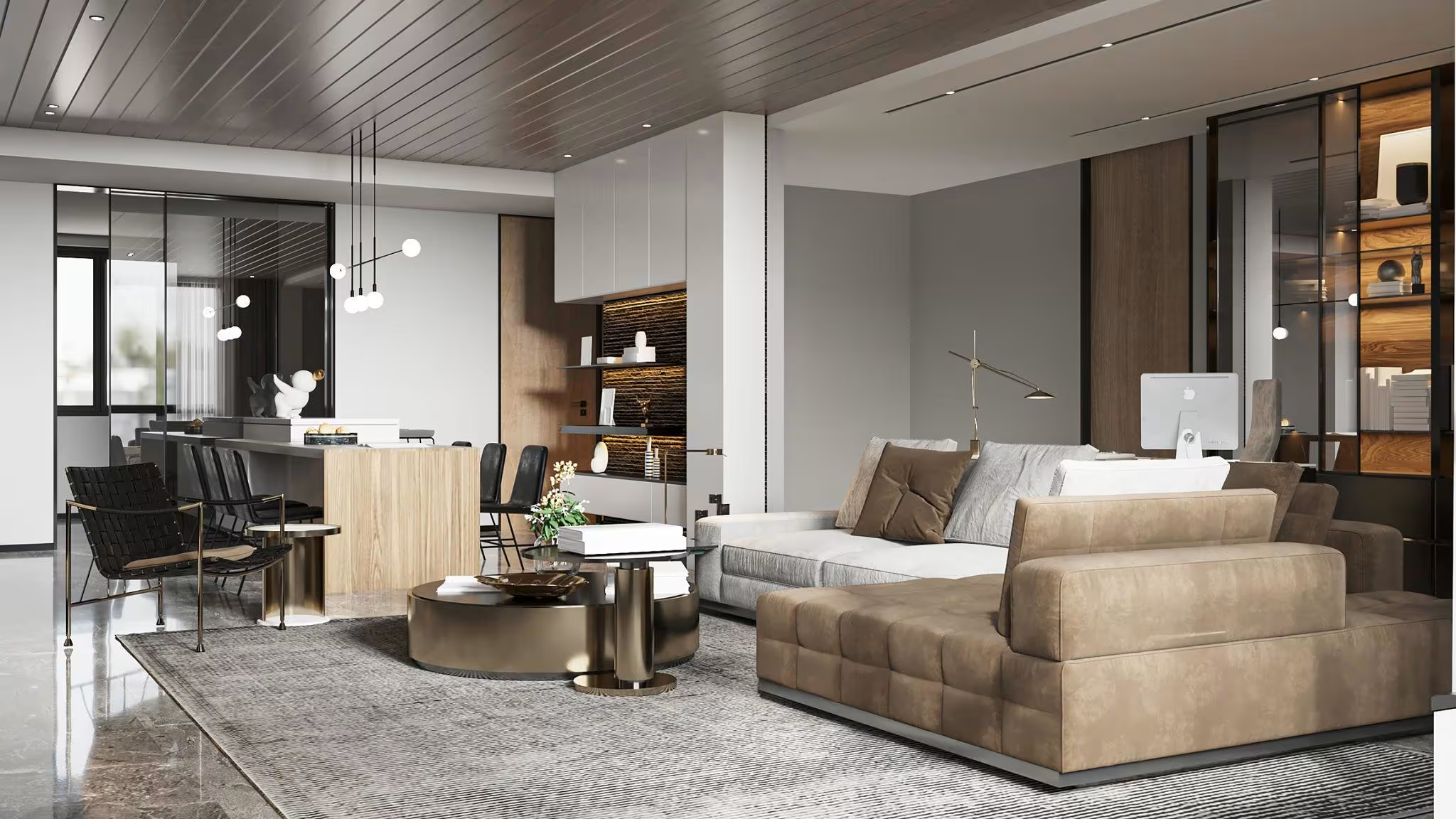
A sectional tends to be a great fit if you have an open floor plan that needs visual definition, a household that regularly hosts people and needs real seating capacity, or a living room where your current furniture feels disconnected and you want one cohesive anchor piece.
It’s worth thinking twice if your space is genuinely small and a sectional would dominate it, if you move frequently and you’re considering a fixed (non-modular) design, or if you’re someone who likes to rearrange your living room layout seasonally — in which case modular is the only version worth considering.
For fabric, if you’ve got kids, pets, or just a household that eats on the couch more than it should, a performance or stain-resistant fabric is worth the upgrade — our sofa fabric guide covers what holds up best long-term.
If your living room currently feels like a collection of furniture rather than a room, a sectional is one of those purchases that genuinely changes how the space feels — not just visually, but in how people actually use it. Just measure twice, think honestly about whether your life calls for modular flexibility, and don’t let the corner seat become an afterthought.
FAQ
What are the main benefits of a sectional sofa?
A sectional sofa offers more continuous seating per square foot than separate furniture pieces, helps define open floor plans without walls, and often costs less than buying a sofa, loveseat, and accent chair individually at a similar quality level.
Is a sectional more cost-effective than a sofa and loveseat?
Generally yes, when comparing similar quality levels — a sectional bundles the equivalent of a sofa, chaise, and extra seat into one piece, avoiding the added cost of multiple separate frames and deliveries.
What size living room do you need for a sectional?
There’s no fixed minimum, but you’ll want enough space to fit the sectional while still maintaining clear walkways around it; smaller rooms generally do better with compact or apartment-sized sectional designs.
What’s the difference between a fixed and modular sectional?
A fixed sectional is permanently joined into one shape, while a modular sectional consists of separate pieces that can be rearranged or split apart to fit different room layouts.
Are sectionals good for small apartments?
They can be, as long as you choose an appropriately-sized model and confirm it can actually fit through doorways, hallways, and stairwells during delivery — this is one of the most common issues with larger sectionals in apartments.