Estimated reading time: 15 minutes
You’ve decided on a sectional. Great choice. But then you open a furniture website and suddenly you’re drowning in options — L-shaped, U-shaped, chaise, curved, modular, reclining — and what felt like a simple decision now feels like a geometry exam.
This happens to almost everyone. Sectionals look deceptively straightforward until you realize the shape you pick doesn’t just affect how the sofa looks — it affects how your entire room functions. Get it right and your living room finally comes together. Get it wrong and you’ve got a beautiful piece of furniture that blocks the doorway and makes the whole space feel like a furniture showroom nobody actually lives in.
So before you click “add to cart,” here’s a proper look at every type of sectional sofa — what each one actually is, which rooms they work in, who they suit, and where each one falls short.
What Makes a Sectional Different From a Regular Sofa
Quick orientation before we get into shapes: a sectional is a modular seating system. Instead of being one fixed piece, it’s made up of multiple connected units — corner pieces, armless chairs, chaise extensions, recliner sections — that join together into a larger configuration.
That modularity is the whole point. It’s what gives sectionals their seating capacity, their flexibility, and their ability to define a living space in a way a single sofa rarely can. It’s also what makes choosing the right one slightly more complicated.
If you’re still deciding whether a sectional is even the right move for your room, the sectional sofa vs. regular sofa comparison covers that ground well. But if you’re already committed to a sectional and just need to figure out which type, let’s get into it.
The Main Sectional Sofa Shapes
1. L-Shaped Sectional
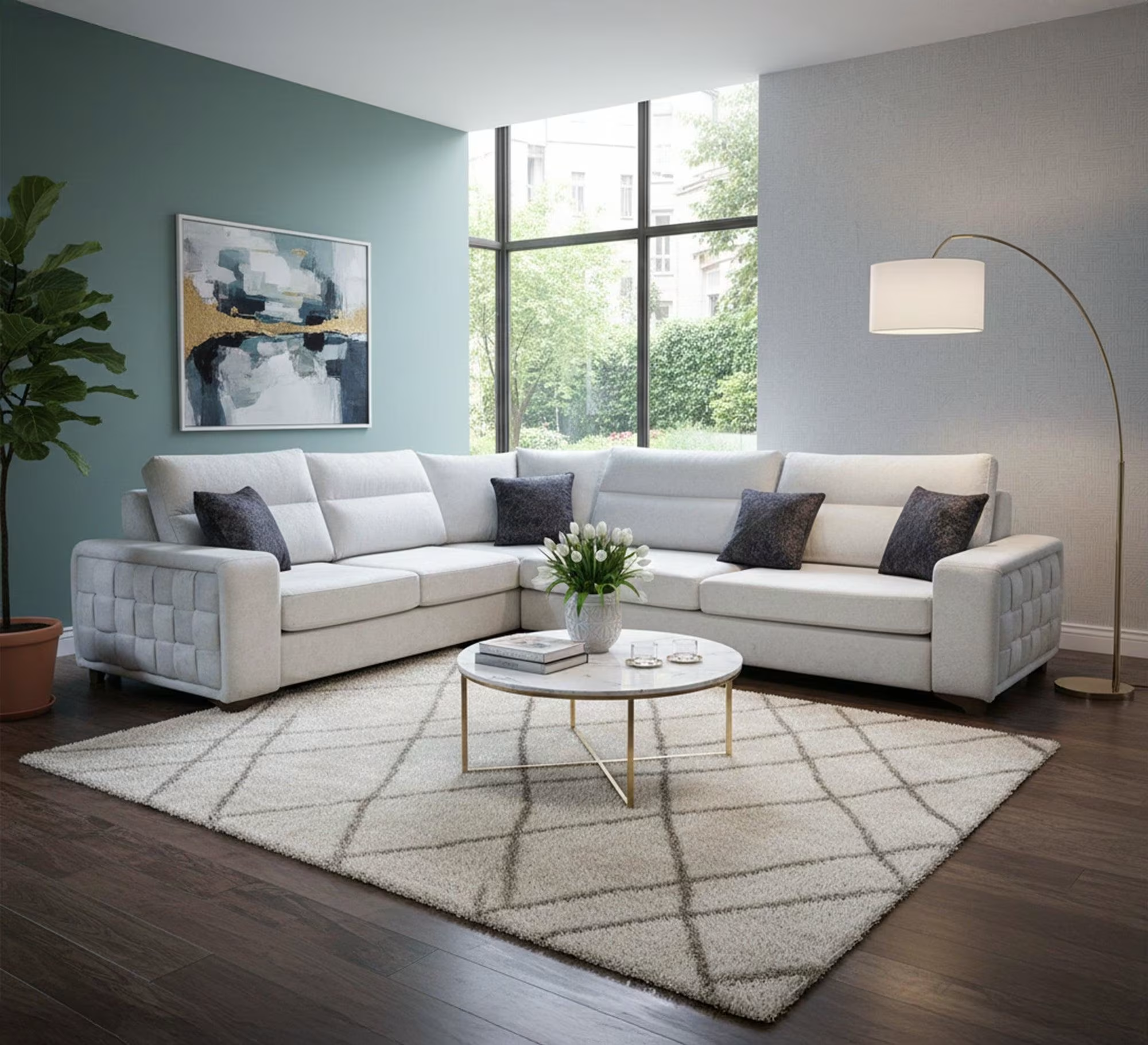
The L-shaped sectional is the most common configuration — and with good reason. It consists of two connected segments meeting at a 90-degree angle, forming that familiar L shape. One side runs long, the other extends perpendicular, and the whole thing tucks naturally into a corner.
This is the shape interior designers reach for most often in medium-sized living rooms, typically those in the 12 × 14 to 15 × 18 foot range. It uses corner space efficiently, keeps floor space open in front, and works well as a room anchor without overwhelming the layout.
The L-shape is also genuinely versatile in terms of style — it’s available in everything from low-profile modern frames to more traditional rolled-arm designs, which means it adapts to more interiors than any other sectional shape.
Best for: Medium living rooms, corner placement, households of 2–4 people, renters who want sectional seating without a massive footprint.
Honest limitation: If your room isn’t at least 10 × 12 feet, even a compact L-shape will feel like it’s eating the space. And depending on configuration, the shorter arm can sometimes feel disconnected from the main seating — people end up bunching toward the longer side anyway.
2. U-Shaped Sectional
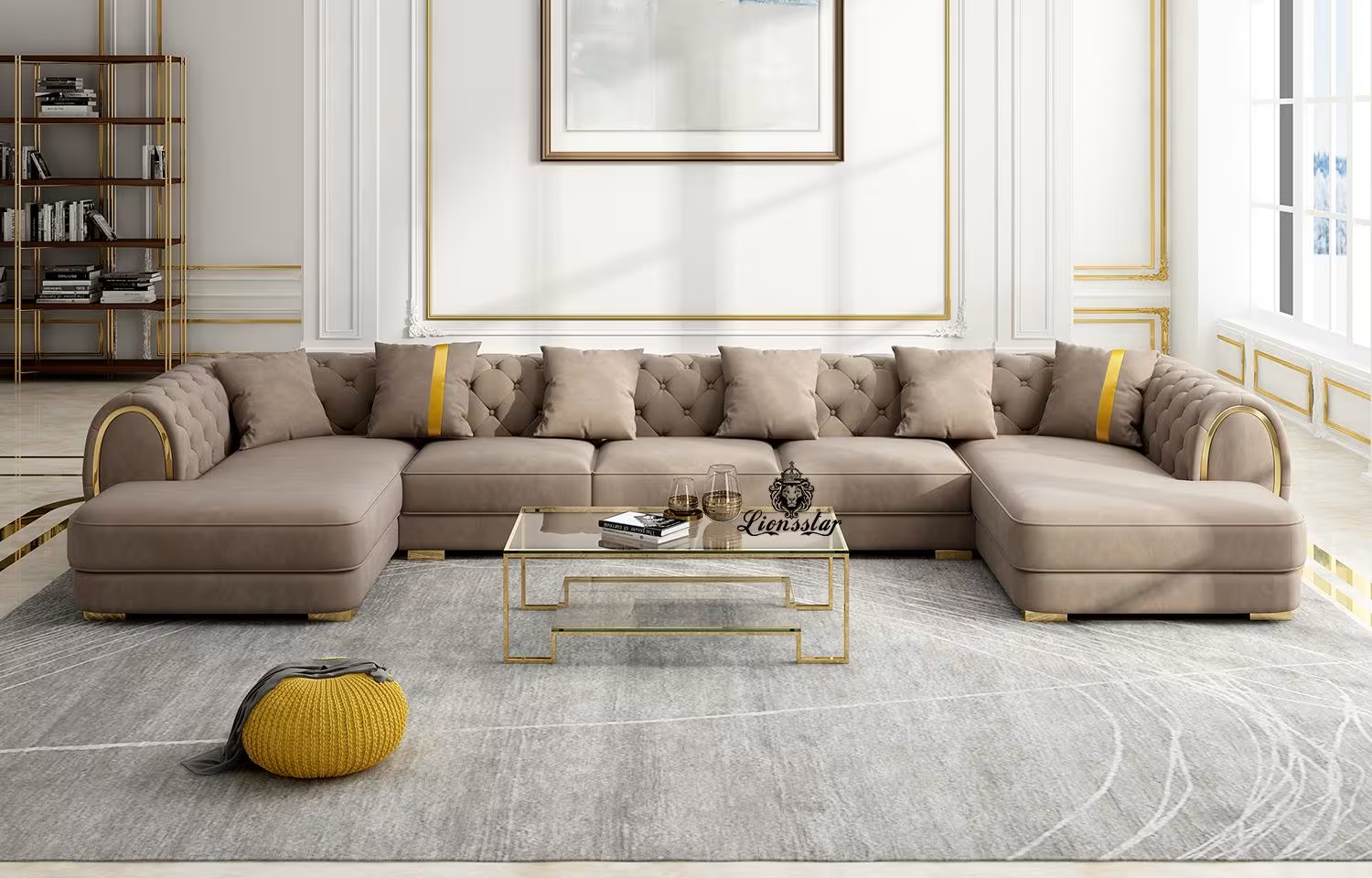
The U-shape is the sectional that means business. Three connected sides wrapping around a central open area — usually a coffee table — creating an enclosed, social seating arrangement that holds a lot of people comfortably.
These are genuinely impressive in the right room. A U-shaped sectional in a large open-plan space creates a clear “living zone” that feels purposeful and grounded. Home theater rooms love them. Big family spaces love them. They seat anywhere from six to ten people depending on configuration, which makes them ideal for households that genuinely use their living room as a gathering hub.
The catch — and it’s a significant one — is that U-shaped sectionals need serious square footage. You’re looking at a minimum of 14 × 16 feet to make this work without the room feeling claustrophobic, and that’s on the modest end. In anything smaller, a U-shape doesn’t just fill the room; it is the room, leaving almost no breathing space around it.
Best for: Large open-plan living rooms, family homes, frequent entertainers, home theater setups.
Honest limitation: Committing to a U-shape in a room that’s too small is one of the most common sectional mistakes people make. They look incredible in showrooms — which are always larger than your actual living room. Measure obsessively before buying.
3. Chaise Sectional
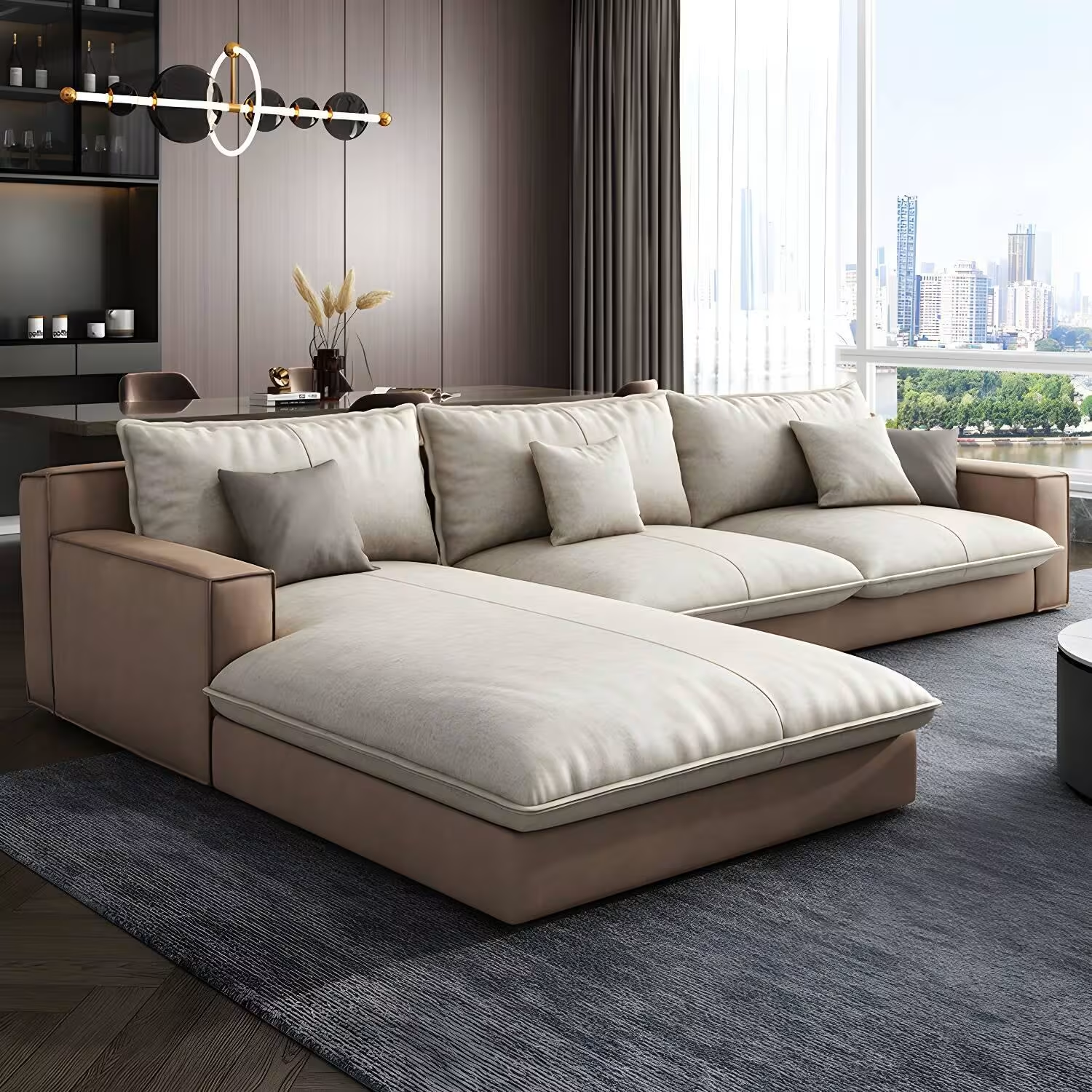
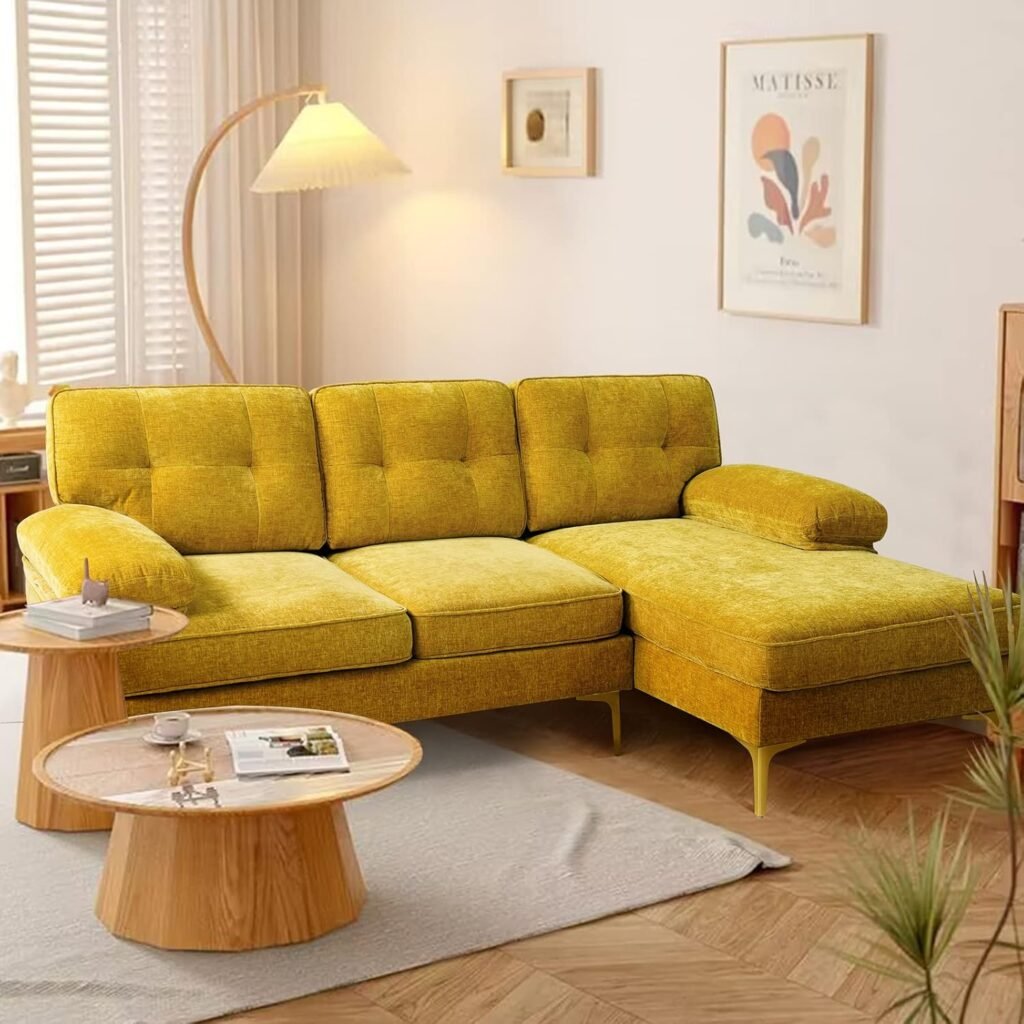
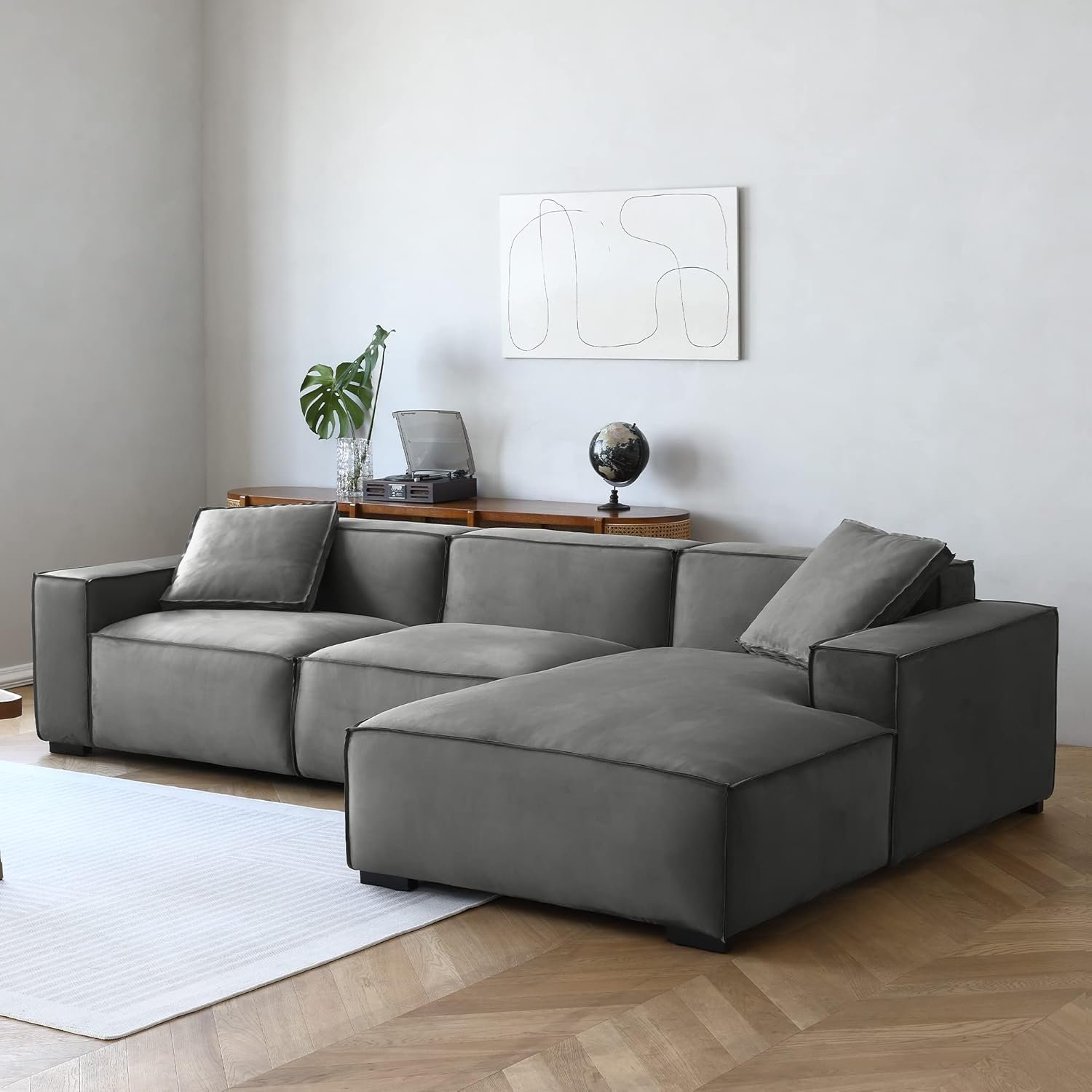
The chaise sectional is essentially a sofa with an extended lounging section on one end — think of it as a built-in chaise lounge attached to a regular sofa frame. It’s more compact than either the L or U configuration while still giving you somewhere to actually stretch out.
This is the shape that apartment dwellers and smaller-room owners should look at first. A chaise sectional typically runs around 100 to 115 inches on the long side — comparable to some larger regular sofas — which means it can slot into spaces where a full L-shape would be impossible.
One genuinely useful feature to look for: reversible chaise configurations. Some chaise sectionals let you flip the extended section to either the left or right side, which gives you flexibility if you move or rearrange the room.
Best for: Apartments, studios, smaller living rooms, people who want lounging capacity without a large footprint.
Honest limitation: The chaise side works brilliantly for one person to stretch out, but it’s oddly positioned for regular sitting. Guests often end up perched on the chaise at an angle that doesn’t quite work. If you frequently have more than two or three people in your living room, the chaise sectional’s seating capacity can feel limiting fast.
4. Curved Sectional
Curved sectionals are the unconventional choice — and arguably the most underrated one in the right setting. Instead of straight segments meeting at sharp angles, these flow in a gentle arc that creates a softer, more intimate seating arrangement.
The visual effect is striking. In a large room, a curved sectional reads as a deliberate design choice rather than just a furniture decision. It softens a space that might otherwise feel boxy or angular, and the inward curve naturally orients everyone toward the center — which makes conversation flow differently than a standard L-shape where people end up half-facing each other.
That said, curved sectionals demand generous floor space. The arc takes up more square footage than a straight configuration of similar seating capacity, and the shape makes them harder to reposition — they don’t sit flush against walls, which limits placement options significantly.
Best for: Large open-plan spaces, design-forward interiors, conversation-oriented rooms, homes where aesthetics are as important as function.
Honest limitation: These are not rearrangeable. Once you place a curved sectional, that’s essentially where it lives. The shape also makes them harder to move when you relocate — those curved sections are awkward to maneuver through doorways. If you rent or move frequently, think carefully before committing.
5. Modular Sectional
Modular sectionals are the most flexible option in the entire category — and the most misunderstood. Unlike other sectional types that come as a fixed configuration, modular sectionals are sold as individual pieces that you assemble yourself and can rearrange however you need.
Want an L-shape today and a U-shape next year when you move to a bigger place? A modular sectional makes that possible. Need to pull a couple of pieces apart to accommodate a party layout or reconfigure for a new room? You can do that too.
This flexibility is genuinely valuable for people who like to rearrange furniture, live in multifunctional spaces, or anticipate moving in the next few years. You’re not locked into one configuration — the sofa adapts with you.
The trade-off is that modular pieces can shift and separate over time, especially under heavy daily use. The connectors between pieces need occasional attention, and cheaper modular sectionals tend to show that wear faster than fixed-configuration options. Quality matters more here than with other sectional types.
Best for: People who rearrange frequently, multifunctional spaces, those who anticipate moving to a differently sized home, flexible living situations.
Honest limitation: Modular sectionals at the budget end tend to feel less cohesive than fixed configurations. The seams between pieces can become noticeable over time, and pieces occasionally drift apart during use. If you go modular, prioritize build quality over price.
6. Reclining Sectional
Exactly what it sounds like — a sectional with built-in recliner seats, either on individual seats throughout the configuration or at specific end positions. Some come with manual recline mechanisms; others are powered with motors and controls.
Higher-end reclining sectionals now include USB charging ports, integrated cup holders, and even massage functions, which puts them firmly in the “serious home theater” category. If your living room is primarily a movie-watching or gaming space, a reclining sectional delivers a level of comfort that no regular sofa with an ottoman can realistically match.
Best for: Home theater rooms, gaming setups, households that prioritize maximum comfort for extended sitting.
Honest limitation: Reclining sectionals are bulky, heavy, and almost impossible to move gracefully. The reclining mechanisms need clearance space behind them — usually at least 12 to 18 inches from the wall when fully extended. In a tight room, that eats into your floor space considerably. They also tend to lean toward a specific aesthetic that doesn’t blend well in design-forward or minimalist interiors.
7. Sleeper Sectional
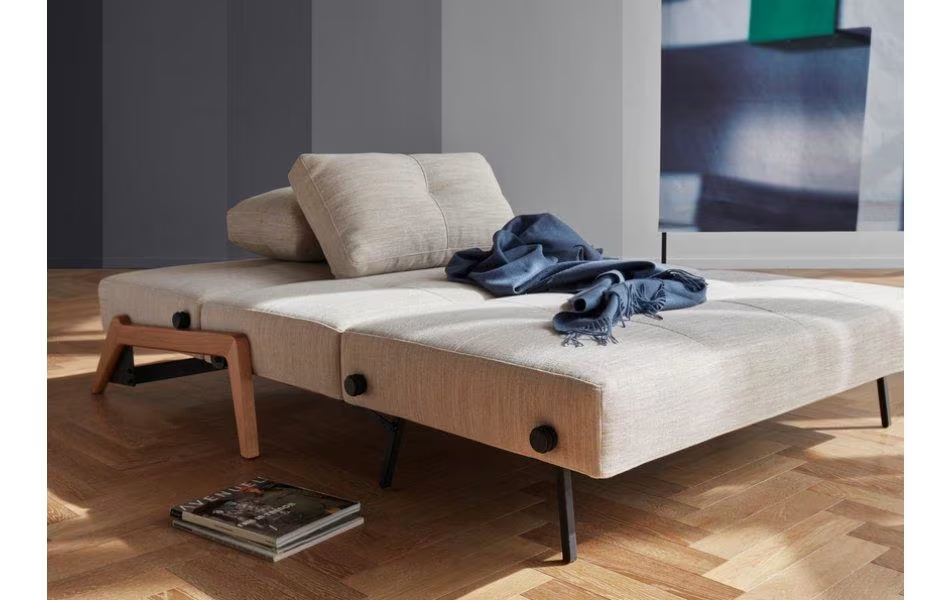
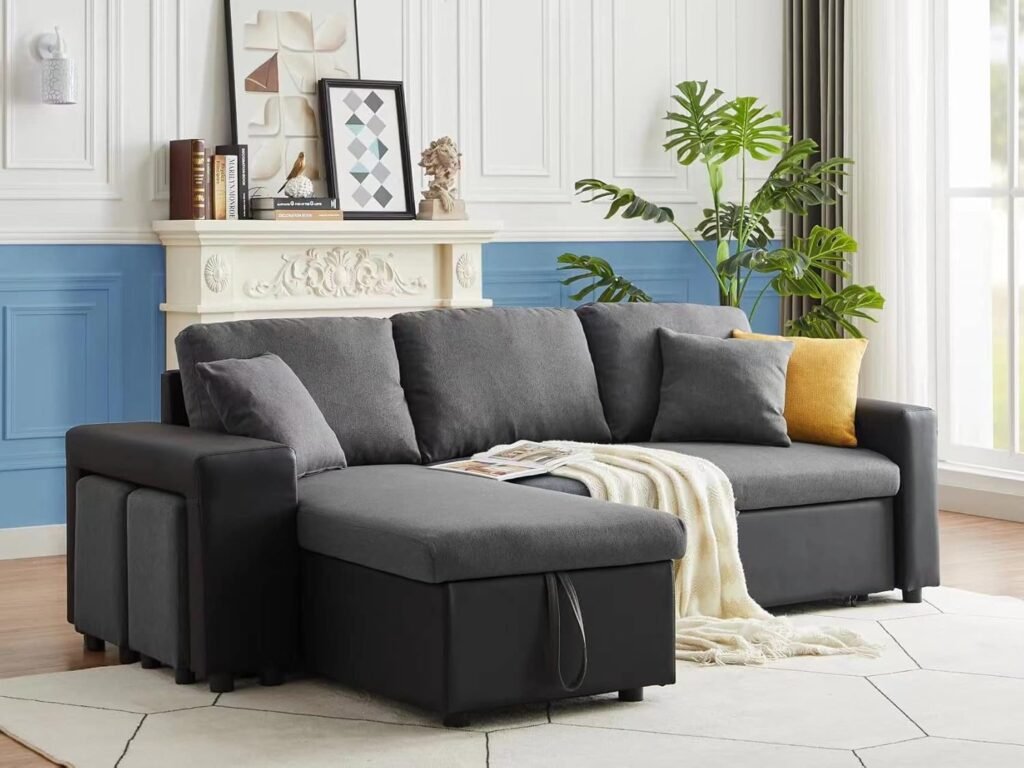
A sleeper sectional hides a pull-out bed (or a fold-down sleeping surface) within the frame, giving you seating during the day and a guest bed at night. For smaller homes without a dedicated guest room, this is a genuinely practical solution.
The key thing to understand is that sleeper sectionals vary enormously in sleep quality. The pull-out mattress in a budget sleeper sectional is usually thin and uncomfortable — fine for occasional use, less ideal for a guest staying more than a night or two. Mid-range and higher-end sleeper sectionals use better mattress options, including memory foam inserts, that are actually comfortable for regular sleeping.
Best for: Homes without a guest room, studio apartments, spaces that need to serve double duty as living and sleeping areas.
Honest limitation: The sleeper mechanism adds weight and limits some configuration options. You also need enough open floor space in front of the sectional to pull the bed out fully — typically around 60 to 70 inches of clearance. Plan for that before purchasing. For more guest-space ideas in a compact home, clothes storage ideas for small spaces has some useful thinking on making dual-use rooms work better overall.
8. Corner Sectional
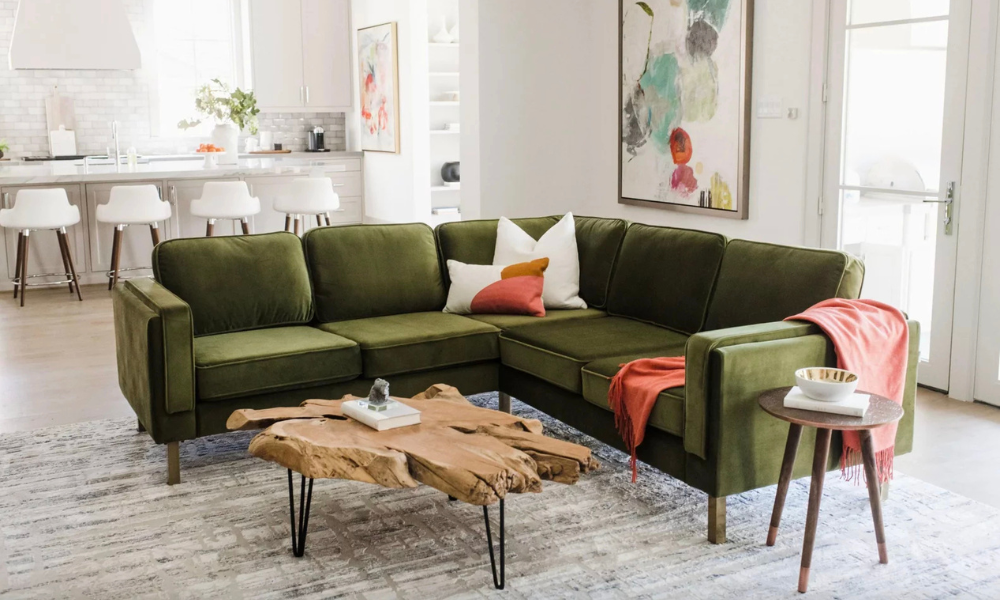
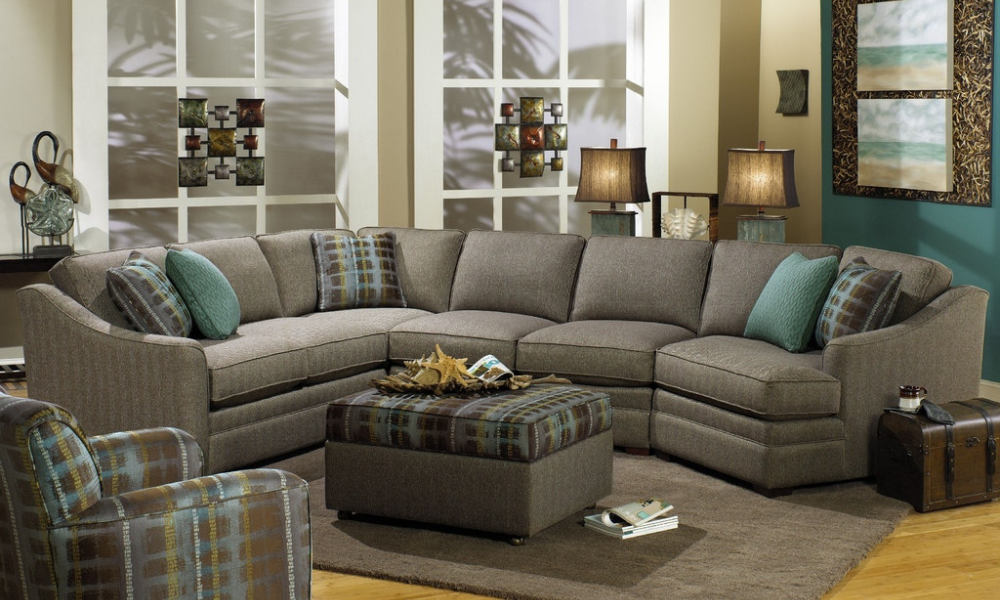
Slightly different from a standard L-shape, a corner sectional specifically features a corner unit — a square or diagonal piece — at the junction point rather than just two straight segments meeting at an angle. That corner piece is often the roomiest, most comfortable seat in the whole configuration.
The corner unit makes the transition between the two sides smoother and more deliberate. It also typically adds a bit more seating capacity than a comparable L-shape without the corner unit, and many people find the center corner seat the most coveted spot in the house.
Best for: Families with kids who fight over the “best” spot, rooms where the corner junction needs to feel intentional rather than like an afterthought.
Honest limitation: Corner units add to the overall footprint of the sofa. A corner sectional of the same length as an L-shape takes up noticeably more floor space due to that additional center piece. Account for it in your room measurements.
Quick Reference: Sectional Types at a Glance
| Shape | Minimum Room Size | Seating Capacity | Best For | Watch Out For |
| L-Shaped | 10 × 12 ft | 3–5 people | Most room types | Bunching toward one side |
| U-Shaped | 14 × 16 ft | 6–10 people | Large spaces, entertainment | Needs serious square footage |
| Chaise | 9 × 11 ft | 2–3 people | Apartments, small rooms | Limited guest seating |
| Curved | 14 × 16 ft | 4–6 people | Open-plan, design-forward | Hard to reposition |
| Modular | Any | Variable | Flexible lifestyles | Pieces drift over time |
| Reclining | 12 × 14 ft | 3–6 people | Home theater, gaming | Needs wall clearance |
| Sleeper | 12 × 14 ft | 3–5 people | Guest-room-free homes | Needs bed clearance |
| Corner | 12 × 14 ft | 4–6 people | Families, corner layouts | Larger footprint than L |
Sectional Sofa Styles: How the Look Interacts With the Shape
Shape determines function. Style determines feel. And they interact in ways that matter.
Modern sectionals — clean lines, low profiles, minimal cushion detail — work best with L-shapes, chaise configurations, and modular setups. They suit minimalist rooms where the sofa should feel intentional but not dominant.
Transitional sectionals blend traditional comfort with modern simplicity — think neutral fabrics, slightly higher backs, subtle arm detailing. These are the most forgiving in terms of interior style and tend to work across L-shapes and corner configurations.
Classic sectionals — tufted backs, rolled arms, richer fabrics like velvet or textured weave — lean naturally toward corner configurations and U-shapes. They suit rooms with some architectural character: crown molding, paneling, older homes with a bit of personality.
Reclining sectionals are their own aesthetic category. They rarely look at home in design-forward spaces. If your living room leans modern or Scandinavian, a reclining sectional is going to fight the vibe. Embrace it in a casual, comfort-first space or a dedicated media room.
Fabric and Materials: Connect This to Your Life, Not Just Your Taste
Most articles list fabric options in isolation. Here’s a more useful framing: match the fabric to how you actually live.
Leather is easy to wipe down and ages well, but it’s cold in winter, warm in summer, and shows scratches from pets immediately. Best in formal or adult-only living rooms with low daily traffic.
Performance fabric — microfiber, stain-resistant weaves, solution-dyed options — is the realistic choice for families with kids and pets. It doesn’t feel like a compromise anymore; good performance fabrics are genuinely comfortable and hold up under real-world conditions better than most natural fibers.
Velvet looks spectacular and feels luxurious. It’s also high-maintenance. Velvet marks easily, traps pet hair aggressively, and fades in direct sunlight. Reserve it for lower-traffic rooms where you want a statement piece rather than an everyday workhorse.
Standard fabric blends sit in the middle — comfortable, affordable, decent durability. Fine for moderate-use households. Just check the rub count (a measure of fabric durability): anything above 15,000 double rubs is considered residential-grade; 25,000+ is better for heavy use.
Planning Your Layout: Shape-Specific Tips
Generic layout advice (“leave 3 feet of clearance”) only takes you so far. Here’s how layout planning differs by shape.
For L-shapes and corner sectionals, the long side almost always works best running parallel to the room’s longest wall, with the shorter arm pointing inward toward the room center. Don’t fight the corner — let the sofa define it.
For U-shapes, center the configuration on the room’s focal point (usually the TV or fireplace) and treat it like a room within a room. Everything else in the space should sit outside the U’s footprint.
For chaise sectionals, the chaise arm should point away from the main traffic flow — typically toward a window or a side wall rather than toward a doorway. This keeps the visual weight off the room’s natural paths.
For curved sectionals, forget the walls. These are floating-furniture pieces — they look best pulled away from walls with space behind them, which means you need enough total room to accommodate that.
For modular sectionals, sketch out your configuration on paper first. It sounds obvious, but modular pieces are easy to accidentally over-order. Map it out by section, not just by overall dimensions.
If you’re building out a full living room and want to think about how all the furniture pieces work together, the living room set guide is worth reading alongside your sectional decision. And if floor-level seating fits better with your aesthetic or space constraints, the Japanese floor sofa offers an interesting alternative configuration worth knowing about.
FAQs
What type of sectional sofa is best for a small living room?
A chaise sectional or a compact L-shaped sectional. The chaise gives you lounging capacity without the full L-shape footprint, and works in rooms as small as 9 × 11 feet if the rest of the furniture is kept minimal. Avoid U-shaped and curved sectionals in smaller rooms — they’ll dominate the space.
What’s the difference between an L-shaped and U-shaped sectional?
An L-shape has two connected segments meeting at 90 degrees — it fits corners and works in medium rooms. A U-shape adds a third side, wrapping around a central space for much higher seating capacity. U-shapes need significantly larger rooms to work well — plan for at least 14 × 16 feet minimum.
What is a modular sectional sofa?
A modular sectional is built from individual pieces you can rearrange into different configurations. Unlike fixed sectional shapes, modular sofas adapt to different room sizes and layouts, making them a good option for people who move frequently or like to change their room setup.
Which sectional sofa fabric is easiest to clean?
Performance fabrics — microfiber, stain-resistant weaves, or solution-dyed options — are the easiest to clean and most durable for everyday household use. Leather is easy to wipe down but scratches easily. Velvet is beautiful but the most demanding to maintain.
Can a sectional sofa work in a small apartment?
Yes, if you choose the right type. A chaise sectional or a compact L-shape in a well-proportioned room around 10 × 12 feet can work well if you keep other furniture minimal. Avoid U-shaped and curved sectionals in apartments — the scale rarely works.
What is the most popular sectional sofa shape?
The L-shaped sectional is consistently the most popular. It works across the widest range of room sizes, suits corner placement naturally, and comes in more style variations than any other configuration. For most households, it’s the safest starting point.
How do I know what size sectional to get?
Measure your room first, then subtract roughly 18 inches from each side to account for walkway clearance and breathing room. The remaining area is your working footprint for the sectional. Most designers recommend leaving at least 36 inches of clearance around the sofa for comfortable traffic flow. If the numbers feel tight — they are. Size down rather than cramming in something that’ll make the room feel smaller than it is.