Estimated reading time: 12 minutes
Last updated on June 23rd, 2026 at 07:23 am
You’ve probably seen it happen to someone. Maybe it happened to you.
A sofa that looked genuinely stunning in the showroom — rich, smooth, smelled like real leather — started flaking apart within two years. Little curls of surface peeling away from the corners and armrests. Not cracking like aged leather does. Actually peeling, like a sunburned shoulder.
That’s not bad luck. That’s bonded leather doing exactly what bonded leather does.
The problem is that most people buying a leather sofa have no idea there are five completely different materials that all get sold under the “leather sofa” umbrella. Some last decades. Some barely survive a tenancy agreement. And the labels? They’re deliberately confusing — which we’ll get into in a moment.
Here’s a plain-English breakdown of every type of leather sofa, what each one actually feels like to live with, and how to figure out which one makes sense for your home.
The 5 Types of Leather Sofas, Explained Without the Jargon
Full-Grain Leather — The Heirloom Option
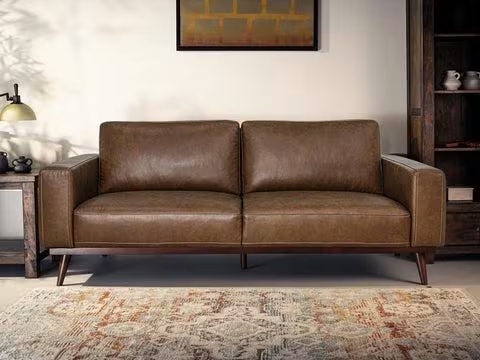
Full-grain leather is the real deal. It comes from the outermost layer of the hide — the tightest, most durable part — and it’s left almost entirely unprocessed. No sanding, no buffing, no heavy coating to hide imperfections. What you’re buying is essentially the hide in its most natural state.
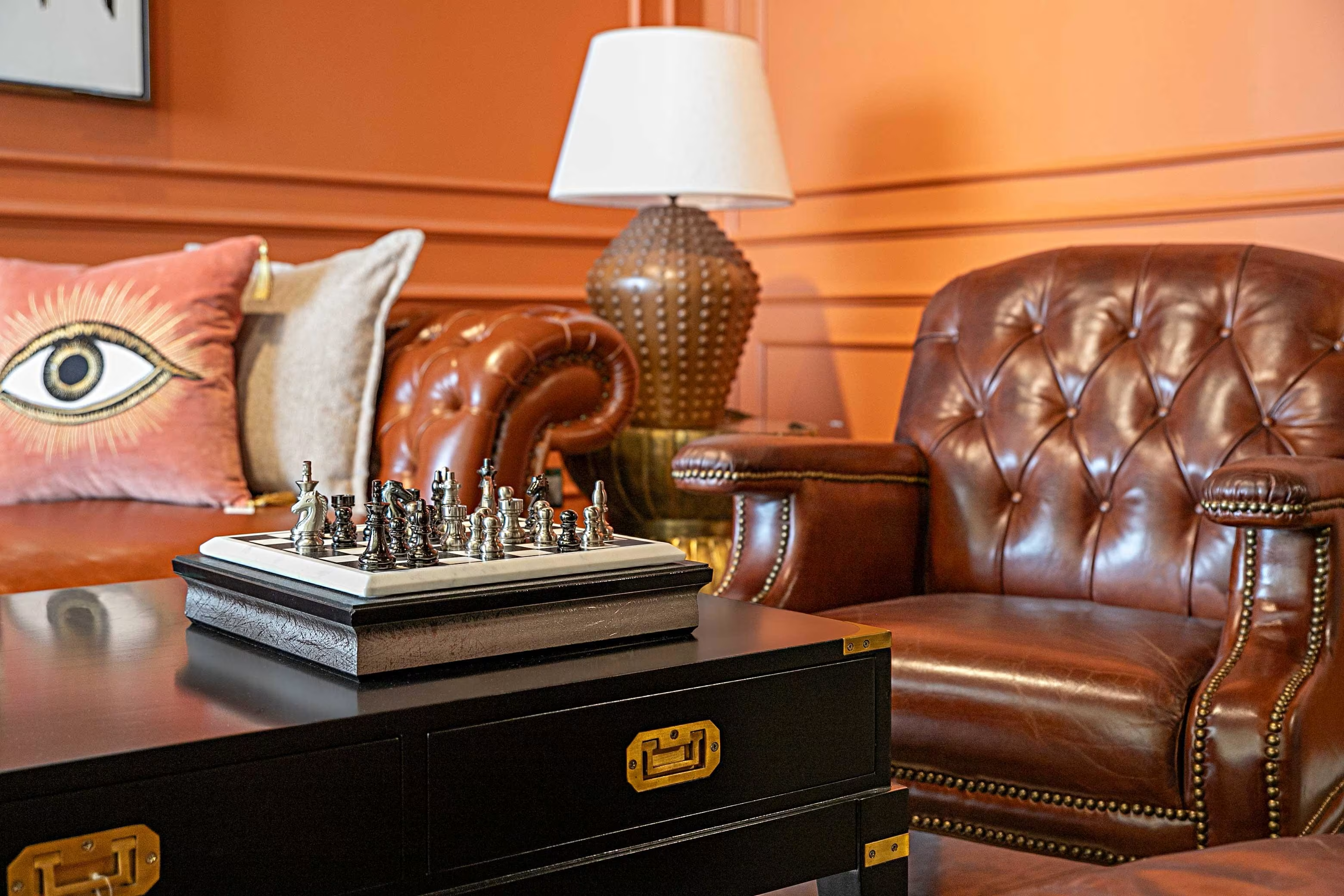
That means you’ll see natural markings. The occasional scar, variation in grain, slight colour differences between panels. Some people love this. Others find it unsettling after paying serious money for a sofa.
What it feels like: Cool and slightly firm when you first sit down, then it warms quickly to your body. Proper full-grain aniline leather has a distinctive smell — not artificial, genuinely rich. Over time, it develops a patina: a subtle darkening and softening that makes it look increasingly beautiful rather than increasingly worn.
Quick verdict: Full-grain leather is the best leather you can buy for a sofa. It genuinely gets better with age. But it marks more easily than treated leathers, and it’s expensive — expect to pay £2,000–£5,000+ for a quality piece. Not the right call if you have toddlers or pets.
Real-world timeline: At one year, it might show a light scratch from a belt buckle or a scuff near the armrest. At five years, those marks blend into a warm, lived-in surface that looks intentional. At ten years, it looks like something worth keeping.
Top-Grain Leather — The Everyday Luxury Pick
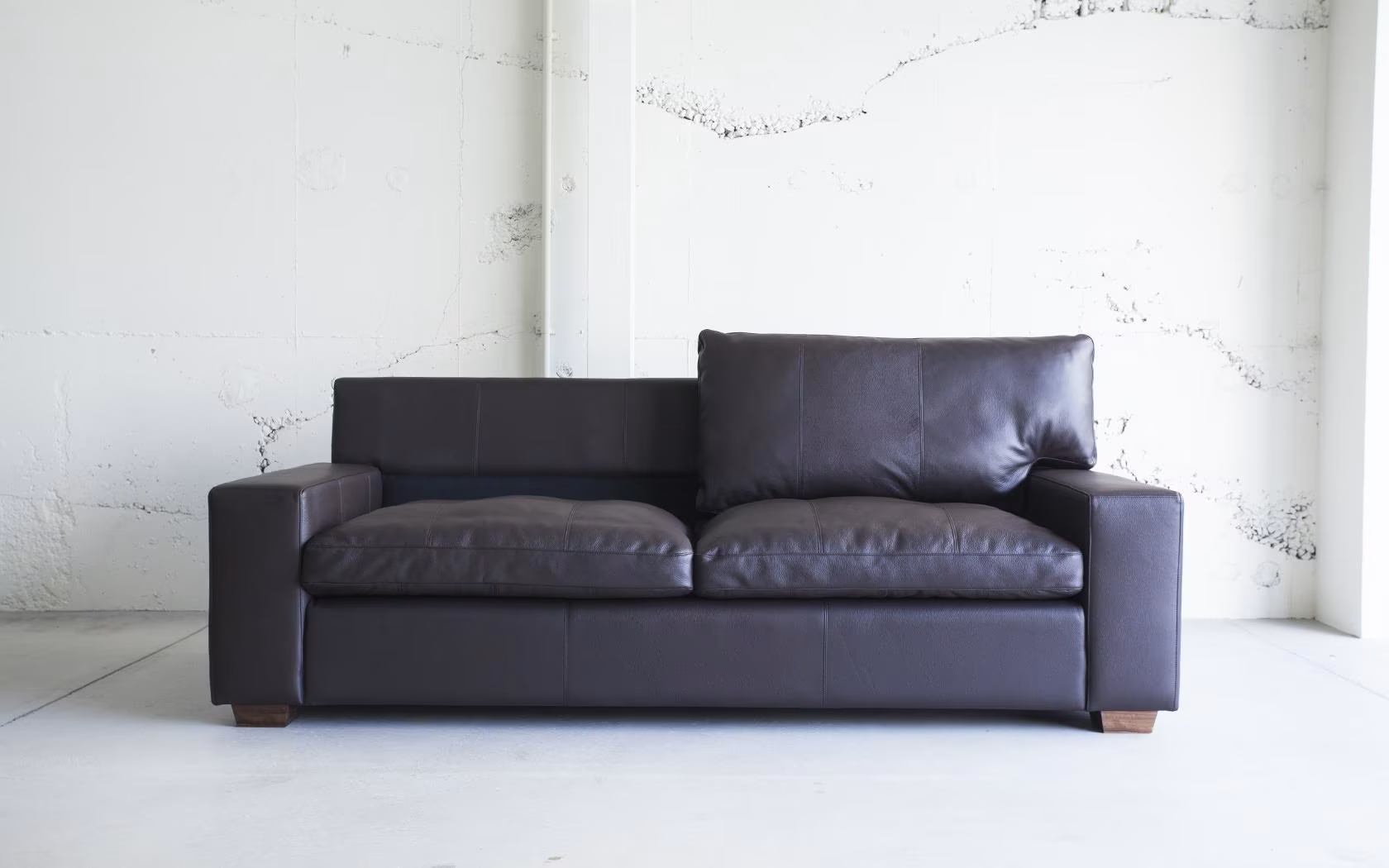
This is where most people land — and it’s a genuinely good option for most households.
Top-grain leather still uses the top layer of the hide, but it’s been lightly sanded to remove natural imperfections, then finished with a protective coating. That process makes it more uniform in appearance, more resistant to staining, and noticeably softer to the touch than full-grain.
What it feels like: Softer and more supple from day one than full-grain. The surface is slightly smoother. It doesn’t have that intense natural leather smell — more subtle. It’s also easier to wipe clean, which matters more than people admit before they have a pasta incident.
The tradeoff is that because the surface has been processed and coated, it won’t develop the same rich patina over time. It ages, but more predictably. Less character, more consistency.
Quick verdict: Top-grain leather is the sweet spot for most homes. Durable, attractive, resistant to everyday mess, and available in a wide range of colours and finishes. Budget around £1,200–£3,000 for a solid three-seater.
If that sounds like your situation — you want something that looks great, holds up to real life, and doesn’t require treating like a museum exhibit — top-grain is where you should be looking.
Split-Grain Leather — The One Worth a Closer Look (For the Wrong Reasons)
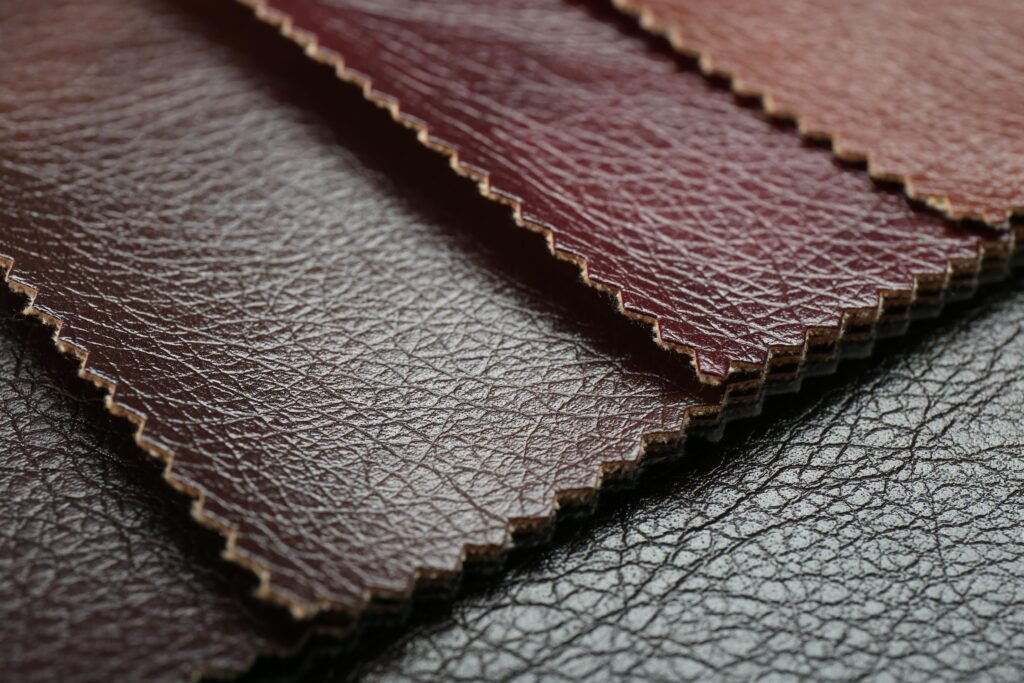
Split-grain comes from the lower layers of the hide, after the top layer has been separated off. It’s a byproduct of making top-grain leather, essentially. The surface is rougher and less durable, so manufacturers typically emboss it with a fake grain texture and apply a heavy finish to make it look like something it isn’t.
What it feels like: Stiffer, often plasticky on the surface. It doesn’t breathe well, so it can feel warm and sticky in summer. It lacks the natural smell of real leather entirely — you’re sitting on a heavily processed, lower-grade material.
Split-grain isn’t a scam, exactly. It’s just significantly lower quality than either full-grain or top-grain, and it’s rarely labelled clearly. You’ll often see it described vaguely as “genuine leather” or just “leather” — which brings us to the section you actually need to read.
Quick verdict: Avoid if you can. If a sofa is priced between £500–£900 and marketed as “real leather,” there’s a good chance this is what you’re getting.
Bonded Leather — Why It Almost Always Disappoints
This is the one responsible for all those peeling sofas.
Bonded leather isn’t really leather in any meaningful sense. It’s made from shredded leather scraps and fibres — the leftover waste from manufacturing — ground up, mixed with polyurethane, and pressed onto a paper or fibre backing. The result is a surface that looks leather-like and initially feels smooth, but has almost none of leather’s actual properties.
It doesn’t breathe. It doesn’t age gracefully. It doesn’t develop character. What it does, reliably, is start to crack and peel — usually between two and five years of regular use. The polyurethane coating separates from the backing, and once it starts, there’s no fixing it.
The reason this matters so much is that bonded leather sofas are everywhere, they’re often attractively priced (£400–£900 for a full three-seater), and the marketing around them is deliberately vague. Words like “reconstituted leather,” “blended leather,” or just “leather” can all be code for bonded. If a sofa is surprisingly cheap for “leather,” check for this.
Quick verdict: Just don’t. Spend a little more and get proper faux leather — you’ll be better off in almost every scenario. If you’ve already got a bonded leather sofa that’s starting to peel, this guide on why leather sofas peel and what to do about it covers your options honestly.
Faux Leather (PU/PVC) — Better Than Its Reputation
Faux leather gets unfairly dismissed. Modern PU (polyurethane) faux leather has genuinely improved over the past decade, and for the right person in the right situation, it’s an excellent choice.
It’s made entirely from synthetic materials — no animal products involved — and it comes in a huge range of colours and textures. The best versions are soft, wipe-clean, resistant to scratches, and hold up well to heavy use.
What it feels like: Warmer to the touch than real leather, often more consistent in texture. It doesn’t breathe as well as full or top-grain leather, so on a hot day, you’ll notice it more. Some versions have a faint chemical smell when new that fades within a few weeks.
The honest limitation is longevity. Quality PU faux leather can last 5–10 years with reasonable care. But it won’t age as gracefully as real leather — it’ll eventually show wear rather than develop character. And not all faux leather is equal: the cheap versions do peel, though usually not as quickly or dramatically as bonded leather.
Quick verdict: If you’re budget-conscious, have pets, are furnishing a rental property, or care about avoiding animal products, good-quality faux leather is a completely legitimate choice. Budget £400–£1,000 for a decent sofa. It’s also worth exploring the faux leather vs real leather comparison if you’re genuinely torn between the two.
What “Genuine Leather” Actually Means — And Why It’s Misleading
This part tends to surprise people.
“Genuine leather” sounds like it means real, proper leather. The genuine article. But in the leather industry, it’s actually a grade designation — and it’s near the bottom of the quality ladder, sitting just above bonded leather.
Genuine leather typically refers to split-grain leather with a heavy finish, or sometimes a mix of lower-grade processed hides. It’s real leather in the technical sense — it does come from animal hide — but it’s not the premium product the name implies.
So when you see a sofa labelled “genuine leather” and priced like a bargain, that’s not a deal. That’s a grade label telling you something about quality, not authenticity.
The leather quality hierarchy, simply put, goes: full-grain → top-grain → genuine leather (split-grain) → bonded leather → faux leather. Real quality is at the top. “Genuine” is in the middle. And faux leather, despite being entirely synthetic, is often a better practical choice than the two grades above bonded.
Worth knowing before you buy.
How to Choose the Right Leather Sofa for Your Home
If You Have Pets or Kids
Top-grain leather with a pigmented, protective finish is your best friend here. The coating resists scratches better than untreated leather, wipes clean after spills, and doesn’t show wear as dramatically.
Full-grain leather is beautiful. But if you have a dog that loves jumping up or a toddler who treats cushions as food delivery platforms, you’ll spend the whole time anxious. That’s not a good relationship with your sofa.
High-quality PU faux leather is also genuinely worth considering — it’s easy to wipe down, often scratch-resistant, and less expensive if something goes catastrophically wrong. Check out our guide to the best leather sofas for pets if this is your main concern.
Short answer for voice search: For families with pets or children, top-grain leather with a protective finish is the most practical choice — it handles scratches, spills, and daily wear far better than untreated full-grain or bonded leather.
If You Want a Sofa That Ages Beautifully
Full-grain aniline or semi-aniline leather is what you want. Accept the higher price, plan for a little early-life care (conditioning it once or twice a year), and enjoy owning a piece of furniture that gets more interesting with time rather than less.
This is also the type of leather that rewards a low-traffic setting. A reading room, a home office, a formal sitting room. Not a living space where three kids and a spaniel compete for the same cushion.
If You’re on a Strict Budget
Skip bonded leather entirely. Seriously. A £600 bonded leather sofa that starts peeling in three years costs more in the long run than a £750 quality faux leather sofa that lasts eight.
Look for well-reviewed PU faux leather options in the £500–£900 range, and check the returns policy. If the retailer won’t tell you clearly what type of material it is, that’s information too.
You can also find furniture on a tight budget without sacrificing quality — it just takes a little more research.
If You Care About Sustainability
Faux leather has a complicated environmental picture. PVC-based options involve plastic production and aren’t particularly recyclable. PU faux leather is somewhat better. Real leather, meanwhile, is a byproduct of the meat industry — which makes the ethics complicated in a different direction.
The most honest answer here is that there’s no perfect option. If sustainability is your priority, look for brands using plant-based leathers (cactus leather, mushroom leather) or certified responsible leather sourcing. These are still niche but increasingly available.
Quick Comparison: All 5 Leather Sofa Types at a Glance
| Type | Durability | Approx. Cost | Pet-Friendly | Easy to Clean | Breathable |
| Full-grain | Excellent (15–30 years) | £2,000–£5,000+ | Low | Moderate | Yes |
| Top-grain | Very good (10–20 years) | £1,200–£3,000 | Good | Good | Yes |
| Split/Genuine | Moderate (5–10 years) | £600–£1,200 | Moderate | Moderate | Limited |
| Bonded leather | Poor (2–5 years) | £400–£900 | Low | Poor | No |
| Faux leather (PU) | Good (5–10 years) | £400–£1,000 | Very good | Very good | No |
FAQs
Which type of leather sofa lasts the longest?
Full-grain leather is the most durable type of leather sofa and can last 20–30 years with proper care. It uses the strongest, most intact part of the hide and develops a natural patina over time rather than degrading. Top-grain leather is the next best option, typically lasting 10–20 years.
Is bonded leather real leather?
Technically yes, but barely. Bonded leather is made from shredded leather scraps bonded together with polyurethane and pressed onto a backing. It contains some real leather content but behaves nothing like genuine full or top-grain leather — it typically starts peeling within 2–5 years of use.
What does “genuine leather” mean on a sofa label?
Despite the name, “genuine leather” is actually a lower grade of real leather — usually split-grain with a heavy finish. It sits near the bottom of the leather quality hierarchy. It’s not fake, but it’s misleading: the label implies quality it doesn’t have.
Is faux leather good for a sofa if you have pets?
Yes — high-quality PU faux leather is often the best practical choice for pet owners. It resists scratches, wipes clean easily, and is less expensive to replace if significantly damaged. Avoid PVC-based faux leather, which tends to crack more readily.
What is the difference between full-grain and top-grain leather?
Full-grain leather uses the complete, unaltered hide surface — including natural markings — and is the highest quality. Top-grain leather has had the surface lightly sanded to remove imperfections, then finished with a protective coating. Top-grain is softer and more stain-resistant from the start; full-grain develops more character over time.
Why is my leather sofa peeling?
Peeling almost always means the sofa was made with bonded leather (or sometimes split-grain with a failing coating). Real full-grain or top-grain leather doesn’t peel — it may crack or dry if neglected, but it doesn’t shed in flakes. Unfortunately, once bonded leather starts peeling, it can’t be repaired permanently.
If you’re also thinking through cushion types and sofa fabrics alongside leather, this breakdown of sofa fabric types is worth reading — it covers the same “honest comparison” approach for textile upholstery. And if you’re deciding between a sectional or a standard sofa in leather, the differences are bigger than most people realise.
The sofa market is genuinely full of vague labelling and optimistic durability claims. Hopefully this gives you enough to walk into a showroom — or a product listing — and know exactly what questions to ask.