Estimated reading time: 12 minutes
Last updated on June 23rd, 2026 at 07:13 am
Most sleeper sofas have a look. You know the one — bulky arms, flat cushions, a slight air of “this is a bed pretending to be furniture.” The appeal of mid-century modern is precisely the opposite: clean lines, tapered legs, low profiles that make a room feel intentional instead of improvised.
So what happens when you need both? The good news is that a mid-century modern sleeper sofa for small spaces is genuinely possible — not as a compromise, but as a considered choice. The less-great news is that most roundups skip the two things you actually need to know: whether the thing will fit once it’s open, and whether your guests will wake up miserable.
Let’s cover both.
What Makes a Sleeper Sofa Actually Work in a Small Room
Before any product names, there are three numbers worth understanding. Width is the obvious one — but it’s the least important of the three.
Width determines how the sofa looks closed and how much wall it needs. For a small living room or studio, you’re generally looking for something under 80 inches. That’s about 6.5 feet — tight enough to leave breathing room on either side without making the sofa feel miniaturised.
Leg height affects the visual footprint. This is where mid-century modern design genuinely earns its place. Tapered wooden legs — even modest 6-inch ones — lift the frame off the floor and expose more visual floor space. That single detail makes a sofa read as lighter and less imposing, which matters enormously in a compact room.
Extended sleeping depth is the measurement almost nobody thinks about until they’ve already ordered. When you pull out a queen sleeper, you’re typically adding 45 to 55 inches of depth beyond the sofa’s footprint. In a small living room, that’s the difference between the bed fitting and the bed blocking your walkway. Measure your room with that in mind — not just the sofa width, but the full open depth from wall to bed edge. More on this in the measurement section below.
The Best Mid-Century Modern Sleeper Sofas Right Now
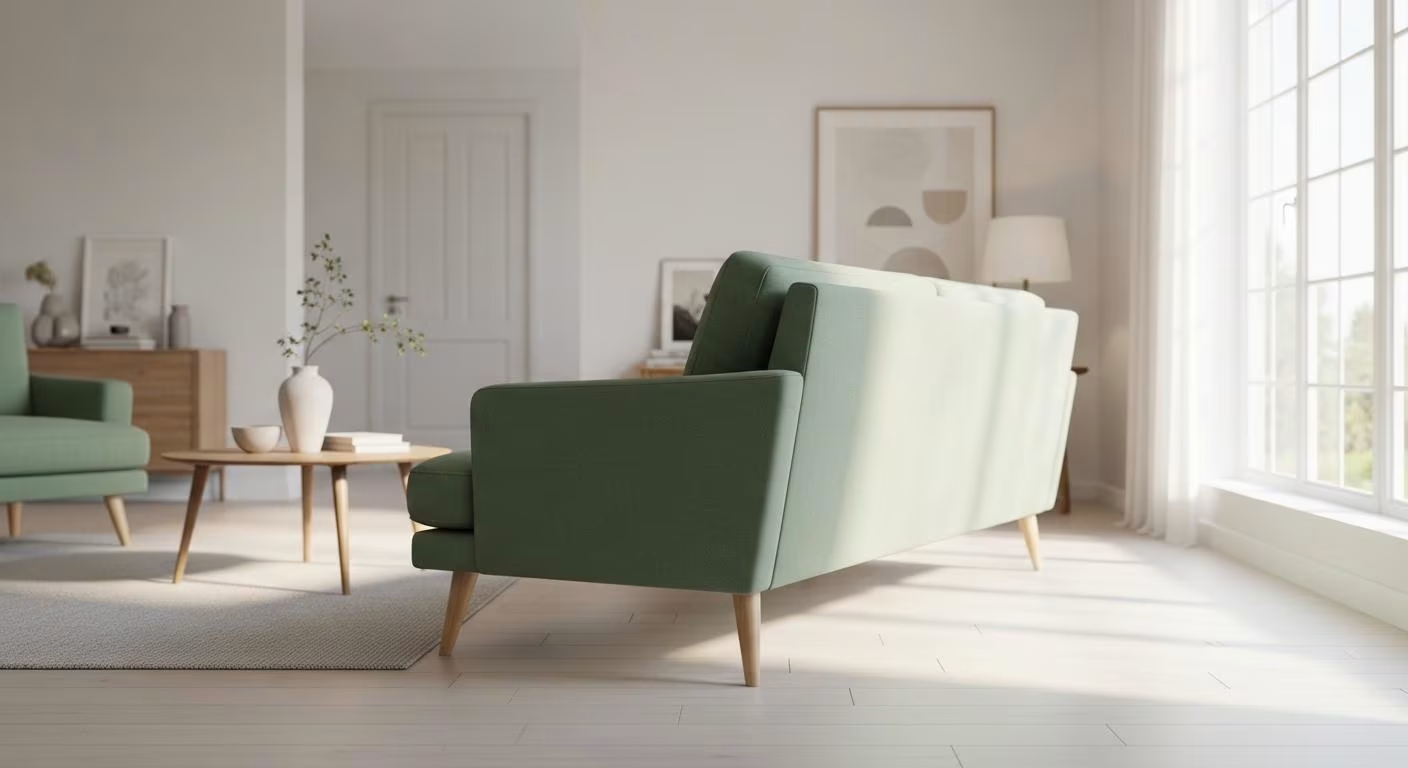
These four picks represent the range from budget entry point to investment piece — with genuine commentary on what each one does well and where it falls short.
West Elm Shelter Sleeper Sofa
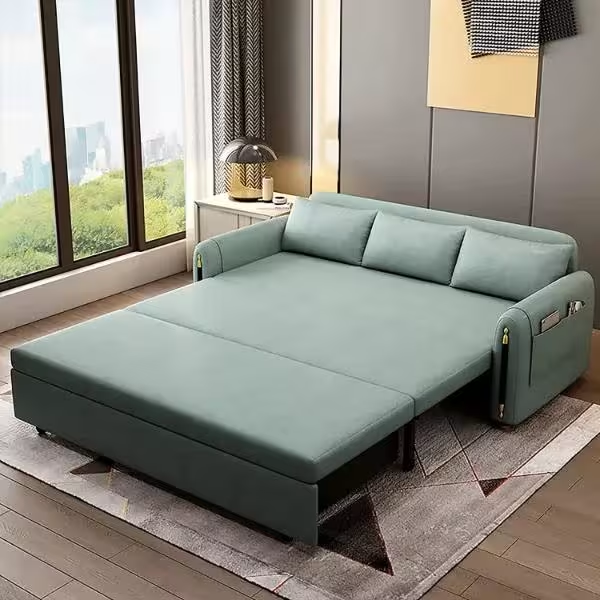
The Shelter is what most people picture when they imagine a proper MCM sleeper. Low, wide, clean — the kind of sofa that looks like it came with the apartment. The frame sits on slim tapered legs, the back is low enough that it doesn’t dominate a room, and the fabric options lean toward the muted end (which, honestly, is the right call for a piece this prominent).
It comes in a queen pull-out configuration with a gel-infused memory foam mattress — which is genuinely better than the standard bar-laden option most sleeper sofas ship with. Not perfect for nightly use, but comfortable enough that your guests won’t be calculating checkout time at 3am.
Width runs around 83 inches, so it’s on the longer side. Worth measuring carefully if you’re working with a narrow wall. It also qualifies as a design-forward piece, meaning it doesn’t look like a sleeper sofa — which, for many buyers, is the entire point.
Best for: Style-first buyers in apartments with a dedicated guest wall. Price sits in the mid-to-high range.
Joybird Eliot Twin Sleeper
This one solves a specific problem: twin pull-out sofas are rare, and Joybird executes the format well. Smaller footprint than a queen (typically around 68 to 72 inches wide), genuine MCM aesthetic with a low frame and solid wood legs, and a pull-out twin configuration that leaves substantially more room when extended.
The trade-off is obvious — a twin sleeper suits solo guests comfortably, couples less so. But for a studio apartment or home office with occasional overnight visitors, it’s often the smarter call than squeezing a queen into a room that can’t absorb the depth.
Joybird’s build quality is solid for the price bracket, and the customisation options (leg finish, fabric) mean it can be calibrated to fit an existing colour scheme without looking like an afterthought.
Best for: Studio apartments, home offices, or anyone who hosts solo guests more than couples.
Burrow Shift Sofa
The Shift takes a different approach — modular conversion instead of a traditional pull-out. The chaise section reconfigures to create a sleeping surface, which keeps the mechanism simpler and eliminates the bar-through-the-mattress problem entirely (more on that shortly).
The sleeping surface is firm and relatively low to the ground, which some people find comfortable and others don’t. The visual profile is excellent — clean, compact, genuinely MCM in its proportions. And the compact footprint (around 76 inches wide for the two-piece configuration) works well in tighter rooms.
One note: the modular conversion means the sleeping surface is narrower than a standard queen pull-out. It’s comfortable for one, snug for two.
Best for: Design-conscious buyers who want a cleaner mechanism and don’t need to sleep two guests at once.
Novogratz Brittany Futon
Every honest roundup should include a budget pick, and this is the one worth discussing properly. The Brittany is often mentioned briefly and moved past — which undersells both its strengths and its limitations.
Strengths: the aesthetic is genuinely mid-century leaning, with a low wooden frame and clean upholstery lines. The click-clack mechanism is simple and reliable. At its price point (typically well under $700), it outperforms what you’d expect in visual terms.
Limitations: the click-clack format means the sleeping position is the folded-flat version of the sitting position — so the cushion thickness and firmness matter more than with a dedicated pull-out. It’s comfortable for occasional overnight use; it’s not a nightly sleeping solution. The frame is also lighter than higher-end options, which means it’ll show wear faster if it’s being converted daily.
Best for: Budget-conscious buyers, occasional guest use, anyone furnishing a first apartment with a realistic price ceiling.
Pull-Out, Click-Clack, or Modular: Which Conversion Type Is Right for You
This question comes up constantly and rarely gets a straight answer.
Pull-out (also called a sofa bed with a fold-out frame) is the most common format. A metal frame folds out from under the seat cushions to reveal a mattress. The main advantages are that the sleeping surface is separate from the sofa cushions, and it can support a proper mattress. The disadvantages are mechanism complexity (more parts that can wear or stick) and the depth extension — typically 45 to 55 inches of floor space when open.
Click-clack is the futon-style mechanism where the back folds down to create a flat sleeping surface from the existing cushions. Simpler mechanics, fewer moving parts, and the frame is usually lighter. The sleeping surface is whatever the sofa cushions are, which is why cushion quality matters so much in this format. Easier to operate than a pull-out — genuinely one-person, no-tool conversion.
Modular conversion (like the Burrow Shift) involves reconfiguring separate sofa sections to create a flat surface. Mechanism is the simplest of the three. The sleeping area is usually narrower, and the feel depends heavily on how the cushions are designed. Best suited to occasional use and single guests.
For small spaces, the click-clack and modular formats win on footprint — they don’t add sleeping depth beyond the existing sofa depth. Pull-outs are more flexible in mattress quality but need extra floor clearance. If your room is genuinely tight, measure the pull-out extension first.
If you’re curious about how these fit within the broader landscape of sofa styles, this guide to the different types of sofa beds breaks down all the variations worth knowing.
The Mattress Question — Let’s Be Honest About It
This is the section most roundups skip entirely, and it’s where the most trust is either built or lost.
Most sleeper sofa mattresses are not designed for nightly use. That’s not a criticism — it’s the product category doing what it’s designed to do, which is support occasional overnight guests without adding 12 inches of profile to the sofa. The engineering trade-offs are real.
The most common complaint about pull-out sleeper sofas is the support bar — the metal bar across the centre of the fold-out frame that you feel through the mattress if the mattress is thin or soft. The first thing most guests notice when they unfold a budget pull-out is exactly this. It’s not uncomfortable in a dramatic way; it’s uncomfortable in a “I kept waking up” way.
There are a few ways the better options address this. Gel-infused memory foam toppers (as in the West Elm Shelter) add enough cushioning to make the bar a non-issue for most guests. Some newer sleeper sofas use a higher-gauge steel frame that positions the bars differently. The Burrow Shift sidesteps the problem entirely by using a different mechanism.
For click-clack formats like the Novogratz Brittany, the mattress question becomes a cushion question. Foam density matters here — look for high-density foam (around 1.8 to 2.5 lb/cubic foot if the spec is listed) rather than just thickness.
The honest bottom line: if your guests will be sleeping on it more than once or twice a month, it’s worth either spending more on the mattress tier or buying a separate 2-inch memory foam topper (around $40 to $80) that you fold away when the sofa is in sofa mode. This is what a lot of apartment dwellers actually do, and it works well.
Curious about what sofa cushion types are used in quality upholstered furniture? This breakdown of sofa cushion types explains the differences between foam densities and fill types in plain language.
How to Measure Your Room Before You Buy Anything
This is the step that prevents the most expensive mistakes.
Step 1: Measure the sofa wall. The distance between any furniture or architectural features flanking where the sofa will sit. This gives you your maximum sofa width.
Step 2: Measure the room depth. From the sofa wall to the opposite wall or nearest obstruction. This is your available space for the open sleeping configuration.
Step 3: Find the sofa’s extended depth. Check the product listing — it’s usually listed as “bed size” or “extended depth.” Queen pull-outs typically extend 50 to 54 inches from the back of the sofa. Add that to the sofa’s own depth (usually 34 to 38 inches) and you have your total floor requirement when open.
Step 4: Account for walkway clearance. You want at least 24 to 30 inches of clearance around the sleeping surface for your guests to actually get in and out comfortably. If the extended bed leaves less than that, you’re looking at a twin-width format or a modular conversion sofa.
Step 5: Check door clearance. This one is easy to forget. Large sofas sometimes don’t fit through apartment doorways, especially around hallway corners. Measure the tightest point between front door and the sofa’s destination room.
A queen pull-out sofa at 83 inches wide, once extended, can occupy a 7-foot by 8-foot area of floor. That’s not a problem in a living room — it’s a real constraint in a studio. Run the numbers before you fall in love with a specific model.
For more on arranging furniture in compact living rooms, this guide to storage ideas for small living spaces has practical layout advice worth reading alongside this.
Quick Comparison: All Four Picks at a Glance
| Sofa | Approx. Width | Conversion Type | Mattress Type | Price Range | Best For |
| West Elm Shelter | ~83 in | Pull-out | Gel memory foam | $$$ | Style-first, dedicated guest room |
| Joybird Eliot Twin | ~70 in | Pull-out (twin) | Foam | $$ | Studio apartments, solo guests |
| Burrow Shift | ~76 in | Modular | Cushion surface | $$ | Design-conscious, tight spaces |
| Novogratz Brittany | ~82 in | Click-clack | Foam cushion | $ | Budget, occasional use |
Price ranges are approximate. Check current listings as prices vary by configuration and retailer.
Frequently Asked Questions
What width sleeper sofa fits a small living room?
For most small living rooms and studio apartments, a sleeper sofa between 68 and 80 inches wide works well. That’s roughly 5.5 to 6.5 feet — enough seating for two or three people without dominating the wall. If you’re working with under 10 feet of clear wall space, lean toward the lower end of that range and factor in side tables or armchair clearance.
Is a futon or pull-out better for small spaces?
For floor space when open, a futon (click-clack) is usually better — it doesn’t add sleeping depth beyond the sofa’s own footprint. For mattress comfort and sleeping quality, a pull-out with a dedicated foam mattress tends to be more comfortable, especially for guests staying more than one night. The right answer depends on how often the bed function actually gets used and how much floor clearance your room allows.
Do mid-century modern sleeper sofas have good mattresses?
Honestly — most are fine for occasional use, not ideal for nightly sleeping. The better options (like the West Elm Shelter’s gel foam) are noticeably more comfortable than entry-level pull-outs. If mattress quality matters, look for gel-infused foam or high-density foam specs in the listing, and consider adding a removable foam topper for frequent guest use.
What does “mid-century modern” actually mean in sofa construction?
Practically speaking: tapered solid wood or metal legs, a low back profile, clean arm shapes (either thin track arms or gently rounded), and upholstery in solid fabric or textured weaves rather than busy patterns. Some sofas market themselves as MCM but only apply the aesthetic at the leg level while keeping a bulky, traditional frame. The real markers are the overall silhouette and the leg-to-frame proportion — a proper MCM sofa should look light, not heavy, from across the room.
How long do sleeper sofa mechanisms last?
A well-made pull-out mechanism used occasionally (a few times a month) should last 5 to 10 years without issue. Daily use is harder on the hardware — particularly the hinge points and frame welds. Click-clack mechanisms are generally more durable because they have fewer moving parts. If you’re planning to use the bed function regularly, look for a solid steel frame and user reviews that specifically mention long-term use.
Can a mid-century modern sleeper sofa work in a home office?
It can work really well, actually. The key is choosing a sofa that reads as intentional furniture during the day — not a guest bed in waiting. The Joybird Eliot twin or the Burrow Shift are both good candidates because their compact footprints leave enough floor space for a desk setup, and neither reads as “guest room” when folded. For more on this kind of dual-purpose room planning, this home office guest room combo guide is worth a look.