
Estimated reading time: 12 minutes
There’s something quietly embarrassing about a dirty washing machine. It’s supposed to be the thing that cleans everything — and yet, open the door on a humid afternoon and you might find black mould creeping around the rubber seal, or a ring of brown residue sitting inside the drum like it’s been there for months. Maybe it has.
Most people only notice it when the smell becomes impossible to ignore, or when their freshly washed white shirts come out with faint grey smudges that weren’t there before.
If that sounds familiar, you’re not alone — and your machine isn’t necessarily broken. These stains are genuinely common, they have specific causes, and most of them can be sorted at home with the right approach. This guide focuses on stains inside the machine itself — the drum, door seal, and dispenser drawer — because that’s usually what’s behind the problem.
Let’s get into it.
Why Does Your Washing Machine Get Stained in the First Place?
This is the part most articles skip, and it’s actually the most useful thing to understand. Because if you don’t know why it’s happening, you’ll clean it once and find yourself back in the same situation three months later.
Low-temperature washes are one of the biggest culprits. Eco cycles and 30°C washes are great for your energy bill and gentle on fabrics — but they don’t get hot enough to kill mould spores or flush out detergent residue properly. Do this consistently, and that residue starts to build up on drum walls, accumulate in the rubber seal, and eventually turn into visible staining.
Hard water makes things worse. If you live in an area with high mineral content in the tap water — much of southern England, parts of the US Midwest and Southwest — limescale deposits form inside the drum and on heating elements over time. That chalky white or brownish crust isn’t just unsightly; it reduces the machine’s efficiency too.
Too much fabric softener is another common cause that doesn’t get nearly enough blame. Softener is thick, waxy, and doesn’t dissolve cleanly at low temperatures. Over time, it coats the drum walls and dispenser drawer with a grey, slightly sticky residue that traps bacteria and starts to smell.
And then there’s airflow — or the lack of it. Closing the door immediately after every wash traps moisture inside. Mould loves moisture. It’ll find the folds of the rubber gasket and settle in before you’ve even noticed.
The Different Types of Stains (and What’s Actually Causing Them)
Not all washing machine stains are the same, and the fix depends entirely on what you’re dealing with. Treating rust with fabric softener remover won’t do much. Treating mould with limescale solution is equally pointless. So it’s worth spending thirty seconds identifying what you’re looking at.
Black or Dark Grey Marks Around the Door Seal
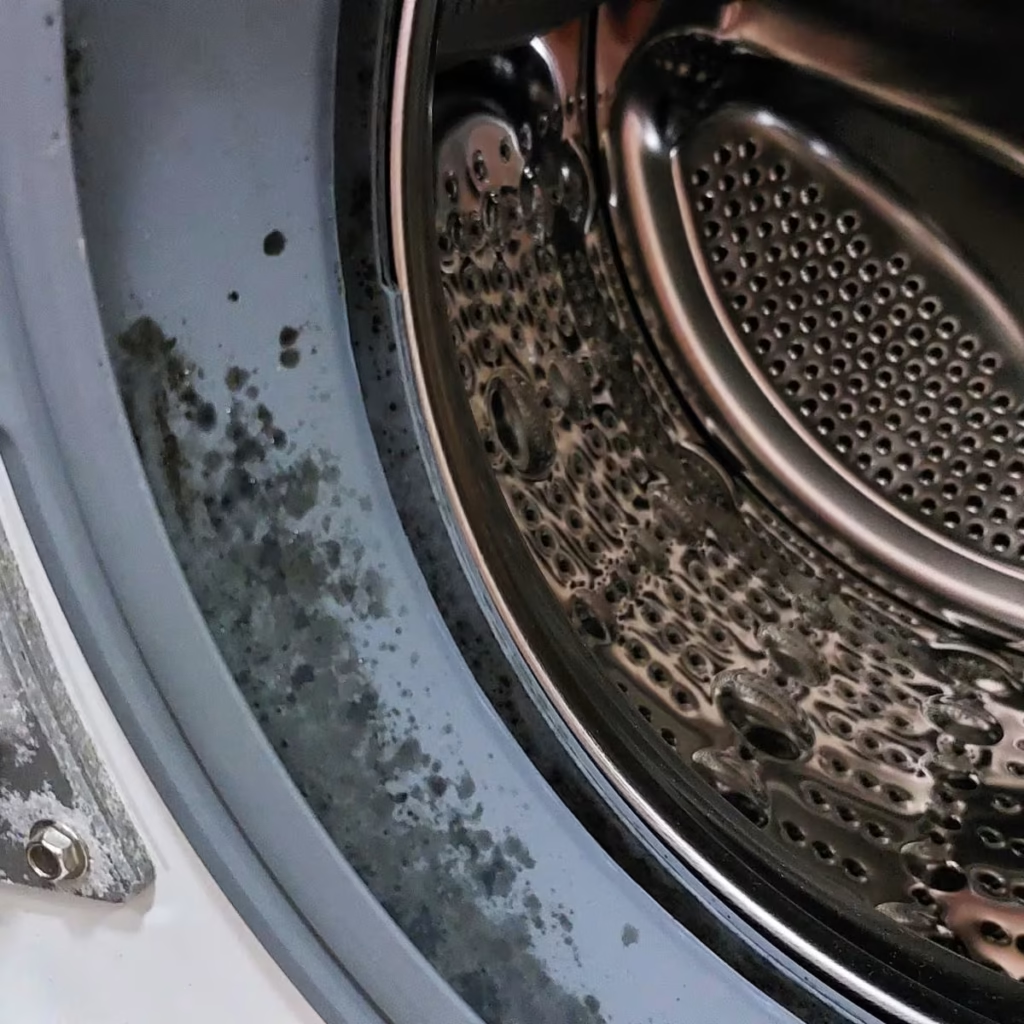
This is almost always mould. The rubber gasket on a front-loader is designed with folds and ridges — and those folds hold onto moisture, lint, and detergent residue between washes. It’s an ideal environment for mildew to grow, especially if the door gets closed while everything’s still damp.
You might also notice a musty smell that lingers even after a wash cycle. That’s the mould.
Brown or Orange Stains Inside the Drum
These can mean two different things. If they look like rust — reddish-brown, slightly rough to the touch — there may be a chipped or damaged area inside the drum where metal is oxidising. That’s worth checking carefully, because rust inside a drum can eventually transfer onto clothes.
Brown staining that’s more of a film or tide mark is usually a combination of detergent residue, hard water minerals, and fabric softener that’s been cooking at low temperatures over a long period. Less alarming, but still needs sorting.
White or Chalky Deposits
Limescale. Classic hard water problem. You’ll often see this around the drum opening, on the door glass, and inside the detergent drawer. It’s essentially the same mineral buildup you’d find in a kettle or showerhead.
Grey or Greasy-Looking Residue
This is typically detergent or fabric softener buildup. It often appears in the dispenser drawer first, but it can coat the drum walls too. If your drawer has started to smell or looks like it’s growing something grey and fuzzy, this is probably what’s happening.
How to Remove Mould From the Door Seal
The rubber gasket is the trickiest part to clean because it has deep folds and the mould can get quite embedded. Be honest with yourself: a quick wipe with a damp cloth probably won’t shift it. You need something with a bit of antimicrobial action.
What works: A solution of one part white vinegar to one part warm water, or a diluted bleach solution (one tablespoon of bleach to one litre of water). Both will kill mould spores. The bleach solution is faster and more effective on heavy mould; vinegar is gentler and better for regular maintenance.
Here’s the process:
- Pull back the rubber folds of the gasket — there’s usually a front flap that lifts to reveal a deeper channel where water and grime collect.
- Spray or apply your cleaning solution directly onto the mouldy areas and leave it for at least 20–30 minutes. Don’t rush this part.
- Scrub with an old toothbrush or a small stiff brush — you need something that can get into the ridges. A cloth won’t do it properly.
- Wipe away the residue with a damp cloth and rinse well.
- Run a short hot cycle (60°C or above) on an empty machine afterwards to flush everything through.
If the mould has been there a while and has visibly stained the rubber itself, it may not come out completely. Products like HG Mould Spray or Dettol Washing Machine Cleaner can help, but very deep mould staining on a gasket sometimes means the seal needs replacing. That’s a job for a repair technician, but it’s usually not expensive.
Dealing With Brown Stains and Drum Residue
For general drum staining — the kind caused by detergent buildup, hard water, and fabric softener residue — a hot empty wash with a cleaning agent is your best starting point.
Citric acid is excellent for this. It breaks down limescale and mineral deposits far more effectively than most commercial tablets. You can find food-grade citric acid powder cheaply online or in health food shops. Add about 100–150g directly to the drum (not the drawer) and run the hottest cycle your machine offers — ideally 90°C, or at least 60°C.
White vinegar works similarly but is better at cutting through grease and softener residue. Add 500ml to the drum and run a hot cycle. Don’t combine vinegar and bleach — ever. The fumes aren’t safe.
Oxygen bleach (like sodium percarbonate, found in products like OxiClean or Vanish Oxi Action) is useful for persistent drum staining. It’s different from chlorine bleach — less harsh, no fumes, safe for most machine types. Add a couple of scoops directly to the drum and run a 60°C cycle.
For actual rust spots — the kind that feel rough or are concentrated in one area — check the drum carefully for chips or scratches. Small rust patches on the drum interior can sometimes be treated with specialist appliance touch-up enamel, but if the rust is spreading or deep, that’s a conversation worth having with a washing machine repair service before it damages your laundry.
Don’t Forget the Detergent Drawer
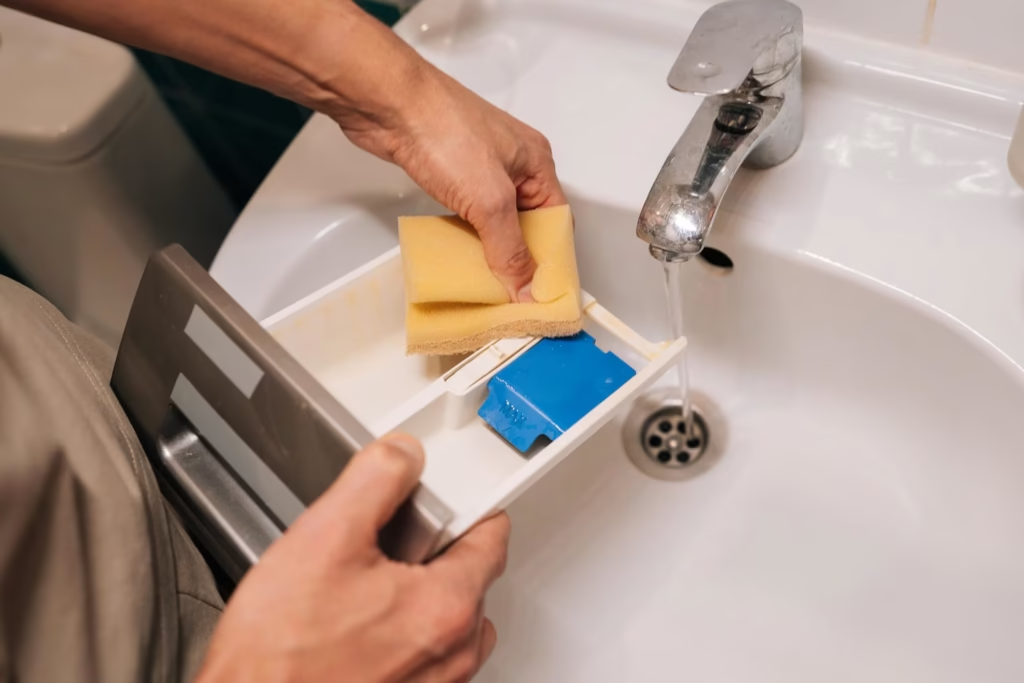
Seriously, pull it out. The whole thing usually unclips or slides right out — there’s often a small release tab at the back. What you find inside might surprise you.
Fabric softener in particular turns into a thick, gunky residue that blocks the compartment and starts harbouring bacteria. Rinse the drawer under hot water and scrub it with an old brush. For stubborn buildup, soak it in hot water with a scoop of oxygen bleach for 30 minutes before scrubbing.
Check the cavity the drawer sits in too — mould and residue build up in there as well, and it’s easy to overlook. A small brush or damp cloth can get into the corners.
If you find yourself cleaning this every few months, cutting down on fabric softener will help a lot. Many people use far more than they need to — the recommended dose is usually much smaller than the fill line suggests.
For more on keeping this area clean, check out how to remove stains quickly — some of the same principles apply to built-up residue in appliance compartments.
Front-Loaders vs Top-Loaders: A Quick Note
Most of what’s covered here applies to both machine types, but there are a couple of differences worth knowing.
Front-loaders are significantly more prone to mould around the door seal. The horizontal drum orientation means water sits in the gasket folds after every wash. If you have a front-loader, the gasket deserves specific attention every few weeks — not just when you can see a problem.
Top-loaders don’t have that rubber seal, so mould is less of an issue. Their main problem tends to be residue buildup on the drum walls and around the agitator (if they have one). A hot empty wash with citric acid or a dedicated machine cleaner tackles this well.
Both machine types benefit from leaving the door or lid open between washes to let moisture escape. It’s a small habit that makes a meaningful difference.
Why the Stains Keep Coming Back
If you’ve cleaned the machine and the stains reappeared within a month or two, the root cause hasn’t changed. Here’s what usually needs adjusting:
Run a hot wash regularly. Once a month at 60°C or 90°C — empty, with a cleaning agent — flushes out buildup before it becomes visible staining. Think of it like home maintenance for winter: regular upkeep is far easier than dealing with a crisis.
Use less detergent and softener. Most people overdose on both. Excess doesn’t clean better — it just leaves more residue behind.
Leave the door open. Half an hour after each wash is enough to let the drum air out. Even leaving it ajar counts.
Clean the filter. Your machine has a filter — usually behind a small panel at the front bottom — that catches lint and debris. A blocked filter affects drainage and contributes to damp conditions inside the drum. It’s worth checking every couple of months. You can find more detail on this in a dedicated guide to keeping your home appliances running well.
If you’ve done all of this and the machine is still producing stains or smell, it might be worth having it professionally serviced. Sometimes the issue is internal — a blocked standpipe, a malfunctioning heating element that isn’t reaching cleaning temperatures, or deteriorating drum seals. A washing machine engineer can usually diagnose this in one visit.
Vinegar vs Bleach vs Citric Acid: Which Should You Use?
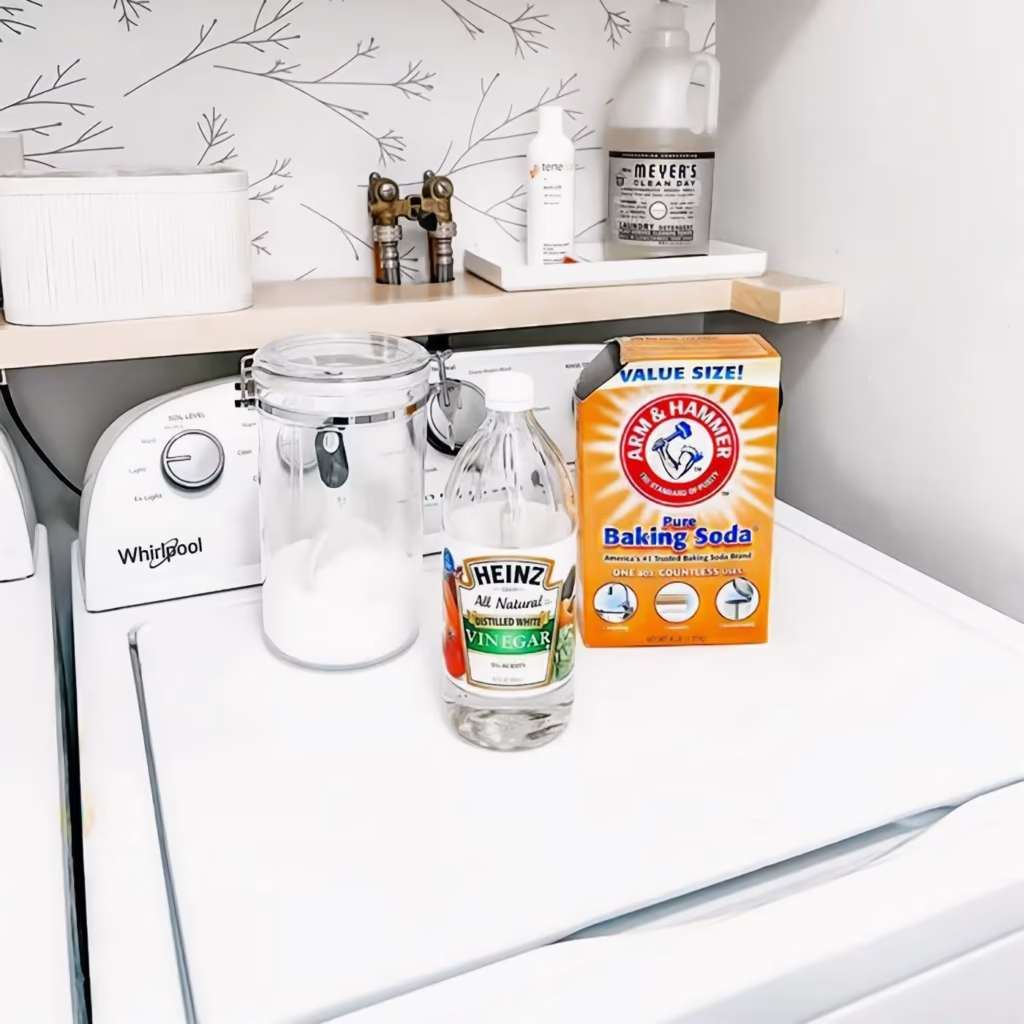
Here’s a quick breakdown since this is where most people get confused:
White vinegar — Good for regular maintenance, softener residue, and mild mould. Safe, cheap, widely available. Run it through on a hot cycle. Don’t combine with bleach.
Citric acid — Best for limescale and hard water deposits. Highly effective, cheap, and much gentler on machine components than bleach. A good first choice if you’re in a hard water area.
Oxygen bleach (sodium percarbonate) — Strong all-rounder for drum staining, residue, and odour. Safe for most machines. Better than chlorine bleach for general use.
Chlorine bleach — Most powerful for mould, but use it sparingly and dilute properly. Not suitable for all machine types — check your manual. Never mix with vinegar or other acids.
Commercial machine cleaners (Affresh, Dettol Washing Machine Cleaner, Calgon) — Convenient, generally effective, and formulated not to damage seals or components. Worth using occasionally even if you’re using natural alternatives.
Frequently Asked Questions
Is it safe to put bleach directly in the washing machine drum?
Yes, in small amounts and diluted. Add one tablespoon of chlorine bleach per litre of water, or use a product formulated for machine cleaning. Don’t add it undiluted and never mix it with vinegar or citric acid. Always run a rinse cycle afterwards. Check your machine’s manual if you’re unsure — some manufacturers advise against bleach specifically.
How often should I clean my washing machine?
A proper drum clean every four to six weeks is a reasonable routine for most households. If you wash at low temperatures regularly, or have a large family doing multiple washes a day, once a month is better. The door seal and detergent drawer deserve a quick wipe-down every couple of weeks.
Why does my washing machine still smell after cleaning?
A persistent smell usually means the mould or bacteria is somewhere that a standard drum cycle doesn’t reach — often the gasket folds, the filter, or the detergent drawer cavity. It can also indicate a drainage issue. Clean all three components specifically, not just the drum, and check that your filter isn’t blocked. There’s more detail on this in our guide on why washing machines smell and how to fix it.
Can I use the same cleaning methods on a front-loader and a top-loader?
Mostly yes, but with one difference: the rubber door seal on a front-loader needs manual cleaning that a top-loader simply doesn’t require. Everything else — hot cycles, citric acid, cleaning the drawer and filter — applies equally to both.
Will cleaning the machine remove stains from my clothes too?
Not directly. If your clothes are coming out with marks on them, a clean machine helps prevent future transfer — but existing stains on fabric need to be treated separately. Getting into the habit of a quick stain removal process before washing makes a big difference.
The honest truth is that most washing machine staining is a maintenance problem, not a damage problem. The machine isn’t failing — it’s just not being cleaned as regularly as it probably should be. A monthly hot cycle, a bit of attention to the rubber seal, and pulling out the detergent drawer occasionally will keep most of these issues from ever becoming the kind of problem that sends you searching for answers at 11pm.
Start with whichever stain is most visible right now and work from there. You don’t need to overhaul everything at once.


