Estimated reading time: 19 minutes
Title: Best Home Decor Items to Refresh Every Room in 2026
Most people don’t have a decorating problem. They have a starting problem.
Your place is clean. It’s functional. But there’s this nagging feeling every time you walk through the door — like the space belongs to a version of you from three years ago, not the one you are now. Nothing is technically wrong with it. Everything just feels a little off, a little borrowed, a little unconvincing.
That feeling has a fix. And it rarely involves buying a whole new sofa.
The best home decor items aren’t the biggest or most expensive ones. They’re the pieces that shift a room from looking assembled to feeling inhabited. This guide goes room by room through the items that actually move the needle in 2026 — with specific material recommendations, honest sizing guidance, and a section for renters who are usually left out of this conversation entirely.
No generic “invest in quality” advice. No vague gestures toward “adding warmth.” Just practical, specific, real.
Why Refreshing a Room Feels Harder Than It Should
Here’s something nobody says out loud: the reason most home refreshes stall isn’t taste. It’s decision paralysis. You open a tab, scroll through 400 throw pillows, close the laptop, and do nothing.
The antidote is having a framework before you shop — knowing which category of item your room is actually missing, rather than trying to find the perfect single piece to fix everything at once. A room that feels flat usually needs one of three things: a layer of texture it’s missing, a light source that isn’t the overhead fixture, or a focal point your eye can actually land on. Figure out which one your room needs and the shopping list practically writes itself.
For a broader look at the types of home decor items worth building a collection around, this overview of home decor items breaks down the categories worth prioritising.
Living Room Decor Items Worth Every Dollar
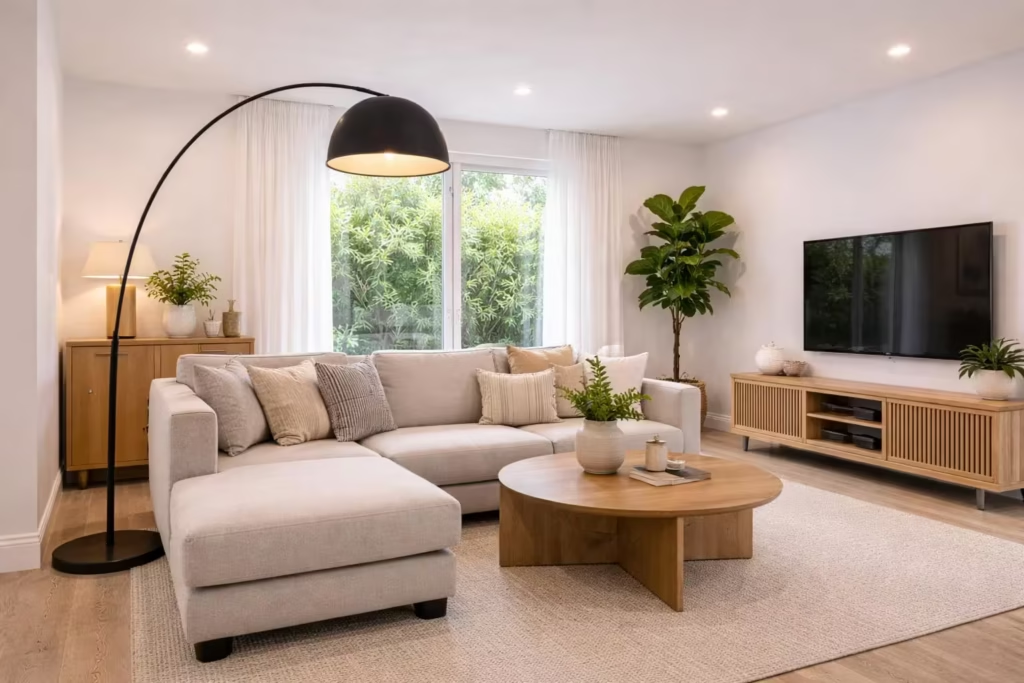
The living room carries more decorating weight than anywhere else in the house, which is exactly why people overthink it. Let’s work through the items that genuinely matter.
Get the Rug Right First
A rug that’s too small is the most common living room mistake, and it’s also one of the easiest to fix once you know what to look for. The front legs of every major seating piece — sofa, armchairs — should rest on the rug. Not hover near it. Actually on it. A rug that only sits under the coffee table makes your furniture look like it’s floating.
In 2026, the rugs getting the most traction are low-pile wool, natural jute, and hand-knotted Moroccan-style flatweaves. They’re durable, they photograph well in any light, and they age gracefully instead of getting that sad, matted look cheaper options develop after a year. If you’re working with a standard living room, aim for a 9×12 or 8×10 — most people underestimate how large a rug needs to be in an actual room versus what looks proportional in a product photo.
Lighting Is the Thing Everyone Gets Last (Do It First)
Here’s an honest observation: every single room that feels “off” but hard to explain is almost always a lighting problem. Overhead lighting illuminates a room. Layered lighting inhabits it.
The most impactful single item you can add to a living room right now is a floor lamp with a warm-toned bulb — something sculptural that earns its place as a design object even when switched off. Arched floor lamps with linen shades, rattan torchieres, and blackened iron designs with Edison-style filament bulbs are all doing the work in 2026. Pair any of them with a small table lamp on an end table at seating height and you’ve instantly created the layered, dimensional lighting effect that makes a room feel designed rather than default.
If your end tables are pulling double duty as storage, these end table storage ideas are worth a look before you style them.
Throw Pillows and Blankets — The Cheat Code Nobody Talks About
Pillows get a bad reputation for being the lazy decorator’s tool. That’s fair — badly chosen pillows absolutely wreck a room. But the right combination is transformative and costs a fraction of new furniture.
The mistake most people make is buying pillows that all match. A sofa covered in identical cushions looks like it came straight off the showroom floor. Instead, choose two or three fabrics that coordinate rather than match — a solid linen, a subtle pattern in the same color family, and a textured boucle or velvet. Keep the sizes varied too: two larger squares (22″) and two smaller ones (18″) create asymmetry that looks collected rather than curated-for-Instagram.
A chunky knit or sherpa throw draped casually over one arm of the sofa finishes the look. Not folded. Draped, slightly off-centre. There’s a reason every interiors photographer does this — it signals that a real person actually sits there.
Bedroom Refresh Items That Make You Want to Be in the Room
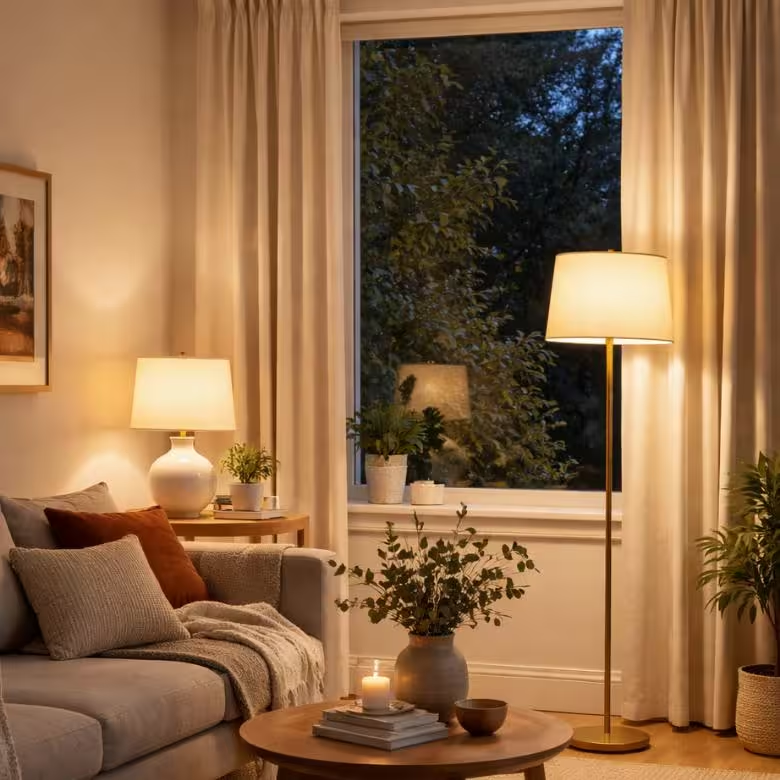
The bedroom is the most underestimated room in the house. People spend real money on the living room because guests see it, and then make do with whatever’s in the bedroom. Which is a shame, because the bedroom is the one room that directly impacts how you feel when you wake up and go to sleep every single day.
Linen Bedding — The Upgrade Worth Doing Sooner Than You Think
Linen bedding is one of those purchases where the gap between cheap and decent is enormous. Inexpensive linen washes stiff and scratchy. Quality washed linen — look for a thread count of 80-150 with a flax content above 60% — gets softer with every wash, drapes beautifully, and has that effortlessly relaxed texture you see in every aspirational bedroom photo. Natural flax tones, warm whites, and earthy terracottas are the palette of the moment in 2026, and for good reason — they complement almost every other material.
Layer your bed the same way you’d layer a sofa: a fitted sheet, a flat sheet, a lightweight cotton blanket, then the duvet. Add two or three accent pillows in front that come off at night. It sounds like a lot, but it takes 90 seconds once you have a routine, and the visual payoff is significant.
Nightstand Styling That Actually Works
Your nightstand is the most styled surface in the room that most people completely ignore. The formula that works: one light source (a ceramic or terracotta-based table lamp with a small drum shade reads well in any bedroom style), one functional tray (a wooden or stone tray corrals your phone, glasses, and whatever book you’re currently not finishing), one plant or small vase, and nothing else. Three things. That’s it.
The plant matters more than you’d expect — something small like a propagated pothos in a terracotta pot brings organic warmth that no object can replicate. And it’s alive, which adds a quality to a room that photographs can’t fully capture but that you feel every time you walk in.
The Mirror That Changes a Room’s Proportions
A full-length mirror in the bedroom does two things simultaneously: it makes the room feel larger and brighter, and it gives you a proper place to get ready in the morning. A leaner mirror — one you prop against the wall rather than hang — is particularly effective in rented spaces where wall fixings are limited.
In 2026, arched mirrors are still going strong, and rightly so. The curved top softens the hard lines of most bedrooms and adds a sculptural quality that flat rectangular mirrors can’t match. If you prefer something hung, a round mirror above the dresser creates a vignette that feels intentional rather than accidental.
Kitchen Decor That Doesn’t Require a Renovation
Most kitchen decor advice assumes you’re willing to gut the place. The reality is most people want to make their existing kitchen feel better without touching a single cabinet. Here’s what actually works.
Hardware Swaps — The Fastest Transformation in Decorating
Changing cabinet hardware is the closest thing home decorating has to a cheat code. It costs relatively little, takes an afternoon, and the visual difference is extraordinary. The two finishes dominating kitchens right now are brushed brass and matte black — both have legs because they work with warm-toned and cool-toned kitchens respectively.
The only rule worth following: commit to one finish throughout the kitchen, including your faucet if you can. Mixing gold-toned pulls with chrome fixtures creates a visual noise that’s hard to pin down but easy to feel. Cohesion in the metallic finishes is one of the primary signals that separates a kitchen that looks considered from one that looks assembled over time.
Pairing updated hardware with smart storage inside those cabinets extends the refresh feeling beyond the surface level — a kitchen cabinet drawer organiser makes the functional upgrade complete.
Counter Styling Without the Clutter
Here’s an honest kitchen observation: most kitchen counters are either a storage overflow zone or a staged-to-within-an-inch-of-its-life showroom set. Neither feels like a real person’s kitchen.
The version that works: keep only the items you use daily on the counter (coffee machine, toaster, knife block), and then add exactly three decorative elements that earn their space. A wooden end-grain cutting board propped upright against the backsplash. A ceramic crock holding your most-used utensils. And a small herb planter near the window — fresh basil, rosemary, or thyme — which adds colour, fragrance, and the genuinely satisfying feeling of having something living in your kitchen.
If you’re thinking about how appliances fit into the overall kitchen aesthetic, the latest kitchen appliance trends show how form and function are increasingly being balanced in 2026.
Open Shelving — Worth It If You Do It Right
Open shelves are divisive, and not without reason. Done poorly, they become a dust-collecting chaos zone. Done well, they’re the most characterful feature a kitchen can have. The key is radical editing: display only your most attractive pieces, keep the colour palette of displayed items cohesive (all white ceramics, or all warm terracotta tones), and leave genuine negative space between groupings.
A shelf that’s 70% full looks styled. A shelf that’s 95% full looks like storage. That 25% of breathing room is doing more work than any individual object on the shelf.
Bathroom Items That Turn a Basic Space into Somewhere You Actually Enjoy
Bathrooms are genuinely neglected in most home decor conversations, which is strange given how much time most people spend in them and how quickly they respond to a few considered additions.
The Mirror Upgrade That Changes Everything
If your bathroom still has the builder-grade frameless mirror that came with the place, this is the single highest-impact swap you can make. A round mirror or arched mirror above the vanity immediately signals intentionality — it communicates that someone made a choice, which is what all good decorating communicates.
A round mirror in the 24-30″ diameter range works for most standard vanities. Go larger if your vanity is wide and you have the vertical wall space. The key is hanging it so the centre of the mirror sits roughly at eye level for the tallest person who uses the room — around 60 inches from the floor as a starting point, adjusted for your specific situation.
Towels, Trays, and the Details That Read as Luxury
Two sets of matching, high-quality towels in a neutral tone — warm white, sand, or soft sage — do more for a bathroom’s aesthetic than almost any other change. Display them folded on open shelving or a ladder rack rather than stuffed into a closed cupboard. The visible fabric becomes part of the room’s texture palette.
A wooden or marble tray on the counter corrals your everyday products and stops the surface from looking cluttered. The tray itself doesn’t need to be expensive — a small acacia wood or white marble tray from most homeware stores does the job — but the effect of containing your products within a defined boundary is immediately cleaner and more considered.
A trailing pothos in a white ceramic pot on the windowsill or vanity is the easiest plant decision in the house. It thrives in humidity, tolerates low light, and looks genuinely lush within a few weeks.
What Actually Makes a Room Look Expensive
This is one of the most-searched questions in home decorating, and most answers dance around it. Here’s the direct version.
Scale. Expensive rooms use large-scale items — a sofa that actually fills the wall, a pendant light that makes a statement rather than apologising for itself, a mirror that takes up meaningful wall real estate. Rooms that look cheap often have furniture and accessories that are too small for their space, making everything feel tentative.
Negative space. A room filled edge-to-edge with furniture and objects looks overcrowded regardless of what you spent. Expensive-looking rooms have deliberate emptiness — a clear stretch of floor, a shelf with breathing room between objects, a console table with a single vase rather than seven things fighting for attention.
Cohesive metallics. As mentioned in the kitchen section: pick one metal finish and use it throughout the room. Every lamp base, every drawer pull, every picture frame wire, every hardware detail. Mixing polished chrome with warm brass with brushed nickel creates visual noise that reads as “budget” even when nothing in the room actually is.
Quality of textiles. You can tell the difference between cheap and quality linen, velvet, and wool from across the room. Not because you consciously assess it, but because the way fabric hangs, catches light, and drapes tells your eye everything. Textile quality is the single most impactful signal of room quality.
One genuinely unexpected piece. Every room that reads as expensive has at least one thing you can’t buy at a mainstream retailer — a vintage find, a handmade ceramic, a piece of original art, a rug from a small producer. It doesn’t need to be the most expensive item in the room. It just needs to be the piece that makes someone say, “where did you get that?”
Decorating When You Rent — The No-Damage Approach
Most home decor guides are written for homeowners. Which means an enormous number of people — renters in apartments, house-shares, or temporary situations — are left trying to adapt advice that assumes you can paint, drill, and permanently modify your space.
You can’t. But that doesn’t mean you’re stuck.
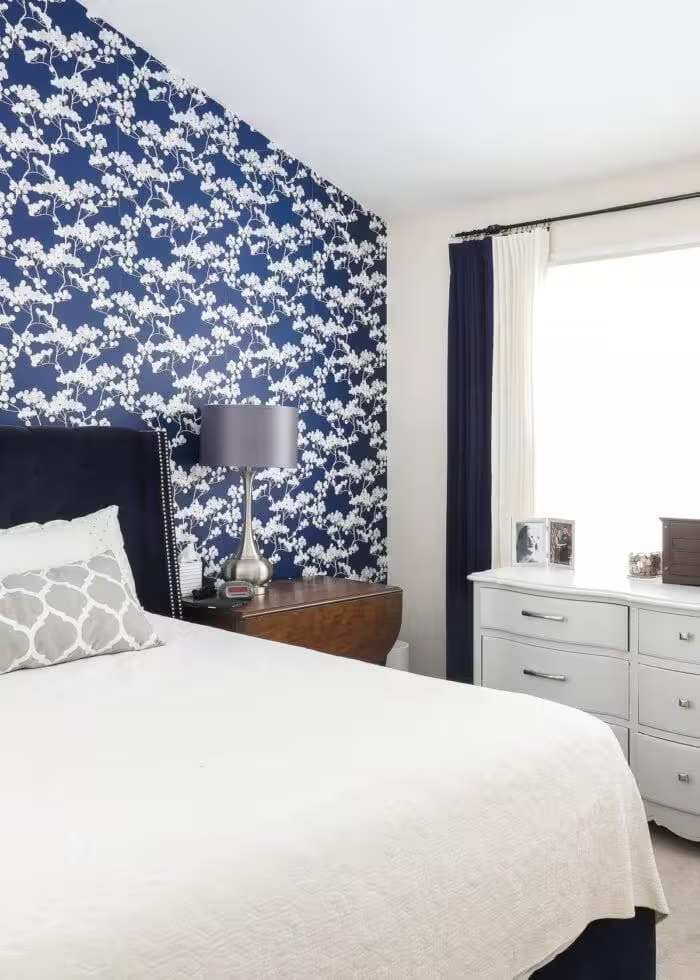
Removable wallpaper has come a very long way. Modern peel-and-stick wallpaper from brands with proper adhesive technology goes up cleanly, comes down without damage, and now comes in genuinely sophisticated patterns — linen textures, subtle grasscloth effects, architectural grid prints. One accent wall behind a bed or along a hallway is all you need to transform the feel of a space.
Tension rods let you hang curtains without drilling. Floor-to-ceiling curtain panels in linen or velvet, even in a rental bedroom, make the ceiling feel taller and the windows feel more intentional. Use command hooks rated for the weight of your curtain rod if you need wall support.
A large area rug is one of the most transformative items in any rental. It covers tired flooring, defines zones in open-plan layouts, and adds more warmth to a space than almost any other single purchase. It also travels with you when you leave.
Furniture choices matter too. If you’re renting and potentially moving in the next few years, a sofa bed is a much smarter investment than a standard sofa — it gives you flexibility without sacrificing daily comfort. These sofa bed options cover the range from compact apartment-scale designs to full-size convertibles.
If your main challenge is making a small rental feel bigger and better organised, these strategies for creating extra space are directly applicable to rental constraints.
The goal for renters isn’t to pretend you own the place. It’s to make it feel genuinely yours within whatever limitations you’re working with. That’s actually a more interesting creative challenge than having unlimited freedom — constraints force specificity.
The 60-30-10 Rule — The Simplest Framework for Color in Any Room
The 60-30-10 rule is a color distribution guideline used in interior design. It divides a room’s palette into three proportions: 60% dominant color (usually walls, large furniture, and flooring), 30% secondary color (upholstery, curtains, or a large rug), and 10% accent color (cushions, artwork, decorative objects, and accessories).
The rule works because it prevents the two most common color mistakes: using too many competing colors in equal amounts, which creates visual chaos, and using only one color throughout, which creates visual monotony. The 10% accent is where personality enters — a pop of terracotta in an otherwise neutral room, a deep navy blue in a mostly warm-toned kitchen, a soft blush in a room dominated by earthy greens.
It doesn’t need to be applied rigidly. A room that’s 65-25-10 isn’t broken. The principle matters more than the precise numbers — the key insight is that accent colors should be genuinely accented, not equal players.
This same framework originally comes from painting composition, which is part of why it feels so intuitive when you see a room that uses it well — your eye registers the proportions as natural even if you can’t articulate why.
Three Decorating Mistakes That Are Worth Avoiding This Year
These come up in almost every room, and they’re worth naming directly.
Hanging art too high. The centre of any artwork should sit at approximately 57-60 inches from the floor — roughly eye level for the average adult. When art hangs above a sofa, leave 6-8 inches between the top of the sofa back and the bottom of the frame. Art hung higher than this floats disconnected from the furniture below it, which makes the whole wall feel unanchored. Most people hang art too high the first time. A tape measure solves this in 30 seconds.
Buying everything from one place. A room furnished entirely from one retailer in one shopping session looks like a showroom. It’s technically correct but personally empty. The goal is a “collected over time” feeling — which you can actually achieve intentionally by mixing one or two new pieces with a vintage or secondhand find, or combining a mainstream retailer’s basics with a handcrafted accessory from a small maker.
Ignoring the space between things. Overcrowding surfaces is the number-one reason a styled room stops feeling styled and starts feeling cluttered. The negative space around objects is as much a design choice as the objects themselves. A coffee table with five things on it reads very differently from the same table with three — even if the three are less interesting individually. When in doubt, remove one thing.
The Decor Items That Make the Biggest Difference by Room — Quick Reference
Here’s a condensed version of the highest-impact additions covered above:
Living room: a properly sized area rug (front legs of all seating on the rug), a sculptural floor lamp with warm-toned bulb, coordinated throw pillows in mixed fabrics and sizes.
Bedroom: washed linen bedding in natural tones, a ceramic table lamp at nightstand height, a leaning or arched full-length mirror.
Kitchen: updated cabinet hardware in a single consistent finish, three counter styling elements (cutting board, utensil crock, herb plant), open shelving edited to 70% full.
Bathroom: a round or arched mirror above the vanity, matched towels on a ladder rack, a wooden tray to contain counter products, a pothos in a ceramic pot.
Renter-specific: removable peel-and-stick wallpaper for one accent surface, floor-length curtains on tension rods, a large area rug over rental flooring, a sofa bed if flexibility matters.
If sustainability matters in your material choices — and it increasingly does for 2026 buyers — this guide to eco-friendly home improvements covers natural materials and lower-impact options across product categories.
And if you’re thinking seasonally — particularly getting your space ready for winter — these practical home maintenance tips sit alongside the decorating decisions worth making before the cold months arrive.
FAQs
What are the best home decor items for a small living room?
For a small living room, focus on pieces that serve double duty or create the visual impression of more space. A large mirror on the main wall reflects light and makes the room feel deeper. A rug that’s larger than you think you need (rather than one that’s too small) makes the space feel defined rather than cramped. Choose a loveseat or two armchairs over a large sectional, and keep the floor plan open by floating furniture away from the walls slightly rather than pushing everything to the edges. Vertical storage — tall bookshelves, floor-to-ceiling curtains — draws the eye upward and makes ceilings feel higher.
How do I make a rented apartment feel stylish without damaging walls?
Removable wallpaper, command hooks rated for the relevant weight, and tension rods for curtains are the three main tools. For larger pieces, floor-leaning mirrors and propped artwork avoid wall damage entirely while still adding visual interest. A high-quality area rug transforms floors without any modification. For actual wall art, gallery ledges (which need only a single row of small fixings) let you swap art in and out without creating multiple holes.
What home decor items make the biggest visual impact for the least money?
Updated cabinet or drawer hardware, new throw pillow covers (not whole pillows — just the covers), a set of coordinated towels for the bathroom, and a fresh area rug are consistently the highest-impact purchases relative to cost. Rearranging your existing furniture is genuinely free and is often more transformative than buying anything new. Moving your sofa away from the wall by 10-12 inches and reorienting chairs toward each other rather than toward the television often completely changes how a room feels.
What are the biggest home decor trends in 2026?
Warm minimalism — spaces that are pared back but not cold, using natural materials like linen, travertine, raw wood, and ceramic to create tactile richness without visual clutter. Organic modern design, which brings curved furniture silhouettes and natural imperfections into otherwise clean spaces. Japandi aesthetics, blending Japanese wabi-sabi principles with Scandinavian functional simplicity. Biophilic elements — indoor plants, natural light optimisation, and materials that feel connected to the outdoors. And a strong move toward the “collected over time” look: spaces that mix eras and sources instead of looking showroom-fresh.
How do I know what decorating style actually suits my home?
Save 20-30 images of rooms you genuinely like — from Pinterest, from magazines, from interiors accounts you follow — without filtering them. Then look at them together and notice the patterns. Do they share warm or cool tones? Are they layered and full or spare and minimal? Do they use wood and natural materials or polished and sleek surfaces? The patterns you see across images you’ve chosen for pure gut-reaction appeal are much more revealing than any style quiz. Once you’ve identified two or three consistent threads, you have your starting point.
Looking to update your outdoor areas at the same time? These backyard refresh ideas pair well with an interior update, particularly for anyone wanting a coherent indoor-outdoor aesthetic through the warmer months.