Estimated reading time: 11 minutes
A friend of mine skipped his annual pipe check two years ago. “I’ll get to it,” he said. By January, he had a burst pipe in his basement, two inches of standing water, and a repair bill that made him physically ill. That’s the thing about winter home prep — it’s invisible until it isn’t.
To prepare your home for winter, you need to seal drafts around windows and doors, service your furnace before October, insulate any exposed pipes in unheated spaces, clean your gutters, and shut off outdoor faucets. Do those five things and you’ve handled the most expensive problems before they happen.
The rest? We’ll go through it in order of what actually matters.
Why Most People Prep Too Late (And What It Costs Them)
Most people think about winterising their home when they first feel that chill in the air. Which is usually late November. Which is already too late for several things — furnace technicians are booked solid, the ground is frozen, and whatever you meant to caulk around the kitchen window is going to have to wait until spring.
The cost of waiting isn’t just inconvenience. A burst pipe can cause anywhere from a few hundred to tens of thousands in water damage depending on where it happens. A furnace that stops working on a cold December night is an emergency call, which costs significantly more than a scheduled tune-up. Heating a poorly sealed home through winter can add hundreds to your energy bills without you realising it’s happening.
None of this is meant to scare you. It’s just worth knowing that the window for doing this stuff well — not expensively — is roughly September through mid-November.
Start Outside: Gutters, Faucets, and the Stuff You’ll Regret Ignoring
Outside work is where most people lose the most money by skipping it, and ironically it’s also some of the easiest to do yourself.
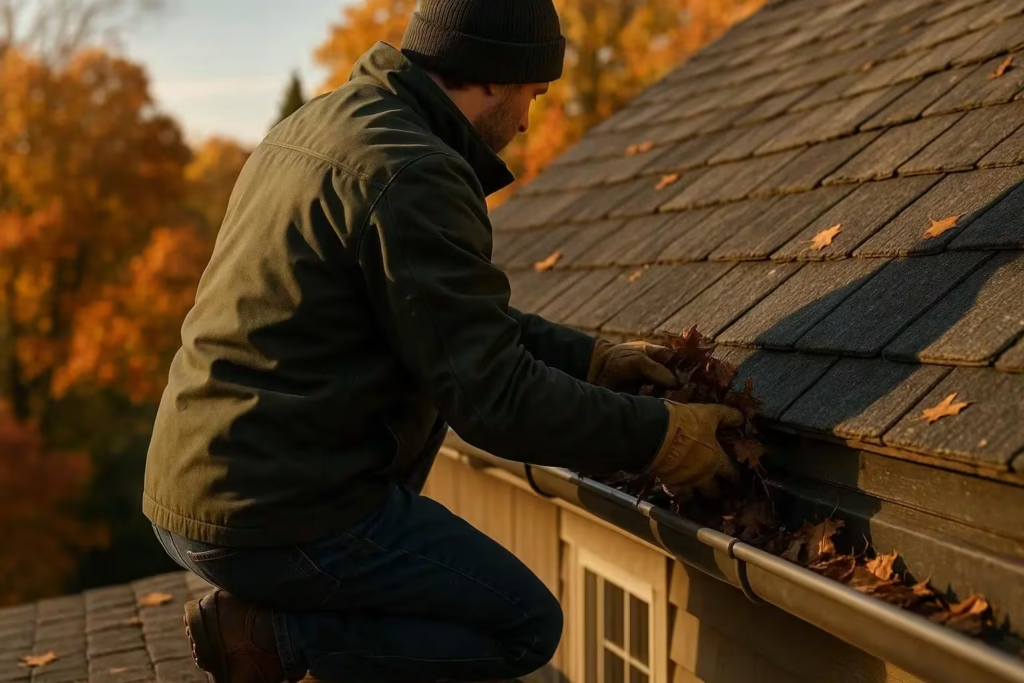
Gutters and downspouts are priority one. When gutters are clogged with leaves and debris, water backs up. In freezing temperatures, that water turns into ice dams — heavy buildups of ice along your roofline that can lift shingles, crack gutters, and let water seep into your walls. Clean them out once the trees have dropped their leaves, usually late October. If your house has a lot of tree cover, do it twice — once in October, once in November. Understanding your roof’s condition matters here too, especially if it’s more than 15 years old.
Outdoor faucets and garden hoses — disconnect all your garden hoses before the first frost. Seriously. A hose left connected traps water in the pipe behind the wall, which freezes, expands, and cracks the fitting. It’s a five-second task that prevents a plumber call. After disconnecting, shut off the interior valve to any outdoor spigots if you have one, and let the remaining water drain out.
DIY or pro? Gutters are fine to do yourself with a ladder and gloves. If you’ve got a two-storey home with tricky access, a gutter cleaning service runs about $100–$250 and is worth it.
Your Heating System: Don’t Wait Until November
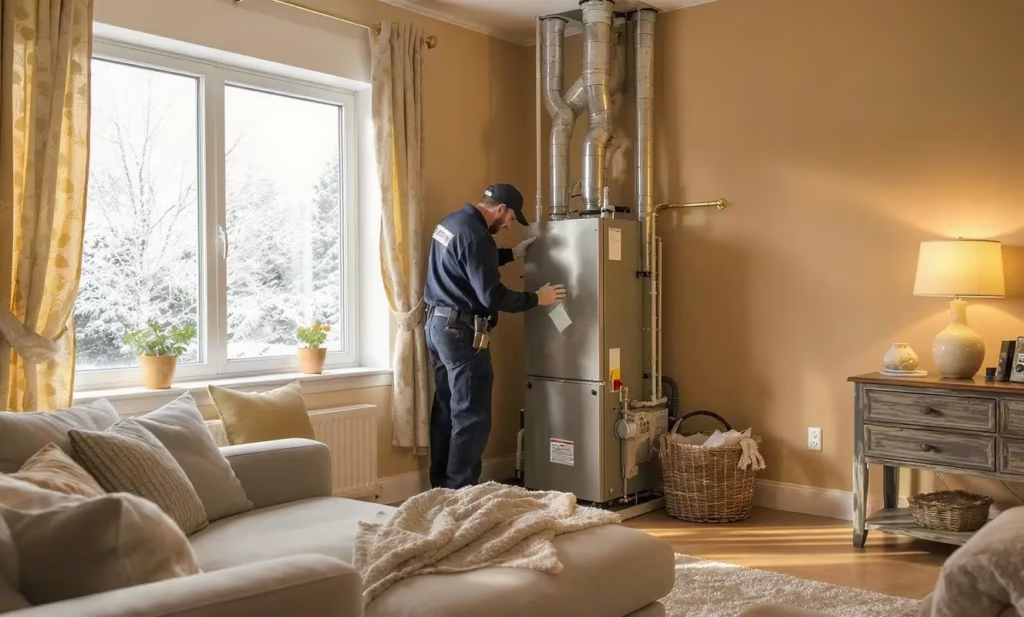
Your furnace has been sitting dormant all summer. Before you actually need it, get it checked. Schedule a furnace tune-up in September or early October — not because it’s convenient, but because HVAC technicians get slammed with emergency calls once cold weather hits. Book early and you’ll pay the standard service rate. Book in December when it breaks and you’ll pay the emergency rate, probably on a weekend.
A standard furnace service includes cleaning the burners, checking the heat exchanger for cracks, testing ignition, and making sure everything runs efficiently. It costs roughly $80–$150 in most areas. A cracked heat exchanger, on the other hand, can mean carbon monoxide in your home — which is why it’s not something to guess at.
While you’re at it:
- Replace your furnace filter. A clogged filter makes your furnace work harder and costs more to run. A new one is $10–$30 and takes five minutes.
- Check your vents. Make sure furniture hasn’t been shifted over floor vents during summer rearranging. Blocked vents reduce efficiency and can damage the system over time.
- Test your thermostat by actually switching it to heat mode and watching it respond. Sounds obvious, but discovering your thermostat is dead in September is much better than discovering it on the first cold night.
If you’ve been thinking about a programmable or smart thermostat, this is the right time to install one. Being able to set back the temperature at night or while you’re at work can trim your heating bill by a noticeable margin without any sacrifice in comfort.
Sealing Drafts and Insulating — What’s Actually Worth Your Time
Here’s the honest version: most homes, especially older ones, are leakier than they should be. Cold air gets in around window frames, under doors, through electrical outlets on exterior walls, and around any pipe or wire that passes through an outside wall. All of that adds up — and most of it is fixable with a tube of caulk and a roll of weatherstripping.
Weatherstripping around doors is one of the highest-value DIY jobs you can do. Run your hand along the bottom and sides of your exterior doors on a cold day and you’ll feel the draft immediately if the seal has worn out. Self-adhesive foam weatherstripping is cheap (a few dollars per door) and easy to apply — peel, stick, done. For the bottom of the door, a door sweep installs with a screwdriver and makes a real difference.
Caulking around windows takes a bit more patience but it’s not difficult. Use a silicone or latex caulk suitable for exterior use, clean the surface first, and run a neat bead along any gap where the window frame meets the wall. Don’t bother doing this on a day below freezing — the caulk won’t adhere properly.
Attic insulation is worth mentioning even though it’s not a quick weekend job. Heat rises, and if your attic is poorly insulated, a significant amount of your heating just escapes through the ceiling. If your energy bills are consistently high and your home never feels warm enough, this is often the reason. Getting a home inspection that includes an energy assessment can help you figure out where you’re losing the most heat before spending money on insulation.
Pipes and Plumbing: The Most Expensive Mistake to Skip
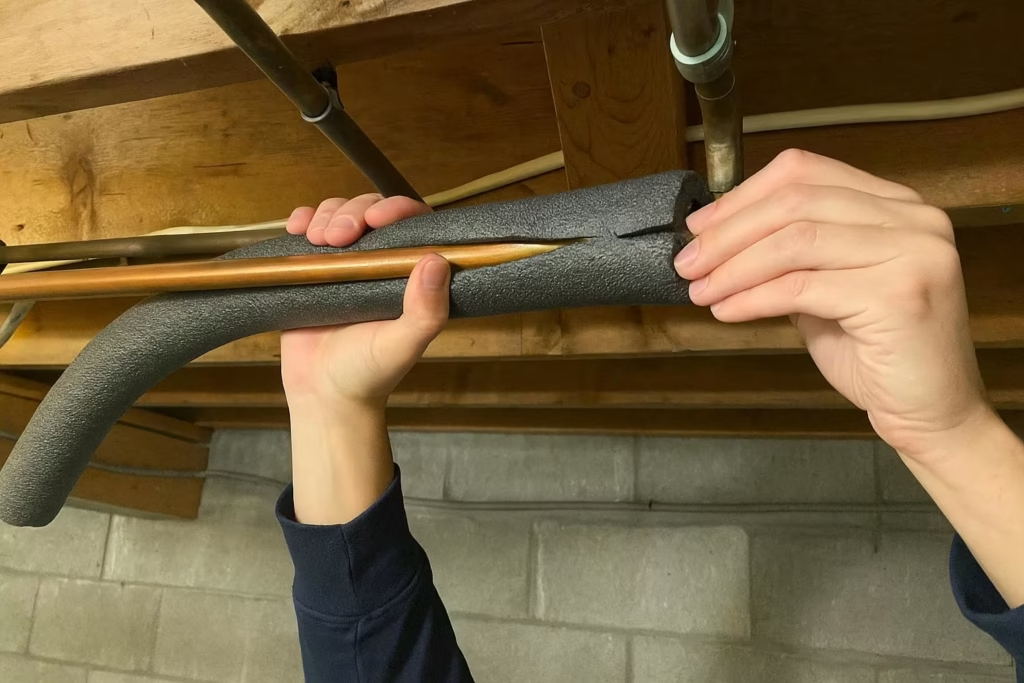
This is the one that trips people up most often, and it’s the section of every winter prep article that gets the least detail. So let’s fix that.
Any pipe that runs through an unheated space is at risk. That includes:
- Pipes in an uninsulated basement
- Pipes in a garage wall
- Pipes in an exterior wall with no interior insulation
- Any pipe in a crawl space
When water freezes inside a pipe, it expands. Pipes don’t stretch — they crack or split. And often you won’t know it happened until the water thaws and starts flowing somewhere it shouldn’t.
The fix is straightforward: foam pipe insulation. It comes in pre-split tubes at any hardware store and costs very little — usually $1–$3 per linear foot. You measure the pipe diameter, buy the matching tube, and slip it over the pipe. You can cut it with scissors. It’s genuinely one of the easiest tasks on this list and has one of the highest consequences if skipped.
For pipes in extremely cold spaces, pipe heating cables are worth considering — they run along the pipe and keep it above freezing during cold snaps. These are particularly useful in crawl spaces or garages in colder climates.
If you go on holiday during winter, don’t turn the heat completely off. Keep it set to at least 55°F (13°C) to protect the pipes. This catches more people out than you’d think.
Quick Wins Inside: Ceiling Fans, Carbon Monoxide, and a Few Easy Ones
Let’s talk about ceiling fan reversal, because it’s in every winter prep list and it deserves an honest assessment. Yes, running your ceiling fan clockwise on low speed in winter does push warm air back down from the ceiling. Does it make a meaningful difference? Mildly. It’s not going to noticeably reduce your heating bill, and it’s genuinely not worth worrying about if it’s not immediately obvious how to reverse your fan. Do it if it’s easy, skip it if it isn’t, and focus your energy elsewhere.
What’s actually important inside:
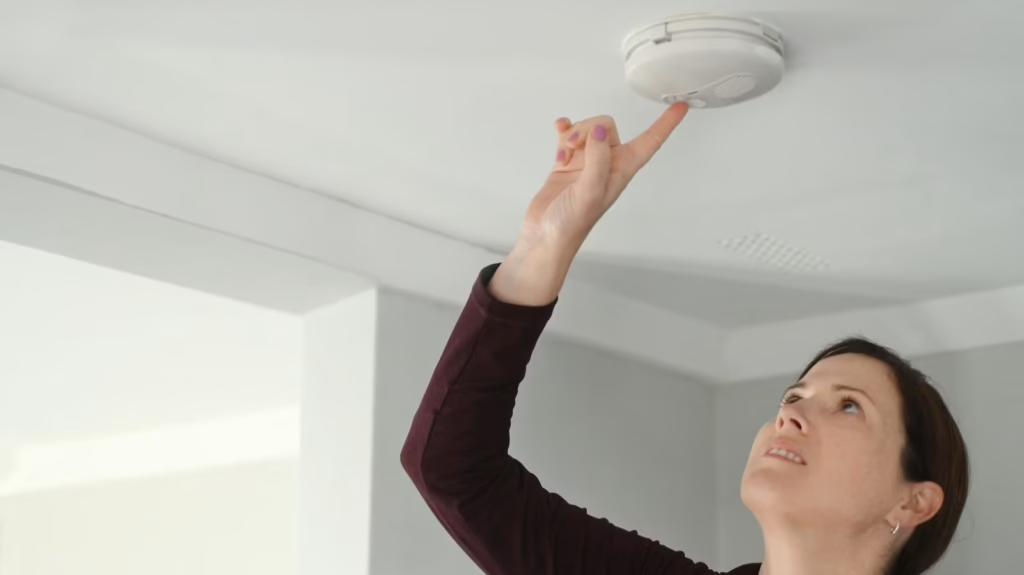
Carbon monoxide detectors. If you’re running a gas furnace, a fireplace, or any combustion appliance, you need a working CO detector. Test it. Replace the batteries. If it’s more than 7 years old, replace the whole unit. Carbon monoxide is invisible, odourless, and fast-acting — this isn’t a suggestion, it’s a genuine safety requirement.
Smoke detectors should get the same treatment. Test them all, replace dead batteries, and check the manufacture date on the back. Most last about 10 years.
Chimney cleaning — if you use a wood-burning fireplace, you need the flue swept before the first use of the season. Creosote builds up and is a leading cause of house fires. A professional chimney sweep costs $100–$250 and is worth every penny. Don’t skip this if you’re planning to use it.
Reverse osmosis filters and water softeners — if you have these systems, check their condition before winter. This isn’t in any other article, but system failures during cold months are inconvenient to fix when pipes are harder to access.
Your Month-by-Month Winter Prep Timeline (September–November)
No other prep guide breaks it down like this, but it’s how you should actually think about it.
September
This is your outdoor month. You still have time, the weather is cooperative, and you’re not rushed.
- Disconnect garden hoses and shut off outdoor faucets
- Check and clean gutters (first pass)
- Inspect window caulking and reseal any gaps
- Book your furnace service appointment for October
- Check your weatherstripping — replace anything worn
October
This is your systems month. Get the mechanical stuff sorted before the cold arrives.
- Have your furnace serviced and filters replaced
- Test smoke and carbon monoxide detectors
- Insulate exposed pipes in basement, garage, or crawl space
- If you have a fireplace, get the chimney swept
- Check your attic for obvious insulation gaps or air leaks
November
This is your final-pass month. You’re tightening up and making sure nothing was missed.
- Second gutter clean after leaves have fully dropped
- Install door sweeps or replace worn weatherstripping
- Set your thermostat programme for winter hours
- Drain and store any outdoor furniture that could be damaged by ice
- Check your emergency kit — flashlights, batteries, a few days of supplies if you live somewhere that gets serious weather
That’s it. Three months, one handful of tasks each. Nothing on this list requires professional training to understand, and most of it costs under $100 in materials.
Frequently Asked Questions
How early should I prepare my home for winter?
Start in September, while the weather still allows outdoor work and service appointments aren’t fully booked. Aim to have everything done by mid-November, before the first hard freeze.
What happens if you don’t insulate pipes before winter?
Uninsulated pipes in cold spaces — basements, garages, crawl spaces — can freeze and crack. When the ice thaws, you get water damage that can be significant depending on where the pipe is located. Foam pipe insulation is inexpensive and installs in minutes.
Does reversing a ceiling fan really save energy in winter?
A little, but it’s one of the lower-impact tasks on this list. Running the fan clockwise on low speed can help redistribute warm air near the ceiling, but the energy savings are modest. Focus on sealing drafts and servicing your furnace first — those have far greater impact.
Is weatherstripping worth it?
Yes. Worn or missing weatherstripping is one of the most common causes of cold draughts and energy loss in older homes. Self-adhesive foam weatherstrip costs a few dollars per door and takes under ten minutes to apply. It’s one of the best value-for-money fixes in home maintenance.
When should I schedule a furnace tune-up?
September or October is ideal. HVAC technicians are busy enough in summer with air conditioning calls, then get overwhelmed again with heating emergencies in November and December. Booking in early autumn means you get a scheduled slot at standard rates, and you’ll know before winter if anything needs replacing.
What’s the one thing most homeowners forget before winter?
Disconnecting garden hoses. It’s a thirty-second task that prevents a burst fitting inside your wall — and almost everyone forgets it at least once.