Estimated reading time: 11 minutes
Most articles about green home improvements give you a list and call it a day. LED bulbs. Fix your leaks. Maybe try solar panels. Thanks, very helpful.
What they don’t tell you is what anything costs, how long it takes to pay off, or which upgrade you should actually do first if you’ve got $200 to spend versus $2,000. That’s what this guide is for.
Eco-friendly home remodeling doesn’t have to mean gutting your house or spending a fortune. The best moves are often the boring ones — the unsexy fixes that quietly shave $30, $60, even $100 off your monthly bills without requiring a contractor or a second mortgage. And yes, some of the bigger investments are genuinely worth it, but only once you’ve handled the basics.
Here’s how to think about it, ranked by where you’ll get the fastest return.
Why Going Green at Home Is Also Just Smart Budgeting
Let’s be clear: this isn’t about ideology. Energy-efficient upgrades reduce what you owe the utility company every single month. That’s real money back in your pocket, compounding year after year.
The average U.S. household spends about $2,000 a year on energy bills. Studies consistently show that a combination of basic efficiency upgrades can cut that by 25–30%. That’s $500–$600 annually — without solar panels, without a major renovation, without dramatic lifestyle changes.
And if you’re thinking about selling eventually, ENERGY STAR-certified homes and verifiable energy efficiency improvements are increasingly factored into appraisals. Buyers notice lower utility costs.
The trick is prioritizing what moves the needle most for the least upfront cost. So let’s start there.
Start Here: The Upgrades With the Fastest Payback
These are the things worth doing before anything else. Low cost, quick return, no contractor needed.
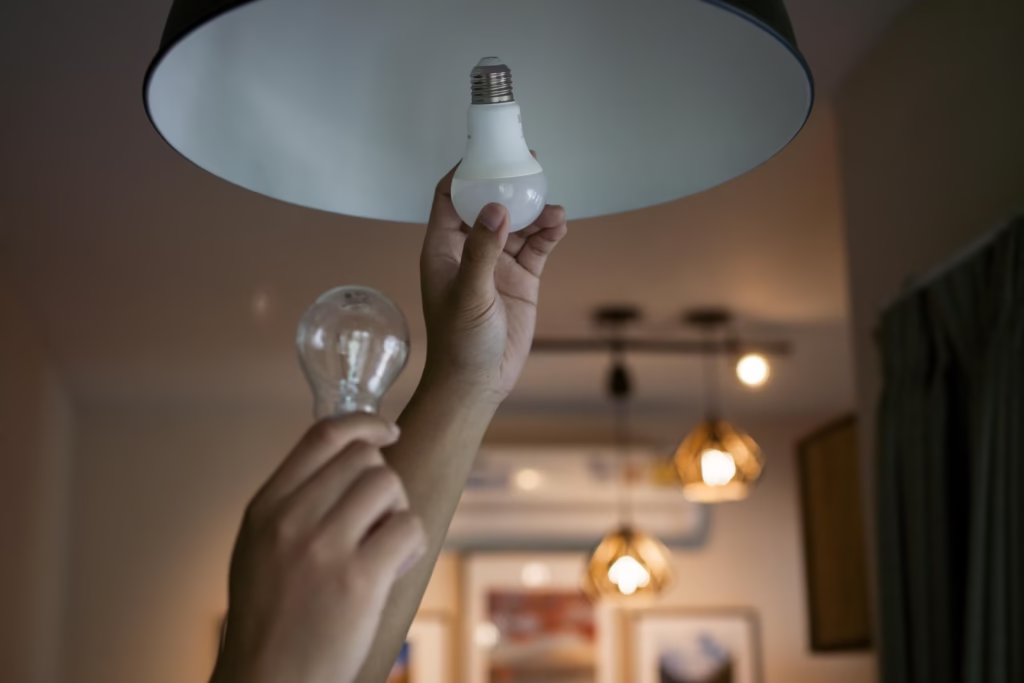
Switch Every Bulb to LED
This one’s almost too obvious, but it’s still worth saying: if you haven’t replaced all your bulbs yet, do it this week. LED bulbs use roughly 75% less electricity than incandescent bulbs and last up to 25 times longer.
The math is simple. A single LED bulb costs $3–$6. Replacing 20 bulbs in a typical home costs somewhere around $60–$100. The energy savings across those bulbs can add up to $150–$225 per year. Payback period: under a year.
Go with reputable brands like Philips, GE, or Cree. Look for the ENERGY STAR label to ensure you’re getting the efficiency rating you’re paying for.
Install a Smart Thermostat
A programmable or smart thermostat is one of the highest-ROI upgrades available. Models like the Google Nest or Ecobee cost $130–$200 and can reduce heating and cooling bills by around 10–15% annually.
For most households, that translates to $100–$180 in savings per year. Payback period: 1–2 years. Most utility companies also offer rebates of $25–$100 for installing one — check your provider’s website before you buy.
These are DIY-friendly installs for most people. If your wiring is older or unusual (common in homes built before the 1980s), it’s worth having an HVAC tech take a look first.
Fix Leaks and Add Low-Flow Fixtures
A dripping faucet wastes around 3,000 gallons per year. A running toilet can waste 200 gallons per day. Both are usually cheap to fix — a new flapper valve for a toilet runs under $10, and a plumber visit for a stubborn leak is typically $75–$150.
Beyond repairs, low-flow fixtures make a meaningful difference. EPA WaterSense-labeled faucet aerators cost $5–$15 each and reduce water usage by up to 30% without affecting water pressure. Low-flow showerheads run $20–$60 and can save a family of four around $70–$100 per year on water heating alone.
Say you’re already planning a bathroom refresh — swapping to WaterSense fixtures while you’re at it costs almost nothing extra and pays dividends for years.
Seal Air Leaks With Weatherstripping
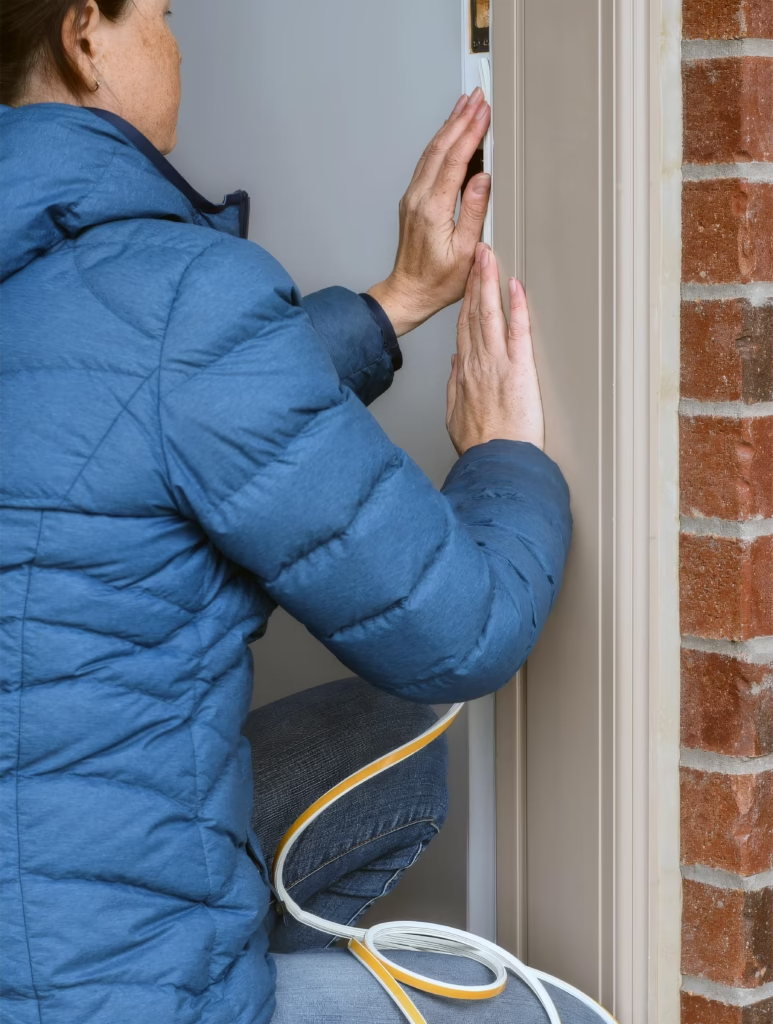
Drafts around doors and windows are silent budget killers. The Department of Energy estimates that air leaks account for 25–40% of the energy used for heating and cooling in a typical home.
Weatherstripping a door costs $10–$30 and takes about 30 minutes. Caulking around window frames costs about $5 per tube. If your home was built before 2000, there’s a good chance air sealing alone will move your heating bill noticeably.
This is also a smart first step before preparing your home for winter — every dollar you spend on air sealing multiplies the effectiveness of your heating system.
Mid-Range Upgrades Worth the Investment
Once the low-hanging fruit is handled, these upgrades make sense — they cost more upfront but have solid, predictable returns.
Upgrade to Energy-Efficient Windows
Old single-pane windows are one of the biggest sources of heat loss in older homes. Double-pane, low-E windows reduce heat transfer significantly — the EPA estimates they can lower heating and cooling costs by 12–24% depending on your climate and current window condition.
Cost: $300–$800 per window installed, depending on size and material. For a home with 10 windows, you’re looking at $3,000–$8,000 total. Payback period: 7–15 years, which is long — but the value is also reflected in home resale price and the improved comfort of your living space.
Window replacement makes the most financial sense if your current windows are failing (fogging between panes, drafts even after weatherstripping, condensation on interior glass). If your windows are in decent shape, air sealing and interior window film are cheaper alternatives worth trying first.
Under the Inflation Reduction Act (IRA), energy-efficient window replacements may qualify for a federal tax credit of up to 30% of the project cost, capped at $600 per year. That meaningfully changes the math.
Improve Your Insulation
Most homes — especially those built before 1990 — are underinsulated. Heat rises, and if your attic isn’t properly insulated, you’re essentially heating the neighborhood. Adding insulation to an attic runs $1,500–$3,500 for most homes and can reduce heating and cooling costs by 15–25%.
Payback period: 3–7 years. And like windows, insulation upgrades can qualify for federal tax credits under the IRA — up to 30% of material costs, capped at $1,200.
Wall insulation is more involved (and expensive), so prioritize attic and basement rim joists first. Those areas give you the best return for the effort.
Replace Old Appliances With ENERGY STAR Models
Appliances account for about 13% of household energy use. Older refrigerators, dishwashers, and washing machines can be significantly less efficient than current ENERGY STAR-certified models.
A new ENERGY STAR dishwasher uses about 3.5 gallons of water per cycle versus 6+ gallons for older models. A certified washing machine uses 25% less energy and 33% less water than standard machines. If your appliances are more than 12–15 years old, replacement often makes economic sense even before factoring in energy savings — older units break down more frequently.
Before you buy, compare top-rated models. And if you’re weighing specific brands, a side-by-side dishwasher comparison can help you cut through the marketing noise.
Bigger Projects Worth Planning For
These require more money and planning, but for the right home and the right situation, they’re genuinely transformative.
Heat Pumps
Heat pumps are the most talked-about home efficiency upgrade right now — and for good reason. They provide both heating and cooling using electricity, and they do it at 2–4x the efficiency of traditional HVAC systems. That’s not a typo: they move heat rather than generate it, which makes them dramatically more efficient.
A heat pump system costs $4,000–$10,000 installed depending on your home size and existing ductwork. The IRA offers a tax credit of up to 30% on heat pump installation, plus many states offer additional rebates. For homes in moderate climates currently running on natural gas or oil heat, switching to a heat pump can cut heating costs by 30–50%.
Payback period: 5–10 years. In cold climates, make sure you’re looking at cold-climate heat pumps (they operate efficiently down to -15°F), not standard models.
Solar Panels
Solar is worth it for the right home — but it’s not the first thing you should do, and it’s not right for everyone. A typical residential solar system costs $15,000–$25,000 before incentives. The federal solar tax credit under the IRA covers 30% of that cost, bringing it to roughly $10,500–$17,500 out of pocket.
Savings depend heavily on your electricity rates, roof orientation, local sun exposure, and whether net metering is available in your state. In high-electricity-cost states like California, New York, or Massachusetts, payback periods of 7–10 years are common. In states with lower electricity rates and less sun, payback can stretch to 15+ years.
The honest advice: handle all the efficiency improvements first. Solar panels generate electricity — if your home is leaking that electricity through inefficient appliances, bad insulation, and air leaks, you’re undersizing your system to compensate for waste.
Roofing Upgrades
If your roof is due for replacement anyway, a cool roof or metal roofing with reflective coatings can reduce heat absorption, lowering cooling costs by 10–15% in warm climates. Look into the types of roofing services available in your area — some contractors specialize in green roofing options and can walk you through what’s available locally.
Sustainable Materials: What’s Actually Worth Using

When you’re remodeling specific rooms, the materials you choose matter — both for the environment and for durability.
Bamboo flooring is harder than most hardwoods, grows back in 3–5 years (versus 20+ for oak), and costs $3–$8 per square foot — competitive with mid-range hardwood. It works well in living rooms, bedrooms, and hallways. Avoid it in high-moisture areas like bathrooms.
Reclaimed wood has a genuinely lower environmental footprint than new lumber and adds character that new wood can’t replicate. It costs more — typically $5–$15 per square foot for flooring, higher for feature walls — but it’s unique and durable. Good for accent walls, shelving, or flooring in lower-traffic spaces.
Low-VOC paint is worth specifying every time. Traditional paint off-gasses volatile organic compounds for months after application, affecting indoor air quality. Low-VOC options from brands like Benjamin Moore Natura or Sherwin-Williams Harmony cost about the same as standard paint now. There’s no real reason not to use them.
Recycled-content tile is worth looking for in kitchens and bathrooms. Some manufacturers use 40–70% recycled glass or porcelain. It’s the same price range as conventional tile, so it’s an easy swap when you’re already remodeling.
Should You Start With an Energy Audit?
Here’s something most articles skip: the single most useful thing many homeowners can do before spending any money on upgrades is get a professional home energy audit.
An audit costs $200–$600 and involves a professional using blower door tests, thermal cameras, and combustion testing to identify exactly where your home is losing energy. Instead of guessing whether your attic insulation is the problem or your windows are, you get a prioritized list of what to fix and in what order.
Many utility companies offer subsidized audits for $50–$100. Some offer them free. Call your provider and ask — it’s an underused benefit.
If your home is older, your bills feel unusually high, or you’re planning multiple upgrades, an audit before you spend a dollar is almost always the right move. It’s how contractors and energy professionals actually approach this — not with a checklist, but with a diagnosis.
FAQs
What is eco-friendly home remodeling?
Eco-friendly home remodeling means making upgrades that reduce your home’s energy and water consumption, use more sustainable materials, or both. It ranges from simple swaps like LED bulbs and low-flow fixtures to larger projects like heat pump installation and solar panels.
Which eco-friendly upgrade saves the most money?
For most homes, improving insulation and air sealing offers the highest return relative to cost. LED lighting and a smart thermostat are close behind because they cost very little and pay back quickly. Solar panels save the most in absolute dollars over time but require the highest upfront investment.
Are there federal tax credits for eco-friendly home improvements?
Yes. Under the Inflation Reduction Act, homeowners can claim credits of up to 30% on qualifying upgrades including heat pumps, solar panels, energy-efficient windows, insulation, and more. Some credits are capped annually (e.g., $600 for windows, $1,200 for insulation materials). Visit energystar.gov for the current list of qualifying improvements.
Does eco-friendly remodeling increase home value?
Generally, yes. Energy-efficient homes sell faster and at higher prices in most markets. ENERGY STAR certification, solar panels, and new insulation are all factors that show up in appraisals and appeal to buyers concerned about monthly operating costs.
What’s the cheapest green home upgrade?
Weatherstripping a door or caulking around windows costs under $30 and can be done in under an hour. Low-flow faucet aerators cost $5–$15. These are the cheapest ways to reduce your home’s energy and water footprint immediately.
How do I know if solar panels are worth it for my home?
Solar makes financial sense when you have a south-facing roof with minimal shading, electricity rates above $0.12 per kWh, and access to net metering in your state. A solar installer can provide a free site assessment and projected payback period. Don’t make the decision based on a national average — get numbers specific to your address.