Estimated reading time: 10 minutes
You’re standing at the dishwasher with a fistful of mismatched dishes, staring at six unlabeled buttons, and just trying to figure out which one won’t melt your Tupperware or leave your wine glasses streaky. Sound familiar? You’re not alone. Most dishwasher manuals explain these settings about as well as IKEA explains furniture assembly — technically present, practically useless.
Here’s the thing: every cycle on your dishwasher does something specific. Once you know what’s actually happening inside that machine, picking the right button stops being a guessing game.
Quick answer: Use Normal for everyday dishes, Heavy for baked-on grease and pots, Quick when you’re in a hurry, and Eco when you want to save the most water and electricity. Pair any of those with Air Dry to protect plastics, or Heated Dry when you need dishes back fast and don’t mind the extra energy use.
That’s the short version. Let’s get into the why.
A Quick Side-by-Side Before We Dig In
| Cycle | Best For | Typical Time | Energy/Water Use |
| Normal / Auto | Everyday moderately soiled dishes | 1.5–2.5 hours | Moderate |
| Heavy / Pots & Pans | Baked-on food, heavy cookware | 2–3 hours | High |
| Quick / Express | Lightly soiled, need them back fast | 20–35 minutes | Low water, less thorough |
| Eco / Energy Saver | Routine cleaning, lowest cost per load | 3–4 hours | Lowest |
| Delicate / Glassware | China, crystal, stemware | 1–1.5 hours | Low |
| Rinse Only | Holding dishes between full loads | 10–15 minutes | Minimal |
Keep this table in your back pocket. Now here’s what’s actually happening behind each one.
Normal (or Auto) Wash: Your Everyday Default
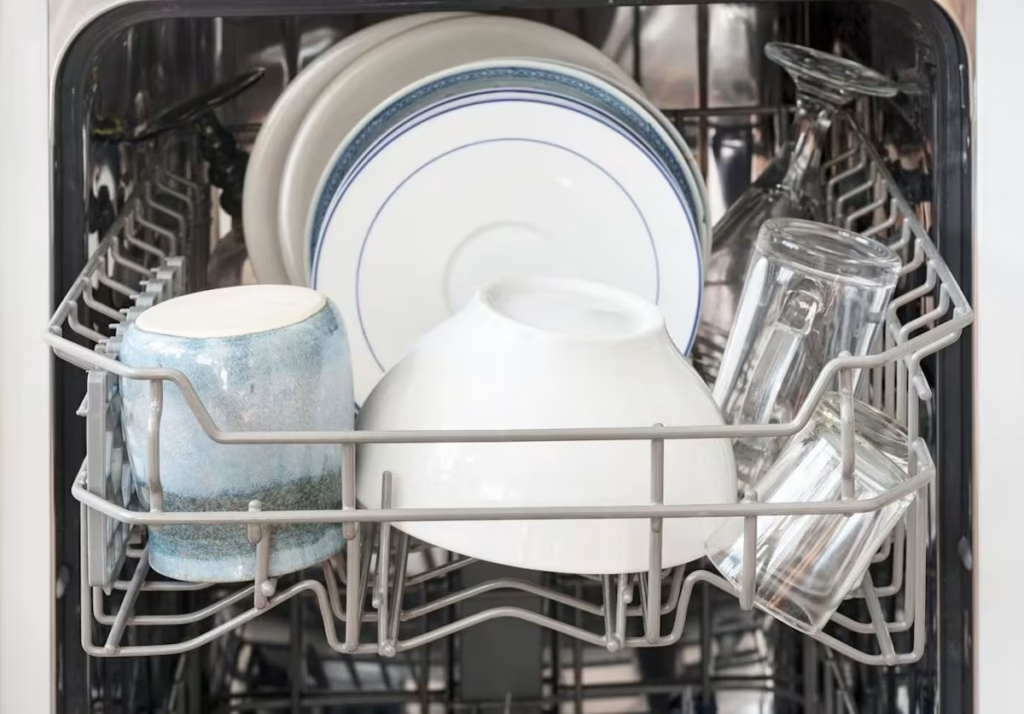
This is the cycle you’ll use more than any other, and for good reason. If your dishwasher has a soil sensor — most newer models do — Normal mode actually reads how dirty the water gets partway through and adjusts the cycle length and water usage on the fly. So a lightly used load might finish faster than a genuinely grimy one, even on the same setting.
That sensor-driven flexibility is also why your “Normal” cycle sometimes runs 90 minutes and other times stretches past two hours. It’s not broken — it’s adjusting.
Use it for: Regular dinner plates, everyday glasses, mugs, mixed loads where nothing is extremely greasy or extremely delicate.
Heavy, Intensive, or Pots & Pans: When Normal Isn’t Cutting It
If you’ve ever pulled a casserole dish out of Normal mode with crusted-on cheese still clinging to the edges, you needed Heavy instead. This cycle runs hotter water and uses more aggressive spray pressure to physically blast off stuck-on food, which is exactly what baked-on grease and burnt pan residue need.
The trade-off is straightforward: more heat and more pressure means more energy. It’s the right call for cast iron, casserole dishes, and anything that’s been sitting with dried food for a while — but running it on a load of regular plates is overkill that just costs you more on your utility bill.
Use it for: Baking sheets, pots with cooked-on residue, heavily soiled pans after a big cooking session.
Quick, Express, or 1-Hour Wash: Speed Over Everything
This one’s a lifesaver when guests are arriving in thirty minutes and your sink is full. Quick wash typically runs 20 to 35 minutes by skipping the longer soak phases and using less water overall.
Here’s the catch nobody mentions clearly enough: it sacrifices both thoroughness and drying. Dishes coming out of a Quick cycle are more likely to need a towel finish, and if anything was genuinely dirty going in, it might not come out fully clean. Think of it as a cycle for lightly used dishes, not a substitute for proper cleaning.
Use it for: Glasses and plates that were barely used, a quick turnaround before company arrives, small loads that don’t need deep cleaning.
Eco or Energy Saver: The Slow-and-Steady Winner
Eco mode is the one most people skip because it takes the longest — sometimes 3 to 4 hours — but it’s also the cheapest cycle to run, and for one specific mechanical reason: it relies on time instead of heat. By using cooler water and a longer soak period, it gives detergent extra time to chemically break down food residue rather than relying on high temperatures and pressure to blast it off.
If you’re not in a rush, this is genuinely the best everyday choice for your wallet. The lower temperature also happens to be gentler on dishware over time. The only real downside is patience — if you need that load back in an hour, Eco isn’t it.
Use it for: Routine loads when you’re not in a hurry, anyone trying to cut down on utility costs, overnight runs while you sleep.
Delicate or Glassware: Protecting What You Can’t Replace
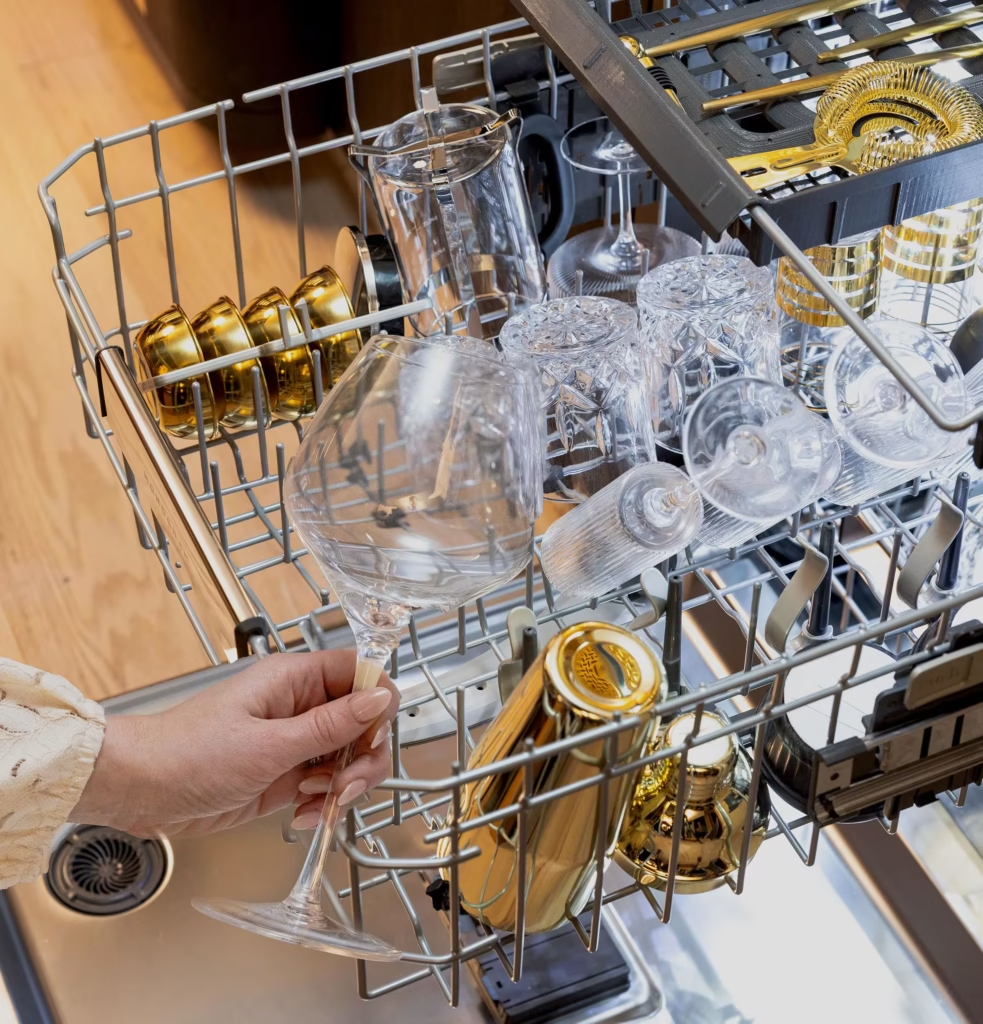
Crystal, fine china, and stemware don’t handle the same water pressure and heat as your everyday dishes — a fact a lot of people learn the hard way after a chipped wine glass or a hairline crack in a wedding-gift plate. The Delicate cycle deliberately lowers both water temperature and spray pressure to reduce that mechanical stress.
It won’t tackle grease the way Heavy does, but that’s not its job. Its job is making sure your good glassware survives the dishwasher instead of just the dinner party.
Use it for: Wine glasses, fine china, anything thin or hand-painted, items you’d be genuinely upset to lose.
Rinse Only: The Underrated Holding Pattern
If you cook through the week and don’t run a full load every night, Rinse Only solves a real problem: food drying onto dishes and turning into a smell-magnet sitting in your machine for two days. This cycle uses a small amount of water just to rinse, not actually wash, which keeps things from hardening or going stale-smelling until you’re ready to run a complete cycle.
Use it for: Bridging the gap between dishwasher loads, especially in smaller households that don’t fill the rack daily.
Now Let’s Talk Drying — Because That’s a Separate Decision
A lot of people assume drying just happens automatically as part of the wash cycle. It doesn’t — it’s its own setting, and the option you pick affects both your energy bill and your dishware’s lifespan.
Heated Dry: Fast, Effective, and a Little Risky
Heated Dry uses an exposed heating element near the bottom of the tub to evaporate moisture quickly. It works well and it’s fast — but that heating element sits right where your bottom rack lives, which is exactly why plastic containers and lids sometimes come out warped or melted after sitting too close to it.
The real fix here: if you’re running Heated Dry, keep plastics on the top rack, farther from the heat source. It’s a small habit that saves a lot of ruined Tupperware lids.
Air or Fan Dry: Slower, but Gentler and Cheaper
Air Dry circulates ambient or lightly warmed air through the dishwasher instead of relying on direct heat. It takes a bit longer to fully dry everything, but it uses noticeably less electricity and it’s the safer choice for anything plastic.
If you’ve got mostly plastic storage containers, kids’ cups, or anything heat-sensitive, this is the better default even though it’s not the fastest option.
Auto-Open Door: The Newer Feature Worth Knowing About
Some newer dishwashers automatically crack the door open a few inches once the cycle finishes, letting built-up steam escape naturally instead of trapping it inside. It sounds minor, but it solves two annoyances at once: it cuts down on water spots, and it dries hard-to-dry items like plastic far better than a sealed tub ever could, since the steam actually has somewhere to go.
If you’re shopping for a new machine and comparing features — say you’re weighing something like a Whirlpool against a GE model — this is a feature worth checking for, especially if plastic items are a regular part of your loads.
Sanitize Mode: Not Just a Marketing Word
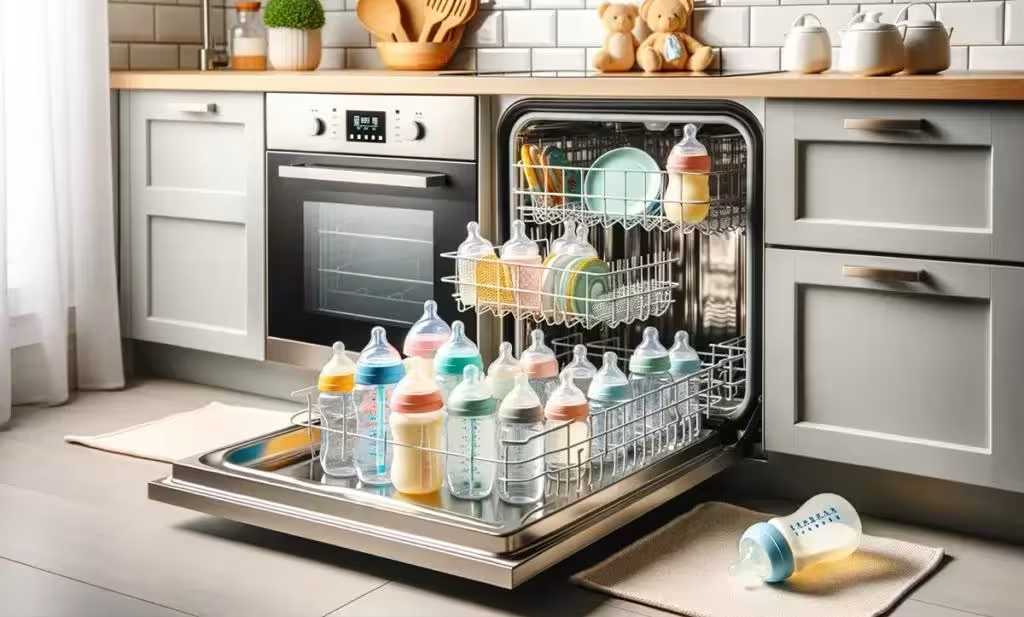
Sanitize works a little differently than the cycles above — it’s usually layered onto a wash cycle rather than standing entirely on its own. It raises the water temperature specifically during the final rinse, hot enough to kill the vast majority of bacteria on contact. As a side effect, that extra heat also super-heats your dishes, so they tend to dry faster afterward through natural condensation, almost like a bonus drying boost.
This setting genuinely matters after someone in the house has been sick, or for baby bottles and cutting boards used with raw meat. It’s not something you need every single load, but it’s not just a fancy upsell feature either — there’s a real mechanical reason it exists.
A Quick Troubleshooting Note
If dishes are coming out of Heated Dry still damp, that’s almost never a sign the cycle is broken — it’s usually a rinse-aid problem. Rinse aid breaks the surface tension of water so it sheets off dishes instead of pooling in droplets. Run low on it, and even a working Heated Dry cycle will leave streaks and damp spots behind.
Which Cycle Actually Fits Your Dishes
If you’re sorting a typical kitchen’s worth of items, here’s the practical breakdown:
- Greasy pots and baked-on casserole dishes → Heavy, paired with Heated Dry if you need them back soon, or Air Dry if you’re not in a rush.
- Everyday plates, bowls, and glasses → Normal, paired with whichever drying option matches your plastic-to-glass ratio.
- Wine glasses, crystal, fine china → Delicate, always with Air Dry — the lower heat keeps both the wash and dry phases gentle.
- Plastic containers and kids’ cups → Normal or Eco, always with Air Dry to avoid warping.
- Cutting boards after raw meat, baby bottles → Sanitize layered onto Normal or Heavy.
- Half-full sink, guests arriving soon → Quick, accepting that a towel might finish the job.
- Routine loads, no rush, trying to save money → Eco, every time.
A Note on Hand-Washing vs. Letting the Machine Handle It
If you’re still debating whether some items are better off skipped entirely and washed by hand — delicate glassware being the classic example — it’s worth comparing the actual differences between hand-washing and dishwasher cleaning before deciding. Sometimes the dishwasher genuinely does a better, more consistent job; sometimes your hands are the safer bet.
And if your current machine doesn’t have the cycle flexibility described above — older units especially tend to have just two or three basic settings — it might be worth browsing what’s currently available, including compact options like a countertop dishwasher for smaller kitchens that still want sensor washing and an Eco mode.
FAQs
Is heated dry bad for plastic?
It can be. The heating element sits near the bottom rack, so plastic containers placed too close can warp or partially melt. Keeping plastics on the top rack, or switching to Air Dry for loads with a lot of plastic, avoids the problem entirely.
Does Eco mode actually clean well?
Yes, it does — it just works differently than you might expect. Instead of relying on high heat and pressure, it uses a longer soak time at a lower temperature, giving detergent more time to chemically break down food residue. It’s slower, not weaker.
What’s the fastest dishwasher cycle?
Quick or Express wash, typically running 20 to 35 minutes. It trades thoroughness and drying performance for speed, so it’s best for lightly soiled dishes rather than anything genuinely dirty.
Does Sanitize mode replace hand-washing for safety?
For most everyday purposes, yes — it raises water temperature high enough during the final rinse to kill the vast majority of bacteria. It’s particularly useful for baby bottles, cutting boards used with raw meat, or dishes used during an illness in the house.
Why is my dishwasher not drying dishes completely?
The most common cause isn’t a broken cycle — it’s low rinse aid. Rinse aid helps water sheet off dishes instead of pooling into droplets, so running low on it often shows up as damp spots or streaks even when everything else is working fine.
Is the Eco mode worth using every day?
If you’re not in a rush, yes. It’s the cheapest cycle to run in terms of both water and electricity, and the lower temperature is gentler on your dishware over time. The only downside is the longer runtime, so it’s better suited to overnight loads or days when you don’t need dishes back in a hurry.