
Estimated reading time: 14 minutes
You finally set up the patio furniture, poured yourself something cold, and sat down for what was supposed to be a relaxing evening — and lasted about four minutes before giving up.
Sound familiar?
Getting rid of mosquitoes in your backyard feels like a losing battle, especially after you’ve already tried the candles, maybe even planted some citronella near the deck, and the swarms are still showing up every single evening like clockwork. The frustrating part isn’t just the bites — it’s that most advice out there recycles the same short list of tips that barely scratch the surface.
So let’s cut through it. This isn’t a checklist of generic suggestions. It’s an honest breakdown of what actually works, what’s overhyped, and one genuinely effective tool that almost no one talks about.
The Short Version (If You Want It First)
Before we dig deeper, here’s the core of it:
- Eliminate or treat every source of standing water — including spots you’d never think to check
- Use BTi mosquito dunks in water you can’t drain
- Keep grass short and shrubs trimmed to remove daytime resting spots
- Run fans on your patio — seriously, this works better than most people expect
- Apply a permethrin or pyrethrin barrier spray around lawn edges and shrubs
- Skip the bug zapper; it does almost nothing for mosquitoes specifically
Now let’s talk about why each of these matters, and how to actually do them properly.
Why Your Backyard Keeps Producing Mosquitoes
Here’s what most articles skim over: you don’t have a mosquito problem because mosquitoes happen to like your yard. You have one because your yard is actively producing them.
A female mosquito needs less water than what fits in a bottle cap to lay her eggs — and she’ll find it. Those eggs hatch into larvae, and within just 7 to 10 days depending on temperature, those larvae become biting adults. That cycle is fast. If water sits in your yard after a rainstorm and you don’t deal with it within a couple of days, a new generation is already underway before you’ve even noticed.
Common culprits most people completely overlook: plant saucers under potted plants, the folded edge of a tarp, low spots in the lawn that hold water, clogged gutters — this one is enormous — the lip of a wheelbarrow sitting against the fence, old tires, and even the dog’s outdoor water dish. The birdbath gets all the attention, but the actual problem is often scattered across a dozen smaller containers you’ve stopped noticing entirely.
Once you understand that breeding sites are the source rather than just an inconvenience, the whole approach shifts from swatting at adults to cutting off the supply.
Start Here: Remove Every Breeding Site (Including the Ones You’re Missing)
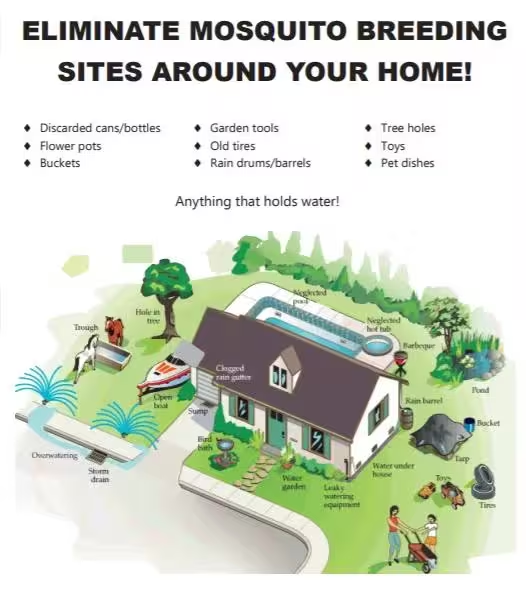
Walk your yard after the next rainstorm. Not on a dry day when everything looks fine — do it 24 to 48 hours after rain, when temporary puddles are still sitting and small containers have had time to collect water.
Look specifically for:
- Plant saucers and clustered pots — even a half-inch of water sitting in a saucer is enough. If you have a lot of container plants grouped on a deck, this is worth addressing first.
- Clogged gutters — blocked gutters are one of the single biggest mosquito producers in suburban yards. Leaves and debris hold moisture for days, and most gutters have standing water you simply never see. Cleaning them twice a season makes a meaningful difference.
- Tarps and outdoor covers — pool covers, furniture covers, grill covers. Water pools in the folds and sits there. Flip them regularly or tighten them so water runs off.
- Low lawn areas — if part of your yard stays soggy for more than a day or two after rain, that’s a consistent breeding zone. Improving drainage there — even aerating the soil — helps significantly over a season.
- Children’s toys, play equipment, and sandboxes — kiddie pools are classic offenders. Dump them after every single use, or store them upside down between sessions.
- Bird baths and pet water bowls — refresh these every two to three days. Mosquito larvae need several days to develop; regularly changing the water breaks that cycle before it completes.
The goal isn’t to eliminate every drop of water from your property. It’s to stop water from sitting long enough to become a nursery.
The One Tool That Most Articles Never Mention
Some water sources can’t simply be emptied — ponds, rain barrels, ornamental water features, boggy corners of the garden. This is where most mosquito advice completely falls short, usually offering nothing useful beyond “try to drain it.” Here’s what actually works.
BTi — and why you’ve probably never heard of it
Bacillus thuringiensis israelensis, or BTi, is a naturally occurring soil bacteria that’s lethal to mosquito larvae but completely harmless to fish, birds, pets, wildlife, and people. It comes in the form of small floating dunks — or loose granules — that you simply drop into standing water.
One dunk treats roughly 100 square feet of water surface for up to 30 days. They’re inexpensive, widely available at garden centres and hardware stores, and they genuinely work. This is one of the most effective and ecologically safe DIY tools for backyard mosquito control, and the fact that it rarely makes it into mainstream advice is genuinely baffling.
Drop one in your rain barrel, pond, or any permanent water feature you can’t drain. Reapply monthly through peak mosquito season. If you take only one new thing from this article, make it this. For a detailed walkthrough of how to use mosquito dunks in your backyard, it’s worth reading before your next treatment.
Yard Maintenance That Actually Moves the Needle
Adult mosquitoes don’t spend their days hovering around looking for you. They rest. They hide in tall grass, underneath dense shrubs, in thick mulch, and in shaded vegetation along fences and house walls. Reducing those resting spots doesn’t eliminate the problem, but it meaningfully cuts the number of mosquitoes that take up residence on your property through the day — the ones that emerge in force at dusk.
A few things that genuinely help:
- Keep grass mowed regularly, especially along borders, fences, and under trees where shade retains moisture
- Trim shrubs so they’re less dense underneath — mosquitoes favour that cool, sheltered micro-climate
- Thin out thick ground cover or ornamental grass that sits close to where you spend time outdoors
- Avoid heavy mulch right against the house walls; it holds moisture and makes excellent mosquito shelter
The specific reason this matters is worth understanding: it’s not that mosquitoes dislike a tidy yard aesthetically. Dense, shaded, moist vegetation is where they spend most of their resting hours. Reduce that environment and you reduce the local population that emerges each evening. If you’re already thinking about refreshing your outdoor space this season, cutting back overgrowth near seating areas is one of the highest-impact changes you can make from a pest-control standpoint — and it improves the look of the yard at the same time.
What Actually Works on Adult Mosquitoes, Ranked Honestly
Once you’ve dealt with breeding sites and resting spots, you’re working on the adults flying in from neighbouring properties or surviving despite your best efforts. Here’s an honest ranking.
Fans — criminally underrated
Mosquitoes are genuinely weak flyers. A basic oscillating fan on a deck or patio creates enough airflow to disrupt their flight pattern and push them away from the seating area. This sounds almost too simple, but it’s one of the most reliable immediate fixes there is. Running two large fans facing outward from a patio works consistently, costs nothing beyond electricity, and involves no chemicals whatsoever.
Permethrin and pyrethrin barrier sprays
These contact insecticides are applied to grass edges, shrubs, and vegetation around your outdoor spaces. They kill adult mosquitoes resting in those areas and provide residual protection for two to three weeks. Most lawn-safe versions contain bifenthrin or permethrin as the active ingredient, and you can apply them yourself with a garden hose sprayer. Timing matters — treating in the late afternoon, when mosquitoes are starting to become active, is more effective than morning applications.
Reapply every two to three weeks during peak season. It’s not a permanent fix, but it’s one of the most consistent methods for keeping populations manageable.
Mosquito misting systems
For larger properties or yards with significant mosquito pressure, automated misting systems that release pyrethrin at scheduled intervals can maintain meaningful control with minimal ongoing effort. They’re an investment, but for the right situation they’re worth considering. Placement matters — they should be installed away from flowering plants to minimise exposure to pollinators.
Bug zappers — honestly, skip them
This is worth being direct about. Bug zappers attract insects using UV light, but mosquitoes aren’t strongly drawn to UV. Research has consistently found that the vast majority of insects killed in backyard zappers are moths, beetles, and other non-pest species — not mosquitoes. A zapper in your yard is likely doing more harm to the local moth population than it is to your mosquito problem. Save your money.
Citronella candles and torches
Not useless, but limited in range. Citronella provides some deterrent effect within a few feet of the flame, which makes it a reasonable addition to an intimate table setting. For a full patio or a yard gathering, it’s not doing nearly enough on its own. Think of it as a supplement to actual control methods, not a standalone solution.
The Honest Truth About Mosquito-Repellent Plants

This is a popular topic, and it deserves a straight answer: the plants themselves don’t actually repel mosquitoes in any meaningful way.
Lavender, citronella grass, marigolds, lemongrass — they contain oils with genuine repellent properties, but simply growing them in your garden doesn’t release enough of those compounds into the surrounding air to deter mosquitoes. The effect requires crushing the leaves to release the oils, or using them in concentrated extract form.
That said, these plants aren’t a bad idea. They’re attractive, most of them support pollinators, and citronella grass in particular can be rubbed lightly on skin as a mild, temporary repellent. Just don’t plant a border of marigolds expecting them to create a mosquito-free zone — it’s a nice garden, not a forcefield.
One important note for pet owners: pennyroyal mint is toxic to both dogs and cats. Concentrated citronella oil — not the plant, but the oil — can also be harmful if ingested by pets. Before adding any repellent plants to a yard where animals roam, check toxicity against a veterinary reference. If you’re working through broader pet-safety questions alongside yard changes, the professional pet care resources here are a useful reference.
When Professional Treatment Actually Makes Sense
DIY methods work well for most properties, but there are situations where professional treatment is genuinely the more practical option.
If you’re near a pond, creek, marsh, or any large body of water, you’re dealing with mosquito pressure from a source you can’t control on your own. No amount of yard maintenance will fully offset that without active, recurring treatment. Professional barrier spray services typically cost between $50 and $150 per application and provide three to four weeks of coverage.
It’s also worth checking whether your municipality runs a mosquito abatement program — many areas offer community-level treatments, particularly in regions where Culex mosquitoes pose a West Nile virus risk. This is a free resource that goes unused by most homeowners simply because they don’t know to ask.
For a side-by-side look at DIY versus professional spray options, this guide breaks down costs and coverage so you can make an informed decision based on your property size and budget. Incorporating mosquito control into your broader seasonal home maintenance routine also helps you stay ahead of the problem rather than reacting to it mid-summer.
Keeping Kids and Pets Safe While Treating Your Yard
A few specifics worth knowing before you apply anything.
Permethrin and bifenthrin are considered safe for humans and pets once they’ve fully dried on treated surfaces. The key window is during and immediately after application — keep children and pets off treated areas for 30 to 60 minutes until the product is dry. These compounds are toxic to fish and aquatic invertebrates, so avoid applying near ornamental ponds or any water feature with fish.
BTi mosquito dunks are completely safe for pets, fish, birds, and wildlife. No waiting period needed. This is one of their biggest practical advantages and a major reason to make them your first choice for any standing water treatment.
Pyrethrin-based sprays are generally safe once dry, but can irritate respiratory systems in concentrated form. Avoid applying on windy days, and keep pets indoors during the actual application.
Plants to avoid in pet-accessible areas: Pennyroyal mint, concentrated citronella oil, and garlic are all toxic to dogs and cats in significant quantities. If you’re planting anything with repellent properties in your garden, cross-reference it with a vetted toxicity list before it goes in the ground.
For families with young children, the most sensible approach is to prioritise non-chemical methods first — breeding site removal, BTi, fans, and regular lawn maintenance — and use sprays selectively in high-traffic outdoor zones rather than treating the entire yard.
What You Can Realistically Expect

No one wants to say this out loud, but it’s worth knowing: you can’t completely eliminate mosquitoes from your backyard. They fly in from neighbouring properties, breed in places outside your control, and if you’re in a warm, humid climate near water, some level of mosquito pressure is just part of outdoor life.
What you can do is reduce the population on your property dramatically. Consistent breeding site elimination, BTi treatment of permanent water features, regular barrier sprays on vegetation, and fans near seating areas — done together and kept up through the season — can cut mosquito activity enough that sitting outside at dusk becomes genuinely comfortable again.
The combination is what matters. One candle won’t do much. But empty containers, mosquito dunks in the pond, trimmed shrubs, a barrier spray, and a fan running on the patio? That’s a yard you can actually enjoy.
Frequently Asked Questions
How long does a mosquito yard treatment last?
Most DIY and professional barrier sprays provide protection for two to three weeks before needing reapplication. Mosquito dunks using BTi remain effective for up to 30 days per treatment. During peak summer season, plan for at least monthly reapplication of any treatment you’re using.
Does citronella actually work against mosquitoes?
Citronella oil, in concentrated form, does have genuine mosquito-repelling properties. Candles and torches offer modest protection within a few feet of the flame. The plants themselves, however, release far too little of the oil to meaningfully reduce mosquitoes in an outdoor setting. They’re pleasant to have in the garden — just don’t rely on them for pest control.
Are mosquito dunks safe for dogs, cats, and fish?
Yes. BTi — the active ingredient in mosquito dunks — is non-toxic to mammals, birds, fish, and wildlife. It’s one of the safest mosquito control options available, and one of the few you can safely use in a yard pond with fish present.
Why do I still have so many mosquitoes even after removing standing water?
Because mosquitoes fly. They’re not limited to breeding on your property — neighbouring yards, storm drains, ditches, and natural water sources all supply adult mosquitoes that range into your yard. Eliminating your own breeding sites is essential, but barrier sprays and fans become more important when pressure is coming from outside sources.
Do bug zappers help with mosquitoes?
Not meaningfully. Mosquitoes aren’t strongly attracted to UV light. Studies have shown that the vast majority of insects killed in backyard zappers are moths and other non-pest species. For mosquito control specifically, barrier sprays and breeding site elimination are far more effective uses of your time and money.
When is the best time of day to apply mosquito spray?
Late afternoon, just before dusk, tends to be most effective. Mosquitoes start becoming active during that transition period, so treating vegetation then maximises contact with resting adults. Avoid applying in rain or strong wind, which reduces coverage and shortens the residual protection.