Estimated reading time: 10 minutes
Last updated on June 23rd, 2026 at 05:53 am
You know that feeling when a room is almost there, but something’s off? The furniture’s in place, everything’s clean, and yet it still feels like a hotel room someone forgot to finish decorating. That gap between “functional” and “feels like home” usually comes down to accessories — and more specifically, to how those accessories are arranged.
I’ve moved more times than I’d like to admit, and every single time, the moment a place started feeling like mine wasn’t when the big furniture arrived. It was when I added a few smaller things — a tray here, some art there — and arranged them with a little intention. So this isn’t just a shopping list. It’s also about what to actually do with the stuff once you’ve bought it.
Where to Start When a Room Feels “Almost Done”
If you’re staring at a room that feels unfinished and don’t know where to begin, here’s the short version: pick one surface — a coffee table, a console, a shelf — and focus there first. Trying to fix an entire room at once is overwhelming and usually results in things getting placed somewhat randomly just to “fill space.”
The accessories that tend to make the biggest visual difference, in roughly this order of impact: one larger statement piece (a big piece of art, a sculptural object, or an oversized vase), some layered texture (a tray, a basket, a textured throw), and a few personal touches (photos, books, small objects that mean something to you). A single large piece of wall art will usually do more for a room than five small framed prints scattered around — it gives the eye somewhere to land.
One more thing worth saying upfront: not every home needs to look “collected over time” with lots of small objects. If your style leans more minimalist, the same principles apply, just with fewer, larger pieces and more breathing room between them. The goal isn’t more stuff — it’s more intention.
Living Room: Accessories That Add Warmth Without Clutter
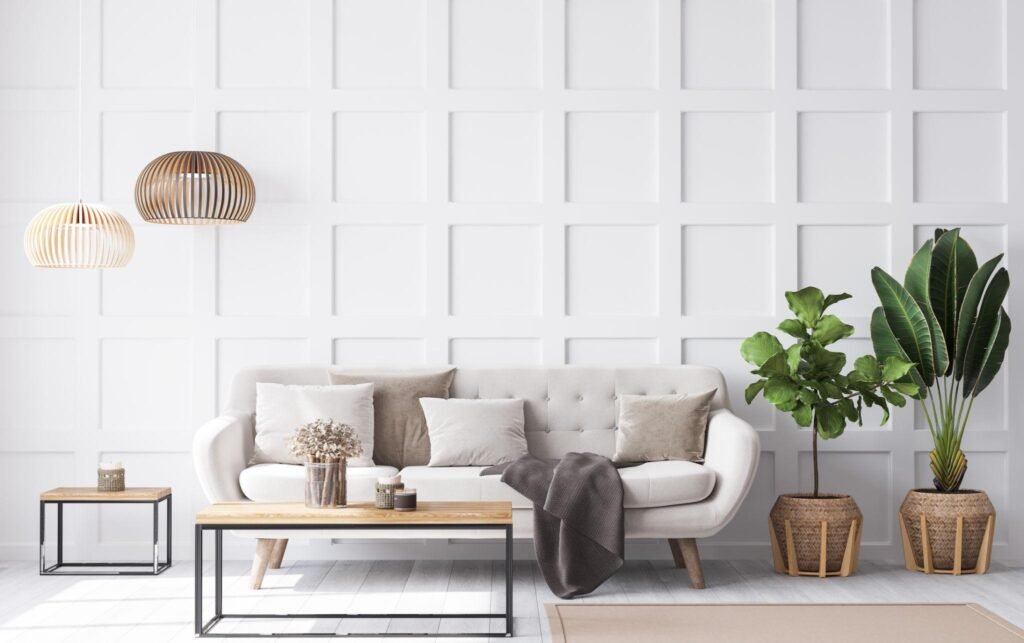
The living room usually needs the most help because it’s doing the most jobs — entertaining, relaxing, sometimes working. What it needs most is texture and a few anchor pieces that make empty corners and bare shelves feel deliberate rather than unfinished.
If you’ve got open shelving that looks sparse, bookends (marble or any heavier material) do double duty — they organize books while adding visual weight to an otherwise empty-looking shelf. For dark or awkward corners, a textured planter with a tall plant or branches softens the space without needing a whole new piece of furniture.
Blank walls are one of the easiest wins here. A single oversized piece of wall art — even one good piece — tends to anchor a room more effectively than a gallery wall of smaller pieces, especially if you’re not confident about arranging a gallery wall yet (that’s its own skill, and a slightly mismatched gallery wall can look more chaotic than empty walls).
For the coffee table or a side table, this is where styling actually comes in: a tray groups smaller items together so they read as one intentional vignette instead of clutter. A candle, a small stack of books, and one object with some shape or texture (a small sculpture, a bowl, a piece of pottery) is enough — the tray itself is what makes it look “styled” rather than “stuff that ended up there.”
Entryway: Small Space, Big First Impression
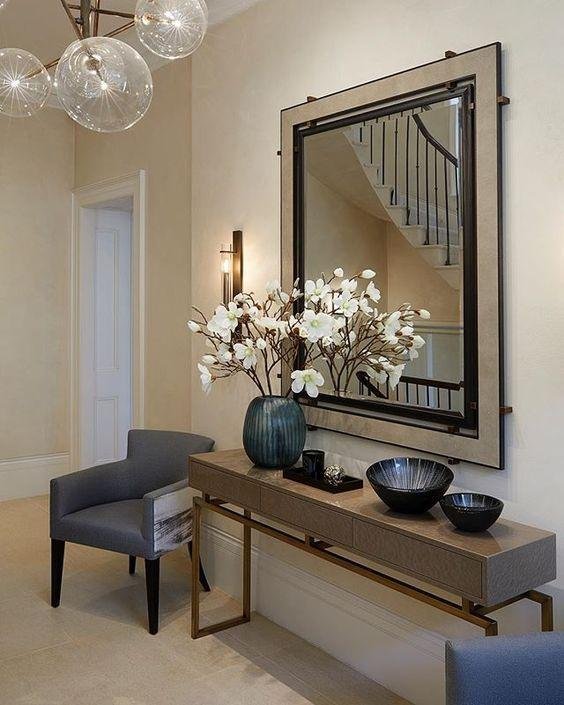
Entryways are often small, sometimes just a wall and a door, but they set the tone for everything else. The good news is that a little goes a long way here.
A console table, even a narrow one, gives you a spot to land keys and mail and a surface to style — which matters, because entryways without any surface tend to feel purely functional and a bit cold. On top, a vase with branches or dried greenery adds height without taking up floor space, which is especially useful if the entry is tight.
If there’s wall space, a coat rack with some visual character — even just an interesting silhouette — does more than a plain hook strip, because it’s one of the first things people see. And if you want a bit of personality without much effort, a small decorative object on the console (something with history or a story, even if it’s just to you) gives visitors something to notice on their way in.
Kitchen and Dining: Everyday Pieces That Feel Special
This is the room where decor and daily use overlap the most, which is actually an advantage — the things you reach for every day can also be the things that make the space feel nice.
Cake stands are a good example. Even if you’re not baking constantly, having one out with fruit on it or just empty on the counter adds height and visual interest to what’s often a flat, busy surface. Trays are useful here too — corralling oils, salt and pepper, or a few bottles onto one tray instantly makes a counter look more organized, even if nothing else changes.
For the dining table itself, something as simple as cloth napkins with rings turns an ordinary weeknight dinner into something that feels slightly more considered, without any extra effort beyond laundry. And if you entertain even occasionally, a nice serving tray or bar accessory (an ice bucket, a set of glasses on a tray) means you’re not scrambling when people come over — it’s decor that’s also doing a job.
Bedroom: Layering for Calm
The bedroom is the one room where less really can be more — it’s supposed to feel calm, and too many small objects can work against that.
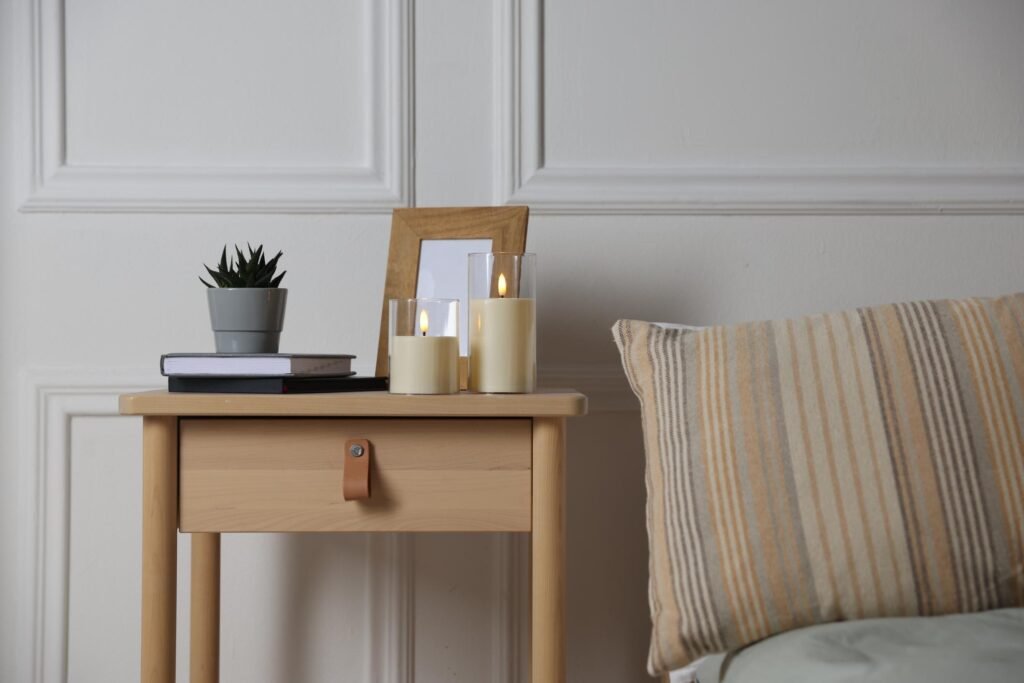
Bedside styling is where most of the impact happens: a small tray on the nightstand to corral a lamp, a candle, and maybe a book keeps things from looking scattered, even if what’s on it changes day to day. Photo frames are worth including here specifically (more than in other rooms) because the bedroom is personal in a way other rooms aren’t — but keep it to one or two meaningful images rather than a cluster.
For warmth, this is where mixing materials matters most: a soft textile (a throw blanket, textured pillows) against something with a bit of shine or weight (a metal candle holder, a small tray) creates the kind of contrast that makes a space feel cozy rather than flat. You don’t need much of either — just enough that the room doesn’t feel like it’s all one texture.
Home Office: Personality Over Function
A home office can easily end up looking like, well, an office — purely functional, with nothing in it that reflects who’s actually working there. The fix is usually just one or two objects with some personality.
Bookends show up again here, but in an office they’re doing more than holding books up — a slightly unusual pair (something with shape or character) adds visual interest to a desk or shelf that’s otherwise all function. A small object with a story — an old compass, a globe, a game set displayed on a shelf — gives the space some warmth and gives you something to glance at that isn’t a screen.
If your office has shelving, resist the urge to fill every inch. A shelf with a few well-chosen objects and some negative space looks more intentional than one packed edge to edge — packed shelves tend to read as storage rather than styling.
Bathroom: A Boutique Feel Without the Boutique Budget
Bathrooms benefit enormously from small, coordinated touches, mostly because bathroom counters tend to be cluttered with everyday products that don’t look great just sitting out.
A matching set of accessories — soap dispenser, tray, maybe a tumbler — in one finish (brass, glass, whatever fits your space) does a surprising amount to make a counter look pulled-together, even if the rest of the bathroom is unchanged. A tray specifically is useful here too, the same way it is in the kitchen: it groups everyday items (hand soap, lotion) so they look placed rather than just left out.
For towels, a decorative towel rack or ring keeps things organized and adds a bit of shape to what’s often a plain wall. And if storage is tight, a woven or metal basket for extra towels or toiletries is both functional and adds some texture to a room that’s often all hard, smooth surfaces (tile, porcelain, mirrors).
Patio and Garden: Setting the Evening Mood
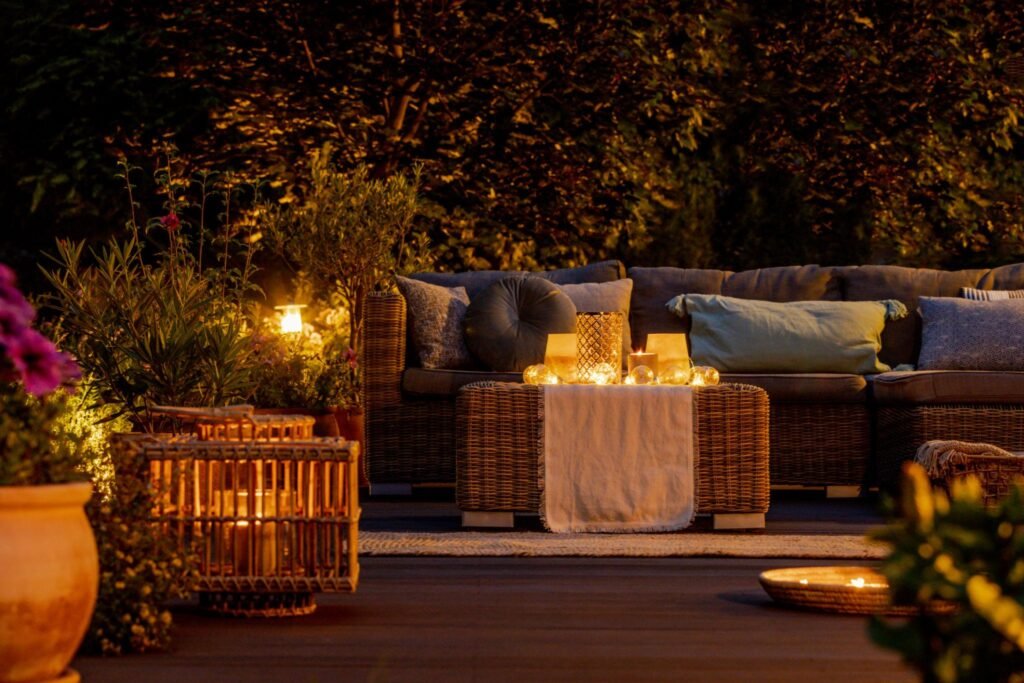
Outdoor spaces are mostly about mood, especially in the evening, and lighting does more work here than almost anything else.
Lanterns or candle holders placed around a patio table or seating area make evenings feel noticeably different — warmer, slower — without any structural changes. Planters with some height (not just low pots) add layers of greenery that make a patio feel more enclosed and intentional, especially if it’s a smaller space that could otherwise feel exposed.
If you’ve got a garden path or a corner that needs a focal point, a single garden statue or sculptural piece can anchor the space the same way a piece of art anchors an indoor wall — one piece, placed thoughtfully, usually works better than several smaller ornaments scattered around.
If you’re working with a smaller home overall, our small-space decorating guide goes deeper into making rooms feel bigger and more finished without adding bulk. And if you’re starting completely from scratch in a new place, our budget home makeover guide covers prioritization — which rooms and pieces to tackle first when you can’t do everything at once. For more on the gallery wall question that came up in the living room section, our gallery wall ideas guide walks through spacing and arrangement in more detail.
FAQ
How do I make my living room feel less empty?
Focus on one larger statement piece first — oversized art, a sculptural object, or a substantial planter — rather than adding many small items. Layered texture (a tray, a basket, a throw) and a few personal touches like books or frames fill in the rest without making the space feel cluttered.
How do you style a coffee table or console table?
A tray is the easiest starting point — it groups smaller items together so they read as one arrangement instead of scattered objects. Add a candle, a small stack of books, and one object with shape or texture (a small sculpture or bowl), and that’s usually enough.
What’s the difference between decorating and styling?
Decorating generally refers to choosing and placing items in a space — the “what.” Styling is more about how those items are arranged together, including height, grouping, and texture, so they look intentional rather than randomly placed — the “how.”
What decor accessories should I buy first on a budget?
If budget is limited, prioritize one statement piece for your main living space (large art or a sculptural object) and a tray or two for surfaces like a coffee table, console, or bathroom counter. These have an outsized visual impact relative to their cost compared to smaller, scattered items.
How often should you update home decor accessories?
There’s no fixed timeline — many people do small seasonal swaps (textiles, candles, a few accent pieces) a couple of times a year, while statement pieces like art or larger objects can stay the same for years. It often comes down to whether the space still feels right to you, rather than following a schedule.