Estimated reading time: 8 minutes
Last updated on June 23rd, 2026 at 06:54 am
This is the easy part. Both crib and toddler mattresses are built to the same standard footprint — roughly 27-28 inches wide and 52 inches long. That’s by design, since most toddler beds are essentially crib frames with the side rail removed, so they’re made to take the same mattress.
| Crib Mattress | Toddler Mattress | |
| Size | ~28″ x 52″ | ~27-28″ x 52″ |
| Firmness | Firm (often dual-sided) | Softer, more cushioned |
| Typical price | $50-$150 | $60-$180 |
| Best for | Infants 0-2 years | Toddlers 2-5 years |
A couple of things worth double-checking before you assume your mattress will transfer over without a hitch. Some toddler beds — especially ones with a built-in frame rather than a converted crib — can have slightly different dimensions, so it’s worth measuring before you get rid of anything. And if you’re switching to a twin-size toddler/junior bed (some brands do this), you’re in completely different territory size-wise, and your old crib mattress won’t fit at all.
Firmness: Why It Actually Matters (and When It Stops Mattering As Much)
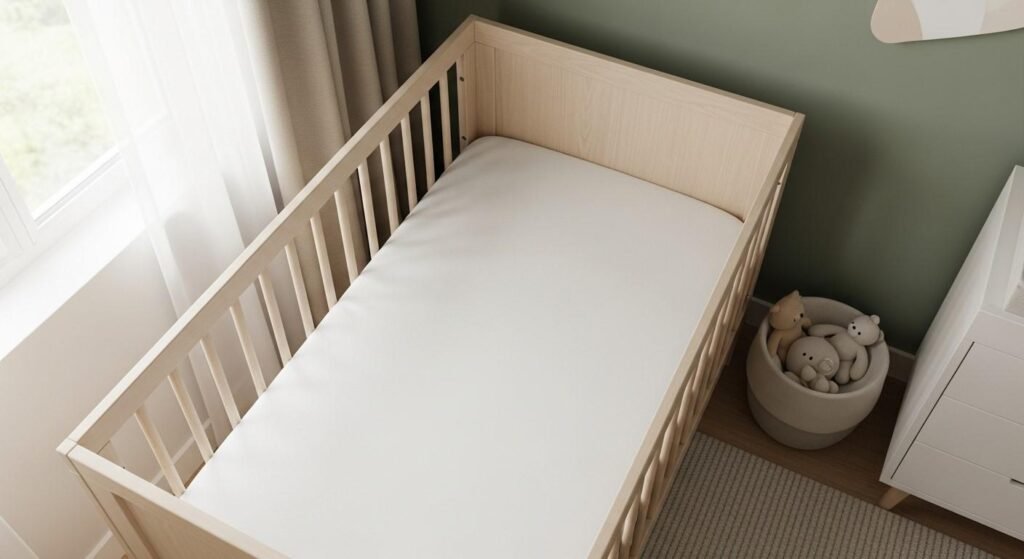
This is where the real difference lives, and it’s rooted in something genuinely important: infant sleep safety. Babies under 12 months need a firm, flat sleeping surface — soft mattresses increase the risk of suffocation if a baby rolls into a soft spot. That’s why crib mattresses are built dense and firm, often with almost no give at all. Some are even dual-sided, with a firmer side for infants and a slightly softer side meant for the toddler years.
Once your child is walking, climbing, and sleeping in a toddler bed, that extreme firmness isn’t a safety requirement anymore. A toddler mattress with a bit more cushion can actually be more comfortable — kids this age move around a lot in their sleep, and a slightly softer surface is gentler on growing joints and easier to get comfortable on.
But here’s the thing nobody tells you: firmness isn’t really an age-based switch you need to flip on a calendar. If your crib mattress is on the firmer side and your toddler sleeps fine on it, there’s no rule saying you have to swap it out. Plenty of toddlers sleep great on a firm mattress well into preschool. The “softer is better” advice is more of a comfort preference than a hard requirement.
Is It Safe to Use a Crib Mattress in a Toddler Bed?
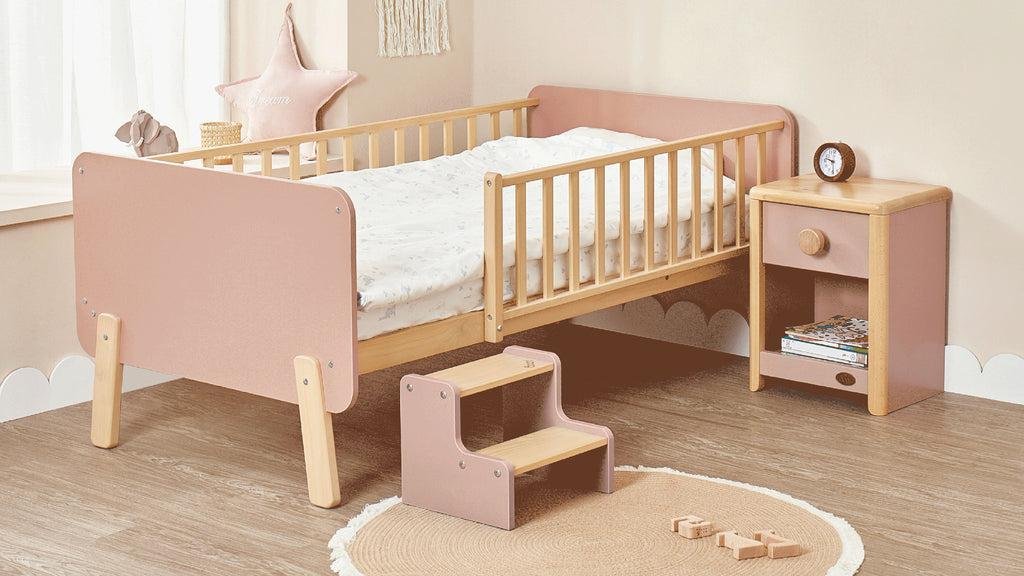
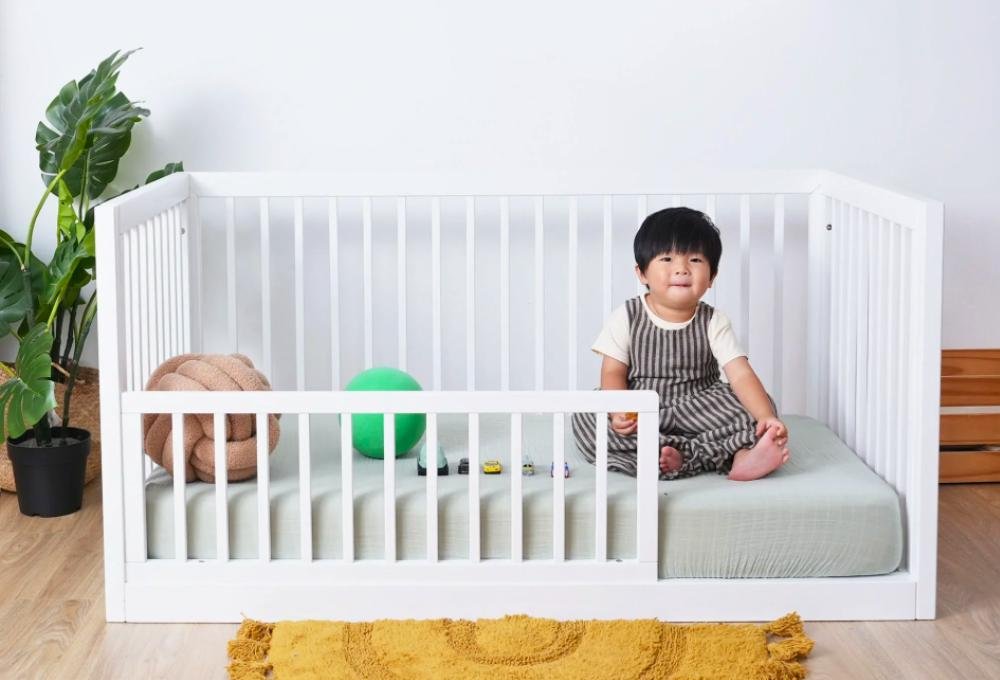
Yes — generally speaking, using your existing crib mattress in a toddler bed is completely fine, as long as the mattress itself is in good shape and fits the bed frame without leaving gaps.
The safety concerns that apply to crib mattresses (firmness for SIDS prevention, fitting snugly with no gaps around the edges) are specific to infants in cribs. Once your child has transitioned to a toddler bed — which sits lower to the ground and usually has guardrails — those particular risks aren’t really in play anymore. The bigger safety factors at this stage are about the bed itself: making sure the guardrails are installed correctly and that the mattress sits at a height where a sleepy toddler won’t tumble out and have a long way to fall.
One thing worth a quick mention: if you’re buying a thicker toddler mattress (some “comfort” toddler mattresses run noticeably thicker than crib mattresses), check that it doesn’t push the sleeping surface up too close to the top of the guardrail. A mattress that’s too tall can effectively cancel out the guardrail’s protection.
Should You Reuse Your Crib Mattress? A Quick Test
Here’s where I’d actually spend your decision-making energy — not on the crib-vs-toddler debate, but on whether your specific mattress still has life left in it.
The 3-question test:
- Does it still bounce back? Press down firmly with your hand in a few spots — center, edges, corners. It should spring back quickly with no lingering dip or soft spot.
- Any visible damage? Look for lumps, sagging corners, cracks in the cover, or stains that suggest old leaks ever made it through to the foam or springs.
- Does it smell off? Give it a sniff, especially in the corners. A musty smell that doesn’t go away after airing it out usually means moisture got into the mattress at some point — and that’s not something you want your toddler sleeping on, regardless of firmness.
When a softer mattress makes sense: If your crib mattress passes all three checks but is genuinely very firm and your toddler seems to be struggling to get comfortable (lots of nighttime waking, seems restless), upgrading to something with a bit more cushion is a reasonable comfort call. It’s optional, not mandatory.
When firmness still matters: If your mattress fails any of the three checks above — especially the bounce-back test — that’s your answer regardless of the crib-vs-toddler debate. A sagging or damaged mattress isn’t comfortable or supportive for anyone, toddler or adult.
If your crib mattress still passes the firmness and wear checks, there’s genuinely no reason to buy a new one just because your kid moved to a “big bed.” That’s money that could go toward the rest of the room transition — a step-by-step guide to moving from crib to bed covers what else is actually worth prioritizing.
Signs It’s Time for a New Mattress
A few flags that mean it’s probably time to retire the crib mattress, even if your toddler doesn’t complain:
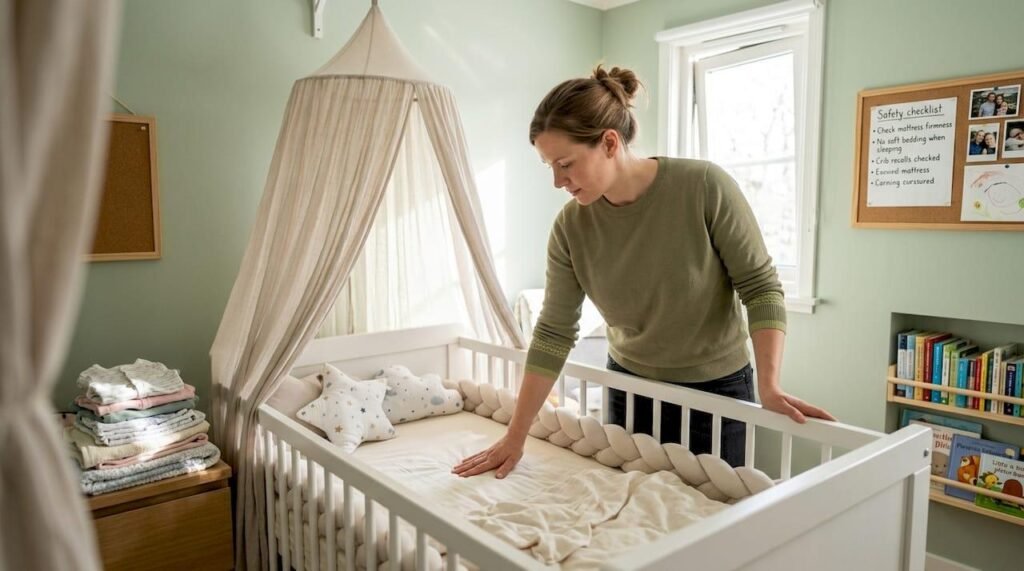
- It’s more than 3-4 years old and has seen daily use
- You can feel springs or firm spots through the surface unevenly
- There’s visible sagging in the center, even slight
- It’s been through multiple leaks or accidents, even if cleaned thoroughly
- The cover is cracked or torn, exposing the foam underneath
None of these are dramatic emergencies — but they’re the kind of thing that’s easy to ignore until you actually stop and check. If you’re noticing more than one of these, it’s a reasonable time to start looking, and our guide on knowing when to replace any mattress walks through what to look for at any age.
The Second-Child Scenario
This one comes up a lot and doesn’t get talked about enough: what if you’re moving your older child to a toddler bed because a new baby is on the way and needs the crib?
In this case, the math is pretty simple. The crib mattress goes with the crib — it’s the one that needs to meet those firm, snug-fitting safety standards for the new baby. Your older toddler gets a “new” mattress, which is really just whatever you choose for their toddler bed (could be a budget option, could be an upgrade — totally up to you and your space).
If you’re trying to keep costs down during this whole reshuffle, a budget toddler mattress is genuinely fine as long as it’s a reasonable size and in decent shape. The firmness debate matters far less here than the basic condition checks above.
A Few Practical Extras Worth Knowing
If you’re shopping for either type of mattress, a couple of certifications are worth glancing for on the label — CertiPUR-US (for foam content and emissions) and GREENGUARD Gold (for low chemical emissions) are both reasonable indicators of a mattress that’s been tested for the kinds of things you’d want to avoid in a kid’s room. Neither is a dealbreaker if absent, but they’re a nice bonus when present.
Waterproof covers are worth keeping regardless of which mattress you go with — toddlers have accidents well past potty training age, and a removable, washable cover saves you from dealing with it directly on the mattress itself.
And if you’re setting up the room from scratch anyway, it’s worth taking a pass at the room’s overall safety setup — our toddler bedroom safety checklist covers the kind of stuff that’s easy to overlook once the crib comes down (cord placement, furniture anchoring, that sort of thing).
FAQs
Is a crib mattress the same as a toddler mattress?
They’re usually the same size, but not the same product. Crib mattresses are built firmer to meet infant sleep safety standards, while toddler mattresses tend to have a bit more cushion for comfort. Many crib mattresses work perfectly well in a toddler bed.
Can I use my crib mattress in a toddler bed?
Yes, as long as the mattress is in good condition — no sagging, damage, or odor — and fits the bed frame properly. The infant-specific safety concerns around firmness don’t apply once your child is in a toddler bed.
How long do crib mattresses last?
Most crib mattresses hold up well for 3-4 years of regular use, sometimes longer with good care. After that, check for sagging, lumps, or odor before continuing to use it.
What firmness is best for a toddler?
There’s no strict requirement — toddlers can comfortably sleep on either a firm or moderately cushioned mattress. A bit of extra give can help with comfort, but firm mattresses are perfectly fine too, especially if that’s what your toddler is used to.
Can a 2-year-old sleep on a crib mattress?
Yes. A 2-year-old can safely sleep on a crib mattress in a toddler bed, provided the mattress is in good shape. There’s nothing about the firmness that’s unsafe for a toddler — it was only a strict requirement during infancy.