Estimated reading time: 14 minutes
Last updated on June 23rd, 2026 at 06:56 am
Here’s a scene I bet you’ve lived through: standing in a kitchen with maybe four feet of counter space, scrolling through a “20 must-have appliances” list, and realizing there’s no way all of that is fitting. Half of it would just become storage clutter you trip over every morning, and the other half would end up living on top of your fridge, which — let’s be honest — is where small appliances go to die.
So let’s skip the 20-item list. If you’re setting up a small kitchen in 2026 — apartment, dorm, tiny house, doesn’t matter — there are really only a handful of essential small kitchen appliances that pull their weight every single week. Everything else is optional, and a surprising amount of it is stuff you can happily live without.
The quick list: an air fryer, a multi-cooker (Instant Pot-style), and a decent blender. That’s the core. An electric kettle and a toaster oven round out the “next tier” if you’ve got a bit more room. Everything beyond that is genuinely a “depends on you” situation, and we’ll get into what’s worth skipping entirely a bit further down.
Let’s get into why these specific appliances make the cut, what size actually makes sense for a small space, and where people tend to overbuy.
The Air Fryer: Still Earning Its Spot
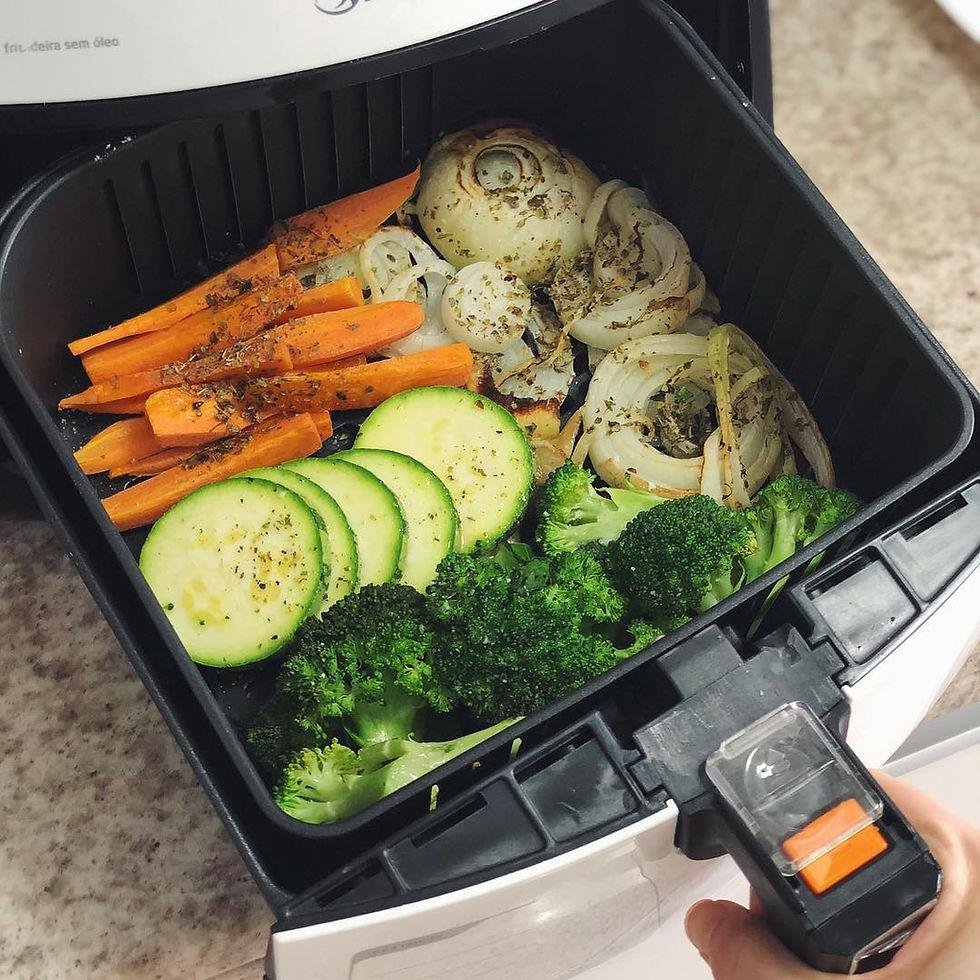
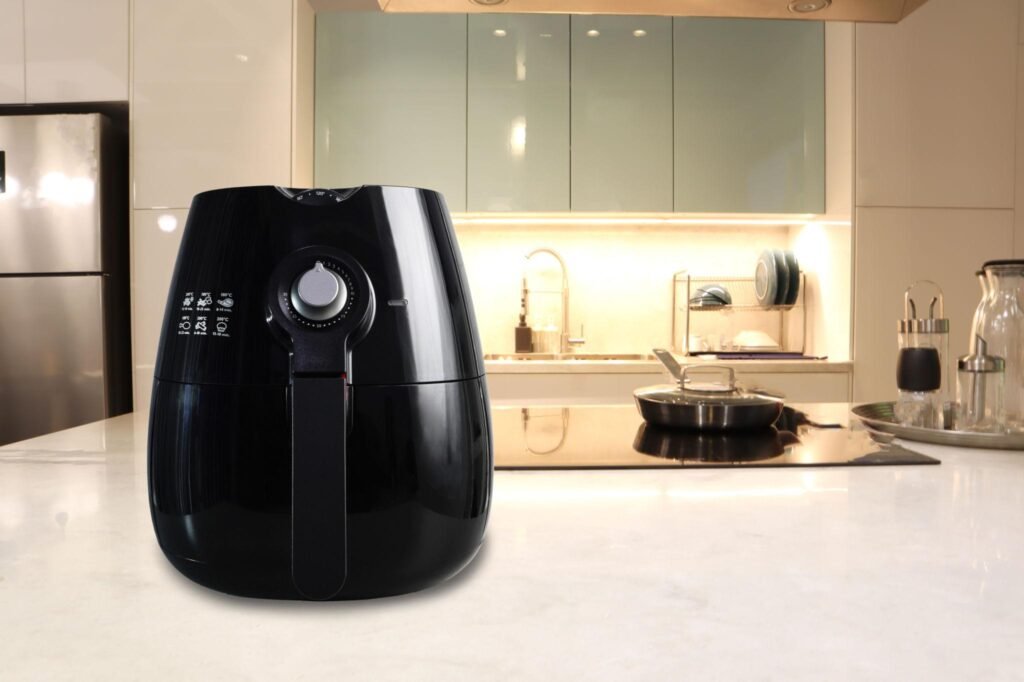
Air fryers had their moment a few years back, and unlike a lot of kitchen trends, this one stuck — and for good reason. It uses circulating hot air to crisp up food with little to no oil, which means things like fries, chicken thighs, roasted veggies, even reheated pizza come out way better than they would in a microwave. There’s a real, noticeable difference between microwaved leftovers and air-fried ones, and once you’ve had crispy reheated fries, it’s hard to go back.
For a small kitchen, the real question isn’t whether to get one, it’s what size. This is where a lot of people overbuy, usually because the marketing photos for the bigger models look so much more impressive. A 3-4 quart basket is genuinely plenty for one or two people — it’ll handle a solid portion of fries, a couple of chicken breasts, or a tray of vegetables without much trouble. The 8-quart models that look so capable in ads are built for families of four or more, and in a small kitchen, that extra footprint is real estate you probably can’t spare. We’re talking the difference between something that fits in a single cabinet shelf versus something that needs its own dedicated corner of counter.
One thing worth knowing before you buy: air fryer baskets need cleaning pretty regularly. Grease and crumbs build up fast, especially if you’re cooking things like chicken wings or anything breaded, and it’s not really a “wipe it once a week” situation if you’re using it often. Not a dealbreaker by any means, just something to factor in if your counter-to-sink distance matters in your layout — and in a small kitchen, it usually does, because you’re often working in a tighter triangle than you’d like.
A couple of practical things that don’t get mentioned enough: air fryers run hot and need a few inches of clearance around the back and top for the exhaust, so tucking one into a tight corner cabinet (even with the door open) isn’t ideal. And they’re loud-ish — not jet-engine loud, but enough that if your kitchen is open to a living room or bedroom, you’ll notice it during a 15-20 minute cook.
Air fryer vs. toaster oven — do you need both?
Short answer: probably not, and this is one of those overlaps that nobody really talks about until you’re standing in a store aisle trying to justify buying both. A lot of newer toaster ovens come with an air-fry setting built in, and if you’re already considering a toaster oven for toast, reheating, or small baking jobs anyway, that combo unit might cover both needs in one footprint.
The dedicated air fryer tends to crisp slightly better — the basket design with air flowing all the way around the food just does a better job than a toaster oven’s air-fry tray, which only has airflow from a few directions. It also heats up faster, which matters more than you’d think when you’re hungry and impatient. But if counter space is really tight, a toaster oven with an air-fry function is a perfectly reasonable one-appliance solution, especially if you’re not cooking air-fried food multiple times a day. We’ve gone deeper on this exact tradeoff in our air fryer vs. toaster oven comparison, if you’re stuck between the two and want a more detailed breakdown.
The Multi-Cooker: One Appliance Wearing a Lot of Hats
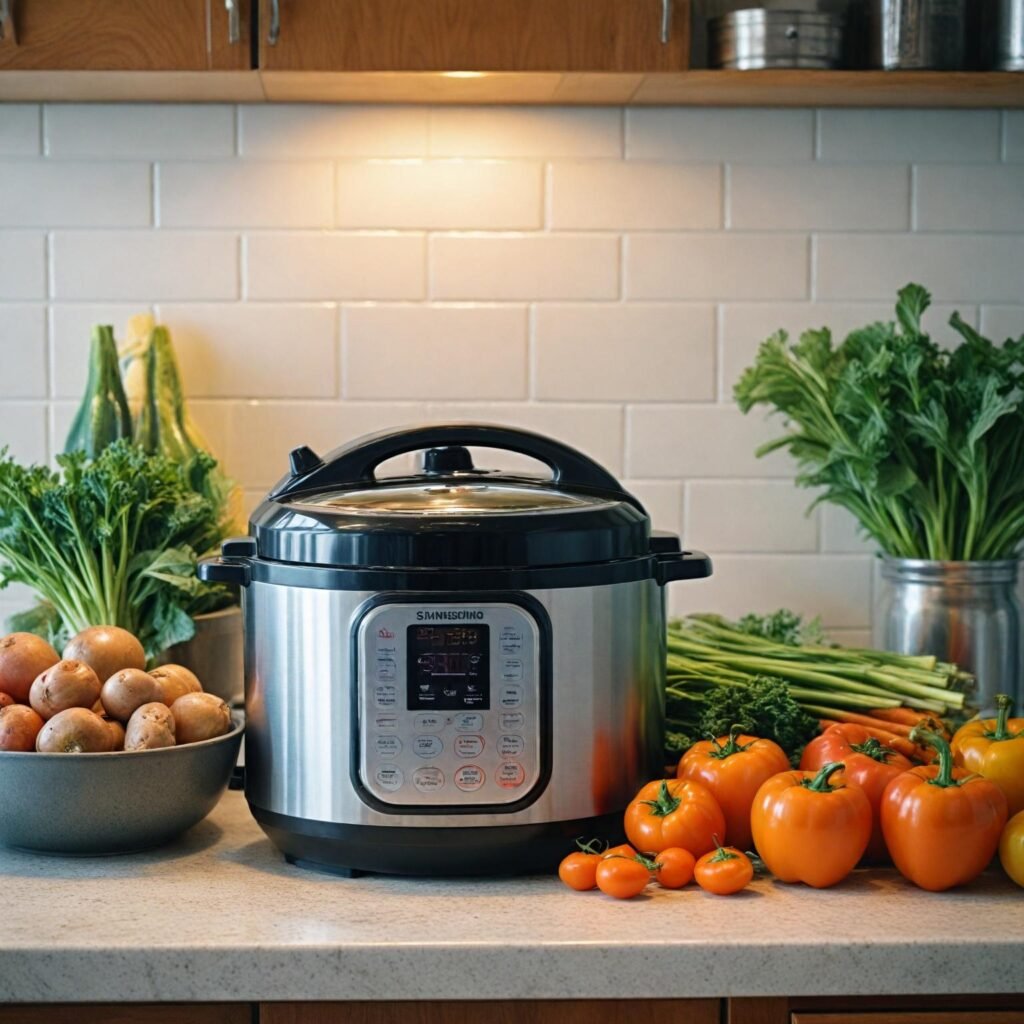
This is the Instant Pot-style appliance — pressure cooker, slow cooker, rice cooker, sauté pan, and steamer all crammed into one pot. For small kitchens, this is the appliance that does the most replacing. If you’d otherwise need a separate rice cooker, slow cooker, and stockpot taking up cabinet space, a multi-cooker can realistically cover all three jobs, and honestly does a pretty respectable job at each.
Here’s the honest tradeoff, though, and it’s the kind of thing that’s easy to gloss over in a buying guide: it does a lot of things well enough, but rarely does any single thing as well as a dedicated appliance would. Rice from a multi-cooker is good — genuinely fine for everyday eating. Rice from a real, dedicated rice cooker is sometimes a notch better in terms of texture consistency, especially if you’re particular about things like sushi rice or specific grain types. Slow-cooked dishes work fine in the slow-cook setting, but if you’re a slow-cooker purist who likes the gradual, all-day, set-it-and-forget-it style with a loose-fitting lid that lets some moisture escape, the pressure-cooker-style sealed lid takes a bit of adjusting to. The results are still good, just slightly different.
For one or two people, a 6-quart multi-cooker is the sweet spot. It’s big enough for actual meals and leftovers — think a full pot of chili or a whole chicken — but small enough to store in a cabinet rather than leaving out permanently. And these things are heavier than they look once they’re full of food, so you’ll want a storage spot where you’re not awkwardly lifting it in and out from a high shelf every time you want to cook.
One practical note that’s easy to overlook: multi-cookers come with a lot of small parts — the inner pot, the lid with its sealing ring, a trivet, sometimes a steam rack. All of that needs somewhere to live, and the sealing ring in particular can hold onto food smells (garlic and curry are notorious for this) unless you wash it promptly. If you’re someone who cooks a lot of strongly-flavored food, it’s worth knowing you might eventually want a second sealing ring just to keep “savory” and “dessert” cooking separate — a small thing, but a real one.
Does it replace your slow cooker AND rice cooker?
Functionally, yes — it can do both jobs, and for most people, that’s more than enough. Whether it should fully replace them depends on how particular you are about either dish. If you make rice almost every single day and have strong opinions about texture, a dedicated rice cooker is still worth the small extra footprint — they’re often quite compact anyway, sometimes smaller than you’d expect. If rice is more occasional for you, the multi-cooker’s rice setting is genuinely fine and not worth doubling up on.
The Blender: Immersion vs. Countertop
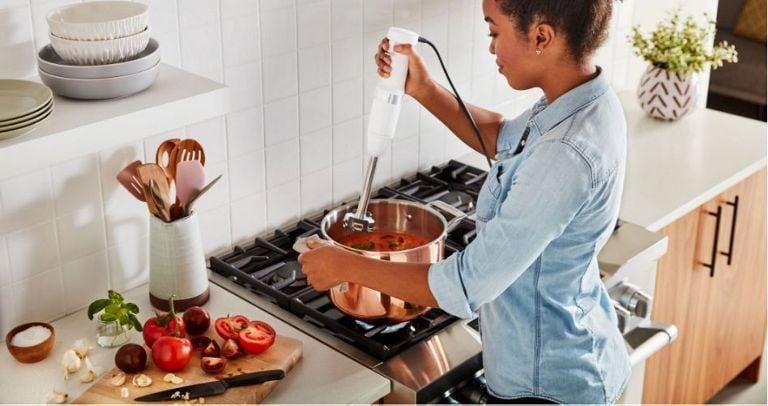
A blender feels like the most “obvious” item on this list — almost too obvious to even explain — but the type of blender matters more in a small kitchen than people realize, and this is honestly where I see the most unnecessary purchases happen.
A countertop blender — the classic pitcher-on-a-base setup — is great if you’re making smoothies regularly, batch soups, or anything that needs serious blending power, like crushing ice for frozen drinks or grinding nuts into butter. But it takes up permanent counter space or a decent chunk of cabinet shelf, pitcher included, and that pitcher is often an awkward shape that doesn’t stack well with anything else.
An immersion (stick) blender is the small-kitchen secret weapon, and it’s the one appliance on this list that I think is genuinely underrated. It’s basically a wand that blends directly in whatever pot, bowl, or cup you’re using — no separate pitcher to wash or store, no extra footprint at all beyond the wand itself, which often comes with a thin storage case that fits in a drawer. It won’t crush ice as well as a countertop blender, and it’s not great for thick smoothies loaded with frozen fruit (you’ll be standing there longer than you’d like, working it through chunks). But for soups, sauces, salad dressings, and quick blending jobs, it does the job in a fraction of the space and with a fraction of the cleanup.
A lot of small-kitchen setups are honestly better served by an immersion blender plus a cheap personal blender cup (the kind with a travel lid) than by one big countertop unit. You get soup-blending capability from the immersion blender and smoothie capability from the personal blender, and combined, they probably take up less space than one countertop blender’s pitcher alone.
If smoothies are a daily, non-negotiable thing for you — like, this is part of your morning routine and you’re not changing that — a proper countertop blender earns its space, full stop. The motor power difference is real for things like frozen fruit and ice, and a weak blender trying to do that job every day will burn out faster and frustrate you in the meantime. But if blending is more occasional — soups, dressings, the odd smoothie here and there — go immersion, and you’ll likely free up an entire cabinet shelf for something else.
What Else Is Worth Considering (Without Being “Essential”)
A couple of honorable mentions that don’t make the core three but are worth knowing about, especially if you’ve got a little more room than the bare minimum:
- Electric kettle — if you drink tea, make coffee via pour-over or French press, or just want faster boiling water than waiting on a stovetop pot, this is small, cheap, and genuinely useful daily. It’s also one of the smallest-footprint appliances on this entire list, so it’s an easy add even in a very tight space.
- Toaster oven — as mentioned above, especially one with an air-fry function, this can sometimes replace both a regular toaster and an air fryer in one unit. If you’re someone who eats a lot of toast, bagels, or reheated slices of pizza, having a dedicated toasting function (rather than relying on the air fryer for everything) can be more convenient day-to-day.
Neither of these is a “must,” and I wouldn’t feel bad about a small kitchen that skips both. But they’re the next things I’d consider after the core three, depending on your habits — and honestly, an electric kettle is one of those appliances that, once you have it, you wonder how you lived without it.
What to Skip in a Small Kitchen
This is the part most lists skip entirely, and it’s honestly where you’ll save the most space and money. None of these are bad appliances in general — they just tend to be bad fits for a small kitchen specifically, where the real cost isn’t the price tag, it’s the cabinet space you don’t have to give up.
Standalone rice cookers — unless rice is a genuine daily staple for you and you’re particular about texture, the multi-cooker’s rice setting covers this. A dedicated rice cooker is one more single-purpose box taking up a shelf.
Bread makers — they’re large, they’re single-purpose, and in my experience they sit unused more often than not after the initial novelty wears off. If you bake bread occasionally, doing it by hand (it’s more forgiving than people think) or using a multi-cooker’s “bake” function if it has one is far more space-efficient than dedicating a permanent appliance to it.
Juicers — bulky, genuinely annoying to clean (the pulp gets everywhere and into every crevice), and a blender plus a fine strainer or nut-milk bag does most of what people actually use a juicer for, minus the cleanup headache.
Stand mixers — unless you bake genuinely often, like multiple times a week, a hand mixer does the same job for most recipes in a fraction of the storage space. Stand mixers are also heavy and awkward to move, which makes them a poor fit for a kitchen where appliances need to be shuffled around regularly.
Waffle makers, electric griddles, sandwich presses — these are the classic “used twice and then forgotten” appliances. They’re fun, sure, but they’re single-purpose and bulky, which is exactly the combination a small kitchen can’t afford.
Making It All Fit
A few small things that make a real difference once you’ve settled on your appliances:
Stack what you can — multi-cookers and air fryers are often similar heights, and with a sturdy shelf divider, they can sometimes share a cabinet shelf rather than each needing their own. Keep daily-use appliances (the kettle, the air fryer if you use it often) closer to the counter or in an easy-access spot, and cabinet anything used a few times a week, like the multi-cooker or blender. Lifting a 6-quart multi-cooker out from a deep, low cabinet every single day gets old fast — but for two or three times a week, it’s no big deal.
Look for appliances with flat, stackable shapes rather than oddly contoured or rounded designs. It sounds like a minor detail, but it adds up fast when cabinet space is at a premium — a flat-topped multi-cooker that another box can sit on top of is worth more than its slightly-cheaper-but-curvy counterpart, in practical terms.
If you’re setting up the whole kitchen from scratch, it’s worth thinking through the layout before you buy anything at all — our guide to organizing a small kitchen covers storage approaches that make appliance placement way less of a headache later, including where outlets typically end up and how to plan around them.
At the end of the day, the appliances that earn a permanent spot in a small kitchen are the ones that either do double-duty or get used often enough to justify their footprint. An air fryer, a multi-cooker, and a blender (the right type for how you actually cook) cover most of what a small kitchen needs — everything else is a “nice to have” you can add once you’ve lived with the basics for a while and have a better sense of what’s actually missing from your routine, rather than what just looks good on a wishlist.
FAQs
What are the must-have appliances for a small kitchen?
The core essentials are an air fryer, a multi-cooker (like an Instant Pot), and a blender. Together they cover frying, roasting, pressure cooking, slow cooking, steaming, and blending — without needing separate single-purpose appliances for each of those functions.
Do I need both an air fryer and a microwave?
Yes, they serve different purposes. A microwave is for quick reheating and defrosting, while an air fryer crisps and roasts food in a way a microwave simply can’t. Many small kitchens use both, though some combo microwave-air fryer units exist if space is extremely tight.
Is an Instant Pot worth buying for a small kitchen?
For most people, yes. A 6-quart multi-cooker can replace a rice cooker, slow cooker, and steamer, which is a meaningful space-saver. If you cook rice daily and are particular about its texture, a dedicated rice cooker may still be worth keeping alongside it.
How much counter space do I need for an air fryer?
A 3-4 quart air fryer typically needs about a 12×12 inch footprint, plus a few inches of clearance around the back and top for ventilation. It doesn’t need to live on the counter permanently if cabinet storage is close to an outlet.
What’s the best all-in-one appliance for a small kitchen?
A multi-cooker offers the most functions in one unit — pressure cooking, slow cooking, steaming, and sautéing. For crisping and roasting, though, you’d still want an air fryer or an air-fry toaster oven alongside it, since no single appliance does everything well.