Estimated reading time: 9 minutes
Last updated on June 23rd, 2026 at 05:49 am
Quick answer: if you’ve got outdoor space and flavor is your top priority, get a gas grill. If you’re working with a balcony, a small patio, or you just want something you can plug in and forget about, an electric grill is going to make your life easier. That’s the short version. The long version depends on a few things most articles gloss over, so let’s get into it.
I’ve owned both. For years I had a propane grill on a back deck, and when I moved into a third-floor apartment a few years back, I had to switch to electric because, well, the building’s fire code didn’t give me a choice. That switch taught me a lot about what each type can and can’t do, and some of it surprised me.
Gas vs. Electric Grills at a Glance
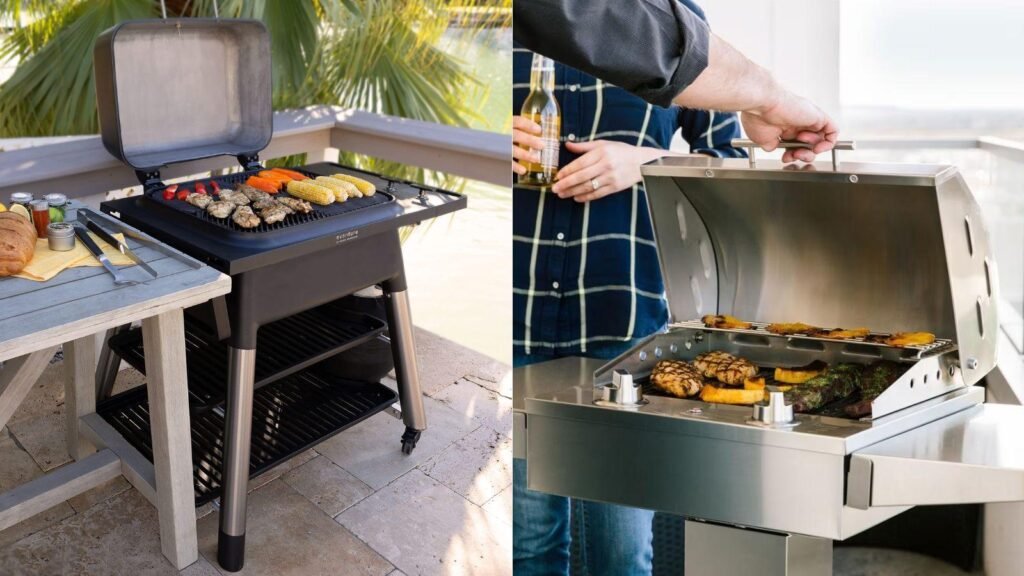
Here’s the breakdown most people are looking for before they dig into the details:
| Gas Grill | Electric Grill | |
| Heat output | High (40,000–60,000+ BTU) | Moderate, consistent |
| Flavor | Smoky, charred | Clean, no smoke flavor |
| Setup | Propane tank or gas line | Plug and go |
| Cost (upfront) | $150–$1,500 | $50–$400 |
| Cost (running) | Propane refills add up | Cheap, just electricity |
| Maintenance | Grease traps, igniters, hoses | Minimal, easy to clean |
| Safety | Open flame, gas risk | No flame, safer indoors |
| Best for | Backyards, big cookouts | Apartments, balconies, small spaces |
Does Gas Really Taste Better?
Short answer: yes, and there’s a real reason for it.
When fat and juices from your food drip onto a hot flame or hot metal, they vaporize and create smoke that drifts back up and clings to whatever you’re cooking. That’s where the “grilled” flavor comes from — it’s not just the high heat, it’s that smoke interacting with the surface of the meat. You also get the Maillard reaction kicking in hard at high temperatures, which is the chemical process responsible for that deep brown crust on a steak or burger.
Electric grills can’t replicate this. There’s no open flame, so there’s no drip-and-vaporize cycle creating smoke. You can still get good color and a decent crust if your electric grill runs hot enough, but it’s never going to taste like it came off a charcoal or gas flame.
If that smoky flavor is non-negotiable for you, don’t talk yourself into an electric grill thinking you won’t notice the difference. You will.
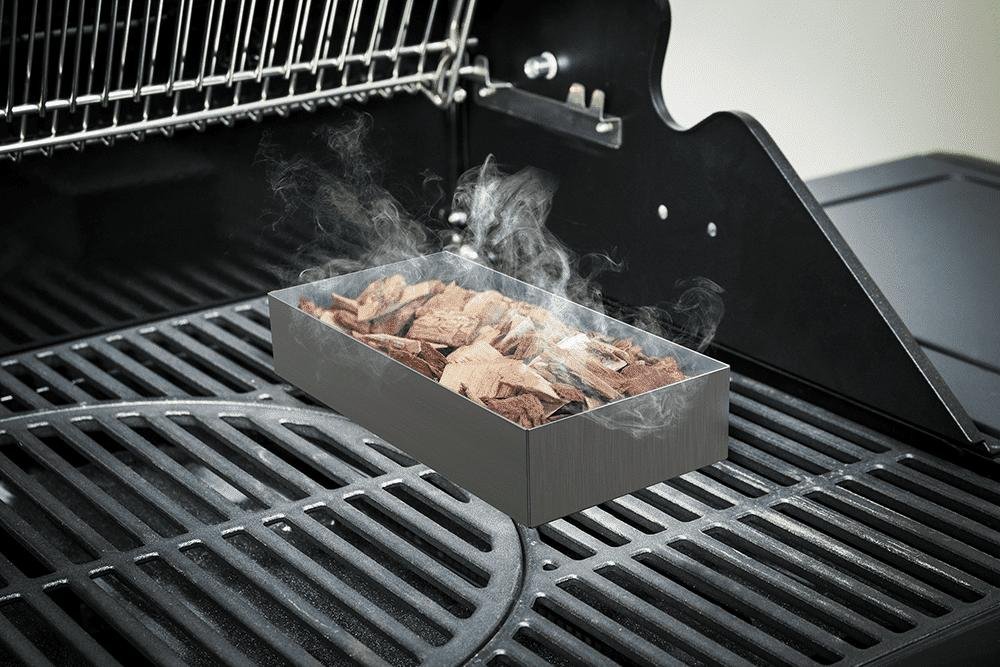
That said, there’s a workaround for gas grill owners who want even more smoke flavor: a small smoker box filled with wood chips, placed directly over a burner, can add a noticeable smoky note to whatever you’re cooking. It’s a cheap addition that a lot of people don’t know about.
Heat and Cooking Performance
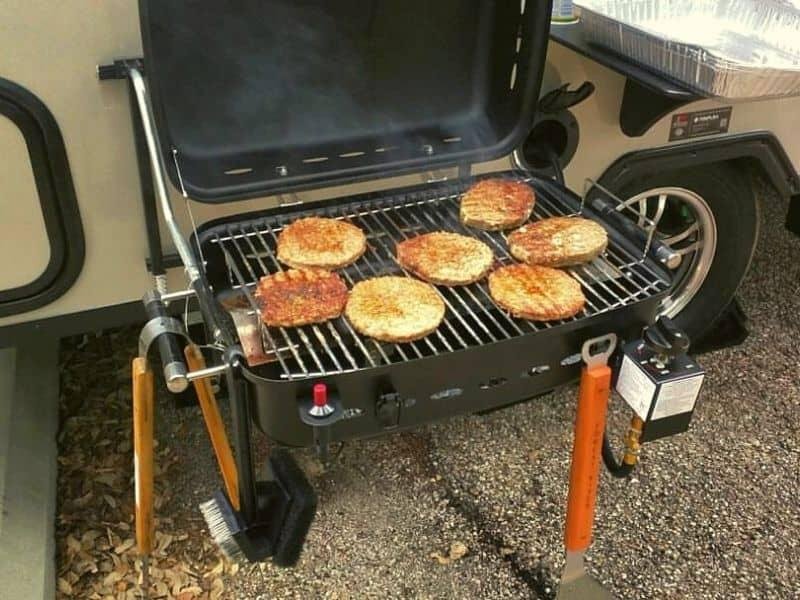
Gas grills typically put out somewhere between 40,000 and 60,000 BTUs, sometimes more on bigger units. That’s enough to get a proper sear on a steak — important if you care about that crust-on-the-outside, juicy-on-the-inside result.
Electric grills usually run on standard household current, which caps how hot they can get. Most top out somewhere in the 400–500°F range on the cooking surface. That’s hot enough for burgers, chicken, vegetables, and even a decent sear on thinner cuts, but it won’t quite match a gas grill’s high-heat performance on something like a thick ribeye.
One thing that surprised me with my electric grill: the heat is more even. Gas grills can have hot and cold spots depending on burner placement, but electric heating elements tend to distribute heat more uniformly across the cooking surface. So while you lose some top-end heat, you gain consistency — which actually makes it easier for beginners to avoid burning food.
If searing is a top priority, look for an electric grill with infrared heating elements. These models get hotter faster and do a noticeably better job with a sear than basic coil-based electric grills.
Cost: What You’re Actually Paying
Let’s get specific instead of throwing out a vague range.
Electric grills:
- Budget option (~$50–80): basic countertop electric grills, fine for apartments and occasional use
- Mid-range (~$100–200): models like the George Foreman Indoor/Outdoor Electric Grill, good build quality, larger cooking surface
- Higher-end (~$250–400): models with infrared elements and bigger grates, closer to a “real” grilling experience
Gas grills:
- Budget option (~$150–300): two-burner models, decent for small households
- Mid-range (~$400–700): three to four burners, side burners, better build materials
- Higher-end (~$800–1,500+): built-in rotisseries, larger cooking areas, premium materials like stainless steel
Beyond the upfront cost, gas grills come with ongoing expenses. A propane tank refill typically runs $15–25 and lasts somewhere between 10–20 hours of cooking time, depending on usage. If you grill often, that adds up over a season — and there’s also the hassle of running out mid-cookout and having to make a tank-swap run.
Electric grills run on household electricity, which is cheap. You’re looking at pennies per use in most cases. No tanks, no refills, no surprise mid-cookout shutdowns.
Safety and Where You’re Actually Allowed to Grill
This is the section a lot of articles skip, and it’s often the deciding factor for renters and condo owners.
Many apartment buildings, condo associations, and even some cities have rules against propane and charcoal grills on balconies or within a certain distance of the building — often due to fire risk. These rules vary a lot by location, so it’s worth checking with your building management or local fire department before assuming you can use a gas grill on a balcony, even if you see one for sale that’s marketed as “compact” or “balcony-friendly.”
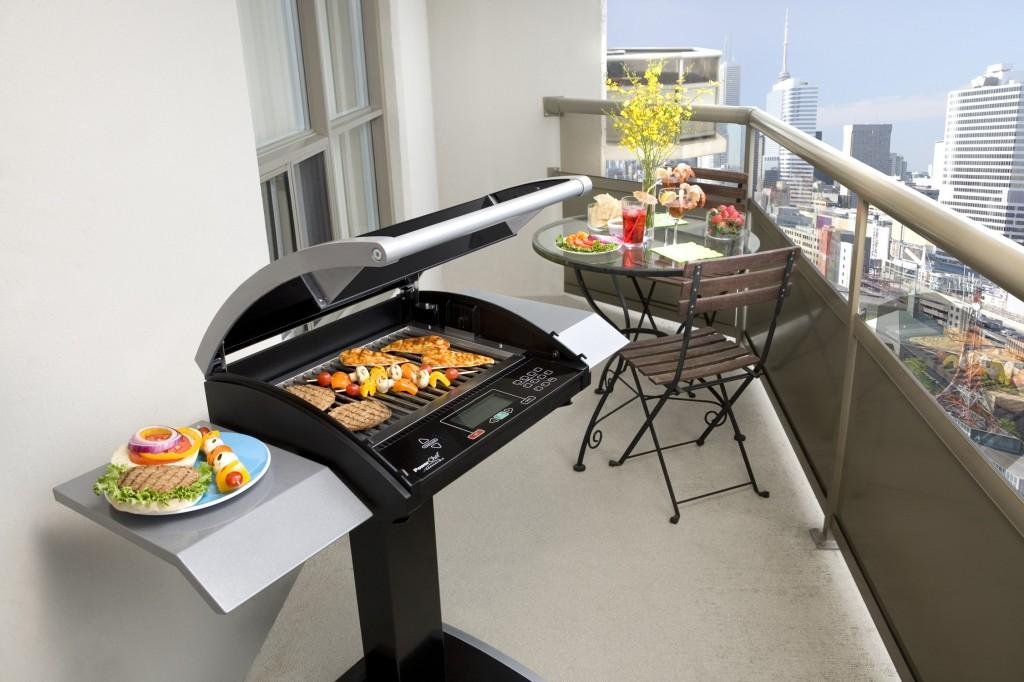
Electric grills are generally allowed in places gas and charcoal aren’t, because there’s no open flame and no fuel tank involved. If you’re on a balcony, in a condo, or in a building with strict fire codes, electric is often your only legal option — not just the more convenient one.
For backyard use where space and fire codes aren’t a concern, gas grills are generally safe as long as you check propane connections regularly for leaks (a simple soapy water test on the hose connections will show bubbles if there’s a leak) and keep the grill away from siding, railings, and overhangs.
Maintenance and Day-to-Day Convenience
Gas grills need a bit of upkeep: cleaning grease traps, occasionally replacing igniters, checking hoses and connections for wear, and managing propane levels. None of it is hard, but it’s something.
Electric grills are about as low-maintenance as it gets. Most have removable plates that go straight in the dishwasher or wipe clean easily. There’s no ash, no grease trap buildup in the same way, and no fuel system to maintain. If you want to grill on a Tuesday night without thinking about whether you have enough propane, electric wins this one easily.
Electric Grill vs. Air Fryer — What’s the Difference?
Worth addressing since people often lump these together. An air fryer circulates hot air around food in an enclosed space, basically acting like a small convection oven. An electric grill uses a heated grate or flat surface that food sits directly on, giving you actual grill marks and a more traditional grilling texture.
If you want that classic grilled look and texture — char marks, grill lines — an electric grill does that in a way an air fryer can’t. An air fryer is better for things like fries or wings where crispiness all around matters more than grill marks.
Our Recommendation by Lifestyle
If you’re in an apartment or condo: Go electric. Check your building’s rules first, but in most cases, electric is your safest bet both legally and literally. Look for a model with a larger cooking surface and infrared elements if you want better searing.
If you’ve got a backyard and grill regularly: Gas is hard to beat. The flavor, heat output, and overall experience of outdoor grilling is still better with gas for most people. A mid-range three-burner model gives you plenty of room and flexibility.
If you’re into RV trips, tailgating, or camping: Electric grills can work if you have access to power (campground hookups, for example), and they’re easier to pack and clean than a propane setup. But if you’re truly off-grid, a small portable propane grill is more practical since it doesn’t depend on finding an outlet.
If you’re setting up a backyard space around your grill — patio layout, seating, that kind of thing — our guide to small patio and balcony setup ideas covers a lot of practical layout tips that work well alongside either grill type.
For gas grill owners wanting to get more out of that smoky flavor, check out our guide to using wood chips for extra smoke flavor on a gas grill. And if you go electric and want to keep it running well, our grill maintenance and cleaning guide has some useful tips that apply to electric models too.
If you’re still narrowing down models, our roundup of best electric grills for apartments and balconies breaks down specific picks by price range.
FAQ
Is an electric grill worth it?
Yes, if your priorities are convenience, safety, and being able to grill in spaces where gas or charcoal aren’t allowed. You’ll trade some flavor and high-heat searing ability for low maintenance and easy cleanup.
Can electric grills be used on a balcony?
In most cases, yes — electric grills are typically allowed where gas and charcoal grills are restricted, since there’s no open flame or fuel tank. Always check your building’s specific rules first, since policies vary.
Do electric grills taste as good as gas? Not quite. Gas grills produce smoke from dripping fat hitting an open flame, which adds a smoky flavor electric grills can’t replicate. Electric grills can still produce well-cooked, flavorful food, just without that charred, smoky taste.
Do electric grills get hot enough to sear steak?
Basic electric grills usually max out around 400–500°F, which can sear thinner cuts but may not match a gas grill on thicker steaks. Models with infrared heating elements perform noticeably better for searing.
How long does a propane tank last on a gas grill?
A standard 20-pound propane tank typically lasts 10–20 hours of grilling time, depending on the heat setting and how often you use it. Heavy use at high heat will drain it faster.
Are electric grills safe to use on a wood deck?
Generally yes, since there’s no open flame or hot ash involved, which makes them lower-risk on wood surfaces compared to gas or charcoal grills. Still, keep the grill away from the edge of the deck and never leave it unattended while in use.