Estimated reading time: 12 minutes
Last updated on June 23rd, 2026 at 05:49 am
There’s a special kind of pain that comes from stepping on a Lego at 11pm in the dark. If you’ve felt it, you already know exactly why you’re here.
I’ve spent a lot of years — and a lot of trips to the container store — trying to figure out systems that actually stick. Some of them were total flops, and I’ll tell you about those too, because honestly, knowing what doesn’t work has saved me more time than the stuff that did. Here’s what’s actually held up in my house, with two kids who share a room and have very different ideas about what “clean” even means.
This isn’t a list of Pinterest-perfect setups that look great for a photo and fall apart by Thursday. It’s the stuff that’s survived actual daily use, actual siblings, and actual “I don’t want to” mornings.
The One Thing That Makes Everything Else Work
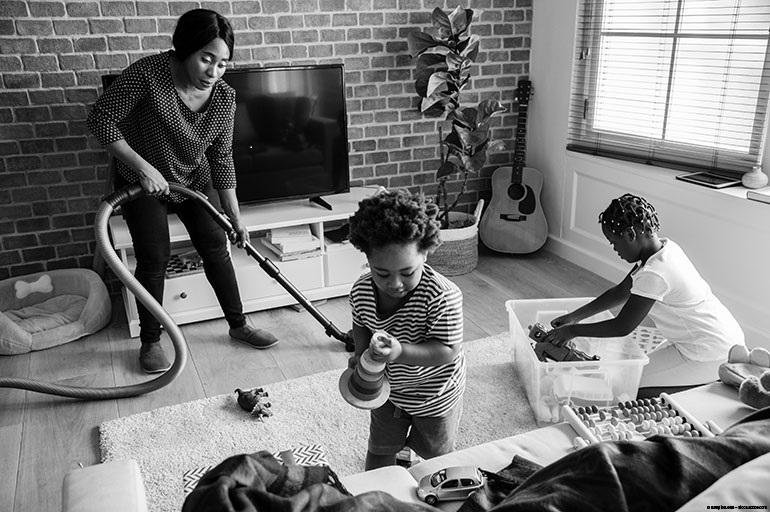
If there’s a single principle behind every system that’s worked for us, it’s this: every type of item needs one specific home, and that home needs to be obvious enough that a kid can find it without asking you where it goes.
That’s it. That’s the whole foundation. Bins, labels, shelves — all of that is just dressing on top of “this thing lives here, always.”
The reason most setups fail isn’t that the bins were the wrong color or the shelf wasn’t cute enough. It’s that the system was designed by an adult thinking about how a room should look, rather than how a kid actually moves through their day. Adults design for aesthetics. Kids operate on momentum — whatever requires the least effort in the moment is what’s going to happen, every time, regardless of how nice the labels are.
So before buying anything, it helps to spend a day just watching. Where does your kid actually drop their backpack? Where do shoes end up, even after you’ve told them a hundred times to put them by the door? Where do toys pile up at the end of the day? Those spots — not the spots that make sense on paper — are where your systems need to live.
Drop Zones That Kids Actually Use
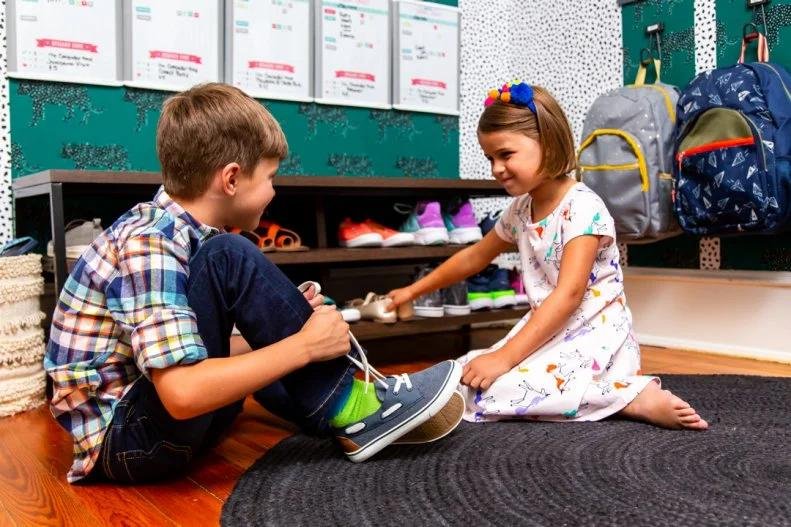
A drop zone is just a spot near the door (or wherever your kid enters their room) where backpacks, shoes, and school stuff land. The idea isn’t new, but most versions fail because they’re set up where it would look nice rather than where the mess already happens.
Here’s the fix: put the drop zone exactly where the mess already happens, even if it means it’s the first thing you see when you walk in. If your kid kicks their shoes off two steps past the door every single day, that’s where the shoe bin goes. Fighting that instinct is a losing battle — working with it is what actually changes behavior.
For the actual setup, a low bench with cubbies underneath works really well, because kids can sit down to take their shoes off right there instead of standing on one foot in the hallway. If space is tight, a few command hooks at kid-height for backpacks and a single open bin for shoes is enough to get started. You don’t need a whole mudroom situation — you need friction-free.
One thing I’d actively skip: labeled bins for “Monday’s folder,” “Tuesday’s folder,” and so on. It sounds organized, and it photographs beautifully, but in practice it’s one more decision a tired kid has to make at 7am, and decisions are exactly what you’re trying to remove from the morning routine. One bin labeled “stuff that goes to school” is plenty. The folder goes in the backpack the night before, and the backpack goes by the door — that’s the whole system.
If your kids share an entryway or hallway space, giving each child their own hook and bin (even if they’re identical) cuts down on the “that’s not my hook” arguments before they start.
Toy Storage That Doesn’t Become a Dumping Ground
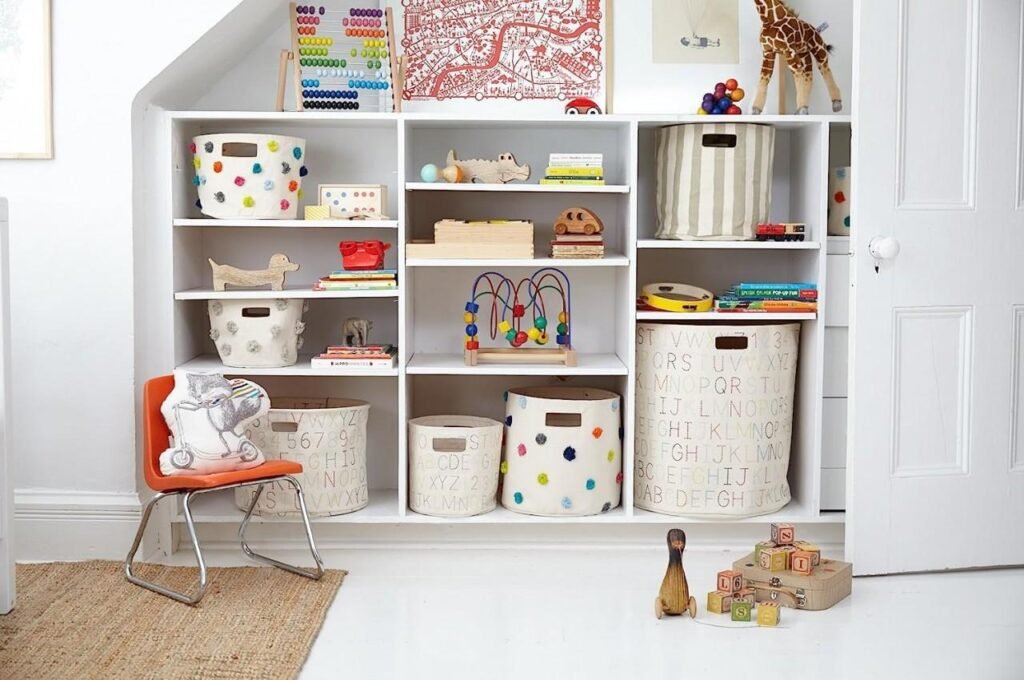
Color-coded bins look amazing in photos. In my house, they lasted about two weeks before everything got mixed together anyway, because kids grab the closest bin, not the “correct” one — especially when they’re racing to clean up before dinner.
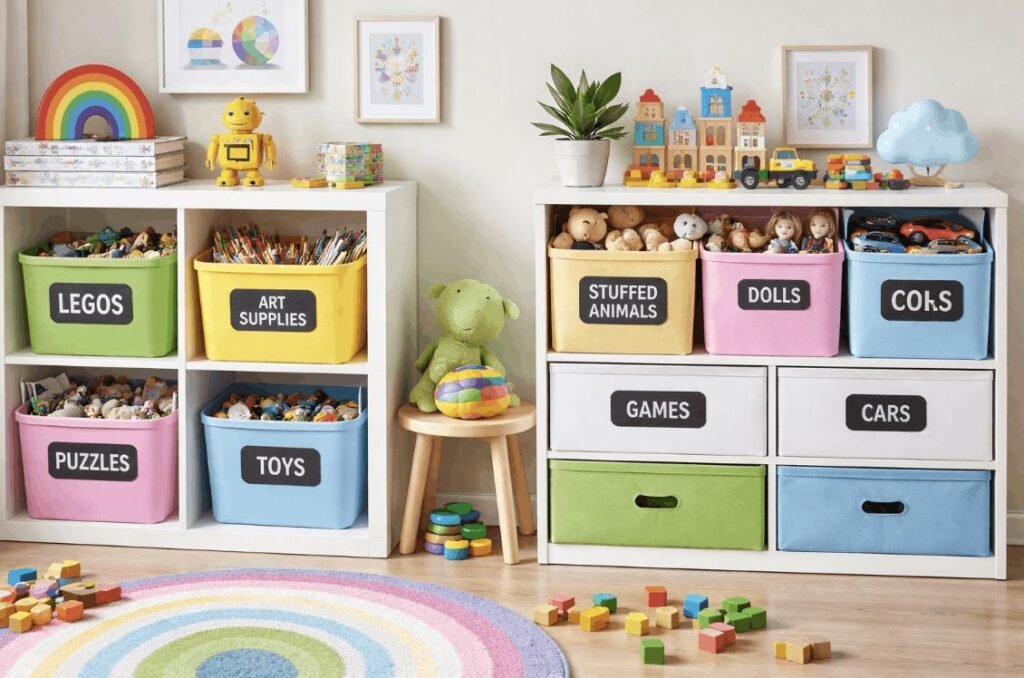
What’s worked better is grouping by type of play instead of by child or by color: one bin for building toys (Legos, blocks, magnetic tiles), one for pretend play (action figures, dolls, costumes), one for art supplies, and one for “small stuff that goes everywhere” — cars, figurines, random pieces that don’t belong to any specific set anymore. Clear bins help a lot here, because kids can see what’s inside without opening five containers just to find one toy.
Labels still matter, but keep them simple — a picture or a single word, not a paragraph. For kids who can’t read yet, a printed picture taped to the front of the bin does more work than any text label ever will.
Toy Rotation: The Underrated Trick
This one genuinely changed things for us, and it’s something most organization articles don’t mention at all. The idea is simple: not all the toys are out at once. A portion goes into storage — under-bed bins work great for this — and every few weeks, you swap what’s accessible.
Two things happen when you do this. First, the room has noticeably less stuff to manage at any given time, which makes daily cleanup faster and less overwhelming for kids. A room with 30 toys out is genuinely less daunting to clean than a room with 100. Second, when toys come back out after a few weeks in storage, they feel “new” again, which can cut down on the constant “I’m bored, can we buy something” cycle that hits most households at some point.
You don’t need a strict schedule for this. I just rotate when a bin starts looking too packed, or when I notice my kids haven’t touched something in a while. Under-bed bins with lids work well because they keep dust off and slide in and out easily, even for kids to do themselves once they get the hang of it.
A nice side effect: toy rotation makes the eventual “should we donate this?” conversation easier, because you’ve already got a built-in checkpoint every few weeks to notice what nobody’s missed.
Organizing a Shared Kids’ Room
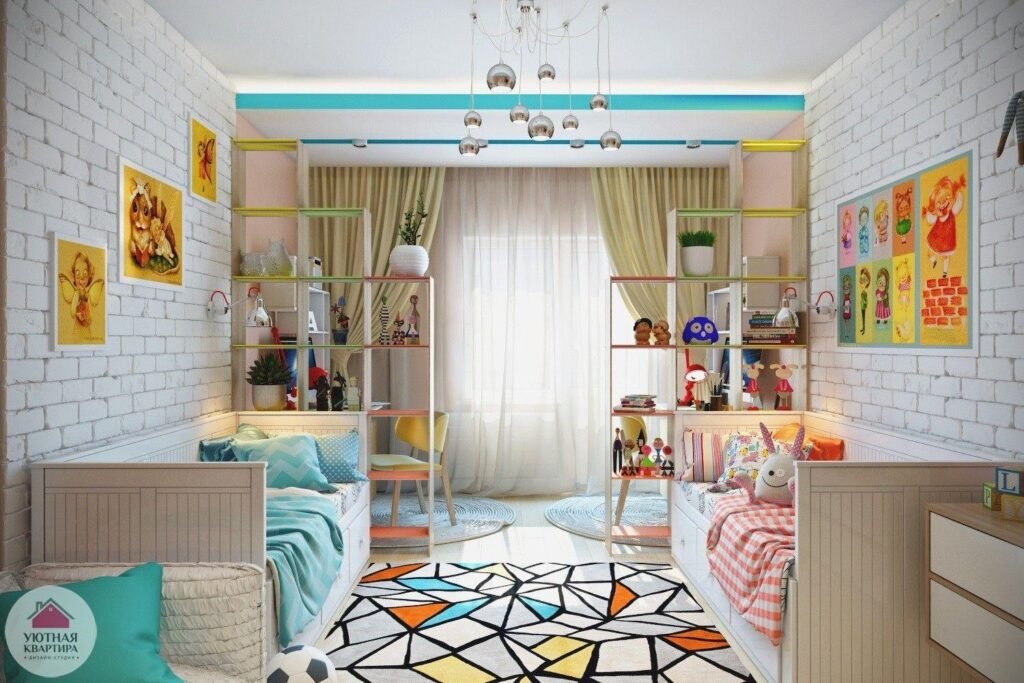
This is the part most articles skip entirely, and it’s the part that actually matters if you’ve got more than one kid in a room.
The biggest shift for us was moving away from “his stuff vs. her stuff” zones for everyday items, and toward “type of stuff” zones that both kids share. Shared bins for toys based on category, but each kid still gets their own labeled space for personal items — a drawer, a shelf, a cubby — that’s theirs and off-limits to the other. That distinction matters more than it might seem. Kids need some space that’s unquestionably theirs, even in a shared room, or you’ll spend a lot of energy refereeing ownership disputes over things that don’t really matter.
Vertical space becomes really important in shared rooms, because floor space gets eaten up fast by two beds and two sets of everything. Wall-mounted shelves above each bed for books, awards, or personal items free up floor space without anyone feeling like they got less room than the other. If there’s a closet, splitting it down the middle — literally, with a piece of tape on the rod if you need a visual marker — gives each kid a clear sense of “this side is mine.”
For clothes specifically, drawer dividers turn one shared dresser into something that can realistically hold two kids’ folded clothes without becoming one mixed-up pile within a day. If you’ve got the budget for it, two smaller dressers (one per kid) solve a lot of “that’s my shirt” arguments on their own, but dividers in a shared dresser get you most of the way there for a fraction of the cost.
One thing worth mentioning: shared rooms work best when bedtime routines are also somewhat aligned, even if the kids are different ages. If one kid’s stuff is constantly being shuffled around because the other is still playing an hour after “lights out,” it undoes a lot of the organizing.
Getting Kids to Actually Put Things Away
Here’s the honest part: no system survives if kids won’t use it, and most won’t use a system just because it exists, no matter how well-designed it is.
What’s worked for us is making the “right” thing easier than the “wrong” thing. If putting a toy away means opening a bin, removing a lid, and placing it just so — that’s not happening, especially at the end of a long day. If it means tossing it into an open basket from a few feet away, that’s a much lower bar, and lower bars get cleared a lot more often. Every extra step you add to a system is a step kids will skip.
A simple visual routine chart helps too — not a complicated chore chart with stars and rewards for everything, just a short list of three or four things that happen at the same time every day: backpack in the drop zone, dirty clothes in the hamper, toys in bins before bed. Repetition does more heavy lifting than reminders ever do. After a few weeks of the same short routine, it stops being something you have to ask about and starts being just… what happens before bed.
And honestly? Some days it doesn’t happen, and that’s fine. The goal isn’t a spotless room every single day — it’s a system simple enough that getting back on track the next day doesn’t take an hour of catch-up. If a system requires a “big reset” every time it slips, it’s too fragile to be a real system.
It also helps to do quick resets together sometimes, especially with younger kids. Five minutes of “let’s beat the timer” toy pickup with you in the room turns into something kids will eventually do on their own, once the routine of it becomes familiar.
Adjusting the System as Kids Get Older
What works at 3 doesn’t work at 9, and that’s completely normal — it doesn’t mean you did anything wrong, it just means the kid changed and the room needs to catch up.
| Age Range | What Tends to Work | What to Let Go Of |
| Toddler (2-4) | Open bins, picture labels, low shelves | Anything with lids, small or sortable systems |
| Elementary (5-9) | Labeled bins by category, drop zones, toy rotation | Overly complex multi-step systems |
| Tween (10-12) | More personal storage and privacy, fewer toy bins, more desk and hobby organization | Toy-focused systems, shared “kid stuff” zones |
As kids get older, toy bins shrink and things like desks, hobby supplies, books, and personal storage take over more of the room. A system built around toy bins for a 5-year-old will feel babyish and unused by the time they’re 10 — not because the system failed, but because the kid outgrew it. It’s worth revisiting your setup every year or so rather than assuming what worked last year still fits this year.
This is also a good moment to involve older kids in the redesign itself. A 10-year-old who helps decide where their things go is far more likely to actually use the system than one who’s handed a finished setup and told to keep it that way.
If your kids’ rooms are tight on space in general, our guide to small-space storage solutions has some ideas that pair well with the systems above. And if the chaos extends beyond their room into the rest of the house, our home decluttering guide walks through a broader approach that works alongside toy rotation.
For the daily routine side of things, a simple chore chart system can work well alongside the drop zone and toy storage ideas here — just keep it short and consistent, and resist the urge to make it more complicated than it needs to be.
FAQ
How do I organize a shared kids’ room?
Focus on shared zones for toys based on type rather than by child, and give each kid their own small personal space — a drawer, shelf, or cubby — that’s just theirs. Vertical storage like wall-mounted shelves above each bed helps maximize space without dividing the room in half, and splitting closet space gives each child a clear sense of ownership.
What is toy rotation and does it work?
Toy rotation means keeping only some toys accessible at a time and storing the rest, then swapping periodically. It reduces clutter day-to-day, makes cleanup feel less overwhelming, and can make rotated-in toys feel new again, which may cut down on boredom and requests for new toys.
How do I get my kids to actually put their toys away?
Make putting things away as low-effort as possible — open bins instead of ones with lids, and storage spots close to where toys are actually used. A short, consistent daily routine of three or four steps at the same time each day works better than complicated reward charts, and doing quick “beat the timer” pickups together can help younger kids build the habit.
What’s the best way to organize kids’ clothes in a small closet? Drawer dividers and splitting closet space — even just visually with a marker on the rod — work well, especially in shared rooms. Vertical hanging organizers can also help separate each kid’s clothes without needing more floor space, and two smaller dressers can reduce mix-ups if budget allows.
How often should you declutter kids’ toys?
Every few months works for most families, often timed around birthdays or holidays when new toys come in. Toy rotation can reduce how often a full declutter feels necessary, since you’re already cycling items in and out and naturally noticing what’s gone unused.