Estimated reading time: 10 minutes
Last updated on June 23rd, 2026 at 05:51 am
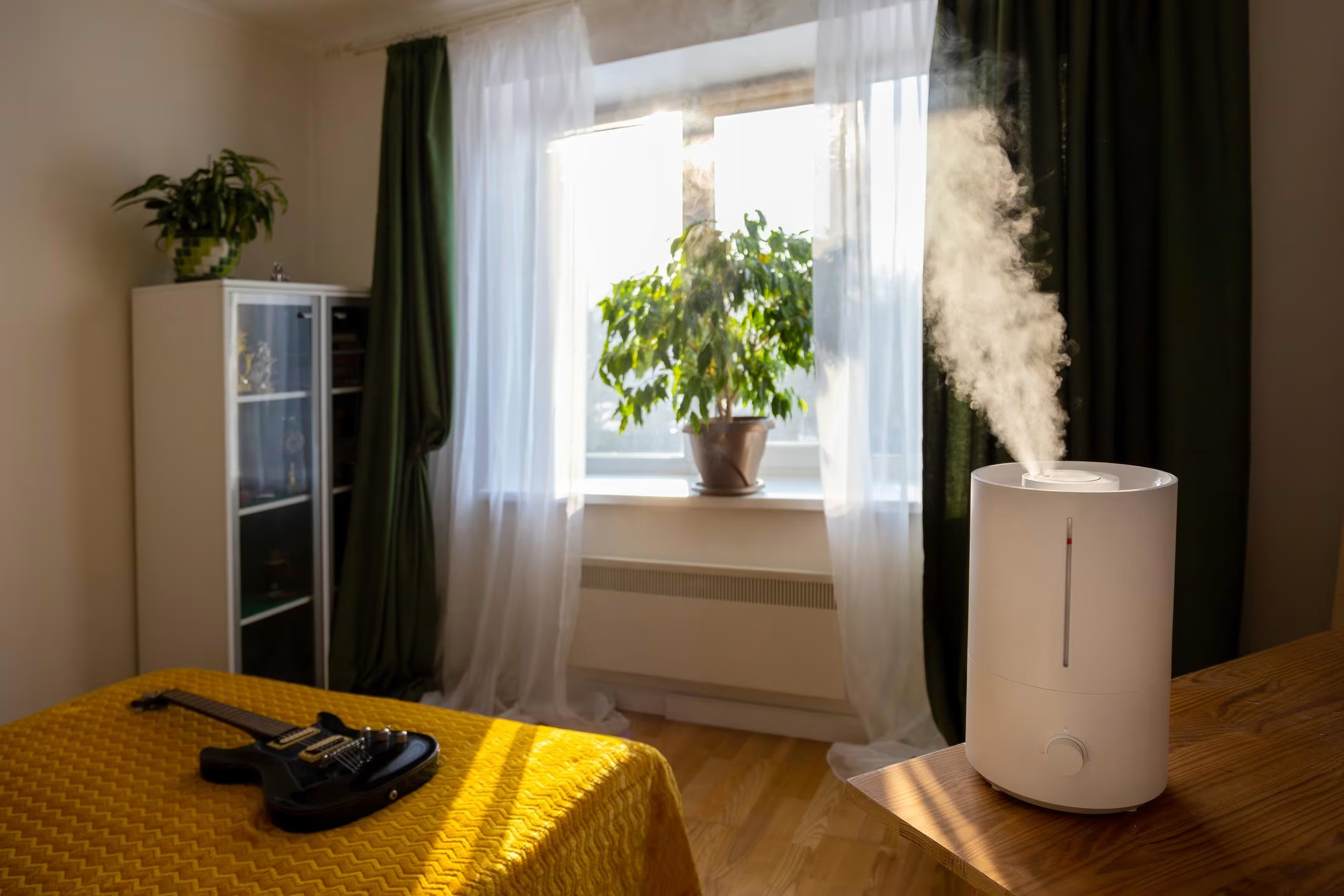
About a month after I bought my first humidifier, I noticed a fine white film on my nightstand. Then on my phone screen. Then on the dresser. I genuinely thought something was wrong with the unit until I looked it up and realized it was just… doing exactly what ultrasonic humidifiers do with hard tap water. Nobody warned me about that before I bought it.
That’s the thing about humidifiers — they seem like a simple appliance, but there’s a handful of details that determine whether you end up with better sleep and softer skin, or a dusty nightstand and a unit that smells faintly off after two weeks. Let’s get into what actually matters.
Quick Answer: What Humidifier Should You Get?
For most bedrooms, a cool mist humidifier — either evaporative or ultrasonic — in the 1 to 1.5 gallon range covers a typical room comfortably and runs through the night without needing a refill. If you’re dealing with hard water, lean evaporative or look for an ultrasonic model with a demineralization cartridge to cut down on white dust. For nurseries, cool mist is generally the safer pick over warm mist, simply because there’s no hot water or steam involved.
That’s the short version. Here’s the longer version, because the “right” answer really does change depending on your room, your water, and how much maintenance you’re realistically going to do.
Cool Mist vs. Warm Mist — What’s the Real Difference?
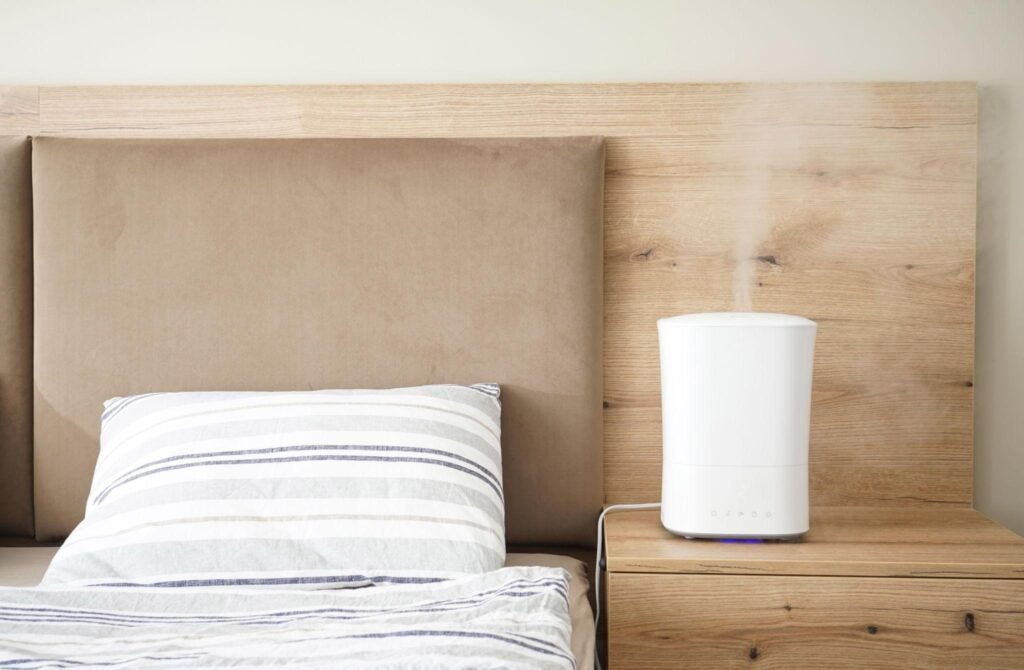
Cool mist humidifiers release room-temperature moisture into the air, either by evaporation or by vibrating water into a fine mist. Warm mist humidifiers (also called vaporizers) heat water to create steam, which then cools slightly before it leaves the unit.
In terms of effect on the room, both raise humidity about equally well. The differences come down to safety, energy use, and a bit of personal preference.
Warm mist units use more electricity because they’re heating water, and they involve a reservoir of hot water sitting in the unit — which matters if you’ve got curious toddlers or pets that might knock it over. Some people find warm mist feels more soothing for congestion, possibly just because steam feels like it should help with a stuffy nose, similar to a hot shower.
Cool mist is generally the safer default, especially in kids’ rooms, just because there’s no hot water involved at all. If you’re choosing for a nursery and can only pick one, cool mist is the lower-risk option.
Ultrasonic, Evaporative, or Steam? Picking a Type
This is where most buying guides just list the names and move on, which doesn’t actually help anyone choose. Here’s what each one is actually like to live with.
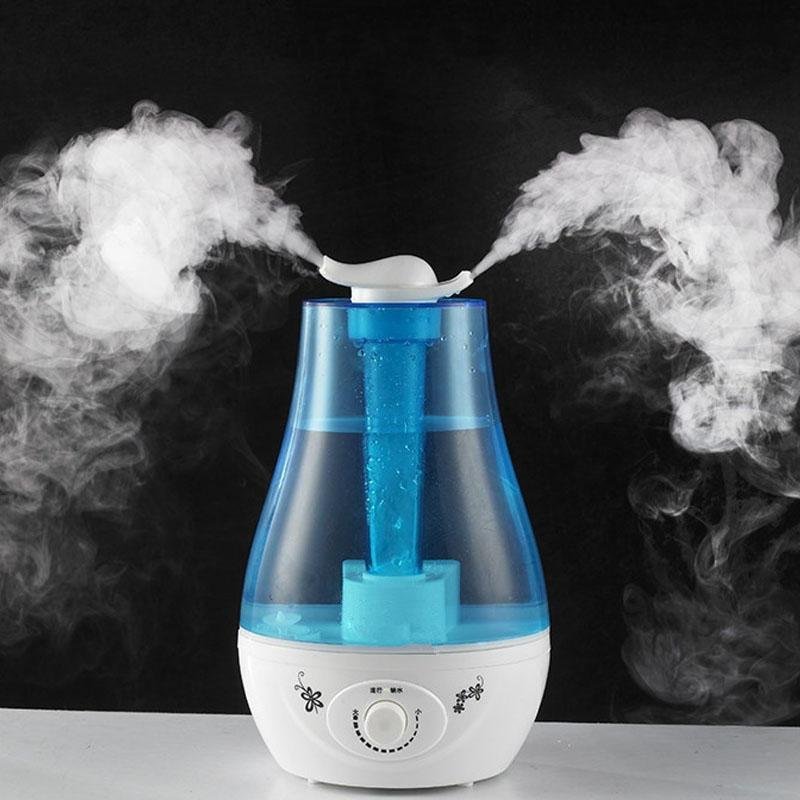
Ultrasonic humidifiers use a vibrating plate to break water into a fine mist. They’re quiet — often the quietest option — which makes them popular for bedrooms. The catch is that if your tap water has any minerals in it (and most tap water does), those minerals get sprayed into the air along with the moisture, eventually settling as that white dust I mentioned earlier. Using distilled water mostly solves this, but that’s an ongoing cost and errand most people don’t account for.
Evaporative humidifiers work by blowing air through a wet wick or filter, so water evaporates naturally into the air. They’re a bit noisier — there’s a fan involved — but they don’t produce white dust, because minerals stay behind in the wick instead of getting launched into the air. The trade-off is that the wick needs replacing every couple of months depending on water hardness and usage, which is a recurring cost worth factoring in.
Steam/warm mist humidifiers boil water to create steam. They’re naturally quieter than evaporative models since there’s no fan, and the boiling process kills off most bacteria in the water before it’s released — which is a genuine plus for cleanliness. The downsides are the energy use and the safety consideration mentioned earlier.
Impeller humidifiers use a rotating disk to fling water into a mist. They’re less common than the other three, tend to be on the cheaper side, and can also produce white dust with hard water, similar to ultrasonic models.
If I had to pick one default for a typical bedroom: an evaporative humidifier is the most forgiving option for most people, mainly because it sidesteps the white dust issue entirely without requiring distilled water. If quiet operation matters more to you than that, ultrasonic with a demineralization cartridge is a solid second choice.
What Size Do You Actually Need?
Tank capacity matters more than the box’s marketing copy usually suggests. As a rough guide:
- Small bedroom (under 250 sq ft): A 1 to 1.5 gallon tank is usually enough for an overnight run without refilling.
- Larger bedroom or living room (250-400 sq ft): Look for 1.5 to 3 gallons, especially if you want it running for most of the day.
- Open-concept space or whole floor: At this point, a console-style humidifier with a tank in the 4-6 gallon range, or a whole-house humidifier connected to your HVAC system, makes more sense than running multiple small units.
A unit that’s too small for the room won’t necessarily fail — it’ll just need refilling more often, or it won’t raise humidity as much as you’d expect in a larger space. If you’re constantly topping off the tank, that’s usually a sign the unit is undersized for the room rather than something being wrong with it.
It’s also worth picking up a cheap hygrometer — they run about $10-15 — so you’re not just guessing. The ideal indoor humidity range is roughly 30-50%. Below that, you’ll notice dry skin, static, and possibly cracking in wood furniture or flooring. Above 50%, you start running into the opposite problem: condensation on windows, a musty feeling in the room, and conditions that favor mold and dust mites. A humidifier without a hygrometer is basically running blind.
The Mold and White Dust Problem Nobody Warns You About
This is the part that doesn’t get enough attention, and it’s honestly the main reason some people swear off humidifiers entirely after one bad experience.
Humidifiers hold standing water, and standing water plus a warm room is exactly the environment mold and bacteria like. If you’re not cleaning the tank regularly — and I mean every two to three days, not “occasionally” — you can end up spraying that mold and bacteria into the air right along with the moisture. That’s about as far from “improving air quality” as it gets.
The cleaning routine itself isn’t complicated: empty the tank, rinse it out, and every few days do a more thorough clean with a mix of water and white vinegar to break down mineral buildup and any early mold growth, then rinse well before refilling. Units with wide tank openings and removable parts make this dramatically easier — if you can’t easily get your hand inside the tank to scrub it, that’s worth considering before you buy, not after.
As for the white dust — if you’ve got hard water and an ultrasonic or impeller humidifier, you’re going to see it eventually. Distilled water mostly eliminates it, but that’s an ongoing expense most people don’t think about at purchase time. If you’d rather not deal with buying water on a regular basis, that alone might be reason enough to go evaporative instead.
Best Humidifier Setup by Room
Bedroom: A 1-1.5 gallon evaporative or ultrasonic humidifier with auto-shutoff (so it doesn’t run dry overnight) covers most bedrooms well. Quiet operation matters most here, so check noise ratings if you’re a light sleeper.
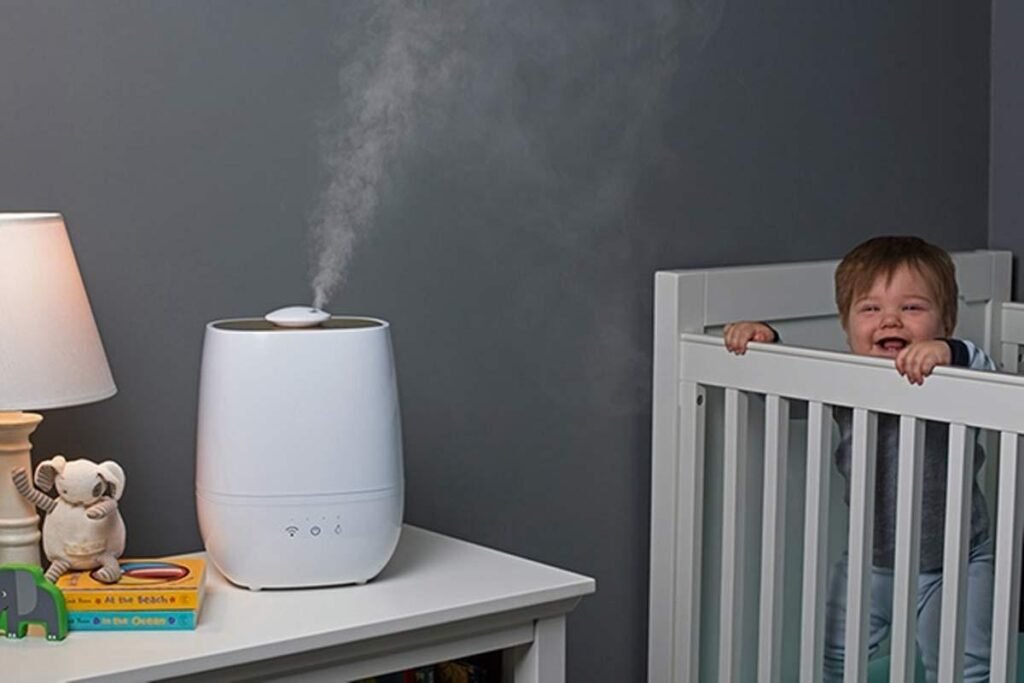
Nursery: Cool mist is the safer default, both for the no-hot-water reason and because babies’ rooms tend to be smaller, so a compact 1-gallon unit is usually plenty. Easy-to-clean designs matter even more here, since you’ll want to be cleaning it every couple of days without it being a hassle.
Living room or larger spaces: A console-style unit with a larger tank (4+ gallons) reduces how often you’re refilling, and evaporative models tend to handle larger spaces well without the white dust concern.
Whole house / dry climates: If dryness is a year-round, whole-home issue rather than a single-room problem, a whole-house humidifier installed with your HVAC system is worth looking into. It’s a bigger upfront investment, but it removes the daily refill-and-clean routine entirely, since it connects to your home’s water supply.
If dry indoor air is affecting more than just comfort — think cracked skin, irritated sinuses, or worsening allergy symptoms — it might be worth pairing this with a look at our guide on dealing with dry winter air and skin, which covers some complementary fixes beyond just adding moisture to the room.
And if you’re also dealing with dust, allergens, or general air quality concerns alongside dryness, our air purifier comparison guide covers how the two types of devices work together rather than competing for space on your nightstand.
For parents setting up a nursery, our nursery essentials guide covers humidifier placement alongside other setup considerations worth thinking through before baby arrives.
FAQ
What humidity level is best for a home?
Most homes do best somewhere between 30% and 50% relative humidity. Below 30%, you’ll likely notice dry skin, static, and irritated sinuses. Above 50%, you risk condensation on windows and conditions that encourage mold and dust mites. A basic hygrometer makes it easy to keep track without guessing.
Cool mist vs warm mist — which is better?
Both raise humidity effectively, so the choice mostly comes down to safety and energy use. Cool mist is generally the safer option for nurseries and homes with young kids since there’s no hot water involved, while warm mist units use more electricity but some people find the steam soothing for congestion.
How often should you clean a humidifier?
Ideally every two to three days for a basic rinse, with a more thorough vinegar-based clean weekly to prevent mineral buildup and mold growth. Standing water in a humidifier tank is an easy environment for bacteria and mold, so regular cleaning isn’t optional if you want it to actually improve your air quality.
Why does my humidifier leave white dust on furniture?
This usually happens with ultrasonic or impeller humidifiers when used with hard tap water — minerals in the water get released into the air along with the mist and settle as a fine white film. Using distilled water, or switching to an evaporative humidifier, can largely eliminate this issue.
Is a humidifier or diffuser better for a cold?
A humidifier is generally more effective for cold symptoms, since it raises overall room humidity and can ease congestion and throat irritation through moisture alone. A diffuser is designed primarily for dispersing essential oils in smaller amounts and isn’t really built to meaningfully change room humidity.
Can a humidifier make allergies worse?
It can, if humidity gets too high or the unit isn’t cleaned regularly — both conditions favor mold and dust mites, which are common allergy triggers. Keeping humidity in the 30-50% range and cleaning the tank regularly helps avoid this.