Estimated reading time: 10 minutes
Last updated on June 23rd, 2026 at 07:17 am
I stood in my living room a while back, holding a stack of board games, a pile of throw blankets, and absolutely no idea where any of it was supposed to go. The shelves were full. The closet was a lost cause. And I remember thinking — this isn’t a “buy more bins” problem. This is a “I’m not using my space right” problem.
If that sounds familiar, you’re probably past the basic advice already. You’ve got bins. You’ve donated a few bags of stuff. And your apartment or small house still feels like it’s working against you. The good news is there’s a whole tier of storage ideas to maximize living space that most people never think about, because they’re hiding in plain sight — your walls, your doors, that weird gap under the stairs, even the inside of your cabinet doors.
The Four Places Extra Storage Is Actually Hiding
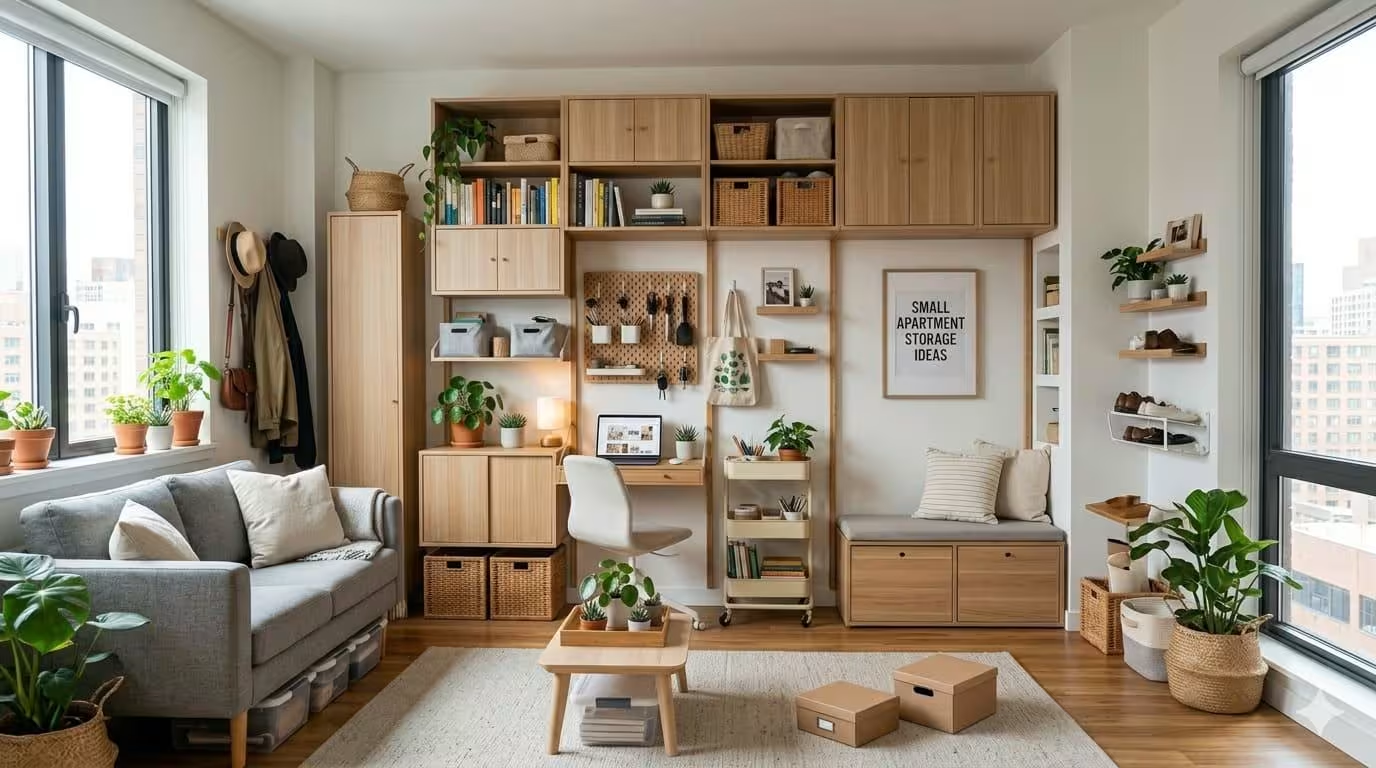
Before getting into specifics, it helps to know where to even look. Pretty much every smart storage solution falls into one of four categories:
- Furniture that does double duty — pieces that store things inside or underneath while still functioning as furniture
- Vertical space — your walls, doors, and corners, which most homes leave almost completely empty above eye level
- Architectural nooks — those odd leftover spaces (under stairs, beside radiators, in window alcoves) that builders never quite figure out what to do with
- Micro-organization — small tweaks inside the storage you already have, which make existing cabinets and drawers hold noticeably more
You don’t need to do all four. Honestly, picking two or three that fit your space and your lease situation will make a bigger difference than trying to cram every idea on this list into one apartment.
Furniture That Quietly Does Double Duty
This is usually the easiest place to start, because you’re not adding anything new to your home — you’re just being smarter about what you already need to buy anyway.
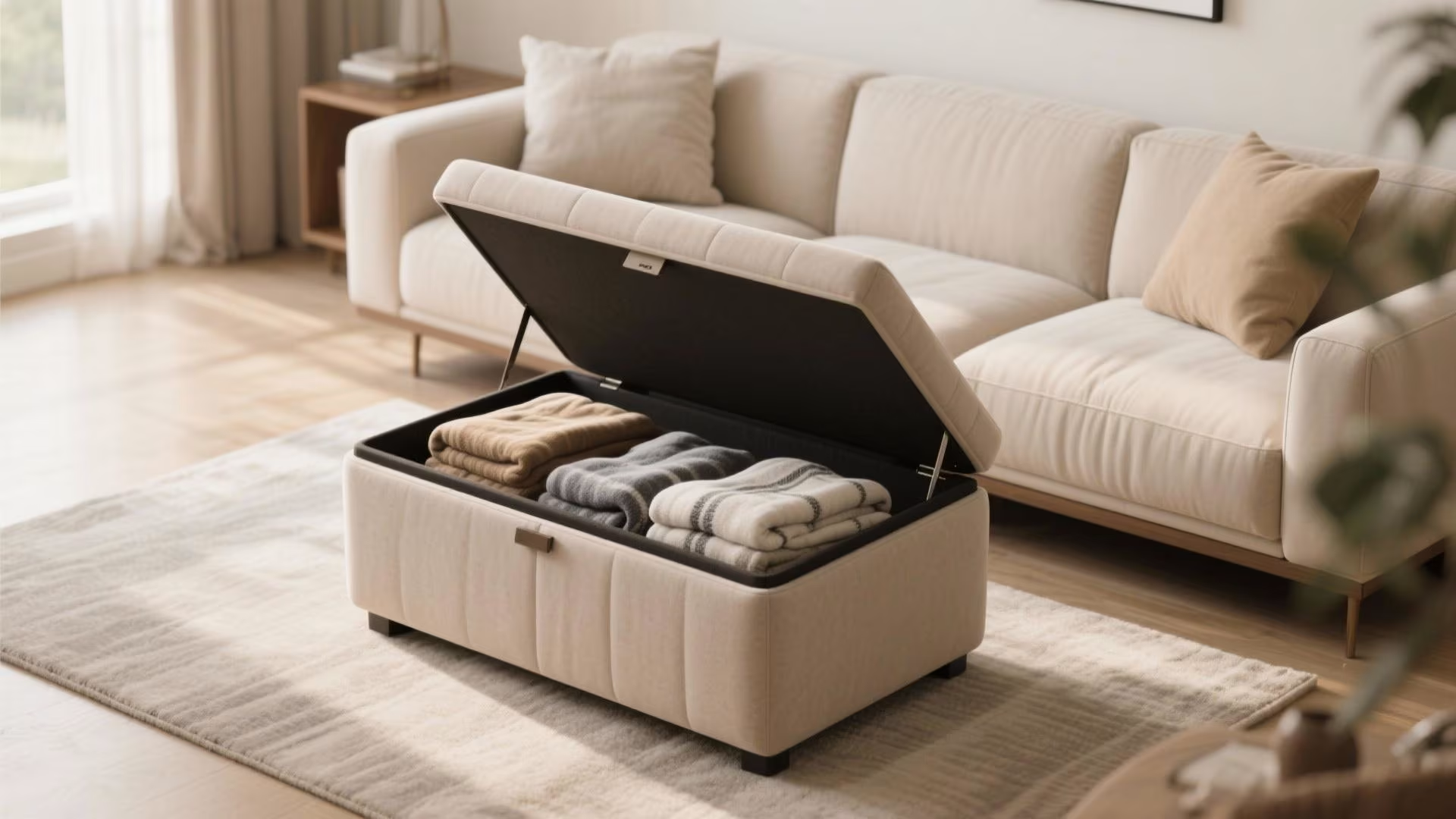
A storage ottoman is the obvious one, but it’s obvious for a reason. Swap out your coffee table or an accent chair for one, and suddenly that pile of throw blankets, the kids’ board games, or your seasonal pillows have a home that doesn’t look like clutter — it looks like a piece of furniture.
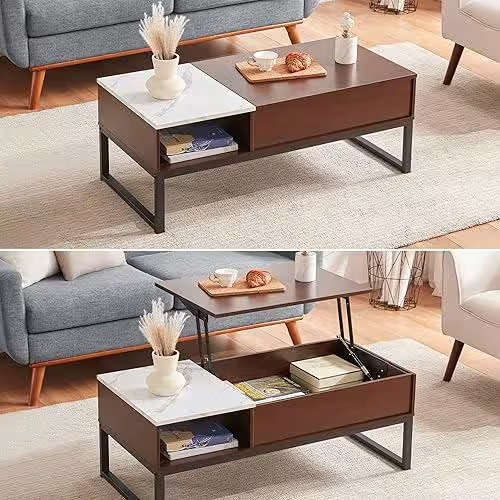
A lift-top coffee table does something similar but takes it further. The top pivots open to reveal a hidden compartment, and some models also lift up to become a makeshift desk or laptop stand. If you work from your couch occasionally (who doesn’t), this one pulls double duty in a way that’s genuinely useful, not just a storage gimmick.
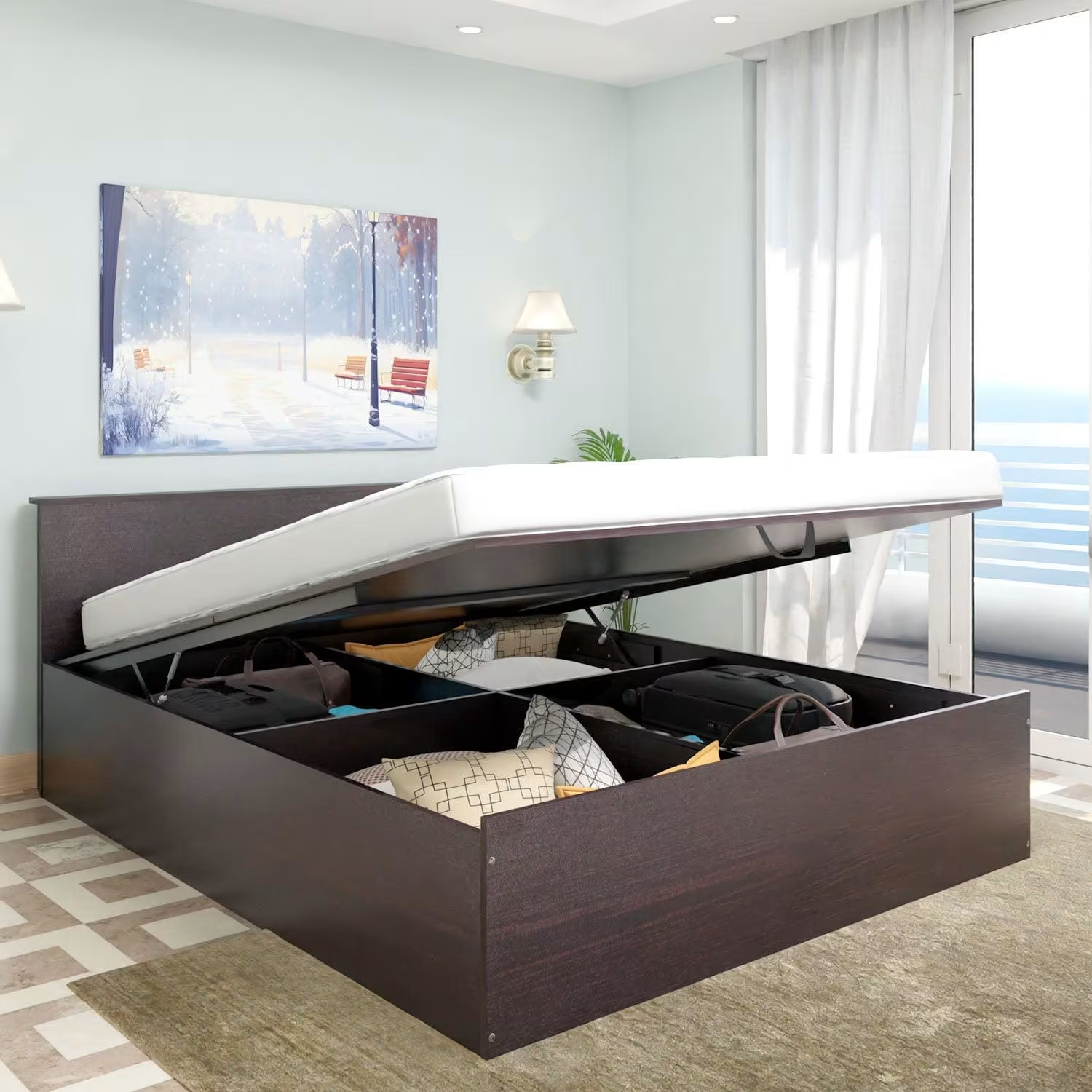
If your bedroom is where things pile up, a hydraulic storage bed is worth a serious look. The whole mattress platform lifts on hinges, revealing a compartment underneath that’s roughly the size of your entire bed frame — which is a lot more than the shallow under-bed bins most people are used to. The trade-off is that these beds are heavier and bulkier than a standard frame, so if you move often, factor that in.
And for anyone dealing with a small dining area or a living room that doubles as a workspace, a drop-leaf table folds down flat against the wall when you’re not using it, then opens up fully for meals or projects. It’s less “storage” and more “reclaiming floor space,” but the effect is the same — more room to breathe.
What to Look For If You’re Renting
All four of these are completely renter-friendly — none of them require drilling, permits, or anything you can’t take with you when you move. That’s part of why furniture-based storage is usually the first place to start: it’s an investment that travels with you, rather than something tied to this specific apartment.
Using Your Walls, Corners, and Doors
Once you’ve got the furniture sorted, look up. Most homes have an enormous amount of unused vertical space — the area above eye level on every wall is basically empty in most rooms, and that’s wall real estate you’re not using.
Floor-to-ceiling shelving is the most dramatic version of this. It draws the eye upward, which actually makes a small room feel taller and bigger rather than more crowded — counterintuitive, but it works. The one thing worth being careful about: tall shelving units need to be anchored to the wall, especially in homes with kids or pets, so this isn’t a “just place it and walk away” situation.
Over-the-door organizers are about as renter-friendly as it gets — they hang over the top of any standard door with zero hardware. They’re an obvious fit for a pantry door (canned goods, snacks) or a bathroom door (toiletries, cleaning supplies), but don’t overlook a bedroom closet door for shoes, scarves, or accessories.
Then there’s floating corner shelves — and yes, even that weird triangular space in the corner of your living room counts. Corners get ignored constantly because furniture doesn’t fit them well, but a few floating shelves turn dead corner space into a spot for books, plants, or a little display area that actually adds personality to the room.
For kitchens, craft rooms, or home offices, a pegboard is one of the most flexible things you can put on a wall. Hooks, small shelves, and bins all clip into the holes and can be rearranged whenever your needs change — which makes it a genuinely modular storage system rather than a fixed shelf. The catch is that pegboards do need to be mounted, so if you’re not allowed to put holes in the wall, this one might have to wait for your next place (or go on the inside of a closet door instead, where damage is less visible).
The Weird, Overlooked Spots in Your Home
This is the part most storage articles skip entirely, and it’s honestly where some of the biggest wins are.
Under-stair drawers turn that triangular dead zone beneath a staircase into actual usable storage — pull-out drawers built into the steps themselves. If you’ve got stairs inside your home (even just a few leading to a split level), there’s a good chance that space is sitting completely empty right now.
A radiator cover is a small thing that solves two problems at once: it makes an unsightly radiator look intentional, and the flat top becomes a display shelf or a spot to set things down — which matters more than you’d think in a small room where every flat surface gets claimed within a day.
Recessed wall niches are more involved — these are shallow shelves built into the gap between wall studs, flush with the wall surface. It’s a great look and genuinely useful for bathrooms, hallways, or beside a bed, but this is firmly in “needs a contractor or serious DIY confidence” territory, since you’re cutting into drywall.
And window benches — building a bench seat over a low window sill, often with a flip-up lid for storage underneath — are one of those ideas that feels like it belongs in a renovation show, but it’s genuinely achievable for someone comfortable with basic carpentry, and it turns an awkward window area into both seating and storage at once.
What Needs a Contractor vs. What You Can DIY
Radiator covers and under-stair drawers are very doable as weekend projects if you’re reasonably handy. Recessed niches and structural changes around windows are where it’s worth getting a second opinion — not because they’re impossible, but because cutting into walls means dealing with what’s actually inside them (wiring, plumbing, insulation), and that’s not a guess you want to get wrong.
Small Fixes That Make a Big Difference
Not every idea needs to involve furniture or construction. Some of the most useful changes are tiny adjustments inside the storage you already have — and these are the ones almost anyone can do today, for very little money.
A magnetic strip mounted inside a cabinet door is perfect for bobby pins, tweezers, or metal spice jars — small metal items that otherwise end up loose in a drawer, taking up more visual and physical space than they should.
Tension rods placed vertically inside a cabinet create instant dividers — slide baking sheets, cutting boards, or trays into the gaps instead of stacking them in a wobbly pile. This one genuinely surprised me the first time I tried it; it’s a two-dollar fix for a problem I’d been annoyed by for years. If your kitchen cabinets feel chronically chaotic, this guide on kitchen cabinet organization ideas goes deeper on this kind of fix.
Vacuum storage bags compress bulky items like out-of-season clothes or extra bedding down to a fraction of their size. They’re not glamorous, but if you’re trying to free up closet space without getting rid of things you actually need seasonally, this is one of the few tricks that creates real, measurable space. For more on this specifically, clothes storage ideas for small spaces covers a few other angles worth considering.
And shelf risers — the little stands that create a second tier inside a cabinet — effectively double the usable height of a shelf that was previously wasting all the air above your plates or cans. Cheap, simple, and one of those things you’ll wonder why you didn’t do sooner.
Before You Buy Anything
Here’s the part that’s easy to skip but worth saying anyway: storage furniture filled with things you don’t need doesn’t actually solve clutter — it just gives clutter a nicer hiding spot. If you’re about to invest in a storage ottoman or a hydraulic bed, it’s worth doing a quick pass through what you’re planning to put inside it first. Sometimes the “storage problem” is really an “I have three sets of bedding I never use” problem, and no amount of clever furniture fixes that.
That said, once you’ve got a realistic sense of what you’re actually keeping, these ideas work — and you really don’t need all of them. Pick two or three that fit your space, your lease, and your weekend, and go from there. If you’re tackling a whole room at once, essential racks, shelves & drawers and how to create more space in your home are both worth a look for the next layer of ideas once these are sorted.
FAQs
What are the best storage ideas for small spaces?
The most effective storage ideas to maximize living space fall into four categories: multi-functional furniture (storage ottomans, lift-top tables, storage beds), vertical storage (shelving, over-the-door organizers, pegboards), architectural nooks (under-stair drawers, window benches), and micro-organization (tension rods, shelf risers, vacuum bags).
How can renters add storage without damaging walls?
Renters can rely on furniture-based storage (ottomans, lift-top tables, drop-leaf tables), over-the-door organizers, tension rods, magnetic strips, and vacuum storage bags — none of which require drilling or permanent changes, and all of which move with you to your next place.
What furniture doubles as storage?
Storage ottomans, lift-top coffee tables, hydraulic storage beds, and drop-leaf tables all combine everyday function with hidden storage space, making them some of the most practical pieces for small living spaces.
How do I organize a small living room?
Start with furniture that hides clutter (an ottoman or lift-top table), add vertical storage like floating corner shelves or floor-to-ceiling shelving to use empty wall space, and do a quick declutter pass before adding new storage so you’re not just relocating items you don’t need.
What’s the best way to use vertical space for storage?
Floor-to-ceiling shelving, over-the-door organizers, floating corner shelves, and pegboards all make use of walls, doors, and corners that are typically left empty — areas above eye level that most rooms have plenty of room to spare.