Estimated reading time: 14 minutes
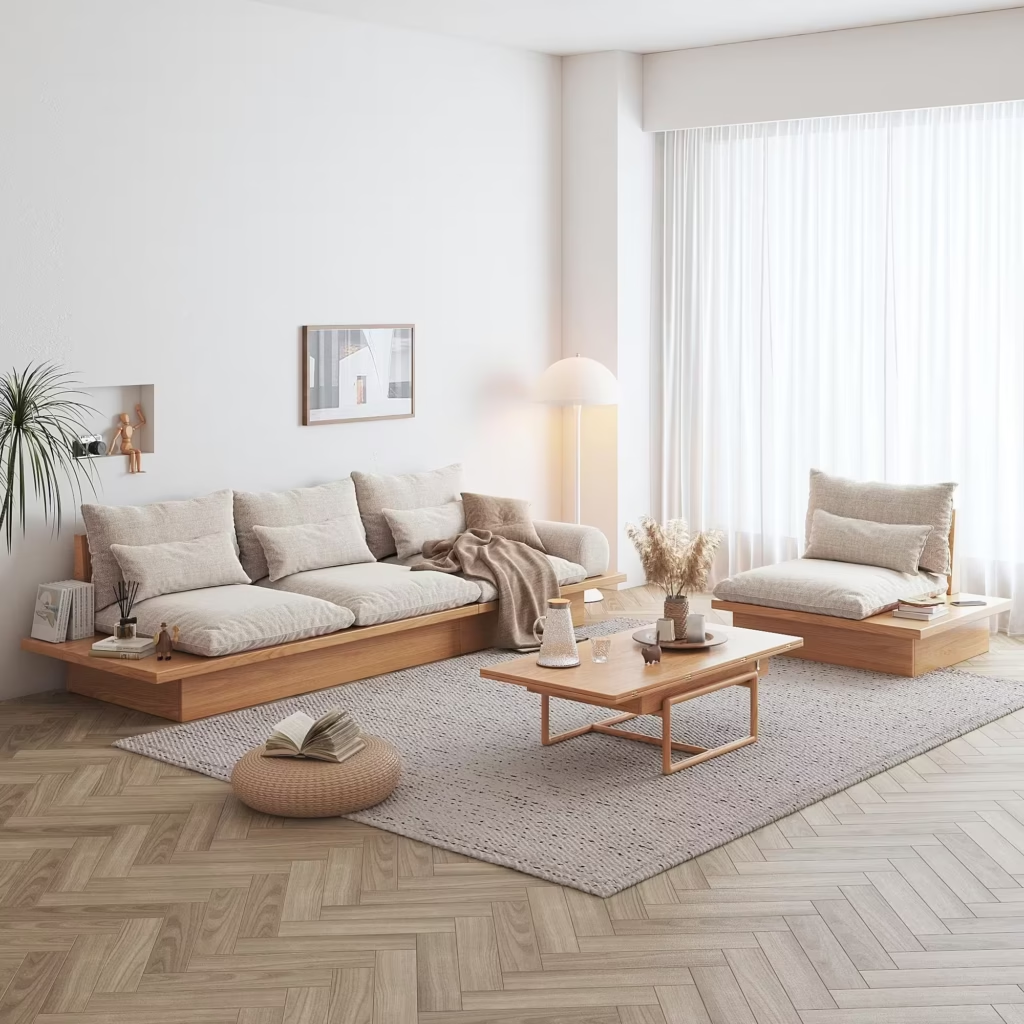
You walk into a friend’s apartment and something just feels different. The room isn’t cluttered. Everything sits low to the ground. There’s a sofa — if you can call it that — practically hugging the floor, covered in linen, with a couple of cushions tossed on it casually. The whole space feels calm in a way your own living room never quite does.
That feeling has a name. And that sofa? It’s a Japanese floor sofa.
More people are searching for these than ever, and honestly, it makes sense. Between the Japandi aesthetic blowing up on Pinterest and the very real problem of bulky Western sofas eating up half a studio apartment, floor-level seating is starting to look like the smarter option. Not just aesthetically — practically.
But there’s a lot of confusion in this category. What even is a Japanese floor sofa? How does it differ from a futon? Is it actually comfortable, or does it just look comfortable in photos? And which ones are actually worth buying?
Let’s sort all of that out.
What Exactly Is a Japanese Floor Sofa?
A Japanese floor sofa is low-profile seating designed to sit directly on or very close to the floor, rooted in the Japanese tradition of ground-level living. In traditional Japanese homes, furniture is intentionally kept low — it connects occupants to the space, slows the room down visually, and creates a sense of openness and calm.
The philosophy behind it has a name: ma — the Japanese concept of negative space and intentional emptiness. Low furniture reinforces that. Less vertical mass means more breathing room.
Now, you’ll see a few related terms thrown around, and they’re not all the same thing:
- Shikibuton — a thin, foldable Japanese sleeping mat, traditionally used on tatami floors. It’s bedding more than seating.
- Zabuton — a flat floor cushion used for meditation or kneeling. Not a sofa.
- Futon — in the Western sense, a sofa frame with a fold-out mattress. In Japan, it’s a foldable sleep mat. Very different products sharing the same name.
- Japanese floor sofa — a structured, low-profile seating piece designed for lounging. It often has a fixed or convertible frame, cushioning, and upholstery. This is what we’re talking about.
The short version: a Japanese floor sofa is a proper piece of furniture, not a mat or a cushion. It’s designed for sitting and lounging the way a conventional sofa is — just closer to the ground.
Why People Actually Love These Things
The obvious reason is the look. A floor sofa gives a room that effortlessly calm, minimal vibe that’s really hard to fake with regular furniture. If you’re going for a Japandi aesthetic or a minimalist living room, this piece does a lot of the visual heavy lifting.
But the practical case is just as strong.
Floor sofas make small rooms feel larger. Think about it — a standard sofa is 30 to 36 inches tall. A floor sofa might hit 10 to 14 inches. That extra 20 inches of visible wall space changes everything. The room opens up. Sight lines clear. The space feels like it has room to breathe.
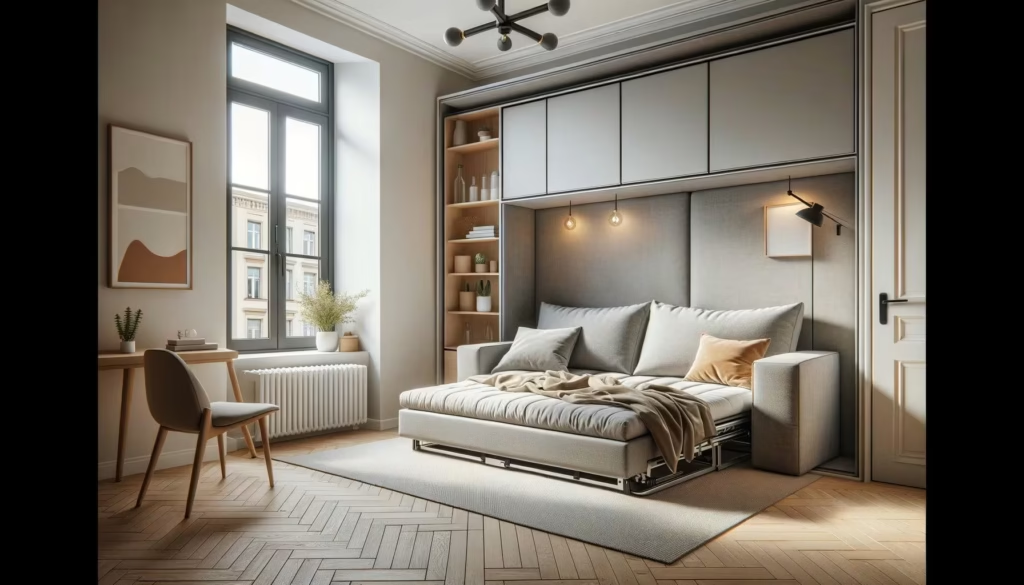
They’re also genuinely versatile. Most Japanese floor sofas can function as a sofa, a daybed, or — if you get a convertible model — a guest bed. For a studio apartment or a one-bedroom where you’re hosting occasionally, that’s a meaningful upgrade over a sofa that only does one thing.
The materials tend to feel better than standard budget sofas, too. Many options use cotton, linen, or corduroy upholstery rather than the scratchy polyester that dominates the cheap sofa market. High-density foam cores are common. They’re not memory foam soft, but they hold shape longer and feel more supportive than cheap alternatives.
And they’re easy to move. No assembling eight-armed behemoths with a hex key and a prayer.
The Honest Truth About Floor-Level Comfort
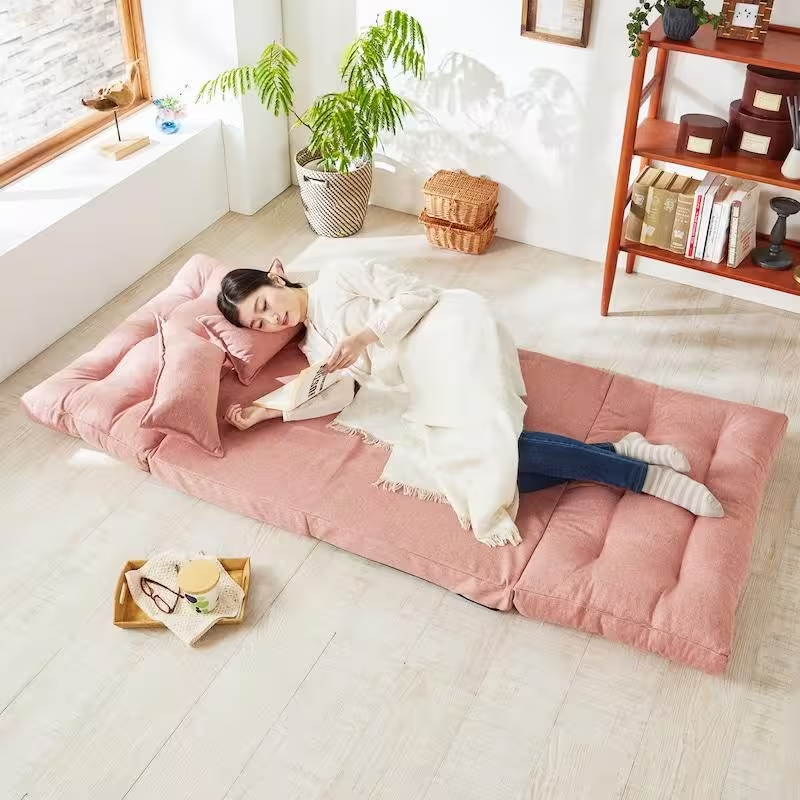
Here’s what the aesthetic photos don’t tell you: sitting on the floor — even with a cushioned sofa — is a different experience than sitting in a regular chair or sofa.
If you’ve spent the last 30 years on elevated furniture, the first week or two on a floor sofa takes some adjustment. Getting up is a different motion. Sitting cross-legged or reclining feels natural; perching upright like you’re at a desk does not.
Back support is the most common concern. Most Japanese floor sofas have back cushions or angled frames, but they’re not ergonomic office chairs. If you have chronic lower back pain or serious lumbar issues, you’ll want to test one before committing — or at minimum, get a model with adjustable backrest angles. The YzzhStaryefire floor chair with ottoman, for example, lets you dial in the recline angle, which helps considerably.
For older adults or anyone with knee or hip issues, getting down to floor level and back up repeatedly can be genuinely uncomfortable. That’s not a criticism of the furniture — it’s just reality. A sectional sofa or standard-height seating might serve you better in that case.
But for younger apartment dwellers who spend time lounging, reading, watching shows, or hosting casual gatherings? Most people find floor sofas feel surprisingly good once they’ve broken in.
Japanese Floor Sofa vs Futon: What’s the Actual Difference?
| Japanese Floor Sofa | Western Futon | |
| Frame | Fixed or low-slung, stays as seating | Bifold frame that converts to a flat bed |
| Mattress | Cushioned upholstery, not a sleeping surface | Mattress designed to sleep on |
| Primary use | Lounging and seating | Seating + guest sleeping bed |
| Aesthetic | Minimalist, intentional | Often bulky, utilitarian |
| Setup | Permanent sofa position | Needs to fold out to use as bed |
| Comfort (seating) | Generally better | Frame bars can be uncomfortable |
The difference between a couch and a sofa is one thing — but this comparison is what actually trips people up. If you want dedicated sleeping capability with a thin foam mattress, a futon works. If you want something that lives as a sofa first and doubles as a lounging/sleeping surface secondarily, the floor sofa wins aesthetically and practically.
Who Should (and Shouldn’t) Buy a Japanese Floor Sofa
It’s a great fit if you:
- Live in a small apartment or studio and need multi-use furniture
- Are going for a minimalist, Japandi, or calm-neutral room aesthetic
- Host guests occasionally and want a flexible sleep option
- Sit cross-legged or reclined rather than upright
- Want something lightweight you can actually rearrange solo
It might not be the right call if you:
- Have chronic lower back pain or joint issues
- Need to get up from a seated position frequently and quickly
- Prefer deeply cushioned, sink-in-style sofa comfort
- Have a large family room that needs substantial seating for 4–5+ people regularly
There’s no shame in that second list. Floor sofas have a specific lifestyle fit, and forcing one into the wrong context just means you’ll end up buying a regular sofa six months later anyway.
What to Look for When You’re Shopping
Frame and structure
Look for a rubberwood or solid wood frame for longevity. MDF-framed options are cheaper but flex and loosen over time. If the listing doesn’t specify frame material, that’s usually a sign it’s MDF or particle board.
Foam density
High-density foam (anything 1.8 lb/cubic foot and above) holds its shape and supports your weight properly. Lower-density foam compresses quickly and creates that sad, sunken-sofa look within a year. Most Japanese floor sofas don’t advertise foam density, but user reviews will tell you within a few months whether it holds up.
Convertibility
If you want guest bed functionality, check that the conversion is actually flat — some “sofa beds” in this category unfold at angles that nobody could sleep on comfortably. Look for dimensions when flat, and check if the gap between panels is significant.
Upholstery
Cotton and linen breathe better and feel better against skin. Corduroy has nice texture and is surprisingly durable. Velvet looks great but shows wear and pet hair faster. Avoid anything labeled just “fabric” without specifics.
Size
Floor sofas often run larger than they look in photos because the low profile makes them appear compact. Measure your space before ordering — then measure again. A king-size floor sofa in a small room can actually work because it doesn’t create visual walls, but you still need the floor area.
The Best Japanese Floor Sofas Right Now
QQR Convertible Floor Sofa Bed — Best Overall
This is the one that keeps coming up for good reason. The QQR has a fixed-shape frame (more stable than folding-panel designs), converts flat for guests, and comes in king-size dimensions that are surprisingly livable in open-plan spaces.
What we like: The frame doesn’t creak or wobble with extended use. The conversion to flat is genuinely flat — you won’t wake up guests with a ridge running down their spine. Upholstery is soft without being flimsy.
Honest limitation: It’s on the larger side, so measure carefully. Not the best pick for spaces under 150 square feet.
Best for: Studio apartment dwellers who want a sofa-to-guest-bed setup that doesn’t scream “I have a pull-out.”
YzzhStaryefire Floor Chair with Ottoman — Best for Back Support
This one solves the biggest complaint about floor seating: back support. The adjustable backrest angles let you dial in your ideal recline, and the attached ottoman means you’re not leaving your legs dangling awkwardly at floor level.
What we like: The high-density foam cushioning feels substantially better than most floor chairs at this price point. The adjustability makes it workable for a much wider range of sitting positions. Perfect for reading or working from home at low height.
Honest limitation: It’s a chair, not a full sofa — so if you need seating for two or more, you’d need multiples. Also, the fabric can trap pet hair.
Best for: Solo loungers, remote workers who sit for long stretches, anyone who’s worried about back comfort on floor seating.
Wayfair Japanese Floor Sofa (Rubberwood Veneer) — Best Aesthetic Pick
If the look matters as much as the function — and honestly, for a lot of people it does — this Wayfair option is the cleanest-looking piece of the bunch. The rubberwood veneer frame has a solid, intentional feel. The silhouette is genuinely minimal without looking cheap.
What we like: It photographs beautifully and looks even better in person. Works exceptionally well against light hardwood floors, natural textiles, and neutral walls. The dimensions are proportional and well-thought-out.
Honest limitation: It’s more of a pure sofa than a convertible — if you need guest bed functionality, look elsewhere. Also slightly firmer than the other options on this list, which some people love and some don’t.
Best for: People who want a permanent statement piece for a Japandi or minimalist living room and aren’t prioritizing the sofa bed function.
Modular Floor Sectional (Low-Profile Style) — Best for Flexibility
If you occasionally rearrange your space — seasonal changes, hosting differently at different times — a modular floor-level sectional is worth considering. These connect in various configurations and can adapt to L-shapes, straight lines, or chaise setups depending on the day.
What we like: You’re not locked into a single layout. Great for open-plan spaces where traffic flow changes. Works for living room sets that need to expand or contract.
Honest limitation: More pieces means more gaps between cushions over time. Assembly is more involved. Some modular sets feel less cohesive aesthetically than single-piece options.
Best for: People who like to rearrange, hosts who want flexible configurations, or larger spaces where one sofa isn’t enough.
How to Actually Style a Japanese Floor Sofa
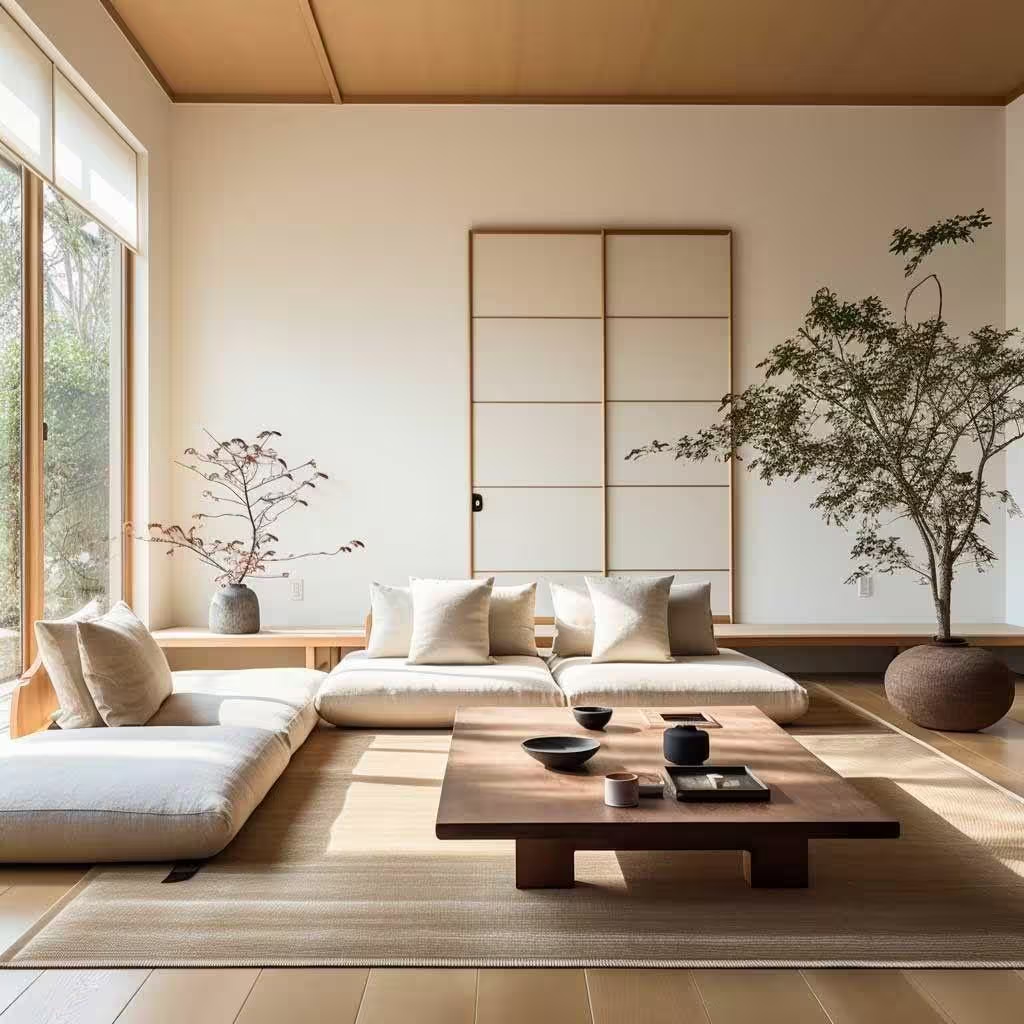
Here’s where most buying guides drop the ball — they tell you what to buy but not what to do with it.
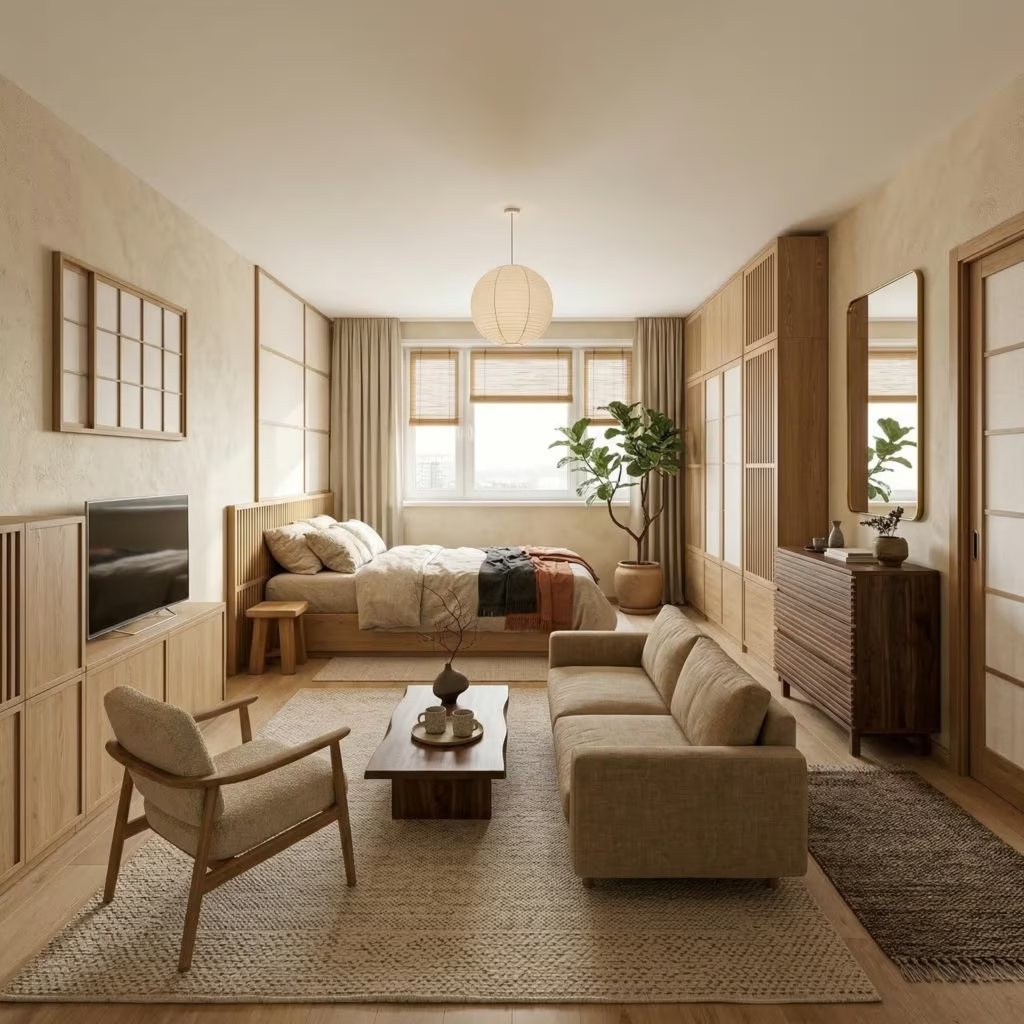
Keep the surrounding furniture low. A floor sofa next to a regular-height side table looks awkward. Pair it with a chabudai (traditional low Japanese table), a flat tray, or a low coffee table that sits at or below the sofa’s seat height. Everything in the space should feel grounded.
Add texture through textiles. The sofa itself is usually in a neutral — cream, grey, natural linen. Build warmth around it with a chunky cotton throw, zabuton-style floor cushions, and a natural fiber rug (jute or wool works well). This is how the room starts to feel layered rather than sparse.
Mind the wall behind it. Because floor sofas sit low, the wall above them becomes prominent. A single large piece of art, a floating shelf with one or two objects, or even clean empty wall space works better than a gallery wall that competes with the grounded vibe.
Light matters more than you’d think. Floor-level furniture emphasizes horizontal planes. Pair it with soft, low lighting — a floor lamp at mid-height, paper lantern pendants, or indirect strip lighting. Harsh overhead ceiling lights undo the calm aesthetic.
Don’t overcrowd it. The whole appeal of this look is breathing room. A small space storage solution that keeps clutter off the floor makes the floor sofa the hero of the room rather than just another piece competing for attention.
Keeping It Clean and Making It Last
Japanese floor sofas sit close to the floor, which means they catch dust and debris faster than elevated furniture. Vacuum the cushions weekly — especially in the gaps between panels — and shake out any removable covers monthly.
Most upholstered floor sofas have spot-clean or machine-washable covers. Check before you buy, because cleaning a non-removable cover on a floor-level sofa is exactly as awkward as it sounds.
For foam longevity, rotate and flip seat cushions every few months if they’re reversible. Floor sofas with fixed cushioning are harder to rotate, but fluffing and reshaping after every few uses helps maintain the shape.
Avoid placing them in direct sunlight for extended periods — linen and cotton fade faster than you’d expect, especially lighter colorways.
For the frame, a damp cloth works for most materials. Rubberwood frames can occasionally be treated with a natural oil finish to prevent drying out.
FAQs
What is a Japanese floor sofa called?
The broad category is simply a floor sofa or low-profile sofa. Related Japanese terms include shikibuton (a thin foldable sleeping mat) and zabuton (a flat floor cushion), but a modern Japanese floor sofa is a structured furniture piece with a frame and cushioning — closer to a conventional sofa in construction, just much lower to the ground.
Are Japanese floor sofas comfortable?
Yes, but differently than conventional sofas. They use high-density foam and structured upholstery that supports sitting and lounging well. The adjustment period is real — getting used to floor-level seating takes a week or two if you’ve always used raised furniture. Models with adjustable backrests help significantly with comfort during extended use.
Is sitting on a floor sofa bad for your back?
Not inherently, but it depends on the individual. Many people find low seating encourages better posture because it promotes a more natural, grounded sitting position. However, if you have existing lower back or lumbar issues, a floor sofa without adjustable back support may aggravate them. Look for models with angled or adjustable backrests if this is a concern.
What’s the difference between a Japanese floor sofa and a futon?
A futon (Western version) is a bifold frame with a flat mattress that converts between sofa and bed positions. A Japanese floor sofa is a structured low-profile seating piece that may or may not convert. Aesthetically, floor sofas are considerably more minimal. Functionally, futons are better dedicated guest bed options; floor sofas are better as primary living room seating.
How do you clean a Japanese floor sofa?
Most have spot-cleanable or removable/washable upholstery covers. Vacuum weekly to manage dust and debris. For removable covers, check care labels — most cotton and linen covers are machine washable on a gentle cold cycle. Avoid harsh chemical cleaners on natural fabrics.
Can a Japanese floor sofa replace a regular sofa?
For many people, yes. If you live alone or with a partner, prefer a minimal aesthetic, and don’t need seating for large groups regularly, a floor sofa handles everything a conventional sofa does — and often takes up less visual space doing it. For families needing seating for four or five people or for anyone with mobility concerns, a sectional sofa or standard-height option is probably more practical.
The floor sofa won’t be for everyone — and that’s fine. But if you’ve been feeling like your living room is somehow louder than you want it to be, like the furniture dominates instead of disappears, like the space never quite settles the way you want it to — this might be the shift worth making.
Sometimes sitting lower just changes everything.