Estimated reading time: 13 minutes
Furnishing a living room from scratch is one of those tasks that sounds straightforward until you’re actually doing it. You open a furniture website, and within about ten minutes you’ve got fifteen tabs open, three different sofas bookmarked, and absolutely no idea whether you should be looking at pieces individually or just buying a set.
That last question — set or no set — is where a lot of people get stuck. And it’s a genuinely useful thing to figure out before you spend anything, because the answer actually changes depending on your situation, your space, and what you’re hoping to end up with.
So let’s start at the beginning: what is a living room set, what does one actually include, and is buying one the right move for you?
What a Living Room Set Actually Is
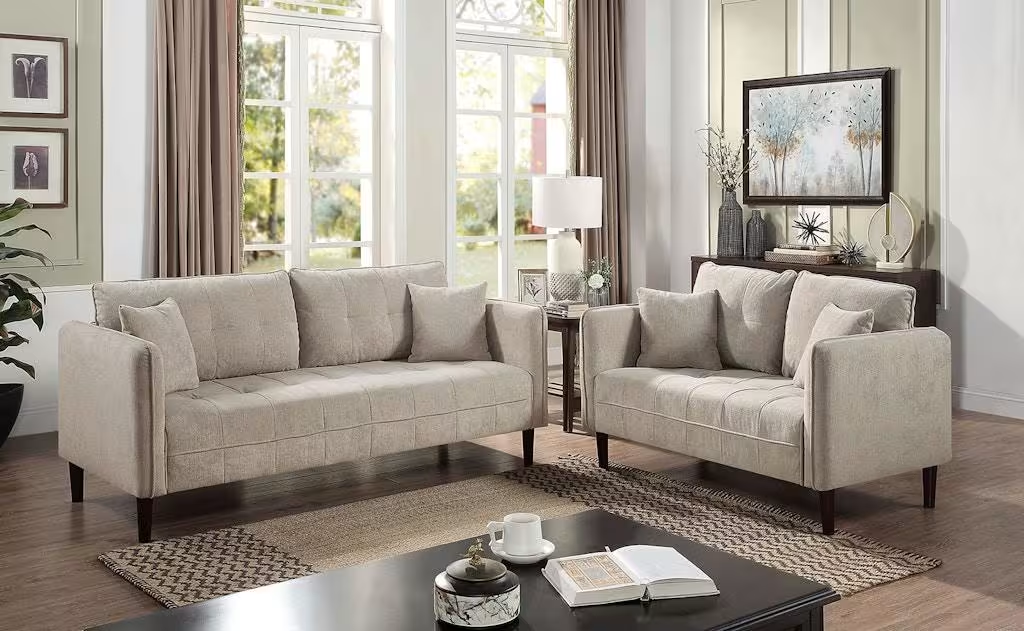
A living room set is a pre-coordinated collection of furniture pieces designed to work together — same upholstery, matching or complementary frames, unified aesthetic. The idea is that someone has already done the design work of making sure the pieces look intentional together, so you don’t have to.
At its most basic, a living room furniture set starts with seating. Almost every set is built around a sofa as the anchor piece, and most add a loveseat as the companion. From there, sets expand depending on configuration — some include accent chairs, some add a coffee table, end tables, or even an ottoman.
The core value proposition is coherence. You’re paying for pieces that are guaranteed to coordinate, rather than spending hours — or months — trying to assemble that same coordination yourself from separate sources.
What’s Actually Included: Breaking Down Set Configurations
This is where most articles leave you hanging with a vague wave at “various pieces.” Here’s what the different configurations actually contain.
2-Piece Living Room Set
The foundational option: a sofa and a loveseat. That’s it. Two upholstered seating pieces in matching fabric and style. This is the most common entry point and works well for smaller living rooms or minimalist setups where you want coordinated seating without a lot of furniture crowding the space.
3-Piece Living Room Set
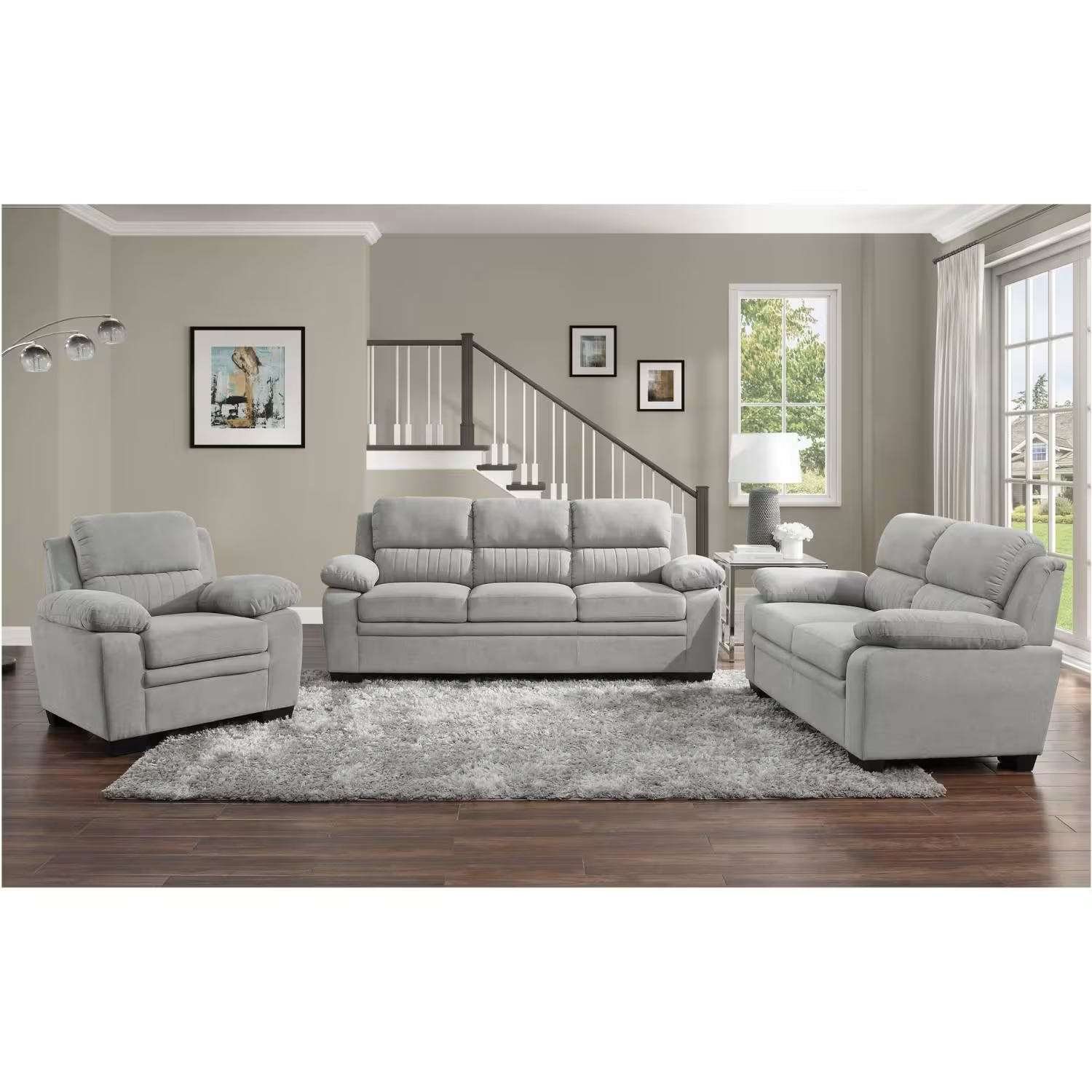
A sofa, loveseat, and one accent chair. This is probably the most popular configuration — it gives you three distinct seating zones, handles four to six people comfortably, and creates enough variety in the room that it doesn’t feel like a showroom. The accent chair often sits at an angle, which naturally opens up the room’s layout.
5-Piece Living Room Set
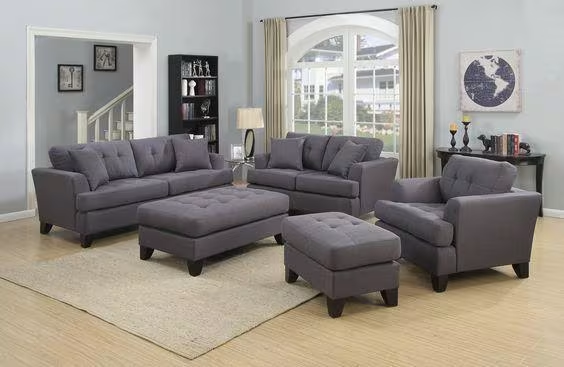
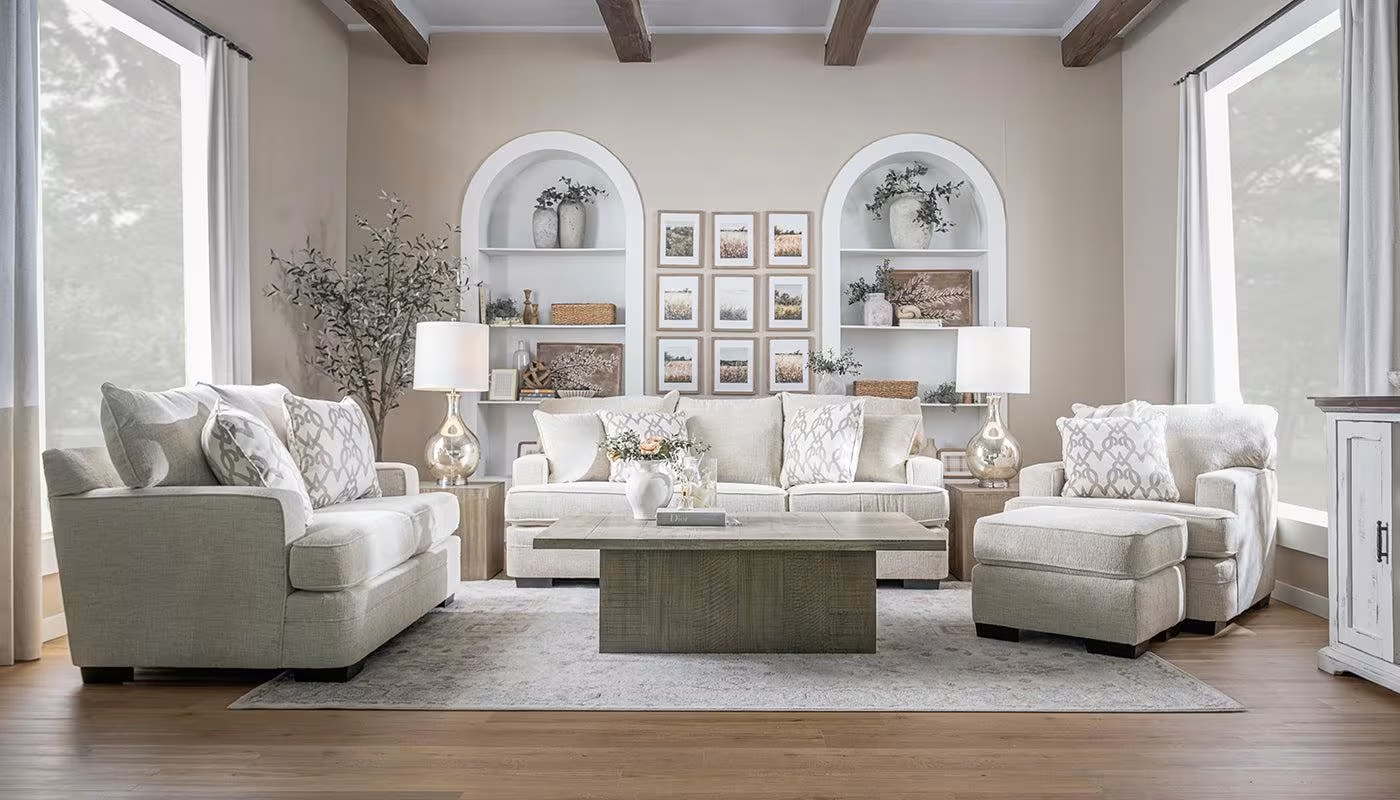
This is where sets start becoming full room packages. A typical 5-piece set includes a sofa, loveseat, accent chair, coffee table, and either an end table or ottoman. Some versions swap the loveseat for a second accent chair and add more table pieces. If you’re furnishing an empty room and want a cohesive look without sourcing each piece separately, a 5-piece set can genuinely take the work out of it.
Sectional Set
Some sets are built around a sectional sofa instead of a traditional sofa-and-loveseat pairing. These typically include the sectional and one or two accent chairs, sometimes with a coffee table. Because the sectional already provides significant seating capacity, the set doesn’t need a loveseat — the sectional covers that ground on its own.
If you’re weighing up whether a sectional configuration is right for your space before committing to a set, the sectional sofa vs. regular sofa guide walks through that decision in practical detail.
The Styles You’ll Actually Find
Living room sets broadly fall into a handful of aesthetic categories, and knowing which direction you’re going before you shop saves a lot of time.
Traditional sets tend to feature rolled arms, button-tufting, darker wood frames, and richer fabrics — think chenille, velvet, or structured linen. They suit homes with some architectural character: crown molding, wood floors, older layouts with defined rooms rather than open plans.
Modern sets lean toward clean lines, low profiles, square arms, and neutral upholstery in grays, creams, and charcoals. These are the easiest to live with long-term because they adapt well to styling changes and don’t lock you into a specific decade’s aesthetic.
Transitional sets sit between traditional and modern — a little of each without fully committing to either. Slightly curved arms, neutral fabrics, subtle wood detailing. These are what most people land on when they want something that “just works” without being too specific a style statement.
Rustic and farmhouse sets use distressed wood frames, natural fabric textures like burlap-blend or slipcover linen, and earthy tones. Great for casual, lived-in spaces. Less suited to urban apartments or formal rooms.
Leather sets are worth their own mention because they cross style categories. A leather sofa-and-loveseat set reads differently depending on the frame style — a modern leather set with track arms feels very different from a classic Chesterfield-style leather set. Leather is durable, easy to wipe down, and ages well, but it’s cold in winter and warm in summer, and it shows scratches from pets immediately.
Is Buying a Living Room Set Actually Cheaper?
Here’s the honest answer: usually yes, but not always by as much as you’d think — and sometimes the savings come with trade-offs in quality or flexibility.
When a retailer packages pieces together as a set, they’re typically offering a discount of 10 to 25 percent compared to buying the same pieces individually. That’s a real saving, especially on larger configurations. A 5-piece set that would cost you $2,400 piece by piece might be listed at $1,900 as a bundle. That’s not nothing.
But here’s where it gets more complicated. Mid-range and budget sets sometimes achieve their price point by using lower-grade materials across all pieces simultaneously — thinner foam, softwood frames, fabrics with lower durability ratings. When you buy individually, you can sometimes spend more on the sofa (which gets the most use) and less on accent pieces.
That said, for most people furnishing a home on a reasonable budget who want a cohesive look without obsessing over every individual piece, a well-chosen set from a reputable brand is genuinely good value. The coordination work alone — matching upholstery, aligned wood tones, proportions that work together — would take significant time and expertise to replicate by sourcing pieces separately.
The “Too Matchy” Problem (And Whether It’s Actually a Problem)
Let’s talk about the hesitation that doesn’t always get said out loud: what if it looks like a furniture catalog?
This is a legitimate concern, and it’s worth addressing directly. A perfectly matched living room set — identical fabric, identical legs, every piece obviously from the same collection — can look stiff. It can feel like nobody actually lives there.
The good news is that this is entirely fixable, and it doesn’t require buying separate pieces to solve it.
The key is layering. A matched set becomes a living room when you add things that weren’t in the original collection — a throw blanket in a contrasting texture, cushions in a different pattern or color, a rug that introduces another element, artwork that has nothing to do with the furniture. The set provides the structural backbone; everything else gives it personality.
Interior designers actually use this approach deliberately. They’ll source the large upholstered pieces as a set for cohesion, then layer in individual accessories, lighting, and accent pieces to make it feel curated rather than packaged.
The “too matchy” problem is almost always a styling problem, not a set problem.
What to Look for in Quality (Before You Spend Anything)
This section matters a lot more than most buying guides acknowledge. The price range for living room sets is enormous — you can spend $600 or $6,000 — and knowing what separates a set worth buying from one that falls apart in three years is genuinely useful.
Frame material is the foundation. Kiln-dried hardwood frames (oak, beech, poplar) are the gold standard for longevity. They don’t warp with humidity changes and hold screws and joints securely over years of use. Softwood frames and particleboard are cheaper to produce but significantly less durable. If a listing doesn’t specify the frame material, that’s usually a sign it’s not worth specifying.
Foam density determines how long cushions hold their shape. High-density foam (1.8 lb per cubic foot or higher for seat cushions) keeps its structure under regular use. Low-density foam compresses quickly and stays compressed. Some mid-range sets use a foam-and-fiber blend in back cushions, which is comfortable initially but tends to go flat and lumpy over time.
Fabric durability is measured by rub count — how many times the fabric can be abraded before showing wear. For residential use with moderate traffic, look for at least 15,000 double rubs. Heavy daily use or households with kids and pets should aim for 25,000 or more. Performance fabrics — stain-treated weaves, solution-dyed options, microfiber — are worth the slight premium if your living room sees real daily activity.
Leg and joinery quality is easy to overlook in product photos but matters in real life. Corner blocks inside the frame (reinforcing joints from the inside) are a sign of well-constructed furniture. Wobbling legs or visible staples in frame joints are warning signs you’ll find after delivery, not before.
How to Size a Living Room Set for Your Space
The most common mistake people make is falling in love with a set online without checking whether it actually fits their room — not just in terms of square footage, but in terms of how the pieces will coexist with traffic flow and other furniture.
A few practical rules:
The sofa should leave at least 18 inches of clearance on each side for walkways. The coffee table should sit 12 to 18 inches from the sofa — close enough to reach comfortably, far enough to move around without bumping it. The loveseat or accent chairs need enough space that they don’t feel crammed against the primary sofa.
For small living rooms — roughly 10 × 12 feet or smaller — a 2-piece set or a compact 3-piece set is almost always the right choice. A 5-piece set in a small room will leave you with almost no floor visible, which makes the space feel smaller and harder to navigate.
For medium rooms in the 12 × 16 to 14 × 18 foot range, a 3-piece or 5-piece set works well, and you have enough floor space to breathe around the furniture.
For large or open-plan spaces, a sectional-based set or a full 5-piece collection can anchor the living zone effectively without getting lost in the room.
If you’re also thinking about how to handle storage in a smaller space — because furniture shopping and organization often go hand in hand — clothes storage ideas for small spaces has some practical thinking that applies to multipurpose rooms as well.
When a Living Room Set Makes Sense — And When It Doesn’t
A set is likely the right choice if:
- You’re furnishing an empty room and want a cohesive look without the design work of sourcing individual pieces
- You’re working with a defined budget and want to know the total cost upfront
- You want the coordination guaranteed — same upholstery, matching legs, pieces that are proportioned for each other
- You have a straightforward rectangular or square living room with clear placement options
- You’re not deeply invested in having a unique, one-of-a-kind interior — you just want the room to look good and function well
Individual pieces probably make more sense if:
- You have specific quality requirements for different items — like wanting a high-end sofa but less expensive side tables
- Your room has an unusual shape or constraints that make standard set configurations awkward
- You already own pieces you love and just need to add to them
- You have a clear design vision that involves mixing styles, textures, or eras — something a matched set can’t accommodate
- You enjoy the process of curating a room over time and don’t need it all solved at once
There’s no wrong answer here. A beautifully chosen living room set in a well-styled room will always look better than individually sourced pieces that don’t quite work together. And a thoughtfully curated room with carefully chosen individual pieces will almost always outperform a matched set. The question is which approach suits how you shop, how you live, and what you care about most.
For people who want to understand the core seating options in more detail before committing to a set configuration, the couch vs. sofa guide clears up the terminology, and the types of sectional sofas breakdown helps if you’re considering a sectional-based set. If floor-level seating appeals to you as an alternative approach, the Japanese floor sofa is worth a look as well.
The living room is the space most people spend the most time in. Getting the furniture right — whether that’s a set or not — is worth the effort of understanding what you’re actually buying before you spend.
FAQs
What is a living room set?
A living room set is a pre-coordinated collection of furniture pieces — typically centered on a sofa — designed to work together visually and functionally. Most sets include matching upholstery, aligned frame styles, and proportions that suit each other. They come in configurations ranging from a simple 2-piece sofa-and-loveseat pairing to a 5-piece collection with chairs, coffee table, and end tables.
What does a 3-piece living room set include?
A standard 3-piece living room set includes a sofa, a loveseat, and an accent chair. All three pieces typically share the same upholstery fabric and frame style, providing coordinated seating for a full living room without additional table pieces.
Is buying a living room set cheaper than buying pieces separately?
Usually yes, by roughly 10 to 25 percent in most cases. Sets offer genuine savings compared to buying the same pieces individually, especially on larger configurations. The trade-off is that you have less control over individual piece quality — when you buy separately, you can invest more in high-use items like the sofa and spend less on accent pieces.
What size living room set do I need?
It depends on your room dimensions. Small rooms under 10 × 12 feet work best with a 2-piece set. Medium rooms in the 12 × 16 to 14 × 18 foot range can accommodate a 3 or 5-piece set comfortably. Larger or open-plan spaces can handle a sectional-based set or a full 5-piece collection. Always measure before buying and account for walkway clearance around each piece.
What are the different types of living room sets?
The main configurations are 2-piece (sofa + loveseat), 3-piece (sofa + loveseat + chair), 5-piece (sofa + loveseat + chair + coffee table + end table/ottoman), and sectional sets (sectional + accent chairs). Style categories include traditional, modern, transitional, rustic, and leather sets.
Will a living room set look too matchy?
Only if you stop at the set and don’t add anything else. A matched set provides a structural foundation — the styling that makes it feel like a real, lived-in room comes from layering in throw blankets, cushions, rugs, lighting, and accessories that weren’t part of the original collection. Most interior designers use this exact approach: coordinate the large pieces, then personalize everything around them.
Are living room sets worth buying?
For most people furnishing a space who want a cohesive look without extensive design work, yes — a quality living room set offers real value in both coordination and cost. They’re particularly worthwhile for first homes, rental upgrades, or anyone who wants the room sorted without spending months sourcing individual pieces. They’re less ideal for people with specific taste requirements, unusual room configurations, or a preference for building a curated room over time.