Estimated reading time: 11 minutes
There’s a particular kind of bare-table guilt that hits right before company arrives. You glance at the middle of the table, see nothing but placemats, and panic-Google something at 6:45 on a Saturday. Either that, or you went the opposite direction years ago and now there’s a permanent pile of mail, candles, and a half-dead plant sitting there year-round.
Both problems have the same fix: a centerpiece that’s actually built for how you use your table, not just how it photographs.
That’s the gap most centerpiece advice misses. Plenty of articles will tell you “fresh flowers always work” and call it done. They don’t tell you the tulips will be drooping by Thursday, or that the gorgeous tall arrangement you saw on Pinterest means your dinner guests can’t see each other across the table. So here’s a rundown of dining table centerpiece ideas organized by what they’re actually good for, with the sizing, cost, and maintenance reality included.
What Actually Makes a Centerpiece Work
Before getting into specific ideas, it helps to know the three things that separate a centerpiece that works from one that just sits there looking awkward: height, scale, and function.
Quick rules worth keeping in mind as you scroll through ideas:
- Keep most pieces under 14 inches tall, or use something narrow enough (like a single bud vase) that height doesn’t block sightlines.
- Leave at least 6 inches of clearance on each side so plates and elbows have room.
- Mix at least two textures — glass and wood, ceramic and greenery — so it doesn’t read as one flat object.
- Match the centerpiece’s permanence to how often you actually use the table. Daily-use tables need something low-maintenance; occasion tables can handle more fuss.
- If kids or pets are regulars at your table, skip candles and anything with small, loose pieces.
Those five rules will save you more frustration than any specific product recommendation.
Floral Centerpiece Ideas
Flowers get top billing for a reason — nothing else adds color and life to a table quite as fast. But not every floral choice behaves the same way once it’s living on your table for a week.
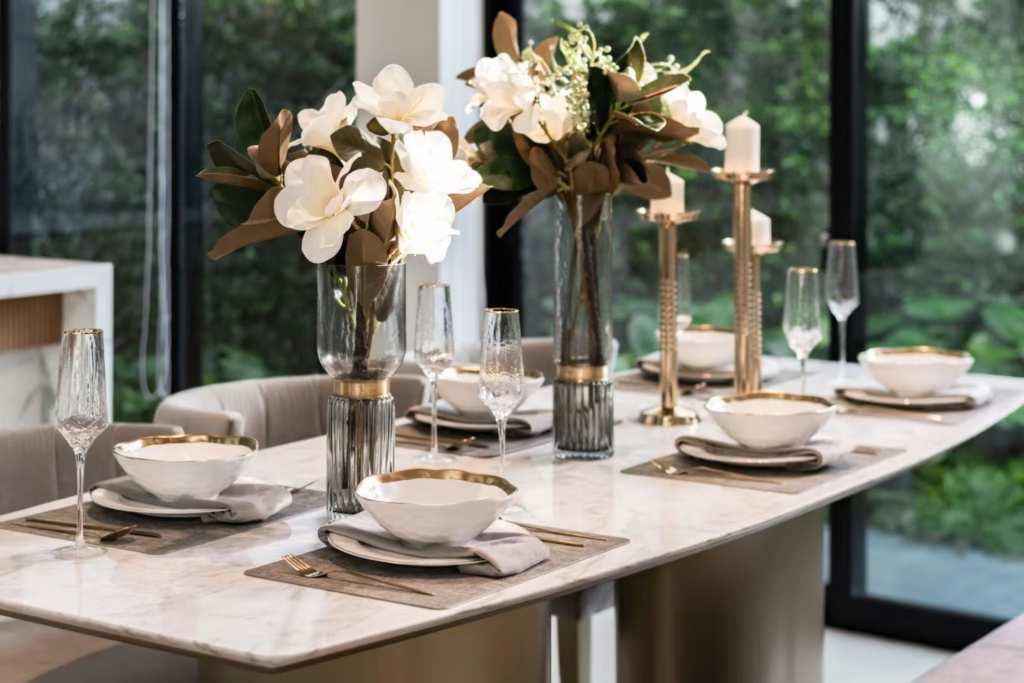
White tulips in a clear glass vase give you that clean, almost editorial look without trying too hard. A simple glass vase runs $10 to $25, and a decent bunch of tulips is usually $8 to $15 at a grocery store. The catch: tulips droop fast, often within four or five days, and they keep growing after you cut them, so don’t be surprised if they lean differently by day three than they did on day one.
Vibrant peonies in a minimalist vase bring drama without needing a dozen stems. Three or four peony stems in a plain ceramic or glass vase looks intentional, not sparse. Peonies are pricier — expect $5 to $8 per stem in season — and they’re seasonal, so this isn’t a year-round option unless you’re buying imported stems at a premium.
Sunflowers work well if your dining room leans toward a country or farmhouse look, and they’re sturdier than tulips — they’ll often hold up for a full week. Mixed autumn foliage (think dahlias, mums, and some branch material) does double duty as both centerpiece and seasonal decor from September through November.
Honest trade-off: fresh flowers look stunning for about three to five days, then they’re a chore. If you’re hosting on a Saturday, buy them Thursday, not the week before.
No-Flower and Low-Maintenance Ideas
If you’re not a flower person — allergic, forgetful about water changes, or just tired of buying a new bunch every week — there’s a whole category of options that look just as intentional.
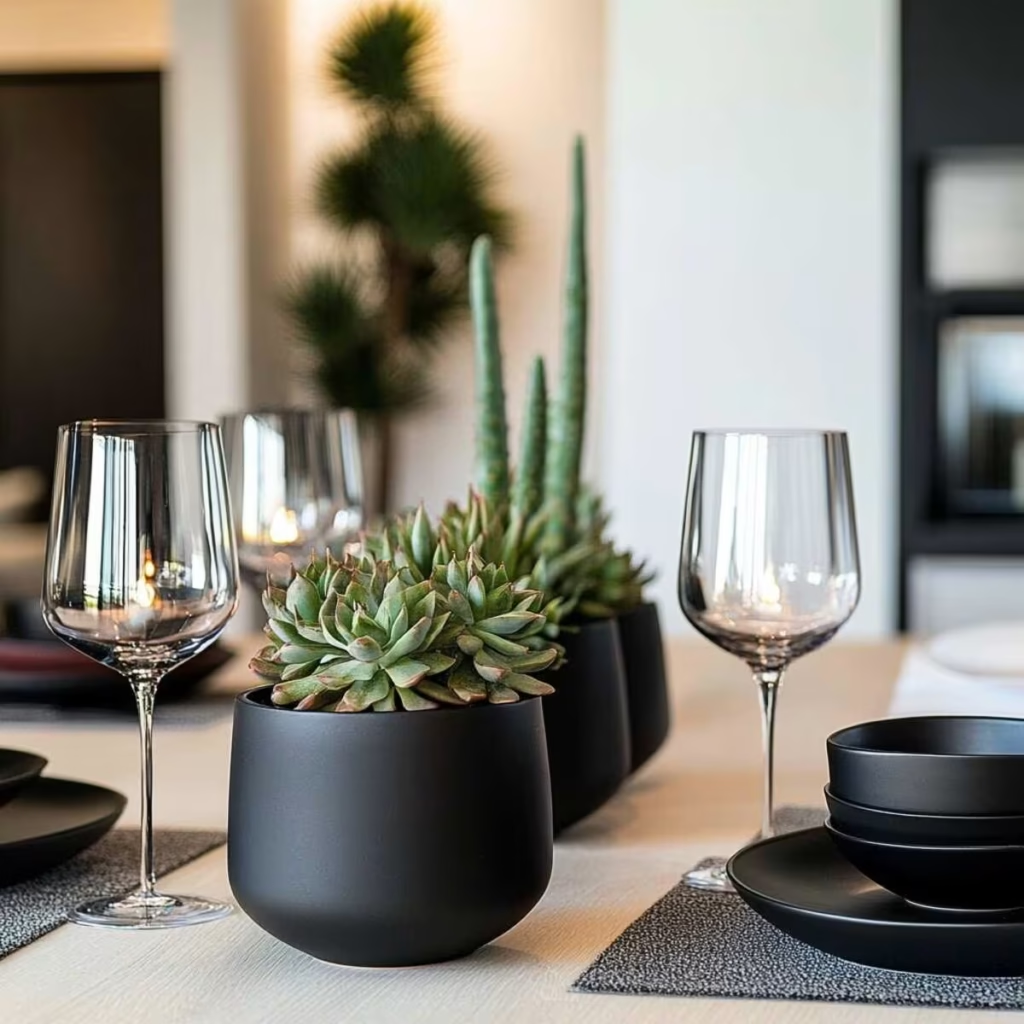
Succulents in a low dish or trio of small pots are close to indestructible. They’ll survive weeks of neglect and don’t need much light if your dining room is dim. The catch: a single succulent by itself can look a little lonely on a full-size table. Pair it with a small tray or a couple of candles to add visual weight without adding upkeep.
A classic bust planter with trailing greenery adds a slightly artistic, eclectic touch that flowers can’t replicate. It’s a strong choice if your dining room already leans toward a gallery wall or mixed-vintage aesthetic — though it can look out of place in a more streamlined, modern space.
Faux greenery garlands or stems have come a long way. Good-quality faux eucalyptus or olive branch stems ($15 to $30 for a bundle) can look nearly identical to the real thing from a few feet away, and they last years instead of days. The catch: cheap faux greenery looks cheap, full stop — plasticky leaves and unnatural color are an instant tell. Spend a little more here if you go this route.
Dried florals (pampas grass, dried eucalyptus, preserved roses) split the difference — they have the texture and presence of fresh flowers without the weekly replacement cycle. They’ll last six months to a year before fading, which makes them a smart pick for anyone who wants a “set it and mostly forget it” centerpiece.
Tray and Functional Centerpiece Ideas
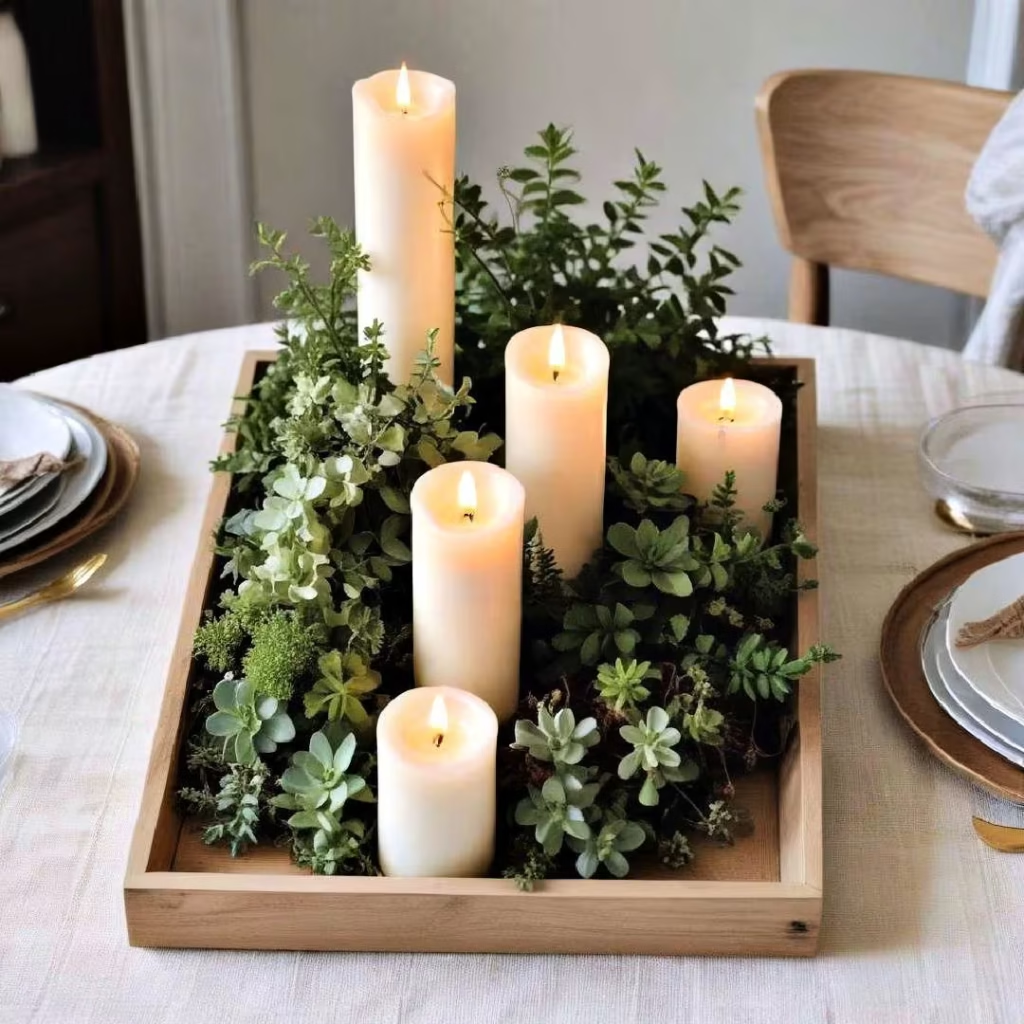
If you only take one idea from this whole list, make it this one: get a tray. A wooden, ceramic, or metal tray ($15 to $40 depending on material) gives you a defined base to build on, and it’s the single most flexible centerpiece foundation there is.
Here’s why it works so well. A tray holds candles steady, contains any wax drips or water rings, and gives you a clear “frame” for grouping smaller items — a few candles, a small plant, a stack of coasters — instead of having them scattered loose across the table where they look more like clutter than decor.
Twisted or pillar candles clustered on a tray create height and warmth without the bulk of a floral arrangement. Three candles of varying heights (say, 6, 9, and 12 inches) on a 12-by-16-inch tray gives you visual interest without blocking anyone’s view across the table. Combine candles with a small cluster of moss or a mini potted succulent and you’ve got texture variety in one compact footprint.
A tray with a small stack of books and a couple of decorative objects (a small bowl, a candle, a single stem in a bud vase) works especially well on an everyday table, since it can absorb mail and keys during the week and still look pulled-together when company comes over. If you’re working on organizing the rest of your dining space too, pairing a styled tray with smart storage — something like the ideas in our guide to essential racks, shelves, and drawers — keeps the whole room from feeling cluttered, not just the table.
Trade-off worth knowing: trays with candles need supervision around kids and pets. If that’s a daily concern at your table, skip the candles and stick to the plant-and-object combination instead.
Minimalist Centerpiece Ideas for Small Tables
Smaller tables — anything under 60 inches — get overwhelmed fast by anything too tall or wide. Minimalist centerpieces aren’t just a style choice here; they’re often the only thing that actually fits.
A single-stem flower in a slim bud vase gives you color and life without eating up table real estate. A 4-inch bud vase with one stem (a ranunculus, a single rose, a sprig of eucalyptus) takes up almost no visual space but still signals “someone decorated this table on purpose.”
A bowl of fresh seasonal fruit is one of the most underrated centerpiece ideas out there, mostly because it’s functional, cheap, and genuinely lasts. A bowl of lemons, apples, or a seasonal mix costs $5 to $10 and looks fresh for about a week before you’d want to rotate it. It also doubles as an actual snack source, which is more than you can say for most decor. If you go this route often, it’s worth knowing the difference between a food processor and a juicer for when that fruit bowl centerpiece is also doing kitchen duty.
For small tables specifically, height matters more than anything else on this list. Keep everything under 10 inches, and resist the urge to add a second item “for balance” — on a small table, one well-chosen piece usually reads better than a cluster. If you’re rethinking the whole room layout, not just the table topper, a broader look at choosing the right size for your dining space might be worth a read too.
Seasonal Centerpiece Ideas
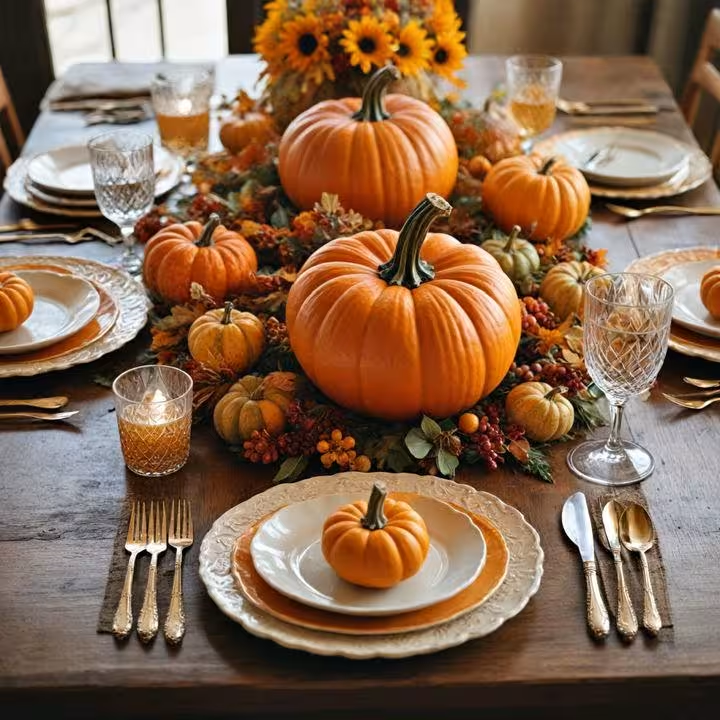
Rotating your centerpiece with the seasons keeps the table feeling current instead of frozen in whatever you set up two years ago. The trick is doing it without buying an entirely new centerpiece four times a year.
Fall is the easiest season to nail: a few small pumpkins or gourds (real ones run $2 to $5 each at most grocery stores in September and October) arranged with some warm-toned foliage on a wooden tray covers six to eight weeks of decor for under $20.
Spring calls for pastel florals — ranunculus, tulips, or hyacinth in soft pinks and yellows — paired with a lighter-colored vase to match the season’s mood.
Winter holidays lean toward evergreen sprigs, pinecones, and candles, which conveniently overlaps with the tray-and-candle setup already mentioned. You’re not buying new pieces every season so much as swapping out the “filler” — the flowers, foliage, or seasonal object — while keeping the same tray or vase as your year-round base.
If you’re freshening up the whole dining room alongside the table, something low-effort like peel-and-stick wallpaper on one accent wall can make a seasonal centerpiece swap feel like a bigger refresh than it actually was.
Budget-Friendly and DIY Ideas
You don’t need a $60 ceramic vase to make this work. Some of the best-looking centerpieces cost almost nothing because they use things you already own.
A cutting board with a few candles and some greenery clipped from the yard mimics the tray idea for free, assuming you’ve already got a board sitting in a kitchen drawer. Mason jars doing double duty as bud vases cost nothing if you’ve got them leftover from pasta sauce or jam. A bowl you already own filled with pinecones, ornaments, or seasonal fruit covers three different seasons without a single purchase.
If you do want to spend a little, $20 to $30 gets you a decent tray or vase that’ll last years, which is a better long-term value than restocking fresh flowers every week at $10 to $15 a pop. Do the math on a year of weekly flowers versus one solid tray setup, and the tray wins by a wide margin.
Common Centerpiece Mistakes to Avoid
A few things trip people up more than anything else on this list:
Going too tall. Anything over 14 to 16 inches starts blocking eye contact across a standard 30-inch-wide table, and conversation suffers for it.
Going too wide. If your centerpiece eats more than a third of the table’s width, you’ve left guests with nowhere to put serving dishes.
Treating every table the same. A centerpiece for a daily-use kitchen table needs to survive spills, kids’ elbows, and pets. An occasion-only dining table can handle something more delicate. Using the same setup for both usually means the daily one gets ruined or the occasion one never gets used.
Skipping the texture mix. A single material — all glass, all ceramic, all greenery — tends to look flatter than a combination of two or three.
Forgetting upkeep entirely. Fresh flowers wilting in a vase for two weeks past their prime is worse for the room’s look than having no centerpiece at all.
FAQ
How tall should a dining table centerpiece be?
Most centerpieces should stay under 14 inches so guests can still see and talk across the table. If you want height, go narrow — a single tall stem in a slim vase works better than a wide, tall arrangement.
What can I use as a centerpiece besides flowers?
Succulents, a bowl of fresh fruit, a styled tray with candles and small objects, or faux and dried greenery all work well. Each option trades a little visual drama for a lot less maintenance.
How do I make a centerpiece look expensive on a budget?
Mix textures (glass with wood, ceramic with greenery) and keep the color palette limited to two or three tones. A $15 tray styled thoughtfully often reads as more put-together than an expensive single item placed alone.
Should a centerpiece be different for everyday use vs. entertaining?
Generally, yes. Everyday centerpieces should handle spills, bumps, and kids or pets — think trays, succulents, or fruit bowls. Occasion centerpieces can afford to be more delicate, like fresh florals or candle clusters, since they’re only on display for a few hours at a time.