Estimated reading time: 12 minutes
I canceled my gym membership two years ago and spent the first $80 I saved on a set of resistance bands and a yoga mat. That’s it. No grand equipment haul, no Pinterest-perfect garage setup. Just enough to stop paying $50 a month for a treadmill I used twice a week and a locker room I mostly used to check my phone.
That’s the real starting point for most people: not “what’s the best home gym,” but “what’s the least I can spend to stop wasting money on a membership I barely use.” So let’s answer that directly.
Quick Answer: What Does a Budget Home Gym Actually Cost?
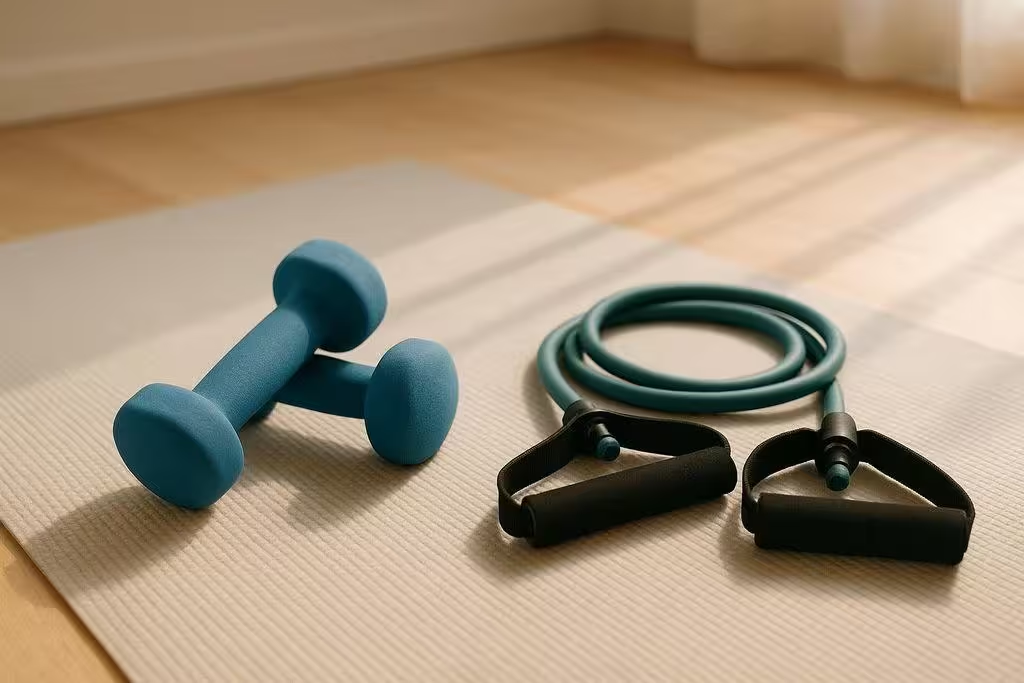
You can start a functional home gym for as little as $50–$150 with resistance bands, a mat, and bodyweight training. A solid setup that covers strength and cardio for one person typically runs $300–$500 using a mix of new and used equipment. Anything beyond that is upgrading comfort and variety, not unlocking new ability to train.
Figure Out Your Space and Goal First
Before you buy anything, answer two questions honestly: how much floor space can you permanently give up, and what are you actually training for?
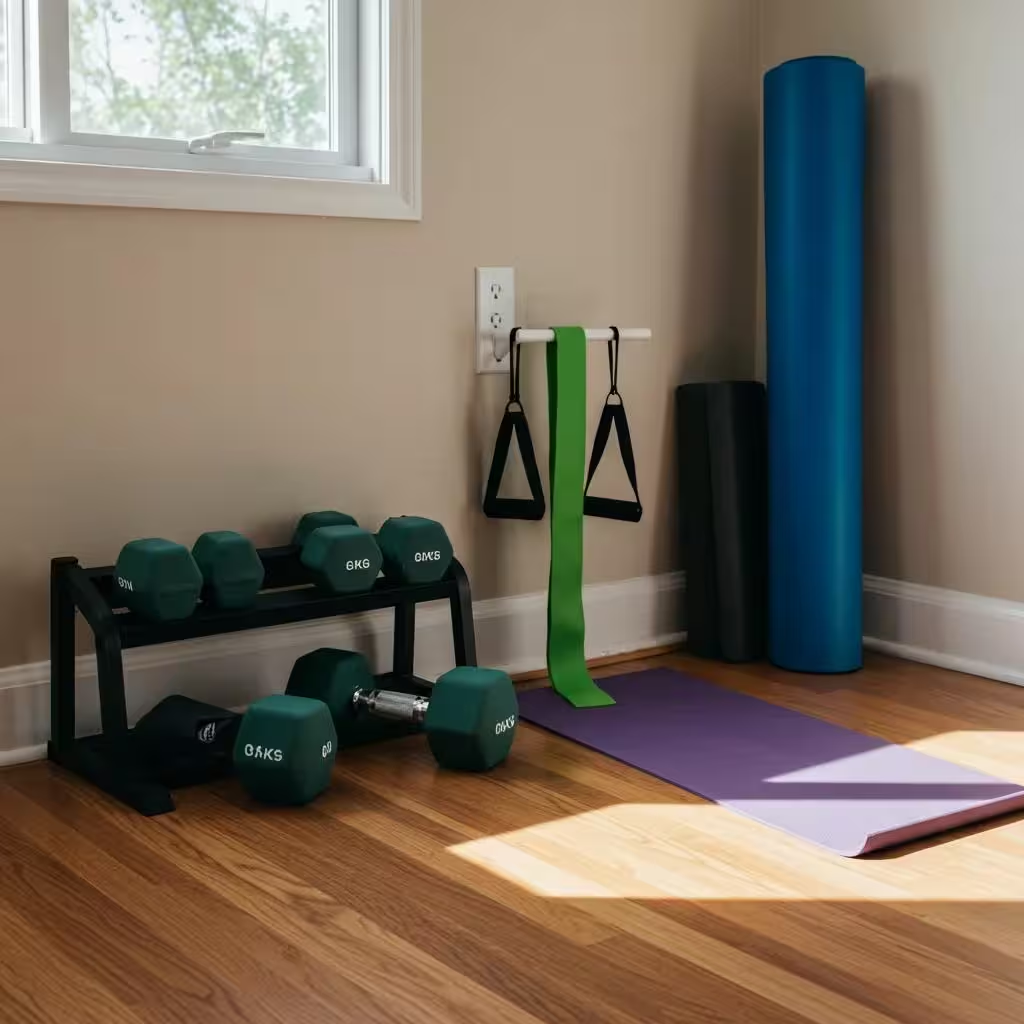
If you’ve got a 6×6 corner of a bedroom, you’re not building a squat rack setup — you’re building a bands-and-dumbbells setup, and that’s genuinely fine. If you’ve got a garage or a basement, you’ve got room to grow into heavier gear later, but you still don’t need to buy for that future on day one.
The goal question matters more than people give it credit for. General fitness and fat loss? You need resistance training tools and something for your heart rate — bands, dumbbells, a jump rope. Strength-focused with a long-term plan to lift heavy? You’ll eventually want a barbell setup, but that’s a $500+ investment on its own and not where a beginner should start. Be honest about which one you are before you spend a dollar.
The Only Equipment You Actually Need (In Priority Order)
blob:https://homeeguide.com/38d4484f-04a3-4851-a497-e8131198069cMeta Boxes
Use up and down arrow keys to resize the meta box pane.Move upMove downToggle panel: Yoast SEO
Optimize your content for discovery or get new content suggestions.Get content suggestions
Focus keyphrase
Focus keyphrase
Use the main word or phrase you want your content found for across search, AI, and beyond. Learn more about best practices for keyphrases.(Opens in a new browser tab)
Discover related keyphrases(Opens in a new browser tab)
Search appearance
Determine how your post should look in the search results.Google preview
MobileGoogle preview: Switch to desktop preview. Currently showing mobile preview.
Desktop
Url preview:

Homeeguidehomeeguide.com
SEO title preview:
How to Build a Home Gym on Any Budget
Meta description preview:
Jun 24, 2026 - I canceled my gym membership two years ago and spent the first $80 I saved on a set of resistance bands and a yoga mat. That’s it. No grand equipment haul,
SEO titleInsert variableGenerate SEO title
Title
Slug
Meta descriptionInsert variableGenerate meta description
Excerpt
SEO analysisEnter a focus keyphrase to calculate the SEO score
Add related keyphrasePremiumTrack SEO performance
Content blocksNew
Internal linking suggestionsPremium
Cornerstone content
Advanced
Insights
Move upMove downToggle panel: WPCode Page Scripts
Yoast SEO
Optimize your content for discovery or get new content suggestions.Get content suggestions
Focus keyphrase
Focus keyphrase
Use the main word or phrase you want your content found for across search, AI, and beyond. Learn more about best practices for keyphrases.(Opens in a new browser tab)
Discover related keyphrases(Opens in a new browser tab)
SEO analysis
Premium SEO Analysis
Get deeper keyphrase insights and stronger headlines
- Synonyms & word form recognition: Write more natural, flowing content.
- Extra SEO assessments: See additional recommendation to improve your content.
Analysis results
Problems (10)
- Outbound links: No outbound links appear in this page. Add some!
- Keyphrase in image alt attributes: This page does not have images, a keyphrase, or both. Add some images with alt attributes that include the keyphrase or synonyms!
- Keyphrase in introduction: Please add both a keyphrase and an introduction containing the keyphrase.
- Keyphrase density: Please add both a keyphrase and some text containing the keyphrase.
- Keyphrase in SEO title: Please add both a keyphrase and an SEO title beginning with the keyphrase.
- Keyphrase length: No focus keyphrase was set for this page. Set a keyphrase in order to calculate your SEO score.
- Keyphrase in meta description: Please add both a keyphrase and a meta description containing the keyphrase.
- Previously used keyphrase: No focus keyphrase was set for this page. Please add a focus keyphrase you haven’t used before on other content.
- Keyphrase in slug: Please add both a keyphrase and a slug containing the keyphrase.
- Keyphrase in subheading: Please add both a keyphrase and some text to receive relevant feedback.
Improvements (1)
- Meta description length: The meta description is over 156 characters. To ensure the entire description will be visible, you should reduce the length!
Good results (6)
- Images: Good job!
- Internal links: You have enough internal links. Good job!
- Single title: You don’t have multiple H1 headings, well done!
- Competing links: There are no links which use your keyphrase or synonym as their anchor text. Nice!
- Text length: The text contains 1797 words. Good job!
- SEO title width: Good job!
Readability analysis
Inclusive language
Add related keyphrase
Track SEO performance
Internal linking suggestions
Search appearance
Social media appearance
Schema
Content blocksNew
Advanced
Cornerstone content
Insights
Open publish panel
- Post
Most home gym lists hand you ten options and call them all equally good. They’re not. Here’s the actual order to buy in, and why.
1. Resistance bands ($15–$40). This is your first purchase, full stop. A decent set of loop and tube bands covers upper body, lower body, and mobility work, takes up almost no space, and travels if you move apartments. If you only ever buy one thing, buy this.
2. A yoga or exercise mat ($15–$30). Protects your floor, protects your joints, and makes bodyweight work and stretching actually comfortable instead of something you do once and quit.
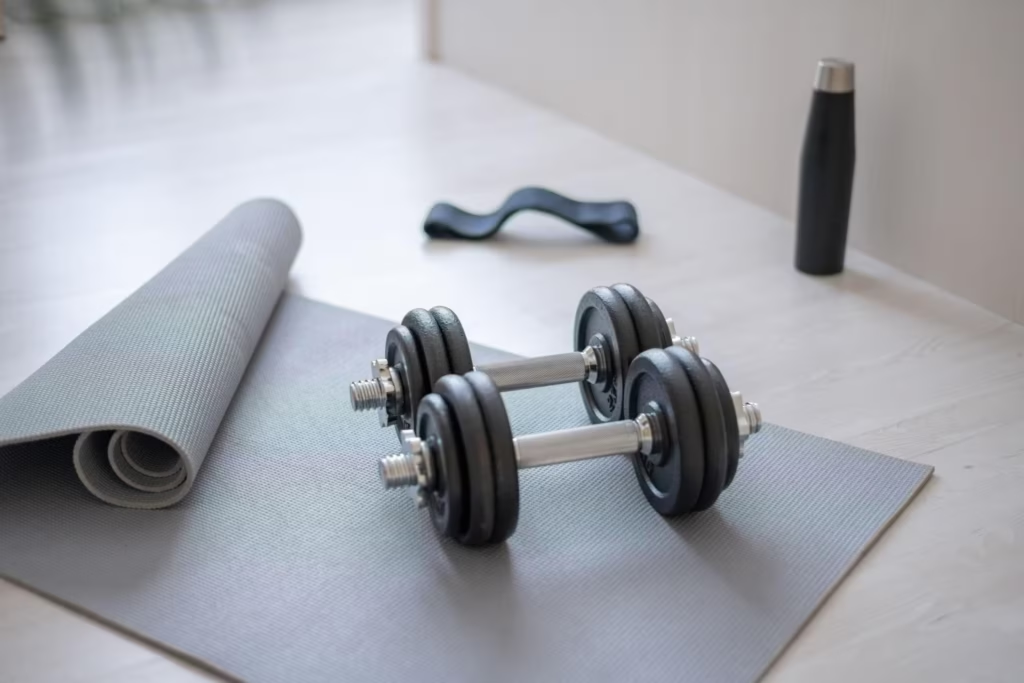
3. Adjustable dumbbells ($60–$150 new, $40–$90 used). This is where real strength progression starts. Adjustable pairs (5–25 lbs or 5–50 lbs depending on the set) save you from buying six pairs of fixed-weight dumbbells over the next year. Buy these before a kettlebell — dumbbells are more versatile for a beginner.
4. A jump rope ($8–$15). Cheapest cardio equipment that exists, and it’s genuinely effective. Ten minutes is a real workout.
5. A pull-up bar ($20–$40). Doorframe-mounted bars need zero permanent installation and open up an entire category of upper-body training that bands can’t fully replace.
6. A kettlebell ($25–$60 depending on weight). Comes after dumbbells, not before. It’s a fantastic tool for conditioning and posterior-chain work, but it’s a “now I’m expanding” purchase, not a starter purchase.
| Item | Price Range | Best For | Space Needed |
| Resistance bands | $15–$40 | Everyone, especially beginners | Almost none |
| Yoga/exercise mat | $15–$30 | Floor work, joint protection | 2’x6′ rolled or laid out |
| Adjustable dumbbells | $40–$150 | Strength progression | Small shelf or floor space |
| Jump rope | $8–$15 | Cardio | None when stored |
| Pull-up bar | $20–$40 | Upper body, back/arms | Doorway only |
| Kettlebell | $25–$60 | Conditioning, posterior chain | Small floor space |
| Power rack/barbell | $300–$700+ | Serious strength training | 6’x8’+ dedicated area |
What to Skip for Now
A power rack and barbell setup is the single most common overspend I see. It’s a serious piece of equipment for a serious lifter, and most people who buy one in their first month aren’t there yet — financially or in their training. Wait until bodyweight and dumbbell training stop challenging you before you spend $300–$700 on a rack.
Cardio machines (treadmills, ellipticals) are the second trap. They’re expensive, they’re heavy to move, and a $300 treadmill off Facebook Marketplace is usually a $300 treadmill with a dying belt motor. A jump rope and your own front door get you 90% of the benefit for 5% of the cost and zero repair risk.
Smart home gym mirrors and app-connected equipment are nice, but they’re a comfort upgrade, not a training necessity. Skip them until your basics are dialed in and you know you’ll actually use a home gym consistently.
Buying Used Without Getting Burned
Used equipment is where a budget home gym gets genuinely affordable, but it’s also where people get burned. Here’s what to actually check before handing over cash, in person if at all possible:
For dumbbells and kettlebells: look for rust on the metal, check that the rubber or vinyl coating isn’t cracked or peeling (that’s a grip and durability problem, not just cosmetic), and for adjustable dumbbells specifically, test that the locking collar actually clicks into place and doesn’t wobble. A wobbling collar on a loaded bar is a foot injury waiting to happen.
For kettlebells: check the handle weld and the seam where the handle meets the body. Hairline cracks there are a hard no, even at a great price.
For resistance bands sold used: honestly, don’t. They’re cheap enough new, and you can’t inspect microtears in rubber that’s been stretched hundreds of times. This is the one category where buying new is the right call regardless of budget.
For barbells and benches (if you’re at that stage): check that the bar still spins freely on the sleeves and that a bench’s padding isn’t torn through to the foam, which means moisture and eventually mold.
A 20–30% discount off retail for gently used gear is normal and fair. If something’s priced at 70% off, ask why — it’s often because of exactly the issues above.
Two Real Budget Breakdowns
The $150 starter kit: Resistance bands ($30) + yoga mat ($20) + jump rope ($10) + a used pair of adjustable dumbbells ($90, inspected per the checklist above). This covers strength, mobility, and cardio in one corner of a room. It’s not a forever setup, but it’s a real one you can train on for months.
The $500 solid setup: New adjustable dumbbells, 5–50 lbs ($140) + a doorframe pull-up bar ($35) + a kettlebell, 25 lbs ($45) + resistance bands ($35) + a quality mat ($30) + a foldable weight bench, used ($120) + jump rope and small accessories ($15) + a bit of buffer for shipping or a Marketplace deal that doesn’t quite line up ($80). This is genuinely enough equipment to train strength, conditioning, and mobility for years without feeling limited.
Notice neither budget includes a rack or barbell. That’s intentional — both of these cover real, sustainable training, and a beginner upgrading straight to barbell work usually isn’t using what they already have to its full potential yet.
The $0 Bodyweight-Only Option
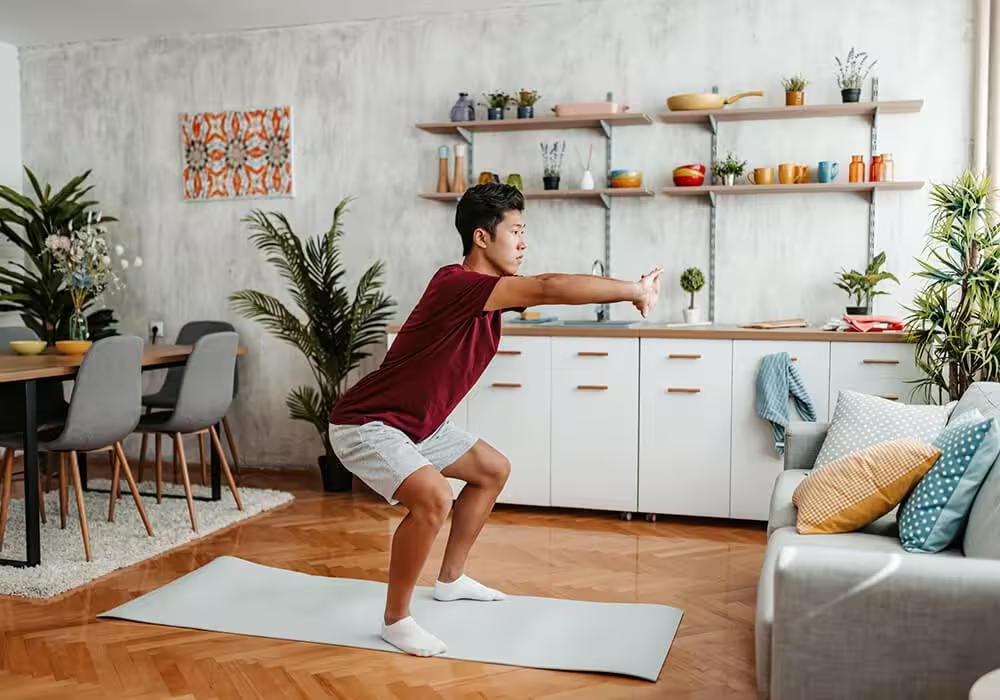
If you genuinely can’t spend anything right now, that’s a real and valid starting point. Push-ups, squats, lunges, planks, and step-ups (using a sturdy chair or stair) cover most of what bodyweight training needs to offer. Progression comes from changing tempo, adding pauses, doing single-limb variations, or simply increasing volume — not from needing equipment.
This isn’t a lesser version of a home gym. It’s a legitimate phase one. Plenty of people train this way for months before spending a cent, and it also tells you honestly whether you’ll stick with home training before you invest in gear.
Where to Actually Put It All
This is the part most home gym content skips, and it’s usually the actual deciding factor for renters and small-space owners.
For a 6×6 space (a bedroom corner or a closet-adjacent nook): a mat rolled out on the floor, a small wall-mounted or freestanding rack for dumbbells and bands, and a hook by the door for the jump rope and pull-up bar attachment. Everything should be able to disappear in under two minutes if the space doubles as a bedroom or office, which is usually exactly why people resist starting in the first place — it doesn’t have to be permanent clutter. A few storage ideas for small spaces translate directly here: stackable bins and over-door organizers work just as well for bands and grips as they do for clothes.
If you’re upstairs from someone, or someone’s below you, floor protection isn’t optional — it’s the difference between a friendly neighbor and a noise complaint. A rubber mat or interlocking foam tiles under your workout area absorb impact noise from jumping, dropped weights, or burpees significantly better than carpet alone. Skip anything that involves actually dropping weights from height; controlled, lowered reps are quieter and, frankly, better for your joints anyway.
For a garage or basement setup, you’ve got the luxury of permanent placement. A simple shelving or rack system keeps dumbbells, kettlebells, and bands organized instead of in a pile, which matters more than people expect — gear that’s annoying to access is gear that stops getting used. If you’re working with a generally tight layout, our piece on creating more space in your home has practical ideas that apply just as well to a workout corner as to any other room.
If this is your first time setting up a dedicated space at all, our broader guide on creating a home gym walks through layout planning in more depth, including for people working with more square footage than a single corner.
FAQ
How much does a budget home gym cost?
A functional setup runs $150–$500. The low end covers bands, a mat, and used dumbbells. The higher end adds a kettlebell, pull-up bar, and bench, and is enough for years of varied training.
What’s the best first piece of equipment to buy for a home gym?
Resistance bands. They’re cheap, versatile across upper body, lower body, and mobility work, and take up almost no storage space.
Can I build a home gym in a small apartment?
Yes. A 6×6 area is enough for a mat, bands, dumbbells, and a doorframe pull-up bar, and all of it can be packed away in a couple of minutes if the space needs to serve double duty.
Is used gym equipment worth buying?
For dumbbells, kettlebells, benches, and barbells — yes, with an inspection for rust, coating damage, and weld cracks. For resistance bands, buy new; wear and microtears aren’t visible from the outside.
Do I need a power rack to get strong at home?
No, not at the start. Bodyweight and dumbbell training can build real strength for a long time before a rack becomes the limiting factor.