Estimated reading time: 10 minutes
You’ve got one open spot left on the counter. Maybe two appliances are already crowding the corner by the toaster, and now you’re standing in an aisle (or scrolling a product page at midnight) trying to decide between a food processor and a juicer. Or maybe you already own one of them and you’re wondering, quietly, if it could just do the other job too. That second question comes up a lot more than people admit, and it’s the one most articles on this topic skip right past.
So let’s actually settle this one. No “it depends on your needs” cop-out at the end.
The Quick Answer
A food processor is the better all-around buy for most kitchens — it chops, shreds, purees, and kneads, and in a pinch, it can even make a rough version of juice if you’re willing to strain it yourself. A juicer does one thing, but it does that one thing cleaner, faster, and with a better yield. If you only have room for one appliance and you cook more than you cleanse, the food processor wins. If fresh juice is the actual goal and you’re not interested in straining anything by hand, get the juicer.
That’s the short version. Here’s the part that actually matters: the details that change which answer is right for you.
What Each One Is Actually Built To Do
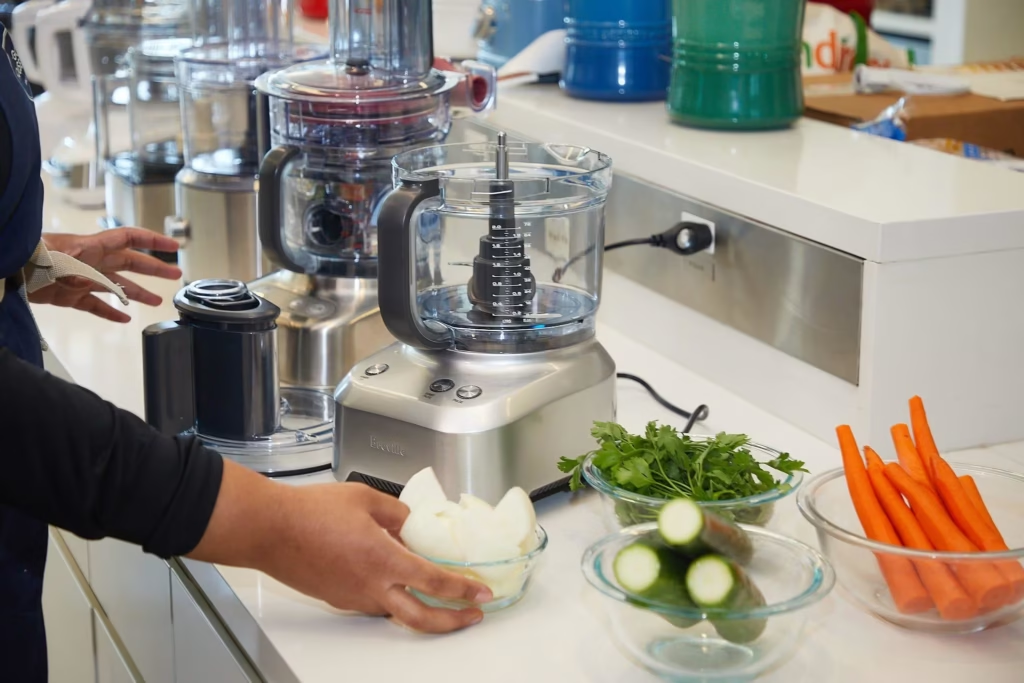
A food processor is a workhorse. Swap the blade and it chops onions, shreds cheese, kneads pizza dough, or turns chickpeas into hummus in under a minute. It’s the appliance that gets used four times a week for completely different reasons, which is exactly why so many kitchens already have one before a juicer ever enters the picture.
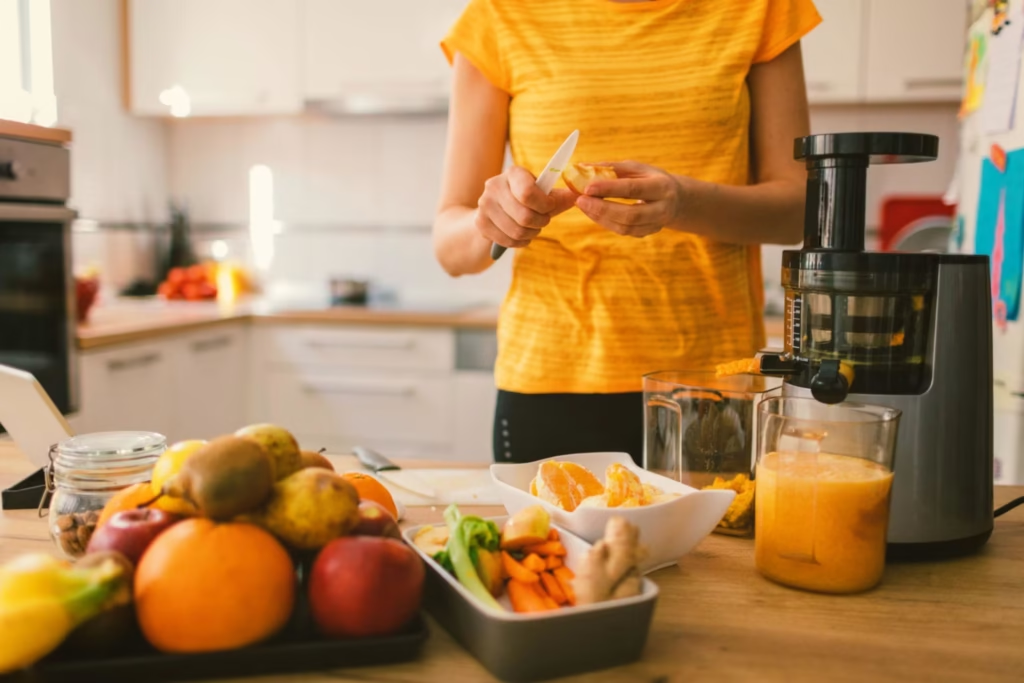
A juicer has one job: separate liquid from solid. Feed it an apple or a fistful of kale, and it spins or presses that produce until the juice drains into a cup and the dry pulp gets shoved into a separate bin. There are two main types — centrifugal juicers, which spin produce against a blade at high speed, and masticating (cold-press) juicers, which crush and press more slowly. Centrifugal models are faster and cheaper. Masticating ones are quieter, give a better yield, and cost more.
Neither appliance is “better” in a vacuum. They’re built for different outcomes, and that’s the whole reason this comparison keeps coming up.
Price tends to track capability rather than brand name. A solid mid-size food processor lands somewhere between $80 and $150, and that buys you enough power to knead bread dough without straining the motor. Juicers split into two price tiers for a reason: cheap centrifugal models start around $50 and work fine for occasional use, while masticating juicers start closer to $150 and climb from there, because the slow-press mechanism that gives you a better yield and quieter operation is just more expensive to build.
Food Processor vs Juicer at a Glance
| Food Processor | Juicer | |
| Best for | Chopping, shredding, dough, purees, batch cooking | Fresh juice extraction |
| Output | Thick, fiber-intact blends | Clear, pulp-free liquid |
| Cleanup | Dishwasher-safe parts, quick rinse | Pulp basket needs scrubbing, more parts |
| Noise | Moderate, short bursts | Centrifugal: loud. Masticating: quieter, slower |
| Price range | $40–$300 | $50–$400+ |
| Counter space | Medium footprint, multipurpose | Medium-large, single-purpose |
If you’re skimming, that table is basically the whole article. Everything below it is the “why” behind each row.
Can Your Food Processor Just Become a Juicer?
This is the question nobody quite answers properly, and it’s the one I get asked the most by people who already own a food processor and don’t want to buy a second machine just to try green juice for a month.
Here’s the honest version: yes, you can make juice in a food processor. No, it’s not the same experience as owning a real juicer, and you should know exactly where it falls short before you try it.
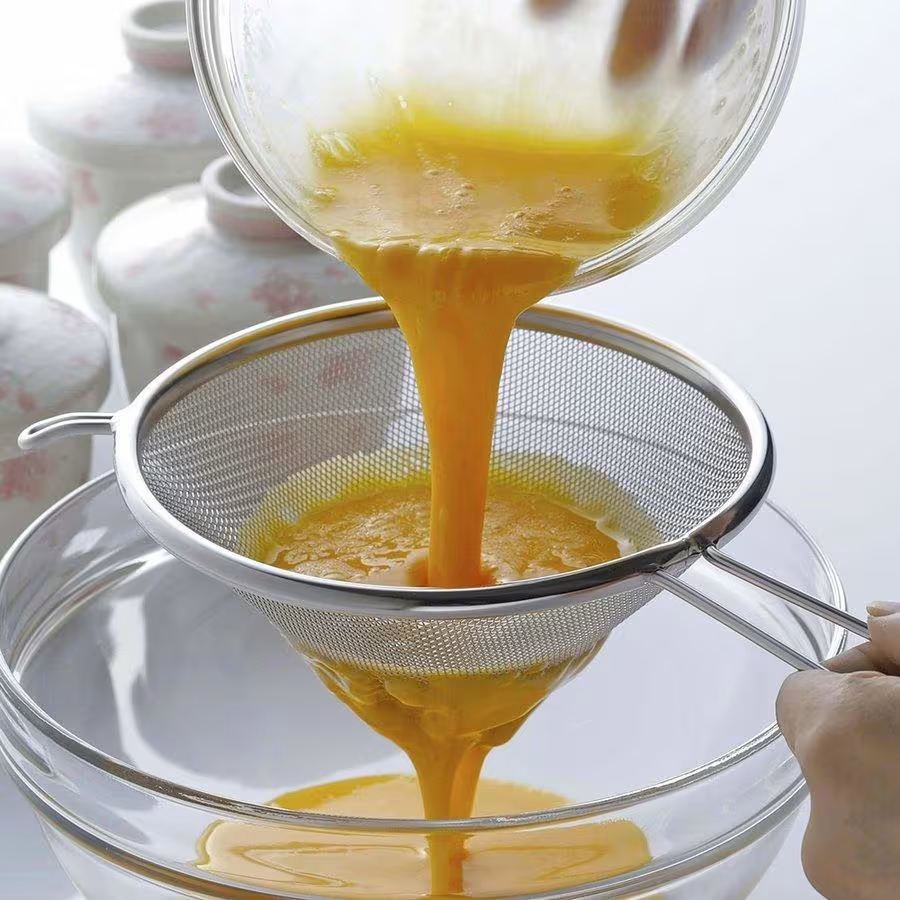
The method. Roughly chop your fruit or vegetables — no skins or seeds that are too tough for the blade, and don’t overfill the bowl. Run the processor until everything breaks down into a wet, pulpy mash, which takes less time than you’d think for soft produce like oranges, watermelon, or cucumber. Then pour that mash through a fine strainer or a nut-milk bag, squeezing or pressing to push the liquid through while the solids stay behind.
Where it actually works well. Watery produce does best here — citrus, melon, cucumber, soft berries. The processor’s blade handles them easily, and there’s enough natural liquid that straining isn’t a huge chore.
Where it falls apart. Hard, fibrous vegetables like carrots or celery turn into a stringy mash that’s miserable to strain by hand. You’ll also lose more juice than a real juicer would extract, because you’re squeezing it out manually instead of letting a machine press it under real force. And the straining step itself is genuinely messy — expect pulp on your hands, your strainer, and probably your counter.
So the honest verdict: if you want a glass of fresh juice occasionally and you already own a food processor, this works fine. If you’re trying to juice daily, or you want green juice made from kale and celery, the lack of a dedicated pressing mechanism will wear on you fast, and a juicer is worth the money.
A rough sense of what to expect: a real juicer typically pulls more liquid out of the same produce than you’ll manage by hand-squeezing a strainer, simply because mechanical pressing is more thorough than anything your hands can apply. Plan on a noticeably smaller glass from the food processor method, plus a few extra minutes spent straining that a juicer skips entirely. It’s a fair trade if you’re juicing once a week. It stops feeling fair around day four of a daily juice habit.
Worth mentioning on the noise side too, since it rarely comes up until someone’s already annoyed by it: a food processor runs loud for short bursts and then it’s done. Centrifugal juicers run at a similarly sharp volume, but for longer, since you’re feeding produce through continuously. Masticating juicers are the quiet option of the three, which matters more than people expect if you’re juicing early in the morning before anyone else is awake.
The Fiber Argument, Settled
You’ll see this debate everywhere, and it usually goes in circles. Here’s the actual point, stated once: juicing removes most of the fiber along with the pulp, so the nutrients hit your system faster but you lose the slow-digestion benefits fiber provides. A food processor (or a blender, for that matter) keeps that fiber intact, which means the same fruit or vegetable digests more slowly and keeps you fuller longer.
Neither is “healthier” across the board — it depends on what you’re trying to get out of the drink. Quick nutrient absorption after a workout? Juice has an edge. Looking for something that holds you over until lunch? Keep the fiber in. That’s it. No need to relitigate it three more times further down the page.
Which One You Should Actually Buy
If your kitchen is small
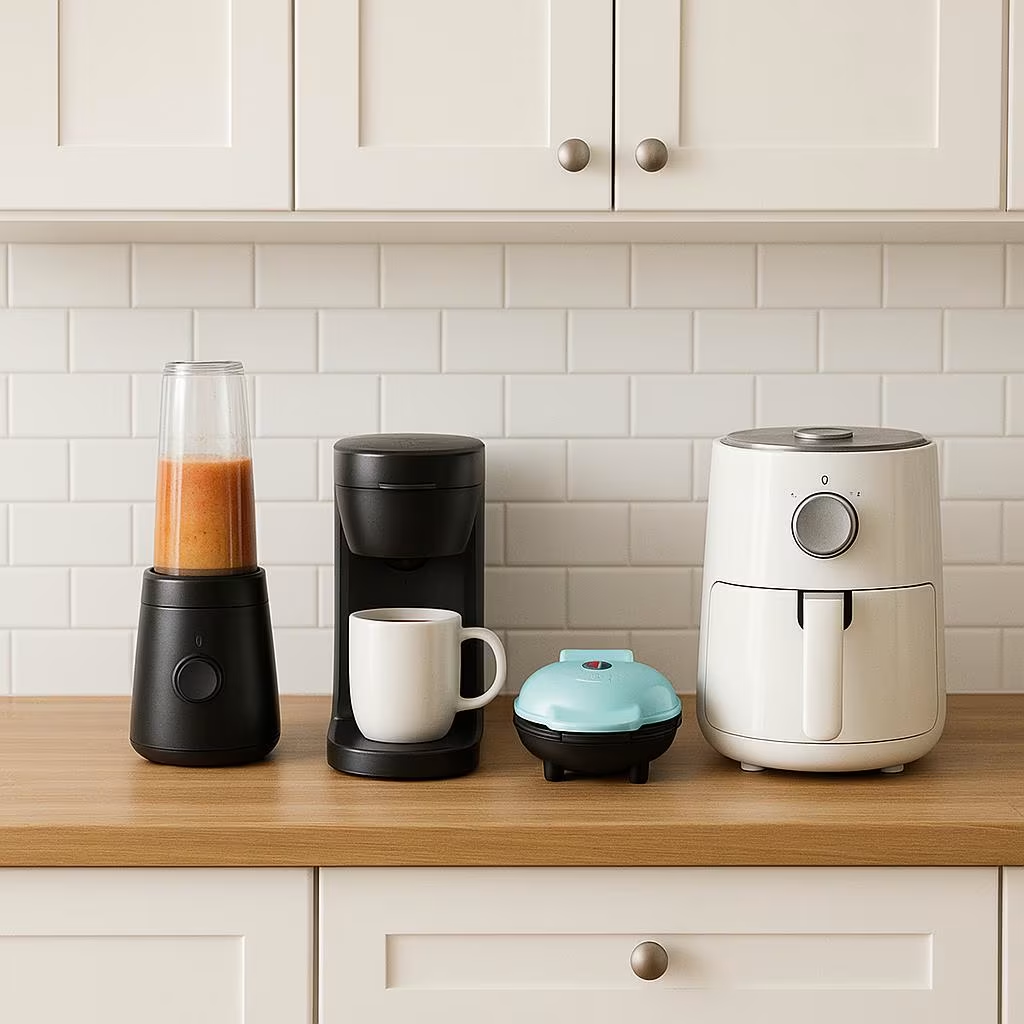
Get the food processor. One multipurpose appliance beats two single-purpose ones when counter space is tight, and you can always make occasional juice with the strain-it-yourself method above. If storage is the real bottleneck rather than counter space, a few racks, shelves, and drawer organizers tucked into a cabinet can free up enough room that this decision stops feeling so binary.
If you cook more than you cleanse
Food processor, no contest. The versatility argument isn’t close — one appliance covering chopping, shredding, dough, and purees will get used far more often than something that only makes juice.
If juicing is the actual goal
Get the juicer, and lean toward a masticating model if you can stretch the budget. You’ll get a better yield, less foam, and a quieter machine. Just go in knowing the pulp basket is the part that needs real attention after every use — it’s the one piece of this whole decision that nobody enjoys. If you’re not ready to commit to the higher price tag yet, a centrifugal model is a reasonable starting point as long as you accept the tradeoffs: louder operation, slightly lower yield, and juice that separates faster in the fridge because more air gets mixed in during the spin. Plenty of people use a cheap centrifugal juicer for a year, confirm they actually stick with the habit, then upgrade to masticating once they know it’s worth it.
If money’s tight right now
Start with the food processor. It does more jobs per dollar, and the juice workaround above covers you until you’re ready to invest in a dedicated juicer later. This is the same logic that applies when planning a kitchen renovation on a budget — buy the flexible tool first, add the specialized one once you know you’ll actually use it.
A few honest notes on cleanup, since it factors into this more than people expect going in. Food processor parts are mostly dishwasher-safe and quick to deal with — closer to washing a few dishes than running a full cleaning routine, similar to the tradeoffs people weigh when comparing hand washing versus dishwashers for everyday convenience. Juicers, especially centrifugal ones, have a mesh basket that traps pulp in tiny holes, and that basket needs a stiff brush and a few extra minutes every single time. If cleanup fatigue is what killed your last attempt at a health kick, that detail alone might decide this for you.
None of this means you’re stuck picking one forever. Plenty of people start with a food processor, make do with the strain-and-squeeze method for a few months, and then buy a juicer once they know juicing is actually a habit and not just a January resolution. That’s a smarter way to spend the money than guessing upfront.
Common Questions About Food Processors and Juicers
Can I use a food processor as a juicer?
Yes, with caveats. Chop your produce, process it into a pulpy mash, then strain it through a fine sieve or nut-milk bag. It works best with watery produce like citrus or melon and is messier and less efficient with fibrous vegetables like carrots.
Is a food processor the same as a juicer?
No. A food processor chops, shreds, and purees while keeping all the fiber and solids in the final product. A juicer is built specifically to separate liquid from pulp, producing a clear, fiber-free drink.
Do I need both a food processor and a juicer?
Not necessarily. Most people are fine with just a food processor unless juicing is a daily habit. If you’re juicing several times a week, a dedicated juicer earns its space.
Which gives a better juice yield, a food processor or a juicer?
A juicer wins here. It presses or spins produce under mechanical force, extracting more liquid than you can get by manually straining mash from a food processor.
Is juicing healthier than using a food processor for smoothies and blends?
Neither is universally healthier. Juicing delivers nutrients faster but strips most of the fiber. Keeping the fiber intact, as a food processor does, slows digestion and helps you stay full longer. The better choice depends on what you want from the drink.
Which is easier to clean, a food processor or a juicer?
The food processor, by a clear margin. Most parts are dishwasher-safe and rinse clean quickly. A juicer’s pulp basket has fine mesh holes that trap fibrous material and usually need a stiff brush and a few minutes of scrubbing after every use.