
Estimated reading time: 11 minutes
You’ve probably already read three articles about the home buying process today, and you still feel like you’re missing something. That’s normal. Most guides hand you a tidy 10-step checklist and call it a day, but they skip the part you actually need — how long each step takes, what it costs, and where things tend to go sideways.
So let’s do this differently. Here’s the home buying process broken into six real phases, with the timelines, costs, and “watch out for this” moments most articles leave out.
Quick answer: The home buying process usually takes 30 to 60 days once you’re under contract, though the full journey — from checking your credit to getting your keys — often runs two to six months depending on how fast you find a home and how busy your lender is. It breaks down into six phases: financial prep, pre-approval, finding your agent and home, making an offer, inspection and appraisal, and underwriting through closing.
Phase 1: Get Your Finances in Order Before You Look at a Single House

This is the step everyone wants to skip. Don’t.
Pull your credit report first — not your credit score, your actual report. Errors on credit reports are way more common than people assume, and a wrong late payment or a duplicate account can knock your score down enough to bump your interest rate. Fixing an error can take a few weeks, so do this before you fall in love with a listing.
Once your credit is clean, figure out your real budget. Not “what can I technically qualify for” — what you can comfortably afford. Lenders will often approve you for more house than feels good month-to-month, and that gap is where a lot of buyer’s remorse comes from.
What to actually calculate:
- Your target monthly payment (including taxes and insurance, not just principal and interest)
- Down payment amount — anywhere from 3% to 20%, depending on your loan type
- Closing costs — typically 2% to 5% of the loan amount
- Cash reserves left over after closing (lenders like to see a cushion, and so should you)
How long this takes: A weekend if your finances are simple, a few weeks if you’re disputing credit errors or paying down debt first.
Where buyers get tripped up: People focus so hard on the down payment that they forget closing costs are a separate chunk of cash due at the same time. On a $350,000 home, that’s potentially $7,000 to $17,000 on top of your down payment. Plan for it now, not the week before closing.
Phase 2: Get Pre-Approved (Not Just Pre-Qualified)

Here’s a distinction that trips up almost every first-time buyer: pre-qualification and pre-approval are not the same thing, even though sellers’ agents treat them very differently.
| Pre-Qualified | Pre-Approved | |
| Based on | Self-reported numbers | Verified documents |
| Strength in an offer | Weak | Strong |
| Time to get | Minutes | 1–3 days |
| Document review | None | Income, assets, credit pulled |
Pre-qualification is basically a guess based on what you tell a lender. Pre-approval means a lender has actually verified your income, assets, and credit, and is willing to put a number behind it in writing. In a competitive market, an offer backed by pre-qualification alone often gets passed over for one backed by real pre-approval.
To get pre-approved, you’ll need to hand over pay stubs, tax returns, bank statements, and authorize a credit pull. It sounds like a lot, but most lenders can turn it around in one to three business days once you’ve submitted everything.
Cost: Pre-approval itself is usually free, though some lenders charge a small application fee. Shop at least two or three lenders — even a quarter-point difference in interest rate adds up to thousands over the life of a loan.
Where buyers get tripped up: Once you’re pre-approved, avoid opening new credit cards, financing a car, or making large undocumented deposits into your bank account. Lenders re-check things before closing, and a sudden change in your financial picture can delay or even derail your approval.
Phase 3: Find Your Agent, Then Find Your Home
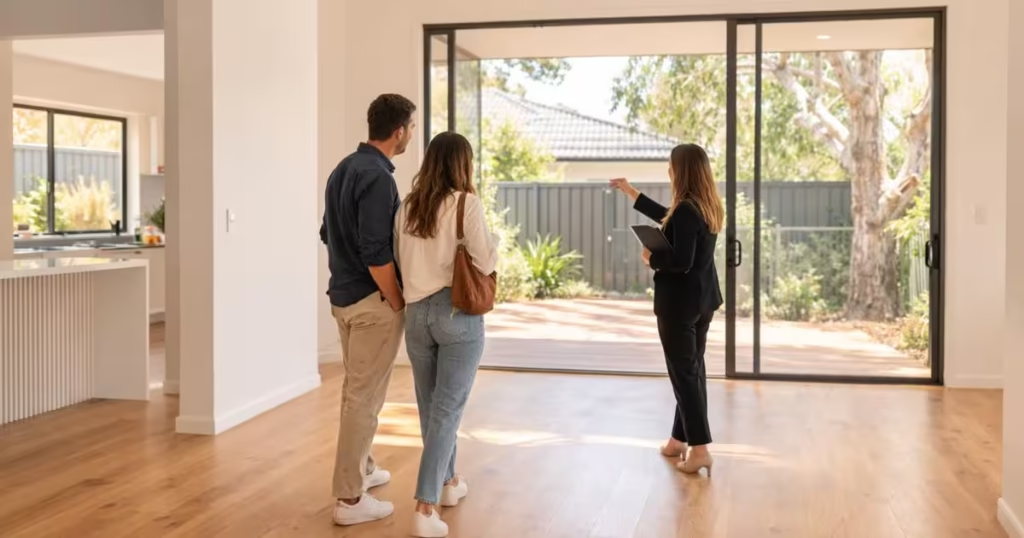
A good buyer’s agent is worth having, and in most transactions, their commission is paid out of the sale by the seller — not out of your pocket directly. That said, agreements around this have shifted in recent years depending on your state and brokerage, so ask upfront how your agent is compensated before you sign anything.
Be specific with your agent about your non-negotiables versus your nice-to-haves. Vague criteria like “somewhere nice with good schools” waste everyone’s time. Specific criteria — three bedrooms, a yard for the dog, under a 25-minute commute — get you better matches faster.
Touring homes is the fun part, but it’s also where people get emotionally attached too early. Try to view at least five to ten homes before making an offer, even if the first one feels perfect. It gives you a real sense of pricing and what’s actually normal for your budget versus what’s overpriced.
How long this takes: Anywhere from a few weeks to a few months, depending on inventory in your area. In a tight market, expect to move fast once something good hits.
If you’re already picturing how you’d furnish the place, it’s worth a quick read on how to buy cheap furniture — it’ll save you from overspending right after you’ve already spent on a down payment.
Phase 4: Make an Offer (and Expect Some Back-and-Forth)
Once you find the home, your agent helps you draft a written offer — price, contingencies, and timeline. Contingencies are your safety net: financing, inspection, and appraisal contingencies all give you a legal way to back out (and typically get your earnest money back) if something goes wrong.
Earnest money is a good-faith deposit, usually 1% to 3% of the purchase price, held in escrow to show the seller you’re serious. It’s not an extra cost — it gets applied toward your down payment or closing costs at closing, assuming the deal goes through.
Counteroffers are completely normal. Don’t take a counter personally; it’s just negotiation, not rejection. Sellers might come back on price, closing date, or who pays for what repairs.
Can you back out after making an offer? Yes, generally, as long as you have contingencies in place and act within their timelines. Backing out without a valid contingency usually means forfeiting your earnest money.
Where buyers get tripped up: Waiving contingencies to make an offer more competitive can work in hot markets, but it’s genuinely risky. If you waive your inspection contingency and then discover a cracked foundation, that’s now entirely your problem.
Phase 5: Inspection and Appraisal — Where Deals Actually Fall Apart
This is, statistically, the phase where things go wrong most often, so it deserves real attention.
A home inspection typically costs $300 to $600 and takes two to four hours. The inspector checks structural elements, electrical, plumbing, roofing, and safety issues. You’ll usually get the report within 24 to 48 hours.
If the inspection turns up problems, you generally have three options: ask the seller to fix them, negotiate a credit toward closing costs, or walk away if it’s a contingency and the issue is serious enough. A lot of buyers don’t realize negotiating a credit instead of repairs is often the smoother path — it lets you control the actual work after closing instead of trusting the seller’s contractor.
Separately, your lender orders an appraisal to confirm the home is actually worth what you’re paying. This costs $300 to $600 as well, usually billed to you.
What happens if the appraisal comes in low? This is more common than people expect, especially in fast-rising markets. If the appraised value is lower than your offer price, you typically have three paths: renegotiate the price with the seller, pay the difference in cash, or walk away if you have an appraisal contingency. Lenders won’t loan you more than a home is appraised for, so this gap doesn’t just disappear — someone has to cover it.
How long this phase takes: Inspection within the first 7–10 days under contract; appraisal usually follows shortly after, adding another 1–2 weeks.
Phase 6: Underwriting, Then Closing
This is the quiet phase. Nothing visible seems to be happening, but behind the scenes, an underwriter is going through every document — income, assets, debts, credit — verifying everything matches what was submitted during pre-approval.
How long underwriting takes: Typically two to six weeks, depending on the lender and how complete your paperwork is. This is also where employment, asset, and credit re-verification happens, so resist the urge to make any big financial moves during this window.
Once underwriting clears, you’ll get a commitment letter outlining final conditions. Around the same time, a title search confirms the seller actually has clear legal ownership to sell, and you’ll need to secure homeowners insurance before closing — most lenders require proof of coverage to fund the loan.
You’ll also receive a Closing Disclosure at least three business days before closing, detailing your final loan terms and costs. Read it carefully and compare it against your original Loan Estimate — discrepancies happen, and three days is your window to catch them.
Who pays closing costs? Typically the buyer, though it’s negotiable — some buyers ask sellers to cover a portion as part of the offer, especially in slower markets.
Final Walkthrough and Closing Day
Within 24 hours of closing, walk through the home one more time. You’re checking that agreed-upon repairs were actually made, nothing’s been damaged since your last visit, and everything that’s supposed to convey with the house — appliances, fixtures — is still there.
Closing day itself is mostly signatures. You’ll sign loan documents, pay your remaining closing costs and down payment (usually via wire transfer or cashier’s check), and once everything’s recorded, you get the keys.
From there, the fun (and slightly overwhelming) part begins. If you’re moving into a fixer-upper or just want to ease into updates room by room, home renovation tips for beginners is a good place to start, especially if you’re trying to prioritize what actually needs doing in the first year versus what can wait.
Common Mistakes Buyers Wish They’d Avoided
A few patterns show up again and again:
- Shopping for homes before getting pre-approved. It feels backwards to most people, but touring homes without pre-approval means you don’t actually know your real budget yet.
- Underestimating closing costs. This catches more buyers off guard than almost anything else in the process.
- Making big purchases mid-process. A new car or furniture on credit between pre-approval and closing can change your debt-to-income ratio enough to affect your final approval.
- Waiving inspections to win a bidding war. Sometimes necessary in extremely competitive markets, but it’s a real gamble, not a formality.
- Not reading the Closing Disclosure carefully. It’s long, but it’s also your last real chance to catch an error before you’re financially locked in.
Frequently Asked Questions
How long does the whole home buying process take?
From getting pre-approved to closing day, most buyers are looking at two to six months total. Once you’re actually under contract on a specific home, closing itself usually takes 30 to 60 days.
Can you back out after making an offer?
Yes, generally, as long as you still have active contingencies — financing, inspection, or appraisal — and you act within their stated timelines. Backing out without a valid contingency usually means losing your earnest money.
What’s the difference between pre-qualified and pre-approved?
Pre-qualification is based on numbers you self-report and takes minutes. Pre-approval involves a lender verifying your income, assets, and credit, and typically takes one to three business days. Pre-approval carries far more weight with sellers.
Who pays closing costs?
Buyers typically cover closing costs, usually 2% to 5% of the loan amount, though it’s negotiable — some buyers request seller credits as part of their offer.
What credit score do you need to buy a house?
It varies by loan type. Conventional loans often want 620 or higher, while FHA loans can work with scores as low as 580 (sometimes lower with a bigger down payment). Higher scores generally mean better interest rates, so it’s worth improving yours before you apply if you have time.
What happens if the appraisal comes in low?
You’ll need to either renegotiate the price with the seller, cover the difference in cash, or walk away if you have an appraisal contingency in place. Lenders won’t finance more than the appraised value.