
Estimated reading time: 11 minutes
You just signed the lease. The apartment is empty, the echo is loud, and you’ve got maybe $1,500 to make four rooms look like someone actually lives there. Here’s the short version: the best way to buy quality furniture on a budget is to set a real number per room before you shop, hit secondhand sources first (estate sales, liquidation stores, online marketplaces), inspect anything used for structural soundness, and save your full-price budget only for pieces you’ll touch every day — your sofa, your mattress, your dining chairs.
That’s the whole game. Everything else is just execution.
I’ve furnished three apartments this way over the past several years, and the mistakes are pretty predictable — so are the wins. Let’s get into both.
Start With a Number, Not a Wish List

Most people skip this step and go straight to browsing, which is exactly how you end up with a $900 couch and no money left for a bed frame.
Before you look at a single listing, write down a per-room budget. Not a total — a per-room number. Something like:
- Living room: $600
- Bedroom: $500
- Dining area: $300
- Everything else (lamps, shelving, small storage): $200
That’s a $1,600 home, fully furnished, and it forces you to make trade-off decisions early instead of mid-shop, when you’re tired and just want to be done.
A trick that’s worked for me: rank your rooms by how much time you actually spend in them. Living room and bedroom get the biggest cut. A guest room or a rarely-used dining nook gets the smallest. It sounds obvious, but most people split their budget evenly across rooms out of habit, not logic, and end up overspending on spaces they barely use.
If you’re furnishing a full living space and want to understand what pieces actually belong in that core room before you start assigning dollars, it helps to know what counts as a living room set so you’re not buying redundant pieces.
Where the Real Deals Actually Are
Here’s where most budget furniture guides get vague. They’ll tell you to “shop secondhand” without telling you where or when. So here’s the actual breakdown.
Estate Sales
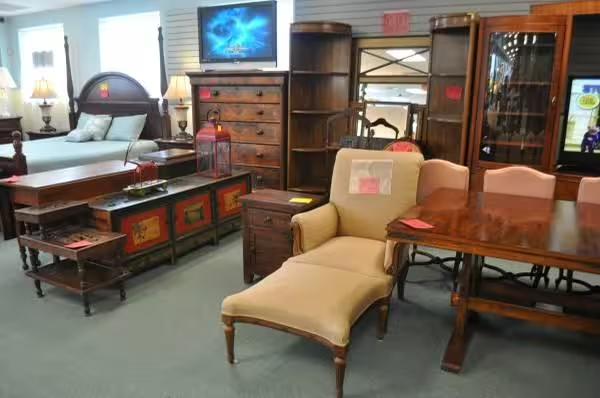
These are probably the most underrated source of quality furniture, and almost nobody under 35 thinks to check them. Families running an estate sale usually want furniture gone fast — they’re not trying to maximize resale value, they’re trying to clear a house. That urgency works in your favor.
One thing I’ve noticed after going to a fair number of these: the first morning has the best selection, but prices are firmest. By the final hour of the sale, prices often drop 30-50%, but you’re picking through what’s left. If you have a specific piece in mind — a dresser, a solid wood dining table — go early. If you’re open to whatever’s good, go late.
Liquidation Stores
When a furniture retailer overstocks a line or discontinues it, liquidation stores pick it up at a fraction of the original price. The furniture is often brand new or barely used, which makes this one of the lowest-risk ways to buy below retail.
The trade-off: selection is unpredictable, and returns are usually not an option. You’re buying what’s there, as-is. That’s a fair deal if the piece checks out on inspection (more on that below), but it’s not the place to buy something sight-unseen.
Online Marketplaces

Facebook Marketplace, Craigslist, and Nextdoor are still where the bulk of secondhand furniture turns over, mostly because people moving don’t want to pay to move furniture they’re about to replace anyway.
Timing matters more than people realize here. Postings spike at the start and end of the month, which lines up with when most leases turn over. If you’re patient and can wait two or three weeks, you’ll see noticeably more listings — and more competition among sellers, which works in your favor on price.
Always inspect in person before paying, and don’t be shy about negotiating. Most listings are priced with room to come down, especially if the seller is on a moving deadline.
If your search keeps turning up sectional sofas and you’re not sure what you’re even looking at, it’s worth understanding the different types of sectional sofas before you buy — chaise direction and modular configuration affect both price and how well a piece fits your actual room.
How to Tell If a “Deal” Is Actually a Good Piece
This is the part most budget furniture advice skips entirely, and it’s the part that actually protects your wallet.
Secondhand and liquidation furniture can be excellent value — or it can be a problem you bring home. A quick inspection takes maybe two minutes and saves you from both.
Run through this before you buy anything used:
- Wobble test. Push down on a corner of any table, dresser, or chair. If it rocks or flexes, the joints are weak — a sign of glue-and-staple construction rather than proper joinery.
- Check the material. Knock on the surface. A solid, dense sound usually means solid wood or quality plywood. A hollow, light sound often means particleboard, which doesn’t hold up to repeated moving or humidity changes.
- Smell it. A musty or chemical smell can mean water damage or off-gassing that won’t go away with airing out.
- Inspect seams and undersides. Flip cushions, check drawer joints, and look underneath upholstered pieces. This is where pests, stains, and structural issues hide — and where sellers are least likely to clean before listing.
- Open every drawer and door. Sticking, uneven gaps, or misaligned hardware usually point to warping, which tends to get worse, not better.
None of this takes long, but it’s the difference between a $150 dresser that lasts a decade and one you’re replacing again in eight months.
Spend Full Price Where It Actually Matters
Not everything should come from a secondhand source, and pretending otherwise is how budget furniture plans backfire.
Your sofa and your mattress get used daily, for years. These are the pieces worth buying new, or at minimum buying from a source with some kind of return policy. The cushion foam, frame integrity, and upholstery quality on a sofa degrade with use in ways that are hard to evaluate secondhand — and you’ll feel it every single day if you guessed wrong.
Everything else — side tables, shelving, decorative pieces, even dining chairs — has more room for secondhand or budget sourcing, because the cost of getting it slightly wrong is low.
If you’re trying to figure out where a couch ends and a sofa begins for shopping purposes (the terms get used loosely and it affects what you’ll find in searches), this breakdown on the difference between a couch and a sofa clears it up.
Timing Your Purchases Around Real Sales Windows
Furniture pricing isn’t random — it follows a pattern, and knowing it saves real money.
- Memorial Day and Labor Day are the two biggest furniture sale windows of the year, tied to seasonal inventory turnover.
- Presidents’ Day in February is a smaller but reliable sale event, often used to clear winter stock.
- End of month, tied to lease cycles, is when secondhand listings spike, as covered above.
- Black Friday through early December brings the steepest retail discounts, especially on larger pieces like sectionals and bedroom sets.
If you can wait for one of these windows on a big-ticket item, it’s almost always worth it. The exception is anything found secondhand at a genuinely good price — those deals don’t wait for a sales calendar, and a great $80 dresser found in March beats a $300 “sale” dresser in November.
Should You Use a Payment Plan?
Sometimes, yes. Often, no. It depends entirely on the terms.
Interest-free financing can make sense if you’re buying a higher-quality piece you’d otherwise have to skip, and you’re confident you can pay it off within the promotional window. That’s a real, legitimate way to afford better furniture without draining your savings.
Where it backfires: many “0% interest” plans are actually deferred-interest plans. If you don’t pay the full balance before the promotional period ends, you can get hit with interest charged retroactively from the original purchase date — not just from the date you missed the deadline. Read the terms before you sign, every time, even if the store rep says it’s simple.
A good rule: only use a payment plan for something you’d buy anyway with cash if you had it sitting in your account. If the payment plan is the only reason you can afford the piece, that’s a sign to look for a cheaper option instead.
Package Deals: Worth It or Not?
Bundled pricing — a bedroom set with a bed, dresser, and nightstand sold together — is genuinely one of the better budget moves, but only under certain conditions.
It’s worth it when:
- You need most or all of the pieces in the bundle anyway
- The bundled price beats buying each item separately (check this — it’s not always true)
- The store allows substitutions if one piece doesn’t fit your space
It’s not worth it when you’re paying for pieces you don’t actually need just to access the discount on the ones you do. A “deal” on a six-piece set isn’t a deal if you only needed three pieces.
If you’re working on a smaller space and trying to figure out what storage pieces you actually need versus what comes bundled, these clothes storage ideas for small spaces are a useful gut check before you commit to a full bedroom package.
Know Your Style Before You Shop, Not While You Shop
This sounds like obvious advice, but it’s the one that saves the most money in practice. Walking into a store or scrolling Marketplace without a clear sense of your style means everything looks like a maybe — and “maybe” purchases are where budgets quietly fall apart.
Pick a direction. Mid-century modern, simple Scandinavian lines, whatever it is — and let that filter every purchase. It speeds up decisions and keeps you from being talked into a piece that doesn’t actually belong in your home, no matter how good the price is.
If you’re drawn to clean Scandinavian lines, something like these Scandinavian nightstands show what that style looks like at the small-furniture scale, which is a low-risk way to test whether a style direction actually works for you before committing to bigger pieces.
Don’t Skip the Local Stores
It’s easy to assume local furniture stores are always more expensive than big online retailers, but that’s not consistently true. Local shops often have more flexibility on pricing than people expect, especially on floor models or pieces that have been sitting for a while.
Calling ahead and just asking what’s currently on sale, or what they can do on price, costs nothing and sometimes turns up better deals than anything online. Staff at smaller stores also tend to know their inventory well enough to point you toward something that fits your budget without you having to ask the right questions yourself.
A Sample $1,500 Living Room, Broken Down
To make this concrete, here’s roughly how that budget could actually play out:
- Sofa (new or store sale): $600
- Coffee table (secondhand or liquidation): $80
- Two accent chairs (secondhand): $150 total
- Area rug (sale): $150
- Lighting, shelving, small decor: $200
- Buffer for delivery, assembly, or a piece that needs replacing: $320
That buffer line matters. Budget plans that assume everything goes perfectly tend to break the first time something doesn’t.
Once the big furniture is in place, small styling details — a centerpiece, a few decorative accessories — do a lot of work to make a budget room look finished rather than sparse. These dining table centerpiece ideas and this decorative accessories list are good places to look once the bigger pieces are sorted.
None of this requires a big budget or a lot of furniture knowledge going in. It requires a plan, a little patience, and knowing which two minutes of inspection can save you from a bad purchase. Furnish the rooms you actually live in first, spend full price only where it counts, and let secondhand sources do the heavy lifting everywhere else.
Frequently Asked Questions
Is it cheaper to buy furniture online or in-store?
It depends on the piece. Online marketplaces tend to win on secondhand items and smaller furniture, while in-store purchases — especially during sale events like Labor Day or Black Friday — can beat online retail prices on larger new pieces, particularly when delivery is included.
What time of year is furniture cheapest?
Memorial Day, Labor Day, Presidents’ Day, and the Black Friday-through-December stretch are the most reliable windows for retail discounts. For secondhand furniture, prices dip around the start and end of each month, when moving activity is highest.
Is secondhand furniture safe to buy?
Generally yes, as long as you inspect it first. Check for structural stability, signs of pests, water damage, and joint quality before buying. Upholstered pieces deserve the closest look, since damage and odor are easiest to hide there.