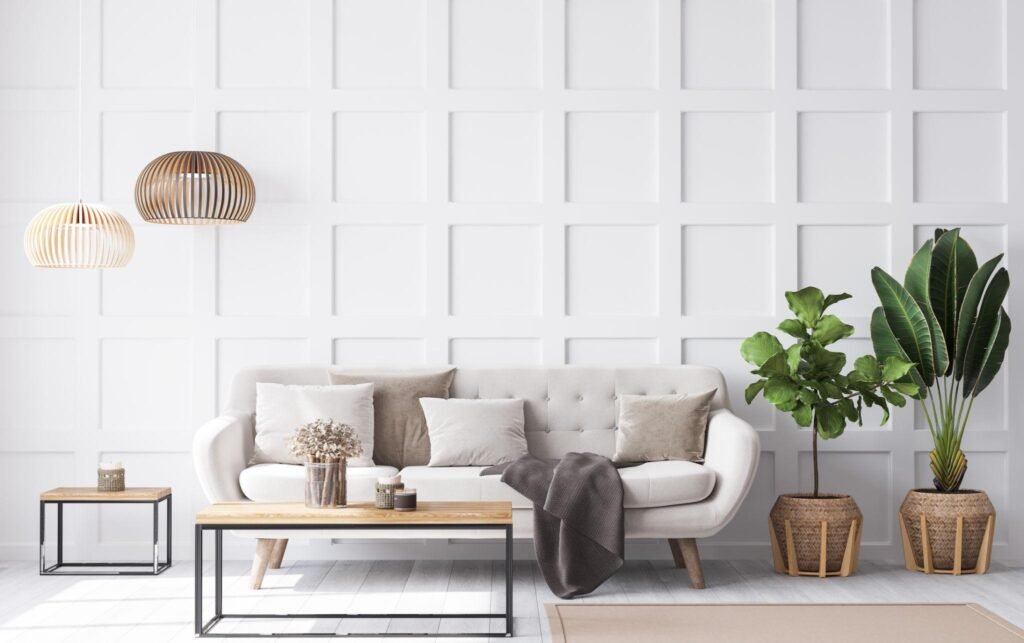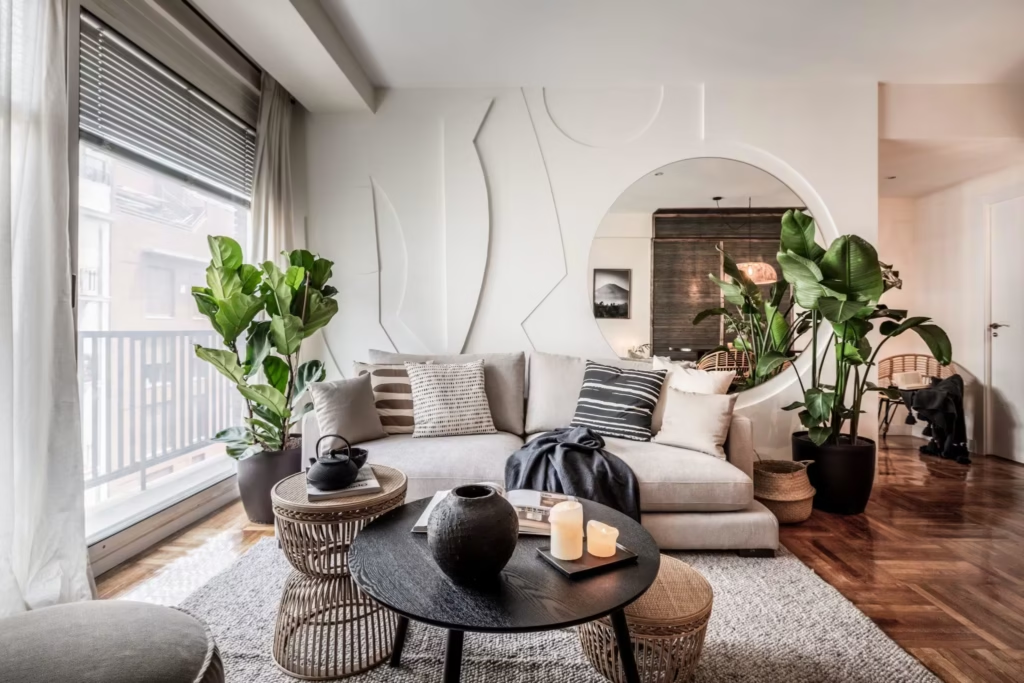
Estimated reading time: 11 minutes
You know the room I’m talking about. The couch is good, the rug is fine, maybe you even painted a wall last spring — and the room still feels like it’s waiting for something. Not broken, just… unfinished. Like a sentence with no period at the end.
That gap usually isn’t a furniture problem. It’s an accessories problem.
Decorative accessories for home are the small, swappable pieces — wall art, mirrors, shelving, ambient lighting — that do the actual finishing work in a room without you having to repaint, reupholster, or call a contractor. They’re the cheapest, fastest lever you have for making a space feel intentional instead of half-decorated, and they’re also the easiest thing to get slightly wrong if you’re just grabbing whatever’s trending on your feed that week.
I’ve gone down that rabbit hole more than once — bought something because it looked perfect in someone else’s sunlit, professionally styled bedroom, then watched it sit awkwardly in mine because the light, wall color, or room size just didn’t match. So before you add anything to a cart, it helps to know not just what to buy, but where it actually belongs.
Quick Picks by Vibe
If you already know your style, start here. If you don’t, scan all three — most people end up borrowing from two.
- Boho: a macrame hanging mirror, layered with texture and warmth
- Minimalist: a set of clean-lined art prints, hung with generous wall space around them
- Cozy-maximalist: LED ambient wall art paired with a few personal, mismatched objects on a shelf
For the Walls
Walls do most of the heavy lifting in how a room feels the second you walk in, which is exactly why they’re worth getting specific about.
Boho Macrame Hanging Mirror
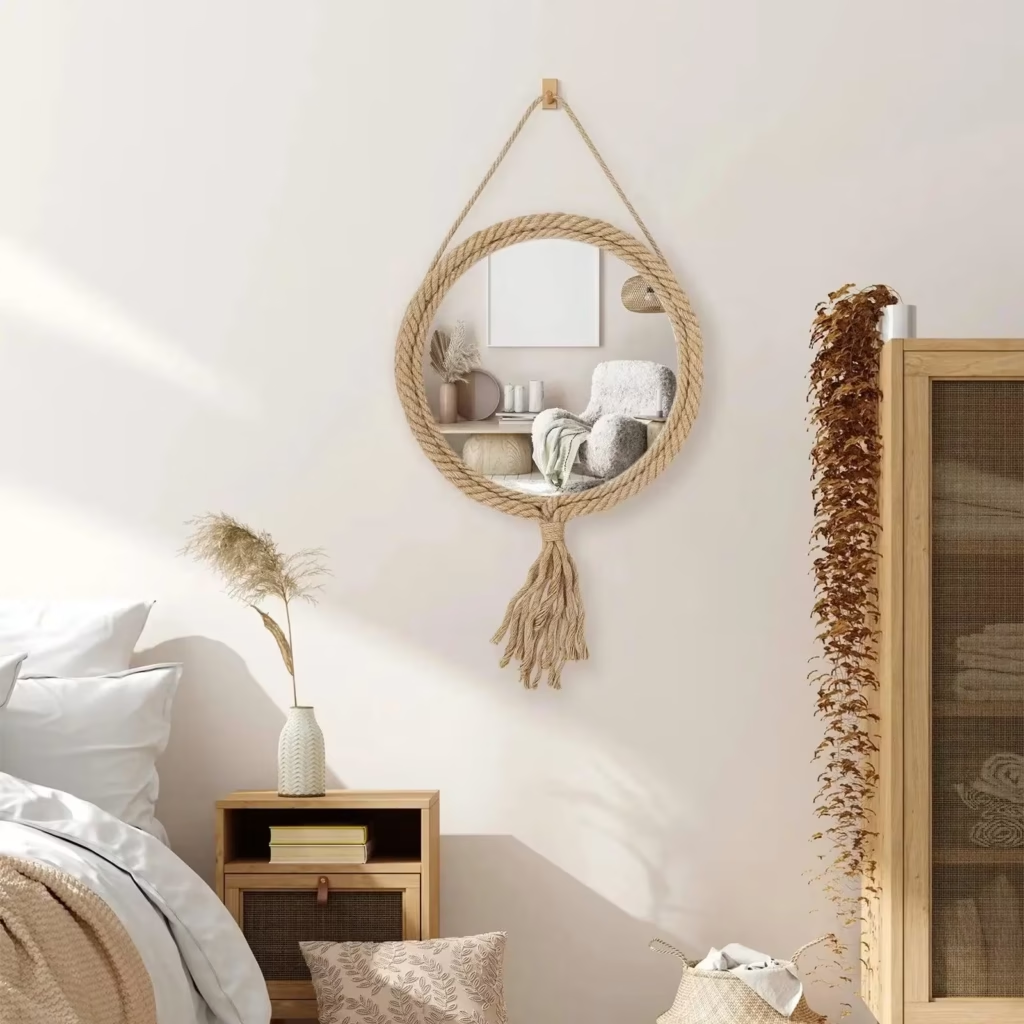
A macrame-framed mirror is one of those pieces that photographs well and, more importantly, actually works in real rooms — the woven texture softens a space in a way a plain frame can’t. It’s a strong fit for bedrooms, entryways, or a vanity corner that needs a bit more personality than a flat mirror gives it.
The placement detail nobody mentions: check the actual hanging weight before you commit to a wall hook, because the fringe and knotwork add bulk that a standard picture hook won’t always hold safely over time. A drywall anchor rated for at least double the listed weight is the safer call.
One honest caveat — if your room is already heavy on texture (a chunky knit throw, a jute rug, a lot of plants), another macrame piece can tip things into “theme park boho” territory fast. In that case, a plainer mirror frame does more for the room than a second textured one.
LED Cloud Wall Art
This one is genuinely lovely in the right room and genuinely disappointing in the wrong one. The soft, dreamlike glow it’s known for only really shows up in a dim or low-light space — a bedroom, a reading nook, a corner that doesn’t get much daylight. Hang the same piece in a sunny living room and the glow mostly disappears into the daylight, so you’re paying for an effect you’ll rarely see.
Skip it if your room already has good ambient lighting from lamps or string lights — you’ll end up with competing light sources instead of one good one. It earns its spot best as the only light feature in its corner, not an addition to several.
Minimalist Line Art Canvas Set
Simple line drawings — a face in profile, a single continuous curve, a basic botanical sketch — bring a kind of quiet sophistication that’s hard to overdo, which makes this the safest pick on this list if you’re nervous about commitment. A set of three usually fills a standard wall above a couch or bed without looking sparse or crowded.
The trick with line art is restraint elsewhere. It works because of the empty space around it, so if you’re hanging it in a gallery wall with six other pieces, you lose the exact effect that makes it appealing in the first place. Give it room to breathe.
If you’re trying to decide between framed prints and a stretched canvas set for this kind of look, it’s worth checking our decorative accessories list for a broader rundown of formats and finishes before you commit to one style across a whole wall.
For Shelves and Surfaces
Once the walls are sorted, shelves and tabletops are where a room either looks curated or looks like storage that happens to be visible.
Acrylic Floating Book Shelves
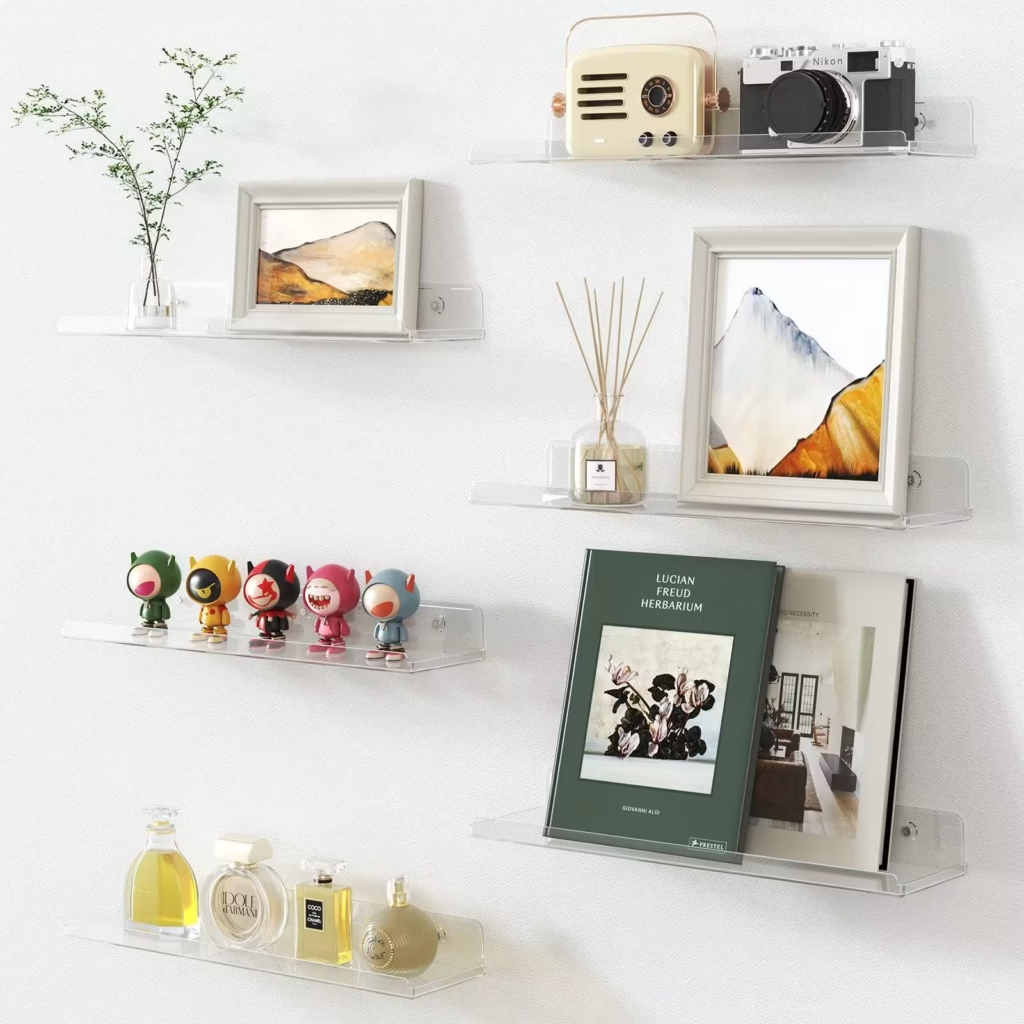
These are quietly one of the smartest accessories on this list because they double as storage and display — your books become the decor instead of competing with it. Arranging them by color or by spine height (rather than alphabetically) is what makes the difference between “shelf” and “styled shelf.”
Spacing matters more than people expect. Leave roughly 10–12 inches between shelves if you’re stacking books flat with a few objects on top, or you’ll end up cramming things in sideways. And because the shelf itself is clear acrylic, it tends to disappear visually — which is great for a minimalist look, but means the books and objects need to do all the visual work themselves. A shelf with three random paperbacks on it looks unfinished in a way a solid wood shelf wouldn’t, just because there’s nothing else there to fill the gap.
For small bedrooms or apartments where every wall surface counts, this is also one of the better space-saving moves — our guide on essential racks, shelves, and drawers goes deeper into mixing display shelving with actual storage if you’re trying to do both in a tight room.
A Styled Tray or Vignette
This isn’t a single product so much as a technique, but it’s the one thing almost every well-styled room has and almost every beginner skips: a tray on a console, dresser, or coffee table with two or three small objects grouped together — a candle, a small dish, a single plant.
The reason it works is grouping. Three random objects scattered across a surface look cluttered; the same three objects on a tray look intentional. Odd numbers and varied height (one tall, one short, one flat) read as “curated” almost automatically, which is a cheap trick worth knowing.
If you’re doing this on a dining table rather than a console, our dining table centerpiece ideas piece has more specific sizing guidance so the grouping doesn’t block sightlines across the table.
For Texture and Softness
Walls and shelves get most of the attention, but a room can have great wall art and still feel cold if nothing in it is soft to look at — let alone touch.
Throw Pillows and a Knit Throw
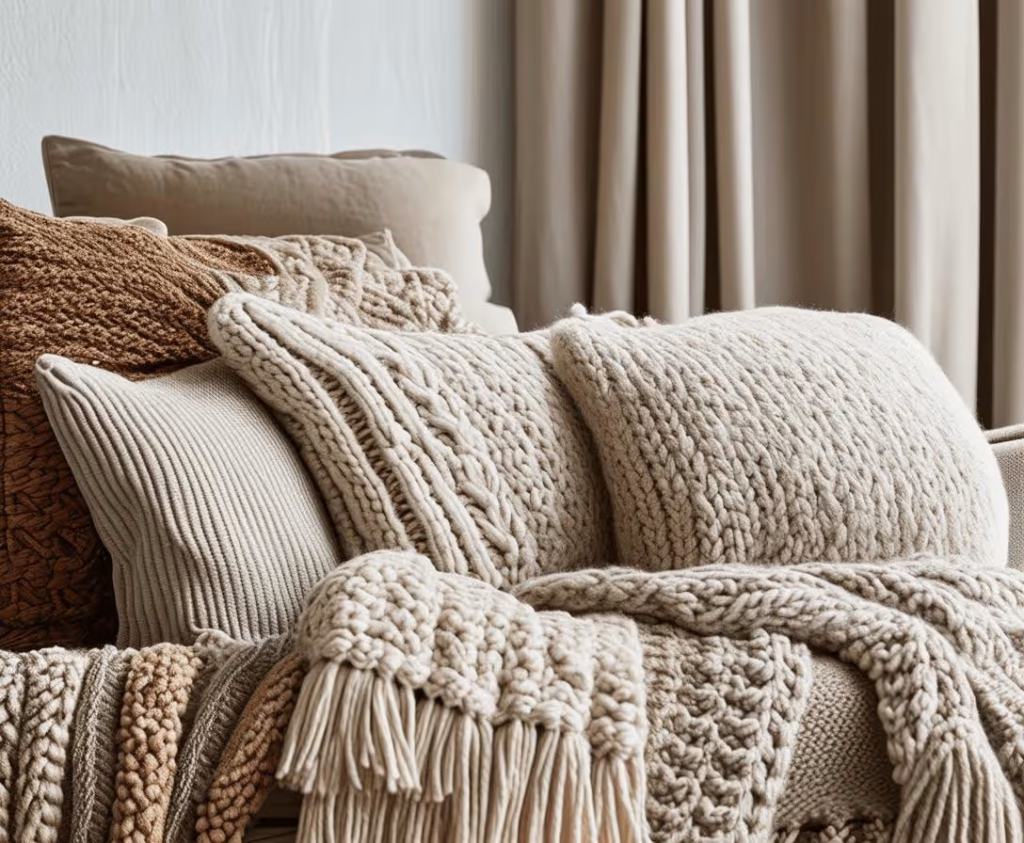
This is the lowest-risk, highest-impact category on this whole list, mostly because it’s the easiest to change your mind about later. A couch with two or three textured pillows and a chunky knit throw draped over one arm looks considerably more finished than the same couch bare, and none of it requires committing to a single aesthetic.
The mistake I see most often is matching pillow covers exactly to the throw blanket — same color, same texture. It reads flat. Pulling one shade from your wall art or rug and letting the rest vary in texture (a woven cover next to a smooth velvet one) does more visual work than perfect color-matching ever does.
A Plant or Two — Real or Not
Greenery is the one accessory that shows up in nearly every well-reviewed room, and it’s not just aesthetics — a plant on a shelf or in a corner basket fills the kind of awkward negative space that nothing else quite solves. If natural light is limited, a well-made faux plant in a woven basket does almost the same visual job without the maintenance guilt of a dying fern on your conscience.
Skip this one if your room already leans heavily boho with macrame and woven textures elsewhere — too much natural texture in one space starts to feel more like a plant shop than a living room. One well-placed plant beats three scattered ones.
Best Decorative Accessories by Room, Vibe, and Price
| Accessory | Best Room | Vibe | Rough Price Range |
| Macrame Hanging Mirror | Bedroom, entryway | Boho | $35–$80 |
| LED Cloud Wall Art | Bedroom, reading nook | Cozy / dreamy | $25–$60 |
| Line Art Canvas Set (3-piece) | Living room, bedroom | Minimalist | $30–$70 |
| Acrylic Floating Shelves | Living room, home office | Minimalist / modern | $20–$50 each |
| Styled Tray + Objects | Console, dresser, dining table | Any | $15–$40 total |
| Throw Pillows + Knit Throw | Living room | Any | $30–$60 total |
| Plant + Woven Basket | Any room | Any | $15–$45 |
How Many Decorative Accessories Is Too Many?
Almost nobody asks this before they start buying, and it’s usually the actual reason a room ends up feeling cluttered instead of cozy.
A rough rule that holds up in practice: one focal piece per wall, and no more than three to five small objects grouped per surface. If you’re standing in the doorway and your eye doesn’t know where to land first, you likely have one too many statement pieces competing for attention in the same sightline.
It’s also fine — encouraged, even — to leave a wall or a shelf section empty. Negative space isn’t a sign you’re not done decorating; it’s often what makes the pieces you do have look more deliberate. A room with eight accessories chosen carefully will almost always look better than one with fifteen chosen quickly.
Mixing Styles Without It Looking Like a Mismatched Mood Board
Most people don’t actually decorate in one pure style — you end up with a boho mirror and a minimalist shelf in the same room more often than not, and that’s fine. What makes mixed styles look intentional instead of accidental usually comes down to one shared thread running through the room, not perfect matching.
That thread can be color (everything pulls from the same warm-neutral palette — sage, terracotta, warm beige are dominating right now), material (wood and natural fiber show up in both the boho and the minimalist piece), or just consistency in how “busy” each piece is. A heavily textured macrame mirror next to a heavily patterned canvas set will fight each other; the same mirror next to a calm, simple line-art print lets both pieces have a moment.
If you’re renovating more than just the accessories — say, also reworking a wall finish or adding texture through wallpaper — it’s worth reading through peel-and-stick wallpaper ideas before you lock in your accessory palette, since the wall treatment will end up setting the tone everything else has to match.
And if accessories are step one of a bigger refresh, our home renovation tips for beginners guide is a reasonable next stop — it covers the order most people get backwards (decorating before they’ve settled on bigger structural changes, then having to redo it).
A Quick Note on Bedrooms Specifically
Bedrooms get extra attention in most accessory searches, probably because it’s the room people spend the most uninterrupted time actually looking at. If you’re focused on a bedroom refresh specifically, pairing wall accessories with the right nightstand styling makes a bigger difference than people expect — a cluttered nightstand undoes a nicely styled wall almost instantly. Our Scandinavian nightstands roundup is worth a look if that’s the next thing on your list.
FAQs
How many decorative accessories should a room have?
There’s no fixed number, but a workable guideline is one focal piece per wall and three to five smaller objects grouped per surface. Beyond that, a room usually starts to feel cluttered rather than finished.
Are macrame accents still trendy in 2026?
Yes, though the look has shifted slightly toward smaller, more refined macrame pieces — like a single mirror or wall hanging — rather than covering a whole wall in fringe and knots. Pairing it with cleaner-lined furniture keeps it from reading as dated.
What’s the difference between decor and accessories?
Decor is the broader term for anything that adds visual style to a room, including furniture, paint, and textiles. Decorative accessories specifically refer to the smaller, swappable finishing pieces — mirrors, wall art, shelving, lighting accents — that you can change without touching furniture or wall color.
What’s the cheapest way to refresh a room without renovating?
Swapping out wall art, adding one new light source, and styling an existing shelf or surface with a grouped tray usually costs under $100 total and changes how a room feels more than people expect from such a small budget.
Can I mix different decor styles in one room?
Yes — most real rooms are mixed rather than purely one style. The key is keeping one consistent thread, usually color palette or material, running through the different pieces so they feel related instead of randomly assembled.