Estimated reading time: 13 minutes
Walk into any appliance store and you’ll immediately understand the problem. There are rows of machines, each with a different price tag, a different door placement, and a salesperson who seems genuinely excited to explain things you didn’t ask about.
Buying a washing machine shouldn’t be this complicated. But when you don’t know the difference between a front loader and a high-efficiency top loader — or why one costs twice as much as the other — it’s easy to either overspend or end up with something that doesn’t quite fit your life.
This article breaks down all 7 types of washing machines in plain English, tells you honestly who each one is actually good for, and ends with a simple decision guide so you can walk away knowing exactly what to look for.
The 7 Types of Washing Machines at a Glance
Before diving deep, here’s the full list:
- Front Load Washing Machine
- Traditional Top Load Washing Machine (Agitator)
- High-Efficiency (HE) Top Load Washing Machine (Impeller)
- Twin Tub Washing Machine
- Single Tub Washing Machine
- Washer-Dryer Combo
- Portable Washing Machine
What determines which one fits you? Three things, mostly: the space you have, the size of your household, and your budget. Keep those in mind as you read through each type.
Front Load Washing Machines
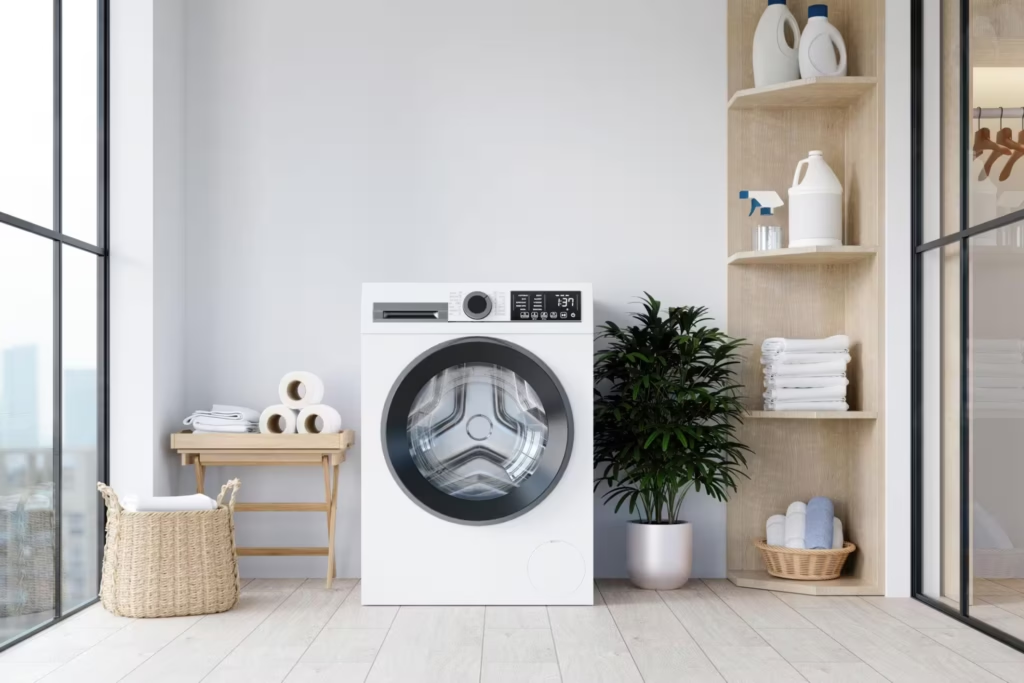
Best for: Families who do frequent, heavy loads and want to save on water and energy bills long-term.
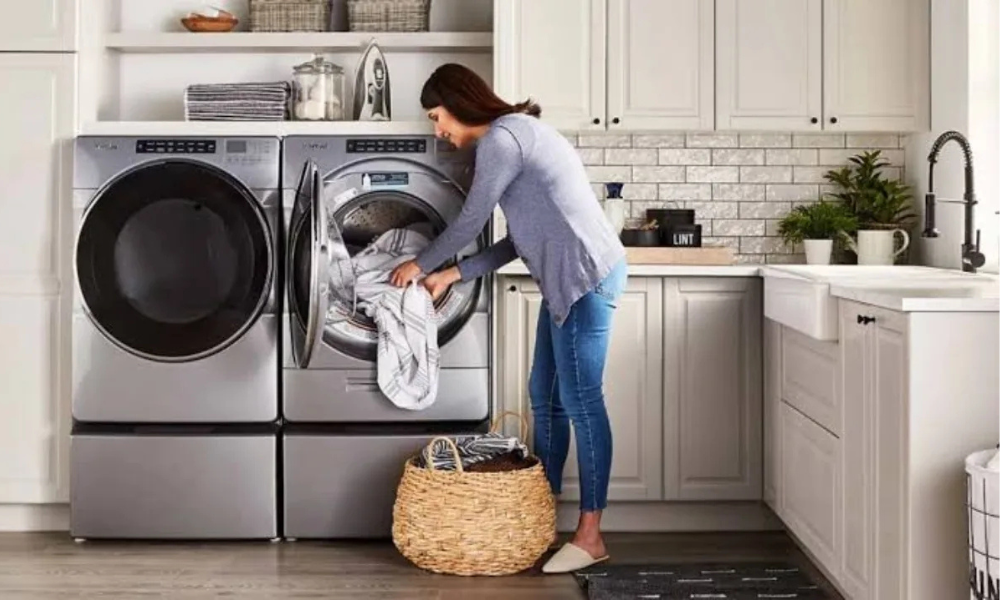
A front load washer has its door on the front — you load clothes horizontally, and the drum tumbles them through a small pool of water rather than submerging everything. That tumbling motion is actually gentler on fabrics than the aggressive agitator in older top-loaders.
The efficiency numbers are genuinely impressive. Front loaders typically use around 40% less water than traditional top-load machines and consume significantly less energy per cycle. Over a few years, that adds up. If you’re running multiple loads a week for a family of four, the savings are real.
They also tend to have higher spin speeds — often 1,200 RPM or more — which means clothes come out less wet, cutting down drying time.
The honest trade-offs:
Front loaders are more expensive upfront. A decent one from LG, Samsung, or Bosch will cost noticeably more than a basic top-loader. They also take longer per cycle than traditional agitator machines, and the front-loading position means bending down to load and unload — which bothers some people more than others.
The bigger issue people don’t talk about enough: front loaders can develop mold and musty smells around the rubber door gasket if you don’t leave the door open after cycles. It’s not a dealbreaker, but it requires a small habit adjustment.
Traditional Top Load Washing Machines (Agitator)
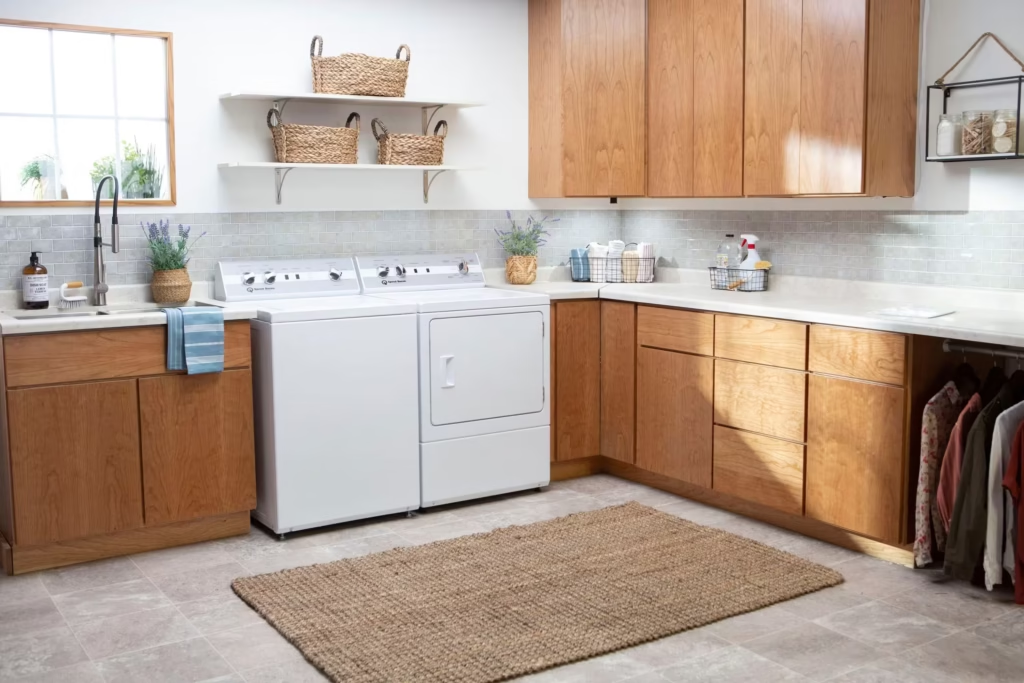
Best for: People who want familiar, straightforward operation and faster wash cycles without spending a lot.
This is the classic. The door’s on top, there’s a tall agitator post in the center of the drum, and clothes get pulled back and forth through the water until they’re clean. It’s the machine most people grew up with, and there’s a reason it’s still around.
Traditional top-loaders are faster than front loaders — cycles often run 30–40 minutes compared to 60–90 minutes for some front-load models. They’re also easier to service, with more straightforward mechanics. And if you forget to add a sock mid-cycle, many models let you toss it in without stopping everything.
The honest trade-offs:
They use more water. Significantly more. The agitator also creates more friction with clothes, which means heavier fabrics hold up fine, but delicate items take more wear over time. Capacity is also somewhat limited compared to front-loaders of a similar size, because the agitator takes up space in the middle of the drum.
For a single person or couple who does laundry a couple of times a week and just needs something reliable, a traditional top-loader absolutely gets the job done.
High-Efficiency (HE) Top Load Washing Machines
Best for: People who want the efficiency of a front loader but prefer top-loading for ergonomic or practical reasons.
The HE top-loader is easy to confuse with the traditional type — same door position, similar look. But the insides are different. Instead of an agitator, it uses an impeller: a low-profile disc at the bottom of the drum that spins and moves clothes in a circular pattern through the water.
No agitator means more room in the drum, so you can fit larger loads. It also uses much less water than traditional agitator models. Energy Star-certified HE top-loaders can cut water usage by up to 50% compared to older machines.
Clothes also come out in better condition. The impeller is gentler on fabrics than an agitator, which matters if you’re regularly washing delicate items or clothes you care about.
The honest trade-offs:
HE top-loaders are generally slower than traditional top-loaders. Some users also find that heavily soiled clothes don’t get as clean without the mechanical scrubbing an agitator provides. They require HE-specific low-sudsing detergent, which is worth factoring in if you haven’t switched already.
For a mid-range option that balances efficiency with top-load convenience, this is often the sweet spot for households that do 4–6 loads per week.
Front Load vs. Top Load: The Quick Comparison
Since this is the most common debate, here’s a direct side-by-side:
| Feature | Front Load | Top Load (Agitator) | Top Load HE (Impeller) |
| Water usage | Low | High | Medium-Low |
| Energy efficiency | High | Lower | High |
| Wash cycle time | 60–90 min | 30–45 min | 45–70 min |
| Fabric gentleness | Very gentle | Less gentle | Gentle |
| Drum capacity | Large | Medium | Large |
| Price range | Higher | Lower | Mid-range |
| Maintenance | Requires door-open habit | Low | Low |
| Best for | Large families, efficiency | Quick, simple laundry | Efficiency + top-load preference |
If you want a proper deep dive on this debate, our front load vs top load comparison guide walks through it in much more detail.
Twin Tub Washing Machines
Best for: People with limited budgets, unreliable water supply, or those who want more control over the wash and spin process.
A twin tub is exactly what it sounds like — two separate compartments side by side. One tub washes, the other spins. You manually move clothes from one to the other when the wash cycle finishes.
Yes, that sounds like more work. It is more work. But twin tubs are considerably cheaper than fully automatic machines, they’re lightweight, and they give you direct control over water usage. If your water pressure is inconsistent or you’re in a situation where conserving water matters, that manual control is actually useful.
They’re also popular in situations where a permanent laundry setup isn’t practical — a rental without a laundry hookup, a workshop, a seasonal property.
The honest trade-offs:
You’re trading convenience for price. The manual transfer between tubs is a real inconvenience compared to a fully automatic machine. They also don’t have the wash program variety of a modern washer — most twin tubs are basic: wash, rinse, spin. Nothing fancy. If that’s fine for your needs, they’re a solid budget choice.
Single Tub Washing Machines
Best for: Very small households, dorms, or anyone who needs a basic machine that doesn’t take up much space.
A single tub machine handles both washing and spinning in one compartment, though typically as a semi-automatic process. It’s simpler than a twin tub, more compact, and usually very affordable.
The controls are usually minimal — timer, mode, done. There’s not much to figure out. For a student in a dorm room or someone in a small apartment who does one or two loads a week, it handles the basics without fuss.
The honest trade-offs:
Capacity is small. You won’t fit a week’s worth of laundry for a family in one of these. Wash quality is also basic — fine for everyday clothes, not ideal for heavily soiled items or bulky bedding.
Washer-Dryer Combos
Best for: People with genuinely limited space who need both functions and can’t fit two separate machines.
A washer-dryer combo does both jobs in one unit. Wash your clothes, come back later, they’re dry. No separate dryer needed, no lugging wet clothes across the apartment.
It sounds like the perfect solution for a small apartment or studio, and for the right person, it actually is.
The honest trade-offs:
There are a few things to know before assuming this solves everything. First, the drying capacity is typically smaller than the washing capacity — so you might need to wash a full load but only dry half of it at a time. Second, drying cycles are slow. We’re talking 2–3 hours for a full drying cycle in many models. Third, ventless combo units use condensation drying, which works, but doesn’t produce the same results as a traditional vented dryer.
If you’re considering one, read our washer-dryer combo breakdown before committing — there’s more to know about the limitations than most product listings tell you.
For a small apartment where the alternative is a laundromat, though? Still worth it.
Portable Washing Machines
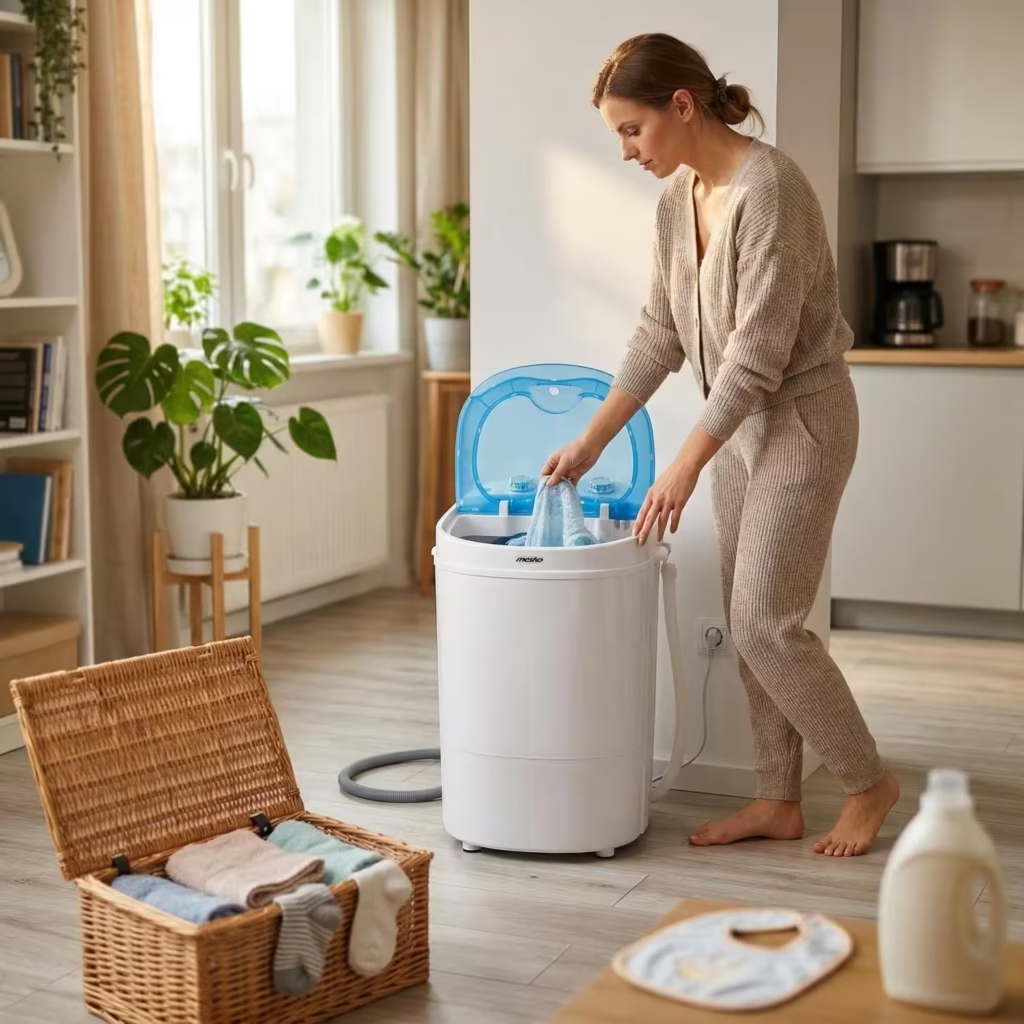
Best for: Renters, people in small apartments, RV dwellers, or anyone who needs a washing machine that connects to a faucet rather than a permanent hookup.
Portable washers are compact, lightweight, and designed to live in a closet or corner when not in use. They connect to a standard kitchen or bathroom faucet using an adapter hose — no permanent plumbing required.
They’re genuinely useful for anyone who can’t install a regular washing machine. Renters who aren’t allowed to modify their apartment, people in small studio units, or anyone living in an RV or temporary accommodation will find them far more practical than they expect.
The honest trade-offs:
Capacity is limited. You’re looking at small loads — 3–5 kg at most in most portable models, compared to 8–10 kg in a standard washer. They’re not built for heavy-duty laundry. But for one or two people doing regular light loads, they work well. If you’re also trying to maximise storage in a compact space, our guide to clothes storage ideas for small spaces has some useful ideas to pair with a smaller laundry setup.
How to Choose: A Simple Decision Guide
Here’s the short version for when you just need an answer:
You have a family of 4+ and do laundry multiple times a week → Front load or HE top load. Go for at least 8–10 kg capacity. Prioritise Energy Star certification.
You’re a single person or couple who wants something affordable and simple → Traditional top load or HE top load in the 6–8 kg range. Straightforward, reliable, and doesn’t cost a fortune.
You’re in a small apartment with limited space → Washer-dryer combo if you need both functions. Portable washer if you just need washing capability and can’t install anything permanent.
You’re on a tight budget and have some time to spare → Twin tub. More manual effort, but significantly cheaper than a fully automatic machine.
You’re a student, in a dorm, or doing very light laundry → Single tub or portable. Don’t overspend on capacity you won’t use.
You travel frequently or move often → Portable washer. Connects anywhere, stores anywhere.
Washing Machine Capacity: What Size Do You Need?
This part trips a lot of people up. Here’s a simple guide:
| Household Size | Recommended Drum Capacity |
| 1–2 people | 5–7 kg |
| 3–4 people | 7–9 kg |
| 5+ people | 9–12 kg |
| Family with bedding/towels | 10 kg+ |
One thing worth remembering: a larger drum doesn’t mean you have to always fill it. But undersizing is a real problem — if your machine is too small for your household, you’ll end up running it constantly, which defeats the purpose of having one.
If you’re unsure how to balance capacity with your space and storage setup at home, it’s worth looking at how your laundry area fits into your broader home organisation — especially in smaller homes where laundry often competes with storage.
Semi-Automatic vs. Fully Automatic: What’s the Difference?
Quick clarification since this comes up a lot:
Semi-automatic machines (like twin tubs and some single tubs) require manual steps during the laundry process — usually moving clothes between tubs or manually starting the spin cycle. They’re cheaper but require more involvement.
Fully automatic machines handle everything themselves. You load the clothes, select a program, press start, and come back when it’s done. Front loaders and HE top-loaders are all fully automatic. Traditional top-loaders come in both semi and fully automatic versions.
For most households, a fully automatic machine is worth the extra cost. The convenience genuinely adds up over time — especially if laundry is already one of those things you’d rather not think about.
Frequently Asked Questions
Which type of washing machine is best for home use?
For most homes, a fully automatic front load or HE top load washer is the best all-around option. Front loaders are more water and energy efficient, while HE top-loaders offer similar efficiency with a more familiar loading experience. If you have a family of 3 or more, aim for at least an 8 kg drum.
What’s the difference between a front load and top load washing machine?
A front load washer loads from the front and tumbles clothes through a small amount of water — it uses less water and energy, is gentler on fabrics, but costs more and takes longer per cycle. A top load washer loads from the top and generally runs faster, costs less upfront, but uses more water and can be harder on delicate fabrics.
What does high-efficiency (HE) mean in a washing machine?
HE stands for high-efficiency. An HE washer — whether front or top-load — uses significantly less water and energy than a standard machine. HE top-loaders use an impeller instead of an agitator to move clothes, which also means a larger usable drum space. They require low-sudsing HE detergent to work properly.
Is a washer-dryer combo worth it?
For people in genuinely small spaces where a separate dryer isn’t an option, yes — it’s worth it. But go in with realistic expectations. Drying takes longer than a standalone dryer, and the drying capacity is typically smaller than the wash capacity. If you have the space for two machines, two separate appliances will usually perform better.
Are portable washing machines actually any good?
For what they’re designed for, yes. Portable washers are great for renters, studio apartment dwellers, or anyone who can’t install a standard machine. They handle everyday light laundry well. Just don’t expect them to handle a king-sized duvet or a full week of laundry for three people — that’s not what they’re built for.
How do I choose the right washing machine capacity?
Match capacity to your household size: 5–7 kg for 1–2 people, 7–9 kg for a family of 3–4, and 9 kg or more if you have five or more people or regularly wash bulky items like bedding and towels. When in doubt, go slightly larger — you’ll thank yourself later.
What’s the cheapest type of washing machine?
Twin tub and single tub semi-automatic machines are the most affordable. They trade convenience for cost — you’ll need to be more hands-on during the wash process — but they clean clothes just fine and are a practical choice when budget is the primary concern.
The right washing machine for you probably isn’t the flashiest or the most expensive one on the floor. It’s the one that fits your space, handles your actual laundry load, and doesn’t make you regret the purchase six months later. Use the decision guide above, match your household to the right capacity, and you’ll be in good shape.
If you’re setting up a new home and thinking through storage and organisation at the same time, our home renovation tips for beginners is a good next read.