Estimated reading time: 12 minutes
There’s a specific kind of frustration that comes with a small bathroom. It’s not just the lack of space — it’s the way the space makes you feel. Closed in. A bit chaotic. Like no matter how clean it is, it still looks cluttered somehow.
I’ve been there. My first apartment had a bathroom so narrow that opening the cabinet door while sitting on the toilet was genuinely a risk. And yet, after a few deliberate changes — none of which cost a fortune or required a single contractor — it stopped feeling like a punishment and started feeling like a real room.
The thing is, your bathroom doesn’t need to be bigger. It needs to feel bigger. And those are two very different problems with very different solutions.
Why Your Bathroom Feels Smaller Than It Actually Is
Before throwing money at the problem, it’s worth understanding what’s actually making the space feel cramped. Because most of the time, it’s not square footage. It’s sightlines, clutter, and light — or the lack of it.
When your eyes can’t travel far in a room before hitting something — a dark wall, a cluttered shelf, a heavy shower curtain — your brain reads that as a small space. It’s a perception thing. The good news is perception is manipulable. That’s exactly what these hacks are designed to do.
Start Here: Declutter Before You Decorate
This sounds obvious, but it gets skipped constantly. People rush to buy new decor without addressing the real problem: too much stuff in too little space.
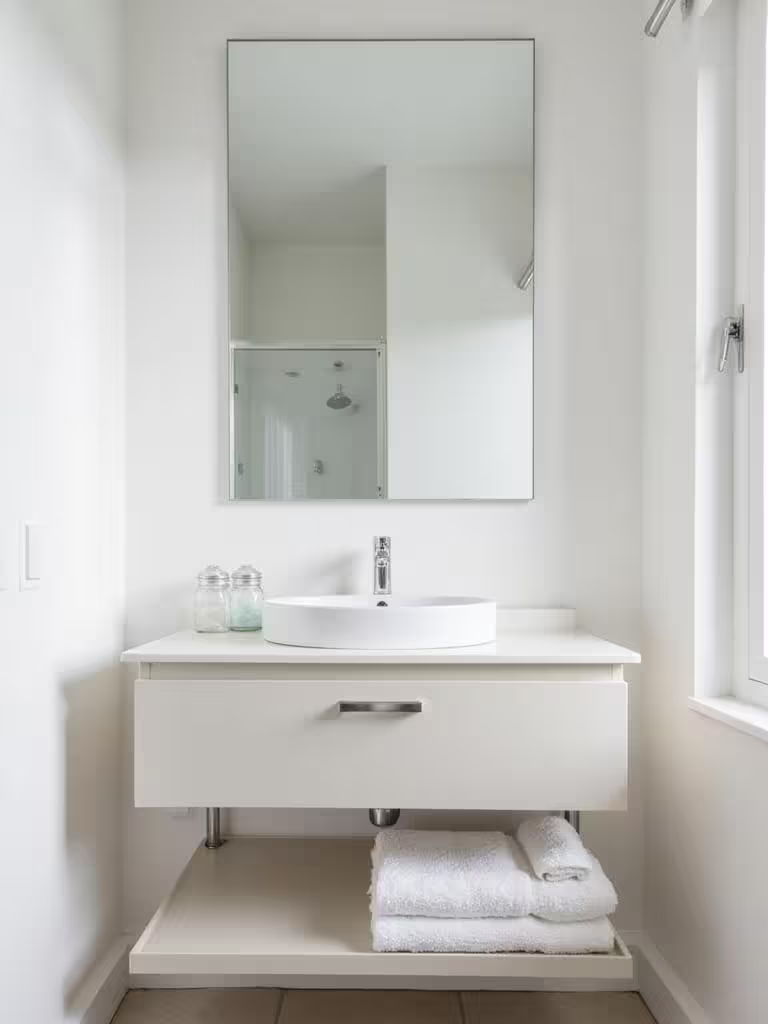
A small bathroom with ten products lined up on the counter will always feel smaller than a bathroom with three. That’s just how it works. The eye reads clutter as density, and density reads as small.
Go ruthless. Pull everything out and put back only what you actually use weekly. Everything else — the half-empty bottles, the three different moisturisers, the candle you bought in 2021 — finds a home elsewhere or goes in the bin.
Once you’ve cleared the surfaces, you’ll be surprised how much breathing room appears before you’ve changed a single thing. It’s the foundation that makes every other hack actually work. If you’re working on organising other parts of your home too, these home decor ideas are worth a look for keeping things streamlined throughout the house.
The Mirror Trick — and How Most People Get It Wrong
Mirrors are the most powerful tool in a small bathroom. Everyone knows this. But the execution is where most people go wrong.
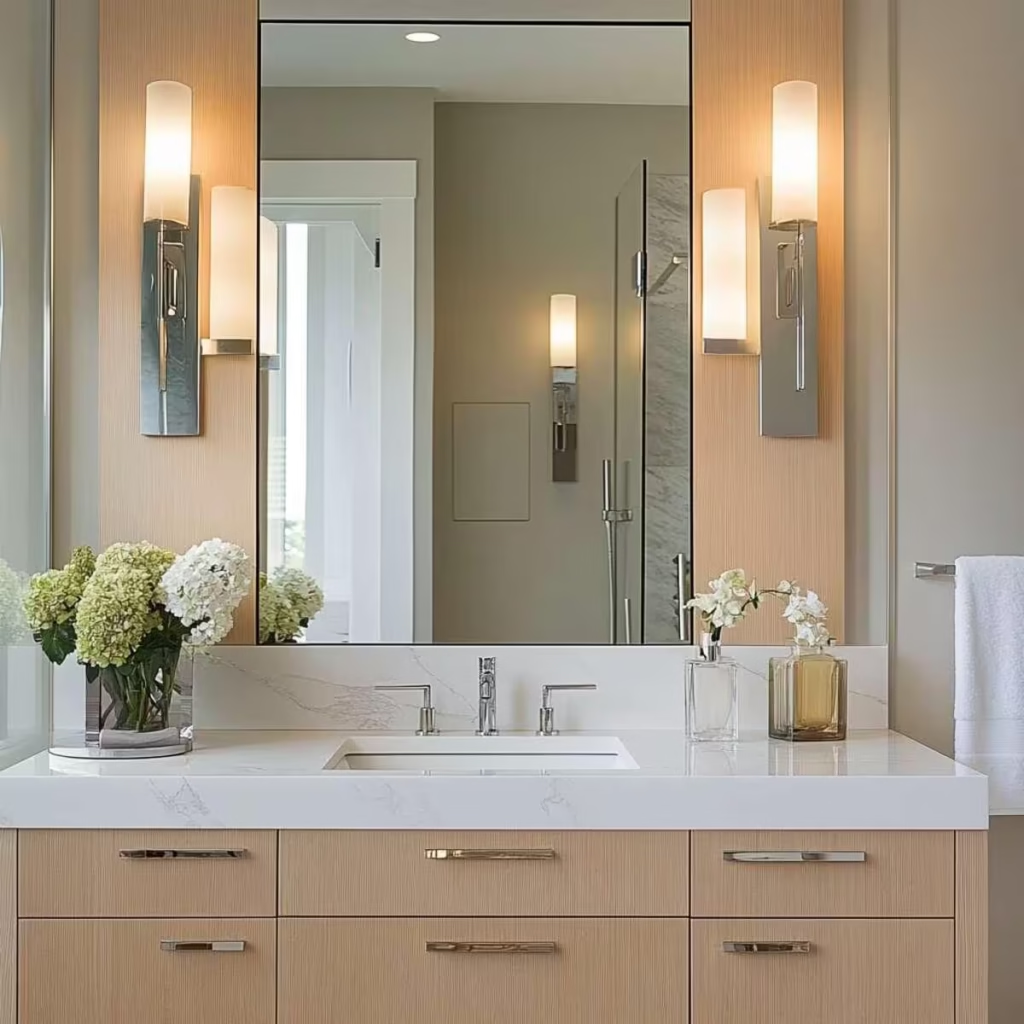
A small mirror above the sink does very little. What actually makes a difference is a large mirror — ideally one that spans most of the vanity wall, from just above the tap to somewhere near the ceiling. The reason is simple: a large mirror reflects the whole room back at you, effectively doubling the visual depth of the space.
Placement matters more than size, though.
Hang it so it catches natural light from a window or directly reflects a light source. A mirror reflecting a dark wall just gives you more dark wall. Position it to bounce light into the room and across surfaces, and the effect is genuinely striking.
Frameless mirrors tend to work better in tight spaces than framed ones. A thick frame adds visual weight and draws the eye to the mirror itself rather than letting it disappear into the wall. The goal is to make the boundary between mirror and room as invisible as possible.
Lighting: The Cheapest Space-Maker You’re Probably Underusing
Bad lighting makes a small bathroom feel like a cave. Good lighting can make it feel twice the size — and it doesn’t require rewiring anything.
The most common mistake is a single overhead light that casts shadows everywhere. Shadows read as depth and corners, which is exactly what you don’t want. You want the light to be even, bright, and distributed.
Here’s what actually works:
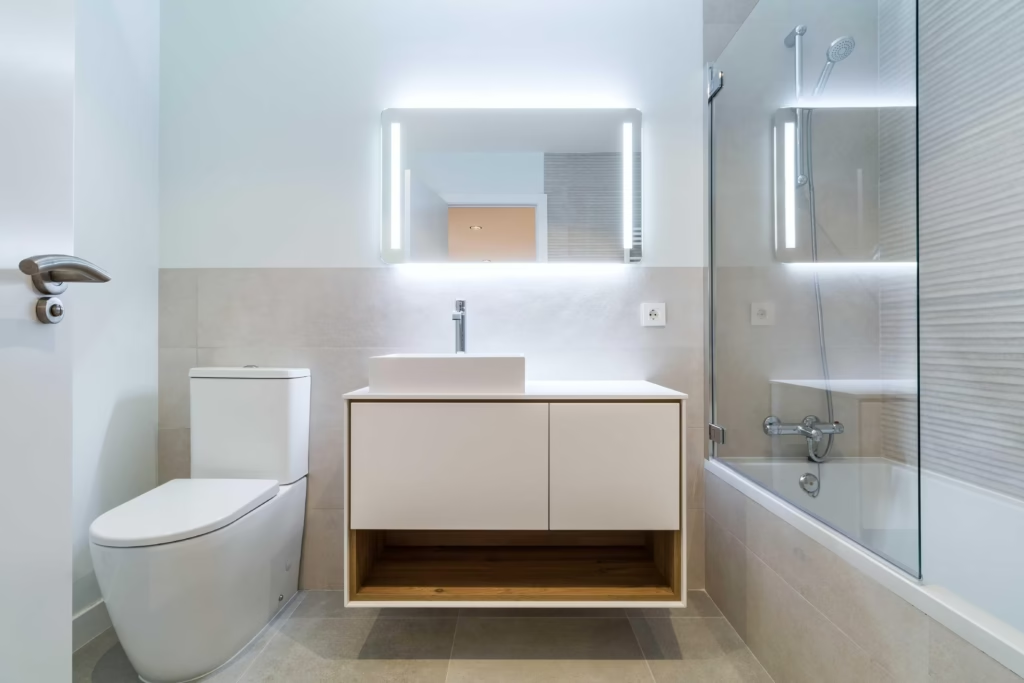
Adding vanity lighting on either side of the mirror (rather than above it) eliminates the face shadows and spreads light more evenly across the room. Even a simple plug-in sconce or LED strip behind the mirror can make a dramatic difference.
Colour temperature matters more than most people realise.
Warm bulbs (around 2700K) create a cosy feeling — which sounds nice but actually makes small spaces feel more enclosed. For a bathroom you want to feel open and airy, go cooler: around 4000K to 5000K. It’s crisper, it reads as cleaner, and it makes the room feel more expansive without adding a single square foot.
If your bathroom has no window at all, good lighting isn’t optional — it’s the entire strategy. Layer it: overhead, vanity-level, and if possible, a small LED night light near the floor. The goal is no dark corners.
Colour and Tile: What Actually Expands a Space
Light colours reflect light. Dark colours absorb it. That’s the basic logic, and it’s true — but the execution is more nuanced than “just paint it white.”
The colour itself is only half the story.
The finish matters just as much. A matte white wall absorbs more light than a satin or semi-gloss white wall. In a small bathroom, go for satin or eggshell finishes that have a slight reflectivity to them. You get the light bounce of white with a finish that holds up to moisture.
For tiles, the direction and scale of the pattern has a real effect on perception. Large-format tiles with minimal grout lines make a floor look continuous and expansive. Smaller tiles with lots of grout lines visually chop the floor into pieces — and a chopped floor reads as small.
The Grout Mistake Nobody Talks About
This is one of the most consistent gaps in bathroom advice online, and it’s worth spending a moment on.
You can choose the most perfectly light, space-expanding tile in the world — and then undermine it completely with dark grout. Dark grout creates a grid pattern across your floor or walls. And grids, visually, make a space feel busier and smaller.
If you want tiles to read as a continuous surface, match the grout colour to the tile as closely as possible. Light tile, light grout. The lines nearly disappear, and the surface looks seamless. That seamlessness is what creates the illusion of more space.
Can Dark Colours Work?
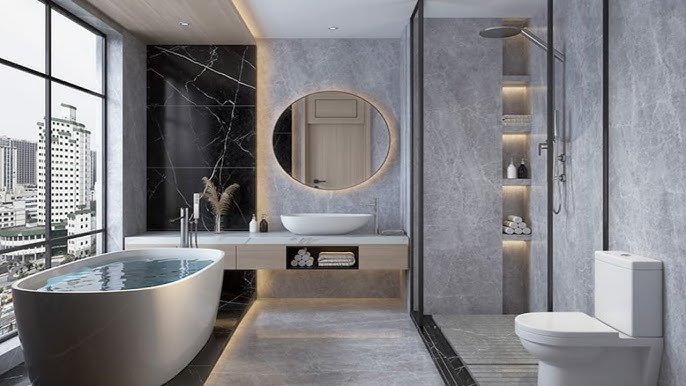
Yes, actually — but with intention. A single dark accent wall in a small bathroom (especially behind the toilet or a floating shelf) can create depth rather than claustrophobia, if the rest of the room is light. The contrast draws the eye and gives the space a deliberate, designed feeling rather than an accidental, cramped one.
What doesn’t work is dark colours on all four walls with a dark floor. That’s when a small bathroom stops feeling dramatic and just starts feeling oppressive.
Glass Over Curtain: When It’s Worth the Investment
A shower curtain is a fabric wall. In a small bathroom, it closes off a big chunk of the room every time it’s drawn — cutting your visible floor space nearly in half and making the whole room feel divided.
A glass shower enclosure does the opposite. It lets your eye travel through the space — across the tiles, to the back wall — which makes the room feel significantly deeper. Interior designers use this constantly in small bathrooms, and the effect is hard to overstate.
The frameless version works best. Framed glass enclosures have metal edges that create visual lines and add weight. Frameless glass is as close to invisible as you can get.
Is it expensive? Yes, compared to a curtain. But it’s one of the changes with the highest visual return on investment in a small bathroom, and it adds perceived value to the space in a way that a new bath mat doesn’t.
If a full glass enclosure isn’t in the budget, a clear shower curtain is a meaningful halfway step. Even a simple PEVA clear liner in place of a printed or coloured curtain opens the room up noticeably. It’s a five-dollar change that can make a real difference.
Vertical Space: The Dimension Everyone Ignores
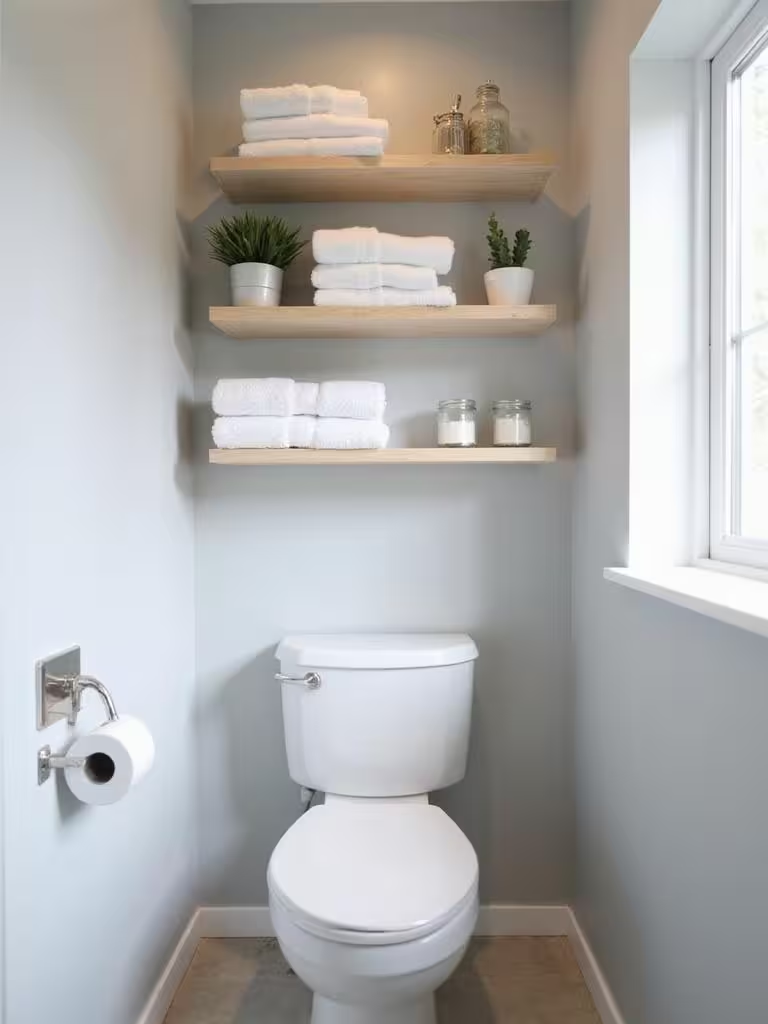
Most people think about floor space. They forget about the walls.
In a small bathroom, the floor is always going to be limited. But the vertical space — from counter height up to the ceiling — is often completely unused. That’s your storage and your opportunity.
Tall, narrow cabinets that run from floor to ceiling don’t just add storage. They draw the eye upward, which makes ceilings feel higher and the room feel taller. A taller-feeling room automatically feels more spacious, even if the footprint hasn’t changed.
Wall-mounted shelves above the toilet are a classic for a reason. The space above the toilet is almost always dead space, and a set of floating shelves there can hold towels, toiletries, and small plants without touching the floor. It keeps things organised without making the room feel smaller.
Renter-Friendly Options
If you’re renting and drilling isn’t an option, there are real alternatives that don’t look like compromises anymore.
Over-door organisers have come a long way — the good ones are slim, clean, and hold a surprising amount. Tension-rod shelving inside cabinets doubles your vertical storage without touching a wall. Freestanding ladder shelves look intentional and stylish and require exactly zero hardware.
And if you want to go a bit further with creating storage in tight spaces, this guide to creating extra house space covers some smart whole-home strategies that work just as well in compact bathrooms.
Let in More Light (Even If You Can’t Add a Window)
Natural light is the ultimate space-expander. It fills corners, eliminates shadows, and makes a room feel connected to something larger than itself. If your bathroom has a window, protect it.
Don’t cover it with heavy curtains or frosted film that blocks light in the name of privacy. Use a privacy window film that obscures visibility while still letting light through — there are good ones that look like frosted glass and let in almost full daylight. Or hang a tension rod with a sheer linen curtain that can be pulled to the side when privacy isn’t needed.
If there’s no window at all, mirrors become even more important — position them across from your primary light source to bounce whatever light exists back into the space. And consider a sun-tube or solar tube if you have roof access above the bathroom. They’re a fraction of the cost of a traditional skylight and can funnel a surprising amount of natural daylight into an interior room.
Small Swaps That Add Up
Beyond the bigger changes, there are a handful of smaller adjustments that have an outsized effect on how a bathroom feels.
Swap a pedestal or floating vanity for a bulky cabinet. The visible floor beneath a floating vanity makes the floor look larger. It’s a simple trick — more visible floor equals more perceived space — but it genuinely works.
Use hooks instead of towel rings. A towel ring holds one neatly folded towel. A small row of hooks on the back of the door or on a wall holds multiple towels, robes, and bags without touching valuable counter or floor space.
Keep your colour palette tight. A bathroom with ten different colours — the mat, the towels, the soap dispenser, the artwork — reads as chaotic, and chaotic reads as small. Pick two or three colours and stick to them. The calm, cohesive look makes the room feel more intentional and more spacious at the same time.
Go taller with storage. If you’re replacing anything — a medicine cabinet, a shelf unit, a freestanding rack — choose the taller version. Every extra inch of height draws the eye up and makes the ceiling feel further away.
These aren’t dramatic changes. But stacked together, alongside the bigger moves, they shift the overall feel of the room in a meaningful way.
For a broader look at how storage and organisation choices affect the feel of a whole home, these end table storage ideas offer some principles that translate surprisingly well to bathroom thinking. And if you’re ever planning a bigger home refresh, having a solid home selling checklist on hand is a smart way to think about which improvements add lasting value.
FAQs
Does a large mirror actually make a small bathroom look bigger?
Yes — and it’s one of the most effective single changes you can make. A large mirror reflects the room back at itself, creating the visual impression of doubled depth. For maximum effect, position it to catch and bounce natural or artificial light across the space. Frameless mirrors work best in tight bathrooms because they reduce visual weight.
What colour makes a small bathroom look bigger?
Soft whites, warm off-whites, and pale greys are the most reliable choices. The finish matters too — satin or eggshell finishes reflect more light than matte. Avoid multiple competing colours; a tight, cohesive palette makes the space feel calmer and more open.
Is a glass shower door better than a curtain in a small bathroom?
For space perception, yes. A glass enclosure — especially frameless — lets your eye travel through the shower area rather than hitting a visual wall. Even a clear plastic curtain is a meaningful improvement over a coloured or patterned one.
What tile is best for a small bathroom?
Large-format tiles with light grout that matches the tile colour. This creates a continuous, seamless look that reads as more expansive than smaller tiles with contrasting grout, which create a grid effect that visually chops the floor into pieces.
Can I make a small bathroom feel bigger without renovating?
Absolutely. The most effective changes — mirrors, lighting, colour, decluttering, and vertical storage — don’t require any structural work. Even clearing the counter surfaces and swapping to cooler light bulbs can shift the feel of the space noticeably.
What’s the single most impactful change for a tiny bathroom?
If you can only do one thing, improve the lighting. Even, distributed light with a cool colour temperature eliminates the shadows and dark corners that make small spaces feel enclosed. It costs relatively little and changes everything about how the room feels.