Estimated reading time: 8 minutes
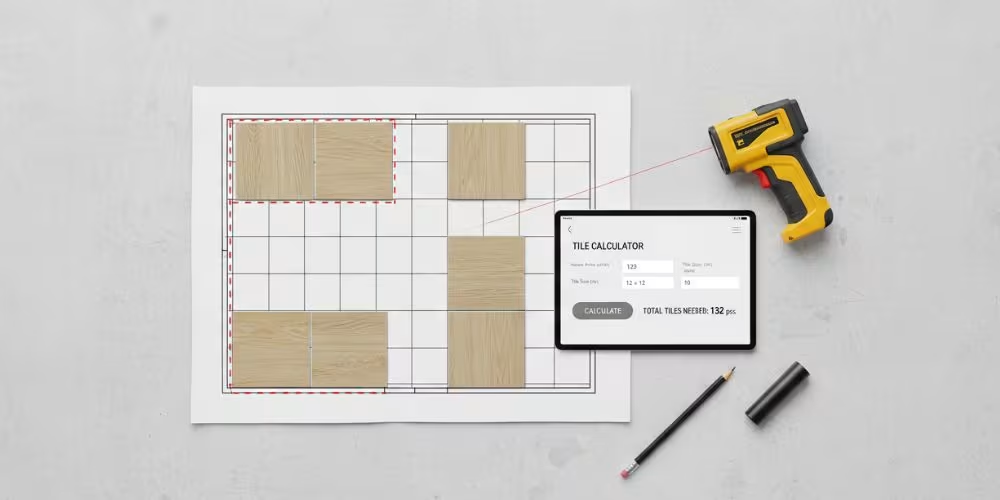
Our advanced tile calculator takes the exact guesswork out of your next flooring estimate. Unlike basic tools, this calculator uniquely accounts for exact grout lines, box packaging quantities, and your specific cutting waste to give you a flawless material list.
Advanced Tile & Flooring Calculator
How to Calculate How Much Tile You Need
If you want to know how much tile you need, follow these exact steps to get a professional-grade estimate:
- Measure the room: Find the total square footage by multiplying your room’s overall length by its width.
- Determine tile size: Choose your exact tile dimensions, whether you are installing small subway tiles or large-format slabs.
- Factor in grout lines: Select your preferred grout joint width (typically 1/8″ or 1/4″) to ensure accurate spacing calculations.
- Select a waste percentage: Add a buffer for breakages, mistakes, and edge cuts based on your specific room layout.
- Calculate boxes and cost: Divide the total tiles needed by the tiles per box to find your final quantity and total project cost.
Why You MUST Include a “Wastage” or “Overage” Factor
No room is perfectly square, and tiles will inevitably break during transit or installation. Factoring in an overage percentage protects your project timeline and ensures you have enough material to finish the job.
- The 5% Rule: Use this strict minimum for simple, perfectly square rooms with no alcoves, pillars, or complicated edges.
- The 10% Rule: This is the golden industry standard for typical room layouts, standard edge cuts, and minor breakage.
- The 15% – 20% Rule: Essential for complex rooms, diagonal cuts, or a herringbone layout, which require significantly more edge trimming and generate higher waste.
How Do Grout Lines Affect Tile Calculations?
Many DIYers completely forget to factor in the physical gap between their tiles. While a standard 1/8″ or 1/4″ grout line seems tiny on its own, it rapidly adds up across a large surface area.
If you ignore grout joints in a massive 500 sq. ft. living room, you will end up buying far more material than your subfloor actually requires. Our calculator bakes this directly into the math so you only pay for what you actually need.
The Tile Calculation Formula (Show the Math)
Want to see how the math works behind the scenes? Here is the exact formula professionals use to generate a precise flooring estimate:
- Room Area = Room Length × Room Width
- Tile Area = (Tile Length + Grout Width) × (Tile Width + Grout Width)
- Total Tiles Needed = (Room Area ÷ Tile Area) + Your Chosen Waste Percentage
Frequently Asked Questions
How many 12×12 tiles do I need for 100 square feet?
A standard 12×12 tile covers exactly one square foot. Therefore, you need 100 tiles for the raw area, plus a standard 10% waste factor, meaning you should order exactly 110 tiles.
Should I calculate tiles in inches or square feet?
Always measure your room in feet to find the total area, but measure your physical tiles and grout lines in inches. A high-quality tile calculator will automatically convert these mixed units for you.
Do I subtract square footage for cabinets and kitchen islands?
Yes. You should never buy flooring for spaces that will be permanently covered by base cabinets or built-in islands. Measure these permanent fixtures and subtract their footprint from your total room measurement before ordering.
How many extra tiles should I keep for future repairs?
Contractors recommend keeping at least half a box (or roughly 5 to 10 extra tiles) safely stored away. You will need these if a tile cracks later, or if you need to replace baseboards and plumbing fixtures down the road.
Get Started on Your Tiling Project
Getting your flooring estimate right the first time saves you money, time, and massive headaches during installation. Now that you know exactly how much tile you need, it’s time to bring your vision to life.
Ready to start your project? Browse our premium tile collection today to find the perfect style for your newly measured space!