Estimated reading time: 13 minutes
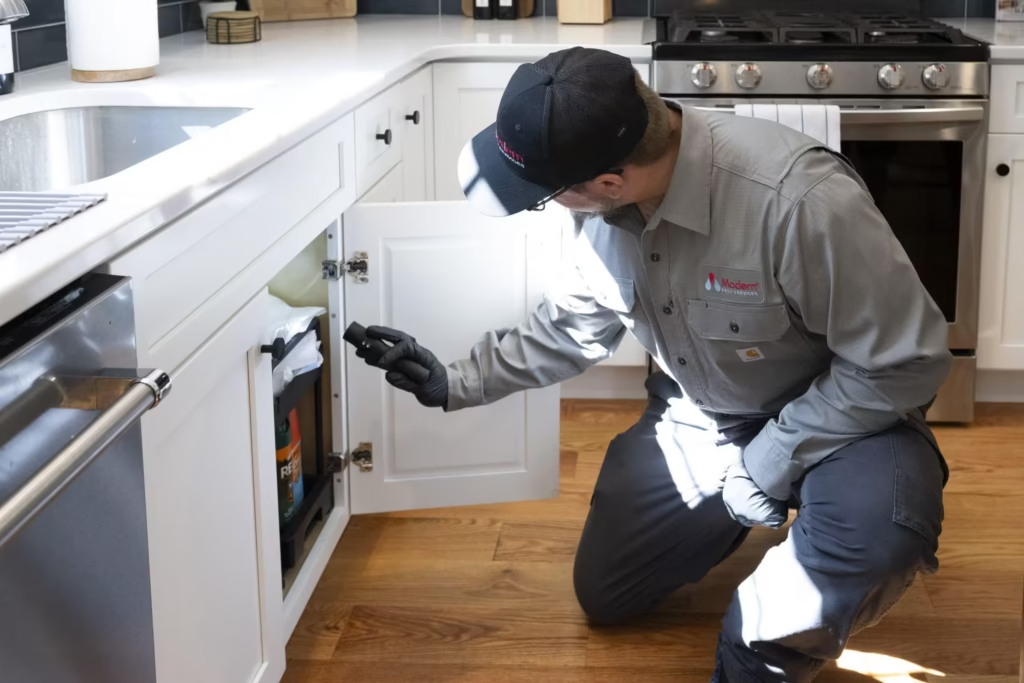
Last spring, I opened the cabinet under my kitchen sink and found something I genuinely wasn’t ready for — a neat little pile of what I can only describe as evidence. Droppings. Something had been living in there, possibly for weeks, without me noticing. I’d kept the kitchen clean. I’d wiped the counters. I thought that was enough.
It wasn’t.
The thing about pests is that they’re not waiting for you to get messy. They’re looking for warmth, moisture, a crumb behind the toaster, a gap behind the dishwasher. They’re opportunists. And most of the advice floating around online — “maintain cleanliness,” “seal entry points” — is technically true but practically useless unless you know the specifics.
So here’s what actually helps: understanding the different pest control methods available, what each one does well, and how to match the right approach to the right problem. Because spraying a can of something at a cockroach and hoping for the best is not a strategy.
The Most Effective Pest Control Combines Multiple Approaches
Before diving into methods, here’s the short version for anyone who wants a direct answer:
The most effective home pest control combines physical exclusion (sealing entry points), habitat modification (removing food, moisture, and clutter that attract pests), targeted treatment when needed, and regular monitoring — in that order. No single method works alone, and reaction is always slower than prevention.
Now, the longer version.
1. Physical Pest Control — Stop Them at the Door
This is the method most homeowners skip entirely, which is exactly why it’s the most important one to start with.
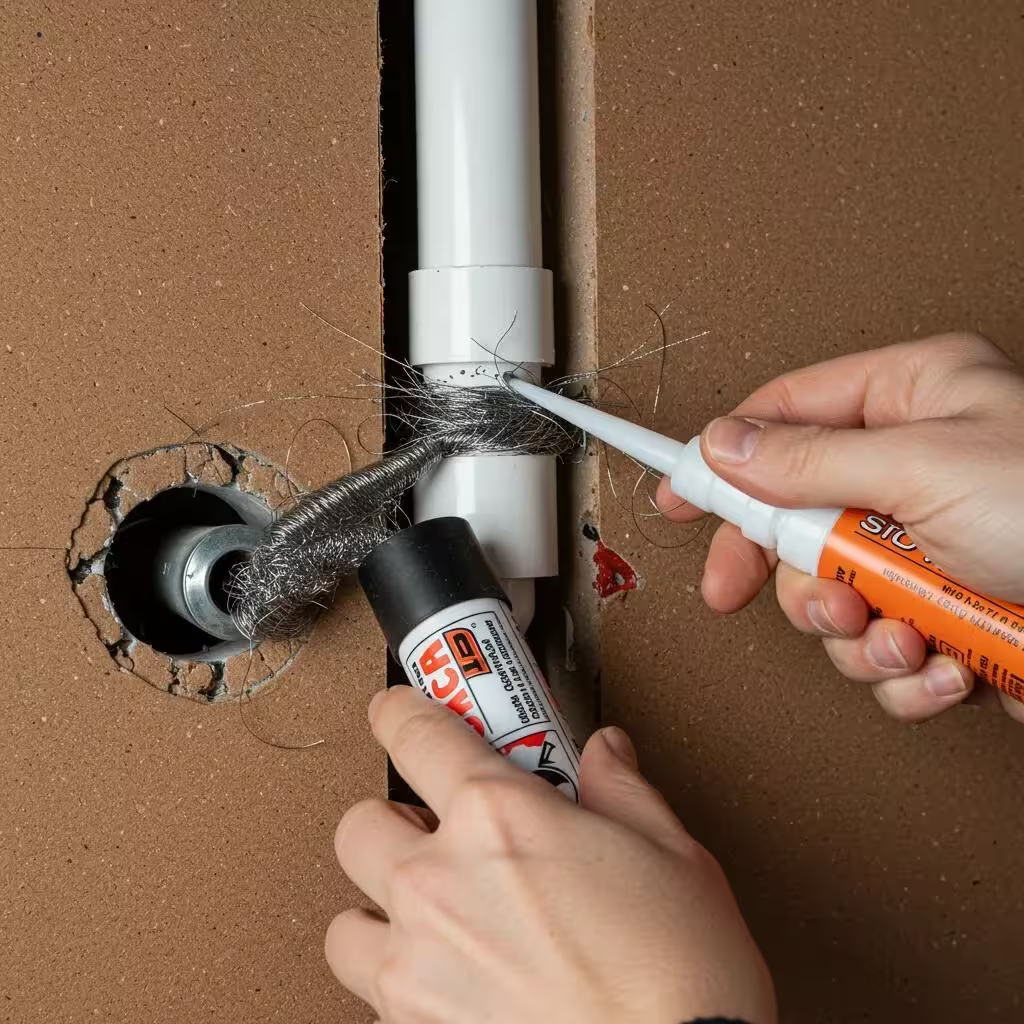
Physical pest control means making your home structurally inaccessible to pests. Not repelling them — actually blocking them out. Weatherstripping around doors. Caulk along the gap where your baseboards meet the floor. Steel wool packed into the space behind the washing machine where a pipe enters the wall. Door sweeps on exterior doors that have a visible gap at the bottom.
This sounds simple, but the execution is where people fall short. A gap the width of a pencil is enough for a mouse. Cockroaches can squeeze through a crack you’d barely notice with your eyes. Ants don’t need a gap at all — they find their way through openings you’d need a flashlight to even find.
Where to check: exterior door frames, window sills, anywhere a pipe or cable enters the wall, the area behind the dryer, vents without covers or with damaged mesh. Also check around your utility meter box — it’s a common and overlooked entry point.
What to use: expanding foam for larger gaps, caulk for smaller ones, copper mesh or steel wool for holes near pipes (mice chew through foam), and metal kick plates or door sweeps for gaps under exterior doors.
The honest caveat here is that this won’t stop everything. Pests that are already inside won’t be stopped by exterior sealing. And some — like certain species of ants or drain flies — breed indoors in moisture or organic buildup. Physical exclusion is your first line of defence, not your only one.
2. Biological Pest Control — Let Nature Do the Heavy Lifting
Biological control sounds like something from a university ecology class, but it has real practical applications — especially if you’re dealing with garden or yard pests.
The basic principle: use natural predators, parasites, or pathogens to reduce pest populations instead of chemicals. Lady beetles eat aphids. Nematodes — microscopic soil organisms — target grubs, fleas, and fungus gnats when worked into moist soil. Bacillus thuringiensis (commonly sold as Bt) is a naturally occurring bacterium that kills mosquito larvae and certain caterpillars without harming people, pets, or beneficial insects.
For outdoor pest management specifically, this is worth taking seriously. If you’re updating your backyard — adding garden beds, a water feature, or a lawn area — thinking about how those changes affect local pest pressure early on can save you a lot of reactive spraying later.
Inside the house, biological control has less direct application. But there’s an indirect version of it that’s underrated: don’t kill everything indiscriminately. Spiders catch flies. Certain wasps prey on the caterpillars destroying your garden. Before you reach for the broad-spectrum spray, it’s worth knowing what you’re actually looking at.
3. Chemical Pest Control — Powerful, But Use It Precisely
Chemical pest control is the one people jump to first, which is often backwards. It works — but it works best when used targeted and intentionally, not as a first-response panic reaction.
There are a few broad categories here:
Insecticides — sprays, dusts, or bait formulations targeting specific insects. Gel baits for cockroaches, for example, are far more effective than spray because cockroaches carry the bait back to the nest. A can of surface spray kills what it touches; gel bait can eliminate an entire colony over a week or two.
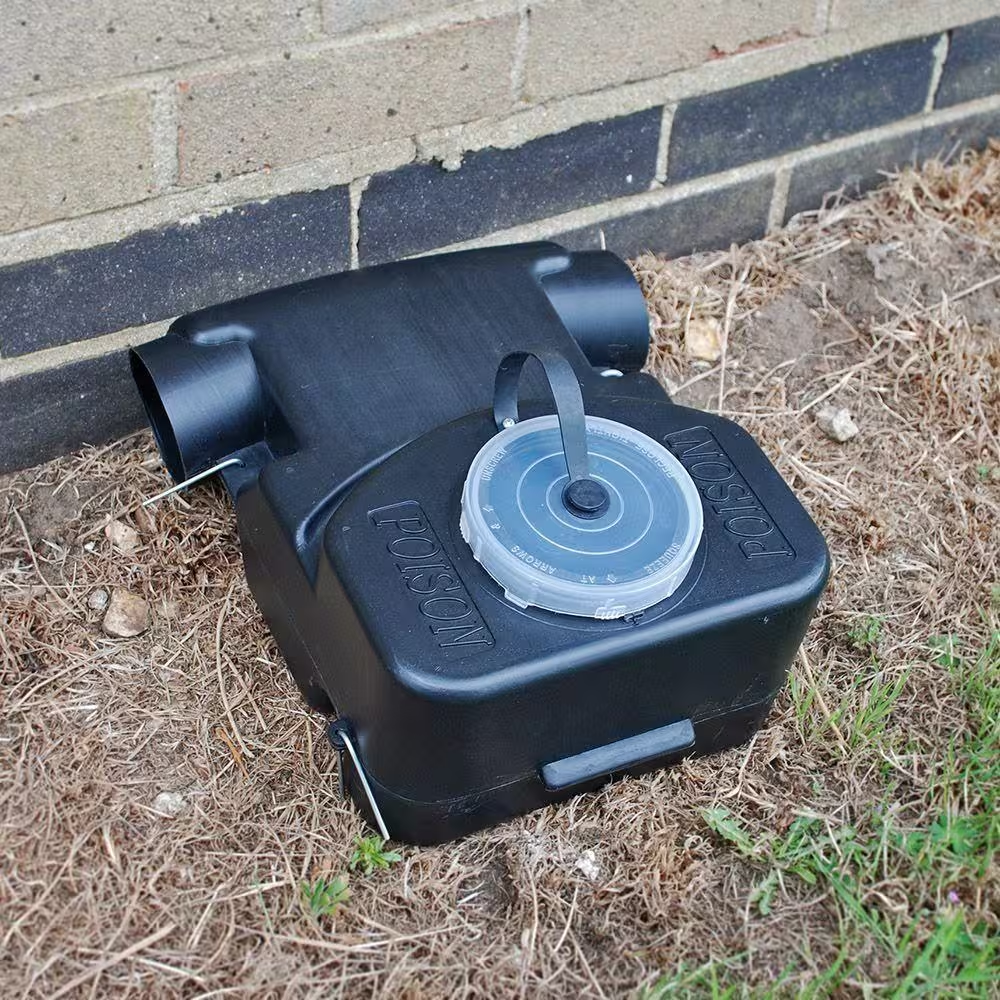
Rodenticides — bait stations for mice and rats. These work, but placement matters enormously. If you have children or pets, tamper-resistant bait stations are non-negotiable.
Residual sprays — applied to perimeter areas, baseboards, or entry points, these leave an active layer that kills pests that walk through them over time. Some last 30–90 days.
What to look for on labels: Active ingredient, target pest (not all insecticides kill all insects), required PPE, and re-entry intervals if you have kids or pets. The EPA’s label guidelines are worth reading once — it’s drier than a tax form, but it’ll save you from a mistake.
The honest trade-off: chemical methods are faster than most natural alternatives but carry real considerations around safety, resistance (some cockroach and ant populations have developed resistance to common insecticides), and unintended effects on non-target insects like bees if used outdoors without care.
4. Natural and Organic Methods — What Actually Works (And What Doesn’t)
This is the section where I’ll try to be genuinely useful rather than just validating whatever’s popular on Pinterest.
Diatomaceous earth (DE) works — and it works because of a physical, not chemical, mechanism. DE is made from fossilised algae and its microscopic particles puncture the exoskeleton of insects, causing them to dehydrate and die. It’s effective against crawling insects: ants, cockroaches, silverfish, fleas, bed bugs. Apply it as a light dust in dry areas — under appliances, along baseboards, inside cabinet voids. It stops working when wet, so kitchens and bathrooms need reapplication after cleaning.
Essential oils get mixed results in actual practice. Peppermint oil genuinely seems to deter mice from areas where it’s applied consistently — but it doesn’t eliminate an active infestation, and the evidence on consistent insect repellency is limited and varies by species. Useful as a supplementary deterrent in low-infestation scenarios; not a replacement for anything else.
Vinegar is a decent surface cleaner that removes ant scent trails — which is genuinely useful for disrupting foraging behaviour — but it doesn’t kill ants and won’t stop an infestation at the source.
Cedar repels certain moths and fabric pests in enclosed spaces like wardrobes. Old cedar blocks lose potency and need to be sanded or replaced.
Natural methods are generally slower, require more consistent application, and work better as prevention than treatment once an infestation is underway. They’re also safer around children and pets, which matters. Just be realistic about what they can and can’t do.
5. Habitat Modification — Remove What They’re Actually Coming For
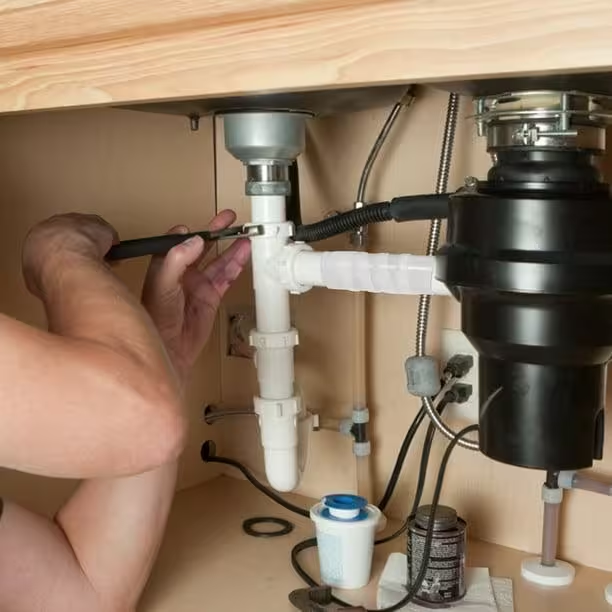
If you’re only doing one thing after reading this, make it this one.
Habitat modification means removing the conditions that make your home attractive to pests in the first place — not just tidying up, but understanding what each pest is actually after.
Ants follow sugar. The residue from a sticky juice bottle cap, a smear of honey near the lid, crumbs in the corner of a cabinet — that’s what brings them in. Regular wiping of containers and cabinet surfaces matters more than general kitchen cleanliness.
Cockroaches need moisture as much as food. A dripping pipe under the sink, condensation around a poorly insulated cold pipe, standing water in a plant tray — these are cockroach habitats. Fix the moisture first, then treat.
Rodents need shelter as much as food. Clutter in storage areas — stacked cardboard, piles of old fabric, bags of dog food stored in their original packaging — gives mice everything they need to nest. Rethinking how you use storage areas isn’t just good for organisation; it genuinely removes nesting habitat.
Mosquitoes breed in standing water. A bottle cap full of water is enough. Gutters that don’t drain fully, a forgotten bucket, a pot saucer that collects rain — all of it. If you’re dealing with mosquitoes specifically in your outdoor space, the fastest wins usually come from eliminating standing water before reaching for any repellent. There’s a more detailed breakdown of what actually works in this guide to getting rid of mosquitoes in the backyard.
Moisture control is probably the single most underrated thing in pest prevention. Fix leaks quickly. Run bathroom fans. Check under sinks regularly. Dry areas are genuinely less hospitable to almost every common household pest.
6. Integrated Pest Management (IPM) — The Smarter System
Integrated Pest Management isn’t a single method — it’s a framework that combines all of the above in a structured, proportionate way.
The core idea: identify the pest, understand its behaviour and lifecycle, set a threshold for action (one ant in the kitchen vs a trail of hundreds are different situations), use the least disruptive effective method first, then escalate if needed.
IPM is how professional pest control companies should be operating — and it’s a useful mental model for homeowners too, because it stops you either overreacting (fumigating your house because you saw one spider) or underreacting (ignoring a dripping pipe that’s slowly creating a cockroach problem behind the wall).
The monitoring piece matters here. Walk your home’s perimeter every few months. Check the roof line, foundation gaps, and areas where utility lines enter. When buying a home, a thorough inspection checklist should include pest risk areas — crawl spaces, attic insulation, basement moisture — not just structural elements.
When to Stop DIY and Call a Professional
This conversation is missing from most pest control articles, which is frustrating because it’s exactly what people need.
Here’s a practical framework:
Call a professional if: you’ve seen rodent droppings for more than two weeks after addressing entry points and food sources; you suspect termites (mud tubes on walls, hollow-sounding wood, discarded wings near windows); you’ve found bed bugs (don’t try to manage these alone — the treatment protocol is intensive and very specific); or you’ve treated a cockroach problem twice without reducing the population.
Keep DIY if: you’re dealing with ants that haven’t established inside, a single mouse that hasn’t become multiple mice, occasional spiders or silverfish, or mosquitoes and garden pests.
The cost reality: a professional pest treatment for a standard home typically runs anywhere from $150–$600 depending on pest type, home size, and whether it’s a one-time treatment or an ongoing plan. That’s not cheap — but it’s also not as expensive as what happens when a termite problem or a rodent infestation gets another six months of uninterrupted progress.
Some pest control companies offer free inspections, which is worth taking up if you genuinely don’t know what you’re dealing with.
Seasonal Pest Activity — What Changes and When
Pests aren’t a year-round constant. They shift with temperature, moisture, and breeding cycles, which means your prevention focus should shift too.
Spring: Ants become active as temperatures rise. Check kitchen and bathroom entry points. Termite swarmers appear in spring — if you see winged insects emerging from walls or soil, don’t ignore it.
Summer: Mosquitoes peak. Wasps build nests in eaves and attics. Rodents are less of a problem outdoors but start scouting for indoor shelter as heat intensifies.
Autumn: This is the big one for rodent entry. Mice and rats move indoors as it gets cold. Seal exterior gaps before temperatures drop. Stink bugs and cluster flies also start seeking overwintering spots in wall voids. Your winter home maintenance routine should include a pest-focused perimeter check every single year.
Winter: Pest activity slows but doesn’t stop. Rodents that got in during autumn are now nesting. Cockroach populations can thrive year-round indoors, especially in heated kitchens.
A 20-minute walk around the exterior of your home in late September — checking for new gaps, damaged weatherstripping, and signs of rodent activity — is one of the highest-value maintenance tasks most homeowners skip entirely.
Natural vs Chemical Pest Control — A Quick Comparison
| Factor | Natural Methods | Chemical Methods |
| Speed | Slower (days to weeks) | Faster (hours to days) |
| Safety | Generally safer for kids/pets | Requires precautions |
| Effectiveness | Good for prevention | Better for active infestations |
| Cost | Low | Low to moderate |
| Environmental impact | Minimal | Varies by product |
| Best for | Early-stage / prevention | Established infestations |
FAQs
Does diatomaceous earth actually work on cockroaches?
Yes — food-grade diatomaceous earth is effective against cockroaches when applied as a light dust in dry areas where they travel: under appliances, inside cabinet voids, along baseboards. It works by physically damaging their exoskeleton, not through a chemical reaction. It stops working when wet, so it needs reapplication after damp cleaning. It’s slow (takes several days) but safe for use around people and pets.
How do I stop ants from coming into the kitchen?
Ants follow scent trails left by scout ants who found a food source. Cleaning with vinegar or soapy water breaks those trails temporarily. For longer-term control: eliminate the food source (wipe down sticky containers, store sugar and flour in sealed containers), then use a gel bait — not a spray — near where they’re entering. Gel bait disrupts the colony at the source. Spray kills what it touches but does nothing about the nest.
When should I call a pest control professional instead of handling it myself?
Call a professional if you’re dealing with termites (always), bed bugs (almost always), or any infestation you’ve treated twice without improvement. For rodents, call if you’re seeing signs of activity — droppings, gnaw marks, nesting material — after you’ve already sealed entry points and removed food sources. Ongoing infestations that persist after two rounds of targeted treatment usually indicate a larger population or a hidden entry point that needs professional assessment.
Are natural pest control methods safe around children and pets?
Generally, yes — but it depends on the method. Food-grade diatomaceous earth is safe once it settles (avoid inhaling the dust during application). Essential oils can be toxic to cats at certain concentrations, so check before using diffusers or sprays around them. Bt (Bacillus thuringiensis), used for mosquito larvae control, is safe for mammals. Always read labels even on “natural” products, because natural doesn’t automatically mean safe for all animals.
What’s the single most effective thing I can do to prevent pests at home?
Honestly? Fix moisture problems and seal exterior gaps. More infestations start from a dripping pipe or a gap behind the washing machine than from anything else. Clean counters help with surface-level ant activity, but the deeper issues are almost always moisture or structural access. Address those two things and you eliminate the conditions most household pests need to establish themselves.