Estimated reading time: 12 minutes
Most entryways feel like afterthoughts. Dark, a little cramped, and weirdly forgettable — even in homes that are otherwise beautifully decorated. The hallway gets a coat rack, maybe a small table, and then nothing else because nobody really knows what to do with it.
A mirror changes that. A good one, placed correctly, can bounce light across a dark space, make a narrow hallway feel twice as wide, and give the whole entry a sense of intention. But a bad one — or a good one hung in the wrong spot — can make things look more chaotic than before.
The advice online mostly isn’t helpful. “Choose a mirror that complements your decor” is technically true but tells you absolutely nothing. This guide skips that kind of filler. You’ll get specific size rules, practical placement guidance, style recommendations that actually match different home types, and a clear list of what not to do.
Why a Mirror Works So Well in an Entryway
It’s not just decorative. That’s worth saying upfront, because a lot of people approach entryway mirrors as a styling add-on when they’re actually a functional upgrade.
Here’s what a well-placed hallway mirror actually does:
- Reflects natural light — if it faces a window or a light source, it bounces that light back into the space and makes the room feel brighter without touching a single light fixture
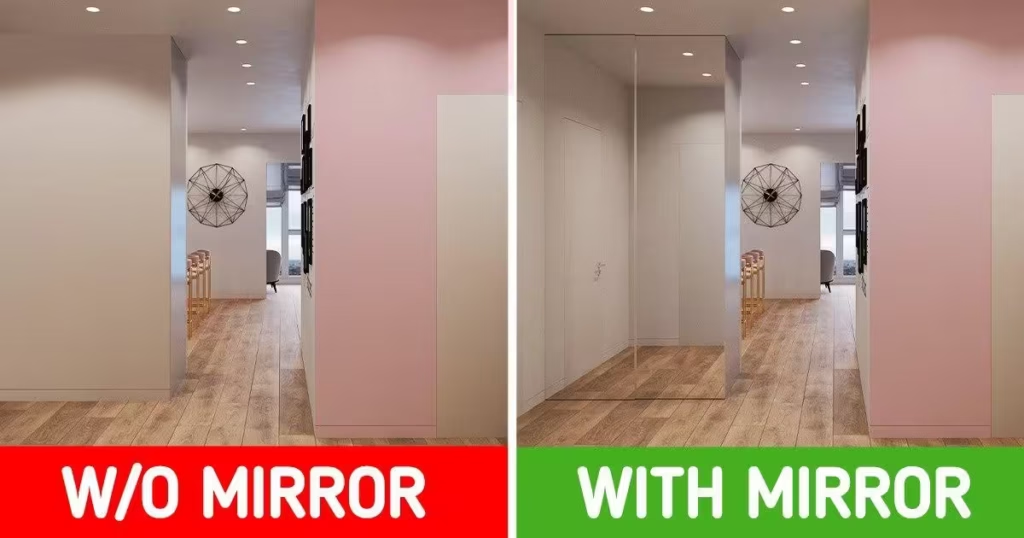
- Creates visual depth — the reflection tricks the eye into reading the space as larger than it is, which matters enormously in narrow entryways
- Gives the space a focal point — an entry without a focal point looks unfinished; a mirror anchors the space the way artwork does in a living room
- Serves a practical purpose — you can check your outfit, your hair, your bag, all before you leave the house
That last point matters more than people admit. A mirror in the entryway is one of those things you use every single day without thinking about it.
That said — and this is important — a mirror won’t fix a cluttered entryway. If there are shoes piled up, bags on the floor, and no real storage, adding a mirror just reflects the mess back at you. Sort the storage situation first. (If you’re still figuring that part out, this guide to home decor organization has some solid ideas for making a space feel more pulled together.)
How to Choose the Right Size Mirror for Your Hallway
Size is where most people go wrong. They either buy something too small — which ends up looking like an afterthought — or they go oversized and the mirror overwhelms the space.
The Two-Thirds Rule
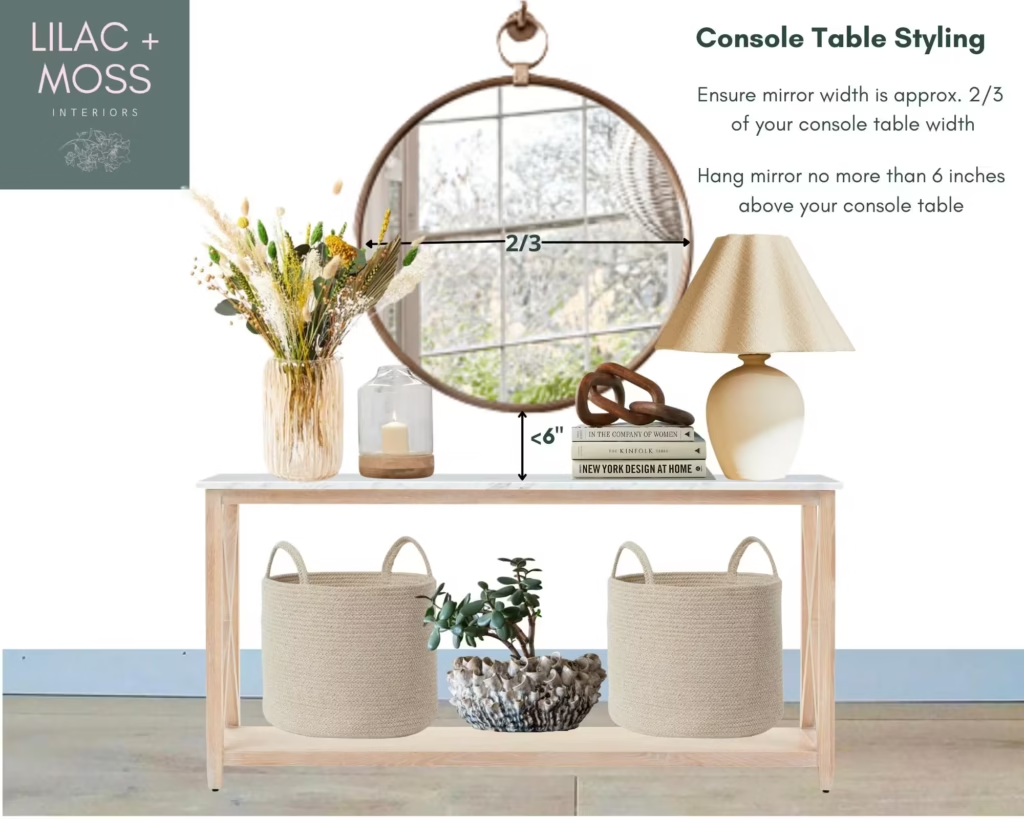
If you have a console table, entryway bench, or any piece of furniture beneath the mirror, use this as your starting point: the mirror should be roughly two-thirds the width of the furniture beneath it.
So if your console table is 48 inches wide, look for a mirror somewhere between 28 and 36 inches wide. It’ll feel proportional. Go wider and the mirror dominates; go narrower and the arrangement looks off-balance.
If you don’t have furniture beneath the mirror, then wall width becomes your guide. A mirror that takes up about half the wall width tends to look intentional without feeling heavy.
Full-Length vs. Wall-Hung
Full-length mirrors — either leaning against the wall or mounted vertically — work beautifully in entryways with enough floor space. They’re practical (full outfit check before you leave), they’re dramatic in the best way, and they make a narrow hallway feel considerably taller and more open.
The catch is floor space. A leaning full-length mirror needs a clear stretch of wall and at least a foot of clearance from foot traffic. In a very tight entryway, a large wall-hung mirror is often the smarter call — you get the visual impact without losing floor space.
For reference: a standard full-length mirror runs around 48 to 65 inches tall. Anything shorter than 48 inches and you’re getting a partial reflection, which defeats the purpose.
What Mirror Style Actually Fits Your Home?
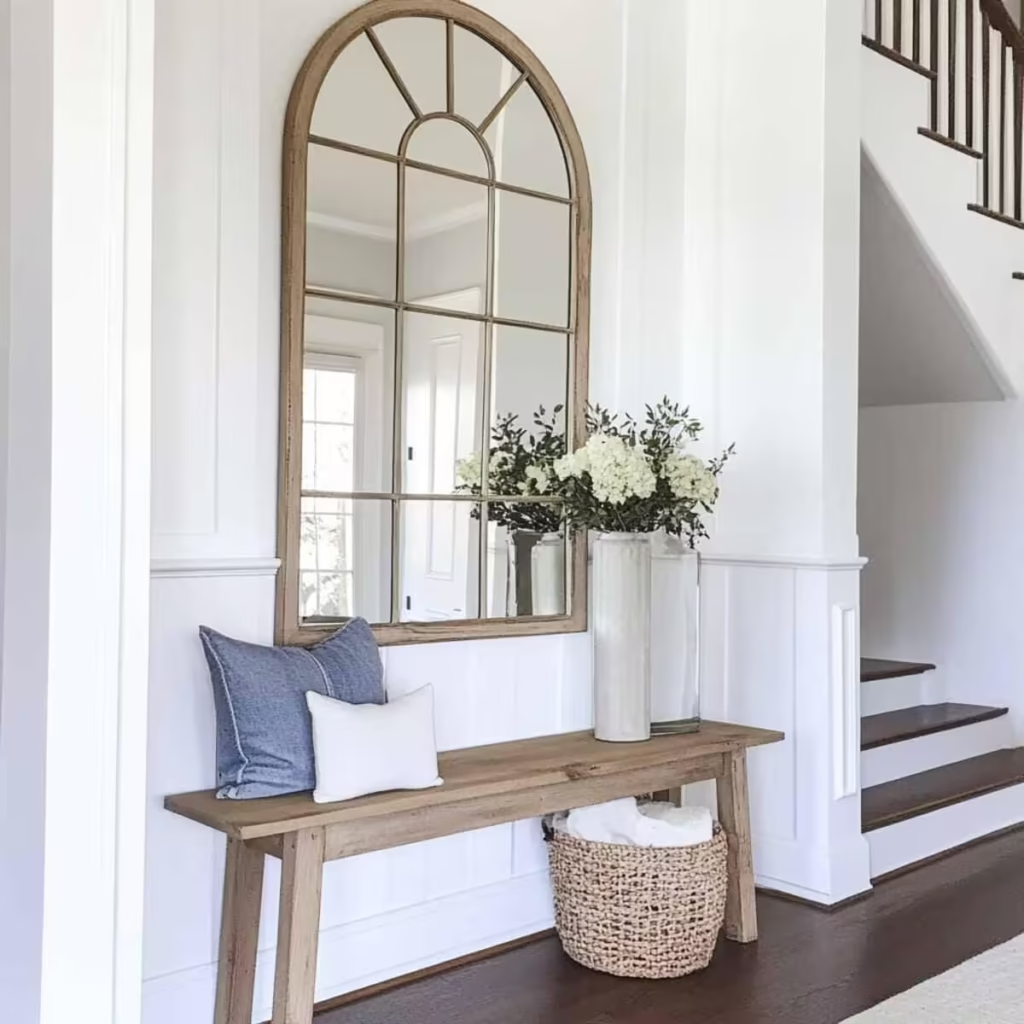
Honestly, this is where a lot of decorating advice falls apart. “Match your decor” doesn’t tell you what to buy. Here’s a more useful breakdown by home style.
Modern and Minimalist Spaces
Go frameless or go thin. A frameless rectangular mirror with polished or beveled edges reads as clean and contemporary. Thin metal frames in black, brass, or brushed nickel work well too. Avoid anything ornate — heavy carved frames or decorative sunburst shapes look out of place in a minimalist entry.
Shapes that work well: rectangle, oval, simple arch.
Farmhouse and Transitional Homes
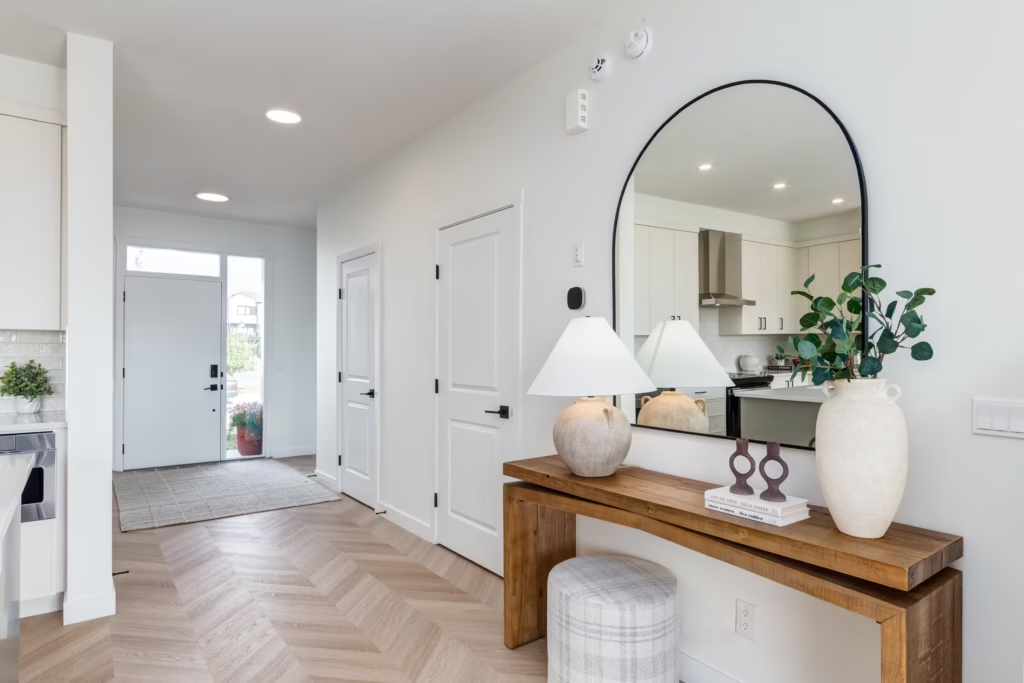
This is where arched mirrors shine. A white or natural wood arched mirror is practically made for farmhouse-style entryways — it softens the architecture, adds warmth, and feels curated without being fussy. Distressed finishes, shiplap-adjacent aesthetics, and simple black metal frames also land well here.
Round mirrors work in transitional spaces too, particularly when the rest of the entry has angular furniture. The contrast between a round mirror and a rectangular console table creates balance.
Eclectic and Bohemian Interiors
This is where you can have more fun. Sunburst mirrors, rattan-framed mirrors, ornate vintage-style frames, irregular shapes — they all work in an eclectic space precisely because the style isn’t trying to be uniform. The key is scale. Even in a maximalist entry, a mirror that’s too small gets lost. Go bold with the frame and make sure it’s large enough to be a genuine statement piece.
Traditional and Classic Homes
Beveled mirrors in carved or gilded frames, Venetian-style mirrors, and rectangular designs with detailed moulding all feel at home in classic interiors. These are the mirrors that look like they’ve always been there. They don’t need to be antiques — good reproductions are widely available — but they should feel substantial.
The Best Placement for an Entryway Mirror
Getting the placement right matters as much as choosing the right mirror.
Height: Where Should the Center of the Mirror Be?
Hang the center of your mirror at eye level. For most homes, that means positioning the center point 57 to 65 inches from the floor. This is the standard range for hanging artwork and mirrors — it works because it’s roughly average adult eye height and feels natural when you’re looking at it.
I’ve seen this go wrong more than once. The mirror ends up hung too high, so instead of reflecting your face, it reflects the top of your head and the ceiling. The practical function disappears. If you’re placing the mirror above a console table, the bottom edge of the mirror should sit 6 to 8 inches above the table surface — close enough to feel connected to the arrangement below it, but with enough breathing room that the table doesn’t look crammed.
Facing a Window vs. Facing a Wall
This is the placement detail most guides skip, and it makes a real difference.
Facing a window: If you can position your mirror on the wall opposite a window or glass door, do it. The mirror will pick up that natural light and redirect it into the space. In a dark or north-facing hallway, this can genuinely brighten the area — not dramatically, but noticeably.
Facing a wall: If there’s no natural light source to reflect, a mirror on a solid wall still adds depth and visual interest. It just won’t do much for brightness. In that case, consider pairing it with a wall sconce or pendant light nearby. The mirror will amplify the artificial light source and create warmth. If you’re thinking about entryway lighting options too, a sconce flanking a mirror or positioned above it is a classic look that always works.
Facing the front door directly: This one’s a bit debated. In feng shui, a mirror facing the front door is considered problematic because it’s thought to push energy back out. Practically speaking, it can also feel a bit startling — you walk in and immediately see yourself coming. It’s not a rule you have to follow, but it’s worth knowing before you commit to that placement.
Mirrors with Storage: Are They Actually Worth It?
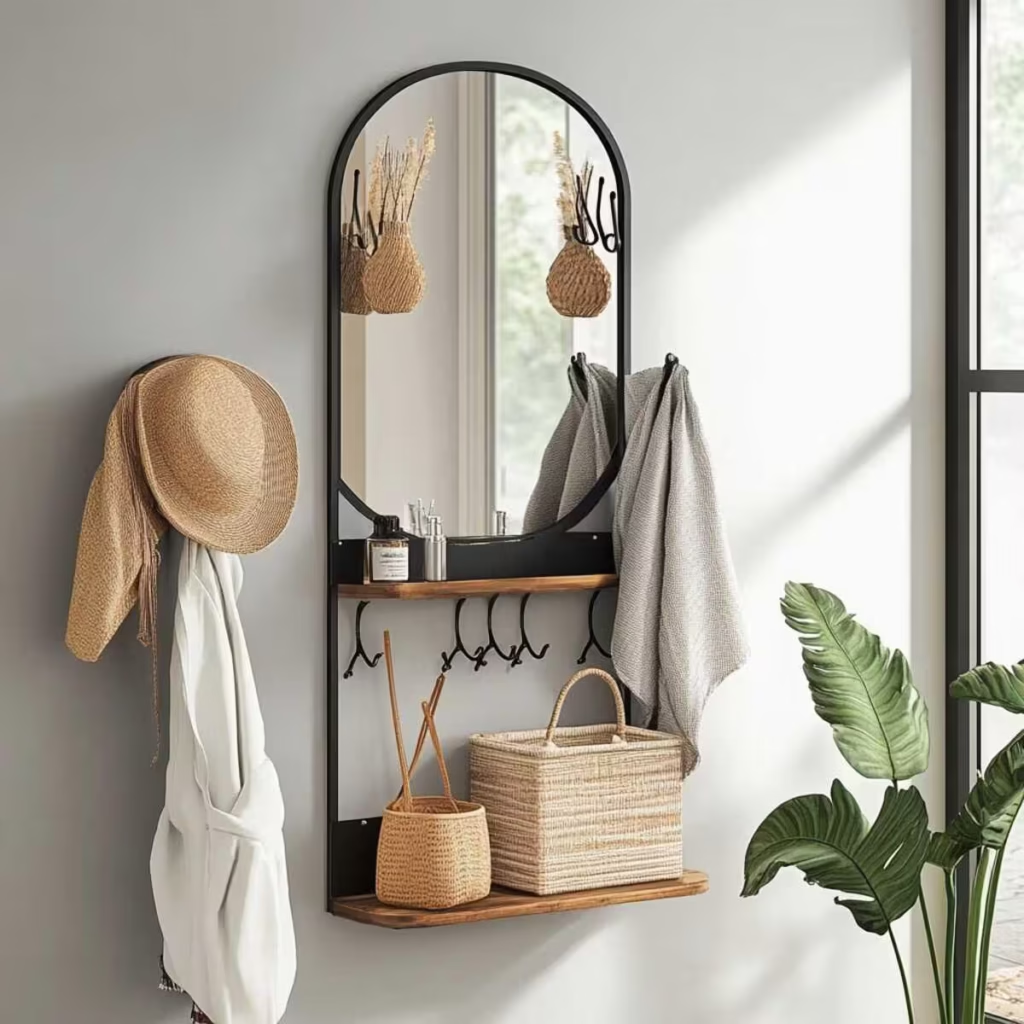
Storage mirrors — designs that include hooks, a shelf, or a small cabinet built into the frame — have become popular over the last few years. And honestly, they make a lot of sense for smaller entryways.
The appeal is obvious: one piece of furniture doing two jobs. Hang your keys on the hooks, drop your wallet on the shelf, check your reflection, done.
There are a few things to weigh, though.
Mirror-with-hooks combos tend to be fairly shallow and work well in narrow hallways where you don’t have room for a separate console table. The hooks are practical for bags, jackets, and dog leads. The limitation is that they can look busy if the wall around them is already crowded.
Mirror-with-shelf designs give you a small landing zone — enough for a plant, a candle, or a small tray for keys. These work better when the shelf is deep enough to be genuinely useful (at least 4 to 5 inches deep). Anything shallower than that and the shelf becomes decorative rather than functional.
Cabinet mirrors — where the mirror opens to reveal storage — are more common in bathrooms but are starting to appear in entryway designs. They’re useful if you need to store smaller items out of sight, though they tend to look more utilitarian than decorative.
If your entryway storage is lacking, a mirror-with-hooks or mirror-with-shelf can do real work for a relatively low cost. But if you already have a console table with drawers or a bench with storage, a standalone mirror will probably look cleaner. You can explore more entryway storage and organisation ideas here if you’re still figuring out that side of things.
Mistakes That Make Hallway Mirrors Look Wrong
These come up constantly, and they’re worth calling out directly.
Hanging the mirror too high. Already mentioned, but it’s the single most common mistake. If the mirror doesn’t reflect your face when you’re standing in front of it, it’s too high. Bring it down.
Going too small. A mirror that’s too small for the wall or the furniture beneath it looks like a decoration that got lost. When in doubt, size up. A mirror that feels slightly large in the store will often look exactly right on the wall.
Ignoring what the mirror reflects. Before you mount it, hold it up and look at what it shows. A mirror that reflects a pile of shoes, a cluttered corner, or a blank beige wall isn’t adding anything to the space. Ideally it should reflect something — light, an interesting part of the room, a plant, a lamp.
Choosing a frame that clashes with existing hardware. If your door handles, coat hooks, and light fixtures are all matte black, a gold ornate mirror frame is going to fight with everything. It doesn’t have to match exactly, but the finish should at least be in the same family.
Skipping wall anchors. Mirrors are heavy. A heavy mirror mounted with small picture hooks is an accident waiting to happen. Use proper wall anchors — ideally into studs — especially for anything larger than 24 inches. If you’re unsure about the installation side, it’s worth reading up on how to hang heavy items safely before you commit.
Quick Reference: Entryway Mirror Sizing Cheat Sheet
| Hallway Width | Recommended Mirror Width |
| Under 36 inches | 18–24 inches |
| 36–48 inches | 24–32 inches |
| 48–60 inches | 30–40 inches |
| Over 60 inches | 36–48 inches (or full-length) |
Mirror center height: 57–65 inches from floor Mirror bottom above console table: 6–8 inches
FAQs
How high should you hang a mirror in an entryway?
Hang the center of the mirror 57 to 65 inches from the floor — this puts it at average eye level and ensures it actually reflects your face rather than your ceiling. If it’s hanging above a console table, leave 6 to 8 inches of space between the bottom of the mirror and the top of the table.
What size mirror should I get for my entryway?
If you have furniture beneath the mirror, aim for a mirror that’s about two-thirds the width of that piece. For a 48-inch console table, a mirror between 28 and 36 inches wide is a good target. For walls without furniture, a mirror that spans roughly half the wall width tends to look proportional.
Should an entryway mirror be full length?
It depends on the space. Full-length mirrors look great and add dramatic visual depth, but they need wall clearance and floor space. In tight hallways, a large wall-hung mirror often works better. In a wider entry with enough room, a leaning full-length mirror is a strong choice.
What shape mirror is best for a hallway?
There’s no single right answer, but arched and rectangular mirrors are the most versatile. Round mirrors work well as a contrast to angular furniture. Sunburst and ornate shapes suit eclectic or traditional spaces. The shape should feel intentional, not random.
Can a mirror be too big for an entryway?
Yes. An oversized mirror in a very small entry can feel oppressive rather than expansive. If the mirror takes up more than two-thirds of the wall width, it starts to dominate rather than complement. That said, most people err too small, not too large.
Is it bad to have a mirror facing the front door?
There’s no hard rule, but many people find it a bit jarring to walk in and immediately see their own reflection. From a feng shui perspective, it’s considered less ideal. Practically, it’s more about whether it bothers you — some people don’t mind at all, others find it unsettling. You have other options, so it’s usually not the first placement to try.
What’s the best mirror for a small, dark entryway?
For a small dark entryway, a large rectangular or arched mirror placed opposite any available light source will make the biggest difference. A frameless or thin-framed mirror maximises the reflective surface area. Avoid small decorative mirrors in dark spaces — they don’t do enough work to justify the wall space.