Estimated reading time: 10 minutes
Boho is one of the few styles where doing more can actively make things worse — and most people don’t realise it until they’re standing in a room full of things they individually love, wondering why it all feels so wrong.
The most common boho styling mistakes aren’t obvious. They’re not “you bought ugly furniture” or “you chose the wrong colour.” They’re subtler than that — a material used one too many times, a layering logic that breaks down, an absence of something the room needs to breathe. And once you can see them, they’re genuinely fixable without starting from scratch.
Here’s what’s most likely going wrong, ranked by how much each mistake typically derails a room.
- Going Too Heavy on One Material (The Rattan Trap)
- Confusing Clutter With Layering — These Are Not the Same Thing
- Forgetting That Negative Space Is Part of the Design
- Avoiding Colour Entirely (Or Using It Without a Logic)
- Buying Everything New — Why This Quietly Kills the Effect
- Following the Style So Rigidly You Lose Your Own Personality
- A Quick Self-Audit: How to Spot What's Actually Off in Your Room
- FAQs
Going Too Heavy on One Material (The Rattan Trap)
Rattan is practically synonymous with boho decor, which is exactly why it becomes a problem.
Imagine walking into a room where the armchair is rattan, the mirror frame is rattan, the pendant light is rattan, the side table is rattan, and the storage basket is also rattan. Your brain doesn’t read “bohemian” — it reads “themed.” Like a beach bar, not a home.
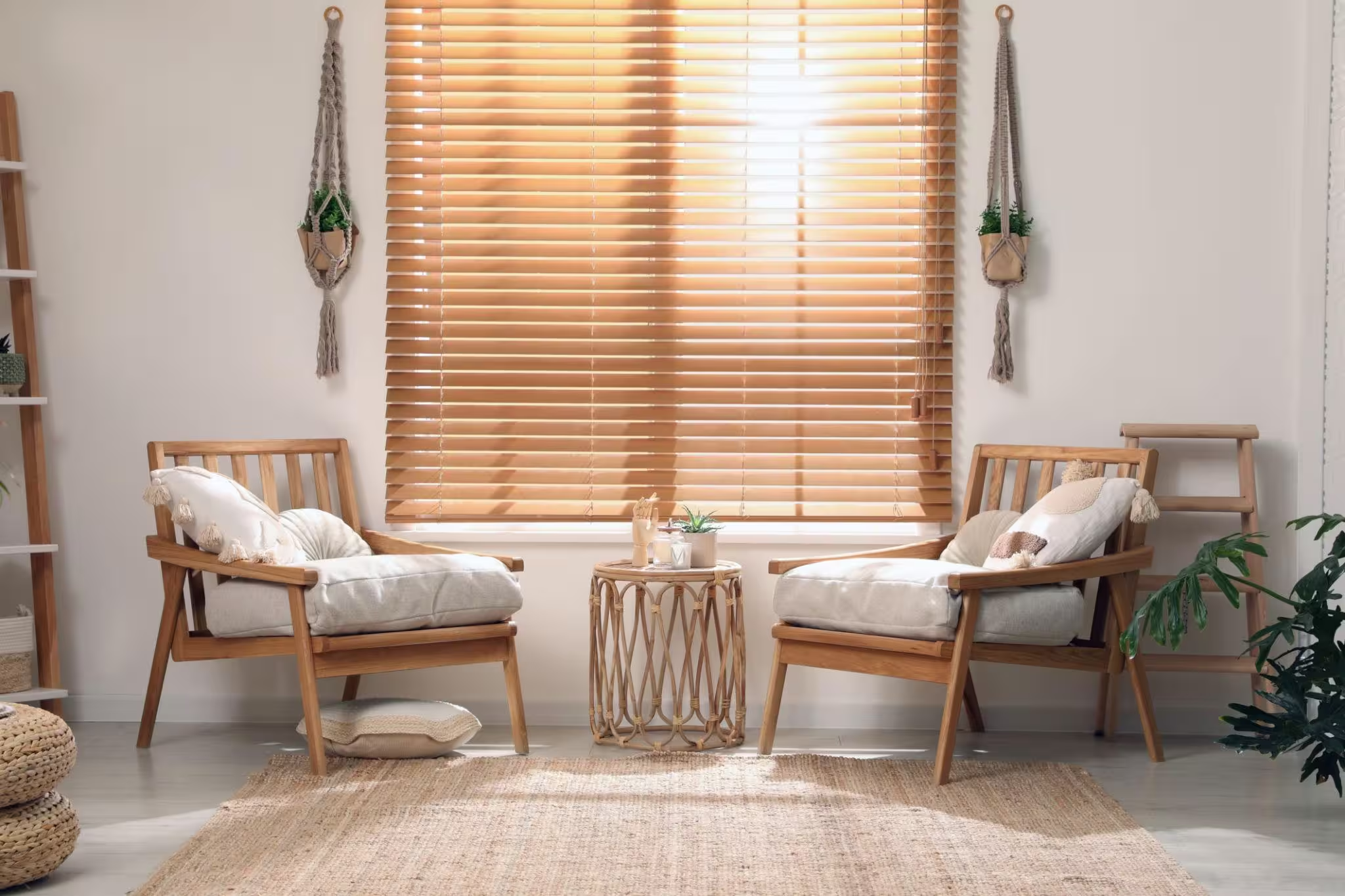
The reason boho works is the mix. Natural materials in conversation with each other — rattan with aged leather, raw wood with ceramic, jute with linen — create the kind of visual interest that feels genuinely eclectic. When one material dominates completely, that tension disappears and you’re left with a single note instead of a chord.
The Right Material Mix for Boho Rooms
A useful heuristic: aim for three to five different natural materials in a room, with no single one appearing more than twice in prominent pieces. Rattan chair? Great. Rattan pendant? Also fine. Rattan mirror, side table, and basket on top of that? The room is now a rattan showroom.
The fix isn’t removing all your rattan — it’s introducing enough contrast that it reads as one element among many rather than the defining feature. A chunky linen throw, a stone lamp base, a raw wood shelf. Each material pulls focus slightly differently, and together they create the layered quality that makes boho rooms feel considered.
Confusing Clutter With Layering — These Are Not the Same Thing
This is the most important distinction in boho decorating, and it’s almost never explained properly.
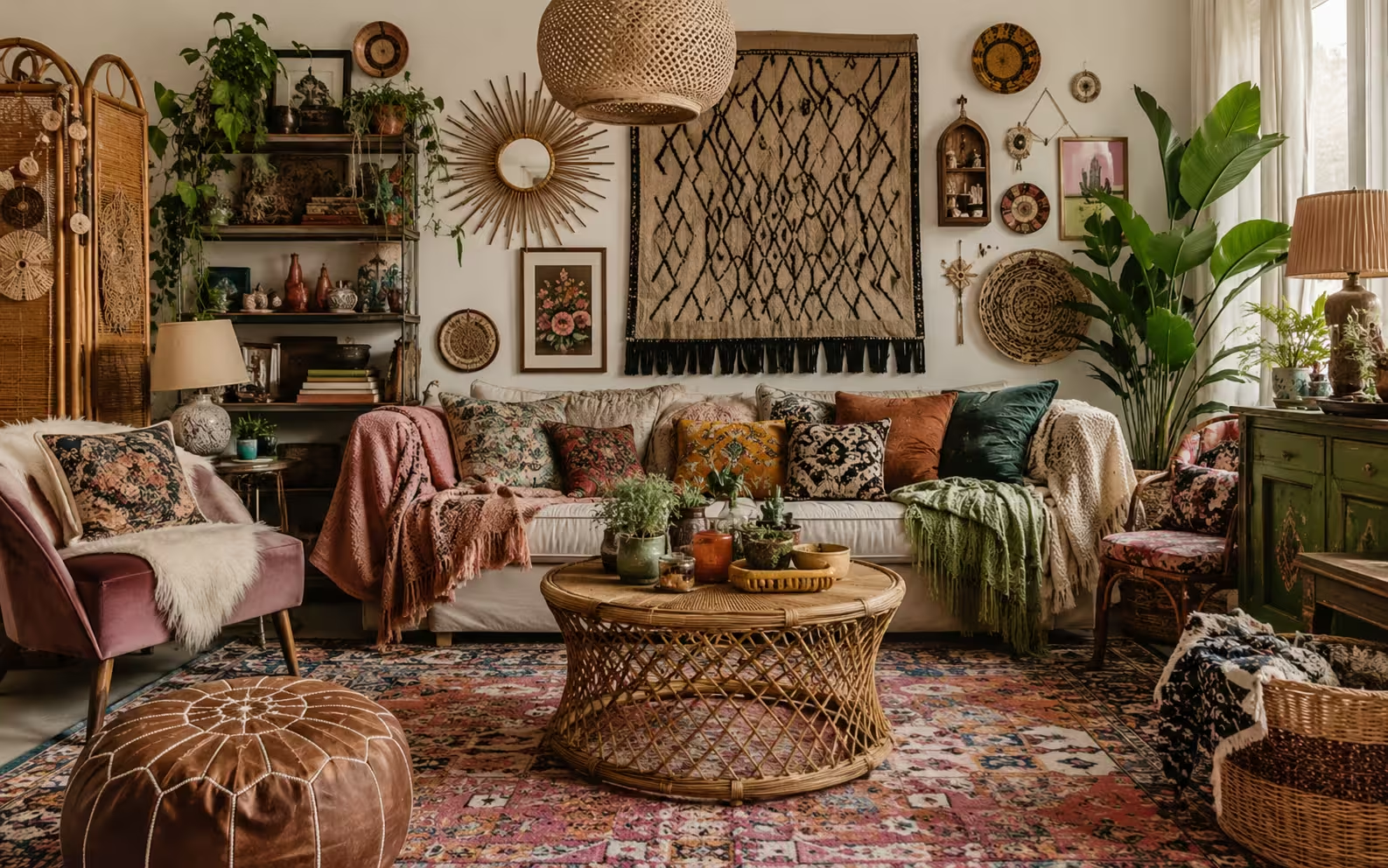
Clutter is what happens when there are too many objects competing for attention at the same visual level — a surface covered edge-to-edge, a shelf where everything is the same height and density, a floor plan where every corner has something in it. The eye has nowhere to rest, and the room feels exhausting.
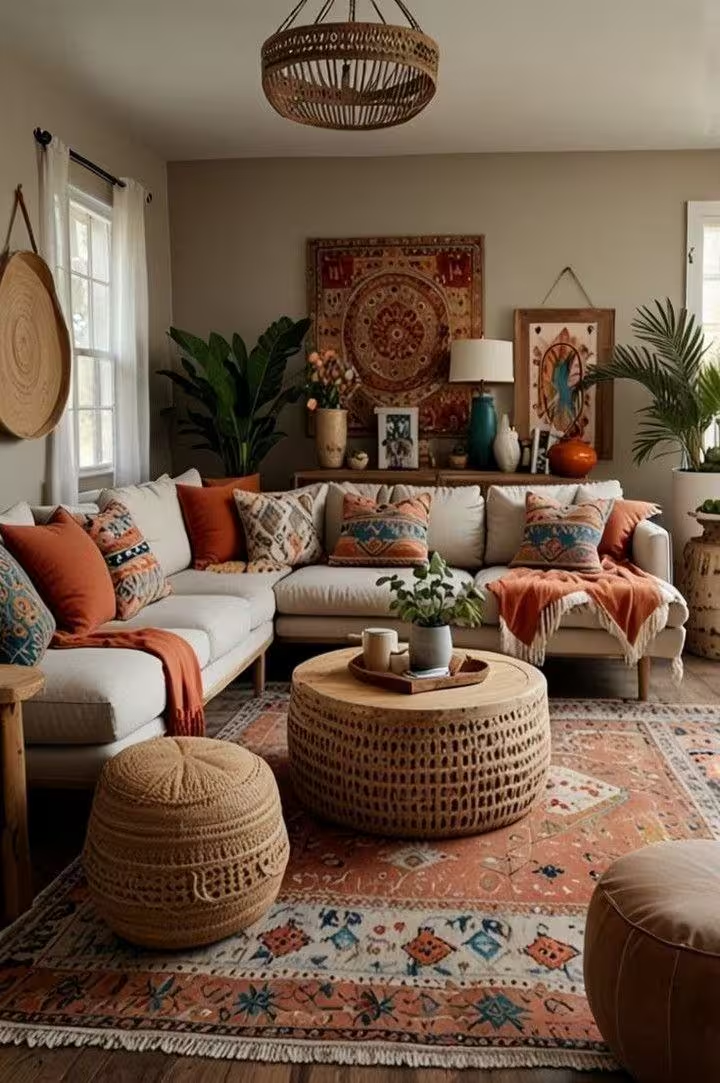
Layering is something different. It has hierarchy. There’s a dominant anchor (usually the rug and largest furniture piece), secondary elements (textiles, plants, lighting), and accent details (objects, art, smaller ceramics) that add interest without noise. Each layer operates at a different visual weight, which is why a well-layered boho room can have a lot happening and still feel calm.
How to Tell If Your Layering Is Working
Stand in the doorway of the room and try to identify what your eye goes to first. Then second. Then third. If there’s a clear sequence — a focal point, then supporting elements, then details — the layering is working. If your eye bounces around without settling anywhere, that’s visual chaos rather than intentional eclecticism.
The fix for over-cluttered rooms isn’t usually a major clear-out. It’s often just removing things from the mid-ground — clearing a surface, editing a shelf, pulling one too-busy textile out of the mix — so the remaining pieces have room to register properly.
Forgetting That Negative Space Is Part of the Design
Boho interiors can handle a lot of visual activity. That’s part of the appeal. But even the most layered, pattern-rich boho room needs breathing room — and most people forget to leave any.
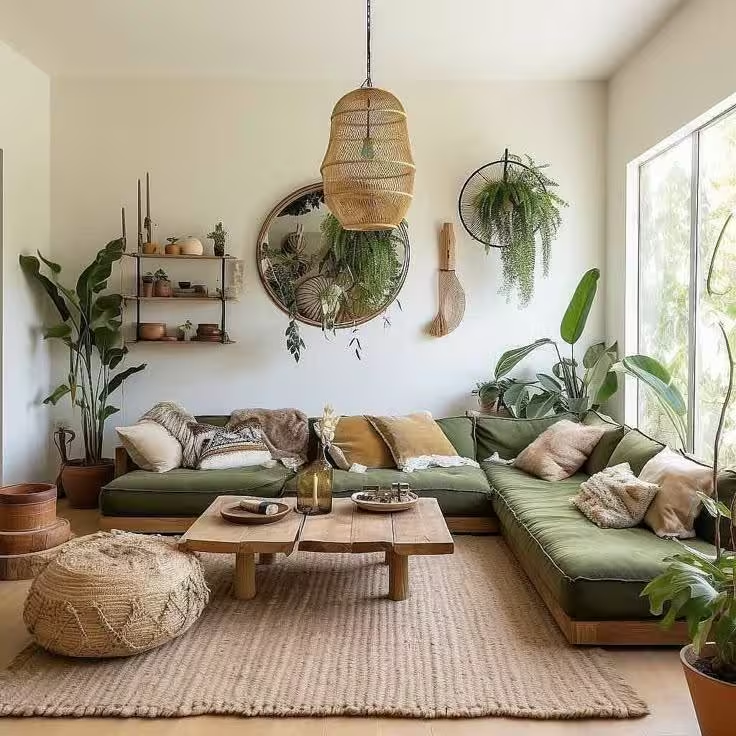
Negative space in a boho context isn’t the same as minimalist empty space. It doesn’t mean bare walls or unfurnished corners. It means pauses — a stretch of calm wall between two art pieces, a clear surface next to a busy textile grouping, a rug with some open floor visible around it. These pauses give everything else room to land properly.
What Negative Space Actually Looks Like in a Boho Room
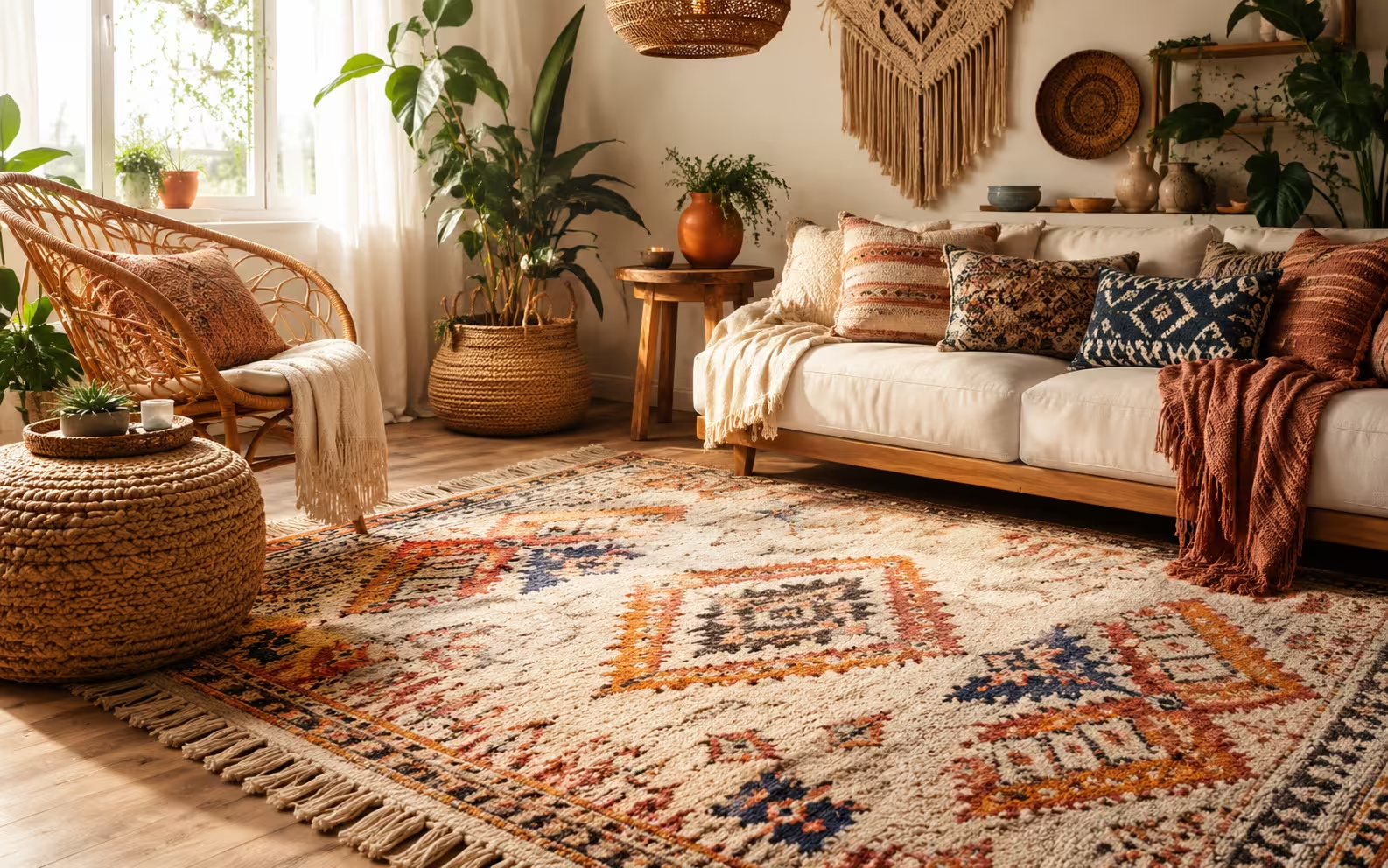
A kilim rug with patterned cushions on the sofa above it works because the sofa upholstery is relatively plain — the sofa provides the pause that lets both the rug and the cushions read clearly. Remove that pause by adding a heavily patterned throw blanket and slipcover, and the whole thing starts to fight itself.
The practical fix: identify the busiest area of your room and find one adjacent element you could simplify. You’re not removing character — you’re creating the contrast that makes character visible.
Avoiding Colour Entirely (Or Using It Without a Logic)
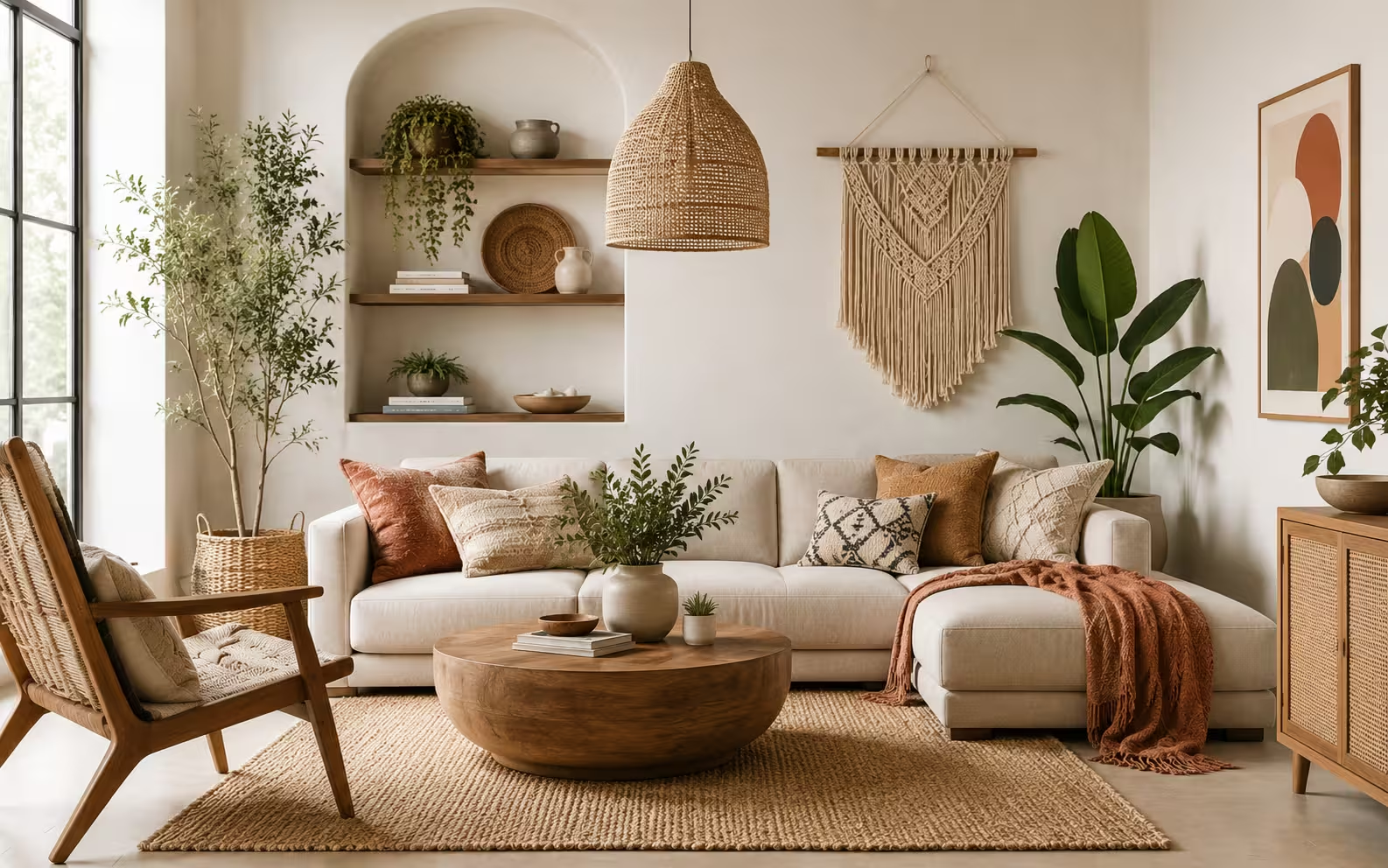
Lots of people play it safe with boho colour and end up with a room that’s technically warm and neutral but somehow feels flat. Beige walls, cream sofa, tan rug, oatmeal cushions — it’s pleasant but it has no energy.
Boho colour doesn’t mean bright. It means warm and intentional. Terracotta, rust, mustard, sage, blush coral, paprika — these tones add life to a neutral base without overwhelming it. The key is that your accent colours should feel related to each other, not just individually attractive. Rust and mustard belong together. Sage and warm white belong together. Mixing cool mint with warm terracotta tends to fight.
The Boho Colour Sweet Spot
Choose one dominant neutral for your large elements (walls, sofa, main rug), then bring two accent tones in through textiles and smaller objects. Those accent tones should share a temperature — either warm together or cool together, not a mix of both.
If you want deeper guidance on building a palette that actually holds together, our modern earthy boho styling guide covers specific tone combinations in more detail.
Buying Everything New — Why This Quietly Kills the Effect
The rooms that feel most convincingly boho share one quality: they look accumulated rather than assembled. Like the person living there has picked things up over time — from a market in one city, a charity shop in another, a grandmother’s house, a beach somewhere.
That quality is almost impossible to fake with new furniture, and it’s the reason so many rooms that tick every boho box on paper still feel wrong. New pieces are too uniform in their perfection — same finish quality, same manufacturing era, same retail-standard proportions. They don’t have the variation and imperfection that makes eclectic interiors feel genuinely personal.
Where to Actually Find the Good Pieces
You don’t need to have travelled extensively to find pieces with character. Charity shops and thrift stores regularly surface vintage ceramics, textiles, and small furniture with exactly the kind of quiet history that makes boho rooms feel real. Online secondhand platforms are particularly good for vintage rugs — kilims and Persian runners that have been used and have real wear are far more interesting in a boho room than a new rug trying to look vintage.
Flea markets and antique fairs are worth the trip specifically for art, mirrors, and one-of-a-kind objects. These are the pieces that can’t be found in any other room because they only exist in one place — which is precisely what gives boho interiors their personality.
Our budget boho decor makeover ideas has more specific sourcing guidance if you’re building the style from scratch.
Following the Style So Rigidly You Lose Your Own Personality
This one is subtle but worth naming.
Some people go so fully committed to “the boho look” that the room stops reflecting anyone in particular and starts looking like a boho mood board. Everything is technically correct — the rattan, the kilim, the macramé, the dried botanicals, the terracotta pots — but it feels hollow. Curated by an algorithm rather than a person.
Boho’s whole appeal is personality-driven design. If you love a mid-century modern chair, bring it in. If you have a piece of art that doesn’t fit any of the usual boho reference points but you genuinely love it, hang it. The rooms that feel most authentically free-spirited are the ones where the design serves the person living there, not the other way around.
The best boho rooms have a few pieces that technically “break” the rules — and those are usually the pieces that make the room memorable.
A Quick Self-Audit: How to Spot What’s Actually Off in Your Room
Before buying anything new or removing anything, try this: spend five minutes in the room with your phone face-down. Just look at it.
Ask yourself: Does your eye have a clear starting point and a natural journey through the room? Or does it bounce without settling? That’s the clutter vs. layering test.
Count how many times each material appears prominently. If one material comes up four or more times in significant pieces, that’s your rattan trap.
Find the calmest surface in the room. If you can’t identify one — if every surface and wall has roughly equal visual density — that’s a negative space problem.
Look at the colour temperature of the room overall. If it reads as grey-beige-cool even though you thought you chose warm neutrals, the issue is probably cool-toned accent pieces undercutting the warmth.
And finally: which pieces in the room feel genuinely yours rather than generically boho? If the honest answer is “not many,” that’s where to start — not with more shopping, but with more consideration of what you actually want the room to say.
For more ideas on what a well-executed version of the style looks like, our modern boho decor ideas and luxury boho living room inspiration are useful reference points once you’ve identified what needs fixing.
FAQs
Stand in the doorway and try to identify where your eye goes first. If it has no clear starting point and bounces around without settling, the room has too much competing for attention at the same visual level. The fix is usually editing the mid-ground — clearing one surface or simplifying one textile grouping — rather than a full overhaul.
It can, but it’s harder. New pieces tend to have a uniformity of finish and proportion that works against the accumulated, eclectic quality that makes boho rooms feel genuine. If you’re buying new, look for pieces with handmade qualities — visible irregularities in ceramics, handwoven textiles, solid wood with natural grain variation — rather than anything that looks factory-perfect.
One or two prominent pieces is generally the sweet spot. A rattan chair and a rattan pendant, or a rattan mirror and a small rattan basket — these contribute to the natural material mix without dominating it. When rattan appears in three or more significant pieces, the room tends to tip from eclectic into themed.
Keep the colour temperature consistent across your accent tones. Warm accents — rust, mustard, terracotta, warm coral — work together. Cool accents — sage, dusty blue, warm grey — work together. Mixing warm and cool accent colours in the same space tends to create visual tension rather than interest. Start with one warm accent colour in textiles before introducing a second.
Yes. A room with a kilim rug, one plant, and plain furniture isn’t really boho — it’s just a room with a nice rug. Boho needs layering to feel like itself: mixed textiles, objects with some visual weight, art or wall decor, plants with genuine presence. The goal isn’t maximum stuff; it’s enough layering that the room feels collected. If it still feels sparse after editing, add texture through a throw, a layered rug, or a wall hanging before adding more objects.