Estimated reading time: 12 minutes
In a boho room, the rug is doing more work than almost anything else. More than the cushions, more than the plants, more than the carefully chosen rattan chair in the corner. A good rug anchors the entire space — it sets the colour story, grounds the furniture, and gives all those layered textures something to build on. A wrong one can quietly make a room that should feel warm and eclectic feel just… confused.
The challenge is that most guidance on the best rugs for boho homes is either a product list with no real explanation, or vague aesthetic advice that doesn’t actually help you make a decision. This is an attempt to do it properly — covering rug types, sizing, pattern mixing, and the practical stuff nobody else mentions.
- Why the Rug Matters So Much in a Boho Room
- The Best Rug Types for Boho Homes
- Getting the Size Right — The Mistake Most People Make
- Colour and Pattern: How to Choose Without Getting It Wrong
- Layering Rugs the Boho Way
- Practical Considerations: Materials, Durability, and Washability
- Vintage vs. New: Which Works Better in a Boho Space?
- FAQs
Why the Rug Matters So Much in a Boho Room
Most interior styles have a clear visual anchor — a fireplace, a statement sofa, a wall of art. In boho rooms, the rug often is that anchor. It’s the piece everything else orients around.
This is partly why getting it wrong is so disruptive. A rug that’s too small makes the furniture look like it’s floating. One that fights the colours in the room creates visual noise instead of warmth. And a rug that’s too new and pristine-looking can undercut the collected, lived-in quality that makes boho rooms feel genuinely personal rather than decorated.
The good news is that once you understand what makes a rug work in this context, the choice becomes much clearer.
The Best Rug Types for Boho Homes
The rug types that consistently work in boho spaces share a few things: warmth, pattern interest, and some quality of character — whether that’s through handweaving, natural variation in the fibres, or genuine age. Here’s what each type brings to the room.
Kilim Rugs
Kilims are probably the single most versatile choice for boho interiors. Full stop.
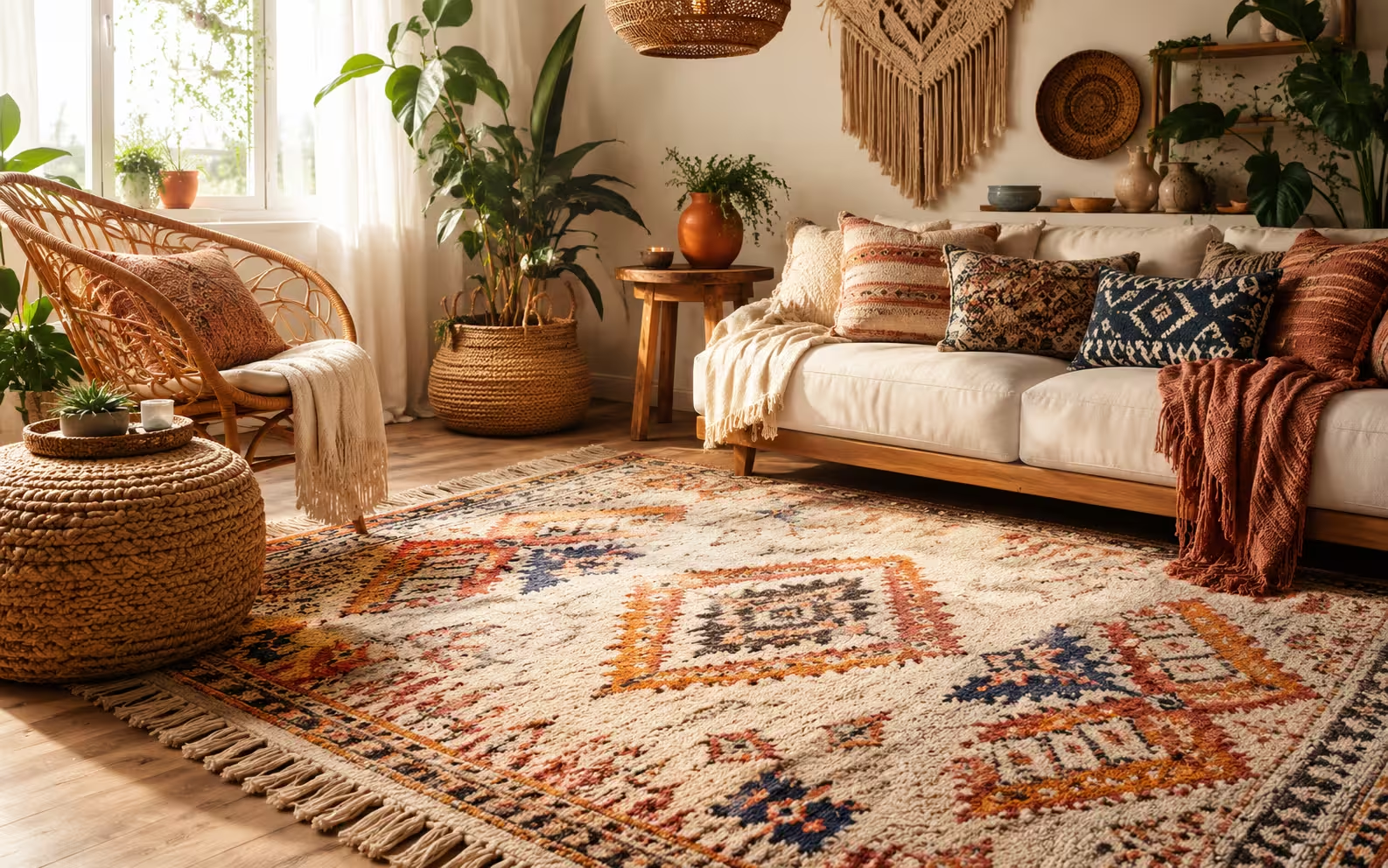
They’re flatwoven, which means they sit cleanly under furniture without bunching and work well in layered rug setups. The geometric patterns — typically bold diamonds, chevrons, and stepped motifs in warm earthy tones — do significant visual work without overwhelming the room. A vintage kilim on a wooden floor brings pattern, warmth, and cultural reference in one piece, which is genuinely hard to replicate with anything else.
The range within kilim rugs is wide. Turkish and Anatolian kilims tend toward geometric complexity; Afghan and Persian flatweaves are often bolder and more graphic. What they share is a kind of earned quality — even a good reproduction kilim has more visual interest than most mass-produced alternatives.
Moroccan Rugs (Beni Ourain and Beyond)
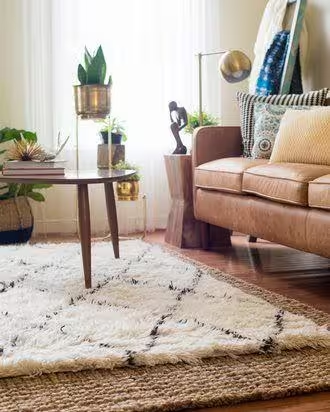
Beni Ourain rugs — the cream-and-black geometric wool rugs from the Atlas Mountains — have become closely associated with the boho aesthetic, and for good reason. The thick pile, natural wool, and minimal pattern work in almost any colour scheme.
They’re beautiful. They’re also one of the least practical rugs for high-traffic spaces, families with children, or anyone who eats near the floor. Cream wool pile shows everything and cleans with difficulty. In the right room — a low-traffic bedroom, a sitting room that doesn’t double as a play space — they’re extraordinary. Elsewhere, consider a Moroccan rug with darker tones and a lower pile.
Persian and Vintage-Style Rugs
Genuine vintage Persian rugs — or good quality reproductions with similar characteristics — are anchor pieces in the truest sense. The layered botanical patterns, the softened colours from years of wear, the slight irregularities in hand-knotted construction — these are exactly the qualities that make boho rooms feel accumulated rather than assembled.
If your budget allows for a genuine vintage piece, it’s one of the best investments in a boho room. Online platforms and vintage markets regularly surface vintage Persian runners and area rugs at more accessible prices than most people expect. The slight wear and colour variation aren’t flaws — in this context, they’re the point.
Dhurrie and Flatweave Rugs
Dhurries are Indian flatwoven cotton rugs, typically with banded or geometric patterns in natural and earthy tones. They’re more casual than kilims and considerably more affordable, which makes them excellent for layering — a dhurrie as a base layer under a smaller vintage kilim is a classic boho combination.
They’re also among the most practical choices: cotton construction, flatweave structure, and often machine washable. The trade-off is that they have less visual presence than a kilim or Persian rug. They work better as supporting players than as the sole anchor.
Jute and Natural Fibre Rugs
Jute rugs are the natural material choice — warm, organic, with a texture that complements linen, rattan, and wood in exactly the way you’d expect. In a largely neutral boho room, a large jute rug provides the textural foundation without adding any competing pattern.
The limitation is practical: jute doesn’t clean well, isn’t water-resistant, and can feel rough underfoot in thicker weaves. For a boho bedroom where foot traffic is light and spills are unlikely, they’re excellent. For a living room that sees daily use, they require more consideration. A jute rug layered under something smaller and more patterned is often the better practical choice.
Getting the Size Right — The Mistake Most People Make
The most common rug mistake in boho rooms — and really in any room — is going too small. It’s an understandable impulse: smaller rugs are cheaper and feel like a lower-stakes commitment. But a rug that’s too small for the room makes everything look unanchored and slightly off, in a way that’s hard to fix without replacing the rug.
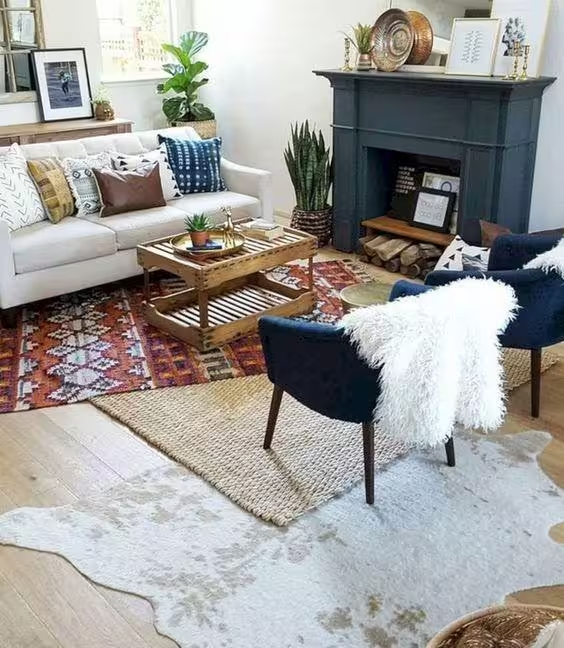
Living Room Sizing Guide
In a living room, the rug should be large enough that all the main seating sits either fully on it or has at least the front legs on it. A sofa with all four legs floating off the rug onto bare floor looks disconnected from the rest of the room.
For a standard living room seating area, a 240cm x 170cm rug is typically the minimum. 270cm x 365cm is more comfortable in larger rooms. When in doubt, go up a size — you can always add a smaller layered rug on top, but you can’t make a too-small rug look bigger.
Bedroom Sizing Guide
In a bedroom, the rug should extend far enough beyond the bed that your feet land on it when you get up. A rug that only sits under the bed and disappears entirely beneath the frame looks like a decorating mistake. Aim for at least 60cm of rug visible on each side of the bed, and similar at the foot.
Colour and Pattern: How to Choose Without Getting It Wrong
This is where people get the most anxious — and usually more anxious than they need to be.
Pattern Mixing Rules
Boho rooms already have a lot of pattern happening in cushions, throws, and wall hangings. The question is how a patterned rug fits into that.
The key isn’t matching — it’s tonal coherence. A geometric kilim in warm rust, ochre, and cream can coexist with ikat cushions and a floral throw if they’re all working in the same warm colour temperature. What creates visual chaos is patterns that operate in different colour temperatures — a cool-blue geometric rug with warm terracotta textiles will always fight.
If you already have bold patterns in the room, a rug with quieter pattern and stronger colour can anchor things without adding to the noise. If your textiles are relatively neutral, a bolder rug pattern gives the room its energy.
Neutral Rugs vs. Statement Rugs
A neutral rug — cream, oatmeal, natural jute — works best when the room already has enough visual interest in textiles and objects. It provides breathing room rather than adding to the mix.
A statement rug — a vivid kilim, a bold Persian pattern, a graphic Moroccan design — does the opposite. It sets the direction and everything else builds from it. If you’re starting a room from scratch, a statement rug is often the smarter starting point.
Layering Rugs the Boho Way
Layering rugs is one of the most effective techniques in boho decorating and one of the least explained. Done right, it adds depth and character that no single rug can achieve alone.
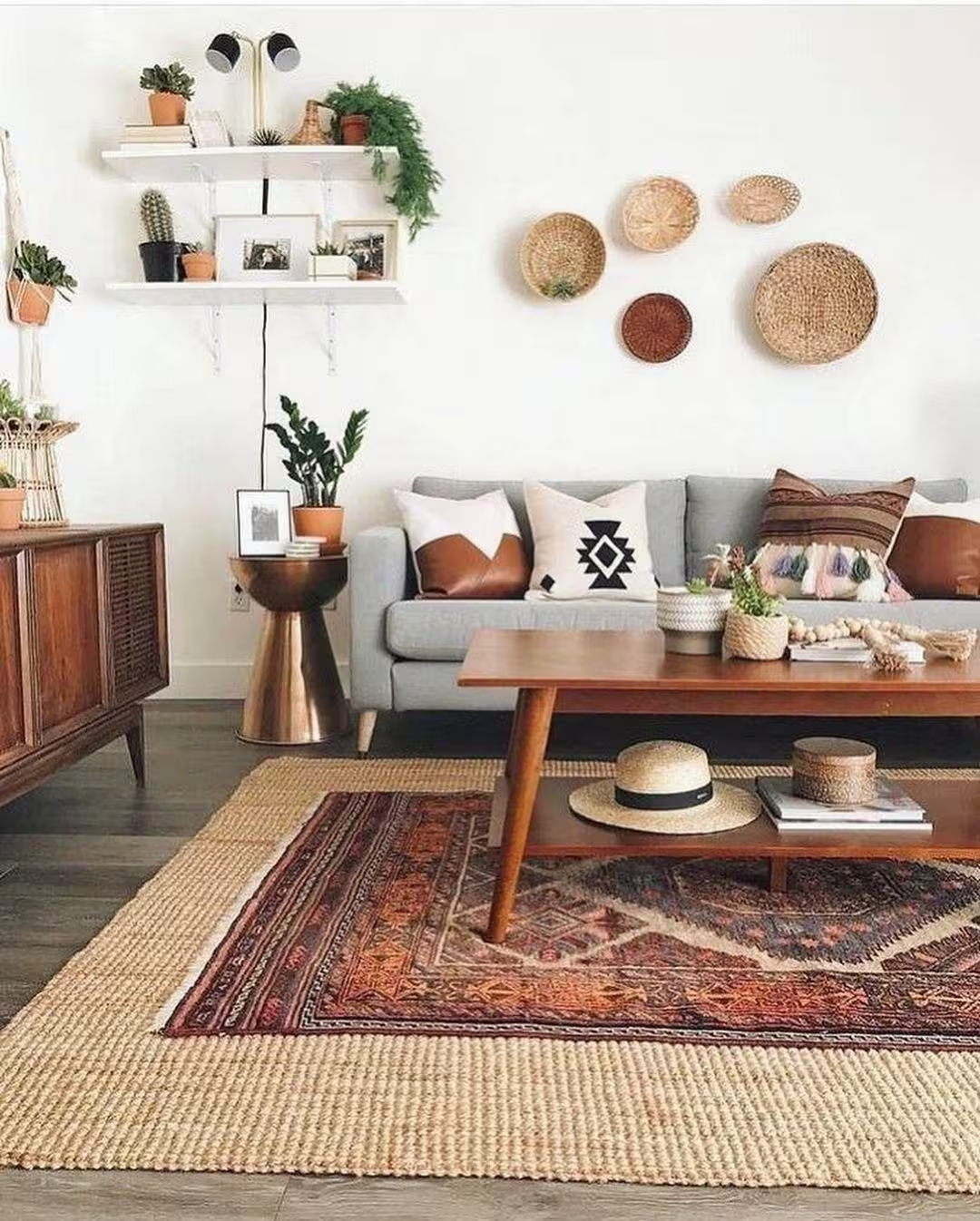
The basic principle: a large, relatively neutral base rug (jute or a low-key flatweave) with a smaller, more characterful rug on top. The smaller rug should be placed so it’s clearly intentional — centred over the base, or offset deliberately rather than accidentally crooked.
The combination that works most reliably is a natural jute base with a vintage kilim or small Persian rug layered over it. The jute provides texture and warmth; the kilim provides pattern and personality. Together they read as collected rather than coordinated, which is exactly the boho effect.
For more ideas on layering and working with what you have, our boho styling mistakes homeowners make article covers the layering principle in the broader context of the whole room.
Practical Considerations: Materials, Durability, and Washability
The reason so many beautiful boho rugs end up rolled up in a cupboard is that they’re impossible to live with. A cream wool rug in a room with kids, pets, or regular foot traffic requires so much careful management that it stops being a design choice and starts being a source of anxiety.
Natural Fibre vs. Synthetic
Natural fibres — wool, cotton, jute, silk — generally look and feel better than synthetic alternatives, and they age more attractively. The trade-off is care. Wool rugs are more resilient than jute but still require professional cleaning for significant stains. Cotton dhurries are the exception — many are machine washable, which makes them genuinely practical.
Synthetic rugs have improved considerably in quality and can be excellent practical choices, particularly in versions that replicate kilim or flatweave aesthetics. The honest caveat is that they rarely have the same visual character as natural fibre rugs — they lack the slight irregularities and tonal depth that make aged natural fibre rugs feel genuinely boho.
Washable Rugs: The Honest Verdict
Machine washable rugs have become significantly better in recent years, and the best ones are worth genuine consideration for high-traffic rooms or homes with children and pets. They tend to work better in natural, geometric, or tribal patterns than in detailed Persian-style designs — the latter relies on yarn and dye quality that washable construction can’t quite replicate.
If washability is a priority, look for flatweave construction and natural-inspired patterns. A washable cotton dhurrie or a flatweave synthetic kilim-style rug can look genuinely good in a boho room while still surviving real life.
Vintage vs. New: Which Works Better in a Boho Space?
Honest answer: vintage usually wins.
This isn’t a budget argument — good vintage rugs can cost as much as new ones. It’s an aesthetic one. The quality that makes a boho room feel genuine — accumulated, personal, with a sense of history — is exactly what vintage rugs provide naturally. Softened colours from decades of use, slight irregularities in handwoven construction, the subtle tonal variations that come from natural dyes fading differently over time — these are impossible to manufacture and difficult to convincingly fake.
New rugs described as “vintage-inspired” or “distressed” can be perfectly good decorating choices. They’re just working harder to create an effect that an actual vintage rug delivers inherently.
For sourcing, online resale platforms are genuinely good for vintage kilims and Persian runners — often significantly below what you’d pay in a design store. Flea markets and antique dealers are worth the trip for one-of-a-kind pieces with genuine provenance.
Our budget boho decor makeover ideas has more specific sourcing guidance if you’re working on building the look without spending a fortune.
FAQs
Kilim rugs are the most consistently versatile choice — their geometric patterns, warm earthy tones, and flatweave construction work in almost any boho room. Vintage Persian rugs and Moroccan Beni Ourain rugs are also strongly associated with the aesthetic. The specific “best” type depends on your room’s colour palette, traffic level, and whether you’re layering.
Yes, and it’s one of the best things you can do. The most reliable approach is a large natural fibre base rug (jute or cotton flatweave) with a smaller, more characterful rug on top — typically a vintage kilim or Persian rug. The base provides texture and scale; the layered rug provides pattern and personality.
Bigger than you think. In a living room, the front legs of all main seating should sit on the rug at minimum — ideally all four legs. This typically means a rug of at least 240cm x 170cm for a standard seating area. In a bedroom, the rug should extend 60cm or more beyond each side of the bed so you step onto it when you get up.
Aesthetically, yes — jute’s natural texture and warm tones complement wood, linen, and rattan beautifully. Practically, jute is less forgiving than wool or cotton: it doesn’t clean easily, isn’t water-resistant, and can feel rough underfoot in thicker weaves. It works best in low-traffic rooms or as a base layer for rug layering rather than as a standalone rug in a busy living space.
The best washable rugs — flatweave construction with kilim-inspired or geometric patterns — can look genuinely good in a boho room. They work better in tribal and geometric patterns than in detailed Persian-style designs, where the intricacy relies on yarn and dye quality that washable construction doesn’t fully replicate. If durability and easy cleaning are priorities, a washable flatweave cotton rug is worth serious consideration.