Estimated reading time: 11 minutes
The fireplace is the natural anchor of any living room. Which makes it all the more frustrating when it looks like it belongs in a different decade — a chunky oak surround, a dated tile hearth, or a gas fire that came with the house and never quite suited it.
The good news is that modernising a fireplace rarely requires starting from scratch. Most of what makes a fireplace look dated is surface-level: the surround material, the chimney breast treatment, what sits above it. Change those, and the whole room shifts.
Modern fireplace styling is built around a few consistent principles: clean lines, intentional materials, and treating the fireplace wall as a considered architectural feature rather than just a functional necessity. That doesn’t mean everything has to be stark or minimalist — some of the most effective contemporary fireplace designs are genuinely warm and textured. But they’re deliberate. Nothing there by accident.
- What Modern Fireplace Design Actually Means
- Five Modern Fireplace Styling Ideas Worth Actually Considering
- Floor-to-Ceiling Surrounds: The Room-Changing Trick
- Organic Textures: Warmth Without Fussiness
- The Chimney Breast as Feature Wall
- The Built-in Media Wall
- What to Put Above a Modern Fireplace
- How to Modernise an Existing Fireplace Without Starting Over
- Frequently Asked Questions
What Modern Fireplace Design Actually Means
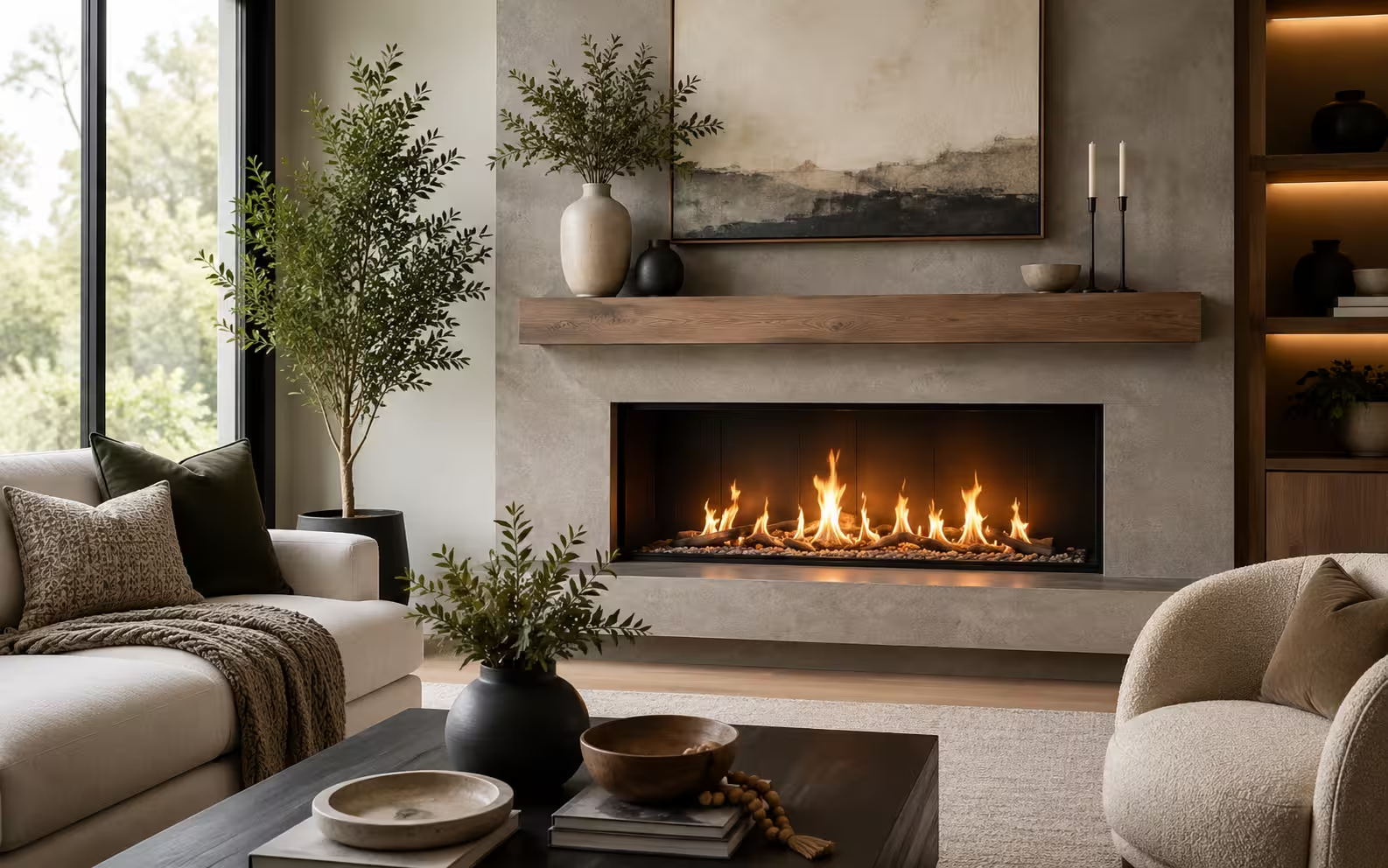
Modern doesn’t automatically mean cold. That’s the most common misconception. A fireplace clad in rough-hewn limestone with a simple oak floating shelf above it reads as completely contemporary — it just uses organic materials instead of polished ones.
What separates modern fireplace design from traditional is the absence of ornamental detail. No decorative corbels, no patterned tile surrounds, no heavily carved mantelpieces. The structure itself does the work. Materials are chosen for texture and proportion, not decoration.
The other defining feature is integration. A modern fireplace doesn’t sit in a room — it feels like part of the architecture. That might mean a floor-to-ceiling chimney breast treatment, a built-in media wall, or a frameless firebox set flush into the plasterwork. The fireplace and the wall around it feel like one considered decision, not a fireplace with a wall behind it.
Five Modern Fireplace Styling Ideas Worth Actually Considering
The Linear Firebox: Sleek, Minimal, Architectural
A linear or ribbon-style firebox — wide, low, frameless — is the defining feature of contemporary fireplace design right now. The flame runs horizontally rather than in a traditional square or arched opening, and when it’s set flush into the wall with no visible frame, the effect is genuinely architectural.
Why it works: The horizontal proportion reads as modern rather than traditional, and the absence of a surround means the fire itself is the feature. Nothing competing for attention.
How to apply it: Linear fireboxes are available in gas and electric formats, with flue-free gas options making them viable in rooms without existing chimney infrastructure. Electric versions are the most flexible — they can go almost anywhere. If you’re retrofitting, this is the higher-budget end of the options, but the visual return is significant.
Trade-off: Without a surround or mantel to anchor the wall, the space above needs careful thought. A plain rectangular firebox in a plain wall can look unfinished if there’s nothing else going on architecturally.
Floor-to-Ceiling Surrounds: The Room-Changing Trick
Running cladding from the hearth all the way to the ceiling is one of the most transformative things you can do to a fireplace wall. The vertical line draws the eye upward and makes the room feel taller — even in a standard-height room where the ceiling isn’t particularly impressive.
Materials that work well here: large-format porcelain slabs (those with a marble or stone effect, in matte finish), natural limestone, and fluted wood panelling. Each reads differently in a room.
Porcelain slabs feel polished and contemporary — better suited to spaces with sleek, minimal furniture. Limestone has a warmth to it that photographs as cool but actually feels much softer in person, especially in lower light. Fluted panelling adds texture without pattern and works across a wider range of interior styles, from modern Scandi to mid-century.
Practical note: For floor-to-ceiling cladding to look balanced, the surround width should be roughly 40–50% of the total wall width it occupies. Too narrow and it looks like a tall thin column. Too wide and it swamps the room.
Trade-off: The installation needs to be precise. A slightly misaligned porcelain panel or uneven grout line will be the first thing anyone notices — this isn’t a weekend DIY project for most people.
Organic Textures: Warmth Without Fussiness
Not every modern fireplace needs to be sleek. There’s a strong case for using raw, tactile materials — stacked natural stone, exposed brick, reclaimed timber — to add warmth and character without slipping into traditional territory.
The key is restraint. Textured stone on the chimney breast only. A single reclaimed oak beam as a floating shelf rather than a full carved mantelpiece. The organic material works as a counterpoint to cleaner surrounding surfaces — a textured fireplace wall against smooth plaster and simple furniture feels considered. The same textured wall in an already-busy room just looks cluttered.
This approach tends to work particularly well with wood-burning and multi-fuel stoves, where the rawness of the fuel source and the rawness of the materials feel consistent with each other.
For ideas on how organic fireplace textures complement other natural materials in a room, our cozy fireplace decor ideas guide covers the layering approach in more depth.
The Chimney Breast as Feature Wall
Painting the chimney breast in a contrasting dark tone — deep charcoal, warm black, dark slate — has become one of the most popular contemporary fireplace treatments, and it works for a clear reason: contrast frames the fire itself. When the chimney breast is the same colour as the surrounding walls, the fireplace disappears into the room. When it’s darker, it creates a visual boundary that makes the flame the focal point.
Colours that consistently work: Farrow & Ball Railings, Charcoal No. 43, Off-Black. For warmer tones, very deep navy or forest green can work beautifully depending on the room. The finish matters — matte almost always looks more considered than satin in this application.
The opposite approach — painting the chimney breast in the same colour as the wall for a seamless, architectural look — also works well in rooms that already have strong visual interest elsewhere. A pale all-white chimney breast in a room with bold furniture and textured curtains can feel calm and intentional.
When not to go dark: In a very small room, a dark chimney breast can feel heavy and make the space contract. In rooms where the fireplace wall receives minimal light, test the colour in the actual light conditions before committing.
If you’re styling the chimney breast alongside window treatments on the same wall, our luxury fireplace styling trends article covers how these elements work together.
The Built-in Media Wall
Integrating a fireplace into a wider media wall — TV mounted above or beside it, flanking cabinetry, floating shelves — has become the dominant living room layout in new builds and renovations. Done well, it’s genuinely impressive. Done poorly, it looks like two different rooms fighting each other.
The version that works: a recessed or flush-mounted electric or gas fire, a floating hearth at a consistent depth with surrounding cabinetry, and a TV mounted at the centre of the composition at a properly calibrated height. Hidden cable management is non-negotiable — a cable running down a pristine media wall defeats the whole point.
Should you put a TV above a modern fireplace? Honest answer: it depends on the fireplace type. With a gas or wood fire that generates significant heat, a TV mounted directly above takes consistent thermal stress — this genuinely shortens the lifespan of some screens and affects performance. Electric fires don’t have this problem. If you’re set on a media wall with a real fire, keep the TV a reasonable distance above the firebox and consider a recessed hearth design that directs heat forward rather than upward.
Our minimalist fireplace decor trends guide covers the pared-back media wall approach if you want the integration without the visual complexity.
What to Put Above a Modern Fireplace
This is one of the most-Googled fireplace questions, and most articles don’t answer it directly. Here’s what actually works:
- A large single mirror — particularly effective in smaller rooms. The reflection adds depth, and a simple frameless or thin-framed mirror doesn’t compete with the fireplace below. See our best mirrors above fireplaces guide for sizing and proportion guidance.
- One piece of oversized art — larger than you think. A canvas that fills 60–70% of the chimney breast width reads as intentional. A small piece floating above a wide surround looks lost.
- A floating shelf with carefully edited objects — the key word is edited. Three things, not twelve. Books, a plant, a single sculptural object.
- Nothing — genuinely valid in the right room. A beautifully clad chimney breast that runs floor to ceiling needs nothing above the fire. Adding something can actually undercut it.
- A mounted TV — see the media wall section above.
What doesn’t tend to work: A collection of small-scale objects, symmetrical candlestick arrangements, or anything that requires the viewer to step close to appreciate it. At fireplace scale, the above-mantel moment needs to read from across the room.
How to Modernise an Existing Fireplace Without Starting Over
This is where most articles go quiet — because it requires acknowledging that the starting point matters. If your current fireplace is a 1990s oak veneer surround with a patterned tile hearth, the options depend on what’s underneath.
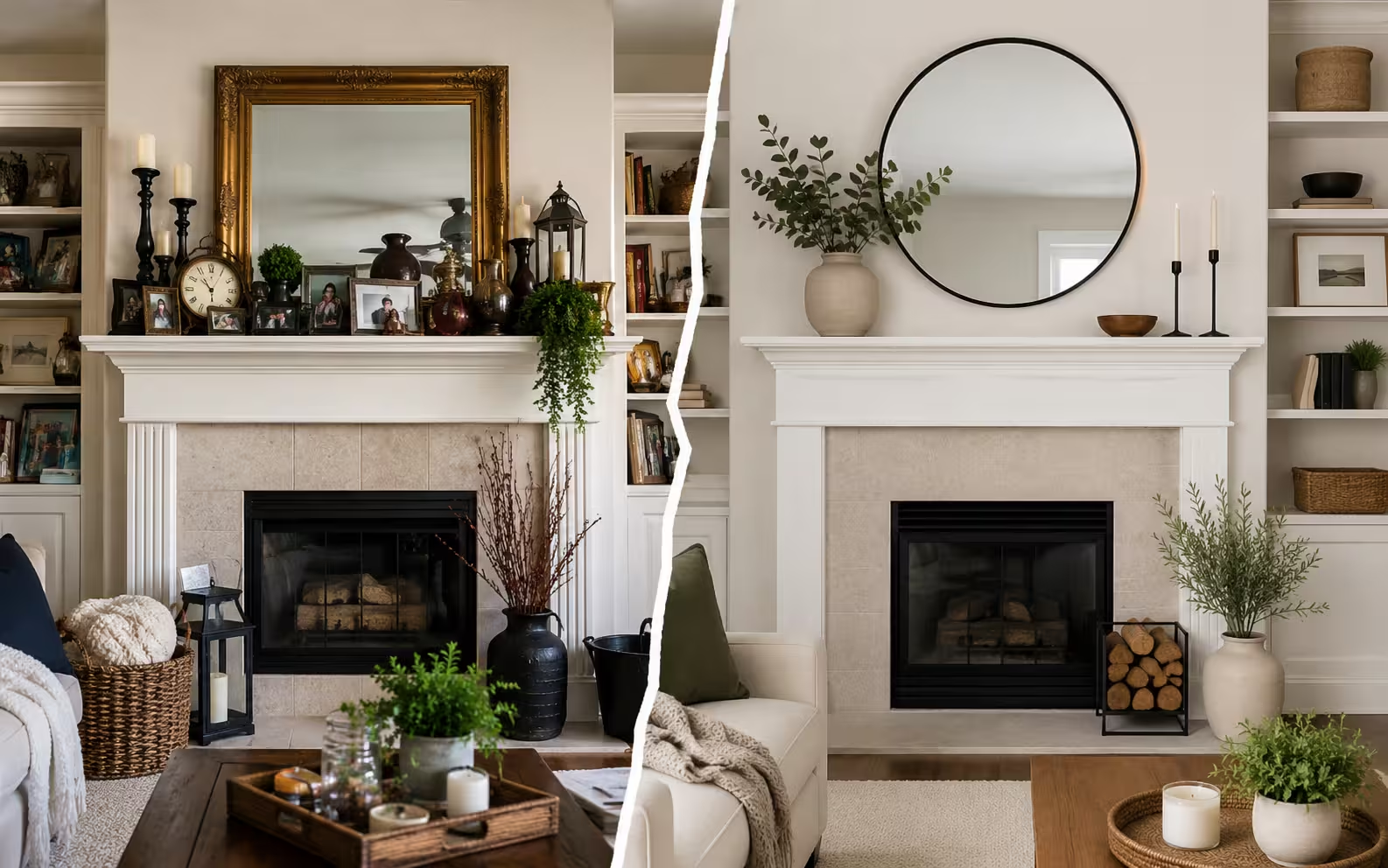
Remove vs. update: Oak surrounds and tile hearths can often be removed with moderate effort and cost, revealing the original fireplace opening and a blank-slate chimney breast. This is frequently more effective than trying to paint or panel over an existing surround that doesn’t suit the space.
If the surround is solid and well-proportioned — stone or marble that’s just dated in colour — painting it in a chalky stone tone can work well. There are specialist stone paints that adhere correctly and hold up to heat.
If the surround is the wrong shape — too ornate, wrong proportions — replacing it is almost always the right call. A simple flat-panel MDF or stone surround is inexpensive relative to the visual return.
The hearth — often overlooked, but a dated hearth tile drags the whole thing back. Large-format concrete-effect porcelain tiles are a practical, heat-safe, and modern-looking replacement that most tilers can install without specialist knowledge.
For ideas at different budget levels, our budget fireplace makeover ideas covers the options that give the most visual return for the least spend.
Frequently Asked Questions
The most contemporary approach is a linear or ribbon-style firebox set flush into the wall — ideally with a floor-to-ceiling chimney breast treatment in stone, porcelain, or fluted panelling and no traditional mantel. The defining characteristic is architectural integration: the fireplace feels like part of the wall, not an addition to it.
Not necessarily. The mantel-free look works well in rooms with high ceilings and sufficient visual interest elsewhere. In standard-height rooms, a simple floating shelf at mantel height provides the same functional ledge without the visual weight of a full surround. What to avoid is going mantel-free and then leaving the chimney breast completely bare — the wall above the fire needs some considered treatment regardless.
Limestone, large-format porcelain, micro-cement, and fluted timber panelling all perform well in contemporary interiors. The choice should reflect the room’s other materials — a polished porcelain surround looks odd in a room full of linen and raw wood. Consistency of texture matters as much as the material itself.
Deep charcoal or warm black creates the strongest contrast and makes the fire itself the visual focal point. Good starting points: Railings or Off-Black by Farrow & Ball, or equivalent in any matte emulsion. If dark feels too heavy for the room, an all-white chimney breast in the same tone as the surrounding walls creates a seamless, architectural look — different effect, equally considered.
Start with the hearth tiles — replacing them with large-format porcelain makes an immediate difference at relatively low cost. Then address the surround: painting a solid stone or MDF surround in a contemporary tone is the most cost-effective update. Save chimney breast cladding and new fireplace units for a later phase if budget is the constraint.