Estimated reading time: 12 minutes
Most people choose a dining room chandelier by sight. It looks beautiful in the photo, the price feels justifiable, and it goes in the basket. The sizing calculation — if it happens at all — comes later. That’s usually where things go wrong.
A chandelier that’s the wrong diameter looks lost. One hung too high loses the entire effect. And one running at the wrong colour temperature can make a beautifully set table look clinical and cold. These aren’t decorating opinions — they’re the three technical decisions that determine whether your best chandelier for the dining room actually works in the room.
Here’s how to get all three right, plus honest guidance on which styles hold up over time and which ones you’ll be regretting in four years.
- Why the Dining Room Chandelier Is Different From Every Other Fixture
- How to Size a Chandelier for Your Dining Table (The Rule That Actually Works)
- Getting the Hanging Height Right
- Colour Temperature: The Detail That Most Buyers Get Wrong
- Chandelier Styles for Dining Rooms: What Works, What Lasts, What to Avoid
- Linear and oval chandeliers
- Drum and fabric shades
- What dates quickly
- Low Ceiling Dining Rooms — Specific Guidance
- What to Check Before You Buy
- Putting It Together
- Frequently Asked Questions
Why the Dining Room Chandelier Is Different From Every Other Fixture
Lighting in most rooms is background. In a dining room, it’s centrepiece.
The chandelier sits directly above the table — at eye level when you’re seated, framed by the room on all sides, and visible to every guest from the moment they walk in. Unlike a ceiling fixture in a hallway or a reading lamp in a bedroom, a dining room chandelier is always on display. It’s the piece guests comment on, the thing that shows up in every food photo, and the detail that quietly signals whether a room was designed or just furnished.
Interior designers consistently treat it as the highest-impact single purchase in a dining room — not the table, not the chairs. Get the chandelier right and it makes everything else in the room look more considered. Get it wrong and it undermines things that cost far more.
That’s worth keeping in mind when the price feels steep.
How to Size a Chandelier for Your Dining Table (The Rule That Actually Works)
The diameter formula — and why it works
The standard sizing rule: add your dining table’s length and width in feet, then read that number as inches. That’s your target chandelier diameter range.
A table that’s 6 feet long and 3 feet wide adds up to 9 — so you’re looking for a chandelier roughly 27–36 inches (70–90cm) in diameter. Round down for more intimate rooms; round up if the ceiling is higher than standard or the room has generous proportions.
The reason this formula works is rooted in how you actually experience the chandelier: seated at the table, looking straight ahead. From that position, the fixture fills your peripheral vision above the table surface. A chandelier that’s too narrow reads as an afterthought — like a pendant light that wandered in from the kitchen. One that’s too wide starts to feel like a ceiling pressing down on the meal.
The formula delivers the proportion that feels visually balanced from the most important seat in the room.
Linear chandeliers over rectangular tables
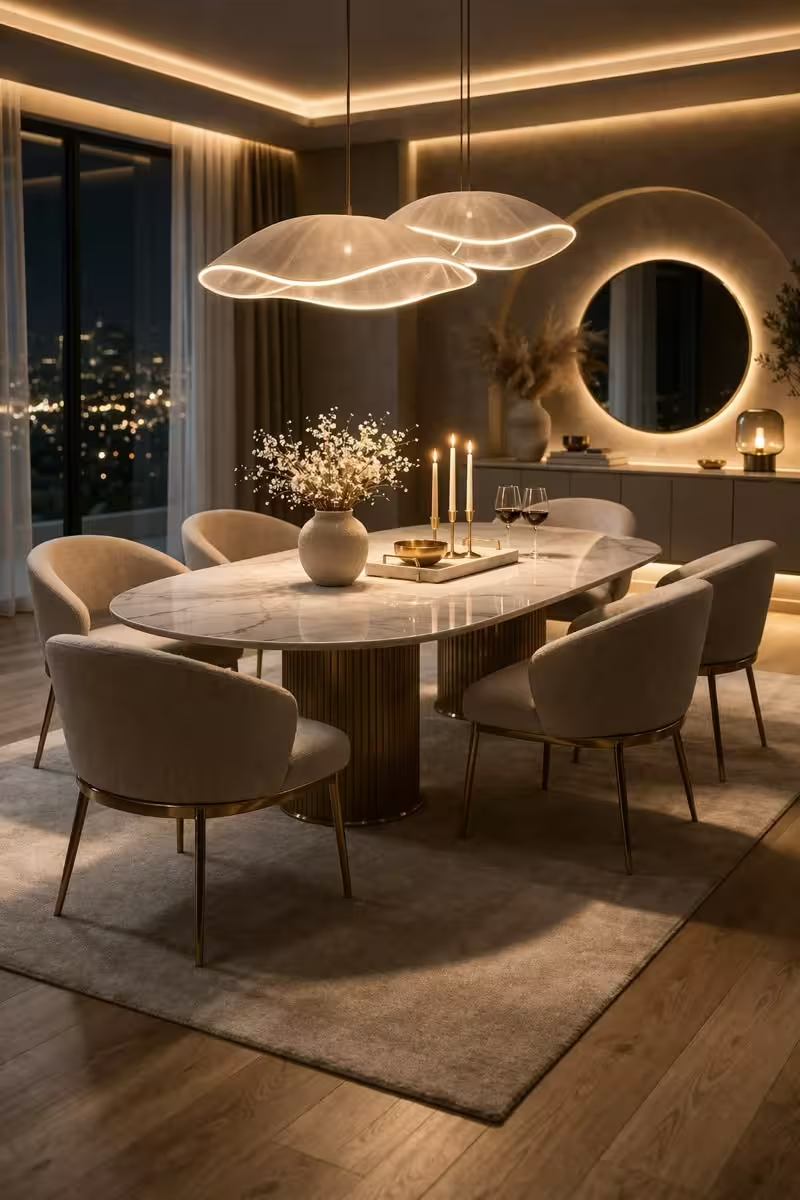
For long rectangular tables, a round or square chandelier often works less well than a linear or oval fixture — one that traces the long axis of the table. The visual logic is simple: a single circular form centred over a 2.4m table has a lot of exposed table on either side. A linear chandelier spanning roughly two-thirds the table length distributes the light and the visual weight far more naturally.
Getting the Hanging Height Right
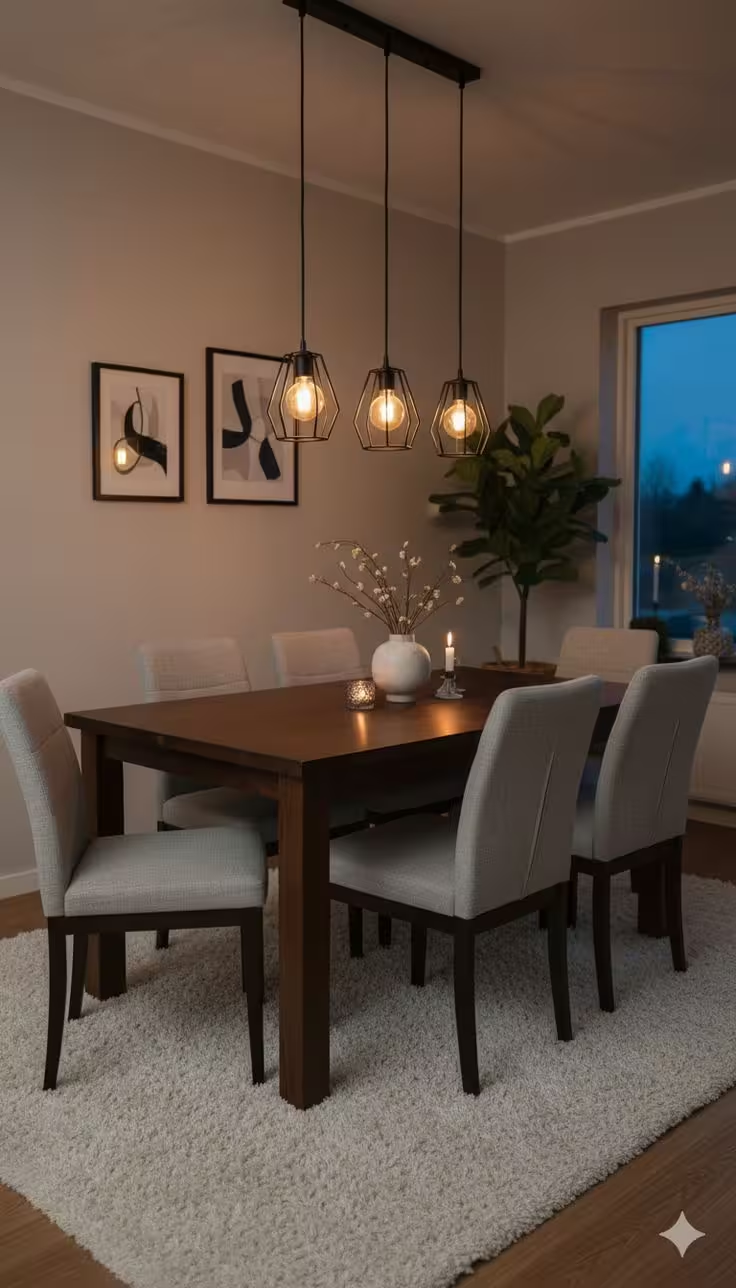
The bottom of your chandelier should sit 75–90cm above the tabletop. That’s 30–36 inches for anyone still working in imperial.
Dining rooms are one of the few spaces where you can hang a fixture significantly lower than you might expect — because there’s no one walking underneath it. The chandelier sits over a fixed piece of furniture. That means it can come down close enough to actually illuminate the table and the faces of the people seated at it, rather than washing light out from ceiling height.
A chandelier hung at 120cm above the table is doing almost nothing for the atmosphere at the table. At 75–80cm, it creates a genuine zone of warmth and focus. That’s the difference between a fixture that functions and one that transforms the room.
For ceilings higher than 8 feet: raise the fixture by roughly 7–8cm for every additional foot of ceiling height above standard. A 10-foot ceiling might see the chandelier at 90–100cm above the table; a 12-foot ceiling gives you room to let the fixture become something more architectural.
Colour Temperature: The Detail That Most Buyers Get Wrong
This one is underappreciated, and it matters enormously.
Light colour temperature is measured in Kelvin. For a dining room, you want 2700K to 3000K — warm white. This range mimics the quality of candlelight: it makes food look appetising, renders skin tones warmly, and creates the sense of intimacy that makes people want to stay at the table. It’s the reason restaurant lighting feels the way it does.
At 4000K (neutral white), the atmosphere starts to feel like a well-lit office kitchen. At 5000K or above (cool daylight), food colours go flat, faces look washed out, and the room feels like a canteen. These temperatures are fine in a workspace. In a dining room, they actively undermine everything you’ve done right everywhere else.
Avoid cool white in a dining room entirely. There’s no context in which it improves the experience.
One practical note: pair whatever chandelier you choose with a compatible dimmer switch. The difference between a dining room lit at full brightness and the same room at 60–70% during a meal is significant. A dimmer also extends bulb life and gives you flexibility — brighter for everyday use, lower for evenings and guests. Check that your dimmer is compatible with LED fixtures; older dimmers designed for incandescent bulbs can cause flickering with modern LED chandelier strips.
Chandelier Styles for Dining Rooms: What Works, What Lasts, What to Avoid
Crystal and halo chandeliers
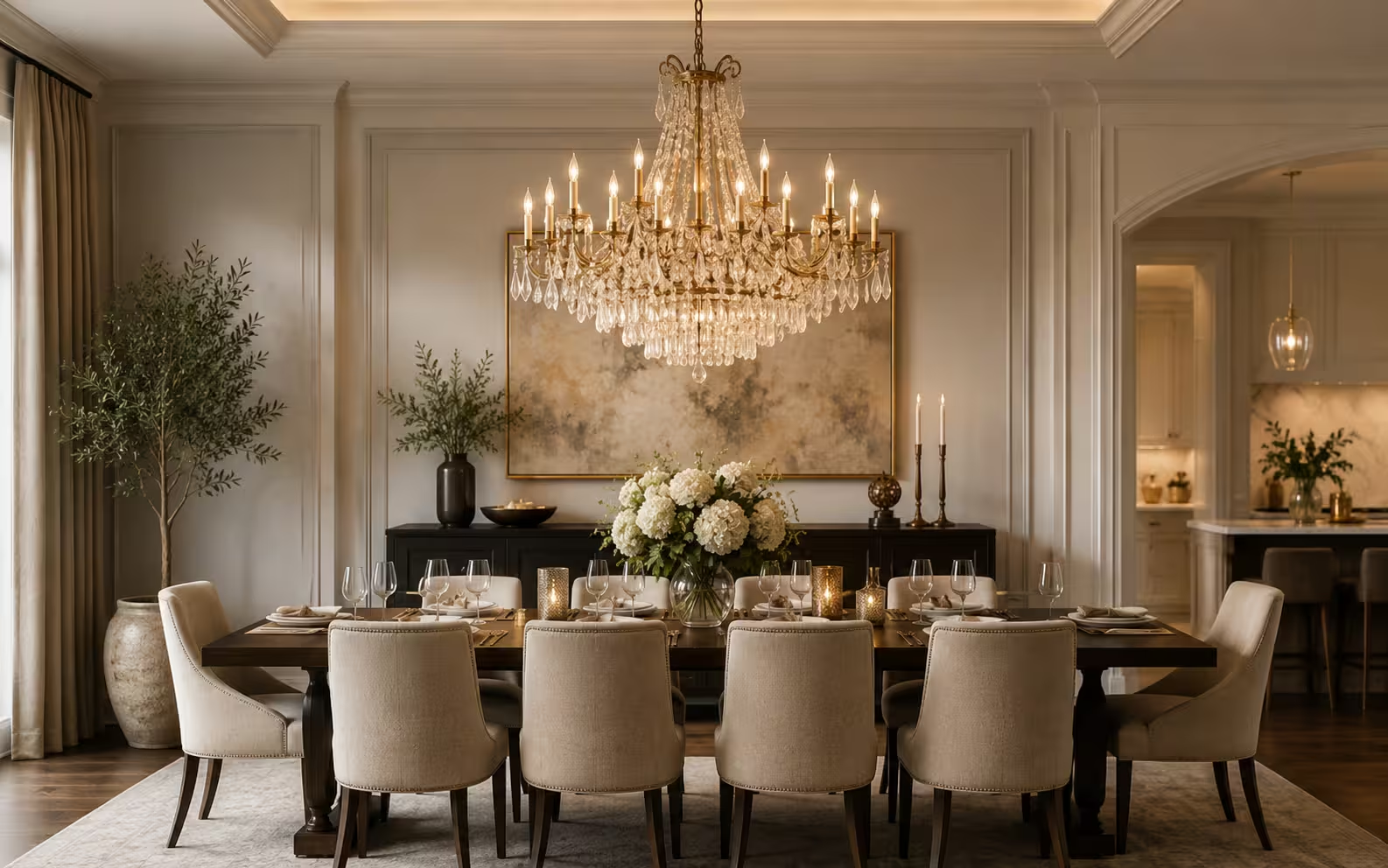
Crystal chandeliers have been declared dated roughly every five years for the past two decades and somehow remain relevant. The reason is that well-proportioned crystal — particularly the circular halo form — refracts light in a way nothing else does. It creates ambient warmth even when the fixture itself is off, catching natural light and scattering it through the room.
The halo form (a single luminous ring) is genuinely versatile. It works over round tables and rectangular ones, suits minimalist interiors as well as more layered spaces, and doesn’t carry the fussy associations of older tiered crystal designs. If you’re drawn to this style, it has real longevity.
The trade-off: crystal accumulates dust and needs cleaning. That’s not a reason to avoid it, but it’s worth knowing.
Linear and oval chandeliers
The linear chandelier has become the dominant dining room fixture of the current decade. Clean architectural silhouette, even light distribution, natural fit over a rectangular table. In a room with dark walls — deep charcoal, forest green, navy — a brass or matte black linear fixture looks genuinely striking.
This style has legs. Simple geometric forms in quality materials don’t date the way ornamental trends do.
Drum and fabric shades
A fabric or linen drum shade over a dining table creates soft, diffused, downward light. It’s warm, unpretentious, and works particularly well in farmhouse, Scandi, or relaxed country interiors. If that describes your home, this is a solid and practical choice. For farmhouse-specific style ideas, the farmhouse dining room decor trends guide covers how this sits within a broader scheme.
What dates quickly
Very elaborate multi-arm baroque designs. Fixtures that are entirely of-the-moment in their detailing — anything where the trend is the whole point. If you’re looking at a chandelier and the main thing it has going for it is that it looks like something you’ve seen everywhere on Instagram this year, give it another six months before committing.
Low Ceiling Dining Rooms — Specific Guidance
This is the scenario most chandelier guides skip entirely, which is a problem because a lot of real dining rooms have low ceilings.
If your ceiling is 8 feet or below, you have less drop to play with — but you’re not limited to boring flush-mount fixtures. A few approaches that work well:
A semi-flush chandelier (one that sits close to the ceiling with a short drop) can still have visual presence and elegance without requiring 60cm of chain. Look for fixtures with a maximum total drop of around 50–60cm including the canopy.
Scale down the fixture, not the ambition. A well-proportioned smaller chandelier — correctly sized for the table using the formula above — looks more deliberate than a large fixture crammed into a low space. Don’t be tempted to go bigger to compensate for a low ceiling.
One counter-intuitive principle: a low ceiling dining room can often carry a more visually bold fixture than a larger room — something with strong lines, interesting materials, or striking form — precisely because the eye doesn’t have to travel far to appreciate it. The fixture is right there, at close range. Use that.
For more ideas on making compact dining spaces work, the small dining room decor hacks guide covers layout and proportion in detail.
What to Check Before You Buy
A few practical things worth sorting before you place an order.
Junction box weight capacity. Most standard ceiling junction boxes support up to around 23kg (50lbs). A lightweight pendant or simple halo chandelier is fine. A heavy multi-tier crystal fixture may require a fan-rated or brace-mounted box. If in doubt, check before you commit to a heavy fixture.
Existing hardwired point. You need a hardwired ceiling junction box above the table. If there isn’t one, you’re not just swapping a fixture — you’re adding electrical infrastructure. That’s a job for a licensed electrician, not a weekend DIY project.
Dimmer compatibility. If your existing dimmer was installed more than ten years ago, it may be designed for incandescent bulbs and incompatible with LED chandelier strips. An incompatible dimmer causes flickering, buzzing, or limited dimming range. Replacing a dimmer switch is inexpensive and straightforward — it’s worth doing before you install the chandelier rather than after.
Swapping like-for-like: if there’s already a chandelier in place and you’re simply replacing it with a different fixture on the same hardwired point, this is generally manageable for a confident DIY installer who’s comfortable with basic electrics. If there’s any uncertainty — about the wiring, the ceiling structure, or the weight — bring in an electrician. The cost is modest relative to what you’re hanging.
Putting It Together
The three decisions that determine whether a dining room chandelier works — diameter, hanging height, and colour temperature — all have specific answers. The formula exists, the measurements are established, and the Kelvin range is clear. None of this is guesswork.
Style is more personal, but it doesn’t have to be a bet. Halo forms, linear fixtures in quality materials, and simple drum shades have a track record of ageing well. Anything where the trend is the entire point carries more risk.
If you’re building out a full dining room scheme alongside the chandelier, the modern dining room decor ideas hub covers how lighting sits within a broader look — and the dining room styling mistakes article is worth reading before you finalise any major purchases. For rooms at the other end of the budget spectrum, luxury dining room inspiration shows what a fully resolved dining space looks like when the fundamentals are right.
Frequently Asked Questions
Add your dining table’s length and width in feet, then read that number as inches — that’s your target chandelier diameter. A table that’s 6ft x 3ft totals 9ft, pointing to a chandelier of roughly 27–36 inches in diameter. Round down for more intimate rooms, up for high-ceilinged or generously proportioned spaces.
The bottom of the fixture should sit 75–90cm (30–36 inches) above the tabletop. Dining rooms allow lower hanging than most rooms because the chandelier sits over a fixed piece of furniture rather than a walking path. This height puts the light where it actually matters — at the table, not in the middle of the ceiling.
2700K to 3000K warm white. This range flatters skin tones, makes food look its best, and creates the warmth and intimacy that defines a good dining atmosphere. Avoid 4000K and above — neutral and cool white temperatures make a dining room feel clinical and are flattering to neither food nor guests.
Linear and oval chandeliers, simple halo forms, and geometric single-tier fixtures all translate well into modern dining rooms without dating quickly. These styles work because their appeal is rooted in proportion and material quality rather than ornamental trend.
Swapping an existing chandelier on an established hardwired point is generally manageable for a confident DIY installer. Installing a new hardwired junction box, upgrading the ceiling structure for a heavier fixture, or working with any uncertainty about existing wiring — those are jobs for a licensed electrician.
Look for semi-flush designs with a maximum total drop of 50–60cm. Correctly size the fixture for your table using the standard diameter formula — don’t go larger to compensate for the low ceiling. A well-proportioned smaller fixture with strong visual character often works better in a low-ceiling room than a large fixture that has no room to breathe. See small dining room decor hacks for more on working with compact proportions.