Estimated reading time: 9 minutes
Most hallways start the same way. A pile of shoes by the door. Coats draped over the bannister. Keys that somehow end up everywhere except where you need them. It doesn’t mean you have bad taste — it just means your entryway isn’t set up to work for you yet.
The good news is that fixing it doesn’t require a renovation. Most entryway ideas that make a real difference cost less than a dinner out and take a weekend at most. This isn’t a mood board. It’s a practical breakdown of what actually helps — and what space you’re working with.
Start with Function, Then Worry About Style
This is the bit most decorating articles skip straight past. They show you a beautiful entryway and forget to mention that the bench, the hooks, and the tray all have a job to do before they get to look good.
Before you buy anything, ask yourself one question: where does everything actually land when you walk through the door? Coats, bags, keys, shoes — they all need a home. If they don’t have one, they’ll create their own, and it won’t be pretty.
A bench near the door changes more than you’d expect
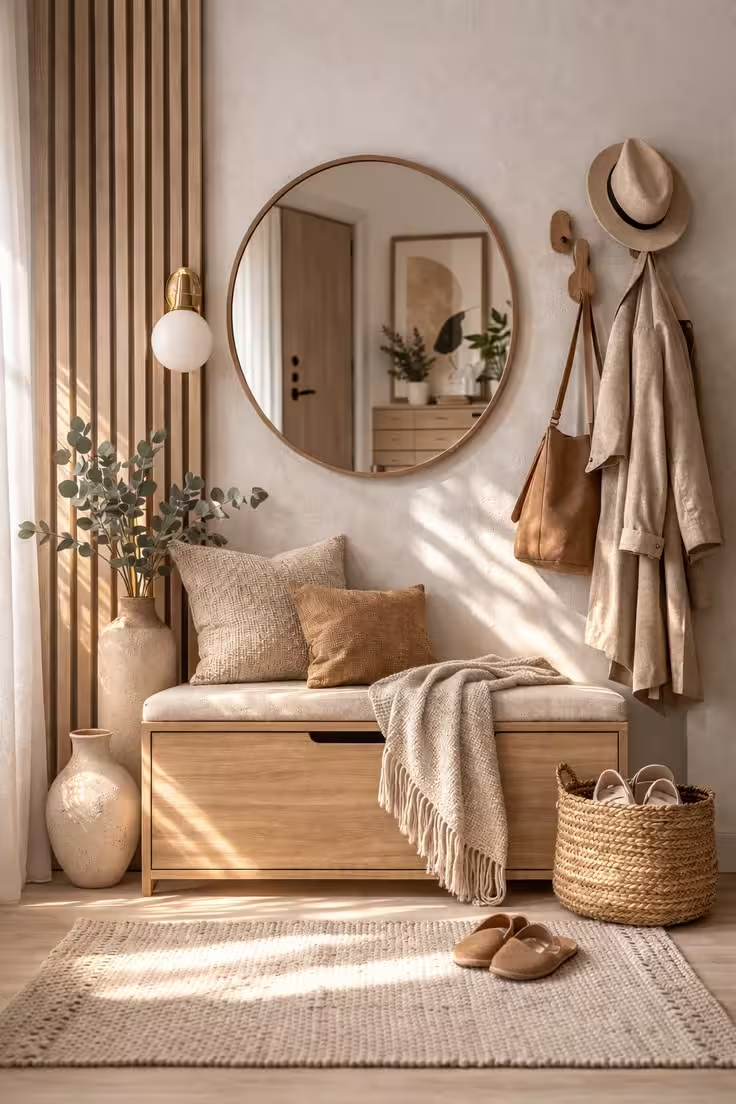
A hallway bench is probably the most functional piece of furniture you can put in an entryway. Not because it looks good in photos — though it does — but because it gives you somewhere to sit when you’re putting shoes on, and a surface to dump things when your hands are full.
Benches under 40cm deep work in most hallways without blocking the walkway. If you’re short on space, look for one with storage underneath — a lift-top bench or one with cubbies keeps shoes out of sight and off the floor. We’ve written more about this in our entryway bench styling ideas guide if you want to go deeper on that.
Hooks do more work than a coat rack ever will
A coat rack looks tidy in a showroom. In real life, coats get piled on top of each other until the whole thing tips over. Wall-mounted hooks are sturdier, take up less floor space, and stay organised because each hook has one thing on it.
If you’re renting and can’t drill, over-door hook panels are genuinely useful — they’re not just a compromise. The better ones hold quite a bit of weight, and some are barely visible from the front of the door.
Shoe storage is worth thinking through properly
Shoes are the number one source of entryway clutter. A rack near the door is fine, but an enclosed cabinet is better — it keeps things looking tidy even when it’s full. If your hallway is very narrow, a low shoe bench with storage inside takes up roughly the same footprint but does two jobs at once.
One thing worth knowing: most shoe storage options assume you have about 30cm of depth to play with. If your hallway is tighter than that, look specifically for slim-profile options. The small entryway storage hacks we’ve rounded up include some that work in under 20cm of depth.
How to Make a Small Entryway Feel Bigger
A narrow or dark hallway is the most common entryway problem people ask about. The honest answer is that you can’t actually make a small space bigger — but you can make it feel less cramped, and that’s often enough.
Mirrors are the oldest trick for a reason
A well-placed mirror reflects light and creates the impression of depth. In a hallway, a full-length mirror or a large round one on the wall does both. It also has the practical bonus of letting you check how you look before you leave, which is something.
The caveat: in a very narrow hallway — one where two people can barely pass — a large mirror can start to feel a bit disorienting. In that case, a smaller mirror above a console table is enough to get the effect without the odd fish-eye feeling. Our best mirrors for entryways guide covers sizes and placements worth knowing about.
Layering light makes a hallway feel more welcoming
Overhead lighting is fine for visibility. It’s not great for atmosphere. If your entryway has a ceiling light and nothing else, it’ll always feel a bit clinical.
A wall sconce or two changes this completely — and it doesn’t need to be expensive. The indirect light they throw softens shadows and makes the space feel warmer. If your ceilings are low (under 2.4m), avoid pendant lights entirely and stick to flush-mount ceiling fixtures or wall-mounted options. A pendant that hangs low in a narrow hallway becomes something you duck under, which gets old quickly.
For more on this, the hallway lighting ideas breakdown goes through what works at different ceiling heights.
Adding Personality Without Creating More Clutter
Once the function side is sorted, this is the part that actually makes an entryway feel like yours. The goal isn’t to fill the space — it’s to give it one or two things worth noticing.
A gallery wall doesn’t have to be complicated
A collection of frames on one wall does a lot. It draws the eye, adds warmth, and gives guests something to look at for the three seconds they’re standing in your hallway. You don’t need a matching set or a perfectly curated theme. A mix of prints, photos, and one odd piece you actually like tends to look more interesting than a matched set anyway.
The only real rule: hang things at eye level, not above it. Frames positioned too high make a room feel oddly formal and the ceiling lower than it is.
Plants — even fake ones — make a real difference
A plant in an entryway signals that someone cares about the space. If your hallway doesn’t get much natural light (most don’t), a good artificial plant is a perfectly reasonable solution. The lifelike ones available now are genuinely hard to spot from a distance, and they require exactly zero effort to keep alive.
A single plant in a decent pot near the door, or a small arrangement on a console table, is enough. You’re going for “someone lives here and likes nice things” — not a garden centre.
A console table pulls it all together
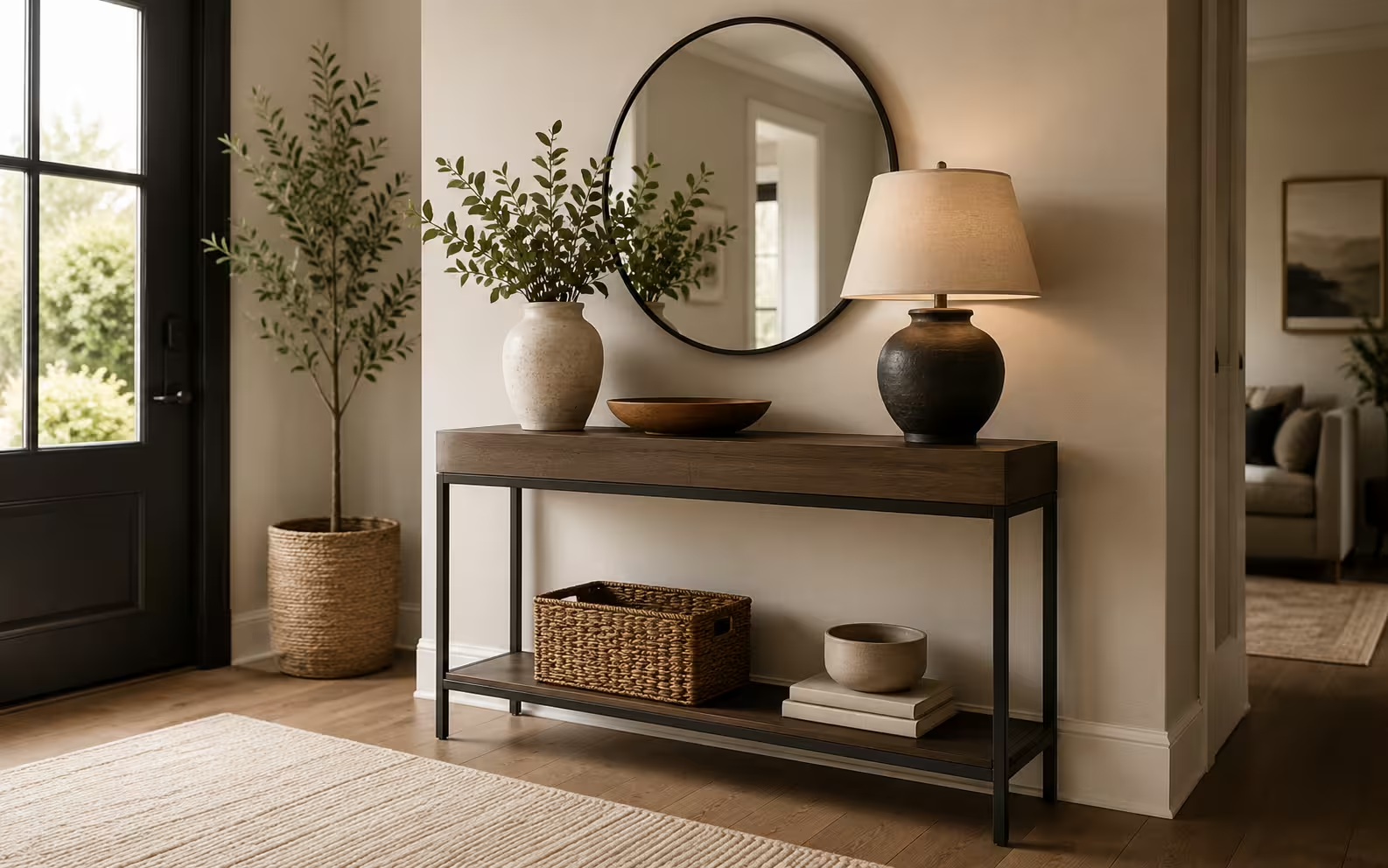
If you have the width for it (roughly 80cm of clear walkway remaining after placing it), a console table is the single piece of furniture that ties an entryway together. It gives you a surface for keys, a lamp, a small plant, and a decorative object. Done right, that’s a complete entryway in one spot.
The best console tables for entryways covers what to look for in terms of depth and height — the standard is 30–35cm deep and 80–90cm tall, which lets it sit flush against most walls without eating into the walkway.
Entryway Ideas by Space Type
This is the section most decorating articles don’t bother with, and it’s exactly why they’re not that useful. A hallway in a Victorian terrace, a corridor in a city apartment, and a wide foyer in a newer build need completely different approaches.
Small entryway with no coat closet
This is probably the most common situation. No closet, no room for a wardrobe, just a door and a small amount of wall space.
The most effective setup: wall hooks at varying heights (so coats and bags can hang at different lengths without overlapping), a low bench with storage underneath, and a mirror to keep things feeling open. Keep the floor clear — anything on the floor makes a small space feel smaller.
Apartment hallway
Apartment corridors are often long and narrow rather than small. The challenge here is usually that there’s not much you can do to the walls without getting permission — and often the lighting is bad and fixed.
Focus on what you can move: a slim console table or hall table, a mirror leaned against the wall rather than hung, a rug to break up the floor, and a floor lamp if there’s width for it. None of these require drilling. They also move easily when you leave.
Renter-friendly setups
Drilling restrictions kill a lot of good entryway ideas. But there are decent workarounds.
Command strips have improved significantly and now hold more weight than they used to — enough for mirrors, small shelves, and light artwork. Over-door hook systems work well for coats. Freestanding coat stands take up more floor space but need no fixings. Leaning mirrors look intentional rather than temporary. For more practical ideas without the wall damage, the budget entryway makeover ideas guide covers renter-friendly options specifically.
Wide foyer or larger entryway
If you have the space, the risk is filling it wrong. A large entryway with too much furniture feels like a waiting room.
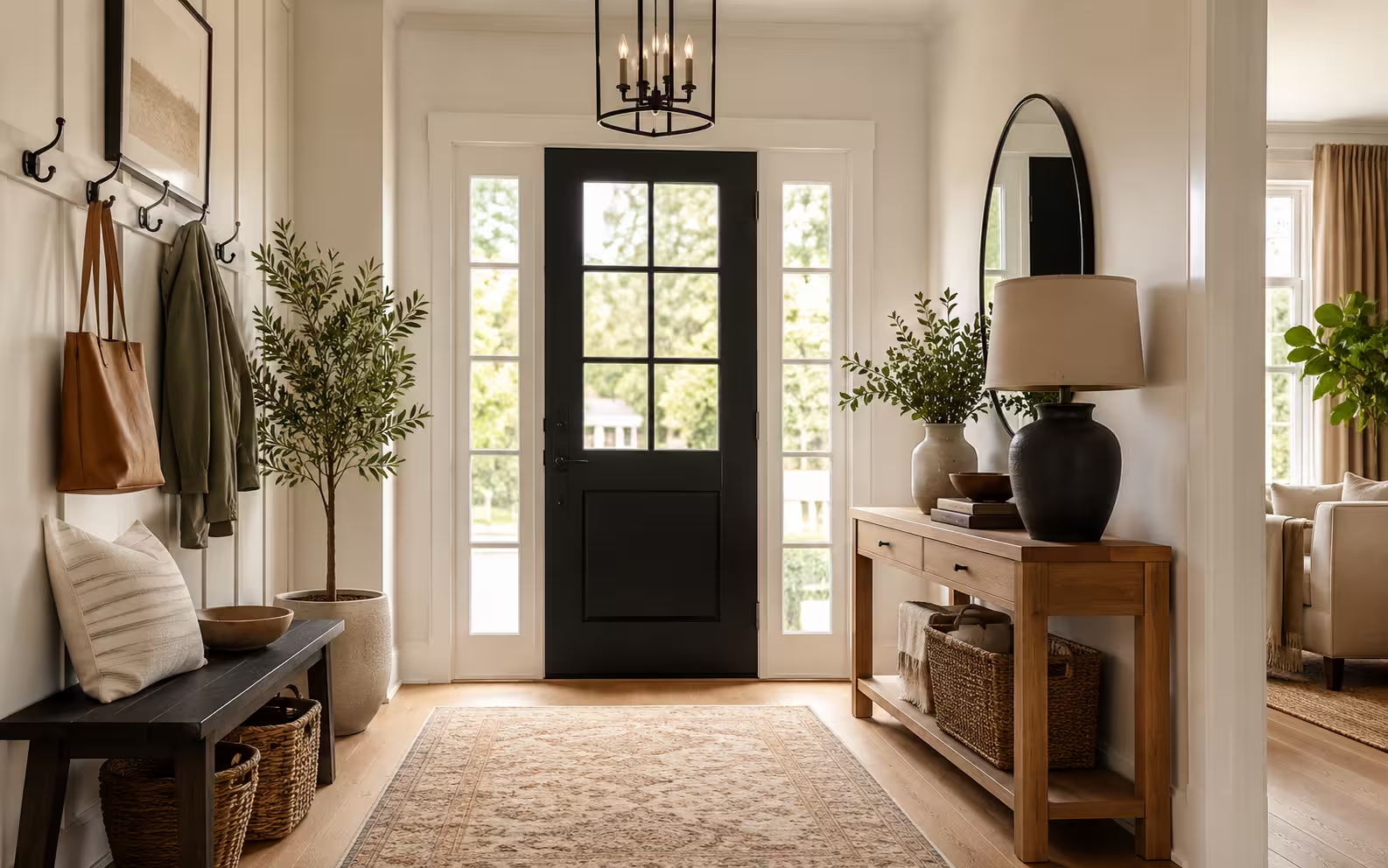
A console table with a mirror above it, a bench or chair on the opposite wall, and something on the floor (a rug, a plant, a lamp) tends to feel more intentional than cramming in everything at once. Symmetry helps in larger spaces — it creates a sense of calm rather than visual noise. For ideas at the higher end of the spectrum, luxury foyer inspiration is worth a look.
Frequently Asked Questions
The most useful pieces are a bench or chair for sitting when putting on shoes, wall hooks or a coat rack for outerwear, and a console table for keys and small items. A mirror is worth adding if you have the wall space. Start with function and add style from there.
Keep the floor as clear as possible and use vertical wall space instead. Wall-mounted hooks, a slim mirror, and a small bench with storage underneath will do more than any amount of decorative objects. Light colours and a mirror help the space feel less closed-in.
A good entryway gives everything a home — coats, shoes, bags, keys — so clutter doesn’t accumulate. It also makes a reasonable first impression without trying too hard. Organisation first, aesthetics second, and the two usually end up working together.
Not always. In a narrow hallway (under 100cm wide), a console table can make walking through feel awkward. Wall hooks, a mirror, and a rug can achieve a similar effect with less bulk. If you do have the width, a slim console at 30cm deep is usually enough.
Lean mirrors instead of hung ones, over-door hook systems, freestanding coat stands, and Command-strip-mounted shelves are all renter-friendly options. A rug and a good floor lamp can transform the feel of a hallway without touching the walls at all.6