Estimated reading time: 10 minutes
Your entryway gets about ten seconds. That’s roughly how long it takes a guest to form an impression of your home — before they’ve seen the kitchen, the living room, or anything else. And yet it’s the space most people either ignore completely or throw random furniture at and hope for the best.
A well-chosen console table changes that. It anchors the space, gives you somewhere to land your keys, and signals that the rest of the home was thought about too. The problem isn’t finding one — there are thousands out there. The problem is finding the right one for your specific hallway, your taste, and how you actually live.
This guide cuts through the noise. We’ll cover sizing, materials, styles, and the storage question, then walk through eight console tables that genuinely earn their place.
- Why the Entryway Is Worth Getting Right
- Before You Buy: The Practical Stuff Nobody Talks About
- Which Material Actually Works in Your Space?
- Design Styles: A Quick, Honest Guide
- Storage or Statement? How to Actually Decide
- 8 Console Tables Worth Considering
- How to Style Your Console Table Once It's in Place
- FAQs
Why the Entryway Is Worth Getting Right
Modern hallways tend to be narrow, functional, and largely forgotten in the design process. Architects treat them as connective tissue — a way to get from the front door to everywhere else — which means they’re often the last space that gets any real attention.
That’s a missed opportunity. The entryway sets the tone for everything that follows. A thoughtful foyer with good furniture tells people — and reminds you every time you come home — that this is a considered space. Not just a corridor.
A console table is the single piece of furniture that can do the most work there. It’s functional, decorative, and if you choose well, it becomes the visual anchor the whole hallway builds around. (If you’re starting from scratch with the space, these modern entryway decor ideas are worth a look before you buy anything.)
Before You Buy: The Practical Stuff Nobody Talks About
Most articles skip straight to the pretty pictures. Here’s what you actually need to figure out first.
Measure properly — and include clearance. A console table that’s too deep will make a narrow hallway feel like a shipping container. As a general rule, aim for a depth of no more than 30–35cm in hallways under 1.2 metres wide. You need comfortable passing space, and if there’s a door nearby, you need to check its swing radius too. More than a few people have bought a beautiful table only to discover it blocks the coat cupboard.
Standard sizing to know:
- Height: 75–90cm is the standard range. Most console tables sit at around 80cm, roughly desk height.
- Width: Match it to your wall, but leave at least 15–20cm of breathing room on each side.
- Depth: 25–40cm is typical. Go shallower in tight spaces.
Think about light levels. Dark hallways with no natural light need lighter materials — pale wood, travertine, light lacquers — to stop the space from feeling heavy. Marble works beautifully in light-filled entryways but can read cold and dense in darker ones.
Decide: functional or decorative? This is the question that narrows your options fastest. If your entryway is the family drop zone — bags, keys, post, the dog lead — you need drawers or a shelf. If it’s more of a showpiece (or if you have storage sorted elsewhere), you can focus purely on how the piece looks. Be honest with yourself here. A beautiful open console table with nowhere to put anything becomes a mess magnet.
For small spaces specifically, these small entryway storage hacks are genuinely useful alongside whatever table you choose.
Which Material Actually Works in Your Space?
Material choice matters more than most people expect — not just visually, but practically. Here’s an honest breakdown.
| Material | Best for | Trade-offs |
| Marble | Light, minimal, high-contrast spaces | Cold to touch, heavy, needs careful maintenance |
| Travertine | Warm, modern, earthy interiors | Porous — needs sealing; not ideal for very damp hallways |
| Wood / Marquetry | Traditional, warm, or mid-century spaces | Scratches over time; marquetry is stunning but a long-term investment |
| Lacquered wood | Contemporary and Art Deco settings | Durable finish, but chips can be hard to repair invisibly |
| Concrete | Industrial, minimalist, outdoor-adjacent spaces | Heavy, can feel stark without warm styling |
Marble is the one people most often regret — not because it’s bad, but because they buy it for the look without accounting for the upkeep or the weight. Travertine is a softer, warmer alternative that reads just as luxurious without the same maintenance anxiety.
Wood, particularly when it involves marquetry (the art of decorative inlaid wood veneer), is genuinely an heirloom-level choice. It ages well, gets better with styling, and suits a wider range of hallway types than marble does. For a deeper look at how the two compare, this piece on marble vs wood furniture is worth reading before you commit.
Design Styles: A Quick, Honest Guide
Modern / Contemporary Clean lines, minimal ornamentation, materials doing the heavy lifting. Works in almost any hallway but can feel cold if not styled with warmth — a lamp, a plant, something tactile.
Art Deco Geometric shapes, bold contrasts, rich materials. Looks incredible in a larger entryway. Can feel busy in a narrow one — be careful with this style if your hallway is tight or lacks architectural interest.
Mid-Century Modern Organic shapes, tapered legs, warm woods. Forgiving, versatile, and genuinely hard to get wrong. A mid-century console table tends to work in spaces where nothing else quite fits.
Storage or Statement? How to Actually Decide
Here’s the framework: if more than two people use your entryway daily, get storage. Drawers, a shelf, a cabinet — something. A console table without storage in a busy household lasts about a week before it’s buried under stuff that has nowhere else to go.
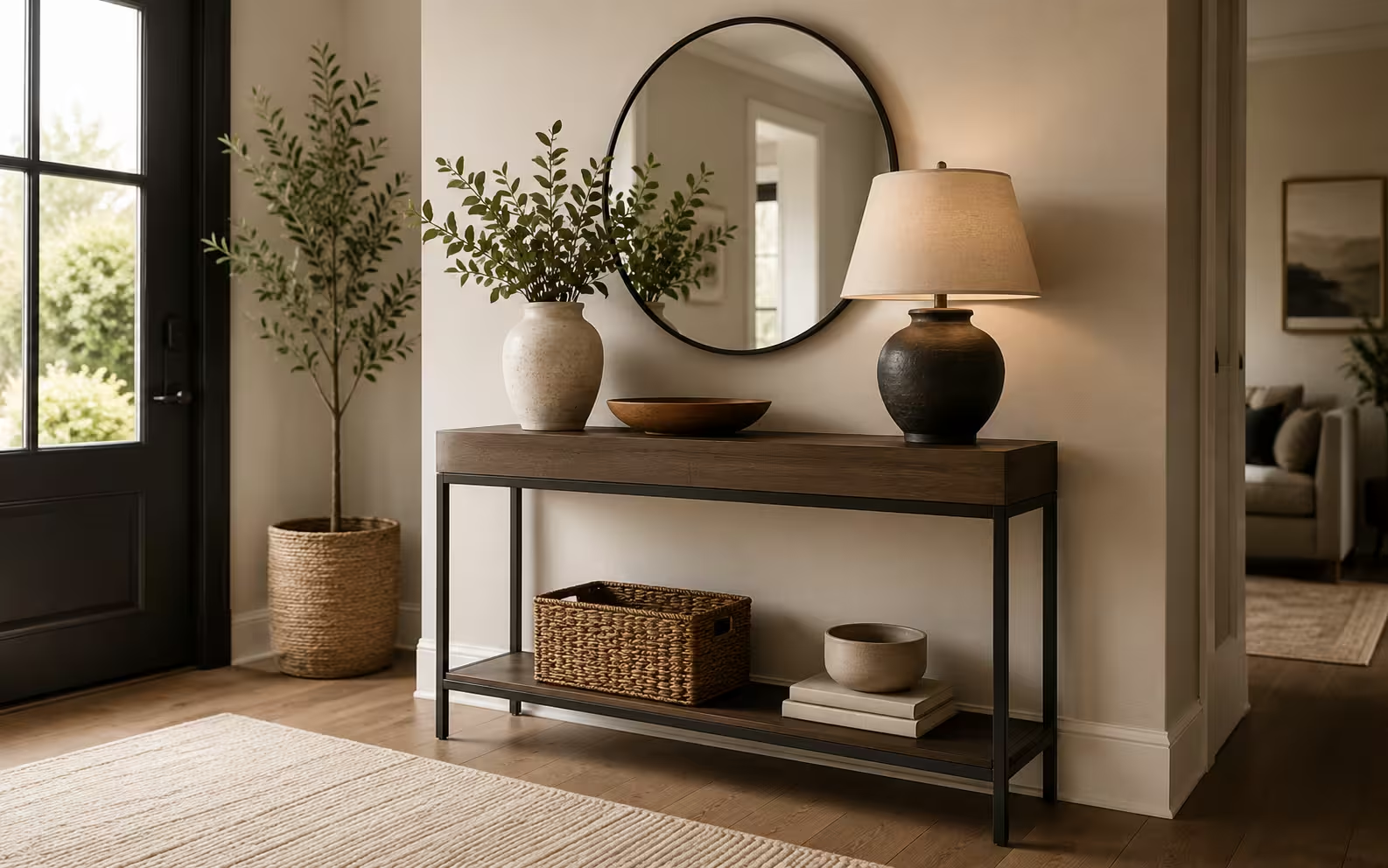
If it’s mainly just you, or if it’s a more formal front hallway that isn’t the main entrance people use, you can go purely decorative. A striking open console table with a mirror above it and a lamp beside it is genuinely one of the most satisfying things you can do to a hallway.
Both approaches work. Just don’t fool yourself into one when you need the other.
8 Console Tables Worth Considering
These aren’t listed in order of preference — they suit different spaces and different priorities. Read the notes on each before assuming one is right for you.
1. Billie Console Table in Travertine This is the one for a modern, warm-toned hallway that wants a sculptural moment without shouting. The travertine body has a natural porousness that catches light differently throughout the day — it’s one of those pieces that looks different at 9am than it does at 7pm. The chunky legs and subtle rounded corners feel substantial without taking up visual weight. Worth noting: travertine needs sealing, and this isn’t a table you want near a very damp entrance.
2. Rapple Console Table A marquetry piece inspired by the layered rock formations of Raplee Ridge in Utah. The wood inlay work here is genuinely intricate — it’s the kind of detail that looks better in person than in photos, which is saying something. The Art Deco influence shows in the geometry without going full 1920s opulence. If you want something that people will ask about, this is it.
3. Plume Console Table A wood body with a marble top — a combination that works better than you might expect, because the warmth of the wood offsets the coolness of the marble. The shape has an Art Deco rhythm to it, but the overall effect reads more contemporary. Good for hallways that sit somewhere between traditional and modern without committing to either.
4. Rumba Console Table This one sits further toward the decorative end of the spectrum. The colour palette is confident — this isn’t a table that blends in, it’s one that owns the room. Best in a hallway that already has strong bones: good architecture, decent height, or an interesting floor. In a bland or very small hallway it can feel like a lot.
5. Annali Console Table The drawers make this the practical choice in this list. The lacquered terra brown and light ivory finish is sophisticated without being cold, and the graphic silhouette — reminiscent of New York Art Deco architecture — gives it genuine personality. If you need storage and want the hallway to look considered, this is probably your answer. It works particularly well in hospitality projects for the same reason.
6. Charlot Console Table Full Art Deco. Angular forms, exotic materials, geometric line work. It’s a committed look. If your hallway can handle it — good ceiling height, space to breathe, adjacent rooms with complementary styling — it’s striking. Pair it with a great entryway mirror and this becomes a hallway that stops people mid-step. In a tight modern flat, it might be too much.
7. Magnus Console Table in Concrete The industrial option. This works when everything else in the space leans minimal — polished concrete floors, bare walls, strong architectural lines. The geometric shape is clean and the material is uncompromising. It’s also heavy, so factor that into delivery and placement. Not one for every home, but in the right setting, completely at home.
8. Quantic Estremoz Console Table The statement piece of the group. Estremoz marble is Portuguese, characterised by its warm white tone and subtle veining — it reads softer than Italian Carrara. The shape of this table is more sculptural than functional, and it’s priced to match the ambition. Best suited to a luxury foyer with room to let the piece breathe. (For more in that direction, luxury foyer inspiration here.)
How to Style Your Console Table Once It’s in Place
The table is only half the equation. Here’s what actually makes an entryway console table look finished:
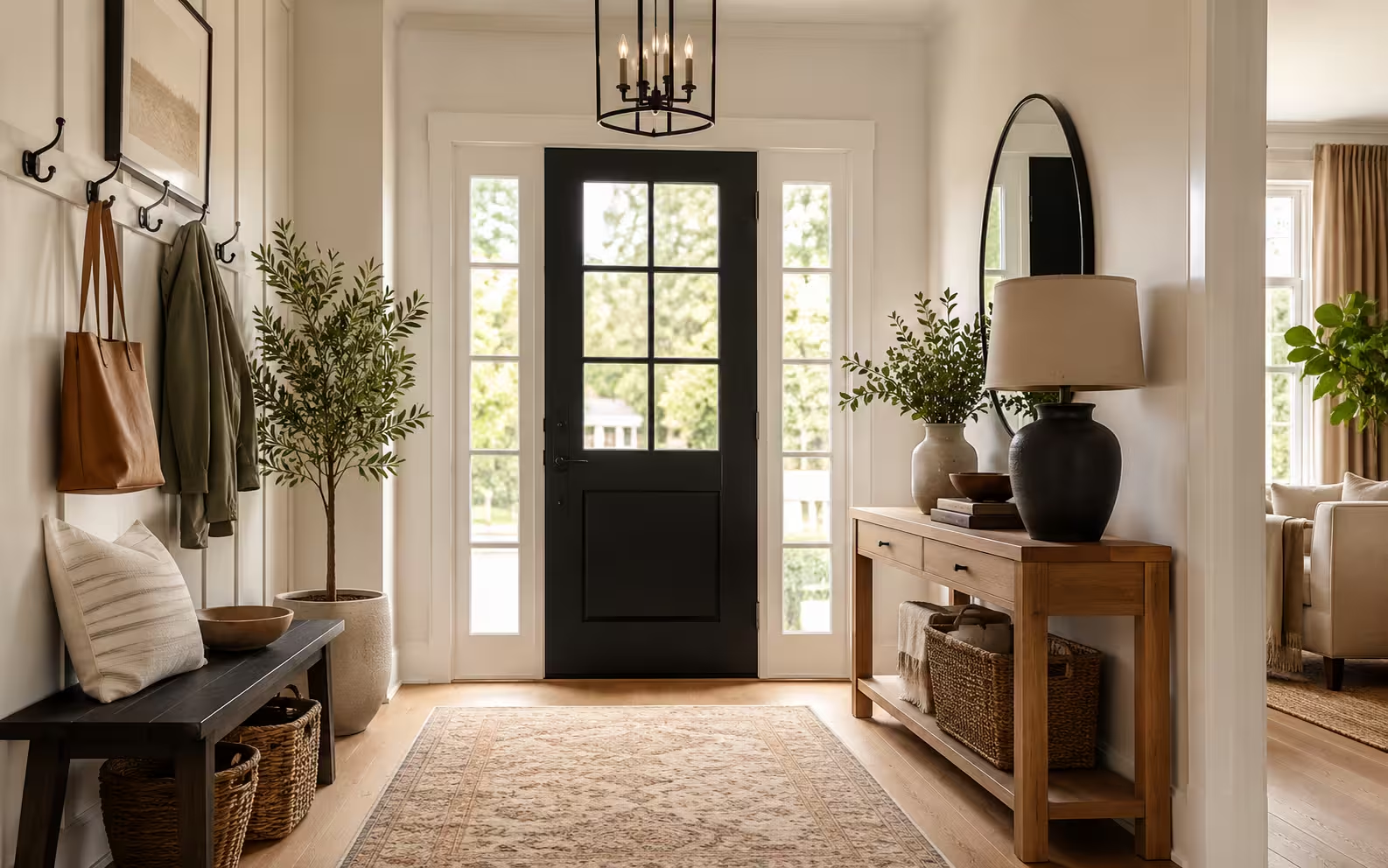
A mirror above it. Almost always the right call. It bounces light, makes the hallway feel larger, and gives people somewhere to check themselves on the way out. The mirror should generally be narrower than the table — same width or slightly less, not wider. How to choose a mirror for your entryway goes into the specifics.
One lamp. Not two, not overhead lighting alone — a single lamp on the console table creates warmth in the evening and softens what can otherwise be a cold or clinical space.
Something living. A plant, a small vase with a branch, even a bowl of fruit. Something that signals the space is alive and maintained.
One object with meaning. A sculpture, a ceramic, a book you love. Not a collection of objects — one. Entryway tables get cluttered fast, and restraint is the thing that keeps it looking intentional.
Keep a small tray. Not for styling, just practically: a tray to corral keys, cards, and the daily detritus means the table stays looking good even when life doesn’t.
FAQs
Most console tables sit between 75–90cm tall, with 80cm being the most common standard. This aligns with a comfortable standing height — roughly hip height for most adults — and works well with mirrors and lamps placed above.
In most modern hallways, 25–35cm deep is ideal. Anything deeper than 40cm starts to interrupt the flow of the space. If your hallway is under 1.2m wide, stay closer to the 25–30cm range and always leave at least 60–70cm of clear walking space.
Yes — but choose carefully. Look for shallow designs (under 30cm deep), open frames with legs rather than solid bases, and lighter materials or colours. Mirrored surfaces or glass tops can also help the space feel less enclosed.
A mirror above, one lamp, something living (plant or flowers), one decorative object, and a small tray for keys and everyday items. The goal is warmth and intention — not a full shelf’s worth of stuff.