Estimated reading time: 11 minutes
You walk into a hotel bathroom and something just clicks. The light is warm, it wraps around you, and for a second you feel genuinely calm. Then you come home, flip on your bathroom light, and it feels like a doctor’s office.
It’s not the tiles. It’s not the towels. It’s almost always the lighting.
Most bathrooms are lit by a single overhead fixture — and that one design choice is quietly responsible for every harsh shadow, every unflattering reflection, and that vague feeling that no matter how nice the rest of the room is, something still feels off. The good news? You don’t need to gut your bathroom or hire an electrician to fix it. You mostly need to understand what spa lighting actually does — and then make a few targeted changes.
Why Bathroom Lighting Feels So Wrong (And What’s Actually Happening)
Here’s the thing nobody explains: the problem isn’t that your bathroom is dim or too bright. It’s that the light is coming from the wrong direction.
Overhead lighting casts shadows downward — directly onto your face, under your eyes, along the sides of your nose. It’s basically the least flattering angle possible. Spa bathrooms, hotel bathrooms, and every bathroom you’ve ever felt good in? They light from the sides and below, wrapping light around you rather than dropping it on top of you.
That’s the core principle behind spa bathroom lighting ideas that actually work. It’s called layered lighting — and it means using more than one light source, at more than one height, to fill a room evenly and softly.
Layered bathroom lighting typically combines three things:
- Ambient light — the general room light that sets the mood
- Task lighting — focused light around the mirror for grooming
- Accent lighting — smaller, softer sources that add warmth and depth
Get those three working together and your bathroom genuinely transforms. But before we get into fixtures, there’s something more important to sort out first.
The One Change That Makes the Biggest Difference
Swap your bulbs to 2700K warm white. That’s it. That’s the starting point for every bathroom that feels like a retreat.
Color temperature is measured in Kelvin, and it’s the single most overlooked factor in bathroom lighting. Most builder-grade bathrooms come fitted with bulbs somewhere between 4000K and 5000K — that’s the cool, blue-white light that feels like a pharmacy. Warm white sits between 2700K and 3000K, and it’s the range that makes skin look healthy, makes rooms feel soft, and makes you actually want to linger.
You can buy a pack of warm white LED bulbs for under $15. If your current fixtures are decent, just changing the bulbs is a legitimate first move — and sometimes it’s enough on its own to make the room feel completely different. Think of it as the $15 version of a bathroom upgrade before spending anything else.
Personally, I’d always choose 2700K over 3000K if you want that golden, candlelit quality. The difference is subtle, but 2700K leans warmer and mellower, while 3000K is still warm but slightly crisper — better for bathrooms where you also do detailed grooming.
3 Spa Lighting Styles Worth Actually Considering
Once the bulb situation is sorted, it’s time to think about the look you’re going for. These three styles cover most people’s tastes — and more importantly, they all work in real bathrooms, not just showrooms.
Coastal Dawn: Soft and Airy
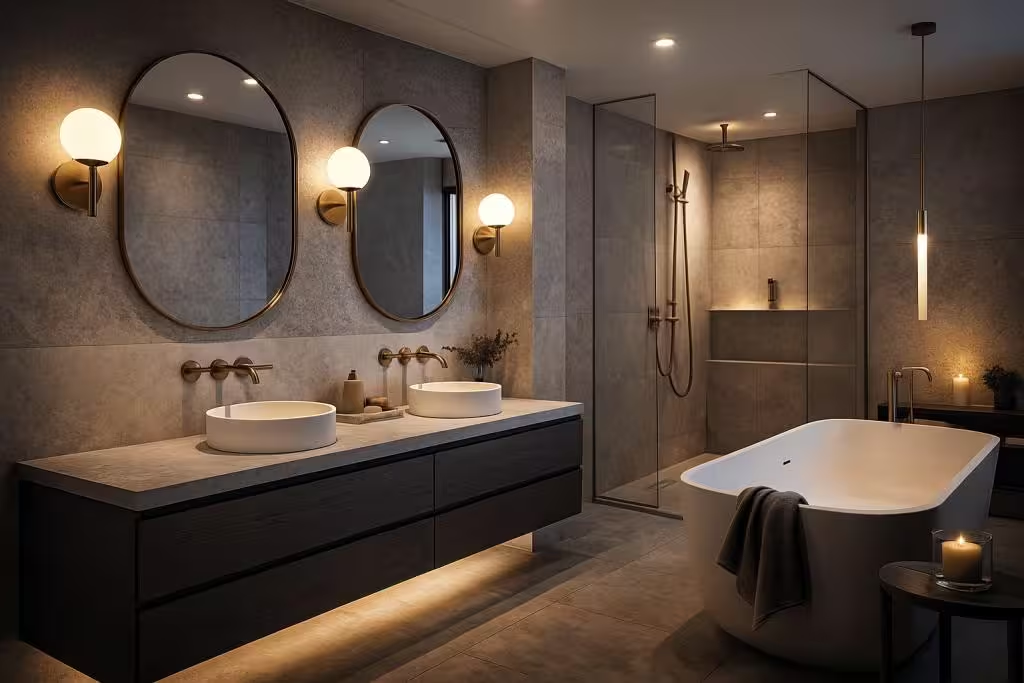
This look is built around diffused light — the kind that feels like morning sun filtering through frosted glass. Frosted globe sconces on either side of the mirror are the key piece here. They spread light evenly rather than creating hot spots, and they read as calm without trying too hard.
A frosted glass pendant above the tub (if you have one) completes the look, but only if it’s rated for damp zones — more on that later. The palette is warm whites and soft naturals. If your bathroom has any wood tones, white tile, or coastal textures, this style fits effortlessly.
For the sconces specifically, mount them at eye level — roughly 60 to 65 inches from the floor to the center of the fixture. That height puts the light exactly where it needs to be: illuminating your face from the sides rather than casting shadows down from above.
Modern Zen: Calm and Considered
This is the style for bathrooms that lean minimal — clean lines, maybe some matte black or brushed nickel hardware, nothing fussy.
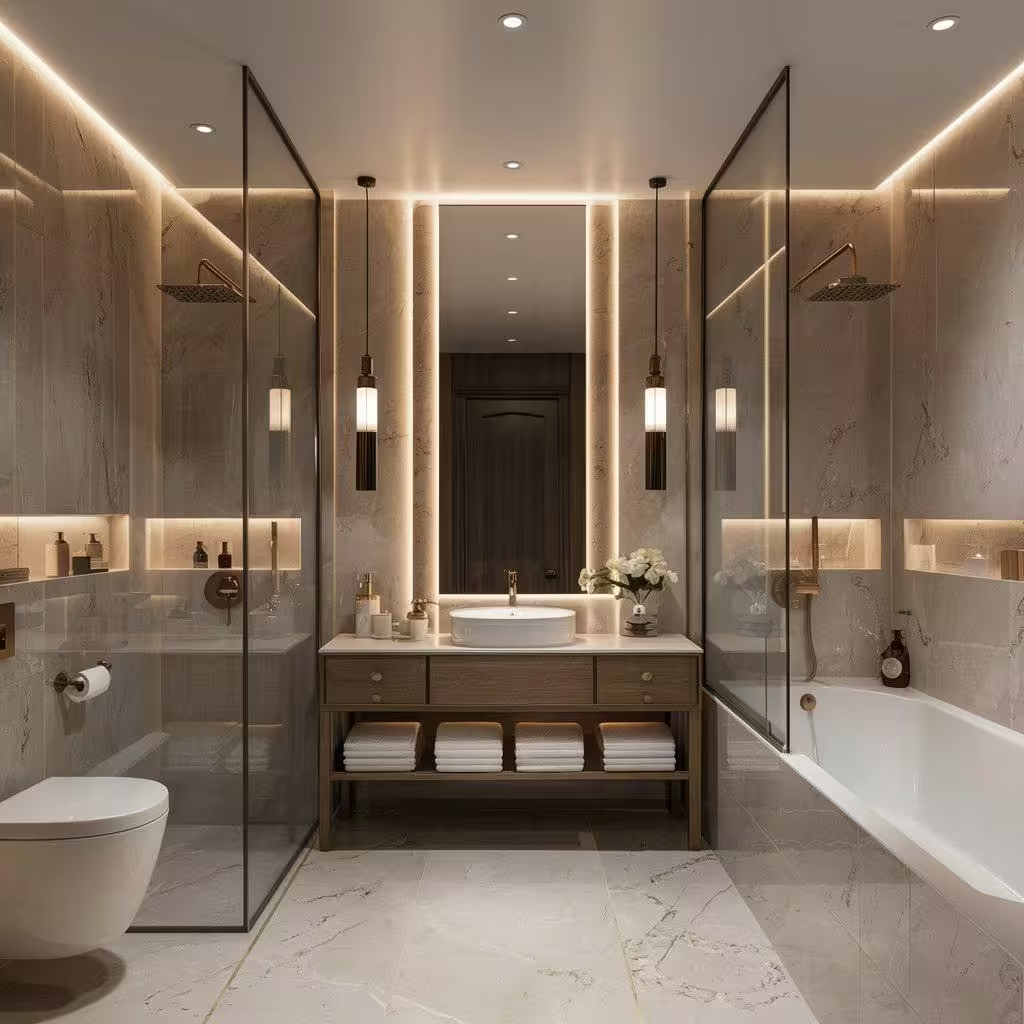
Lantern-style sconces work beautifully here. The paper or frosted shade softens the light without making the fixture feel heavy. Pair them with a warm LED strip light behind a floating mirror or vanity shelf, and you get a really layered, considered look without adding many fixtures.
The key with this style is restraint. The lighting should feel like it belongs to the room, not like it was added as an afterthought. Matte black or dark bronze finishes tend to work well and won’t date as quickly as trendy gold tones (though done right, aged brass looks genuinely timeless here).
Black-and-Brass Hotel Spa: Warm and Luxurious
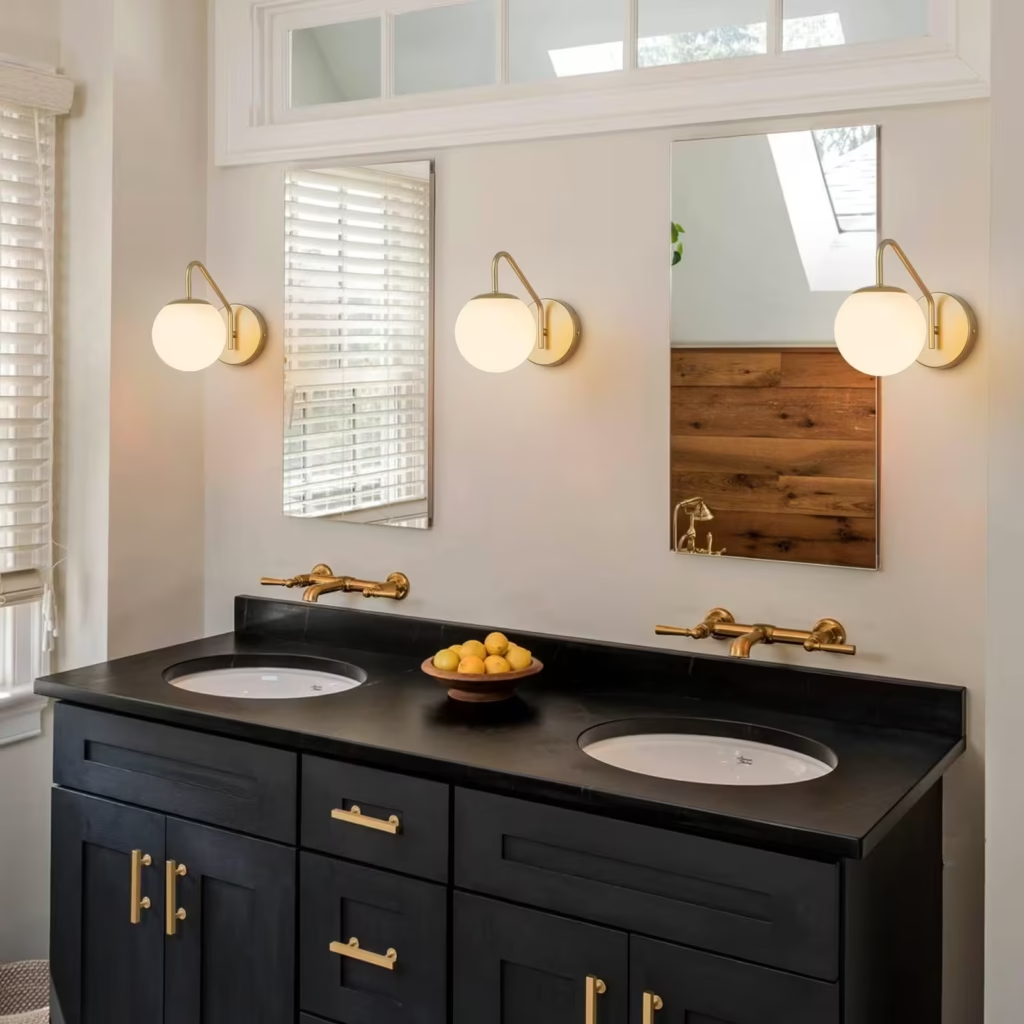
This is the look people see in high-end hotel bathrooms and immediately want to recreate. Double globe sconces flanking the mirror, a rice paper drum pendant overhead, deep warm light everywhere.
It works because of contrast — dark fixture finishes against warm, glowing bulbs. The brass hardware catches the light in a way that feels expensive even when the fixtures themselves aren’t. You don’t need to spend a fortune here. Decent globe sconces with visible Edison-style bulbs (warm white, obviously) can be found for well under $100 a pair at places like IKEA or Amazon, and they read well above their price point.
One honest trade-off with this style: it can feel heavy in a very small bathroom. If your space is compact, go lighter on the fixtures and let the bulb warmth do most of the work.
Where to Actually Put the Lights
This section is where most advice goes wrong. People are told to “add sconces” or “layer your lighting” without any specifics — so they put a sconce in the wrong spot and wonder why it still doesn’t look right.
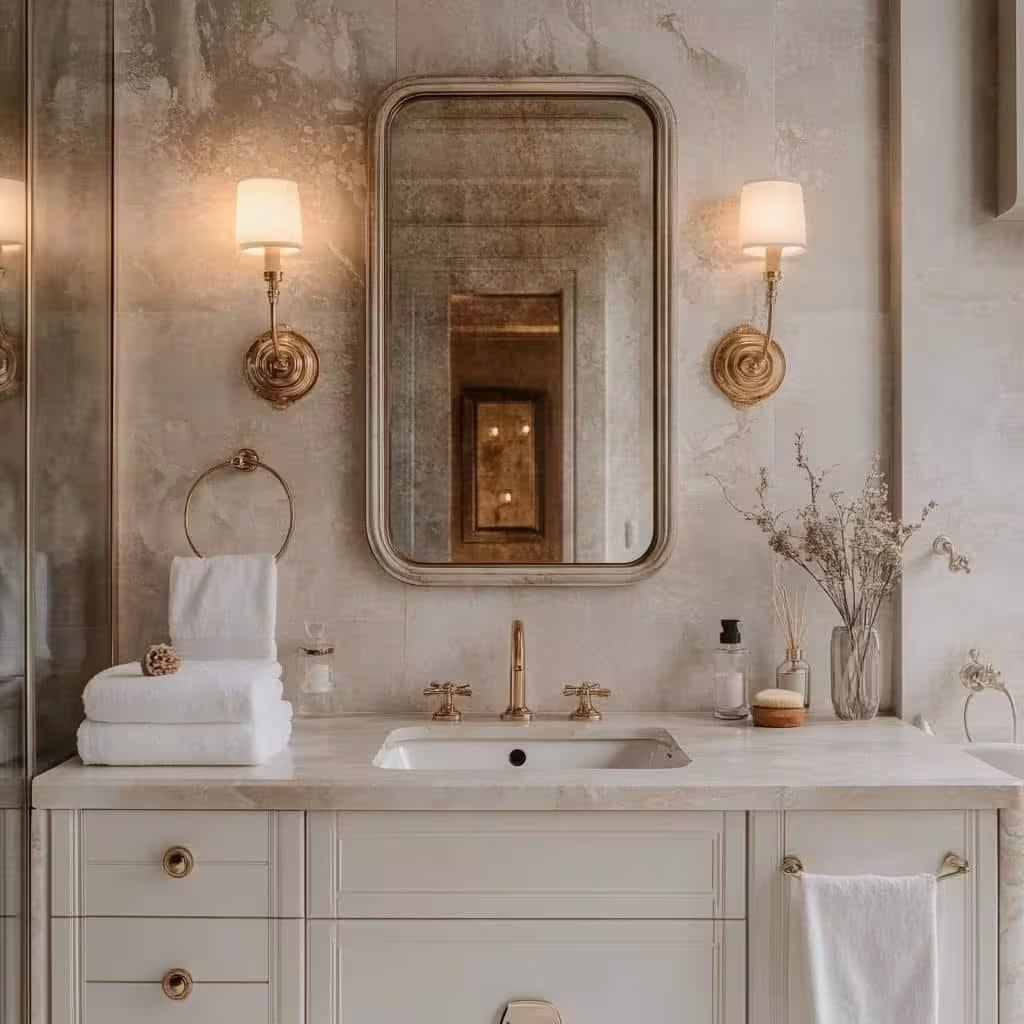
Mirror lighting: Sconces should sit on either side of the mirror, not above it. Above-mirror lighting is what creates that shadow-under-the-eyes problem. Side-mounted sconces at eye level (60–65 inches from the floor) light your face evenly from both sides — exactly how professional makeup artists light their subjects.
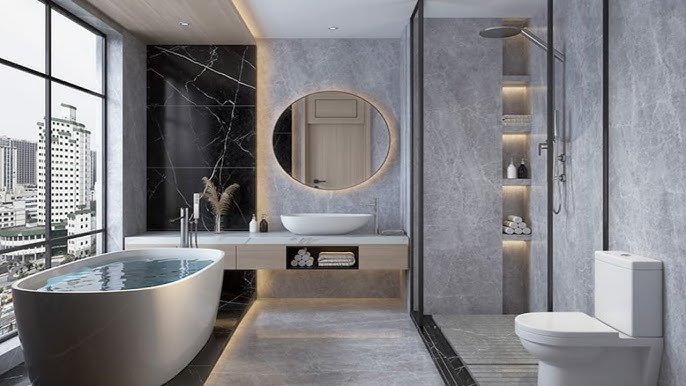
If your bathroom layout truly doesn’t allow for side sconces — say, the mirror butts right up against a wall — a backlit mirror is your best alternative. The light diffuses from behind the mirror’s edge, creating a soft halo effect that’s both flattering and modern. Backlit mirrors are one of the easiest single upgrades you can make to a bathroom.
Overhead lighting: Keep it as ambient support, not the main event. A dimmable overhead fixture on a dimmer switch gives you flexibility — brighter for morning routines, dimmer for evening baths. If you can only make one electrical upgrade in your bathroom, installing a dimmer switch is the one to make.
Accent lighting: LED strips tucked under floating vanities or behind shelving add warmth and depth without requiring any electrical work. They plug in, they’re cheap, and they make a room feel like it has much more thought behind it than it does.
Renter-Friendly Ways to Get the Spa Look
If you’re renting — or just don’t want to hardwire anything — you’re not stuck with whatever the landlord installed. There are legitimate options here that don’t involve touching a circuit breaker.
Plug-in wall sconces have improved dramatically in recent years. The cord management is still not perfect, but mounted neatly with the cord running behind a cable channel, they look genuinely good. Brands like IKEA and various Amazon sellers do respectable versions for under $50 each.
Smart bulbs in your existing fixtures let you control color temperature and brightness from your phone. You can set warmer, dimmer scenes for evenings without changing a single fixture. It’s not glamorous but it works.
Freestanding floor lamps in larger bathrooms are underrated. A small arc lamp in the corner creates ambient light that feels completely different from overhead — softer, moodier, more intentional.
LED strip lights are the easiest no-commitment upgrade. Stick them under the vanity edge, behind the mirror, or along a shelf. They add a layer of warm accent light that makes the room feel designed. If you’re working on a broader bathroom upgrade with a limited budget, these small additions add up fast.
What to Avoid If You Want That Calm, Luxurious Feel
There are a handful of choices that reliably kill the spa vibe, and they’re worth knowing upfront.
Cool white bulbs (4000K and above). They read as clinical and harsh. Even beautiful fixtures look cheap under cool white light. Warm white is non-negotiable if you want that soft, flattering quality.
A single overhead fixture with no other light source. This is the root cause of most bad bathroom lighting. Even if you can’t add new fixtures, adding a plug-in sconce or LED strip at a lower height immediately changes the feel.
Bare bulbs without diffusion. An exposed bulb — even a warm one — creates harsh light that doesn’t spread well. Frosted glass, fabric shades, or paper diffusers all soften the output significantly.
Pendant lights inside wet zones. This one matters for safety. Pendants look stunning above a freestanding tub, but they need to be rated for damp or wet locations, and in many places, code requires them to be positioned at a minimum height above the water. If you’re not sure, consult an electrician before hanging anything above a bath or shower area. It’s one of those details that also comes up in home inspections.
Matching everything too precisely. A bathroom where every finish matches perfectly can read as flat. Mixing warm metals — say, brushed brass sconces with a chrome faucet — adds visual depth and actually looks more considered than a perfectly matchy set.
A Note on Dimmers (They’re More Important Than Any Fixture)
If there’s one piece of advice that tends to get buried in lighting articles, it’s this: dimmers matter more than the fixtures themselves.
A dimmer switch transforms a fixed light into something you can actually control. Morning routine at full brightness, evening bath at 30% — that single dial changes how the entire room feels at different times of day. Most bathrooms don’t come with dimmers installed, but adding one is a straightforward swap if you’re comfortable with basic electrical work, or a quick job for an electrician.
Make sure any dimmer you install is compatible with LED bulbs specifically — not all dimmers handle LEDs well, and incompatible ones cause flickering. Look for dimmers labeled “LED compatible” or “MLV/ELV compatible.”
Quick FAQ
What color temperature is best for spa-like bathroom lighting?
2700K to 3000K warm white. This range creates soft, golden light that’s flattering on skin and makes bathrooms feel calm and retreat-like. Avoid anything above 3500K, which reads as cool or clinical.
Can you use a pendant light in a bathroom?
Yes, but with conditions. Pendants must be rated for damp or wet locations depending on how close they are to water. Above a freestanding tub, position the pendant at least 8 feet above the floor and check your local building codes. For a bathroom without a tub, placement is more flexible.
How do I add ambient light if my bathroom has no wall space for sconces?
A backlit or lighted mirror is the best solution. You can also use plug-in floor lamps in larger bathrooms, or LED strips under the vanity for a lower layer of warm light. Small table lamps on shelves or the toilet tank are unconventional but genuinely work for ambient softness.
What’s the easiest, cheapest spa bathroom lighting upgrade?
Swap your bulbs to 2700K warm white LEDs. It costs under $20, takes five minutes, and the difference is immediately noticeable. From there, add a dimmer switch — that’s the next most impactful change per dollar spent.
Getting bathroom lighting right doesn’t require a renovation, a big budget, or an electrician on speed dial. It mostly requires knowing what you’re actually trying to fix — and then making a few deliberate choices instead of just living with whatever came installed.
Start with the bulbs. Then think about height and layers. The rest follows naturally. And if you want to take things further, the right bathroom accessories can make lighting work even harder for you.
Your bathroom can genuinely feel like a different room — without touching a single tile.