Estimated reading time: 13 minutes
The moment someone steps through your front door, the foyer does all the talking. Before they see the kitchen, the living room, or any of the spaces you’ve carefully curated — they see this one. And if it’s underwhelming, that impression lingers longer than you’d expect.
Here’s something most design articles don’t say plainly enough: a beautifully designed foyer makes the rest of your home feel better, too. It sets the mood, signals the quality, and quietly tells your guests they’re somewhere worth being. Getting it right isn’t about spending the most money. It’s about understanding which elements carry the most visual weight — and layering them intentionally.
These luxury foyer ideas are built around that thinking: not just what to include, but how to choose it, how to size it, and how to make sure it all works together.
What Actually Makes a Foyer Feel Luxurious?
A luxury foyer isn’t defined by square footage or budget alone. It’s defined by the relationship between light, material, and scale. The most impressive entryways — regardless of size — share three things: a clear focal point, layered lighting, and high-quality materials used with restraint.
That last part matters. A foyer stuffed with expensive finishes can still feel cluttered and cheap. One well-chosen chandelier over a polished stone floor, with a thoughtfully placed console table and a single piece of art, can feel genuinely grand. Restraint is a luxury too.
The Statement Chandelier: Don’t Just Hang Something Pretty
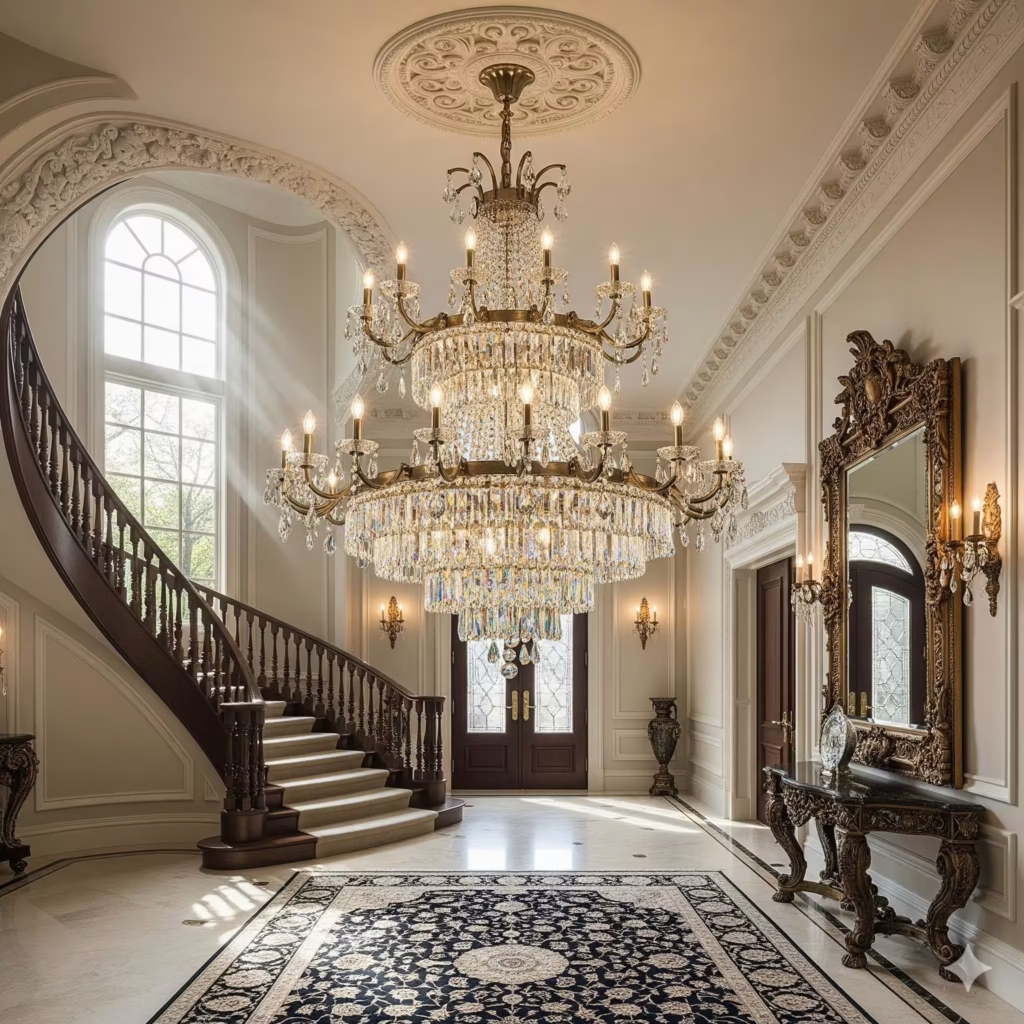
Of all the elements in a grand foyer, the chandelier carries the most immediate visual weight. It’s the first thing eyes travel to in a double-height space, and it sets the style register for everything else.
The problem with most advice on this? It stops at “add a chandelier” without mentioning the single most important detail: sizing.
How to Size a Chandelier for Your Foyer
A chandelier that’s too small in a tall foyer looks like an afterthought. Too large, and it dominates the space in all the wrong ways. Here’s a reliable rule designers actually use:
Add the room’s length and width in feet. That number, converted to inches, gives you a good starting diameter for the fixture. So a foyer that’s 12 feet wide and 14 feet long would suit a chandelier roughly 26 inches in diameter.
For ceiling height, the fixture itself should hang so its lowest point sits at least 7 feet above the floor — higher if you have a true double-height entry. In a two-story foyer, a dramatic cascading chandelier can drop 5 to 8 feet and still clear comfortably.
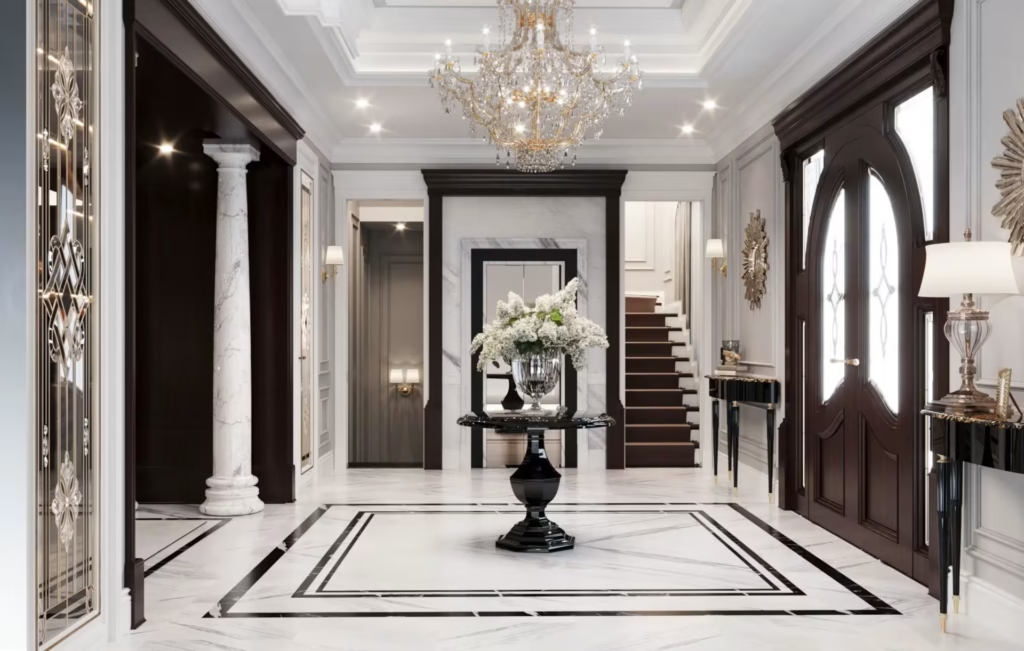
Style-wise, crystal chandeliers remain the classic choice for traditional and transitional foyers — Calacatta marble floors and a tiered crystal fixture is a pairing that’s hard to argue with. But if your home leans modern, sculptural fixtures in brushed brass, matte black, or smoked glass can feel just as deliberate and far less expected. The key is that the chandelier’s finish echoes something else in the space — the hardware on the door, the railing finish, the console table legs.
Quick Tip: If you’re choosing between two chandelier sizes, go with the larger one. Undersized fixtures are the most common chandelier mistake in foyers, and they’re immediately noticeable.
Flooring That Does the Heavy Lifting
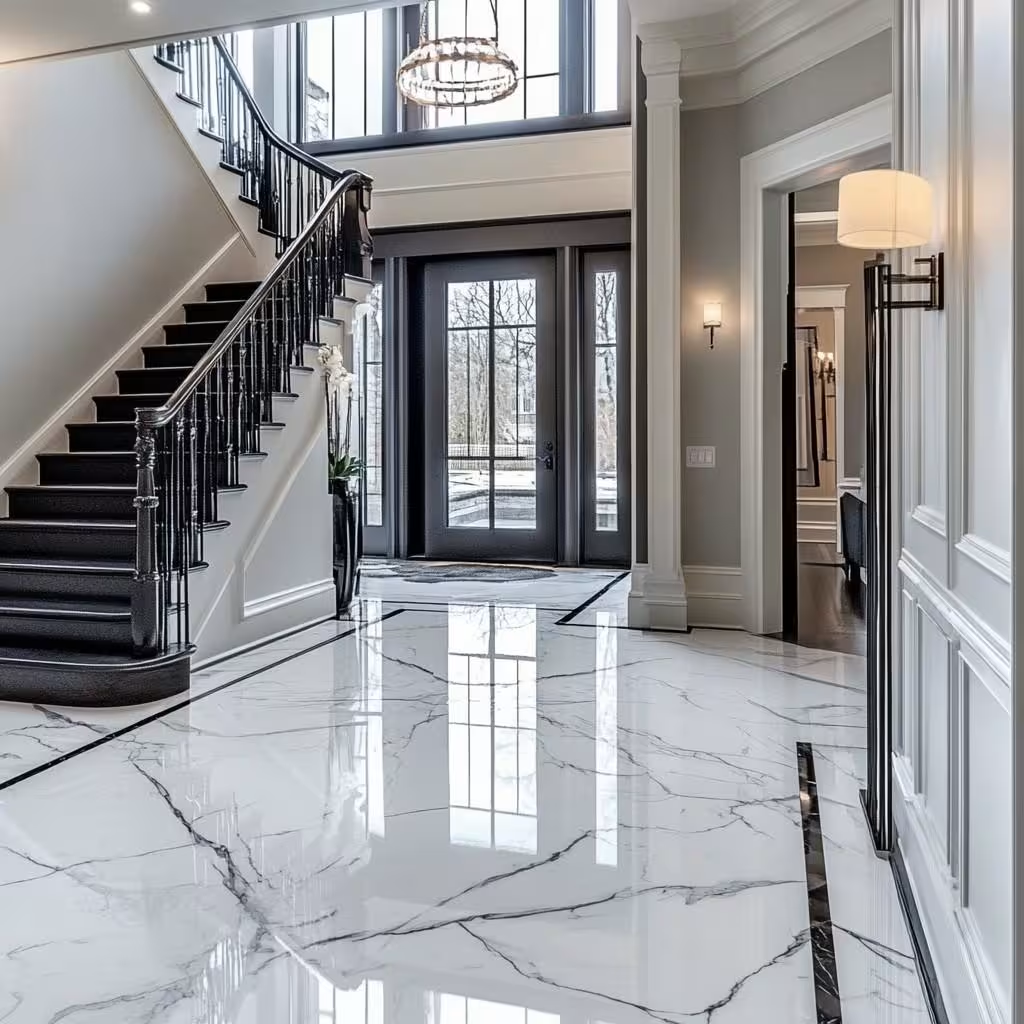
The floor is the largest uninterrupted surface in any foyer, which means it has enormous influence on how luxurious the space feels. Get the flooring right, and everything else has a solid foundation to build from.
Marble, Stone, and the Alternatives Worth Knowing About
Natural marble — particularly Calacatta or Carrara — is the benchmark for luxury foyer flooring. The veining catches light differently throughout the day, large-format slabs create a sense of continuity and scale, and the material has an honest weight to it that no synthetic fully replicates. If your foyer has natural light and you want the most impactful floor possible, real marble is worth the investment.
That said, marble has real trade-offs. It’s porous, which means it needs sealing and is vulnerable to acidic spills. A foyer is a high-traffic zone — shoes, umbrellas, deliveries — so durability is a genuine concern.
Porcelain tiles that replicate marble have improved dramatically in the last decade. Large-format porcelain in a marble pattern (with realistic veining variation, not the obvious repeat-print kind) can look genuinely sophisticated, especially in a foyer without direct sunlight where the material difference is less apparent. They’re more durable, easier to maintain, and considerably less expensive.
Other options worth considering: honed (matte-finish) limestone for a more understated European feel, travertine for warmth, or large-format porcelain in a neutral concrete look for modern entryways. Dark marble like Nero Marquina — deep black with white veining — creates a dramatic effect in the right space, though it shows dust and footprints readily.
Quick Tip: Book-matched stone installation, where adjacent slabs mirror each other’s veining pattern, adds a level of visual sophistication that stands apart from standard random-lay tile work. If you’re investing in real marble, this detail is worth discussing with your installer.
The Grand Staircase: When Architecture Becomes the Feature
Not every foyer has a staircase. But when it does, that staircase is often the single most architecturally significant element in the home — and it deserves to be treated as one.
Curved staircases create a sense of drama that straight runs simply can’t match. The sweep of the curve draws the eye upward and gives the foyer a sense of movement and arrival. If you’re building or doing a significant renovation, a curved or split staircase is worth designing around — it becomes the visual anchor everything else responds to.
For most renovation situations, though, the staircase is already fixed. What you can control is the railing, the treads, and how the staircase is lit.
Wrought iron or powder-coated steel balusters add a traditional elegance that wood can’t replicate in the same way. Brass or brushed gold hardware elevates the whole composition, especially when matched to the chandelier finish overhead. A carpet runner — wool, not synthetic — adds warmth and absorbs sound in a way that matters more than people expect.
If you have a staircase and it leads to an upper hallway that’s visible from the foyer, don’t neglect what guests can see from the bottom. The landing is part of the visual composition too.
Layered Lighting: Why One Overhead Fixture Is Never Enough
The chandelier handles drama. But it can’t do everything. A well-lit luxury foyer actually uses three types of light working together.
Sconces, Recessed Lighting, and Natural Light
Ambient light from the chandelier sets the overall mood. Accent lighting — wall sconces flanking a console table or mirror, or recessed spotlights aimed at artwork — adds depth and visual interest. Natural light, if you have sidelights or a transom window around the front door, changes the character of the space entirely throughout the day.
A common mistake is treating the foyer as purely artificial-light territory and ignoring what comes through the door itself. If you have glass panels around your entry, the way morning light falls across a polished marble floor or illuminates the grain of a wooden console table is one of the most beautiful things in a home. Work with it, not against it.
Dimmer switches on every foyer light circuit are non-negotiable in a luxury space. Being able to shift from a practical bright welcome at 6pm to a warmer, lower atmosphere at 10pm is the kind of detail that separates a finished space from one that’s still being designed.
Entryway Furniture and the Details That Complete the Space
The right furniture in a foyer is edited and purposeful. This isn’t the room for collections — it’s the room for curation.
A console table against one wall is the most useful piece of furniture a foyer can have. It grounds the wall, gives you a surface for seasonal decor and practical items (keys, mail), and creates the perfect base for a mirror and a pair of table lamps. Proportion matters: the table should be roughly two-thirds the width of the wall behind it, not the full width.
A large mirror above the console does multiple things simultaneously. It reflects light (important in foyers without natural light), makes the space feel larger, and gives guests — and you — a practical spot to check their appearance on the way out. An ornate gilded frame suits traditional spaces; a frameless or minimalist profile suits modern ones.
A statement area rug softens a hard floor, adds pattern or warmth, and protects the surface in a high-traffic zone. For foyer rugs, a common sizing mistake is going too small. The rug should be large enough to sit under the console table with room to spare in front of it, and should extend past the reach of the chandelier overhead. A rug that’s too small makes the floor feel crowded rather than grounded.
For further storage ideas that keep the entryway looking polished rather than cluttered, our guide to essential racks, shelves, and drawers has practical options that work in entryway contexts too.
How to Design a Luxury Foyer in a Smaller Space
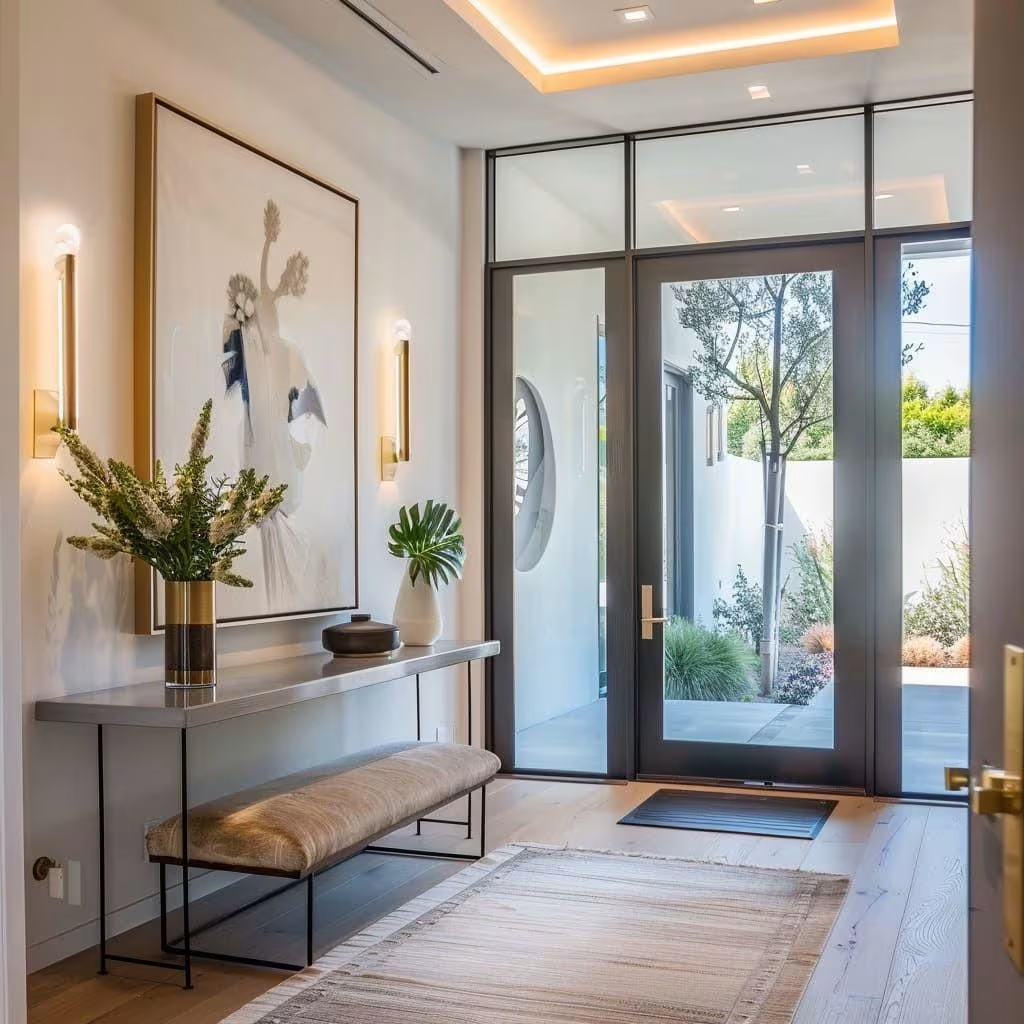
This is the section most articles skip — and it’s the one a lot of readers actually need.
Not every home has a double-height, 400-square-foot entry hall. Many beautiful homes have a foyer that’s modest in size but still deserves real design attention. The good news: the principles of luxury design scale down well. They just require more discipline.
In a smaller foyer, every element has to earn its place. A lower-profile chandelier or a dramatic pendant fixture (not a flush mount) still anchors the ceiling. A console table that’s narrower — 10 to 12 inches deep rather than the standard 14 to 18 — keeps floor space open. A round mirror rather than a rectangular one softens the geometry and makes the room feel less boxy.
For flooring, large-format tiles actually work well in smaller foyers too — counterintuitively, big tiles with fewer grout lines make a small space feel larger. Keep the rug simple: one with a subtle tone-on-tone pattern or a solid natural fiber rather than a bold geometric.
Vertical elements matter more in compact foyers. A tall, narrow mirror, a wall sconce positioned higher than usual, or a dramatic piece of wall art all draw the eye up and add a sense of height.
The other thing that makes a small foyer feel expensive? Editing ruthlessly. Remove anything that doesn’t serve a clear purpose. The feeling of luxury in a small space comes entirely from restraint and quality.
For renovation ideas that help small spaces punch above their weight, home renovation tips for beginners covers practical starting points before you commit to bigger investments.
Tying the Foyer Into the Rest of Your Home
Here’s something that gets overlooked in almost every foyer design article: the foyer doesn’t exist in isolation. It connects directly to whatever room or hallway lies beyond it — and if the transition is jarring, the whole impression falls apart.
Walk into a foyer with white Calacatta marble floors, then step straight into a living room with warm honey-toned hardwood, and the visual disconnect is immediate. It’s not that they can’t coexist, but the transition needs to be intentional. A threshold strip in complementary material, a rug that bridges the two tones, or a consistent color pulled from the adjacent room into the foyer wall treatment — these details create cohesion.
Similarly, the style register needs to be consistent. If your living areas are soft, organic, and natural-material focused, a chandelier dripping in formal crystal looks like it belongs to a different house. And vice versa: a raw linen-shaded pendant over Carrara marble reads as confused, not curated.
The simplest way to approach this: choose one material, one finish, or one color from the most visible adjacent room and bring it into the foyer intentionally. That single thread of connection makes the whole home feel designed rather than decorated.
If you’re thinking about how to refresh other rooms while you’re at it, our peel-and-stick wallpaper ideas piece is worth reading for low-commitment ways to add pattern and visual interest to hallways and adjacent spaces.
Putting It Together: A Priority Framework
When budget isn’t unlimited — and it never really is — here’s the order to invest in luxury foyer elements:
1. Flooring first. It’s the largest surface, and it’s what you see before anything else. Real stone or high-quality large-format porcelain here pays dividends across everything that sits on top of it.
2. Lighting second. The chandelier is the focal point, and the layered lighting around it transforms how the whole space reads. A beautiful floor under flat overhead light still feels ordinary.
3. A quality mirror and console table. These two pieces do the most work in the smallest footprint. Invest in one genuinely well-made console table rather than two mediocre ones.
4. The area rug. A high-quality wool or natural fiber rug adds warmth, absorbs sound, and protects the floor — but it should come after the major pieces are in place so you can choose it in response to what’s already there.
5. Finishing details last. Artwork, decorative objects, seasonal styling — these are what you get to play with once the bones are right. They’re also the easiest to change.
Frequently Asked Questions
What makes a foyer look luxurious?
A luxury foyer depends on three things: quality materials, a clear focal point, and layered lighting. A polished stone or marble floor, a well-scaled chandelier, and a carefully chosen console table with a mirror are the core elements. Restraint matters as much as investment — a few well-chosen pieces outperform a room full of things competing for attention.
What is the best flooring for a luxury foyer?
Natural marble — particularly Calacatta or Carrara — is the gold standard for luxury entryway flooring. High-quality large-format porcelain in a marble look is a practical and increasingly sophisticated alternative. Travertine and honed limestone work well for more understated, European-influenced spaces. Avoid standard ceramic tile or small-format patterns, which tend to look dated in a grand entry.
How big should a chandelier be in a foyer?
A reliable starting point: add the room’s length and width in feet. That total, converted to inches, gives you a good chandelier diameter. A 12×14 foot foyer suits roughly a 26-inch fixture. For ceiling height, the bottom of the chandelier should clear 7 feet minimum. In double-height foyers, dramatic cascading fixtures can drop 5 to 8 feet without issue.
What furniture goes in a foyer?
The most useful pieces are a console table, a large mirror above it, and an area rug underfoot. Optional additions include a bench or upholstered seat (useful for removing shoes), table lamps for ambient lighting, and a decorative object or small piece of art. Keep furniture minimal — the foyer is a transition space, not a display room.
How do I make my entryway look grand without a huge space?
Focus on vertical elements — a taller mirror, a pendant fixture instead of a flush mount, wall sconces positioned higher. Use large-format flooring tiles rather than small ones. Edit ruthlessly: remove everything that doesn’t serve a purpose. One quality piece always reads as more luxurious than several average ones competing for space.