Estimated reading time: 13 minutes
My daughter decided she hated her room when she was six. Not gently. Dramatically. One Tuesday morning she announced it was “boring and babyish” and refused to go in there willingly. We had $80, a free Saturday, and zero desire to end up on a home renovation show.
That weekend taught me more about budget kids room decorating than any blog I’d read before. Mostly because every article I found was full of vague advice — “use thrift stores!” and “try DIY!” — with no actual detail. Which thrift stores? What DIY? How long does it take? What does it actually cost?
So here’s the version I wish I’d found. Specific, honest, and written by someone who has actually done this more than once.
Before You Buy Anything, Look at What You Already Have
This sounds obvious. It isn’t.
Most parents jump straight to shopping when their child’s room needs a refresh. But a surprising number of rooms can be transformed — or at least significantly improved — using things you already own or can source for free.
Start by pulling everything out of the room. Yes, everything. Furniture, wall art, storage bins, the lot. Most rooms look worse than they are simply because things have accumulated without any real intention behind them. Once the room is cleared, you can see what you’re actually working with.
A spare lamp from the living room, a shelf from another bedroom, a basket that’s been sitting in a cupboard — these things can change the feel of a space immediately. And they cost nothing.
If the furniture is fine but looks tired, a coat of chalk paint does remarkable things. A 2-pack of Rust-Oleum chalk paint runs around $12 at Walmart and can transform a scuffed white dresser into something that looks genuinely intentional. It also dries quickly, requires no sanding, and you don’t need to be particularly skilled to get a decent result.
Rearranging furniture costs nothing either. Rotating the bed to face a different wall, moving a bookshelf to create a little reading corner — sometimes the room just needs a new layout, not new stuff.
The $0–$20 Zone: Bigger Wins Than You’d Expect
The cheapest kids room decorating ideas are often the most impactful because they require creativity rather than cash.
A gallery wall made from your child’s own artwork costs almost nothing. Print a few pieces at your local pharmacy for around $0.29 each (standard 4×6 prints), pick up simple black frames from the dollar section at Target or a pack of three from Dollar Tree, and you have a personalised wall display for under $10. It also means something to your child in a way that a poster from a shop never quite does.
Peel-and-stick wall decals sit firmly in the $8–$15 range on Amazon and can completely change the character of a wall in under an hour. Stars, jungle animals, dinosaurs, letter sets — there’s a version of basically every theme a child goes through. They’re also removable, which matters when your child inevitably moves on to a new obsession. Fair warning though: they work brilliantly on smooth painted walls and considerably less well on textured or patterned surfaces. On textured walls they tend to lift at the edges within a few weeks.
Fabric bunting and string lights from the dollar store can make a plain room feel cosy and fun for about $5 total. It’s not a design statement, but kids genuinely love it, and that’s the point.
Swapping out a lampshade is one of those tiny changes that has no right to work as well as it does. A new shade in a bright colour or fun pattern costs $6–$10 and takes two minutes to change. It shifts the whole mood of the corner it sits in.
DIY Wall Art That Looks Like You Meant It
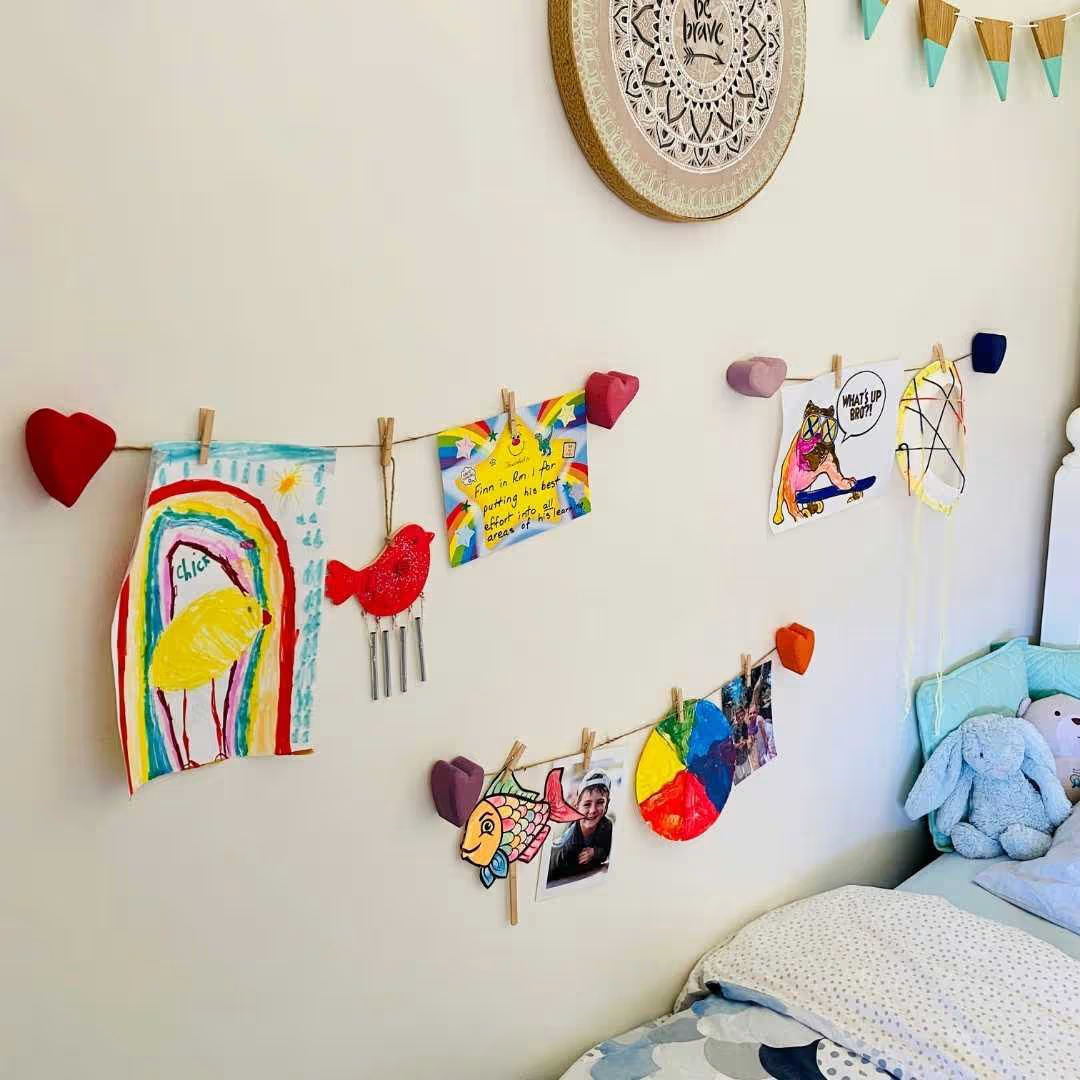
A lot of DIY kids room projects end up looking like a school craft project. Not what we’re going for. The difference between DIY that looks intentional and DIY that looks accidental usually comes down to one thing: commitment to a simple idea executed well, rather than a complicated idea executed badly.
Painted canvas panels are a reliable starting point. A pack of three small canvases from a craft store runs about $6. Pick one or two colours that match the room and paint simple geometric shapes — triangles, stripes, circles. No artistic skill required. Hang them in a cluster and they look like something from a children’s boutique. Total cost: under $12.
A DIY gallery wall with a consistent frame colour is the upgrade version. Mixed frames look messy; matching frames look curated. Pick up a set of matching frames in one colour (white or black works for almost anything) and fill them with a mix of printed photos, simple illustrations you can download for free, and a piece of your child’s artwork. The consistency of the frames is what makes it look pulled-together.
Painted wood letters spelling your child’s name are a classic for a reason. You can find unpainted MDF letters at craft stores for about $1–$2 each, paint them in whatever colour works, and hang them above the bed or on a shelf. Takes an afternoon, costs around $8–$12 depending on how long the name is.
For a step-by-step breakdown of these and other DIY options, [our kids room wall art guide](internal link) goes into much more detail on materials, timings, and what to avoid.
Where to Actually Find Cheap Kids Room Decor
This is the part most budget articles skip. “Shop secondhand!” they say, and leave it there.
Facebook Marketplace is the single best source for cheap kids furniture right now. Parents are constantly offloading kids room pieces as their children grow — beds, dressers, bookshelves, play tables. You can regularly find an IKEA Kura bed (retails at $229) for $40–$60. Search your area, set a price filter, and check it every few days. Good pieces go fast but there are always more.
IKEA is worth knowing specifically for a few things. The KALLAX shelving unit ($49.99) works beautifully as a room divider in shared rooms and doubles as toy storage. The FLISAT children’s table ($69.99) has legs that adjust as children grow. These aren’t impulse buys, but they’re the pieces that justify spending a bit because they last through multiple phases. [Our guide to IKEA kids room hacks](internal link) is worth reading before you visit — a few small additions turn basic IKEA pieces into something much more interesting.
Dollar Tree and Five Below are worth a dedicated trip for the small stuff: picture frames, baskets, bookends, small storage containers, fairy lights. These aren’t quality purchases for things that need to last, but for decorative items they’re absolutely fine.
Charity shops and thrift stores are excellent for soft furnishings — curtains, rugs, cushion covers — and for small furniture like bedside tables and stools. The main thing to know is that painted wood furniture sometimes needs light sanding and a fresh coat of primer before it’s worth using. Budget an extra hour if you go this route.
Walmart clearance sections and end-of-season sales are underused. Kids bedding in particular goes on serious clearance at the end of summer and winter — you can find full duvet cover sets for $8–$12.
Colour on a Budget: The Fastest Room Transformation There Is
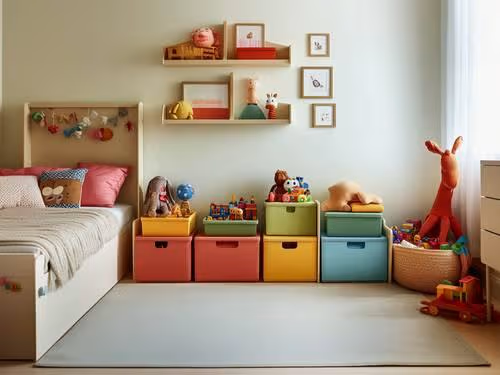
Paint is the single highest-impact change you can make to any room, and it doesn’t have to cost much.
A standard room needs roughly one gallon of paint, which runs $25–$35 for a decent quality option. If you want to add an accent wall — which is genuinely one of the easiest ways to make a kids room feel designed rather than decorated — you only need a quart, which costs $10–$15.
Soft, dusty tones work better than saturated primaries in most kids rooms. A dusty sage green, muted terracotta, or soft blue-grey gives the room a sense of calm while still feeling distinct. These shades also age much better than bright primary colours — they don’t start to feel babyish as quickly.
If you rent, or don’t want to commit to painting, peel-and-stick wallpaper panels are a legitimate alternative. A single accent wall in a kids room typically needs 2–3 rolls at $18–$25 each, so you’re looking at $40–$70 for the wall. It’s more expensive than paint but fully removable. Stick to smooth, flat walls for best results. (On textured walls: just don’t. It will bubble, peel at the edges, and drive you quietly mad.)
For more on what colour combinations actually work for different ages, [this kids room colour guide](internal link) is a useful reference.
What’s Worth Spending On (and What Really Isn’t)
This is probably the most useful section in the article, and the one that’s hardest to find elsewhere.
Worth spending on:
- The mattress. Non-negotiable. Children spend a huge portion of their lives sleeping and a poor mattress affects sleep quality genuinely. A decent kids mattress starts around $100–$150. Don’t buy secondhand.
- Blackout curtains. If your child wakes with the light, a proper blackout curtain pays for itself in sleep (yours and theirs) within a week. A good pair runs $25–$40. Worth every penny.
- Grow-with-me furniture. A convertible cot that becomes a toddler bed, a loft bed with a desk underneath for older kids, an adjustable table. These cost more upfront but survive multiple years and phases, making them genuinely economical.
- Decent storage. The kind that actually works for how your child operates. If they won’t open drawers, open bins work better. Figure out what your child will actually use before buying.
Save your money on:
- Wall art and prints. Free printables, your child’s own artwork, printed photos — these are just as effective and often more personal than anything you’d buy.
- Throw pillows and cushions. Kids don’t care about cushions the way adults do. Three themed cushions for $6 each from the dollar store will get thrown on the floor regardless of their cost.
- Themed bedding. The Paw Patrol duvet cover your four-year-old is desperate for will be a source of deep embarrassment by the time they’re seven. Neutral base bedding with removable themed elements (a pillowcase, a throw blanket) gives you more flexibility.
- Matching furniture sets. A “matching” bedroom set sounds appealing and ends up looking stiff and corporate. Mix pieces from different sources — it looks more interesting and costs less.
How to Future-Proof the Room (So You’re Not Doing This Again Next Year)
The theme problem is real. Children cycle through obsessions with startling speed. The trick is to build the room in layers.
The base layer — paint colour, main furniture, flooring, curtains — should be neutral or broadly themed in a way that isn’t tied to a specific character or franchise. Think “space” rather than “specific superhero,” “ocean” rather than “a particular mermaid movie.”
The personality layer is where you let the current obsession live: a themed duvet cover, some wall decals, a couple of accessories. Because these are the cheaper, more easily swapped elements, updating them when the obsession changes costs $15–$30 rather than $150–$300.
Involve your child in the personality layer and they’ll feel ownership over the room without holding the whole design hostage to their current favourite thing. Ask them to choose between two duvet covers, pick a wall colour from three options, or decide where their artwork goes. They feel heard; you stay sane.
Shared Rooms and Small Spaces: A Few Extra Notes
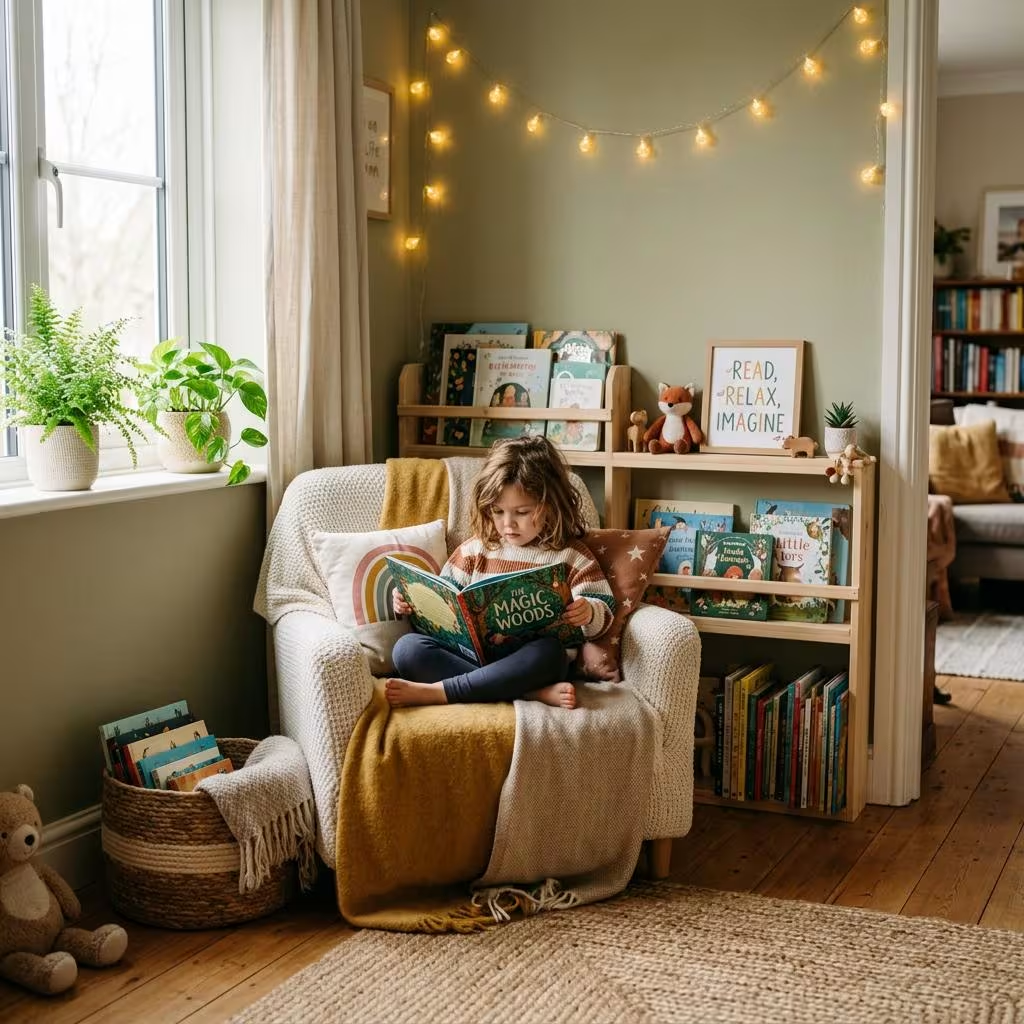
Shared kids bedrooms have their own challenges. The biggest one is usually that two children want completely different things and need defined personal space within one room.
Colour-coded zones are the simplest solution: one child’s side in soft blue, the other in green. It doesn’t require separate rooms or a major renovation — just paint or removable decals applied to one wall on each side. Each child has their own visual territory.
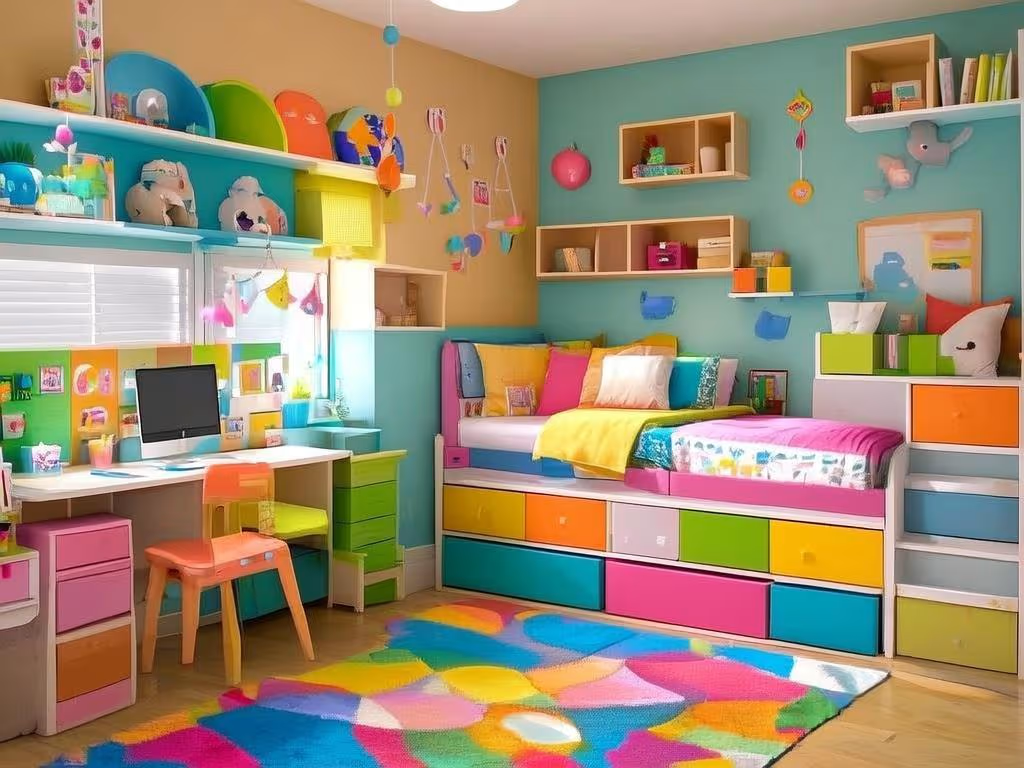
Loft beds are worth considering seriously for small shared rooms. They free up floor space, each child gets their own level (or their own loft bed), and kids almost universally love them. Look for them secondhand — parents sell these constantly as children outgrow them. Facebook Marketplace regularly has solid loft beds for $60–$100.
Under-bed storage should be maximised in any small room. Flat storage boxes on wheels (around $10 at IKEA or Walmart) fit under a standard bed and can hold everything from toys to extra bedding. Label them and they actually stay organised — at least most of the time.
For more ideas specifically for tight spaces, [this shared kids bedroom guide](internal link) goes much deeper on room dividers, storage, and keeping the peace.
Frequently Asked Questions
What’s the cheapest way to decorate a kids room?
Start with what you already own — rearrange furniture, move pieces from other rooms, and see what the space actually looks like cleared out. Then focus on paint (one accent wall costs $10–$15) and personalised wall art using your child’s own drawings printed cheaply at a pharmacy. A full refresh is achievable for under $40 if you’re strategic about it.
Is peel-and-stick wallpaper actually worth it for a kids room?
On smooth, flat walls — yes, it’s genuinely good. It’s easy to apply, looks striking, and comes off cleanly when you want to change it. On textured walls, it’s a frustrating experience: edges lift, bubbles form, and it rarely lies flat. Check your walls before committing.
What kids room furniture is worth buying new vs. secondhand?
Buy the mattress new — always. Everything else is fair game secondhand, especially dressers, bookshelves, desks, and bed frames. Facebook Marketplace and local selling apps are your best source. Just check for structural stability and avoid anything with significant water damage or unusual smells.
How do I involve my child without them taking over the whole design?
Give them real choices within a defined set of options. “Do you want the blue or the green wall?” feels like genuine input because it is — but both options work for you. Same with bedding, accessories, and where things go. Children want to feel heard more than they want total control.
How do I stop the room looking cheap even on a low budget?
Consistency is everything. Matching frame colours, a cohesive palette of two or three colours, and avoiding clutter all make a low-budget room look intentional. The rooms that look cheap are usually the ones with too many clashing colours, mismatched frames, and too much stuff competing for attention.
Where’s the best place to find budget kids room decor?
Facebook Marketplace for furniture, Dollar Tree and Five Below for small decorative items, IKEA for functional basics that last, Walmart clearance for bedding, and your own printer for wall art. In that order.