Estimated reading time: 11 minutes
Here’s a scenario that plays out in bedrooms everywhere: someone buys a bunk bed, grabs a regular twin mattress because hey, it’s the same size, slides it onto the top bunk, and never thinks about it again. Most of the time, nothing bad happens. The mattress fits, the kid sleeps fine, life goes on.
But every once in a while, that mattress turns out to be too thick for the guardrail to do its job properly, and that’s the part nobody warns you about until someone’s googling it at 11pm wondering if they made a mistake.
So let’s get into the bunk bed mattress vs twin mattress question properly, because the size is rarely the issue. It’s everything else—thickness, density, materials, and a safety detail that’s almost never mentioned on the product page.
The Quick Answer
A bunk bed mattress and a twin mattress are often the exact same size—38 x 75 inches. So if you’re picturing two completely different shapes of mattress, that’s not really what’s going on.
The real differences come down to thickness, density, and safety design. Bunk bed mattresses are built thinner and firmer so they don’t sit too high above the guardrail, especially on the top bunk. A standard twin mattress can be a lot thicker, which is wonderful for comfort on a regular bed frame but can become a genuine safety issue once you stick it on a bunk.
Can you use a twin mattress on a bunk bed? Sometimes, yes—but only if it’s thin enough to keep the guardrail working the way it’s supposed to. We’ll walk through the exact numbers in a minute, because this is the part that actually matters.
Size: This Part’s Actually Simple
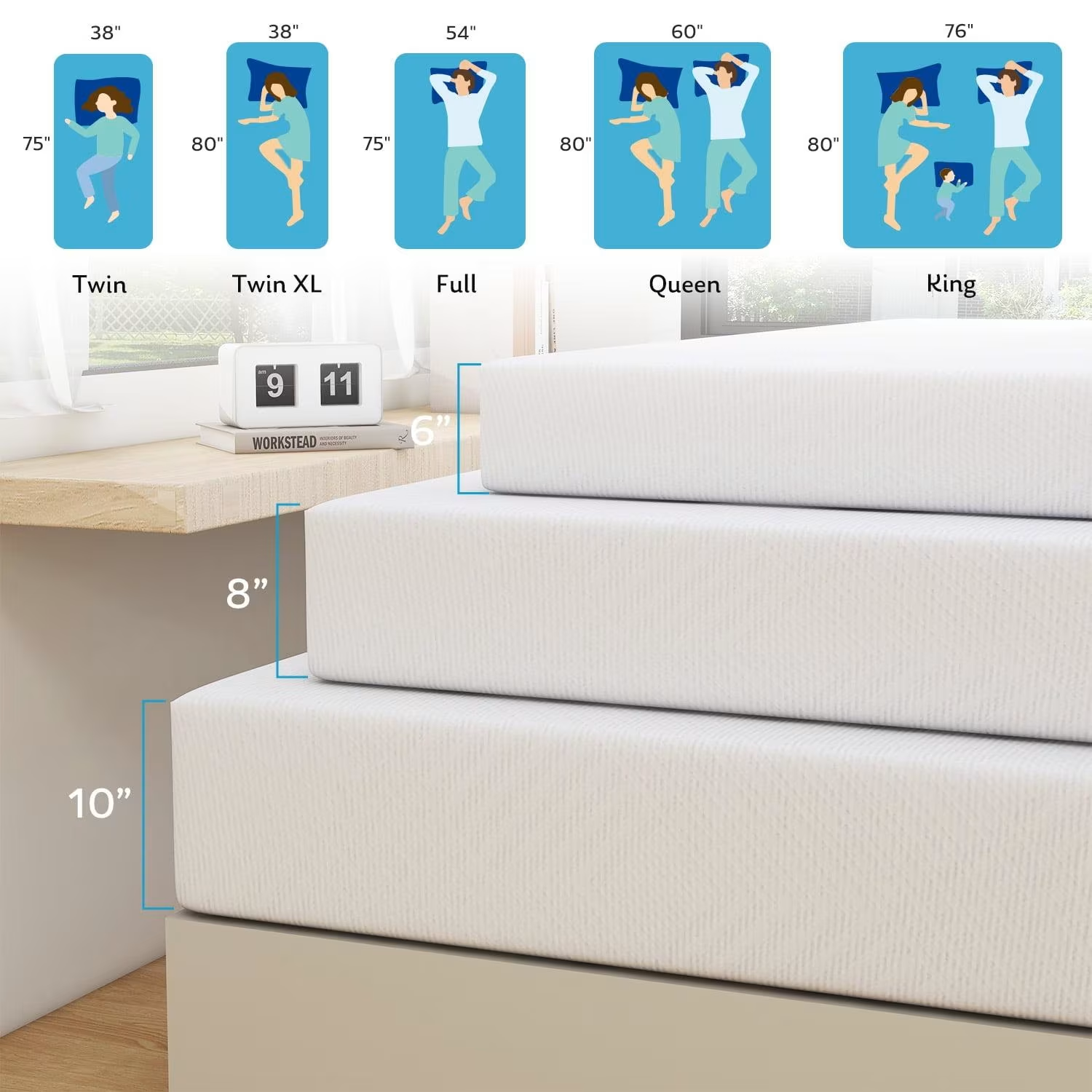
Both twin mattresses and most bunk bed mattresses measure 38 inches wide by 75 inches long. So if you’re just checking “will this physically fit on the frame,” the answer is usually yes, and you can stop worrying about that part.
There’s one wrinkle, though. Some bunk beds—especially older ones, vintage frames, or compact space-saving models—are built for “short twin” mattresses, which run about 5 inches shorter, somewhere around 70 inches. If your bunk bed is one of these, a standard twin mattress simply won’t sit right. It’ll hang off the end of the frame, the corners won’t tuck into the rail brackets properly, and you might not be able to close or latch the safety rail the way it’s designed to close.
This is more common than people expect, especially with bunk beds that have been passed down, bought secondhand, or are part of older furniture sets. Before you order anything, grab a tape measure and check the actual sleeping platform of your bunk—not just the outside frame dimensions, but the inner space where the mattress sits. It takes about two minutes and can save you a frustrating return process, especially if the mattress has already been unboxed and compressed.
Thickness: The Detail That Actually Matters
This is where the real difference between these two categories lives, and it’s the thing almost nobody talks about until it’s already a problem.
Bunk bed mattresses are typically built in the 6 to 8 inch range. Twin mattresses—especially the newer memory foam, hybrid, and “luxury” options that dominate online mattress shopping right now—often run 10 to 14 inches thick, and some go even higher.
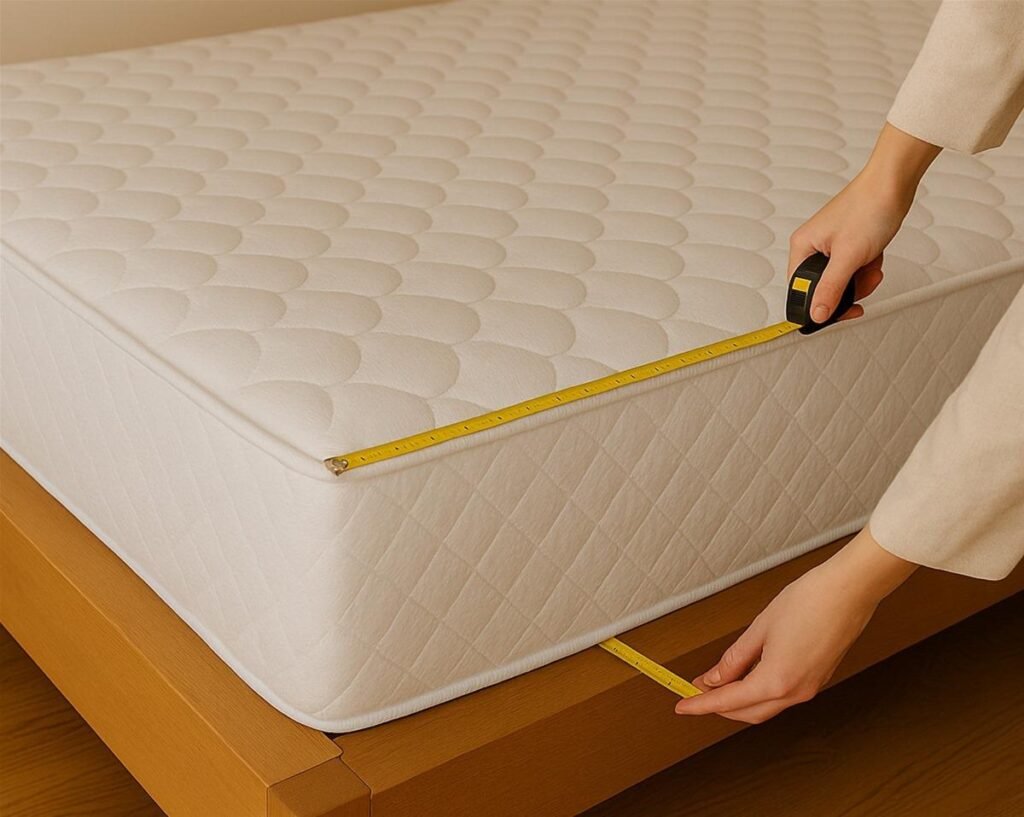
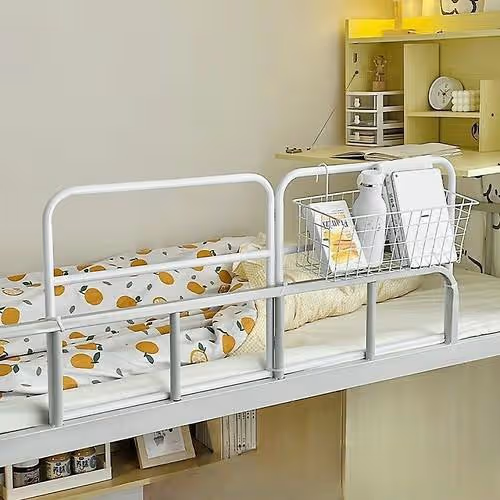
Why does a few extra inches matter so much? Guardrails on bunk beds are engineered to a specific height above the mattress surface, and that height is doing actual safety work. It’s what keeps a sleeping kid (or adult, for that matter) from rolling off the edge in the middle of the night. If you take a bunk bed that was designed around an 8-inch mattress and drop in a 12-inch one, you’ve effectively raised the sleeping surface by 4 inches. That guardrail that used to sit comfortably above the mattress edge might now be level with it, or even below it.
Here’s a simple way to check this yourself, and it only takes a minute:
Measure from the top of the bunk’s platform—the surface where the mattress actually sits—up to the top edge of the guardrail. That’s your rail height. Most safety guidance recommends at least 5 inches of rail remaining above the top of the mattress once it’s in place. So take your rail height, subtract your mattress thickness, and see what’s left.
If the number you’re left with is less than 5 inches, or if it’s negative, that mattress is too thick for that particular bunk—full stop. This isn’t a “maybe it’s fine” situation, especially for the top bunk where a fall has the furthest distance to travel. It’s one of those small measurements that takes almost no effort but makes a real difference.
Density and Weight Support
There’s another difference that doesn’t get nearly enough attention: density.
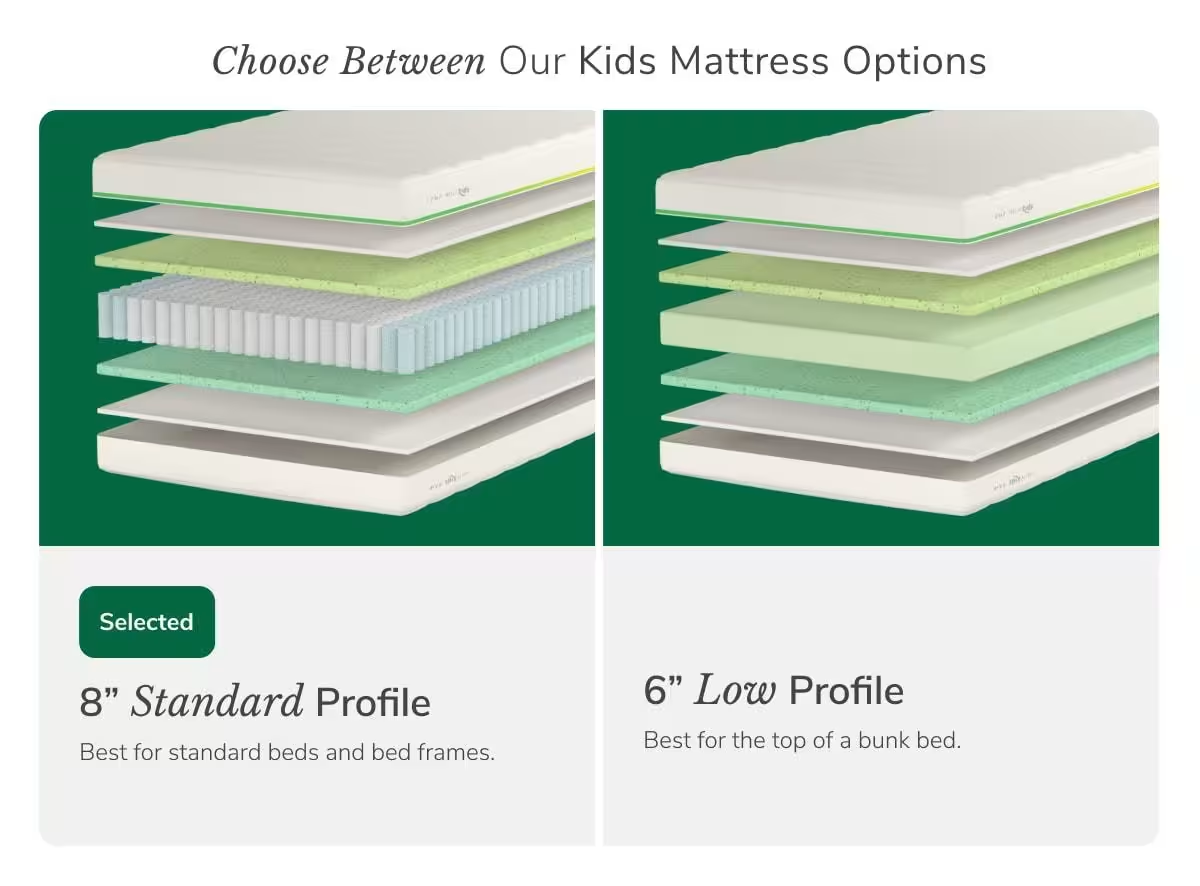
Bunk bed mattresses tend to be denser than your average twin, and there’s a practical reason for that. Most bunk frames use wooden or metal slats instead of a box spring or solid platform. That means the mattress is doing more work on its own—it needs to hold its shape and support body weight without a rigid foundation underneath it.
A lower-density foam mattress sitting on slats can start to sag into the gaps between them over time. You’ll notice it as little ridges or dips that line up exactly with where the slats are. It’s not dangerous, exactly, but it’s uncomfortable, and it shortens the life of the mattress considerably.
Twin mattresses, on the other hand, are usually designed with the assumption that they might sit on a box spring or a solid platform bed. So density requirements for twins are generally a bit more relaxed—manufacturers aren’t necessarily engineering for the slats-only scenario, because a lot of twin mattresses never encounter one.
Materials: What You’ll Actually Be Choosing Between
If you’re shopping specifically for a bunk bed mattress, your realistic options narrow down to a couple of categories:
Foam mattresses (memory foam or poly foam) are popular for bunks because they’re lightweight—which matters a lot for a top bunk, since someone has to lift that thing up there—and they don’t transfer motion. If the kid on top is tossing and turning, the kid on the bottom bunk generally won’t feel it.
Innerspring mattresses built for bunks tend to be firmer and more breathable. They’re a good fit if you’re dealing with a warmer climate or a room that doesn’t get much airflow, since foam can trap heat more than springs do.
Twin mattresses, by comparison, give you the full spread of what’s out there: memory foam, latex, innerspring, hybrid, even some adjustable options. More choice sounds great, but it also means more chances to accidentally pick something that’s far too thick for a bunk frame without realizing it until it arrives.
To put some real numbers on this: a foam bunk mattress like the Zinus 6-inch Twin Memory Foam typically runs somewhere around $90 to $120. A Linenspa 8-inch innerspring twin lands in a similar range, often $100 to $140. Compare that to a standard 12-inch memory foam twin mattress, which frequently starts closer to $200 and climbs from there depending on the brand and materials.
So the bunk-specific options aren’t just safer from a guardrail-clearance standpoint—they’re frequently the cheaper choice too, which is a nice bit of overlap between safety and budget.
Safety Certifications You Should Actually Look For
Bunk bed mattresses are generally built to meet flammability standards, and reputable brands will usually state CPSC compliance directly in the product listing or description. It’s worth a quick scan before you buy.
Standard twin mattresses meet general mattress safety standards as well, but they’re not specifically designed around the stacked-bed, confined-space scenario that bunk beds create. The standards exist, but the intent behind the design is different.
If you’re buying for a kid’s top bunk specifically, look for listings that explicitly say something like “designed for bunk beds” or “meets bunk bed safety standards.” In this particular case, that’s not just marketing language—it usually signals that the manufacturer has already accounted for the thickness and rail-clearance issue, so you’re not left doing the measuring and math yourself.
So Can You Actually Use a Twin Mattress on a Bunk Bed?
Honestly? Yes, in plenty of cases—as long as it’s thin enough.
If you’ve got a spare twin mattress lying around and it’s 8 inches or less, and the rail-clearance math from earlier checks out, you’re probably in good shape. This comes up a lot with older or budget-friendly memory foam twins, which tend to run noticeably thinner than the newer “luxury” 12 to 14 inch models that have become so common.
Where people tend to run into trouble is with those newer plush mattresses—the ones marketed as hotel-quality, cloud-like, or “ultra-comfort.” Those extra inches of comfort foam are exactly what eat into your guardrail clearance. Fantastic for a regular bed frame on the floor. Not great for a top bunk, where those same inches push the mattress surface dangerously close to, or above, the rail.
One more thing worth checking while you’re at it: some bunk beds need what’s called a bunkie board—a thin, flat support panel that sits between the slats and the mattress. This is especially worth considering if you’re using a mattress that wasn’t specifically designed for slatted frames. If your mattress feels like it’s sagging or dipping into the gaps between slats, a bunkie board is a cheap fix—usually somewhere in the $30 to $50 range—before you assume the whole mattress needs replacing.
What About Adults, Dorms, and Vacation Rentals?
For adult bunks—think dorm rooms, hostels, or vacation rental setups—the same thickness and rail-height rules still apply, but there’s an added factor to think about: weight.
Adults put more sustained pressure on a mattress night after night, so density matters even more if you want the thing to actually last. A cheap, thin foam mattress that holds up fine under an 8-year-old might compress and break down a lot faster under regular adult use, leaving you with a saggy mattress within a year or two.
For vacation rentals specifically, durability and ease of cleaning often matter more than plush comfort. Guests aren’t sleeping there every single night, but the mattress needs to hold up to a steady rotation of different people over time, and ideally needs to be easy to wipe down or protect with a mattress cover. A firmer innerspring bunk mattress in the 6 to 8 inch range tends to be the practical, low-maintenance choice for this kind of setup—it’s not going to win any luxury awards, but it’ll still be in good shape after dozens of guests have come and gone.
If you’re setting up a shared kids’ room and working through the bunk bed question, it’s worth checking out our guide on bunk bed safety essentials while you’re at it—rail height clearance is just one piece of a bigger safety picture. And if space efficiency is part of why you went with bunks in the first place, our small bedroom storage ideas for kids’ rooms pairs naturally with this kind of setup.
FAQ
What thickness mattress is safe for a top bunk?
Generally, 6 to 8 inches is the safe range for most bunk beds, but the real test is your specific guardrail height. Measure the rail above the platform, subtract your mattress thickness, and aim for at least 5 inches of rail remaining above the mattress surface once it’s in place.
Do bunk beds need a box spring?
No. Most bunk beds use slats, and adding a box spring would make the total mattress height far too thick, raising it well above the guardrail. If your mattress sags between the slats, a bunkie board is a better fix than a box spring.
Can you put any mattress on a bunk bed?
Not safely, no. While most standard twin mattresses will physically fit a bunk frame size-wise, thicker mattresses—typically anything over 8 to 10 inches—can compromise guardrail safety on the top bunk. Always check thickness against your specific rail height before buying.
What’s the difference between twin and twin XL for bunk beds?
Twin XL is 5 inches longer than a standard twin—80 inches versus 75 inches. Most bunk beds are built for standard twin dimensions, so a twin XL likely won’t fit properly unless your specific bunk frame is designed for it. Check the frame specs before buying; our guide to measuring a bed frame before buying a mattress walks through exactly how to do this.
Can adults sleep on bunk bed mattresses?
Yes, though density and durability matter more for adult use over time. A firmer 6 to 8 inch innerspring or high-density foam mattress designed for bunks will generally hold up better under regular adult use than a thinner, budget option meant for lighter use.