Estimated reading time: 12 minutes
Last updated on June 20th, 2026 at 05:48 am
Most people buy a food processor and end up with something that’s either twice the size they needed or too small to be useful. It’s one of those kitchen purchases that looks simple from the outside — until you’re staring at a wall of options and wondering what half of them actually do.
The truth is, food processors aren’t one-size-fits-all. There are several distinct types, each built around different cooking habits, kitchen sizes, and task volumes. Picking the right one isn’t complicated once you know what separates them. This breakdown covers all eight types — not just what they are, but who they’re actually for and where they fall short.
1. Full-Size Food Processors: Built for Batch Cooking
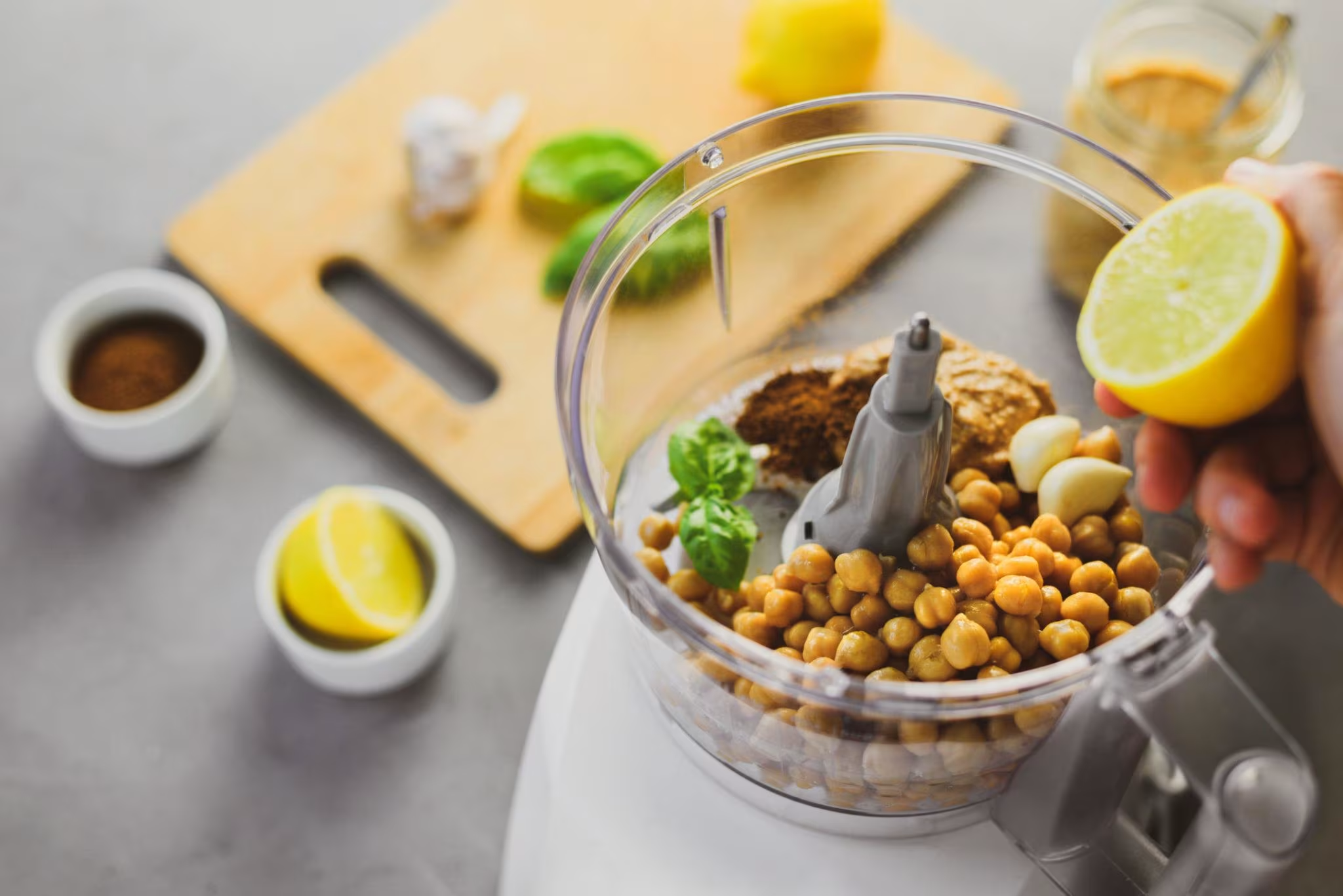
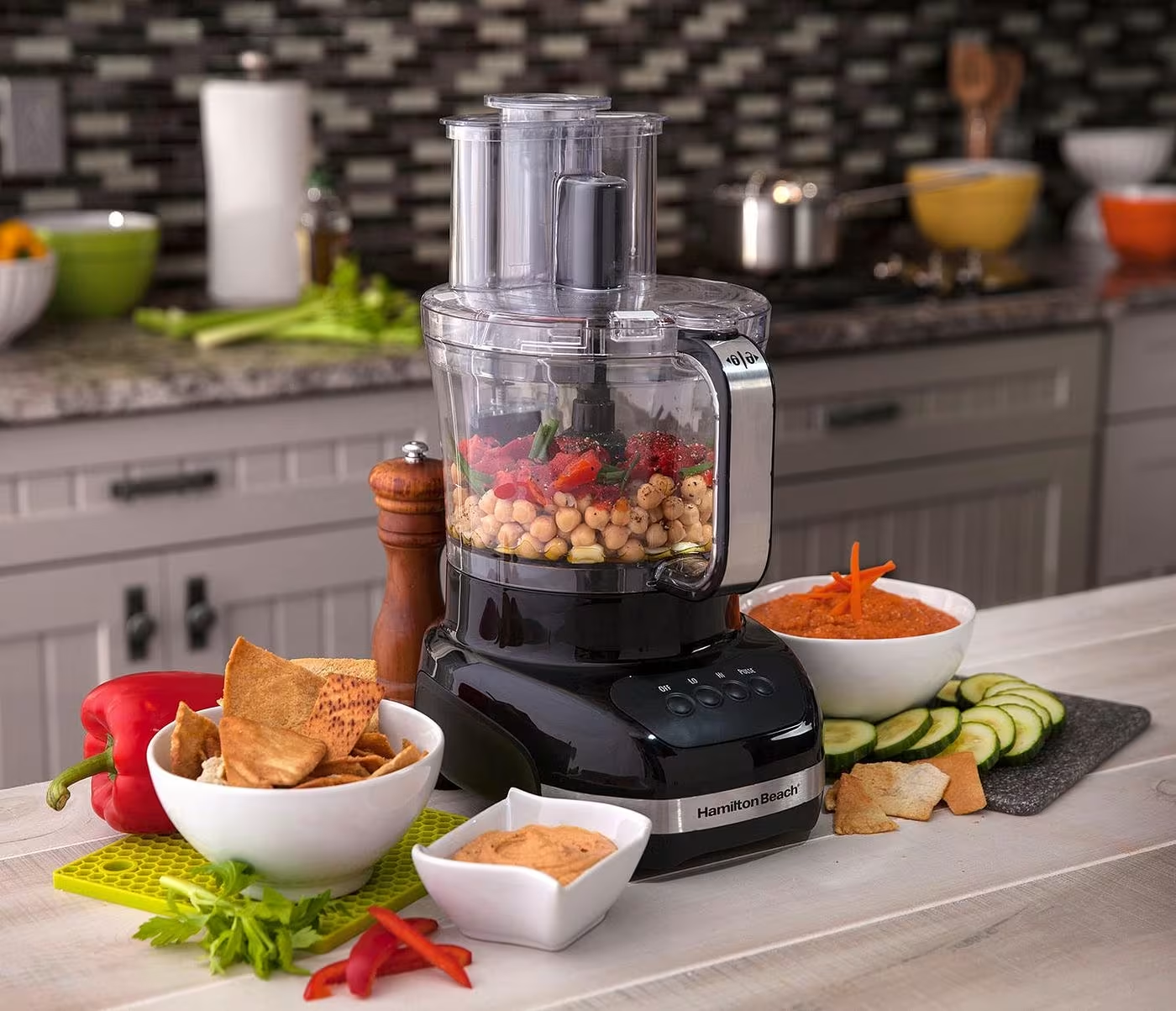
Full-size food processors are the workhorses of the category. They typically come with bowl capacities ranging from 7 to 14 cups, powerful motors, and a collection of interchangeable discs and blades that can handle chopping, slicing, shredding, pureeing, and even kneading dough.
If you cook for a family regularly, batch-prep meals on weekends, or frequently entertain guests, a full-size model makes real sense. Think large batches of salsa, a big pot of soup base, shredded cabbage for a crowd, or enough pastry dough for multiple pie crusts. The capacity means you’re not stopping to empty the bowl every five minutes.
That said, full-size processors have real drawbacks. They’re bulky — most take up a significant chunk of counter space and aren’t easy to store away. They’re also overkill if you cook in small quantities. A full-size processor sounds impressive. But if you’re cooking for one or two people most nights, you’ll spend more time cleaning it than using it.
Best for: Families, batch cooking, meal prep, regular entertainers
Bowl capacity: 7–14 cups
What it won’t do well: Small quantities (ingredients just spin around without making contact with the blade), quick single-use tasks
2. Compact Food Processors: The Underrated Workhorse
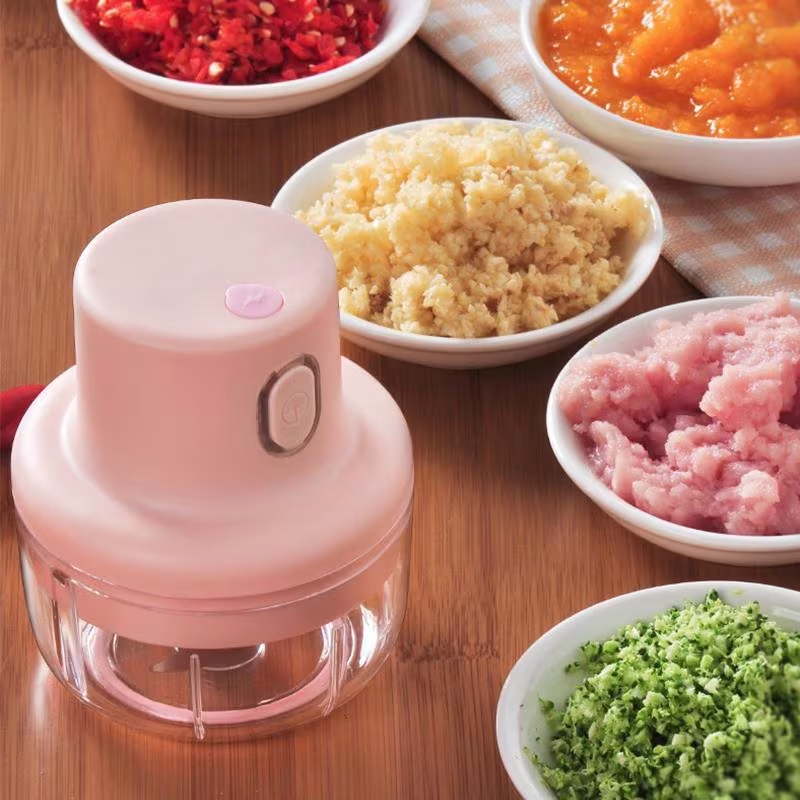
Compact food processors — sometimes called mini food processors — are consistently underrated. They sit in the 3 to 5 cup range, take up almost no counter space, and are genuinely useful for the kinds of everyday tasks that a full-size machine makes unnecessarily complicated.
Chopping an onion, blitzing garlic and ginger into a paste, making a small batch of hummus, pureeing a single avocado for guacamole — these are compact territory. They heat up quickly (motor-wise), they’re easy to wash, and they’re fast to grab and use without committing to a full clean-up operation afterward.
Here’s something most buying guides won’t tell you: for the average home cook preparing everyday meals, a compact processor often outperforms a full-size one in practical terms. Not because it’s more powerful, but because it’s the one you’ll actually reach for. Convenience matters. A 14-cup machine you leave in a cabinet doesn’t process anything.
The limitation is obvious — capacity. If you’re making a big batch of pesto with two overflowing cups of basil and a fistful of garlic, a compact processor is going to struggle. You’d need to work in batches, which defeats the purpose.
Best for: Singles, couples, small kitchens, quick everyday tasks
Bowl capacity: 3–5 cups
What it won’t do well: Large volumes, batch cooking, dough
3. Mini Food Processors: Small but Surprisingly Capable
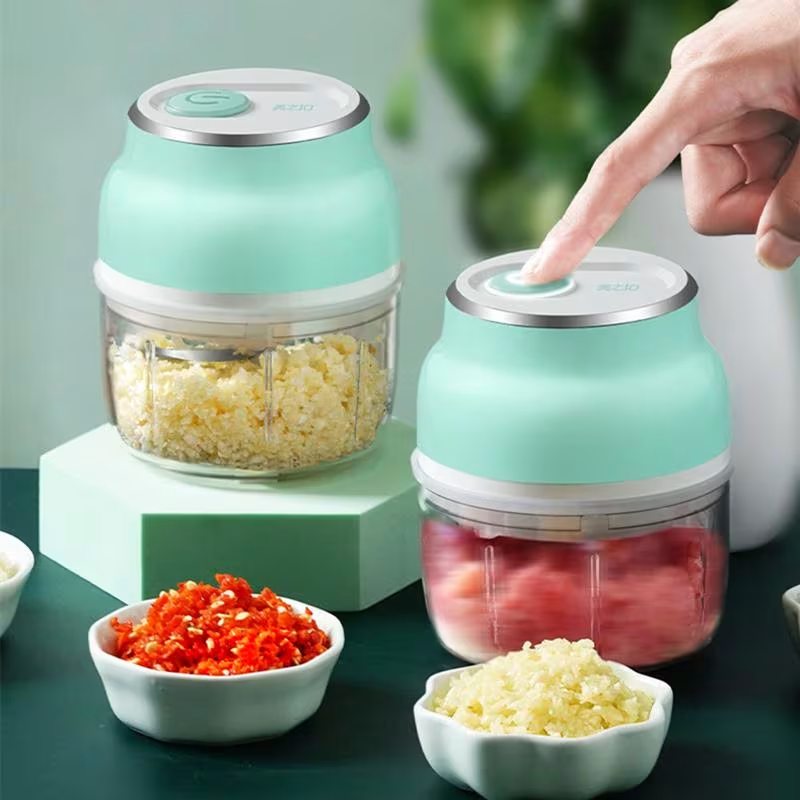
Mini food processors are a step down from compact models, typically in the 1 to 3 cup range. They’re the smallest countertop option and are genuinely good at a narrow set of tasks — think herbs, nuts, garlic, small amounts of spices, baby food, or salad dressings.
The appeal is simplicity. There’s usually one blade, one speed, and a lid you press down to pulse. Some models don’t even need a separate clean-up — just a quick rinse and they’re done. For people who cook simply or who need one specific task handled quickly, a mini processor can be exactly the right tool.
Don’t expect it to handle anything volume-dependent. Half a cup of basil? Brilliant. A full batch of soup? Not a chance. Mini processors are specialists, not generalists. Buy one for what it does well, not as a budget alternative to a full-size machine.
Best for: Herbs, baby food, small quantities of nuts, dressings, simple meal prep
Bowl capacity: 1–3 cups
What it won’t do well: Anything requiring volume or sustained motor use
4. Handheld Food Processors: Convenience with Real Caveats
Handheld food processors — often called immersion blenders or stick blenders — are a slightly different category. They’re designed to be used directly in a pot, bowl, or container rather than transferring food to a separate work bowl.
They’re brilliant for certain things. Blending a soup directly in the pot is genuinely faster and easier than ladling it into a blender in batches. They’re also good for quickly pureeing sauces, making smoothies in a jug, or mixing soft ingredients. Lightweight, easy to store, easy to clean.
The caveats are real, though. Handheld processors aren’t great at chopping solid ingredients from scratch. They work best on things that are already soft or partially cooked. They also lack the consistency of a countertop processor — getting an even chop across a bowl of onions with a stick blender is genuinely difficult. If you already own a countertop processor, a handheld is a nice addition. If you’re choosing between the two, it depends heavily on what you actually cook.
Some handheld models come with small chopper attachments — a little cup and blade — which makes them more versatile. These hybrid versions are worth the slight premium if you want one tool to do multiple jobs.
Best for: Soups, sauces, smoothies, soft ingredient blending
Bowl capacity: N/A — used directly in containers
What it won’t do well: Chopping raw solid vegetables, large batch processing, dough
5. Food Processor and Blender Combos: Two Machines, One Counter Space
Combination units do exactly what the name suggests — they include both a standard blender jug and a food processor bowl, usually sharing the same motor base. The idea is to consolidate two appliances into one and save counter space.
In practice, they work reasonably well if your cooking involves both blending and processing regularly. You get decent performance from both functions without buying two separate machines. For small kitchens where counter real estate is genuinely limited, a combo can be a sensible compromise.
The honest trade-off: combo units rarely outperform dedicated single-function machines in either role. If you’re serious about either blending or food processing, you’ll probably want a standalone unit eventually. Combo machines are best suited to people who need both functions occasionally, not daily power users of either.
Best for: Small kitchens, budget-conscious buyers, light-to-moderate cooking
What it won’t do well: High-volume processing or professional-grade blending — it’s a compromise, not a replacement
6. Commercial-Style Food Processors: When Home Cook Meets Restaurant Habit
Commercial-style food processors are essentially scaled-up full-size machines with larger bowl capacities (often 16 cups and above) and significantly more powerful motors. They’re built for sustained, high-volume use and can handle tasks that would tax a standard home processor.
Honestly, most home cooks don’t need one. They’re heavy, they’re expensive, and they’re sized for people who are cooking at serious volume — think caterers, people who batch-cook for large families, or passionate cooks who are processing kilograms of vegetables at a time.
If you regularly find yourself limited by a standard 11-cup machine and you’re doing real volume work in the kitchen, a commercial-style processor makes sense. Otherwise, you’re paying a significant premium for capacity you won’t use.
Best for: High-volume home cooking, catering, serious batch preparation
Bowl capacity: 16+ cups
What it won’t do well: Being cost-effective or convenient for everyday cooking at normal scale
7. Specialty Food Processors: Built for One Job (And Usually Just One)
Specialty food processors are purpose-built for specific tasks: meat grinding, juicing, making ice cream, spiralizing vegetables, or processing specific ingredients at scale. They often come with unique attachments — grinding plates, juicing screens, ice cream bowls — that standard processors simply don’t have.
Meat grinders are the most common example. If you regularly grind your own mince for burgers, meatballs, or sausages, a dedicated meat grinding attachment or standalone grinder gives you control over fat content, texture, and freshness that store-bought mince can’t match. Same logic applies to ice cream makers — the texture and customisation you get from a dedicated machine is hard to replicate with a standard processor.
The honest take on specialty processors: most home cooks will never need them. They solve specific problems for specific people. If you’ve hit a genuine ceiling with a standard machine on one particular task, a specialty processor is worth considering. If you’re buying one speculatively because it sounds useful, it’ll probably end up at the back of a cabinet.
Best for: Meat grinding, juicing, ice cream making, specific volume tasks
What it won’t do well: General-purpose food prep — they’re not designed for it
8. Continuous Feed Food Processors: The Productivity Machine
Continuous feed processors are a less commonly discussed but genuinely useful type. Unlike standard processors where you load the bowl, process, stop, empty, and reload, continuous feed models have a side chute where you feed ingredients in and a separate exit point where processed food comes out — meaning you can process large volumes without stopping.
They’re particularly useful for high-volume slicing, shredding, or grating tasks: think a large batch of coleslaw, a big block of cheese, or sliced potatoes for a gratin. In a commercial setting, they’re near-essential. At home, they’re a niche but legitimate option for people who regularly process large volumes of consistent ingredients.
The downside is versatility — continuous feed processors do volume-based tasks well but aren’t as flexible as a full-size bowl processor for general cooking. They also tend to require more cleaning.
Best for: High-volume slicing, shredding, grating, continuous batch work
What it won’t do well: Pureeing, mixing, dough, or tasks requiring a contained bowl
Which Type of Food Processor Do You Actually Need?
Here’s a quick framework. Answer these three questions honestly:
1. How many people do you cook for regularly?
- 1–2 people: compact or mini is almost certainly enough
- 3–5 people: a mid-range full-size (7–9 cups) covers most scenarios
- 5+ people or frequent entertainers: go full-size at 11+ cups
2. What tasks do you actually do in the kitchen?
- Everyday chopping, sauces, and quick prep: compact or mini
- Batch cooking, dough, shredding large quantities: full-size
- Soups and soft blending: handheld immersion blender (possibly alongside a processor)
- Grinding meat or making fresh juice regularly: specialty processor
3. How much counter space do you realistically have? This matters more than people admit. A full-size processor you can’t store conveniently is one you won’t use. If space is tight, a compact model that lives on the counter and gets used daily beats a large machine in a cabinet.
A Quick Comparison at a Glance
| Type | Bowl Capacity | Best For | Price Range |
| Full-Size | 7–14 cups | Families, batch cooking | ££–£££ |
| Compact | 3–5 cups | Everyday cooking, small households | £–££ |
| Mini | 1–3 cups | Herbs, baby food, small tasks | £ |
| Handheld | N/A | Soups, sauces, soft blending | £–££ |
| Combo | Varies | Small kitchens, light use | ££ |
| Commercial-Style | 16+ cups | High-volume, catering | £££–££££ |
| Specialty | Varies | Meat, juice, ice cream | ££–£££ |
| Continuous Feed | Varies | Volume slicing/shredding | £££ |
A Genuinely Useful Recommendation
If you’re a home cook buying your first food processor and you’re not sure where to start, a compact model in the 3–4 cup range is almost always the right call. It handles the tasks most people actually do — chopping, blending small batches, making sauces and dips — without taking over your counter or your cleaning routine.
If you find yourself constantly running it multiple times per session because the bowl fills up, that’s your signal to upgrade to a full-size. But most people never reach that point.
For people who cook soups regularly, a handheld immersion blender alongside a compact processor covers almost every base without spending a lot or taking up much space. It’s genuinely a strong combination for everyday cooking.
Specialty, commercial-style, and continuous feed processors are legitimate tools — just for specific people with specific needs. Don’t let a persuasive product description talk you into solving a problem you don’t have.
FAQs
What are the main types of food processors?
The eight main types of food processors are full-size, compact, mini, handheld (immersion), combination blender-processor, commercial-style, specialty, and continuous feed. Each is designed for different volumes, tasks, and kitchen setups.
What size food processor do I actually need?
For most home cooks preparing meals for 1–4 people, a compact processor in the 3–5 cup range handles everyday tasks comfortably. Families cooking in larger volumes or batch-prepping meals will benefit from a full-size model with a 9–14 cup bowl.
Can a compact food processor replace a full-size one?
For most everyday cooking tasks, yes. Compact processors handle chopping, pureeing, making dips, and blending sauces without any issues. The limitation is capacity — if you regularly cook for large groups or make big batches of recipes, you’ll hit the bowl limit quickly.
What is a handheld food processor best for?
Handheld food processors (immersion blenders) are best suited to blending soups directly in the pot, pureeing soft cooked vegetables, and mixing sauces or smoothies in a jug. They’re not well-suited to chopping raw solid ingredients.
Do I need a specialty food processor?
Probably not. Specialty food processors — designed for meat grinding, juicing, or ice cream making — solve specific problems very well but aren’t useful for general cooking. Most home cooks are better served by a good compact or full-size processor that handles a wide range of tasks.
What’s the difference between a mini and compact food processor?
Size and capacity. Mini processors typically hold 1–3 cups and are designed for very small tasks like blending herbs, spices, or baby food. Compact processors hold 3–5 cups and can handle a broader range of everyday prep tasks, including chopping vegetables, making dips, and blending small batches of sauce.
Is a food processor worth it for one person?
Yes — if you cook regularly. A mini or compact food processor makes quick work of tasks that are tedious by hand (mincing garlic, chopping onions, making a small batch of hummus) without requiring a large investment or much storage space. The key is choosing the right size rather than buying a full-size machine you’ll find impractical.