Estimated reading time: 12 minutes
There’s a specific kind of disappointment that comes at the end of a bathroom renovation. The tiles are fine. The fixtures work. You spent real money. But it doesn’t feel right — and you can’t quite explain why.
Usually it’s one of these.
Bathroom decor mistakes are easy to make because most of them feel like reasonable decisions at the time. Recessed lighting is tidy. Matching finishes seem safe. White grout looks clean on day one. Sliding shower doors save space — at least in theory. But once you understand why these choices undermine a bathroom, you can’t unsee it.
Some of these mistakes cost £20 and an afternoon to fix. Others mean cutting into tiled walls. Knowing which is which is half the battle.
- The Lighting Mistakes That Undermine Everything Else
- Tile Decisions You'll Live With for a Long Time
- Storage: Where Most Bathrooms Quietly Fail
- Fixtures and Finishes — What's Worth Spending Money On
- Getting finishes wrong
- The Mistakes That Are Genuinely Hard to Fix Afterwards
- Sliding shower doors
- Neglecting windows — or not thinking about them at all
- FAQs
The Lighting Mistakes That Undermine Everything Else
Lighting is the single most common source of bathroom disappointment — and the most fixable, if you catch it early.
Relying entirely on recessed ceiling lights
This happens because recessed lighting looks clean, it’s easy to specify, and it’s what most electricians default to. The problem is that overhead light — especially from directly above — pushes unflattering shadows downward, flattens the room visually, and makes hard surfaces look harsher.
Designers Pierce Jordan and Evan Krenzien put it plainly: overhead lighting needs to be paired with decorative sconces, pendants, or flush mounts to give a bathroom any warmth at all. People look better — and can actually see themselves properly — when light comes from in front of them rather than bearing down from a single point above.
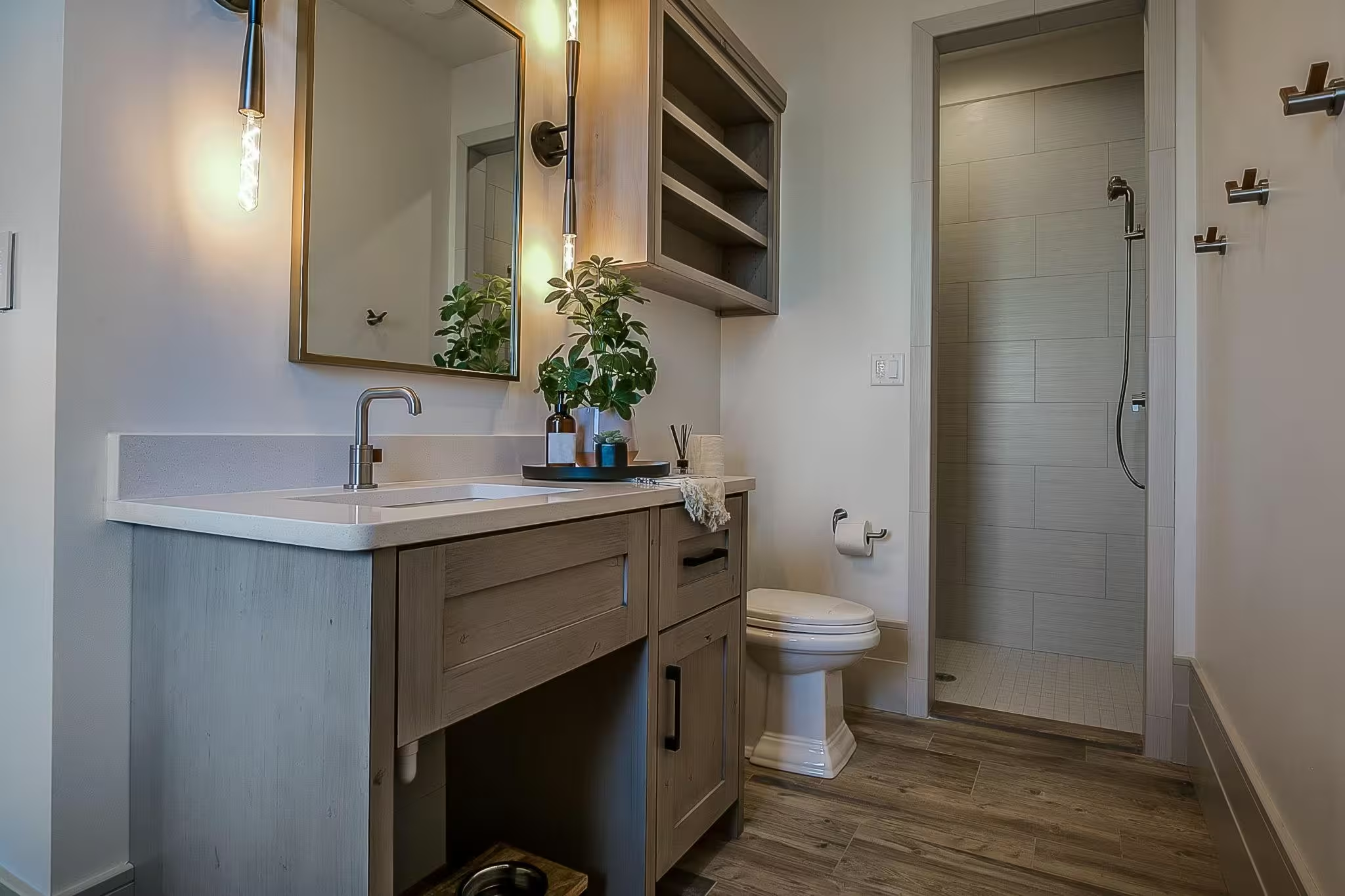
The fix isn’t removing recessed lights entirely. It’s treating them as one component of a layered system, not the whole system. Add a sconce at either side of the mirror and put everything on dimmers. The room changes immediately.
Getting sconce placement wrong
This one’s subtle, but worth understanding before you wire anything. Many homeowners (and contractors) place sconces based on where the junction box looks right — but the bulb position is what actually matters. Some fixtures have the bulb lower than the mount; others place it higher. If you’re not accounting for that when you wire the wall, the light ends up at the wrong height relative to your face.
The correct approach: know where you want the bulb to sit first — roughly eye level is the standard for mirror-flanking sconces — then work backwards to determine where the junction box needs to go. Get that wrong and you’re either living with it or patching walls. For a full breakdown of placement decisions, the best lighting for bathrooms guide is worth reading before any electrical work starts.
Skipping dimmers
This one costs almost nothing to fix and gets ignored constantly. Dimmers aren’t a luxury — they’re the difference between a bathroom that works for one purpose and one that works for all of them. Bright light for getting ready. Dimmed light for a bath at the end of the day. The same room, completely different experience. Install them everywhere.
Tile Decisions You’ll Live With for a Long Time
Tile mistakes tend to be the expensive ones. Most of them can’t be corrected without demolition. So getting these right the first time genuinely matters.
Not bringing shower tile all the way to the ceiling
This is one of the most common and most costly-to-fix mistakes in bathroom design. The reasoning for stopping the tile partway up — cost, or the assumption that the top portion stays dry enough — is understandable. It’s also wrong on both counts.
Aesthetically, a tiled shower that stops below the ceiling looks unfinished. The exposed drywall or plaster above it draws attention to itself in the worst way. But the practical problem is more serious: steam and moisture travel. Drywall above untiled shower walls absorbs that moisture steadily, and mould behind those walls can develop over time without being visible until it’s a significant problem. Always take tile to the ceiling in a shower. It’s not optional.
Using marble on shower floors
Marble walls? Beautiful. Marble floors in the shower? A staining risk most people don’t account for. Marble is porous, and shower floors are the highest-contact surface in the room — constant water, shampoo, conditioner, and personal care products that seep into the stone even when it’s sealed.
The professional solution, as designer Jeanne Barber of Camden Grace Interiors points out, is straightforward: use marble on the walls where it looks spectacular and where contact is minimal, and choose a ceramic tile or a less porous stone for the floor. You get the visual effect without the maintenance nightmare.
Laying marble-look porcelain without checking the layout first
Marble-look porcelain tiles are a credible, low-maintenance alternative to real stone — but they have a specific failure mode that even experienced renovators miss. Because the veining pattern is printed, it can repeat in ways that look obviously artificial if you don’t arrange the tiles on the floor first.
Designer Amy McCoy is direct about this: always lay out the tiles before installation to ensure the veining flows naturally across the surface and doesn’t create awkward repetitions. Ten minutes of layout planning prevents a result that will bother you every time you notice it.
Choosing tiles that date quickly
A tile that felt current when you chose it can look noticeably dated within five years. It happens because highly specific trend pieces — a very particular shape, a very specific colour, an unusually bold pattern — get associated with a moment rather than a style.
The professional alternative isn’t necessarily choosing boring tile. It’s grounding the design in classic materials and a considered palette, then layering in personality through art, textiles, and accessories that can actually be changed as taste evolves. The tile itself should have a long life; the personality of the room can be updated cheaply.
White grout on the shower floor
It looks crisp on day one. Six months later, it’s showing every trace of mould and grime regardless of how often it’s cleaned. The fix is choosing a grout tone that sits close to the tile colour — a medium tone rather than stark white — so discolouration isn’t immediately obvious. This is a two-minute decision at the planning stage and an irreversible annoyance if you get it wrong.
Storage: Where Most Bathrooms Quietly Fail
The storage mistake isn’t usually “not enough storage.” It’s storage that hasn’t been properly thought through, which leads to countertops crowded with products that have nowhere logical to go.
The most overlooked approach — highlighted by designer Stephanie Martin — is powered pull-out storage in vanity drawers specifically for hot tools and hair products. These can be closed after use without anything remaining on the surface. The counter stays clear. The room looks considerably calmer.
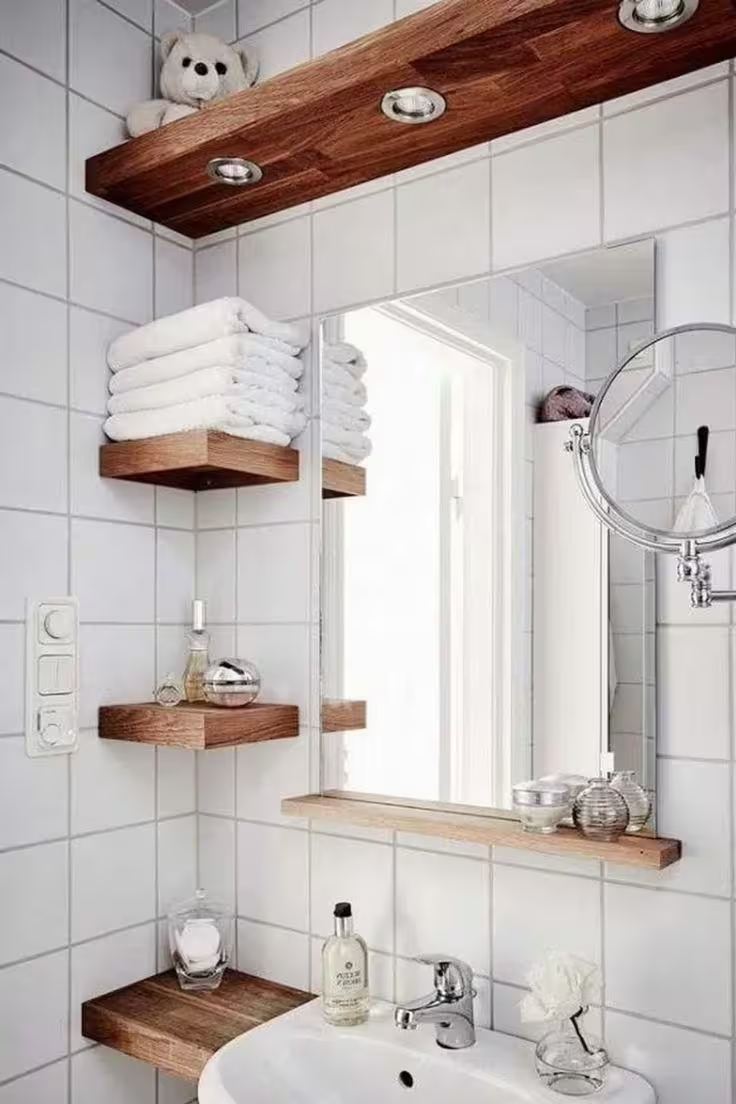
Cabinet zones are also worth considering early: outlets inside cabinetry for electric toothbrushes and hairdryers keep chargers and cords off the counter permanently. Once you’ve seen this done well, the standard approach of leaving everything on the surface looks genuinely cluttered. Bathroom shelf styling ideas covers how to make visible storage look intentional rather than accumulated.
Not prioritising cabinet space is a related problem. Mirrors and sconces often get placed in positions that sacrifice prime storage real estate. These decisions feel reasonable individually but collectively leave a bathroom with less functional storage than it should have.
Fixtures and Finishes — What’s Worth Spending Money On
Skimping on fixture quality
Fixtures are the one place in a bathroom where buying cheaply almost always costs more over time. Low-quality faucets and hardware wear out, operate poorly, and often need replacing — which in a tiled bathroom means cutting into walls or stone surrounds to access plumbing. The disruption and cost of a repair job frequently exceeds what was saved upfront.
Invest in fixtures that feel solid and function well. This doesn’t mean buying the most expensive option; it means avoiding the cheapest ones. The difference in daily experience — how a tap feels to use, how a door closes, how a shower head performs over years — is real and cumulative.
Getting finishes wrong
The mistake isn’t mixing finishes — it’s either matching everything too rigidly (which reads flat and generic) or mixing without a system (which looks unresolved). The professional approach, as designer Stephanie Martin explains, is to choose one dominant finish for the main plumbing fixtures, then introduce a second finish as an accent on hardware or lighting. Two finishes, working together. Not three, not four.
Chrome is fine functionally but reads cold against warm natural materials. Brushed brass and bronze both interact with light more warmly — they absorb some of it rather than reflecting it directly — and they complement stone and wood tones in a way chrome doesn’t. Luxury bathroom accessories ideas covers how finish choices affect the overall feel in more detail.
The Mistakes That Affect How a Bathroom Feels, Not Just Looks
Ignoring acoustics completely
Almost no one talks about bathroom acoustics, which is why bathrooms almost universally suffer from them. A room lined entirely with hard surfaces — tile, glass, stone, porcelain — bounces sound in a way that feels sterile and slightly uncomfortable. The slight echo you barely notice consciously is working against the calm the room is supposed to provide.
The fix is simple: introduce soft surfaces. A woven bath mat, a linen blind, fabric on the window, a cotton shower curtain. These elements absorb sound, soften the room acoustically, and make it feel noticeably quieter and warmer. It’s one of those changes that’s hard to identify before you make it and obvious afterwards. Spa style bathroom decor inspiration goes deeper on this sensory dimension.
Being afraid of bold choices
Bathrooms — especially small ones — are actually the best place in a house to take design risks. The contained scale means a bold wallpaper, a dramatically veined stone, or a strong colour doesn’t overwhelm; it immerses. What would be too much in a living room reads as considered confidence in a bathroom.
The fear of commitment is understandable, but in a small space, timidity often looks worse than boldness. A bathroom that plays it completely safe reads as unfinished or unloved, even if nothing is technically wrong.
The Mistakes That Are Genuinely Hard to Fix Afterwards
Some mistakes are easy to live with or cheaply corrected. These aren’t.
Shower controls placed under the shower head
This one surprises people, but once you hear it you can’t unhear it. Positioning shower controls directly beneath the shower head — which looks logical and tidy on paper — means stepping into a stream of cold water every time you turn the shower on. It’s an annoyance that happens every single day for as long as you own the bathroom.
The correct placement, as designer Brieanna Cunningham of C&C Partners points out, is near the entrance of the shower, separated from the head itself — so you can start the water and let it reach temperature before you step in. It’s a plumbing decision that gets made once and affects every shower you take afterwards.
Sliding shower doors
Sliding shower doors get specified as space-savers. They rarely save much space in practice, and they create genuine problems. The tracks accumulate grime. They don’t seal properly, which means sound and draughts pass through. And functionally, a door that slides rather than swings offers less practical opening width.
A solid-core swing door, or a well-fitted frameless hinged glass panel, seals properly, cleans more easily, and performs better daily. The space-saving argument rarely holds up when you look at the actual clearance numbers.
Neglecting windows — or not thinking about them at all
Natural light transforms a bathroom in ways that artificial lighting never fully replicates. If walls are open during construction or renovation, this is the moment to improve window positioning, add a skylight, or install a sun tunnel. Once the walls close, that opportunity is gone. It’s the most commonly regretted missed decision in bathroom renovation — not because it’s expensive to do at the time, but because it becomes expensive (and disruptive) to address later.
For everything you can change without structural work, budget bathroom decor makeover ideas covers the high-impact, low-disruption options.
FAQs
The most consequential are: relying solely on recessed overhead lighting without layering, stopping shower tile below the ceiling, using marble on shower floors without understanding its porosity, skipping dimmers, choosing white grout on shower floors, and placing shower controls directly beneath the shower head. Most of these are easy to avoid with planning; several are difficult or expensive to correct after installation.
No — and matching everything rigidly tends to produce a flat, generic result. The professional approach is to choose one dominant finish for the main plumbing fixtures (taps, shower fittings), then introduce a second finish as an accent across hardware or lighting. Two coordinating finishes create depth; three or more usually create confusion.
Yes, always. Stopping tile partway up a shower wall looks unfinished aesthetically, and exposed drywall or plaster above the tile absorbs steam and moisture over time, which can cause mould inside the wall before it becomes visible. Tiling to the ceiling costs more upfront and saves significant problems later.
Work from where you want the bulb to sit — roughly eye level for mirror-flanking sconces — and wire the junction box accordingly. The mistake is placing the junction box based on what looks balanced, without accounting for where the actual bulb sits on the fixture. Some fixtures have bulbs positioned well above the mount; others below it. Know your fixture before you wire the wall.
Avoid white. It shows mould and grime quickly regardless of cleaning frequency. Choose a grout tone that sits close to the tile colour — a medium shade that won’t visually highlight every mark. It looks cleaner, longer, with no additional maintenance effort.
Many of the most impactful fixes require no structural work at all: adding dimmers, swapping to warm-white bulbs, introducing soft textures for acoustic softening, replacing a mirror with a better-chosen one, and editing what’s on display. Modern bathroom decor ideas covers what’s achievable without building work in more detail.