Estimated reading time: 12 minutes
The mirror is almost always the last thing people think about in a bathroom refresh. And honestly? It shows.
You repaint the walls, swap the vanity hardware, maybe even retile the floor — and then a builder-grade rectangle of glass you’ve barely noticed for five years makes the whole thing look unfinished. The right bathroom mirror does more visual work than most people realise. It affects how big the room feels, how good the light is for grooming, and whether the space looks considered or cobbled together.
The problem is that searching for the best bathroom mirrors is genuinely overwhelming. The options range from a $30 basic rectangle to $600 smart mirrors with Bluetooth and touch controls, and the product descriptions are mostly useless — a wall of specs that tells you nothing about whether the thing will actually look good in your bathroom or hold up in a humid environment.
This is an attempt to cut through that. Honest picks, real trade-off conversations, and the feature explanations that most roundups skip entirely.
Before You Browse: The Decisions That Actually Matter
Most people open Amazon, scroll through sixty options, get confused, and either buy the wrong thing or give up. Getting a few things clear first saves a lot of that.
How big should your bathroom mirror actually be?
The right bathroom mirror size is one to two inches narrower than your vanity on each side. So if your vanity is 36 inches wide, you’re looking for a mirror somewhere in the 32–34 inch range. This creates visual balance without the mirror appearing to float awkwardly or hang over the edges.
Height depends on the space above your vanity and whether you have wall-mounted lighting or overhead fixtures. A general rule: hang the mirror so the centre is roughly at eye level for the tallest person who uses it regularly, typically with the bottom edge sitting five to ten inches above the sink.
Going too large is a common mistake. A mirror that’s the same width as the vanity or wider tends to dominate the wall in a way that feels heavy rather than spacious. Slightly smaller creates breathing room and actually looks more intentional.
Do you need lighting in the mirror at all?
Not everyone does. If your bathroom already has good overhead lighting positioned in front of your face rather than above or behind your head, a quality frameless or framed mirror without LEDs is perfectly functional.
Where built-in lighting genuinely helps: bathrooms where the overhead light casts downward shadows on your face, making grooming harder. An illuminated mirror with front-facing LEDs solves this without any electrical work — you just need a power outlet nearby.
If you’re considering any form of upgrade across the whole bathroom, these DIY bathroom lighting ideas are worth reading alongside this — the mirror and the lighting above it work as a system, and getting both right at the same time is more efficient than fixing them separately.
LED Mirrors Explained (Without the Jargon)
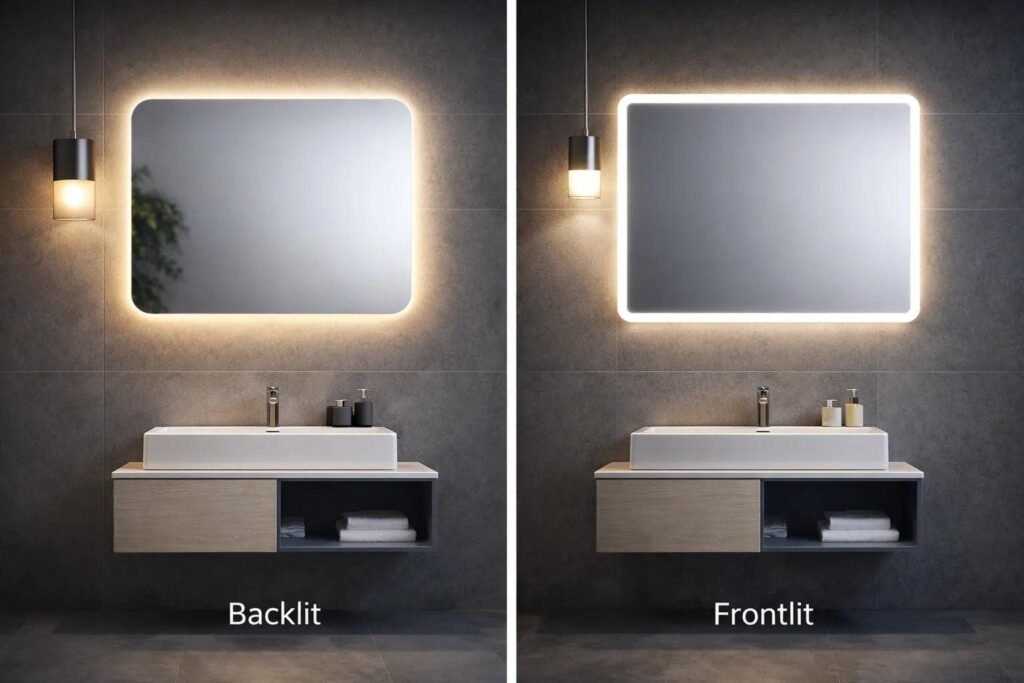
The spec sheets on these products are almost deliberately confusing. Here’s what the numbers actually mean.
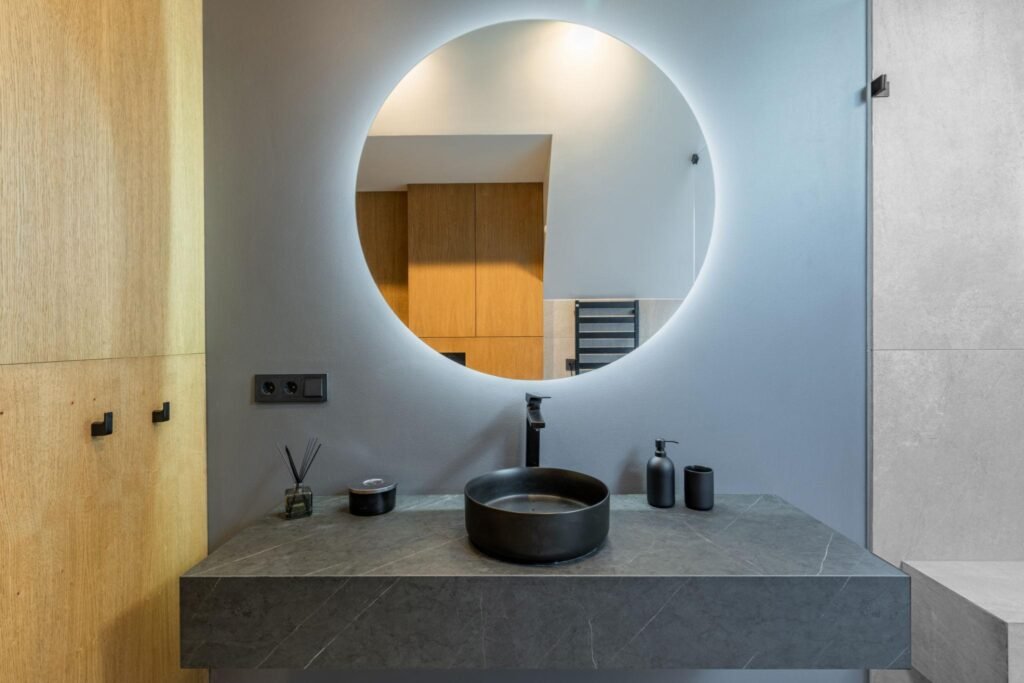
Backlit vs front-lit: A backlit mirror has LEDs mounted behind the glass around the perimeter, creating a soft halo glow on the wall. It looks beautiful, especially at night, but the light comes from behind the reflective surface — so it doesn’t illuminate your face particularly well for grooming. A front-lit mirror has LEDs along the face of the mirror, pointing toward you. Much more useful for applying makeup or shaving accurately. Some mid-range options offer both, which gives you ambience lighting when you want it and functional light when you need it.
Colour temperature: This is the number in Kelvin — 3000K, 4000K, 6000K and so on. Lower numbers (around 3000K) produce a warm, amber-toned light that looks flattering but isn’t accurate for colour-matching makeup or checking skin tone. Higher numbers (5000K–6000K) are cooler and closer to daylight — better for grooming accuracy but harsher if the room doesn’t have other light sources. A dimmable mirror with adjustable colour temperature gives you both, which is the most practical option if you’re spending more than $150.
Anti-fog: An anti-fog mirror has a thin heating element behind the glass that prevents condensation from forming after a hot shower. It’s a genuinely useful feature if your bathroom steams up heavily and you’re tired of waiting for the mirror to clear. That said — if your bathroom has decent ventilation and doesn’t steam up badly, it’s a feature you might pay for and barely use. Be honest about your bathroom before adding $50–$80 to your budget for it.
IP ratings: You’ll sometimes see IP44 or IP65 on bathroom mirror listings. This refers to moisture protection. IP44 means protected against water splashes from any direction — fine for most bathrooms. IP65 adds dust protection. For a standard bathroom environment, IP44 is sufficient. You’d need higher ratings for mirrors directly in shower enclosures, which is a different product category entirely.
The Best Bathroom Mirrors by Category
Best budget pick: Atilioo 24″ Round Mirror
Round mirrors have had a sustained moment in bathroom design, and the Atilioo is one of the more honest budget options. Matte black frame, clean circular shape, good reflection quality. It works particularly well in smaller bathrooms where a rectangular mirror would feel blocky, and the frame reads as deliberate rather than cheap.
The trade-off: no lighting, no storage, no extras. But if you’re spending under $60 and want something that looks like a considered design choice rather than an afterthought, this is a solid pick. Especially useful for renters wanting a style upgrade without committing to anything permanent.
Best mid-range LED option: LOAAO 24×32″ LED Mirror
This is the sweet spot for most bathrooms. Front and backlit LEDs, dimmable brightness, adjustable colour temperature, and anti-fog. The combination of front lighting and backlit glow means you can use it practically during the day and atmospherically at night — and the two modes together look genuinely good.
At mid-range pricing, you’re not paying for a smart touchscreen you’ll stop using. You’re paying for better light quality and more control over it, which is a worthwhile trade for most people.
Best premium pick: WISSMIELS 30″×40″ LED Mirror
If the budget is there and you want something that feels noticeably different, the WISSMIELS is hard to argue with. Dual lighting, three-colour temperature settings, anti-fog, and a build quality that feels substantial rather than plasticky. It changes the entire feel of a bathroom — it sits on the wall like something from a boutique hotel rather than a home improvement warehouse.
Worth knowing before buying: you’ll need a power outlet accessible behind or near the mirror. If that’s not already in place, factor in the cost of an electrician or check whether a plug-in version suits your setup.
Best frameless option: Better Bevel Frameless Rectangle Mirror
Frameless mirrors are genuinely timeless. No frame means nothing to clash with cabinet colours, wall tones, or future redesigns. The Better Bevel has bevelled edges that catch light nicely without being ornate — it’s the kind of mirror you can take with you through multiple bathroom renovations without it looking out of place.
It won’t wow anyone. But it won’t date either, which for something you’re mounting to a wall is arguably more valuable.
Best for character: TRAHOME 38″×26″ Arch Mirror
If you want something that doesn’t look like it came from Amazon, the TRAHOME arch mirror is worth a look. Solid wood frame with a layered farmhouse profile, arch silhouette, five-year warranty. It suits bathrooms going for a warmer, more natural aesthetic — think warm whites, natural stone, or wood-toned vanities.
One honest caveat: it’s non-electronic, so if your bathroom lighting is already not great, this won’t help that. But as a purely aesthetic upgrade for the right style bathroom, it’s one of the more distinctive options at this price range.
Best for large bathrooms: Hivone 40×32 LED Smart Mirror
Larger bathrooms need larger mirrors — a 24-inch mirror on a wide double vanity looks timid and wrong. The Hivone covers the size requirement while adding customisable lighting and anti-fog. Smart features include touch controls and a memory dimmer, so it returns to your preferred brightness setting rather than resetting every time.
Smart mirrors sound appealing until you’re fumbling with a touch panel at 6am. That said, the memory function genuinely makes daily use easier, and the size makes this one of the few options that looks proportionally right in a larger space.
Matching Your Mirror to Your Bathroom Style
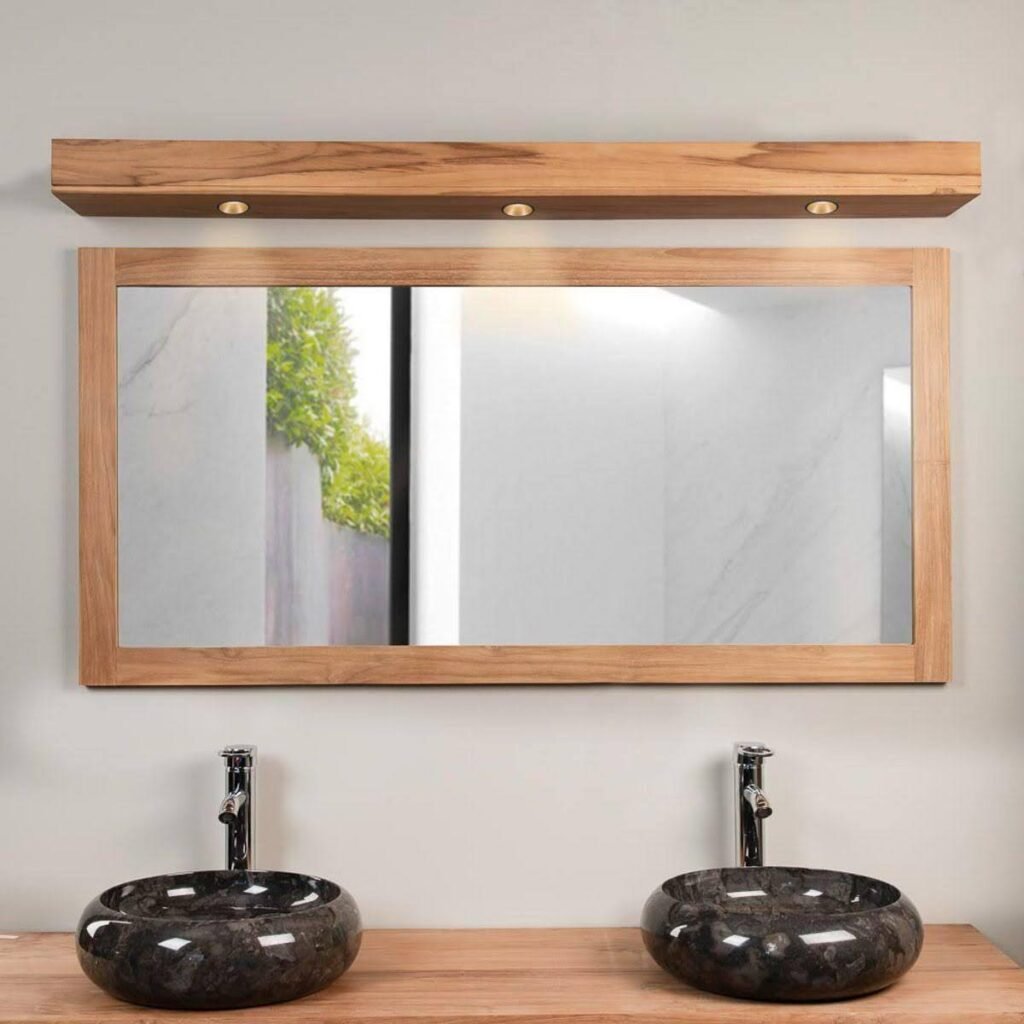
This is where a lot of online guides go quiet, but it matters. Buying the wrong frame finish for your existing hardware and cabinet colour creates a disconnect that’s hard to fix.
Matte black frames work well in modern, minimalist, and industrial-style bathrooms. They pair cleanly with black or brushed nickel hardware. Matte black is everywhere right now, which is either reassuring or a flag depending on how much you care about trends. It’s a strong choice for the next five to seven years at minimum.
Brushed brass or brushed gold suits warmer bathroom palettes — cream vanities, terracotta tiles, natural stone. It’s a more distinctive choice than chrome and feels current without being as ubiquitous as matte black.
Wood frames work in farmhouse, Japandi, or organic modern aesthetics. They add warmth that a metal frame can’t replicate. The risk is they can feel heavy in a very small bathroom.
Frameless suits everything and commits to nothing. If your bathroom style is still evolving or you’re upgrading a rental, frameless is the safe choice that almost never looks wrong.
For a broader look at bathroom styling that goes beyond the mirror, these modern DIY bathroom decor ideas are worth bookmarking — especially if you’re updating the space in stages and want everything to feel cohesive.
The Mirror and the Vanity: Getting Them to Work Together
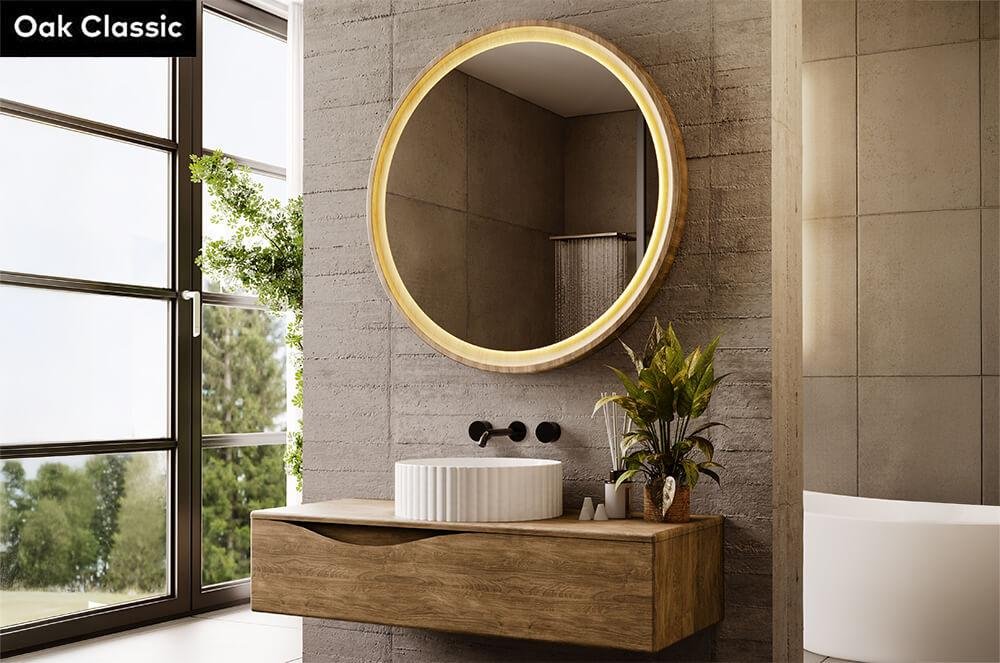
A new mirror often comes after — or alongside — a vanity update. If you’re doing both, it’s worth thinking about them as a pair rather than two separate decisions.
The mirror style should reflect (no pun intended) the direction you’ve taken the vanity. A painted vanity with new brushed brass hardware reads very differently from a stained oak vanity with chrome pulls, and the mirror that looks right over one can look completely wrong over the other.
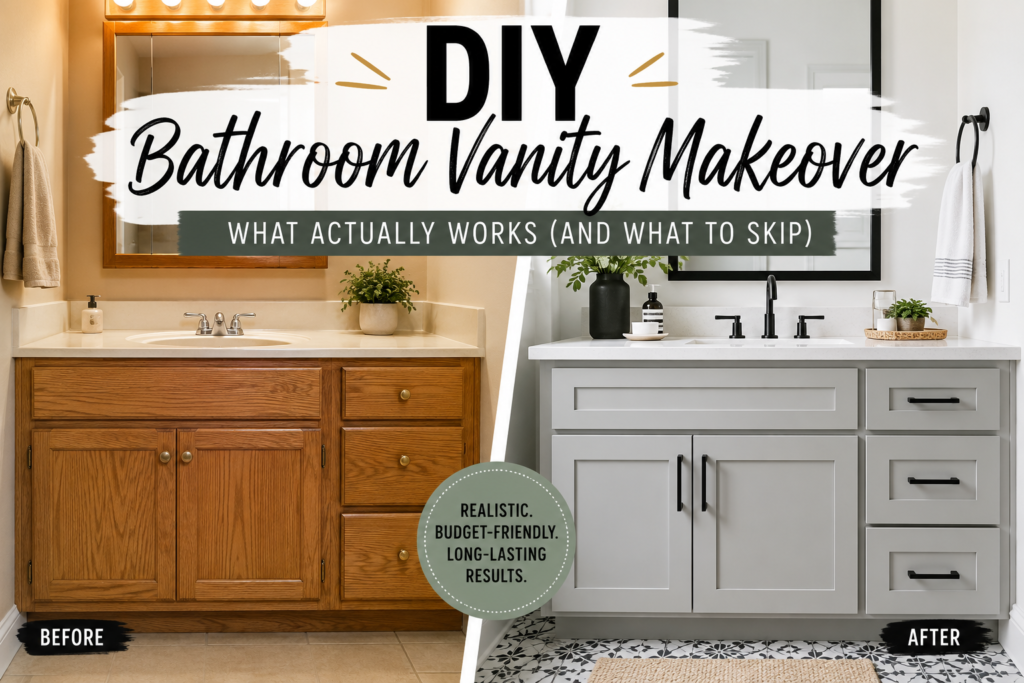
If you’ve recently tackled or are planning a DIY bathroom vanity makeover, deciding on the mirror at the same time makes the whole project feel more considered. It’s easy to underestimate how much the mirror and vanity together set the visual tone for the entire room.
Are Smart Mirrors Actually Worth It?
Honestly — for most bathrooms, no. The core features that make a real difference to daily use are dimmable lighting and adjustable colour temperature. Both are available on mid-range LED mirrors without the smart layer.
Smart mirrors add Bluetooth speakers, touch-screen displays, and sometimes integrated clocks or weather readouts. These are legitimately useful features for people who use them. They’re also features that gather dust in bathrooms where you just want to brush your teeth quickly and leave.
If you spend meaningful time in your bathroom — long grooming routines, skincare, applying detailed makeup — the premium features start to justify themselves. If your bathroom use is mostly functional and quick, a quality mid-range LED mirror will do everything you actually need for considerably less money.
A Quick Comparison
| Mirror Type | Best For | Price Range | Lighting | Trade-offs |
| Frameless | Any style, longevity | $50–$150 | No | No lighting or features |
| Framed (no LED) | Character, farmhouse, style focus | $60–$200 | No | Style-dependent |
| Mid-range LED | Most bathrooms | $100–$200 | Front + backlit | Needs outlet access |
| Premium LED | Style + function | $200–$400 | Full + anti-fog | Higher cost, more setup |
| Smart mirror | Heavy daily users | $300–$600+ | Full smart | Overkill for most |
Frequently Asked Questions
What size bathroom mirror should I get?
Choose a mirror that’s one to two inches narrower than your vanity on each side. This creates visual balance without the mirror appearing to overflow the vanity below it. For height, aim to hang it so the centre sits roughly at eye level, with the bottom edge five to ten inches above the sink.
What’s the difference between a backlit and front-lit bathroom mirror?
A backlit mirror has LEDs behind the glass creating a halo effect on the wall — atmospheric but not especially useful for grooming. A front-lit mirror directs light toward your face, which is far more practical for applying makeup or shaving accurately. Some mirrors offer both modes.
Do anti-fog bathroom mirrors actually work?
Yes — they use a thin heating element behind the glass that prevents condensation from forming after a hot shower. They work reliably and the effect is immediate. Whether you need one depends on how much your bathroom steams up. If your ventilation is decent, it’s a nice-to-have rather than essential.
Is an LED bathroom mirror worth buying?
For most bathrooms, a mid-range LED mirror with dimmable front lighting is genuinely worth the extra cost over a basic mirror — particularly if your overhead lighting is poor or casts downward shadows on your face. The step up to smart mirrors with touch controls is harder to justify for everyday bathroom use.
What colour temperature is best for a bathroom mirror?
For grooming accuracy — applying makeup, checking skin tone — aim for 4000K to 5000K. This is a neutral to slightly cool white that approximates daylight. For a more flattering, relaxed ambience, 3000K gives a warmer glow. A mirror with adjustable colour temperature lets you switch between both depending on the time of day or what you’re doing.
How high should I hang a bathroom mirror?
The bottom edge of the mirror should sit roughly five to ten inches above the sink or backsplash. The centre of the mirror should be at or near eye level for the primary users of the bathroom. In bathrooms with wall-mounted lighting flanking the mirror, the light position will influence the ideal mirror height — aim to have the lights sit at approximately face height when hanging.
Can I use a regular (non-bathroom) mirror in a bathroom?
You can, but it’s worth checking the backing. Standard mirrors without moisture-resistant backing can develop black spots and deterioration around the edges over time in a humid bathroom environment — particularly in smaller bathrooms without good ventilation. Mirrors specifically rated for bathroom use have sealed edges and moisture-resistant backing that last considerably longer.