Estimated reading time: 11 minutes
A full bathroom remodel runs somewhere around $9,000 to $12,000 these days, and that’s before anything goes sideways with the plumbing. Most bathrooms don’t need that. They need a new coat of paint, better lighting, and maybe a mirror that doesn’t look like it came with the house.
I’ve watched enough of these budget bathroom makeover ideas play out — some that looked genuinely custom, some that looked like someone gave up halfway through — to know the difference usually comes down to sequencing. What you fix first, not how much you spend overall.
Quick answer: The cheapest way to refresh a bathroom is paint, hardware, and lighting, in that order. All three together usually land under $300 and make more visual difference than one “big” purchase like a new vanity. Skip anything involving moving plumbing or wiring unless you’re hiring a licensed pro.
That’s the short version. Here’s the longer one, with actual numbers attached.
What $200, $500, and $1,000 Actually Buy You
This is the part most “budget bathroom” articles skip, and it’s the part that actually matters. Saying something is “budget-friendly” without a number attached doesn’t mean much — $200 and $2,000 are both technically a budget.
| Budget | What you can realistically do |
| $200 | Paint (walls + vanity), new cabinet hardware, a new shower curtain and bath mat, a couple of low-light plants |
| $500 | Everything above, plus a new light fixture, a reframed or replaced mirror, and a new faucet and showerhead |
| $1,000+ | Everything above, plus a peel-and-stick tile accent, open shelving, and a secondhand or repurposed vanity |
Notice what’s missing at every tier: a new tub, new flooring, or anything that touches plumbing. Those push you into remodel territory — typically $3,000 and up even for a small bathroom — which is a different project with different fixed costs. Permits alone can run $100 to $1,000 depending on where you live, before a single tile gets laid.
1. Paint Is Still the Highest-Impact Dollar in the Room
If you do exactly one thing on this list, make it this one. A gallon of paint covers around 400 square feet, which is plenty for most bathroom walls and ceiling, and a decent quality paint runs $25 to $50 a gallon.
Two things people get wrong here. First, they paint the walls and skip the ceiling — and a yellowing white ceiling next to freshly painted walls just makes the age more obvious, not less. Paint both. Second, they use the same sheen on everything. Bathrooms deal with humidity, so stick to satin or semi-gloss on the walls — it wipes down and handles moisture better than flat does. The vanity is where you can have some fun: a bold color on just the cabinet, in a different sheen than the walls, reads as a deliberate design choice instead of “we painted the whole room one color and called it done.”
One trick worth stealing: if your bathroom is small and naturally dark, resist the urge to default to all-white. A mid-tone color in a small space with good lighting reads as cozy and intentional. All-white under a single harsh overhead bulb just looks clinical — which brings us to the next one.
2. Lighting Is the Upgrade Everyone Skips, and It Shouldn’t Be
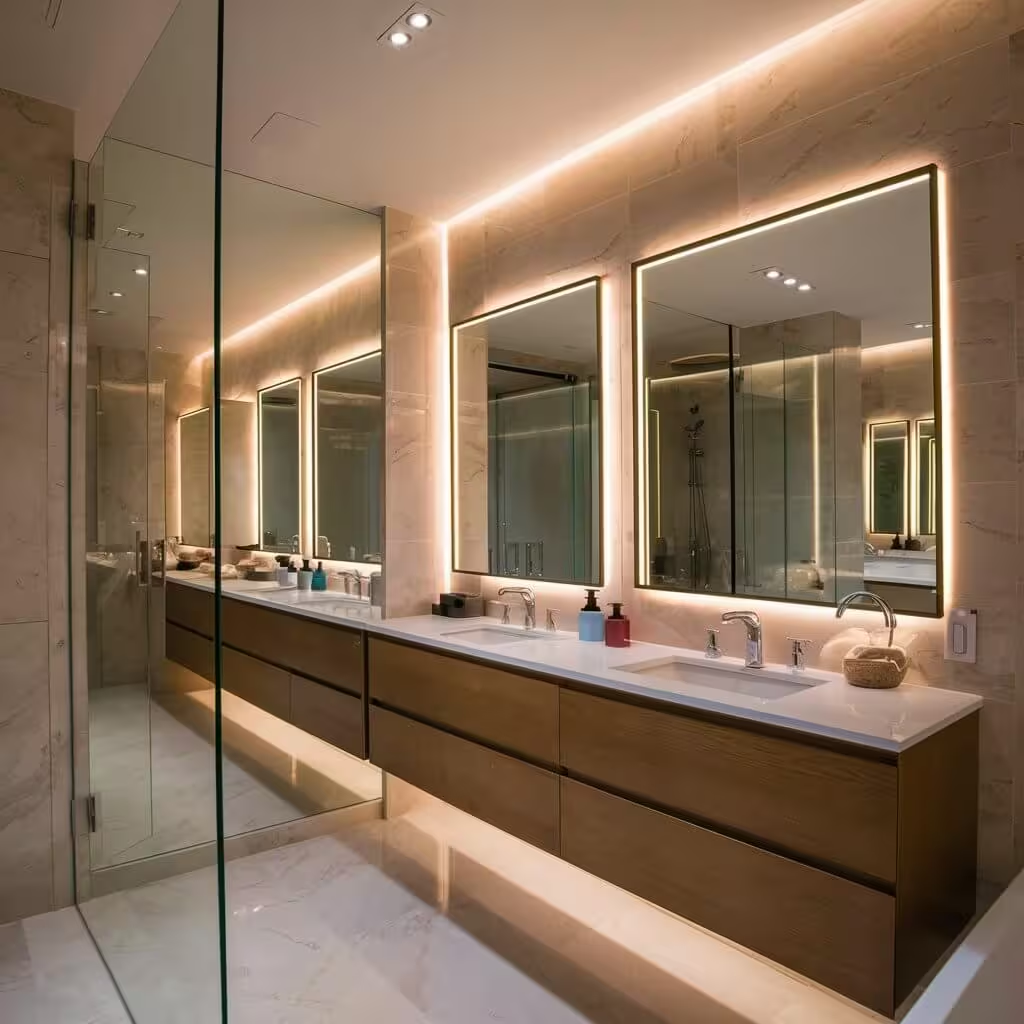
Most bathrooms still run on a single harsh overhead fixture, or worse, one of those builder-grade bar lights over the mirror that makes everyone look tired. Swapping it is usually a $30 to $80 fixture plus about an hour of work, and it changes how every other upgrade in the room reads.
Here’s the part nobody tells you: bad lighting makes good paint look worse, and good lighting makes a tired vanity look intentional. If I were only doing two things on a tight budget, I’d genuinely pick lighting over most of the more popular ideas floating around online — it’s just not as photogenic, so it gets skipped more than it should. Our guide to bathroom lighting goes deeper into fixture placement specifically for wet rooms, including what actually flatters skin tone over a vanity versus what just looks good in a showroom display.
If you’re swapping a fixture yourself, this is one of the few electrical jobs that’s genuinely beginner-friendly — kill the breaker, match the wires, done. Anything beyond a like-for-like fixture swap, like adding new wiring or relocating a fixture, is where I’d call an electrician.
3. Reframe the Mirror, or Replace It Outright
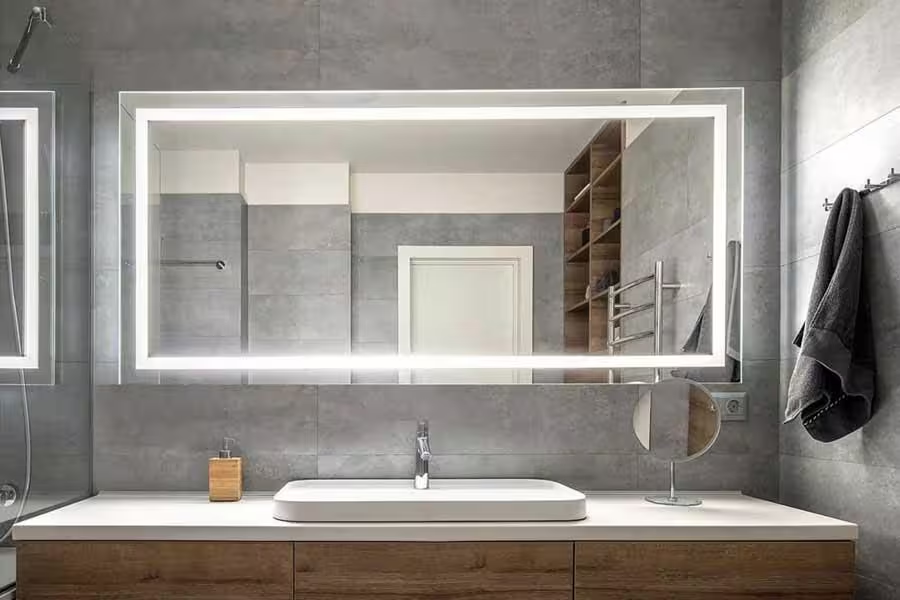
A plain builder-grade mirror is one of the fastest tells that a bathroom hasn’t been touched since the house was built. You’ve got two budget paths here.
Reframe what you have. Peel-and-stick or glue-on mirror frame kits run $20 to $60 and take an afternoon. This is the move if your current mirror is the right size and shape and you just want it to stop looking like a sheet of glass glued to drywall.
Replace it entirely. A framed mirror from a budget retailer runs $40 to $150 depending on size. This is the better call if your existing mirror is small, oddly shaped, or has black edges where the silvering has worn through — a frame kit won’t fix that.
Either way, skip the medicine-cabinet style if you can help it. A simple framed mirror with no storage built in almost always reads more expensive than a medicine cabinet, even when it costs less.
4. Hardware and Fixtures: The $40 Upgrade That Looks Like $400
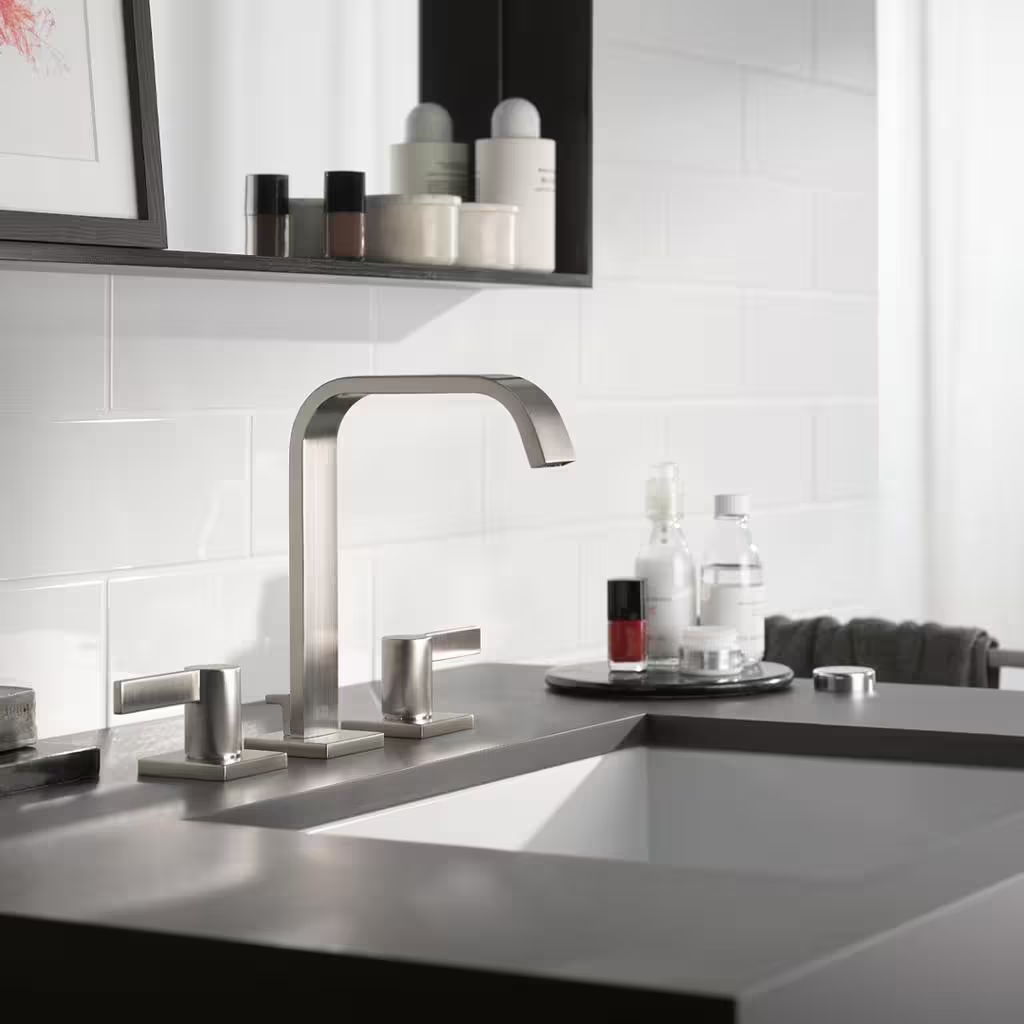
Cabinet pulls, the faucet, the showerhead, the towel bar, the toilet paper holder — these are small, cheap, and touched constantly, which means people register when they’re dated even if they couldn’t say exactly why. A full hardware swap for a small bathroom typically runs $40 to $100 total if you’re not going premium, and it’s maybe two hours with a screwdriver and a wrench.
The honest trade-off: swapping the sink faucet is simple. Anything that requires getting into the wall is not — that’s where a $30 part turns into a $300 problem if you crack a supply line. Faucet at the sink, fine. Anything behind the tile, call someone.
5. Regrout Before You Retile
This is the one I see skipped most often, and it’s probably the highest-value move on the entire list. Dirty, cracked, or discolored grout makes a whole bathroom look neglected even when the tile underneath is perfectly fine. Regrouting a small bathroom is a weekend project and runs $30 to $60 in materials, versus a few thousand dollars for a full retile.
If the tile itself is genuinely dated — not just dirty grout, but the actual color or pattern — a peel-and-stick vinyl tile accent is the budget move, usually $3 to $6 a square foot. I’d only use it as an accent wall or backsplash, though, not inside the actual shower stall. It’s not rated for constant water exposure the way real tile is, and in a wet area it tends to start lifting at the seams within a year or two. That’s a trade-off most lists leave out, and it’s the difference between a makeover that lasts and one you’re quietly redoing next summer.
6. Storage That Doesn’t Require Cutting Into a Wall
Floating shelves, a small ladder shelf, or a repurposed cart can solve a storage problem that built-in cabinetry would otherwise cost hundreds to fix. Floating shelves run $15 to $40 each and go up with basic wall anchors in under half an hour.
If storage is your main complaint rather than aesthetics, it’s worth digging into the layout side specifically — we’ve covered what actually works in a genuinely small bathroom, versus what just photographs well, in our small bathroom decor hacks guide.
7. Repurposed or Secondhand Furniture as a Vanity
This is the highest-effort item on the list, and also the one with the widest range in outcome. A secondhand dresser or console table, converted into a vanity with a drop-in sink, can look genuinely custom for $150 to $400 — well under a comparable-style new vanity, which often starts around $300 and climbs fast once real wood or stone gets involved.
The catch: this only works if the piece is solid wood or solid construction. Particleboard furniture swells and delaminates fast in a humid bathroom — it’s not a matter of if, just when. If you’re hunting secondhand, check joints and weight before you check style. Our guide on buying secondhand and budget furniture covers how to spot solid construction versus particleboard dressed up to look like it.
8. Plants and Greenery, Picked on Purpose
This one’s cheap and it works, but only if you actually pick plants that can handle bathroom conditions — low light, high humidity, and an inconsistent watering schedule from someone who’s busy. Pothos, snake plants, and ZZ plants all tolerate low light and irregular watering, and they typically run $10 to $25 at a garden center. Anything that needs direct sun is going to struggle in most bathrooms within a month, no matter how good your intentions are.
If your bathroom genuinely has no natural light, skip live plants and go with a couple of well-chosen faux ones instead — a dying plant is a worse look than no plant at all. Once the bigger upgrades are done, our decorative accessories guide is a good next stop for pulling the smaller styling details together.
9. A Wall Treatment That Isn’t Permanent
If a full repaint feels like too much, or you’re renting and can’t paint at all, removable wallpaper is the move — $1 to $3 a square foot, and it comes off clean when you move out. It works best on a single accent wall rather than the whole room; a small bathroom wallpapered floor to ceiling can start to feel busy fast. We’ve got patterns and application tips in our peel-and-stick wallpaper guide if this is the route you’d rather take instead of paint.
What to Skip, or Leave to a Pro
Not everything floating around the internet under “budget bathroom” is actually a budget move once you account for what can go wrong. A few honest calls:
- Don’t DIY anything that involves moving plumbing. Relocating a sink or toilet means rerouting supply and drain lines, which usually means permits and inspection in most areas. Getting it wrong means water damage, which is the single fastest way a budget makeover turns into a five-figure repair.
- Don’t reglaze a tub yourself to save money. DIY reglazing kits exist, but the fumes are genuinely hazardous without proper ventilation, and the finish rarely holds up the way a professional job does. Professional tub reglazing runs $300 to $600 on average — significantly less than replacement, and worth paying someone for rather than DIYing.
- Don’t put peel-and-stick tile inside a shower stall. Mentioned above, but worth repeating since it’s the mistake I see most: great as an accent wall, not built for constant water exposure.
If you’re newer to home projects generally and want a sense of which jobs are genuinely beginner-friendly versus which ones need a professional, our home renovation tips for beginners is worth a read before you commit to anything on this list.
Putting It Together
If I were doing this with $500 and a weekend, here’s the order I’d actually go in: paint first, lighting second, hardware and mirror third, and whatever’s left goes toward grout or a couple of plants. That sequence gives you the most visible change at every stage, instead of spending the whole budget on one item and running out before the room feels finished.
Once everything’s refreshed, the easiest way to keep it looking that way is staying ahead of grout grime and water spots before they build back up — our bathroom cleaning checklist covers the maintenance side, so the work you just did actually holds. And if the bathroom was just the first room on your list, our budget dining room makeover ideas follows the same impact-per-dollar approach for the next space.
FAQ
What is the cheapest way to update a bathroom?
Paint, new cabinet hardware, and a new light fixture, in that order. Together they typically cost under $300 and change more of the room’s overall impression than any single bigger purchase.
Can I makeover a bathroom for under $500?
Yes. $500 covers paint, lighting, a mirror upgrade, and new faucet and cabinet hardware — enough to change the entire feel of a small to midsize bathroom without touching plumbing or tile.
Is it cheaper to reglaze or replace a tub?
Reglazing, by a wide margin. Professional reglazing typically runs $300 to $600, compared to several thousand dollars for a full tub replacement once you factor in removal, plumbing work, and installation.
Do I need a permit to remodel a bathroom on a budget?
Not for cosmetic work — paint, fixtures, hardware, and lighting swaps don’t require one. Permits come into play once you’re moving plumbing, doing electrical work beyond a simple fixture swap, or making structural changes, which is part of why this list sticks to cosmetic upgrades.
Is peel-and-stick tile durable enough for a bathroom?
It holds up fine on a dry accent wall, but it’s not rated for constant water exposure. Inside an actual shower stall, it tends to lift at the seams within a year or two — stick to real tile there, and save peel-and-stick for the walls that don’t get wet.