Estimated reading time: 12 minutes
Your dining room isn’t ugly. It’s just… not finished. The chairs don’t quite match, the rug looks like it shrank in the wash even though it never got washed, and the lighting does its job without doing anything else. You’ve seen the dreamy dining rooms on Pinterest and you know yours could get there — you just don’t know which fix actually moves the needle.
Here’s the part nobody tells you: most “expensive-looking” dining rooms aren’t full remodels. They’re three or four smart decisions, executed well, plus a handful of smaller touches that fill in the gaps. You don’t need a new floor or a knocked-down wall. You need the right rug size, layered lighting, one piece that earns its keep as a focal point, and styling that doesn’t look like it came straight off a store shelf.
Quick answer: the fastest, cheapest wins are fixing your rug size (it should extend at least 24 inches past each side of the table), swapping harsh overhead light for layered, warm-toned lighting, picking one statement piece instead of buying everything new, and styling your table with mixed textures instead of a single centerpiece. Do those four and the room already reads as “designed” instead of “furnished.”
Below is the full list, roughly in order of biggest visual payoff for the least money. Pull the ones that fit your space and your budget — you don’t need all ten to feel the difference.
Layer Your Lighting Like a Designer
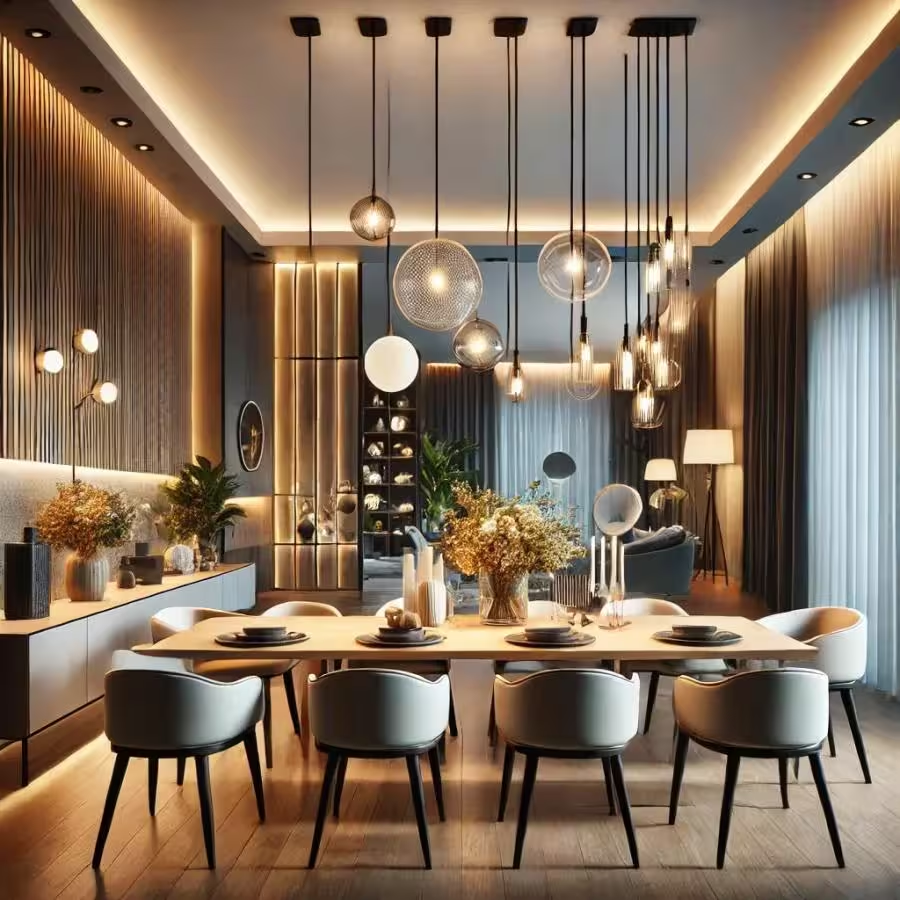
If you only change one thing in this whole list, make it the lighting. A single overhead fixture on full blast is the number one reason dining rooms feel like a cafeteria instead of a restaurant.
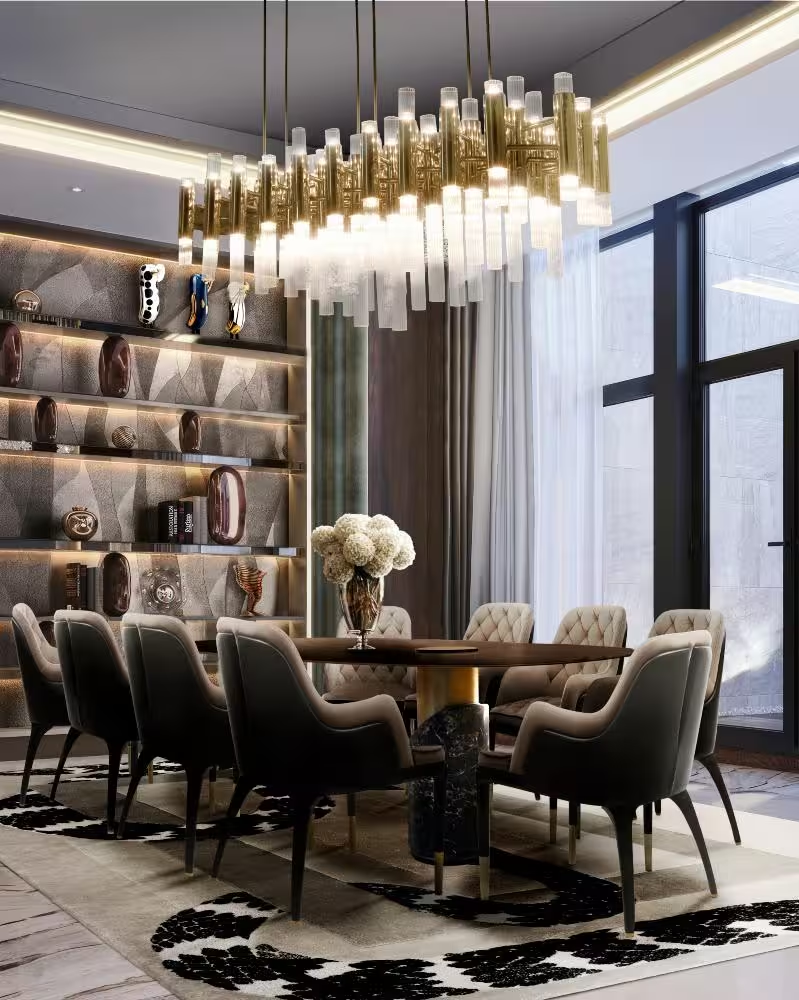
Designers almost never light a room with one source. They layer it: a chandelier or pendant overhead for general light, a couple of wall sconces or buffet lamps for accent lighting, and a table lamp on a sideboard if there’s room for one. That layering is what creates depth — your eye moves around the room instead of getting stuck staring at one bright spot in the ceiling.
Bulb Temperature Actually Matters More Than People Think
This is the part most articles skip, and it’s a cheap fix that changes everything. Look for bulbs in the 2700K–3000K range — that’s warm white, the same glow you’d get from candlelight or a nice restaurant. Anything above 4000K starts reading as office or hospital lighting, no matter how nice the fixture above it looks. A $400 chandelier with the wrong bulb temperature will look cheaper than a $40 fixture with the right one.
And get a dimmer switch if you don’t have one already. It’s a small hardware change, usually under $20 for the switch itself, and it gives you total control over mood without buying anything new.
Renting and can’t touch the wiring? Battery-operated wall sconces have genuinely gotten good — many flicker-free, warm-toned options now exist that stick on with adhesive strips and look hardwired from a few feet away. They won’t fully replace a real sconce on a dimmer, but they’re a smart stopgap that costs a fraction of an electrician’s visit.
Budget for this section: $30–$60 for bulbs and a dimmer kit, $50–$150 if you’re adding battery sconces or a plug-in buffet lamp.
Get the Rug Size Right
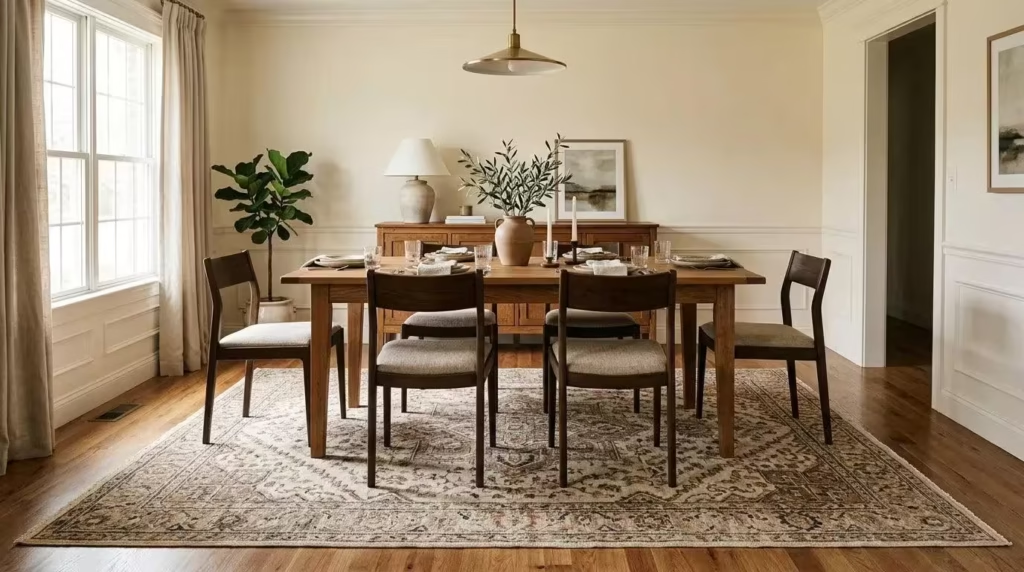
Here’s a rule that quietly wrecks more dining rooms than bad furniture does: the rug under your table needs to extend at least 24 inches beyond each side. Pull a chair out, and it should stay on the rug — not teeter half on, half off.
A too-small rug doesn’t just look slightly off. It visually shrinks the entire room, because your eye reads the floor space as smaller than it is. It’s one of those things you don’t consciously notice, but you feel that something’s wrong, and that “something” is almost always the rug.
If you’ve got an oddly shaped room or an extendable table, size for the table fully extended, not collapsed — otherwise you’ll be shopping for a new rug again the first time you host more than four people. In a tight or awkward layout, a round rug under a round table is often more forgiving than trying to force a rectangle into a space that isn’t quite rectangular.
As for which rug: a neutral one lets your chairs or art do the talking. A colorful rug sets the whole palette for the room. A patterned one ties mismatched pieces together, which is genuinely useful if you’re working with hand-me-down furniture in different finishes.
Budget for this section: $80–$200 for a solid 8×10 in a budget-friendly synthetic blend; $250–$500 for wool or a designer pattern.
Pick One Statement Piece and Build Around It
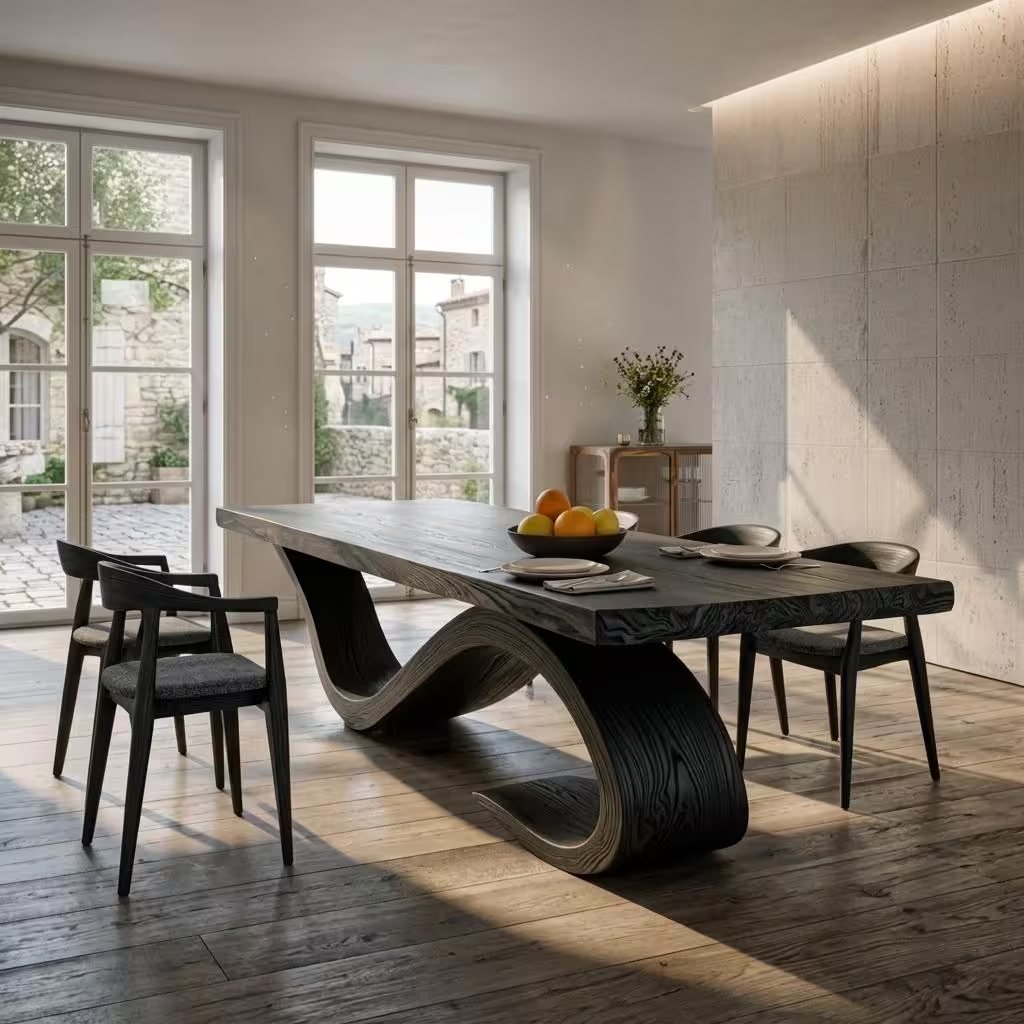
You don’t need to replace your whole dining set to make the room feel elevated. You need one piece that acts as the anchor — usually the table, sometimes the chairs — and everything else can stay simple around it.
If your current table is fine but boring, you don’t necessarily need a new one. A table with a sculptural base — think a metal or stone base under a simple top — adds drama without needing a full replacement. If you are shopping, know that a dining table is a piece most people keep for 10 to 15 years, so it’s reasonable to spend more here than on a console or bar cart you might swap out in three.
If the budget really is tight, the table can stay as-is and the chairs become your statement. A couple of bolder end chairs — velvet, boucle, an open metal frame — paired with simpler side chairs gets you 80% of the “designer mixed it” look for the price of two chairs instead of six.
Before you buy anything, it’s worth learning how to spot quality in budget furniture so you’re not accidentally buying something that looks fine online and falls apart in a year — solid joinery and real wood veneer over particleboard, that kind of thing.
Budget for this section: $150–$400 for two statement end chairs; $600–$1,200 for a sculptural table if you’re replacing it.
Mix, Don’t Match, Your Dining Chairs
Matching dining sets had their moment. They’re not wrong, exactly, they just read as “set bought together” rather than “curated over time,” which is the look most people are actually chasing without realizing it.
The easiest way to do this without it looking accidental: keep your side chairs simple and consistent, then bring in two different end chairs in a contrasting material or silhouette. Velvet scalloped backs against simple wood side chairs is a classic combo for a reason — it reads as intentional, not mismatched.
If you want something more casual, swap one side for a bench. It’s an unexpected move that somehow makes the whole table feel more relaxed and more styled at the same time, which is a weird but true design paradox.
Add a Bar Cart or Drink Station
A bar cart is one of those pieces that makes a room feel more “set up” than it actually is, even if you never use it for an actual drink. It signals that someone thought about this corner of the room on purpose.
In a small space, a well-styled cart with a few glasses, a couple of nice bottles, and one stack of books does more work than people expect. Look for a finish that contrasts with your other metals — matte black against brass hardware, or fluted wood next to a glass tabletop. No room for a cart? A short bar cabinet does the same job and gives you a flat top for a mirror or oversized art.
This one scales easily with budget. A secondhand cart styled well can look better than a brand-new one styled lazily.
Budget for this section: $0–$50 if you’re using something secondhand or already owned, $80–$250 for new at most mid-range retailers.
Build In Storage and Styling With a Console or Buffet
A console or buffet does double duty — it adds storage and it gives you another surface to style. The trick is balance: if your table and chairs are already making a statement, keep the console simple and let it recede. If your main furniture is more minimal, this is where you go bolder — carved detailing, an inlaid pattern, even a cabinet with built-in lighting.
In a tighter room, a single narrow console keeps things from feeling crowded. In a bigger one, lining up two smaller pieces side by side can give you a custom, built-in look for less than one large statement piece would cost.
If you’re rethinking your whole layout to fit one of these in, it helps to think through how to actually create more usable space in a room before you commit to a footprint you’ll regret.
Go Big With Wall Art Instead of a Gallery Wall
One oversized piece of art almost always reads as more intentional — and more expensive — than a cluttered gallery wall of smaller frames. It’s counterintuitive, since more pieces feels like more effort, but scale is doing the heavy lifting here, not quantity.
If your rug and chairs are neutral, let the art bring in color. If your furniture’s already loud, go tonal or textured instead so the wall doesn’t compete with the table. And art doesn’t have to mean a framed print — a grouping of mirrors, a woven textile, or a sculptural wall panel all do the job, sometimes better, since they add texture instead of flat color.
Renting and can’t drill for anything heavy? An accent wall using peel-and-stick wallpaper behind the buffet or console can stand in for art entirely, and it comes down clean when you move.
Bring In Plants or Sculptural Greenery
Greenery is genuinely one of the cheapest ways to make a room feel finished, and it’s the step people skip most often because it feels optional. It isn’t — bare corners are one of the clearest signs a room is still “in progress.”
A tall faux olive tree fills an empty corner without needing a focal point of its own. A simple vase with a few fresh or dried branches on the table does the same thing at table height. If you’ve got a dead corner that nothing else fits, a sculptural planter on a small pedestal table can quietly become the most photographed spot in the room.
No green thumb required — faux greenery has gotten good enough that most people genuinely can’t tell from a few feet away.
Layer Texture and Décor on Your Table and Surfaces
This is the finishing touch that separates “decorated” from “just furnished.” Bare surfaces always look unfinished, even when everything else in the room is right.
Mix materials and heights on your table and console: a linen runner, a stack of books, a few candles at different heights, maybe a ceramic bowl or colored glass vase. Group items in threes for visual balance, or go minimal with two contrasting pieces if you’d rather keep it clean. There’s no wrong answer here as long as you’re mixing textures and not just placing one of everything.
If you want a more specific starting point, there are plenty of ideas for dining table centerpieces and tablescaping that work for both everyday styling and dinner parties, plus a broader list of decorative accessories if you’re filling out the console or buffet too. The goal either way is warmth without clutter — less is more, in both design and in dusting.
The Small-Space Fix: A Banquette Instead of a Standard Table Setup
If your dining room can’t fit a full table with proper clearance on all sides, a banquette solves that and looks more custom than a standard set ever would. Swap traditional chairs for two loveseats or benches arranged in an L, paired with a round or pedestal table, with a chair or two tucked into the open side.
It’s a built-in look without the built-in price tag, and it works in both traditional and modern spaces — the table and chair style you pair it with does most of that work. Throw pillows and mixed materials finish it off so it doesn’t read as a waiting room bench.
None of these need to happen at once, and they definitely don’t need to happen in this order if your room’s biggest problem is obviously one specific thing. If the lighting’s already decent but the rug’s clearly too small, start there. The proportion and balance underneath all ten of these tips is the same: bigger, fewer, better-placed elements read as expensive, while a lot of small, evenly-sized things read as cluttered. Once that clicks, the rest of the decisions get a lot easier to make.
Frequently Asked Questions
What size rug should go under a dining table?
The rug should extend at least 24 inches beyond each side of the table, so chairs stay on the rug even when pulled out. For an extendable table, size the rug for the table at its largest, not its collapsed length.
Should dining chairs match?
No — mixing chairs is the current designer-favored approach. Keep side chairs simple and consistent, then bring in two bolder end chairs in a different material or silhouette for a layered, intentional look.
How can I make a small dining room look expensive?
Focus on a banquette instead of a full chair set if space is tight, keep the rug and wall color simple so the room doesn’t feel busier than it is, and let one piece — usually the table or a piece of art — do the visual work instead of adding several smaller items.
What’s the difference between a console and a buffet table?
Both add storage and surface space, but a buffet is typically deeper and built for serving, often with more drawers or cabinet space, while a console is slimmer and leans more decorative. In a dining room, either works — the choice usually comes down to how much storage you actually need versus how much floor space you have.
Do I need to replace my whole dining set to make the room look better?
Usually not. A single statement piece — a bolder table base, two contrasting end chairs, or better lighting — does more for the room than replacing everything at once, and it’s a lot easier on the budget.